Kevin Schut, a Teaching Professor at Trinity Western University's School of the Arts, Media + Culture, is a Game Studies scholar with expertise in video games, religion, ethics, and media ecology. He earned his PhD in Communication Studies (2004) and BA in Communication Arts & Sciences, History (1996), and has held leadership roles including Associate Dean and Chair of Media + Communication. His 2013 book Of Games & God explores Christian perspectives on gaming. PhD, Communication Studies, University of Iowa (2004) BA, Communication Arts & Sciences & History, Calvin College (1996) His research focuses on moral decision-making in games, media's cultural impact, and technology-religion intersections. Recent projects include analyzing procedural generation in No Man’s Sky and faith-based game design frameworks. Key awards include the 2013 Word Guild Best Book award and TWU's 2009 Provost’s Innovative Teaching Award. He teaches courses like Video Games and Culture and Media, Culture, and Criticism .
Olli Sotamaa is a Professor of Game Culture Studies at Tampere University's Faculty of Information Technology and Communication Sciences, Department of Communication Sciences. He leads the Tampere University Game Research Lab alongside Professor Frans Mäyrä and serves as team leader in the Centre of Excellence in Game Culture Studies. Specializes in game cultural phenomena: online communities, fandom, modding, data-driven game development Co-edited Game Production Studies (Amsterdam University Press, 2021) His research focuses on game industry practices, data analytics impact, and player production cultures. Recent work examines game data labor, industry ethics, and digital preservation challenges. Key trends in his 15 most recent articles include: Game data work and algorithmic culture (2023-2025) Game modding and user-generated content (2021-2022) Game development practices (2019-2021) Game preservation and heritage (2020) Industry sustainability and ethics (2021-2025) Scientific awards: ERC-Advanced-Grant project 'Making Sense of Games (MSG)' Labs/teams: Tampere University Game Research Lab Centre of Excellence in Game Culture Studies
Gerald Voorhees is an Associate Professor and Chair of Communication Arts at the University of Waterloo. He holds a Ph.D. from The University of Iowa (2008) and a B.S. in Speech Communication from the University of Texas at Austin, where he was a Senior Fellow in the Honors Program of the College of Communication. His research explores games and new media as platforms for identity and cultural construction, with a focus on public discourse around gaming and rhetorics of race and ethnicity. Dr. Voorhees has held significant academic roles, including Vice-President of the Canadian Game Studies Association and former membership on the Executive Board of the Digital Games Research Association. He previously taught at Oregon State University and developed the Game and Interactive Media Design track at High Point University. His teaching spans communication theory, media studies, and game design, with courses such as DAC 204 (Game Design) and COMMST 430 (Communication and Social Justice). His research integrates critical theory with digital media analysis, examining topics like gender representation in games, neoliberal masculinity in esports, and racial dynamics in gaming cultures. He has co-edited influential volumes such as Masculinities in Play (2018) and Feminisms in Play (2018), contributing to foundational discussions in game studies. His recent work addresses intersectional feminism in gaming and the cultural implications of shooter game genres. Dr. Voorhees actively engages with professional organizations and academic publishing, serving as co-editor of the Approaches to Game Studies book series (Bloomsbury) and managing editor of the Gender in Play trilogy (Palgrave Macmillan). His scholarship bridges theoretical frameworks with empirical analysis, shaping interdisciplinary dialogue on digital media's societal impact.
Andrew Campana is an Assistant Professor of Asian Studies at Cornell University's College of Arts and Sciences, specializing in modern and contemporary Japanese literature and media. His research explores the possibilities and limitations of expression during media transitions, with particular focus on poetry, digital media, and disability studies. His academic journey includes a Ph.D. in East Asian Languages and Civilizations from Harvard University and an Honors B.A. in East Asian Studies from the University of Toronto. Campana's first book, Expanding Verse: Japanese Poetry at the Edge of Media , published by the University of California Press in 2024 as an open access work, examines Japanese poetic practice from the 1920s to the present as poets engaged with evolving media technologies including film, tape recording, television, and the internet. As a researcher, Campana's work bridges literary studies, media studies, game studies, and disability studies, with current projects exploring how poetry became a key site of digital experimentation in Japan. His research methodology combines traditional literary analysis with hands-on creative practice, informed by his experiences at MIT's Trope Tank laboratory. His scholarly interests span Japanese media history, disability representation in literature and gaming, digital poetics, and gender studies. His research has received significant media attention, including features in the Cornell Chronicle ('Poets in Japan Experiment at the Edge of Media' and 'Japanese Poets Open New Ways of Thinking About Media'), The Statesman, and interviews on NPR's Academic Minute and the Curiosity Daily podcast discussing his work on gaming and accessibility. As an educator, Campana teaches courses including 'Introduction to Japan,' 'Japanese Poetry,' and 'The Glitch: Errors, Disability, and the Edges of Digital Media' (ASIAN 4703/6703), guiding students through interdisciplinary explorations of Japanese literature, media, and digital culture. His teaching reflects his commitment to understanding media transitions through both theoretical and practical lenses.
Dr. Frederick Li is an Associate Professor in the Department of Computer Science at Durham University, UK. He holds editorial roles as Associate Editor of Frontiers in Education (Digital Education) and Editorial Board Member of Virtual Reality & Intelligent Hardware. His research focuses on Computer Graphics, Machine Learning, Geometric Modelling, Collaborative Virtual Environments, Visual Aesthetics, and Educational Technologies. He earned his B.A. (Hons) and M.Phil. from The Hong Kong Polytechnic University and his Ph.D. in Computer Graphics from City University of Hong Kong. Prior roles include Assistant Professor at HK PolyU and project manager of a Hong Kong Government ITF-funded project. **Education**: B.A. (Computing Studies) and M.Phil. from HK PolyU; Ph.D. in Computer Graphics (CityU Hong Kong). **Research Interests**: His work spans mesh saliency detection, human-object interaction recognition, cloud modeling, face beautification, and educational technology. Recent achievements include awards for papers (e.g., Best Paper at ITiCSE 2014) and recognition such as EPSRC Peer Review College membership. He leads Durham's Undergraduate Board of Examiners and has been an external examiner at Northumbria University. **Awards**: Best Paper (ACM ITiCSE 2014), Outstanding Paper (ICALT 2013), EPSRC Peer Review College (2024), Outstanding BMVC 2024 Reviewer. **Grants & Labs**: His research is supported by grants from EPSRC and others. He collaborates with the Centre for Vision and Visual Cognition, VIViD, and AIHS group at Durham.
Małgorzata K. Citko-DuPlantis is an Assistant Professor of Japanese Literature and Culture at the University of Tennessee’s Department of World Languages and Cultures, within the College of Arts and Sciences. She holds a Ph.D. from the University of Hawaiʻi at Mānoa, alongside M.A. and B.A. degrees from Polish institutions (Collegium Civitas and University of Warsaw). Her research interrogates the instability of premodern knowledge systems, focusing on the Man’yōshū’s evolving cultural significance across medieval and modern eras. She challenges the canonical fixation on a single manuscript of this foundational poetry collection, arguing its role as a malleable cultural construct. Her work spans interdisciplinary areas including digital humanities, medieval Japanese poetry reception, and contemporary pop-media depictions of premodern Japan. Citko-DuPlantis has authored/co-authored monographs and peer-reviewed articles in English, Polish, and Japanese, with notable works like Clashes of Dragons and Dragonflies (2012) and her forthcoming monograph Embracing Instability: Imagining “Man’yoshū” in Medieval and Modern Japan . She has been awarded grants from the Japan Foundation, Fulbright, and MEXT, and has presented at major conferences such as the Association for Asian Studies and MLA. Her research awards reflect sustained scholarly impact, complemented by multilingual competence in languages including Arabic, Chinese, French, German, Hebrew, Italian, Japanese, Korean, Portuguese, Russian, and Spanish. Citko-DuPlantis actively engages with both academic and public spheres, bridging historical textual analysis with modern cultural phenomena.
Merlin Seller is a Lecturer in Design and Screen Cultures at the University of Edinburgh's Edinburgh College of Art, appointed in 2019. They teach theory and historical/cultural context across Film, Comics, Media and Game Studies. Seller co-founded the Game Worlds research cluster within the Centre for Data, Culture and Society. Education: MA from St Andrews University MSt from Oxford University PhD from University of East Anglia (UEA) on transmedia works between film, photography and painting in interwar England Seller's research interests span Game Studies, Film Studies, Horror, Non-human theory, and Queer/Trans approaches to games. Their work explores (Post-)Phenomenology, visuality in games, and the representation of nonhuman entities in screen-based media. Seller identifies as a proudly pansexual and trans academic with a background in Art History and Visual Cultural Studies. Analysis of Seller's publications reveals a strong interdisciplinary focus bridging Game Studies with critical theory. Their work frequently examines the intersection of nonhuman perspectives, queer theory, and phenomenological experience in games and film. Recurring themes include temporal mechanics, ecological consciousness, and the materiality of digital interfaces, demonstrating a consistent engagement with contemporary theoretical frameworks in media studies. Seller supervises PhD students including Yun Lu, Trina Tian (Siyu), and Danni C. Pascuma. They also teach courses such as 'Design, Play and Games,' 'Contemporary Cinema,' and 'Introduction to Queer Studies,' while supervising Honours dissertations. Seller co-organized the 'Affecting Game Space' conference through the Game Worlds research cluster. Their creative practice includes plein air paintings of videogame environments and dark comedy comics focused on speculative futures, visible through their portfolio at dearplayer.org.
Shane Denson serves as Professor of Film and Media Studies in the Department of Art & Art History at Stanford University's School of Humanities and Sciences. He also holds courtesy appointments in the Departments of German Studies and Communication. His academic profile spans multiple disciplines with a particular focus on the evolving relationship between media technologies and cultural forms across historical periods. Denson's research interests encompass a wide spectrum of media studies topics, with particular emphasis on phenomenological and media-philosophical approaches to film, digital media, comics, games, and serialized popular forms. His scholarly work investigates how media technologies shape human perception, embodiment, and cultural production, especially in the transition from cinematic to post-cinematic media environments. He has developed significant theoretical frameworks around concepts like discorrelation, post-cinema, and digital seriality that have influenced contemporary media studies discourse. An analysis of Denson's recent publications reveals consistent engagement with the philosophical implications of emerging media technologies, particularly artificial intelligence and digital platforms. His work demonstrates a distinctive trajectory from early research on Frankenstein adaptations and serial narratives toward contemporary examinations of AI aesthetics, desktop cinema, and the phenomenology of digital interfaces. Denson's scholarship bridges traditional academic writing with innovative digital and videographic forms, reflecting his commitment to multimodal scholarly expression. Denson has established himself as a leading voice in the study of digital seriality, with numerous publications exploring how serial forms evolve across media platforms. His research demonstrates how contemporary digital media environments transform traditional narrative structures while creating new forms of community and meaning-making through serialized content. This work intersects with his broader interests in media philosophy and the embodied experience of digital interfaces. Professor Denson maintains an active scholarly practice through his personal website (shanedenson.com) and ORCID profile, where he shares his publications, videographic essays, and experimental digital projects. His work with ROMhacking.net demonstrates his commitment to digital humanities methodologies that combine code analysis with cultural critique, particularly in examining how fan communities engage with and transform established media properties through modification and reinterpretation.
Mercè Oliva is an Associate Professor at the Department of Communication, Pompeu Fabra University (UPF), Barcelona. She serves as Director of the B.A. Programme in Audiovisual Communication and Coordinator of the MEDIUM Research Group. Her academic background includes a PhD in Social Communication (2010) and a Bachelor's in Audiovisual Communication (2002) from UPF. Research Focus: Television and Reality TV Celebrity and Media Culture Neoliberalism and Political Communication Video Games as Cultural Artifacts Her recent publications analyze: Visual motifs in political coverage (handshakes, hugs, kisses) Citizens' responses to neoliberal resilience narratives Celebrity tax evasion cases (e.g., Cristiano Ronaldo) Video game cover art as neoliberal propaganda Working-class stereotypes in Spanish media ('chonis', 'canis') Key collaborations include co-PI roles in projects like 'Heroes of the Crisis' (2015-2019) and 'Redistributive Imaginaries' (2022-2025), funded by Spain's Ministry of Economy and AEI/NextGenerationEU.
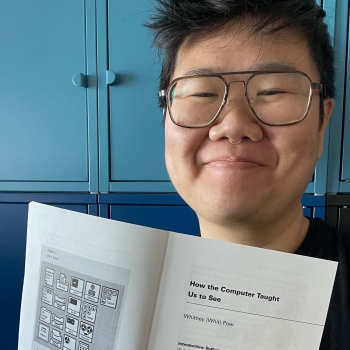
Whitney (Whit) Pow is an Assistant Professor of Media, Culture, and Communication at the Steinhardt School of Culture, Education, and Human Development, New York University. Their research focuses on transgender media studies, trans of color critique, queer theory, and the intersection of these fields with electronic art, video game history, and computer history. Pow’s current book project examines how trans programmers and game designers contested computational limitations to critique institutional systems. Their work analyzes how state surveillance and biopolitical processes—mediated through documents like birth certificates and diagnostic manuals—intersect with computational systems like AI and software. Research interests include: Reparative video game history Queer orientations in software interfaces Glitch studies as trans historiography Racialized surveillance in digital systems Recent articles highlight themes like computational metaphors’ entanglement with medical surveillance (Camera Obscura, 2024) and the necessity of software studies for critical game studies (Just Tech, 2024). Earlier work (Feminist Media Histories, 2021) explores glitches as trans resistance in digital art. A 2019 essay in ROMchip advocates for archival recovery of trans game designers like Dani Bunten Berry. No scientific awards listed. Research grants or advising roles are not detailed in available texts. Pow’s lab/team work centers reparative digital historiography and antiracist methodologies in media studies.
Dr. Kate Cook is a Lecturer in Greek Culture at King’s College London's Department of Classics within the Faculty of Arts & Humanities. Her academic journey includes positions at the Universities of Manchester, Leeds, Durham, and St Andrews. She actively contributes to the Classics Gaming Collaborative, AIMS steering group, and the #WCCWiki Women's Classical Committee Wikipedia editing initiative. Her research intersects Gender Studies, Greek Tragedy, and Classical Reception in video games, with current projects on women's language in ancient texts and gender representation in historical games. She employs interdisciplinary approaches bridging literary analysis and digital media studies. Cook's publications demonstrate a consistent focus on gender dynamics in classical contexts through both traditional literary analysis and emerging digital mediums. She teaches courses on Greek literature, culture, and classical reception methodologies. For public engagement, she regularly contributes to podcasts and events on historical game studies, particularly exploring ancient world representations in interactive media.
Dr. Michiel Kamp is Assistant Professor of Musicology at Utrecht University's Department of Media and Culture Studies within the Faculty of Humanities. He holds a PhD from the University of Cambridge (2015) and co-founded the Ludomusicology research group. His research employs hermeneutic and semiotic approaches to analyze video game music and related audiovisual media. Key interests include musical transmediality, ubiquitous music, phenomenologies of listening, participatory culture, sound synchronization, ecological psychology, musical affordances, ludomusicality, and the aesthetics of background music. Publications focus on phenomenological approaches to game music, hermeneutic analyses of interactive soundtracks, and theoretical frameworks for understanding musical meaning across media platforms. Recent work explores VR audio experiences and historical perspectives on musical interfaces. Dr. Kamp has organized numerous international conferences on video game music and edited foundational publications in ludomusicology. His monograph Four Ways of Hearing Video Game Music presents a comprehensive theoretical framework for game music analysis.
Dr. Bill Hamilton is an Assistant Professor in the Department of Computer Science at New Mexico State University. His research focuses on live media design, online communities, and digital game culture. He holds a Ph.D. in Human Computer Interaction from Texas A&M University (2018), and has collaborated with industry partners like Microsoft Research and Motorola Mobility. Education: Ph.D. in Human Computer Interaction, Texas A&M University (2018) Bachelor’s degree in Computer Science, Texas A&M University Research Interests: Bill explores how live media supports societal participation in education, politics, work, and play. His work employs qualitative methods like ethnographic inquiry to study collaborative digital environments. Recent projects include designing wearable interfaces for human-drone teams and analyzing YouTube’s content policies' impact on free speech. Awards: 2018 Texas A&M Distinguished Graduate Research Award 2016 Best Paper at ACM Interactive Experiences for TV/Online Video Advising & Grants: Mentors students like Preeti De Maurya and Cassandra Palmer, with a focus on inclusive education technologies and collaborative tools for emergency response. Active in conference organization including ACM CHI’s Games and Play Subcommittee (2019). Labs: His research is conducted through the PlexLab, exploring playful interactions and live media systems.
Professor Amy de la Haye holds the Rootstein Hopkins Chair in Dress History & Curatorship at the London College of Fashion (LCF), part of the University of the Arts London. She teaches on MA Fashion Curation and MA Cultural Production courses, while supervising multiple PhD students. Her research focuses on dress history, haute couture craftsmanship, and the intersection of fashion with folk cultures and natural world motifs. She has curated major exhibitions like Ravishing: The Rose in Fashion (2021) and Making Mischief: Folk Costume in Britain (2023), and contributed to Showstudio 's SKINS series analyzing video game costumes. Her career spans roles at the V&A Museum and Brighton Museum, with notable acquisitions including Vivienne Westwood’s iconic blue shoes. Recent projects include catalog essays on Worth, Chanel, and Dior, alongside a forthcoming Phaidon publication on flowers in fashion. She has secured National Lottery Heritage Fund grants and authored/co-authored over 20 books, including children’s titles and Exhibiting Fashion: Before and After 1971 . Key collaborations include the Museum of British Folklore and the Fashion Textile Museum. Current initiatives explore disability-inclusive flower-making, sequin sustainability, and Caribbean textile innovations. She has examined 7 PhD theses and completed supervision of 10 doctoral candidates, emphasizing practice-based research. Her work bridges academic rigor with public engagement through exhibitions, publications, and digital content.
Jeremy W. Smith is an Assistant Professor of Music Theory at The Ohio State University. His research focuses on the analysis of electronic dance music (EDM), particularly the role of continuous processes such as glissandi, accelerations, and filter sweeps in shaping subgenre aesthetics and listener experience. He also explores video-game music through semiotic and hermeneutic frameworks. His teaching includes courses on popular music analysis and video-game music studies. Smith holds a PhD from the University of Minnesota (2019) and degrees from the University of Toronto, including a BM (2013), BEd (2013), and MA (2015). As a performer, he plays euphonium and trombone with local ensembles. Education: PhD, Music Theory, University of Minnesota, 2019 MA, Music Theory, University of Toronto, 2015 BM, Music, University of Toronto, 2013 BEd, Education, University of Toronto, 2013 Research Interests: Smith’s work examines how continuous processes in EDM contribute to structural and aesthetic functions, including orientation, ornamentation, and disorientation. He applies semiotic analysis to fan adaptations of video-game music, such as The Legend of Zelda: Majora’s Mask . His analyses address broader questions about music’s role in cultural and technological contexts. Publications: His recent articles explore EDM subgenres, breakdown aesthetics, and the technical creation of continuous processes via automation curves. While his work emphasizes EDM, it also intersects with pop music and game music studies, highlighting cross-disciplinary themes like authenticity in electronic music and listener engagement.