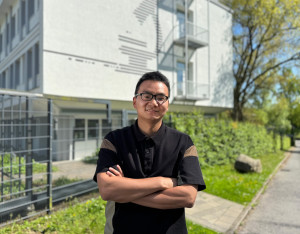
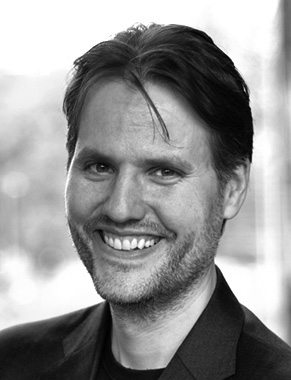
Gilles Delmaire is an Associate Professor specializing in signal processing, hyperspectral imaging, and environmental science. His research spans topics like super-resolution hyperspectral multisensor fusion , tensor decomposition , and butterfly species classification using advanced computational methods. Key research areas: Signal Processing, Remote Sensing, Environmental Science, and Machine Learning. Recent work focuses on hyperspectral data restoration , insect tracking algorithms , and air quality analysis in Mediterranean regions. Collaborations include institutions in France, Greece, Portugal, and Cyprus, with publications in IEEE, Pattern Analysis and Applications, and Science of the Total Environment.
Marco Agostino Deriu is a Full Professor at the Department of Mechanical and Aerospace Engineering (DIMEAS) at Polytechnic University of Turin. He serves as Vice Coordinator of the Biomedical Engineering College and is a member of the PolitoBIOMed Lab - Biomedical Engineering Lab. His extensive academic portfolio includes teaching courses in biomechanical design, rational drug design, and multiscale biomechanics across multiple academic years. Professor Deriu's research spans multiple cutting-edge domains including artificial intelligence, e-health, machine learning, molecular modeling, multiphysics modeling, multiscale modeling, and pathology dynamics. His work bridges computational approaches with biomedical applications, with particular emphasis on translating research into clinical strategies. His expertise is reflected in the ERC sectors he works within: Bioinformatics, Biophysics, Computational Biology, Industrial Bioengineering, and Health Services Research. His publication portfolio demonstrates strong trends toward AI applications in healthcare, particularly in neonatal care, neurodegenerative disease modeling, and medical image analysis. The research shows increasing integration of machine learning with traditional biomedical engineering approaches, with a growing emphasis on explainable AI systems for clinical decision support. Recent work focuses on preterm infant monitoring, neurodevelopmental disorder diagnosis, and molecular-level disease modeling. Professor Deriu actively supervises numerous PhD students working on diverse biomedical engineering topics. His research portfolio includes significant grant funding from multiple sources including National Research projects (LANGMOL, DGDMF2, AIFood), EU Horizon 2020 projects (PARENT, CRYSTAL, VIRTUOUS), and private foundation research (GALATEA). He leads the PolitoBIOMed Lab - Biomedical Engineering Lab and is part of the Biomechanics of Solids and Fluids research group within DIMEAS. His collaborative network spans multiple institutions, including collaborations with University of Applied Sciences of Southern Switzerland (SUPSI), and involvement in international research consortia focused on neonatal health, neurodegenerative diseases, and AI applications in medicine.
Jonas Gamalielsson is an Associate Professor in Computer Science at the Department of Information Technology , University of Skövde. He leads software engineering research projects and serves as course coordinator for advanced master's programs in information technology. Academic affiliation: School of Informatics, University of Skövde Research focus: Open Source Software, ICT Standardization, Digital Government Active in: Empirical Software Engineering, Standards for Smart Systems, Open Collaboration His research explores intersections between open standards and open source implementations, with recent projects analyzing: Public sector open source governance Swedish procurement of SaaS solutions PDF/A document standard compliance Industrial IoT ecosystem standardization Open source business adoption strategies Publications span 2014-2025, with key contributions in the Journal of Standardisation , Empirical Software Engineering , and International Journal of Standardization Research . Collaborates extensively with Björn Lundell and other scholars in software standardization and open source analysis.
Adrian Munteanu is a Professor in the Department of Electronics and Computer Science at Free University of Brussels (Vrije Universiteit Brussel). He has been actively contributing to research in image processing, deep learning, and signal processing since 1995, with over 414 research outputs and an h-index of 29. His work spans diverse fields such as video compression, autonomous vehicle pose estimation, greenhouse gas emissions prediction, and real-time distributed video coding.
Professor Li Xiaoli is the Head of the Information Systems Technology and Design (ISTD) Pillar at Singapore University of Technology and Design (SUTD), effective 15 August 2025. An internationally recognised AI researcher with over 30 years in academia and industry, he was previously Department Head of Machine Intellection at A*STAR I²R and Technical Director of the S$35.8 million national AIMfg centre. He holds adjunct professorial appointments at NUS and NTU and has advised Singapore government agencies including MTI, MOE, MOH and SNDGO. Education: PhD, Institute of Computing Technology, Chinese Academy of Sciences, 2001 Research Interests: Prof Li’s work straddles machine learning, data mining, graph learning and time-series analytics, with high-impact applications in smart manufacturing , semiconductors and the digital economy . He pioneered sensor feature learning with deep neural networks and co-coined the term positive-unlabelled (PU) learning ; his 2015 IJCAI paper alone exceeds 1,600 citations. Additional contributions span social & biological network mining, NLP & text analytics, and AI sustainability. Recent Publication Landscape (2022-2025): His latest 15 papers reveal a dual focus on time-series intelligence (domain adaptation, self-supervised representation, sensor alignment, remaining useful-life prediction) and efficient AI deployment (green AI, hardware-aware deep learning, game-theoretic NAS). Interdisciplinary threads link biomedical informatics (sleep stage, gene networks) and advanced NLP (preference optimisation, video grounding), underscoring a strategy of algorithmic innovation coupled with real-world validation . Honours & Awards: IEEE Fellow (2024) Fellow, Asia-Pacific Artificial Intelligence Association (2023) Clarivate Highly Cited Researcher Listed among World’s Top 2% Scientists (Stanford University) Three IEEE/Conference Best Paper Awards for sensor-data and network-mining research Grants, Labs & Industry Collaboration: Prof Li has secured and led more than 10 major collaborative grants with industry partners such as DBS, Singtel and KPMG, including the S$35.8 million AIMfg programme. He directs joint research labs, translating AI advances into aerospace, telecom, insurance and aviation solutions. His group maintains cutting-edge GPU clusters and sensor test-beds for manufacturing analytics, and he currently supervises a large multi-disciplinary team of research staff and graduate students at SUTD.
Yong Jae Lee is a Professor in the Department of Computer Sciences at the University of Wisconsin-Madison, where he holds the prestigious Susan Beth Horwitz Professorship. He leads the Wisconsin AI and Vision Lab (WAIV) and has been at UW-Madison since Fall 2021. Prior to this, he served as an Assistant and then Associate Professor at UC Davis for six years, and spent time as a Postdoctoral Fellow at UC Berkeley and Carnegie Mellon University. Lee's research focuses on computer vision and machine learning, with particular emphasis on creating robust AI systems that can understand our multimodal world with minimal human supervision. His work spans deep learning for computer vision, image synthesis, video understanding, and multimodal learning. His recent publications demonstrate a strong focus on large multimodal models, vision-language systems, and addressing challenges in model robustness and efficiency. His lab has developed influential systems like YOLACT for real-time instance segmentation, which won the Most Innovative Award at the COCO Object Detection Challenge at ICCV 2019. Current research directions include personalized vision-language systems, efficient multimodal models, and addressing cultural biases in generative AI. H.I. Romnes Faculty Fellowship (2025) Susan Beth Horwitz Professorship (2025) NSF CAREER Award Army Research Office Young Investigator Award UC Davis College of Engineering Outstanding Junior Faculty Award Best Paper Award at BMVC 2020 Most Innovative Award at COCO Object Detection Challenge, ICCV 2019 Professor Lee has advised numerous PhD students who have gone on to successful careers at leading tech companies and research institutions. His research has been supported by major funding agencies including the National Science Foundation (multiple grants), Army Research Office, NASA, and industry partners like Intel, Adobe, Nvidia, Amazon, and Google. He leads the Wisconsin AI and Vision Lab (WAIV), which currently includes multiple PhD students and undergraduate researchers working on cutting-edge vision and language understanding problems.
Gen-Huey Chen is a Distinguished Professor in the Department of Computer Science and Information Engineering at National Taiwan University, where he has served since 1987 (Associate Professor 1987-1992, Professor since 1992). He previously held leadership roles as Dean of the College of Science and Technology (2001-2005) and Department Chair (2001-2002) at National Chi Nan University. Education Ph.D. in Computer Management Decision, National Tsing Hua University, 1987 B.S. in Computer Science and Information Engineering, National Taiwan University, 1981 Research Interests Professor Chen's work centers on Graph Theory , Combinatorial Optimization , and Algorithm Analysis and Design , with significant contributions to discrete mathematics and network theory. His research bridges theoretical foundations and practical applications, particularly in structural graph problems and wireless network protocols, emphasizing efficient algorithmic solutions for complex computational challenges. Publications Trends His 2007-2009 publications reveal a cohesive research trajectory focused on graph-theoretic applications in networking. Key patterns include structural analysis of specialized graphs (chordal/circular-arc), fault tolerance in multiprocessor topologies (grids/tori), and bandwidth-optimized routing in mobile ad-hoc networks. These works consistently apply combinatorial optimization to solve real-world networking constraints while advancing theoretical graph algorithms. Advising and Grants No specific information regarding student advising or research grant funding is provided in the source material. Laboratory He directs the Discrete Algorithm Lab at National Taiwan University, which specializes in discrete algorithm development and wireless network protocol research.
Soheil Kolouri is an Assistant Professor in the Department of Computer Science at Vanderbilt University. He leads the Machine Intelligence and Neural Technologies (MINT) Lab, focusing on cutting-edge research in artificial intelligence and computational systems. Education includes a PhD in Computer Science from Carnegie Mellon University (2015), an MSc from Colorado State University (2012), and a BSc from Sharif University of Technology (2010). Research interests center on Machine Learning , Computer Vision , and Deep Learning , with specialized applications in optimal transport theory, medical imaging, continual learning systems, and neural network efficiency. Recent work demonstrates strong cross-disciplinary collaboration with medical and engineering domains. Publications (2024-2025) reveal three dominant themes: Advancements in optimal transport methodologies (Wasserstein distances, partial transport) Innovations in continual/lifelong learning systems Medical AI applications including surgical gesture recognition and cancer detection The MINT Lab explores neural network architectures, reinforcement learning, and efficient model compression techniques for real-world deployment.
James Priestley is a Researcher and Lecturer at EPFL, leading the Priestley Lab within the School of Basic Sciences (SB) and the Institute of Bioengineering (BMI). He holds dual roles: Scientist in the GR-PRIESTLEY group and Lecturer in the SSV-ENS teaching unit. His lab focuses on the neurobiology of memory, particularly episodic memory formation via hippocampal-cortical circuits in behaving mice. Research combines large-scale neural recordings, virtual reality, and computational modeling to bridge biological and artificial neural network dynamics. Research interests span hippocampal representations of space and time, plasticity mechanisms underlying memory, and real-time neural decoding. The lab collaborates with the EPFL neuroscience doctoral school (EDNE), supervising PhD students Margaret Lane, Daniel Molinuevo, and Olivier Ulrich. Funding includes the ELISIR Scholarship, EPFL Life Science Independent Research Program, and the Fondation Marina Cuennet-Mauvernay. Teaching responsibilities include courses in life sciences engineering. The Priestley Lab is located in AAB 1 37, Lausanne, with active projects on closed-loop neural interfaces and behavioral experiments using virtual reality. Student opportunities include semester projects on real-time neural decoding and video game-based cognitive experiments.
Dr. Bo Yang is a Frankel Research Professor of Aortic Surgery at the University of Michigan Medical School, affiliated with the Department of Cardiac Surgery at the Frankel Cardiovascular Center. He completed his cardiothoracic surgery fellowship at Stanford University and joined the University of Michigan in 2011. His clinical expertise focuses on complex aortic and cardiac surgeries, including valve-sparing aortic root replacement (David procedure) and treatment of aortic dissections. Education & Training: Xiangya Medical School, Central South University (1995) Xiangya Hospital, Cardio-thoracic Surgery Residency (1998) University of Arizona Cancer Center, General Surgery Residency (2008) Stanford University Medical Center, Cardiothoracic Surgery Fellowship (2011) Research Interests: Dr. Yang’s lab investigates mechanisms of thoracic aortic aneurysms using patient-derived induced pluripotent stem cells (iPSCs) and CRISPR-Cas9 gene editing. He explores novel therapies targeting genetic mutations like those in Loeys-Dietz syndrome, Marfan syndrome, and bicuspid aortic valve (BAV). Collaborations with bioengineers focus on tissue-engineered vascular grafts. Clinically, his team studies outcomes of aortic surgery and adult cardiac procedures, including long-term results of the David procedure and surgical management of endocarditis. Awards & Grants: AHA Vivien Thomas Young Investigator Award (Finalist) Young Investigator Award (Loeys-Dietz Syndrome Foundation) NIH Grant Recipient Clinical & Research Impact: Dr. Yang combines surgical innovation with basic science to address aortic pathology. His lab’s iPSC models enable personalized approaches to aneurysm prevention, while clinical research evaluates surgical outcomes and device efficacy. He leads a multidisciplinary team advancing both surgical techniques and regenerative medicine.
Prof Dr Xiaowei Xu is a Professor at the Guangdong Cardiovascular Institute and a Humboldt Research Fellow at ISAS (Leibniz Institute for Analytical Sciences) in Dortmund, Germany. He joined ISAS’s AMBIOM group for an 18-month research stay starting February 2025. Research focus: AI-driven biomedical image analysis, including deep learning for cardiovascular diseases and algorithm/image compression Collaboration: Working closely with Dr. Jianxu Chen’s team at ISAS and engaging with partner hospitals Background: A computer scientist with prior research experience in the US (University of Notre Dame) and Canada His work bridges clinical AI applications with theoretical advancements in efficiency and data processing. The Humboldt Research Fellowship supports his stay, reflecting his international reputation in AI and biomedical research. Scientific Awards Humboldt Research Fellowship (Alexander von Humboldt Foundation) Xu emphasizes Germany’s leadership in AI healthcare, citing nnU-Net (DKFZ) as a benchmark. He maintains ties with his Guangdong research group via video calls and integrates into ISAS’s European research network.
Elmar Eisemann is Professor and head of the Computer Graphics and Visualization group at TU Delft. His research spans real-time rendering, perceptual graphics, visualization, and GPU acceleration techniques. Recent work includes spectral uplifting methods for controllable material appearance, efficient hyperbolic embedding algorithms, light field display optimization, and 3D animation using diffusion models. Eisemann develops novel representations and acceleration structures for rendering and visualization. He received the Netherlands Prize for ICT Research and Eurographics Young Researcher Award, and has chaired major conferences including Eurographics 2018.
Patrick Le Callet is a full professor at Polytech Nantes (University of Nantes), leading the Image & Video Communication (IVC) group at the CNRS IRCCyN lab. His academic journey includes roles as an assistant professor (1997–1999) and lecturer (1999–2003) at the University of Nantes. He earned credentials in electronics from École Normale Supérieure de Cachan. His research focuses on human vision modeling applied to image/video processing, including 3D quality assessment, visual attention modeling, watermarking, and medical imaging. He coordinates major projects (e.g., EU Marie Curie ITN PROVISION, UHD4U) totaling over $5M in grants. He co-chairs VQEG’s HDR and 3DTV initiatives and serves on editorial boards for IEEE Transactions and EURASIP journals. Key contributions include databases like IRCCyN/IVC-Toyama and Eyetracker SD 2009, advancing standards in 3DTV and QoE. Over 20 students have been advised, with notable alumni working on topics like medical imaging and 3DTV discomfort metrics. Projects involve collaborations with Orange Labs, Thomson, and cultural heritage institutions. Labs/teams: IVC group at IRCCyN, managing a 3D visualization platform and eyetracking facilities. Research emphasizes interdisciplinary applications in consumer electronics, healthcare, and cultural preservation.
Hui Zhang is a Professor in the School of Computer Science at Carnegie Mellon University, where he has made significant contributions to networking research for over two decades. He received his PhD from the University of California, Berkeley in 1993 and has maintained a prominent research career focusing on internet protocols, video streaming, and network management. His research interests span computer networking, internet video streaming, quality of service, content delivery networks, network protocols, multimedia communication, and network management. Professor Zhang's work has been particularly influential in developing adaptive video streaming technologies and content delivery mechanisms that power much of today's internet video infrastructure. His recent publications demonstrate continued innovation in networked systems, with a focus on improving video quality of experience through machine learning techniques and advanced network control mechanisms. The research trends show an evolution from foundational network protocol design to more application-focused solutions for video delivery and user experience optimization. Professor Zhang has mentored numerous successful researchers who have gone on to make their own significant contributions to the field. His collaborative work spans multiple institutions including Carnegie Mellon University, University of California, and various industry research labs. His research has been supported by substantial grants from NSF, industry partnerships, and has resulted in technologies that have been widely adopted in commercial video streaming services. Professor Zhang maintains an active research laboratory focusing on next-generation networked multimedia systems.
Jianping Gao is a Professor in applied mathematical modeling and control systems, with significant contributions to vehicular networks, privacy protection algorithms, and nonlinear dynamical systems. His work spans interdisciplinary domains including intelligent transportation, federated learning, and biomechanical engineering. Core Research Areas : Mathematical modeling of chemotaxis and ecological systems Secure computation offloading in vehicle edge networks Federated learning optimization for Internet of Vehicles Privacy-preserving algorithms in social networked transportation Recent Trends : 2025 publications focus on dynamic gradient compression strategies and 3D radar sensing for autonomous vehicles 2024 work emphasizes blockchain-based privacy methods and Gaussian process vehicle state estimation 2023 studies include comprehensive surveys on social IoV security and contraflow control optimization The most frequent co-authors include Ling Xing (13 collaborations), Honghai Wu (12), Huahong Ma (8), and Kaikai Deng (4), indicating sustained interdisciplinary team efforts.