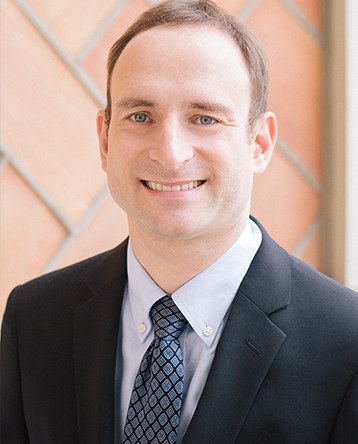
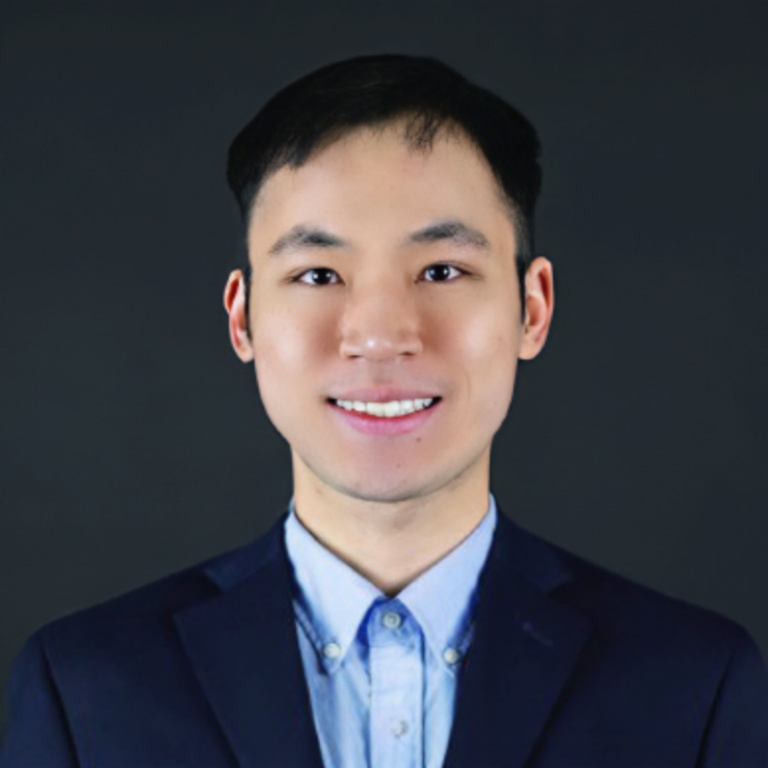
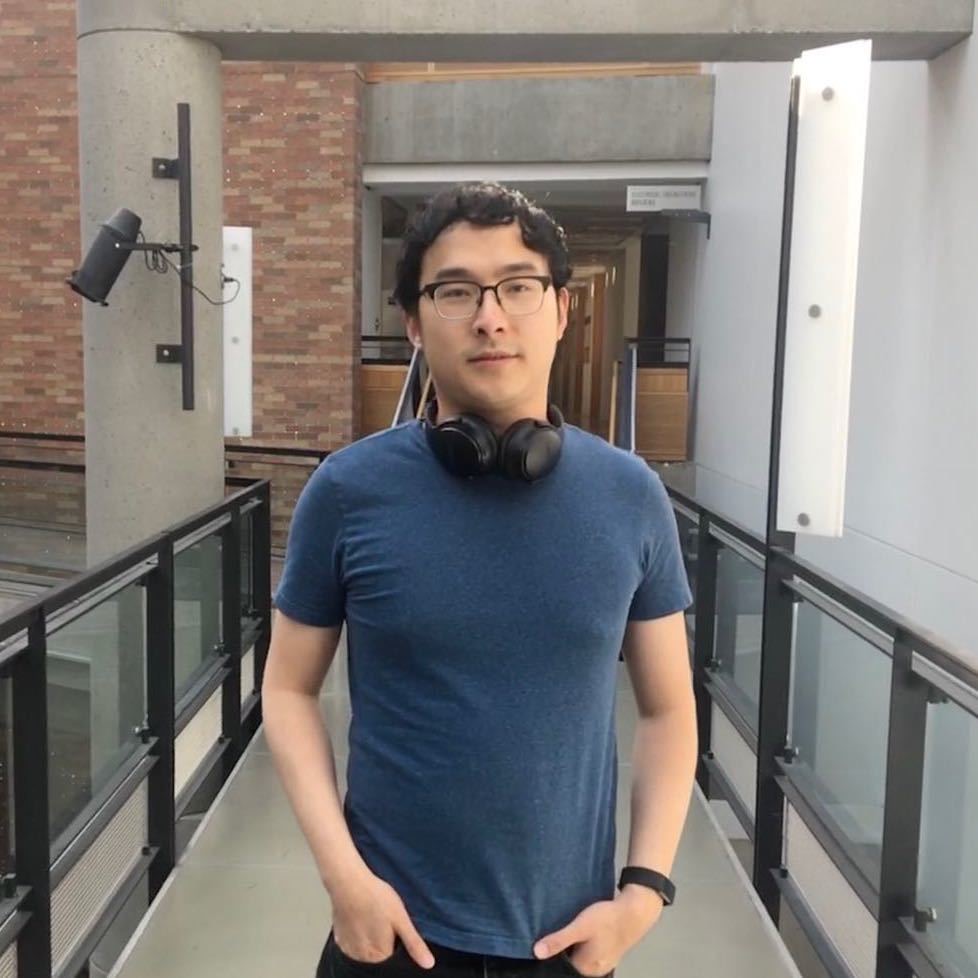
Prof. Dr. Michael Gröschel is a Professor of Business Informatics at the Faculty of Computer Science, Mannheim University of Technology. His expertise spans Business Process Management (BPMN, Process Mining), Digital Transformation, and innovative Business Models. He teaches courses on BPM, project management, and e-business, often collaborating with industry clients through student projects. As a consultant, he specializes in BPMN training and IT-driven business strategy. His work emphasizes practical applications of IT tools like RPA and low-code platforms. Recent publications focus on RPA bot performance evaluation, AI in automotive trade, and business model-IT alignment. Prof. Gröschel’s research bridges academic insights with real-world challenges, particularly in leveraging technology for business innovation. He has authored books and articles on business intelligence tools, mobile business strategies, and digital customer care. His consulting services include executive coaching for academic career advancement and enterprise IT management best practices. Office: Building A, Room 007c | Phone: +49 621 292-6764 | Professional website available for further engagement opportunities.
Charles A. Bouman is the Showalter Professor of Electrical and Computer Engineering and Biomedical Engineering at Purdue University, with a courtesy appointment in Mathematics. He is a leading researcher in computational imaging, integrating statistical signal processing, physics, and computation for applications in healthcare, scientific, and industrial imaging. Education: B.S.E.E., University of Pennsylvania, 1981 M.S., University of California at Berkeley, 1982 Ph.D. in Electrical Engineering, Princeton University, 1989 His research focuses on computational imaging , including statistical image models, multiscale techniques, tomographic reconstruction, and fast algorithms. Key areas include Model-Based Iterative Reconstruction (MBIR), Plug-and-Play priors, document processing, and multiscale segmentation. His work has led to foundational contributions in total variation regularization and sparse-view reconstruction. The recent publications highlight a strong trend in integrating machine learning with physical models for image reconstruction, particularly through Plug-and-Play methods. His work spans optical tomography, halftoning, image scaling, and document compression, demonstrating consistent innovation in both theory and practical software implementation. Scientific Awards and Honors: Member, National Academy of Inventors Life Fellow, IEEE Fellow, IS&T; Honorary Member (2022); Service Award (2023) Fellow, SPIE and AIMBE IEEE Signal Processing Society Claude Shannon-Harry Nyquist Award (2021) Electronic Imaging Scientist of the Year (2014) SIAM Imaging Science Best Paper Prize (2020) Founder, IS&T Computational Imaging Conference (2003) Co-Founder, IEEE Transactions on Computational Imaging Vice President, IS&T; Former VP of Publications (2000–2004) Bouman has advised numerous graduate students and leads a vibrant research group developing open-source tools like MBIRJAX , SVMBIR , and OpenMBIR . His research has been supported by the National Science Foundation, General Electric, Intel, Xerox, Hewlett-Packard, and the State of Indiana 21st Century Fund. He maintains an active presence through tutorials, conference leadership, and educational resources including video lectures and a textbook on Foundations of Computational Imaging. Labs and Research Teams: His group develops cutting-edge software for tomographic reconstruction, clustering, segmentation, and dynamic sampling. Projects include Gaussian Mixture modeling (GMCluster), Plug-and-Play implementations, Sparse Matrix Transforms, and UAV sensing datasets. The research is highly interdisciplinary, bridging engineering, mathematics, and biomedical applications.
Ulrik Schroeder is a Universitätsprofessor (Full Professor) at RWTH Aachen University, leading the Chair of Learning Technologies within the Faculty of Computer Science. His research focuses on the intersection of educational technology, learning analytics, and immersive technologies with particular emphasis on practical implementations in higher education settings. Professor Schroeder's research spans multiple interconnected domains in educational technology. His primary interests include Learning Analytics implementation (particularly using xAPI standards), Virtual Reality applications for education, Open Educational Resources development and conversion, and gamification approaches for programming education. He has developed several notable tools including convOERter for OER conversion, WebWriter for creating explorable explanations, and various xAPI-based learning analytics infrastructures. His work consistently bridges theoretical frameworks with practical educational applications, often focusing on computer science education contexts. Analysis of his recent publications reveals a strong trend toward integrating Learning Analytics with immersive technologies, particularly Virtual Reality environments. His research demonstrates a systematic approach to educational technology development, with emphasis on scalability, interoperability through standards like xAPI, and practical implementation in real educational settings. The work increasingly focuses on personalized learning paths, quality assurance for educational resources, and privacy-conscious data collection. Co-editor of 21. Fachtagung Bildungstechnologien (DELFI) (2023) Co-editor of Hochschuldidaktik der Informatik HDI 2018 Co-editor of DeLFI 2018 conference proceedings Professor Schroeder has supervised numerous doctoral and postdoctoral researchers who frequently appear as co-authors on his publications, indicating an active research group. His projects often involve interdisciplinary collaborations across computer science, education, and psychology. Current major initiatives include the AIStudyBuddy project for study path analysis and the development of VR classroom simulations for teacher training. His research group, the Learning Technologies Innovation Lab, develops open research tools that support various aspects of educational technology research and implementation.
Golan Levin is Professor of Electronic Art at Carnegie Mellon University's School of Art, with courtesy appointments in the School of Design, School of Architecture, School of Computer Science, and Entertainment Technology Center. From 2009 to 2022, he served as Director and Co-Director of CMU's Frank-Ratchye STUDIO for Creative Inquiry, a laboratory dedicated to supporting atypical, anti-disciplinary research at the intersection of arts, science, technology, and culture. Levin's research spans interactive art, digital fabrication, information visualization, and generative design. He explores the critical potential of visualization, generative computation for expressive form, and how abstraction connects to realities beyond language. His practice engages interactive gestural robotics, nonverbal interaction aesthetics, and tactical applications of personal digital fabrication through responsive artifacts and media provocations that highlight human-machine relationships. His publications reveal consistent innovation in real-time audiovisual systems, interactive fabrication interfaces, and pedagogic tools for artists. Key trends include slit-scan video techniques, tangible augmented-reality performance, and noise-based visualizations, demonstrating his commitment to expanding human action vocabulary through digital media while bridging artistic expression with computational systems. Levin's work has received significant recognition: Permanent collection inclusion at Museum of Modern Art (MoMA) Whitney Biennial exhibition "50 Designers Shaping the Future" by Fast Company (2012) Competitive grants from National Endowment for the Arts, National Endowment for the Humanities, Creative Capital, and Rockefeller MAP Fund As an educator, Levin teaches "studio courses in computer science" on interactive art, experimental capture, and generative design, emphasizing computation as a medium for critical inquiry. His research funding from major cultural institutions supports interdisciplinary exploration at the arts-technology nexus. The Frank-Ratchye STUDIO for Creative Inquiry, which he directed for 13 years, remains a vital hub for anti-disciplinary collaboration, continuing his legacy of fostering creative agency through technology-infused artistic practice.
Jishen Zhao is an Assistant Professor in the Department of Computer Science and Engineering at the University of California, San Diego (Jacobs School of Engineering). His research focuses on computer architecture, non-volatile memory systems, and deep learning acceleration. Dr. Zhao has published extensively in top venues including ISCA, MICRO, ASPLOS, and IEEE Transactions. He collaborates with researchers at UCSD and beyond to advance systems for emerging applications in AI and autonomous vehicles. Dr. Zhao's primary research areas include persistent memory systems, hardware/software co-design for deep learning, and safety-critical computing. He develops techniques for crash consistency, memory disaggregation, and efficient neural network deployment. His work on autonomous vehicles addresses scenario generation and perception-aware system design. Recent projects explore LLM applications for software engineering and hardware verification. Analysis of Dr. Zhao's 2024-2025 publications reveals a strong shift toward AI-integrated systems research. He applies large language models to tasks like RTL verification and software issue localization while continuing to innovate in memory systems for serverless computing. There is growing emphasis on safety-critical systems for autonomous vehicles and energy-efficient neural network training using novel hardware architectures. Information about Dr. Zhao's scientific awards, advising activities, grants, and laboratory facilities was not available in the provided documentation.
Franz Franchetti is the Kavčić-Moura Professor of Electrical & Computer Engineering at Carnegie Mellon University. He serves as Associate Dean for Research and Director of the Engineering Research Accelerator at CMU. Education: Ph.D. in Computational Mathematics (Vienna University of Technology, 2003) M.Sc. in Technical Mathematics (Vienna University of Technology, 2000) His research interests focus on automatic performance tuning and program generation for emerging parallel computing platforms , including multicore CPUs , GPUs , and 3DIC chip design . He leads the SPIRAL effort to automate highly optimized software libraries and explores domain-specific compiler transformations in HPC applications for smart grids and material sciences . Recent work extends SPIRAL to quantum computing . The scientific awards Franchetti has received include the Gordon Bell Prize (2006) , HPC Challenge Class II Award (2010) , and the CIT Dean's Early Career Fellowship (2013) . He and his students have won multiple Best Paper Awards at HPEC, DAC, and ISPA ACM TODAES Best Paper (2014) Student Research Competition wins (PACT 2024, CGO 2023) Franchetti has advised students like Richard Veras and Thom Popovici . He has secured significant grants from agencies such as DARPA, DOE, NSF, and industry partners (Intel, NVIDIA, Mercury). He co-founded SpiralGen, Inc. and holds leadership roles in organizations like ASciNA Western Pennsylvania and as Honorary Consul of Austria in Pittsburgh.
Muchao Ye is an Assistant Professor in the Department of Computer Science at the University of Iowa. He earned his Ph.D. from Pennsylvania State University's College of Information Sciences and Technology in 2024 and a Bachelor of Engineering in Information Engineering from South China University of Technology. Ph.D., Information Sciences and Technology, Pennsylvania State University (2024) B.Eng., Information Engineering, South China University of Technology His research focuses on the intersection of Artificial Intelligence, Machine Learning, and AI Safety, particularly adversarial robustness in language models and vision-language models. He designs methods to enhance the security and reliability of deep learning systems for safety-critical applications like video surveillance and healthcare. Recent publications highlight adversarial robustness frameworks (e.g., UniT , PAT ), vision-language models for explainable video anomaly detection ( VERA ), and healthcare risk prediction techniques ( MedPath , MedRetriever ). His work appears in top venues such as NeurIPS, KDD, AAAI, ACL, and CVPR. Professional experience includes Applied Scientist internships at Amazon (2022–2023) and teaching roles at the University of Iowa and Pennsylvania State University. He serves as a reviewer for conferences like NeurIPS, ICML, and journals including IEEE TPAMI.
David Whitney is a Professor of Psychology at the University of California, Berkeley , with affiliations in Cognitive Science and Neuroscience . His research focuses on visual perception, particularly how humans process information in cluttered environments through mechanisms like ensemble perception , serial dependence , and perceptual crowding . He employs techniques such as psychophysics, fMRI, and TMS to study these phenomena. Whitney's recent work examines serial dependence in schizophrenia, emotion perception in crowds , and medical image analysis for dermatology and radiology. His studies reveal how the brain uses dynamic predictive templates and motion cues to stabilize perception despite neural processing delays. Publications span Current Biology , Nature Reviews Psychology , and PLoS ONE , with a strong emphasis on interdisciplinary applications of perceptual science. Scientific contributions include foundational studies on visuomotor control , blind spot filling-in , and holistic face processing . His lab investigates perceptual stability across eye movements, spatial localization, and cross-modal interactions. Whitney has received grants such as NIH EY018216 to support his research on motion-dependent visual coding. Detailed information about his work is available on the Whitney Lab website .
Jiro Katto is a Professor at Waseda University's School of Fundamental Science and Engineering, where he has been conducting research and teaching since 1999. He received his Ph.D. from the University of Tokyo and has established himself as a leading researcher in multimedia signal processing and computer networks. His academic journey includes positions as Associate Professor (1999-2004), Professor (2004-present), and Director at NEDO (2004-2008), along with research experience at NEC C&C Laboratories (1992-1999) and a Visiting Scholar position at Princeton University (1996-1997). Professor Katto's research interests focus on Multimedia Signal Processing and Computer Networks, with particular expertise in video compression, 5G network performance, and learned image compression techniques. His work bridges theoretical advancements with practical implementations, as evidenced by his extensive publications in top-tier conferences and journals. His research group has made significant contributions to point cloud compression, latency compensation in remote systems, and hardware-accelerated video encoding for UHD streaming. His publication record is impressive, with 276 papers cited 3,323 times in Scopus and 6,169 times in Google Scholar, reflecting his substantial impact in the field. His recent work shows a strong trend toward applying deep learning techniques to traditional signal processing problems, particularly in the areas of image and video compression, where his team has developed novel approaches to improve compression efficiency while reducing computational complexity. Electric Telecommunications Promotion Foundation Telecommunications System Technology Award (2023) Takayanagi Kenjiro Foundation Takayanagi Kenjiro Achievement Award (2020) Institute of Image Information and Television Engineers Fellow (2020) Institute of Electronics, Information and Communication Engineers Fellow (2015) IEICE Communications Society Activity Contribution Award (2006) IEICE Academic Encouragement Award (1995) SPIE VCIP 1991, Best Student Paper Award (1991) Professor Katto has served on numerous prestigious committees including IEEE ComSoC Tech News Editorial Board, IEEE Technical Program Committees for major conferences (Globecom, ICC, ICIP), and editorial boards for several academic journals. His leadership in the academic community extends to chairing conferences like IWAIT 2011 and serving as Editor-in-Chief for journals in his field. His research has practical applications in commercial 5G networks, video streaming services, and remote monitoring systems, demonstrating the real-world impact of his work.
Shiqing Ma is an Assistant Professor in the Manning College of Information and Computer Sciences at the University of Massachusetts Amherst. Previously, he held a faculty position at Rutgers University from 2019 to 2023. He earned his Ph.D. in Computer Science from Purdue University (2019) and B.E. from Shanghai Jiao Tong University (2013). His research focuses on secure, intelligent, and transparent computing systems, particularly at the intersection of security, AI, and software systems. Key areas include integrating machine learning into software systems, ensuring algorithmic security through program analysis, and developing novel system architectures. Professor Ma's work has been recognized with prestigious awards, including the NSF CAREER Award (2023), and distinguished paper awards at USENIX Security (2017) and NDSS (2016). He actively contributes to the academic community through editorial roles and program committees in security, privacy, and software engineering. His research explores topics like backdoor attacks, AI safety, and bias mitigation in large language models. Recent articles emphasize defense mechanisms against adversarial attacks, watermarking techniques, and automated debugging systems for machine learning pipelines.
Danyang Zhuo is an Assistant Professor of Computer Science at Duke University, Trinity College of Arts & Sciences, with expertise in datacenter/cloud computing and machine learning systems. He joined Duke in 2020 after postdoctoral research at UC Berkeley under Ion Stoica and a PhD at the University of Washington advised by Tom Anderson and Arvind Krishnamurthy. Education: PhD in Computer Science (University of Washington, 2019) His research focuses on improving cloud infrastructure through systems like Phoenix (application-level abstractions) and Phantora (GPU cluster simulation). Recent work explores LLM verification, tensor compression via video codecs, and fairness in LLM serving. His 15 most recent publications span operating systems, machine learning, and networked systems conferences like HOTOS, NSDI, SIGCOMM, and OSDI. Scientific honors include NSF CAREER Award (2023), USENIX Security Distinguished Paper (2023), and multiple industry research awards. He has secured major NSF grants for projects including "OS-Managed Remote Procedure Call" and "Campus-level RDMA Networking." At Duke, he advises PhD students and teaches courses such as Introduction to Operating Systems (CompSci 310) and Systems for Machine Learning (CompSci 590.05). His work appears in leading conferences and journals, with collaborations across institutions including UC Berkeley, University of Washington, and industry partners.
Joachim Weickert is a Professor of Mathematics and Computer Science at Saarland University where he heads the Mathematical Image Analysis Group since 2001. He received his diploma and Ph.D. in mathematics from the University of Kaiserslautern (1991, 1996), and a habilitation degree in computer science from the University of Mannheim (2001). Prior to his current position, he worked as a research assistant at the University of Kaiserslautern, as a post-doctoral researcher at the universities of Utrecht and Copenhagen, and as an assistant professor at the University of Mannheim. His research focuses on image processing, computer vision, and scientific computing, with special emphasis on techniques based on partial differential equations, variational principles, wavelets, morphological and nonlocal methods, as well as neuroexplicit approaches. He has developed mathematical models and efficient numerical algorithms for image restoration, enhancement, segmentation, compression, optic flow computation, stereo reconstruction, shape from shading, and signal processing methods for tensor fields. These ideas have been successfully applied in industry, biomedical image analysis, and other fields. Analysis of his recent publications reveals a strong trend toward combining traditional PDE-based methods with modern deep learning approaches, particularly in the areas of image inpainting and compression. His work increasingly explores the connections between numerical algorithms for partial differential equations and neural network architectures, demonstrating how mathematical foundations can inform cutting-edge AI techniques while maintaining strong theoretical guarantees. Gottfried Wilhelm Leibniz Prize (2010), considered the most important research award in Germany ERC Advanced Grant (2017) for "Inpainting-based Compression of Visual Data" Elected member of Academia Europaea - The Academy of Europe Jan Koenderink Prize for Fundamental Contributions in Computer Vision (2014) Multiple DAGM Prizes and Best Paper Awards throughout his career AAIA Fellow (2021) and Highly Ranked Scholar (2024) distinctions Professor Weickert has supervised over 250 bachelor's and master's theses and initiated the Master Programme in Visual Computing at Saarland University, the first of its kind in Germany taught in English. He has established numerous interdisciplinary collaborations with colleagues from medicine, bioinformatics, pharmacy, physics, mechatronics, and mechanical engineering. As Principal Investigator for Visual Computing within the Multimodal Computing and Interaction Cluster of Excellence, and former dean of the Faculty of Mathematics and Computer Science (2008-2010), he has played a significant leadership role in advancing visual computing research and education. He heads the Mathematical Image Analysis Group, which has been at the forefront of developing mathematical methods for image analysis. The group maintains strong connections with both theoretical mathematics and practical applications, bridging the gap between fundamental research and real-world implementation across various domains including medical imaging, industrial inspection, and multimedia processing.
James MacDowell is an Associate Professor in Film & Television Studies at the University of Warwick, serving as Departmental Examinations Secretary within the Faculty of Arts. His academic work bridges traditional film criticism with contemporary digital media forms, particularly examining aesthetic strategies across mainstream Hollywood cinema, independent American film, and YouTube culture. His research interests encompass film aesthetics, irony in cinema, Hollywood narrative conventions, audiovisual essays, and the philosophical dimensions of film interpretation. MacDowell approaches these topics through the lens of philosophical aesthetics, emphasizing the interdependence of style and meaning in visual storytelling. His scholarly output reveals a significant trend toward analyzing digital media forms, particularly YouTube, while maintaining deep engagement with Hollywood traditions. Recent work demonstrates growing interest in autofiction, queer theory applications to film interpretation, and the aesthetics of 'so bad it's good' cinema, showing how his research has evolved from traditional film analysis to incorporate contemporary digital culture. As co-director of Warwick's Centre for Research in Philosophy, Literature and the Arts (CRPLA), MacDowell contributes to interdisciplinary scholarship while maintaining active membership in professional organizations including BAFTSS and SCMS. His supervisory work with PhD candidates Danielle Childs and Henrique Bolzan Quaioti reflects his ongoing commitment to mentoring emerging scholars in film studies.
Charles Walter is an Assistant Professor of Computer and Information Science at the University of Mississippi, joining in Fall 2019. He holds a PhD in Computer Science from The University of Tulsa (2018), with prior degrees from the same institution (M.Sc 2016; B.S. 2014). His research focuses on Mobile and Wearable Security, Adversarial Machine Learning, Privacy, Malware Analysis, Fog Computing, and Self-Adaptive Systems. He leads the SPARC Lab, exploring cutting-edge topics like data privacy, malware detection, and security in fog computing environments. Education: B.S. Computer Science, University of Tulsa (2014) M.Sc Computer Science, University of Tulsa (2016) Ph.D. Computer Science, University of Tulsa (2018) Research Interests: His work addresses critical challenges in cybersecurity, including securing low-power wearable devices through fog computing architectures, developing adversarial machine learning defenses, and investigating human factors in code trustworthiness. Recent projects include studying privacy threats in diffusion models and creating frameworks for robust stability estimation in AI systems. Lab Activities: The SPARC Lab actively researches topics such as adversarial ML attacks, privacy-preserving video processing, and adaptive system security. Collaborative efforts focus on real-world applications like improving university transportation systems through smart bike rental programs.
M. Tamer Özsu is a University Professor of Computer Science at the David R. Cheriton School of Computer Science, University of Waterloo, where he holds a Cheriton Faculty Fellowship. He also serves as a Distinguished Visiting Professor at Tsinghua University and is the Founding Director of Waterloo-Huawei Joint Innovation Laboratory since 2018. His extensive contributions to computing have earned him numerous prestigious awards including the 2024 ACM Presidential Award for long-standing and significant contributions to the computing field. Professor Özsu's research focuses on data engineering aspects of data science, particularly addressing data management issues with two main foci: management of non-traditional data and large-scale distributed data management. He is renowned for his seminal book "Principles of Distributed Database Systems" (co-authored with Patrick Valduriez), now in its fourth edition, and the "Encyclopedia of Database Systems" (co-edited with Ling Liu), in its second edition. His work bridges theoretical foundations with practical system implementations, targeting grand societal challenges through computational approaches. His recent publications reveal a strong trend toward graph analytics, streaming data processing, and the integration of large language models with vector data management. The research shows increasing focus on GPU-accelerated graph processing, RDF query optimization, and multimodal data analysis, reflecting the evolution of data management challenges in the era of big data and AI. His work continues to address fundamental challenges in distributed data systems while adapting to emerging technologies and application domains. Scientific Awards and Fellowships ACM Presidential Award (2024) IEEE TCDE Education Award (2024) IEEE Innovation in Societal Infrastructure Award (2022) CS Can | Info Can Lifetime Achievement Award (2018/2019) ACM SIGMOD Test-of-Time Award (2015) ACM SIGMOD Contributions Award (2006) The Ohio State University College of Engineering Distinguished Alumnus Award (2008) Fellow of the Royal Society of Canada Fellow of the American Association for the Advancement of Science (AAAS) Life Fellow of the Association for Computing Machinery (ACM) Life Fellow of the Institute of Electrical and Electronics Engineers (IEEE) Fellow of the Asia-Pacific Artificial Intelligence Association (AAIA) Elected member of the Science Academy, Türkiye Professor Özsu has been deeply involved in academic leadership and community building. As Founding Editor-in-Chief of ACM Books (2013-2019), he launched a series that by 2019 had published 28 major books with another 30 under contract. His service to ACM, particularly through SIGMOD, has been exemplary and widely recognized. He directs the Waterloo-Huawei Joint Innovation Laboratory, which focuses on cutting-edge research in data management and distributed systems, fostering strong industry-academia collaboration.