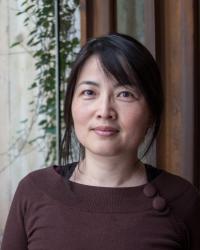
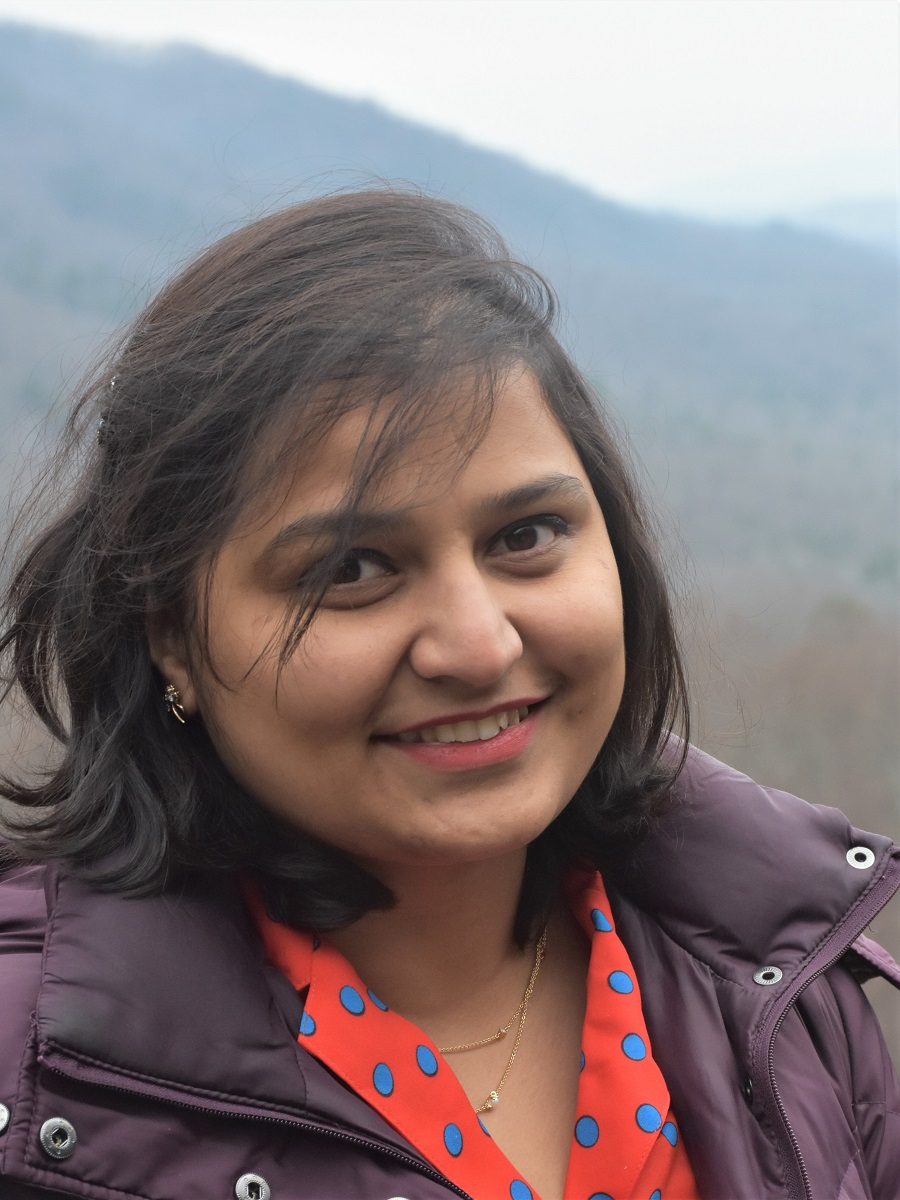
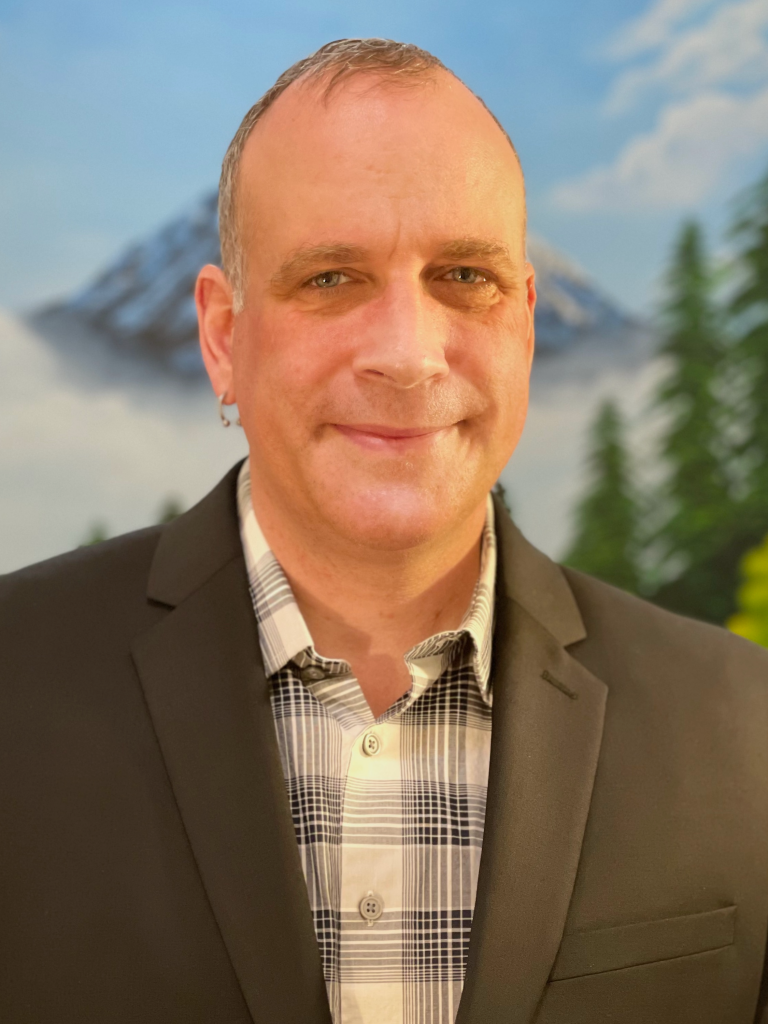
Ping Wang is a Professor in the Department of Asian Languages & Literature at the University of Washington, serving as Graduate Program Coordinator and Graduate Admissions & Education Committee Chair. They hold a Ph.D. in Chinese Language and Literature from the University of Washington (2006). Their research focuses on Chinese Intellectual History, Medieval Philology, Poetry and Poetics, and Translation Studies. Recent research trends include interdisciplinary approaches to classical texts and modern translation methodologies. The listed articles highlight contributions to computational linguistics and AI, though primary disciplinary focus remains humanities. No specific awards are listed, though the department's 'Awards & Honors' page may contain institutional recognitions. Advising emphasizes graduate education coordination rather than individual student mentorship. Active in departmental administration and curriculum development. Research affiliations include the Bilingual and Biliteracy Research Lab and the Early Buddhist Manuscript Project. Office located in GWN M246 with regular Thursday office hours.
Professor Martin Clayton is a leading scholar in Ethnomusicology at Durham University's Department of Music. He holds a BA in Music/Hindi (SOAS, 1988) and a PhD in Ethnomusicology (SOAS, 1993). His work focuses on Hindustani classical music, rhythmic analysis, and embodied musical interaction. He has directed major research projects like the EU-funded EnTimeMent and AHRC-funded 'Interpersonal Entrainment in Music Performance.' Clayton is a Fellow of the British Academy (2020) and former editor of the British Journal of Ethnomusicology. His research explores cross-cultural musicology, computational analysis of performance, and rhythmic entrainment across global traditions. Education: Bachelor of Arts in Music and Hindi (SOAS, University of London, 1988) Doctor of Philosophy in Ethnomusicology (SOAS, University of London, 1993) Research Interests: Clayton’s work bridges ethnomusicology with computational methods, focusing on rhythmic structures in Indian classical music, embodied performance practices, and cross-cultural musical interactions. His studies analyze gesture-sound relationships, temporal frameworks in rag performance, and the social dimensions of musical entrainment. Recent projects integrate machine learning and computer vision to classify ragas and analyze performer movements in ensemble contexts. Publications Overview: His 15+ years of research span theoretical works (e.g., Time in Indian Music , 2000), edited volumes (e.g., Experience and Meaning in Music Performance , 2013), and interdisciplinary studies combining ethnography with computational analysis. Recent work emphasizes multimodal data collection to study synchronization in global music traditions, including Japanese gagaku and Indian khyal. Awards: British Academy Fellowship (2020), Leverhulme Trust Major Research Fellowship Advising & Grants: Supervised doctoral students focusing on Indian music, global guitar practices, and embodied music interaction. He led a £1.2M AHRC grant (2016–2018) on interpersonal entrainment and co-investigated projects on Khyal music and South Asian cultural networks. Labs/Teams: Collaborates with interdisciplinary teams on projects like the Interpersonal Entrainment in Music Performance (IEMP) initiative, developing tools such as the movementsync R package for synchrony analysis. Active in global music research networks, including ESEM and the British Forum for Ethnomusicology.
Prof. Kira Weber is an Assistant Professor at the University of Hamburg 's Faculty of Education . Her research focuses on AI-driven feedback systems in education, teacher professional development, classroom management, and educational technology adoption. She leads studies analyzing the impact of prompt engineering on AI feedback quality and investigates how teacher educators' AI literacy influences pedagogical practices. Her work bridges educational psychology with technological innovation, emphasizing video-based interventions and peer feedback mechanisms. Her research explores topics such as the role of self-efficacy beliefs in AI tool adoption among student teachers, the effects of expert feedback on pre-service teachers' competencies, and the influence of socioeconomic factors on teacher professional development needs. She has published extensively on professional vision measurement, reflective practice in teacher training, and digital tools for feedback quality enhancement. Recent studies include analyses of LLMs in educational feedback (2025), mixed-methods investigations of teacher educators' AI literacy (2024), and longitudinal studies on peer feedback expertise development (2022–2023). Her work consistently emphasizes practical applications of research in teacher training programs and classroom settings. Prof. Weber's academic contributions span over 30 peer-reviewed articles since 2017, covering domains from self-concept measurement in primary education to cutting-edge AI applications. She is affiliated with the University of Hamburg's Faculty of Education , contributing to both research and pedagogical innovation.
Dr. Sabirat Rubya is an Assistant Professor in the Department of Computer Science at Marquette University, co-directing the Social and Ethical Computing Lab. Her research focuses on designing mobile health technologies for vulnerable populations at risk of mental health disorders, emphasizing human-centered computing and health informatics. Education: BSc in Computer Science from Bangladesh University of Engineering and Technology (BUET), PhD in Computer Science from the University of Minnesota. Research Interests: Human-Computer Interaction, Social Computing, Health Informatics, and Human-Aided Machine Learning. She explores technologies supporting marginalized communities through participatory design and mixed-method approaches. Publications highlight user-centric evaluations of mental health apps, predictive analytics for veteran crises, and community-based data validation in recovery contexts. Recent work includes a grant from Advancing a Healthier Wisconsin Endowment to commercialize a veteran support app (as co-Investigator). Service: Served as CHI 2021 Late-Breaking Work Program Committee member, PC member for CHI 2022, and Web Co-Chair for CSCW 2023. Holds leadership roles in HCI conferences and lab co-direction. Labs/Teams: Co-directs the Social & Ethical Computing Lab at Marquette, focusing on ethical tech design and health equity.
Swapna Gottipati is a Full-time Associate Professor of Information Systems (Education) and Associate Dean (Undergraduate Education) at the School of Computing and Information Systems , Singapore Management University . Holding a PhD from SMU (2014) , she specializes in text analytics, education technology, and digital business. Current focus areas: Artificial Intelligence, Data Science, Technology-Enhanced Learning Interdisciplinary applications: Health Informatics, Social Media Analytics Research Interests span text analytics, opinion mining, curriculum analytics, and digital transformation. She applies machine learning and data mining to educational systems, business processes, and health domains. Scientific Contributions: 2016 Best Paper Award (AIS SIG-ED) 2016 MOE TRF Grant 2017-2020 Conference Best Paper Nominations 2013 Best Paper Finalist (CIKM) Academic Leadership includes: Director of Undergraduate Education Co-developer of SMU-X pedagogy Founder of MyCompetencies mobile platform Organizer of curriculum analytics workshops Grant Projects include the Learning Analytics on Qualitative Student Feedback system (MOE TRF 2016) and ICDL-funded digital literacy studies. She has delivered 12+ invited talks on digital transformation in education and industry.
Paolo Buono is Associate Professor at the Department of Computer Science, University of Bari Aldo Moro, Italy. He holds a PhD in Computer Science with specialization in Visual Data Analysis. His research focuses on Information Visualization, Visual Analytics, Human-Computer Interaction, and Mobile Applications. Co-founder and CEO of LARE (2010), a university spinoff providing real-time surgical support through audio-video telestration Member (since 2002) and computer science coordinator at METEA Research Center for environmental protection Visiting scientist at AVIZ (France), University of Maryland (USA), and Fraunhofer IPSI (Germany) His work spans multiple application domains including: Cultural Heritage through interactive exploration systems Healthcare with smart therapeutic devices Environmental Monitoring via CET system IoT-based Smart Interactive Experiences He has contributed to: Dynamic hypergraph visualization techniques End-User Development frameworks (EUDroid) Usability evaluation methodologies Mobile health applications As project leader, he has coordinated: EU-funded VisMaster Coordination Action (2008-2010) Italian Ministry-funded LOGIN project (2014-2015) Apulia Region environmental projects His professional engagements include: Co-chair roles at INTERACT, AVI, IS-EUD conferences Program committee participation in VIS series and HCI conferences Member of ACM, IEEE, and SIGCHI Italy
Seth Dillard is an Associate Teaching Professor in the Department of Mechanical Engineering and School of Biomedical Engineering at Colorado State University (CSU). He joined CSU in January 2022, teaching courses such as Introduction to Mechanical Engineering, Finite Element Analysis, Machine Design, and Problem-Based Learning in Biomedical Engineering. He advises Senior Design teams and honors students across both disciplines. In 2023, he introduced new courses including Senior Design and a Berlin-focused Education Abroad program. Education: PhD (2011) and BSE (2004) in Mechanical Engineering from the University of Iowa. He also holds an EMT-P certification (1996) and postdoctoral research experience at the University of Iowa's IIHR from 2011–2014. Research and teaching interests include cardiovascular biomechanics, image-based modeling, energy systems, and applying engineering principles to healthcare. His teaching innovations include courses like Quantitative Systems Physiology and Prosthetics Innovation in Ecuador, blending engineering with global health challenges. Dr. Dillard has received multiple teaching awards, including the College of Engineering Faculty Excellence Award (2020) and four Excellence in Teaching awards from the University of Iowa. He has supervised over 30 students in thesis and design projects and actively participates in academic service roles such as Associate Director of SBME and accreditation committee leadership. His research spans computational fluid dynamics, cardiovascular modeling, and biomedical device design. He has published extensively in journals like Journal of Neurosurgery and Theoretical and Computational Fluid Dynamics, with peer-reviewed conference contributions since 2005.
Igor Molybog is an Assistant Professor at the University of Hawai'i at Manoa, holding joint appointments in the Departments of Electrical and Computer Engineering and Information and Computer Sciences. His research focuses on advancing artificial intelligence, particularly through large language models (LLMs), multimodal modeling, and core machine learning optimization. He leads the HawAII research group, exploring applications like LLM alignment, efficient inference systems, and scaling properties of foundation models. Education: Ph.D. in Engineering from UC Berkeley (2022), specializing in optimization algorithms for complex systems. Previously worked at Meta AI on LLaMa model development. Research Interests: Efficient LLM development and evaluation frameworks Multimodal AI integration (video/audio + text) Scalable optimization for large models Computational efficiency in training/ inference Recent Work: Presented REAL alignment method (2024), developed long-context scaling techniques (2023), contributed to Llama 2 chat models (2023). Collaborates with organizations like Epoch AI on scaling challenges. Teaching: Offers courses in AI, machine learning, and optimization across ECE and ICS departments. Labs/Teams: Leads HawAII Initiative fostering AI collaboration at UH Manoa, organizes paper reading seminars, and hosts technical talks with industry experts.
Dr. Christopher Collins is a Professor of Computer Science at Ontario Tech University, leading the Visualization for Information Analysis Lab (vialab). He holds a PhD from the University of Toronto (2010) and focuses on interdisciplinary research in information visualization, human-computer interaction, and natural language processing. His work addresses challenges in information overload, text analytics, and novel interfaces such as touch, pen, VR/AR. Collins' research has been featured in top-tier venues like ACM CHI and IEEE Transactions on Visualization and Computer Graphics, earning honorable mentions and over $3M in funding as sole PI. He serves on the IEEE VIS Executive Committee and Board of Governors at Ontario Tech University. Education: PhD in Computer Science, University of Toronto (2010) MSc in Computer Science, University of Toronto (2004) BSc (Hons) in Computer Science, Memorial University (2001) Research Interests: Collins' work spans information visualization , pen+touch interfaces , visual analytics , and text-driven systems . He explores how interactive technologies can democratize complex data analysis, particularly in education, healthcare, and creative domains. Recent projects include gaze-driven learning tools, context-aware camera interfaces, and bias-mitigating product review analysis. Awards: ACM CHI Honorable Mention Award IEEE VIS Honorable Mention Award Grants & Impact: Secured $3M+ in research funding. Media coverage includes New York Times and CBS Sunday Morning for innovations in visualization and text analytics. Teaches courses in human-computer interaction, computer graphics, and information visualization. Labs & Collaborations: vialab develops tools like Lexichrome , ConToVi , and NeuroSight . Active in IEEE Visualization and ACM Interactive Media communities. Collaborates with academia and industry globally.
Dr. Farida Cheriet is a Full Professor in the Department of Computer Engineering and Software Engineering at Polytechnique Montréal . She serves as Director of the 4D Imaging and Vision Laboratory (LIV4D) and holds membership in the Institute of Biomedical Engineering and the Institute for Data Valorization (IVADO) . Her research spans medical imaging , biomedical technology , artificial vision , and 3D movement estimation . Ph.D. (Montreal), DEA (France), Ing. (Algeria) Her work focuses on interpretable AI models for retinal pathology diagnosis, 3D anatomical reconstruction from medical imaging, and automated segmentation of vascular and spinal structures. She leads innovations in deep learning applications for diabetic retinopathy screening, coronary artery analysis , and spine surgery planning . Recent publications highlight her leadership in computer vision for biomedical applications, with 15 featured articles covering ICU readmission prediction, retinal vessel analysis, dental crown design, and spinal ultrasound processing. She received CFI funding (2021) for cutting-edge facilities and collaborates on pan-Canadian ophthalmic image databases (2018). Dr. Cheriet has supervised 28 Ph.D. students and 46 Master's students in biomedical computing, including projects on scoliosis analysis, retinal imaging, and cardiac MRI. Her teaching includes digital communications and computer graphics courses.
Dr. Philip Andrew Fisher is the Diana Chen Professor of Early Childhood Learning at Stanford University's Graduate School of Education, with a courtesy appointment in Pediatrics. His work focuses on early childhood interventions, neurobiological impacts of adversity, and translational research bridging science to policy. He leads the RAPID-EC project, a national survey on young children's well-being during the pandemic. Fisher has pioneered evidence-based interventions like TFCO-P, KITS, and FIND, addressing social-emotional development in high-risk populations. Research Interests: Brain plasticity, child development under adversity, scalable interventions, and family resilience. Awards: 2012 Translational Science Award (SPR), 2019 American Psychological Society Fellowship. Key Projects: RAPID-EC, FIND video coaching, and neurodevelopment studies in foster care populations. Collaborations: Wu Tsai Neurosciences Institute, Stanford Accelerator for Learning. His 200+ publications span developmental psychology, neuroscience, and public health. Recent work examines pandemic impacts on families, material hardship, and racial disparities in child outcomes.
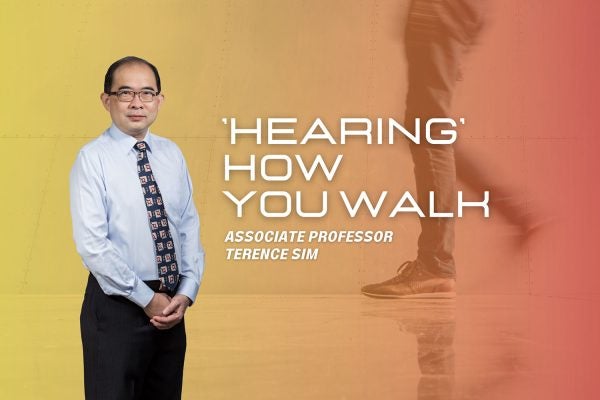
Dr. Terence Sim Mong Cheng is an Associate Professor at the Department of Computer Science within the School of Computing, National University of Singapore . He serves as Vice Dean for Admissions and previously held Vice Dean roles for Communications and Second Vice President of the International Association for Pattern Recognition. His academic journey includes degrees from MIT, Stanford, and Carnegie Mellon University. Ph.D. in Electrical & Computer Engineering (Carnegie Mellon University) M.S. in Computer Science (Stanford University) S.B. in Computer Science & Engineering (MIT) His research focuses on Biometrics and Visual Computing , spanning Deepfake synthesis/detection , Facial image analysis , Continuous authentication , and Multimodal biometrics . He integrates machine learning with physics-based modeling to address complex challenges in these domains. Recent publications highlight advancements in deepfake detection (2023), multi-task learning (2022), and gait-based authentication (2020-2022). These works intersect biometrics, privacy, and machine learning. Face and Gesture 2017 : Test of Time Award Computer Analysis of Images and Patterns 2017 : Best Paper Award NUS Faculty Teaching Excellence Award (2003, 2005) Temasek Young Investigator Award (2005) Dr. Sim has taught diverse courses including Biometrics Authentication , Computer Vision , and Discrete Structures . He provides biometric consultancy in areas like technical assessments and feasibility studies .
Francis Jones is an Honorary Lecturer (retired) at the University of British Columbia's Department of Earth, Ocean and Atmospheric Sciences (Faculty of Science). He volunteers in roles supporting geoscience education and outreach, focusing on curriculum development, educational technology, and public engagement. His work includes coordinating the OCESE and QuEST projects to enhance quantitative geoscience education, developing open-source educational resources, and improving online and in-person teaching practices. Research interests center on geoscience education innovation, including curriculum redesign, assessment strategies, and bridging geophysics research with educational practice. He collaborates with institutions like the Pacific Museum of Earth (PME) to create accessible learning resources and has advised on geoscience programs at the University of Central Asia. Recent activities include evaluating teaching initiatives through multi-source data (student/instructor/observer inputs), designing interactive online labs, and promoting science literacy among non-science students. Jones emphasizes transfer of geophysical research techniques into education and industry, with a focus on fostering computational and quantitative skills in undergraduate programs. Key collaborations involve the PME, UBC's EOAS department, and international partnerships like the University of Central Asia. His work integrates pedagogical research with practical educational development, aiming to modernize STEM education through technology and community-driven approaches.
Dr. Chamith Wijenayake is a Senior Lecturer - Teaching Focused at the School of Electrical Engineering and Computer Science, University of Queensland. He holds a PhD in Electrical and Computer Engineering from the University of Akron (2014) and a BSc (Hons) in Electronic and Telecommunications Engineering from the University of Moratuwa, Sri Lanka (2007). His research focuses on multidimensional signal processing, digital hardware architectures, FPGA-based systems, machine learning accelerators, and engineering education. He has received notable awards, including the 2011 Outstanding Student Research Award and the 2014 IEEE Circuits and Systems Pre-Doctoral Award. Education: BSc (First Class Honours) from University of Moratuwa (2007), PhD from University of Akron (2014). His doctoral work contributed to advancements in signal processing and hardware architectures. Research interests span multidimensional signal processing, FPGA-based system design, and engineering education innovations. He develops low-complexity algorithms for light field processing and multidimensional filters for imaging, sensing, and biomedical applications. His work emphasizes practical implementations in hardware accelerators and educational technologies. Outstanding Student Research Award, University of Akron, 2011 IEEE Circuits and Systems Pre-Doctoral Award, 2014 Teaching and Advising: Focuses on blended learning approaches and project-based instruction in electrical engineering. Prior roles include Lecturer at UNSW Sydney (2015–2019). No explicit student advisee records listed. Grants and collaborations are not detailed in provided texts. Labs/Teams: Involved in multidisciplinary projects integrating signal processing with hardware design, though specific lab affiliations are not specified.
Dr. Min Sun is a Professor in the Department of Educational Policy, Organization and Leadership at the University of Washington's College of Education. Her research focuses on teacher learning, AI/ML integration in education, and policy-driven educational reforms. She leads interdisciplinary teams developing AI tools like the NSF-funded Colleague lesson planning platform and the IES-funded AmplifyGAIN Center. Her work addresses inequities in education through policy analysis and partnerships with K-12 schools and EdTech industries. Dr. Sun holds a Ph.D. in Educational Policy and Measurement from Michigan State University. She teaches courses such as EDLPS 302: Intro to Educational Policy and EDLPS 564: Economics of Education. Her research spans four key areas: AI/ML method development, AI-powered educational tools, data science training programs, and policy research with multi-sector collaborations. Notable grants include a $10 million IES grant for the AmplifyGAIN Center and a $1.5 million NSF grant for AI-driven math lesson planning. Her policy work emphasizes equitable education access and data-driven solutions. She directs the Education Policy Analytics Lab (EPAL) and collaborates with stakeholders to translate research into actionable strategies.