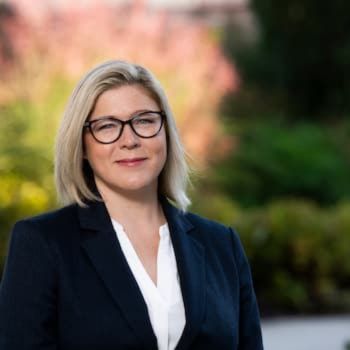
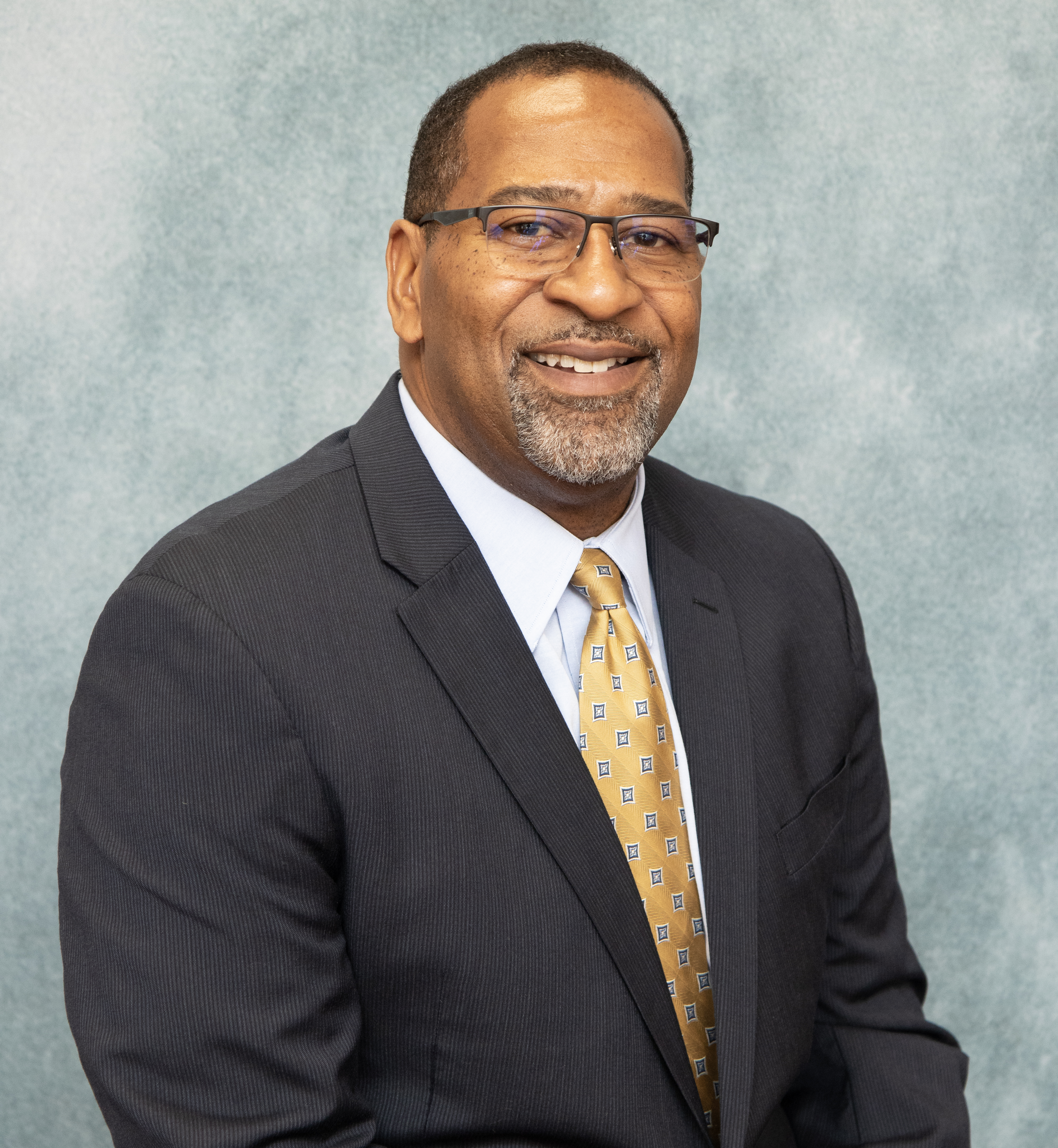
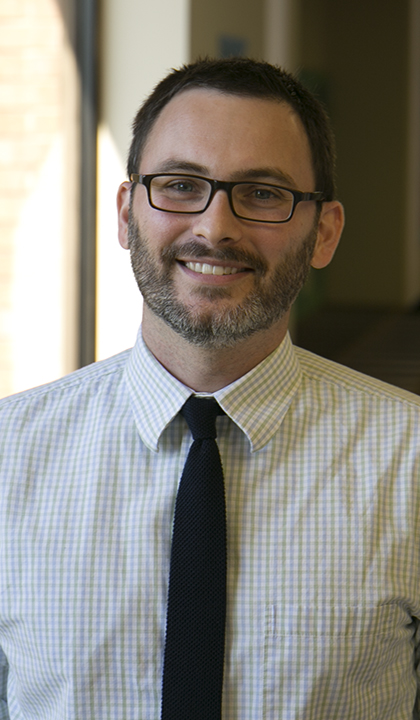
Jennifer Lavoie is an Associate Professor at Wilfrid Laurier University's Faculty of Human and Social Sciences, affiliated with the Department of Psychology and Criminology. She specializes in mental health crisis response, policing strategies, de-escalation techniques, and scenario-based training. Wilfrid Laurier University: Faculty of Human and Social Sciences, Psychology and Criminology Departments Research Interests : Her work focuses on integrating virtual reality and scenario-based training to improve police de-escalation skills. She examines violence risk assessment , correctional systems , and housing first programs for homeless individuals with mental illness. Recent studies address big data governance , cyberstalking victimization , and community-driven policing approaches . Publication Trends : Her research spans mental health policy , police training efficacy , and technological integration in crisis management . She explores virtual reality applications and community co-designed interventions , alongside longitudinal studies on stress and coping mechanisms in correctional and psychiatric settings. Scientific Awards : No scientific awards listed in available data. Advising : Actively supervises students in psychology and criminology, with unlisted advisees. Her work bridges academic research and practical policing applications .
Pardis Emami-Naeini is an Assistant Professor of Computer Science at Duke University, with joint appointments in the Sanford School of Public Policy and the Department of Electrical and Computer Engineering. She serves as the Director of the Duke Interdisciplinary Security, Privacy, and Interaction Research (InSPIre) lab and is a Duke Science and Technology Scholar. Her interdisciplinary work bridges computer science, public policy, and electrical engineering, with a focus on developing usable privacy and security solutions that empower individuals from diverse sociodemographic backgrounds. Dr. Emami-Naeini earned her Ph.D. in Computer Science from Carnegie Mellon University in 2020, followed by postdoctoral research at the University of Washington (2020-2022). Her research sits at the intersection of security, privacy, and human-computer interaction, with particular expertise in IoT security, technology-enabled abuse, reproductive health privacy, and smart city security. She has published extensively at flagship venues including IEEE S&P, CHI, CSCW, and SOUPS, with her work covered by major media outlets such as Wired and The Wall Street Journal. Her recent publications reveal a clear trajectory toward examining the human dimensions of security and privacy in emerging technologies, from LLM chatbots for mental health to social robots and period-tracking apps in the post-Roe v. Wade landscape. Her work consistently emphasizes the need for privacy-aware design that accounts for diverse user needs and contexts, particularly for vulnerable populations. Google Systems and ML Research Gift Award (2025) Google AI Research Scholar Program Award (2024) Top 5% Instructor in Duke Trinity College (2024) ORAU Ralph E. Powe Junior Faculty Enhancement Award (2023) Duke Science and Technology Scholar (2022) IEEE S&P paper highlighted in IEEE Security and Privacy Magazine (2021) CyLab Presidential Fellowship (2019) Dr. Emami-Naeini actively mentors several Ph.D. students including Jabari Kwesi, Jessie Cao, and Hiba Laabadli, as well as undergraduate and master's students. Her research has influenced key organizations including the National Institute of Standards and Technology (NIST), Consumer Reports, and the World Economic Forum in creating usable security and privacy labels for smart devices. She serves on numerous program committees including USENIX Security and CHI, and has participated in NSF grant review panels, demonstrating her growing leadership in the security and privacy community. Her InSPIre lab conducts user-centered research to uncover security and privacy needs of diverse stakeholders, with a particular focus on marginalized communities. The lab's work spans multiple domains including intimate partner violence, reproductive health, virtual reality, and smart cities, always with a strong emphasis on translating research findings into practical tools and policy recommendations.
Dr. Hideko Hamada Bassett is an Assistant Professor at the School of Integrative Studies, George Mason University, specializing in child development, socialization, and interdisciplinary studies. Her research focuses on social-emotional development, emotion socialization, and school readiness in early childhood education. Education: Ph.D. in Applied Developmental Psychology, George Mason University M.S. in General Psychology, University of Memphis B.A. in English, Kansai Gaidai University Her research emphasizes the interplay between executive functioning, emotional competence, and classroom behavior, with a particular interest in cross-cultural comparisons and teacher-child interactions. Recent publications explore themes such as emotion knowledge, self-regulation, and social information processing in preschoolers. Dr. Bassett’s work includes the development of assessment tools like the BRACE Coding System and the Preschool Self-Regulation Assessment, aiming to improve social-emotional learning frameworks. She has contributed to studies examining gender differences, socioeconomic risk factors, and the role of maternal emotion teaching in shaping preschoolers' developmental outcomes. Contact: hhamada@gmu.edu | Office: Enterprise Hall
Professor Philip Birch is a distinguished academic in Criminology at the University of Technology Sydney (UTS), Faculty of Design & Society, School of International Studies & Education. With over 15 years of academic experience across British, American, and Australian university systems, he has established himself as a leading expert in policing, community safety, and criminal justice. His extensive practical background in criminology, including roles as a Specialist Crime Team Manager, Community Safety Research Manager, and Through Care Worker in UK correctional facilities, informs his applied research approach. Professor Birch's educational background includes a BSocSci. (Hons) in Social Policy (Crime & Justice) from the University of Manchester, multiple postgraduate qualifications from the Open University (including an MSc. in Social & Criminological Research Methods), a Post Graduate Certificate in Higher Education Practice from the University of Huddersfield, and a PhD in Criminology from the University of New South Wales. He also holds a Fellowship with the Higher Education Academy. His research centers on six key areas: Police & Policing; Community Safety & Crime Prevention; Prisons, Probation & Parole Policy & Practice; Assessment, Treatment & Management of Offenders; Gender & sexuality inclusive Domestic and Family Violence; and Sex Work, Sex Workers and Procurement. His work emphasizes the practical application of criminological research to real-world justice issues, with strong industry engagement across law enforcement and correctional services. Recent publications reveal a clear trend toward police mental health, aging in policing, hate crime identification, trauma-informed policing approaches, and digital community safety initiatives. His research employs diverse methodologies including qualitative case studies, Delphi methods, rapid evidence assessments, and comparative analyses across multiple jurisdictions. Teaching award (2019) from Australian College of Educators for outstanding contribution to education Literati Award (2019) for published work Fellowship of the Higher Education Academy Professor Birch has supervised numerous Honours, Masters by Coursework, Masters by Research and PhD students in Criminology, Criminal Justice and Policing, with several completions to date. He has secured over $1.3 million in research funding, including an ARC Linkage grant, and has acted as an external assessor for domestic and international funding bodies. His research projects address critical issues in criminology and policing, often with direct policy implications. He established the Crime & Security Science (CaSS) Research Group at UTS in 2022, a cross-faculty initiative connecting academia with industry to advance evidence-based criminology, criminal justice, policing, and community safety research. This group serves as a hub for collaborative projects addressing contemporary security challenges through translational research.
David Shepherd is a Senior Lecturer in the School of Criminology and Criminal Justice at the University of Portsmouth, Faculty of Humanities & Social Sciences. He is a core member of the Centre for Cybercrime and Economic Crime and actively supervises PhD students. His research focuses on white-collar crime, fraud, corruption, organizational compliance, and justice. He employs both quantitative and qualitative methodologies to study offender behavior, fraud measurement, and prevention strategies. His work aligns with the UN Sustainable Development Goals, particularly those related to justice and reduced inequalities. Recent research outputs reveal a strong trend in understanding fraud against vulnerable populations—especially older adults—and evaluating public policy responses. His work also explores economic espionage through social media and systemic fraud in public services. He frequently collaborates with Mark Button and other colleagues on interdisciplinary projects. Emerald Outstanding Paper Award (2018) David Shepherd has contributed to high-impact commissioned reports for the Ministry of Justice, Foreign and Commonwealth Office, and charitable organizations such as Re-engage. He has secured multiple research and innovation grants, often as Co-Investigator, focusing on fraud measurement, victim support, and economic crime. He regularly advises on national policy and has presented findings to the Home Office, INTERPOL, and WIPO. He is actively involved in research dissemination through invited talks and media engagement, emphasizing the societal impact of white-collar crime and digital reintegration challenges for offenders.
Prentice L. White is a Professor and the Associate Vice Chancellor for the Evening Division and Emerging Program at Southern University Law Center. A 1995 alumnus of SULC, he joined the faculty in 2001 after serving as an Assistant District Attorney and Senior Research Attorney, specializing in criminal appellate litigation. Education : B.A. from Xavier University of Louisiana (1991), MBA from University of New Orleans (2001), J.D. from Southern University Law Center (1995). Research interests span Criminal Law , Civil Procedure , Tort Law , and Legal Education , with a focus on Judicial Accountability , Domestic Violence Legislation , and Environmental Tort Law . His publications analyze legal reforms for domestic violence, judicial immunity, plea negotiations, and environmental liability. Notable trends in his articles include critiques of judicial discretion in criminal justice, advocacy for victim compensation in ecological disasters, and pedagogical approaches to legal education. His work bridges Legislative Analysis , Civil Rights , and Legal Ethics . Professional Background : He teaches courses such as Civil Law Property , Criminal Procedure , and Advanced Legal Writing , leveraging his experience in state and federal appellate courts.
Kate Garbers serves as a Rights Lab Visiting Fellow within the Health and Communities Programme at the University of Nottingham, focusing on evidence generation for anti-slavery policy frameworks through collaborations with the Office of the Independent Anti-Slavery Commissioner and the Anti-Slavery Commissioner's office. Her research critically examines modern slavery survivor rehabilitation , emphasizing the socio-economic impact of employment access for victims and re-trafficking risks in the UK. Key projects include Access to Work for Victims of Slavery and Trafficking and Hope at Home , which analyze systemic barriers to survivor recovery and policy-driven solutions for victim support services. As Founder and former Director of the anti-slavery NGO Unseen, she spearheaded operational strategy for survivor support services while liaising with law enforcement and governmental bodies to advance trafficking intervention protocols. Her work bridges academic research with frontline anti-slavery practice through the Rights Lab’s interdisciplinary framework.
Jacqueline Woerner is Associate Professor in Sociology and Psychology at the University of Central Florida, where she directs the Social Theory, Relationships, and Interpersonal Violence Exposure (STRIVE) Lab. Her research examines the intersection of gender-based violence, substance use, and health risk behaviors. Education includes: PhD in Social Psychology from Wayne State University BS in Psychology from Appalachian State University Her NIH-funded research investigates how violence victimization relates to health behaviors through motivational frameworks. Current projects examine technology-facilitated sexual violence on dating apps and alcohol's role in intimate partner cyber abuse. She employs diverse methods including surveys, experiments, and daily diaries. As member of the Violence Against Women Faculty Cluster, she develops prevention strategies addressing sexual violence and health disparities. Funded projects include NIJ grants examining transitional housing models for domestic violence survivors. Honors include Rising Star Award for undergraduate mentoring and multiple teaching awards. She serves on editorial boards for Psychology of Violence and leads NIH-funded projects on dating app-facilitated violence.
Sveinung Sandberg is a Professor at the Department of Criminology and Sociology of Law, University of Oslo. His research spans marginalization, illegal drug markets, radicalization, and narrative criminology, combining theoretical frameworks from Bourdieu and narrative analysis. Academic Interests: Marginalisation, Legal & Illegal Drugs, Violence, Radicalization, Bourdieusian Criminology, Narrative Criminology, Latin American Studies, Social Movements Education: PhD from University of Bergen Research Focus includes: Street capital theory in criminology Drug market cultural dynamics Narrative approaches to extremism Latin American criminal trajectories Recent Publications examine pandemic-related crime shifts, gendered drug use patterns, and narrative mechanisms in criminal justice. His 2021-2025 projects Radicalization and Resistance and Crime in Latin America (CRIMLA) involve cross-country life-story analyses. Scientific Awards: Fridtjof Nansen's Award for Young Researchers (2011) The Meltzer Prize for Young Researchers (2010) Editorial Roles include board memberships at Theoretical Criminology , Deviant Behavior , and International Criminal Justice Review . He has conducted fieldwork in Mexico and held visiting positions at institutions including CIDE (Mexico City) and European Monitoring Centre for Drugs and Drug Addiction (Lisbon).
Prof. Dr. Andreas Zick is a leading scholar at Bielefeld University, serving as Scientific Director of the Institute for Interdisciplinary Conflict and Violence Research (IKG) and Professor for Socialization and Conflict Research at the Faculty of Education. He also co-leads the ConflictA initiative since 2023 and contributes to migration education through the Faculty of Education. 2008: Professor for Socialization and Conflict Research, Bielefeld University 2013: Director of IKG 2023: Scientific Head of ConflictA His research focuses on intergroup conflicts , group-based antipathy , right-wing extremism , radicalization , and socialization processes . He investigates spatial dimensions of radicalization, societal integration challenges, and prejudice dynamics through comparative studies. Recent publications analyze radicalization spaces (2024-2025) using spatial sociology, democratic conflict perceptions (2025), and cross-cultural prosocial behavior during pandemics. Key methods include ethnography, longitudinal surveys, and multi-perspective comparative analysis. Scientific contributions recognized by: Communicator Award (2016) Nevitt Sanford Lifetime Award (2022) Active in public policy as member of the Federal Agency for Civic Education's advisory board and Federal Commissioner's Antiracism Expert Council. Leads major projects on radicalization prevention and spatial conflict dynamics with national/international partners.
Angela Book is a Professor in the Department of Psychology at Brock University. She holds a Ph.D. from Queen’s University and specializes in Forensic Psychology, with a focus on psychopathy and its relationship to victim selection, emotion perception, and deceptive behavior. Her research explores how psychopathic traits influence vulnerability judgments and social manipulation. She is affiliated with Brock’s Psychology Department and has contributed extensively to forensic assessment methodologies and youth psychopathy research. Education: Ph.D. in Psychology, Queen’s University Research Interests: Forensic Psychology, psychopathy, emotion perception, victim selection, deception detection, vulnerability assessment. Grants & Advising: No specific grants or advisee records explicitly mentioned in the provided text. Labs/Teams: Not explicitly detailed in the text, though her work aligns with forensic and clinical psychology research groups at Brock.
Claire Zalc is a CNRS Research Director and Director of Studies at École des hautes études en sciences sociales (EHESS), with affiliations to the Institute of Modern and Contemporary History (IHMC), the Centre de Recherches Historiques (CRH), and the GLOBAL department at the Institut Convergence des Migrations. Her work bridges migration history, Holocaust studies, and quantitative methodologies. Her research focuses on the intersection of migration and persecution in the 20th century, particularly through prosopographical studies like Face à la persecution (2010) and Dénaturalisés (2016), which examine administrative interactions under the Vichy regime. She also explores the use of quantitative methods in historical research, co-authoring Quantitative Methods. An Introduction (2019). Recent projects, such as the ERC Consolidator LUBARTWORLD (2019–2025), analyze transnational mobilities and persecution through case studies in Lubartów and other locations. Key themes in her publications include Vichy-era denaturalization , Polish Jewish migrations , and microhistories of the Holocaust . Her work often integrates spatial analysis and relational data frameworks, as seen in contributions to sequence analysis and social network studies. Scientific Distinctions : Bronze Medal of the CNRS (2013) Prix Malesherbes d’histoire de la Justice (2017) Finalist, Eugen Weber Book Prize (2022) Prix André Conquet for Melting Shops (2010) She co-edits the journal Revue d’histoire de la Shoah and previously co-directed the Histoire-Repères collection at La Découverte (2008–2021). Her methodological expertise has shaped training programs at EHESS and collaborative research initiatives like PERSI (Internet Social Networks Study Program) and relational data analysis.
Catherine White Berheide is the Tisch Family Distinguished Professor and Professor of Sociology at Skidmore College , focusing on work and occupations, organizations, and women's studies. She holds a Ph.D. and M.A. from Northwestern University and a B.A. from Beloit College . Education Ph.D., M.A. – Northwestern University B.A. – Beloit College Her research explores faculty work-life balance, gender disparities in academia, pandemic impacts on academic productivity, and household labor dynamics. Key themes include: Faculty well-being during crises Gendered division of labor Family-friendly institutional policies Academic career barriers for women Intersectional analysis of race and gender in teaching Recent work analyzes: Emotional labor disparities during remote teaching Career trajectory obstacles in liberal arts colleges Gendered work-life conflict patterns She has contributed to curriculum development through Senior Seminar in Sociology and studies institutional diversity initiatives.
William O'Donohue, Ph.D., is a Professor in the Department of Psychology at the University of Nevada, Reno (UNR), within the College of Science. He holds advanced degrees in both clinical psychology (Ph.D., SUNY Stony Brook) and philosophy (M.A., Indiana University). His research focuses on forensic psychology, sexual assault, evidence-based practice, and the philosophy of psychology. He has directed a NIJ-funded clinic for 27 years, providing free services to victims of sexual abuse, and secured over $3 million in grants. He has authored 90 books and 300+ publications, serving on key committees like the APA's DSM revision panel. Education: Ph.D. in Psychology, SUNY Stony Brook (1986) M.S. in Psychology, SUNY Stony Brook (1982) B.S. in Psychology, University of Illinois (1979) M.A. in Philosophy, Indiana University (1988) Research Themes: His work critically examines forensic interviewing protocols, ideological bias in psychology, and the scientific validity of therapeutic practices. He advocates for procedural justice in psychological practice and challenges social justice movements' methodological rigor. Grants & Clinical Work: His clinic's NIJ grant supports free services for sexual abuse victims. He has consulted for the U.S. military and legal professionals on evidence-based practices. Labs/Teams: Operates a long-term clinical research program focused on forensic assessment and victim support through his UNR clinic infrastructure.
Jesse J. Helton, Ph.D., is an Associate Professor in the School of Social Work at Saint Louis University, where he has been since 2014. His research focuses on child maltreatment, adverse childhood experiences (ACEs), food insecurity, and disability, with notable work published in JAMA Pediatrics , Child Maltreatment , and Preventative Medicine . He holds editorial roles at the Child Maltreatment journal and serves on the Prevention Committee of the American Professional Society on the Abuse of Children. Dr. Helton’s community partnerships address child abuse prevention, food security, and family violence mitigation in collaboration with statewide and local organizations. Education: Ph.D. in Social Work, University of Illinois; M.A. in Social Work, University of New Hampshire. Research Interests: Dr. Helton’s work explores intersections between childhood trauma, socioeconomic factors, and health outcomes. Key themes include the impact of food insecurity on caregiver-child dynamics, disparities in ACEs among marginalized groups, and policy interventions to reduce maltreatment. His studies often employ mixed-methods approaches, combining quantitative data analysis with qualitative insights from affected communities. Awards: Recipient of the 2020 Association of Jesuit Colleges Leadership Institute award, 2018 Outstanding Young Alumni from Eureka College, and a 2014 Innovative Teaching Fellowship from SLU’s Reinert Center. Teaching: Courses include Principles of Statistics and Data Analysis , Research Methods for Diverse Societies , and Science of Helping . He emphasizes evidence-based practices and culturally responsive pedagogy. Labs/Teams: Collaborates with multidisciplinary teams across universities and NGOs, focusing on translational research to inform child welfare policies and community programs.