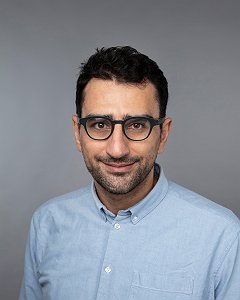
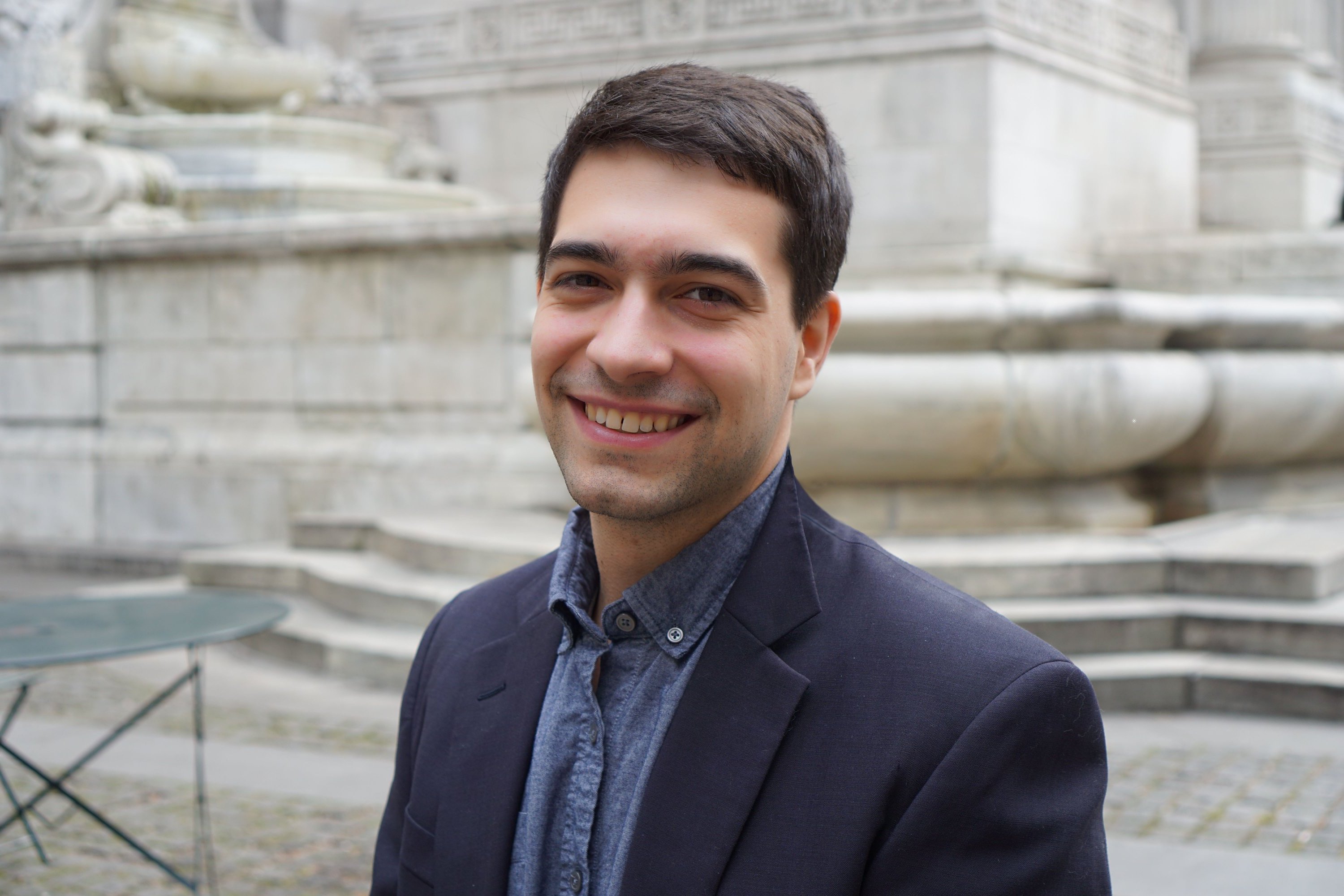
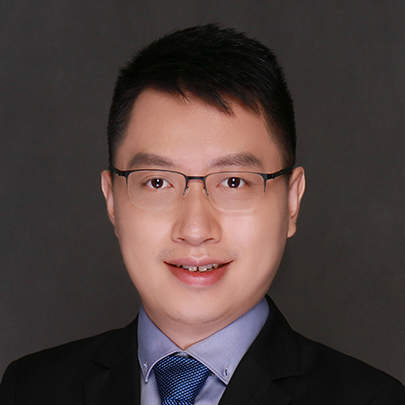
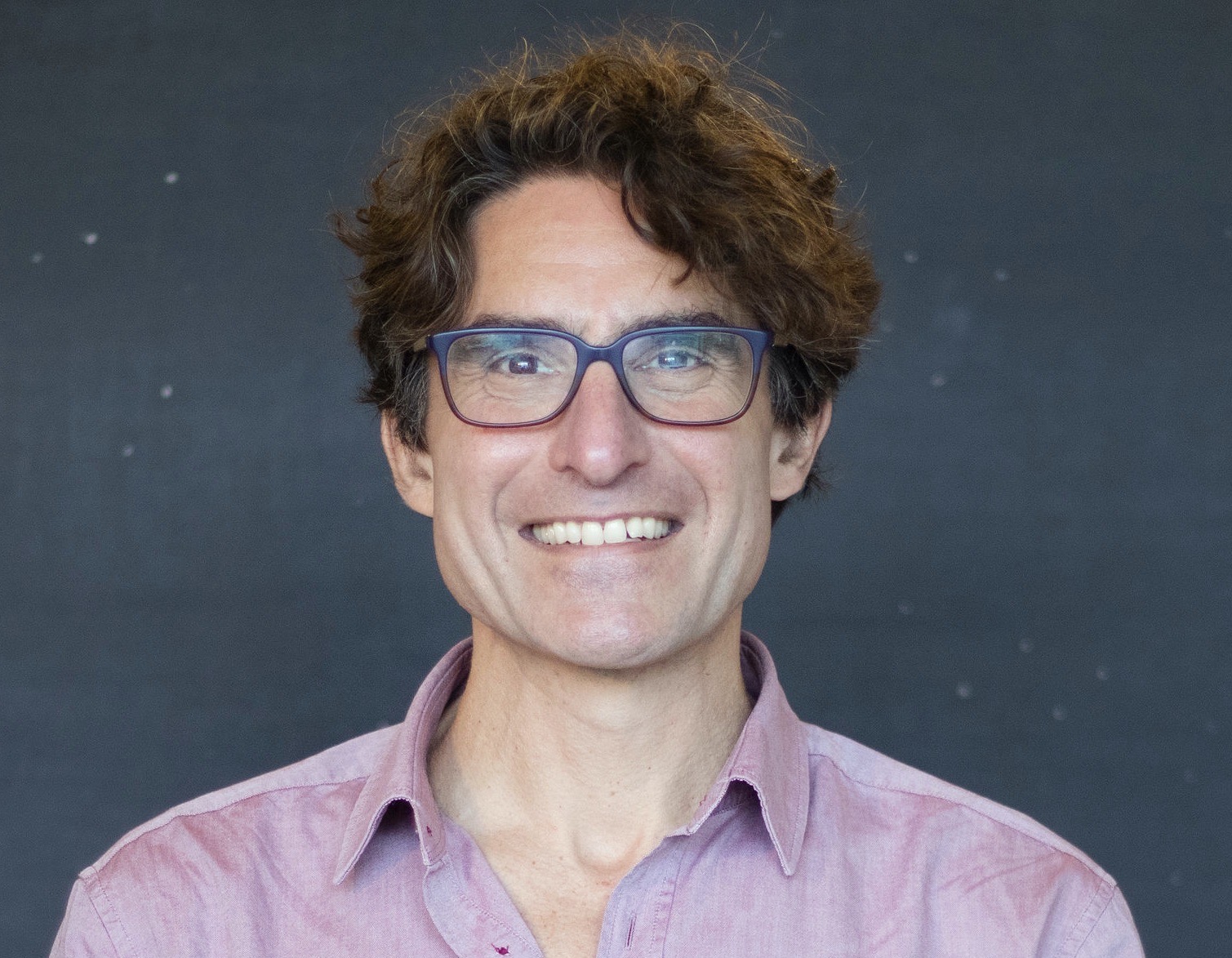
Morris J.J. Weimerskirch is a Tutor affiliated with the University of Vienna and FH Technikum Vienna. He is involved in academic programming education, specifically teaching Programming for Physicists at the University of Vienna and conducting a Warm-Up course in Electronics at FH Technikum Vienna. His work focuses on developing computational skills for STEM students through structured coursework and practical exercises. He maintains an active educational portal with course materials covering topics like Python programming, version control systems (VCS), and object-oriented programming concepts demonstrated through projects like a Connect4 game implementation. His instructional resources emphasize systematic debugging, software development cycles, and configuration management using tools like Neovim and Jupyter. No academic awards or formal research publications are explicitly mentioned in the provided materials. His current roles involve curriculum development and student mentoring in computational physics and electronics education.
Pieter François is Professor of Cultural Evolution at the University of Oxford and a Tutorial Fellow in Human Sciences at Regent’s Park College. He is also the Academic Lead on Data Science and AI for the Arts and Humanities at the Alan Turing Institute and serves as Executive Director of the Seshat: Global History Databank. He leads major interdisciplinary projects including 'Data/Culture: Building Sustainable Scholarly Communities' and the Freedom of Religion or Belief Leadership Network. His research centers on cultural evolution , social complexity , and historical dynamics , with specific interests in ritual, warfare, inequality, and religious tolerance. He develops and applies methodologies for large-scale collaborative research in the digital humanities, leveraging structured historical data to test theories about societal development and collapse. His recent publications highlight a growing focus on artificial intelligence and historical reasoning , particularly through the HiST-LLM benchmark, which evaluates LLMs on PhD-level historical knowledge. These works reveal a trend toward integrating computational methods with deep historical analysis, emphasizing empirical validation and cross-cultural comparison. Scientific contributions and leadership roles include: Founding Director and Executive Director, Seshat: Global History Databank Principal Investigator, AHRC-funded 'Data/Culture' project Academic Lead, AI for Arts and Humanities, Alan Turing Institute Co-leader, Social Complexity and Collapse Group, Complexity Science Hub (CSH) He actively mentors researchers and leads collaborative teams across institutions, fostering sustainable scholarly communities around humanities datasets and software. His work is supported by major grants and involves extensive international collaboration, with future research likely to expand AI applications in historical sciences and deepen understanding of societal resilience and transformation. He is affiliated with key research groups such as the Social Complexity and Collapse Group at the CSH and contributes to major workshops and public-facing science communication, as seen in recent press coverage on AI and history.
Paweł Garbacz is an Assistant Professor at the Department of Computer Science Fundamentals within the Faculty of Philosophy at the Catholic University of Lublin. His work bridges formal logic, ontology, and their applications in computer science and philosophy. He has authored two books: Sentence Logic - One or Many and Logic and Artifacts . Research Focus: Formal logic, computational ontologies, philosophy of technical artifacts, and semantic interoperability. Publications: His recent work explores identity criteria, temporal logic, and the intersection of metaphysics with artificial intelligence. Collaborations: Active in interdisciplinary projects connecting philosophy with computer science, including contributions to the FOIS (Formal Ontology in Information Systems) conference series.
Aleksa Iričanin is a doctoral student and teaching assistant at the Department of Information Technologies, Faculty of Technical Sciences Čačak, University of Kragujevac. His academic career began during his master's studies, and he has been actively contributing to research in software engineering, machine learning, and data privacy. Education: Bachelor's and Master's degrees in Information Technology from Faculty of Technical Sciences Čačak Currently pursuing PhD in the same program Research Interests: Focused on code churn analysis, privacy-preserving machine learning, and horizontal scaling of PHP applications. His work integrates artificial intelligence with software maintenance and data privacy techniques like differential privacy. Publications: Recent articles explore trends in predictive modeling for software development, ethical AI frameworks, and cloud computing solutions for web applications. Contact: Office No. 025, Faculty of Technical Sciences Čačak, Svetog Save 65, Čačak, Serbia.
Aslan Askarov is an Associate Professor at Aarhus University, affiliated with the Department of Computer Science. His research bridges computer security and programming languages, focusing on formal methods for robust security guarantees. Current Projects : Troupe: A programming language for concurrent/distributed programming with dynamic information-flow control DenIM: Protocol for secure instant messaging with metadata privacy Teaching : Fall 2024: Compilers course Spring 2024: Language-Based Security course (link to 2023 version) His recent publications highlight trends in programming language security, formal verification of virtual machine safety, oblivious execution for reactive systems, and foundational work on noninterference and declassification. These align with subfields like separation logic, metadata privacy, type systems, and traffic analysis. Professional activities include program committee roles for PLDI 2025, CSF 2025, and prior conferences including PriSC, POST, and PLAS. He also co-chaired FCS 2017 and Nordsec 2019.
Miguel Ángel Conde González is a Professor at the Department of Mechanical, Computer and Aerospace Engineering at the University of León. His research focuses on Educational Technology , Learning Analytics , Robotics in Education , and Human-Computer Interaction . He leads the Robotics Research Group at ULE, emphasizing STEAM integration and Computational Thinking development through physical devices and robotics. PhD in Education from University of Salamanca (2012) Co-founder of SNOLA (Spanish Network of Learning Analytics) Key contributor to the RoboSTEAM Erasmus+ Project His research spans Learning Analytics (team-based assessment, student interaction analysis), Educational Robotics (haptic simulators, STEAM skills), and Technology-Enhanced Pedagogy (flipped classroom, peer review techniques). Google Scholar articles between 2021-2024 show his focus shifting toward Generative AI applications , 3D-printing in robotics education , and inclusive learning analytics for students with disabilities. Scientific contributions include systematic literature reviews on Challenge-Based Learning and Virtual Laboratories , with methodological innovations in Stochastic Modeling and Cloud Computing for Education . He has co-authored works on Telegram-based teamwork analysis and version control systems in academic assessment .
Dr. Kaan KURTAL is an Associate Professor in the Software Engineering Department at the Faculty of Engineering, Izmir University of Economics. With over two decades of experience in both industry (1982-2002) and academia, he serves as the Erasmus Department Coordinator and previously held roles as Computer Engineering Department Coordinator (2017-2020) and various administrative positions including Institute Manager and Deputy Institute Manager at Izmir University of Economics from 2002-2014. His research interests focus on software engineering, software quality, software maintenance, logistics information systems, e-business, health informatics, and context-aware systems. Dr. Kurtel has made significant contributions to context-aware architectures, software measurement frameworks, and IoT applications, with his publications receiving numerous citations across various domains including software engineering, healthcare systems, and smart building technologies. His recent research (2023-2024) shows a strong trend toward AI-enhanced software testing methods, particularly in mutation testing, while maintaining his longstanding focus on context-aware systems for healthcare and logistics applications. His work bridges theoretical software engineering concepts with practical implementations in medical settings, laundry management, and IoT ecosystems. Teaching Scholarship - Erasmus Mundus, Reliable Software Systems Master Program (2015-2016) Teaching Scholarship - Erasmus Mundus, Reliable Software Systems Master Program (2014-2015) Teaching Scholarship - Erasmus Mundus, Reliable Software Systems Master Program (2013-2014) Dr. Kurtel has supervised multiple graduate theses including Serhat Uzunbayır's PhD on mutation testing and several master's theses on context-aware applications and software maintenance. He has participated in numerous research projects funded by TÜBİTAK, KOSGEB, and European Union programs including LEONARDO DA VINCI, with project topics ranging from veterinary diagnostic support systems to context-aware service platforms. His academic service includes roles as TÜBİTAK ARDEB-EEEAG research project evaluation panelist and KOSGEB R&D Council member.
Reid Holmes is a Professor in the Department of Computer Science at the University of British Columbia , part of the Faculty of Science . His research focuses on improving software engineering practices, particularly in end-user programming, developer tool design, and empirical software engineering. He leads the Software Practices Lab and has contributed extensively to understanding developer workflows, testing methodologies, and educational tools for programming. Education: PhD in Computer Science, University of Calgary (2008) MSc in Computer Science, University of British Columbia (2004) BSc in Computer Science, University of British Columbia (2002) Research Interests: End-user programming environments, software testing, developer productivity tools, human-centered AI, educational technology, and empirical studies on software development practices. His work emphasizes bridging the gap between theoretical advancements and practical usability for both professional developers and novice programmers. Recent Article Trends: Focus on hybrid programming environments (e.g., block-based and graph-based systems), human-AI collaboration in testing/assertion generation, and age-inclusive IDE design. His research often involves empirical evaluations of tool effectiveness and developer workflows. Awards: FSE Most Influential Paper Award ICSE Most Influential Paper Award UBC Computer Science Teaching Award CS-Can/Info-Can Outstanding Research Prize Advising & Grants: Supervised over 30 graduate students and postdocs. Noted for collaborative projects with industry partners (e.g., Mozilla, Microsoft). Active in curriculum development for software engineering education. Labs/Teams: Leader of the Software Practices Lab , collaborating with industry and academic partners on tools like CodeShovel , AutoAssert , and Devy (conversational developer assistant).
Dr. Philip Langer is a researcher at TU Wien's Institut für Information Systems Engineering, part of the Faculty of Informatics. His work focuses on model-driven engineering, semantic model differencing, and cloud-based software modernization. He contributed to frameworks like GLSP, ARTIST, and xMOF, emphasizing tool integration and collaboration in modeling environments. Research Areas: Model transformation, UML semantics, cloud migration, and search-based optimization Key Projects: ARTIST (cloud migration), GLSP (web modeling tools), xMOF (formal semantics) Publications highlight advancements in model differencing using execution traces, multi-objective model merging (MOMM), and semantic visualization techniques for web-based IDEs. His work bridges theoretical foundations with practical tool development, addressing challenges in collaborative modeling and legacy system modernization. Awards: No specific prizes mentioned, but recognized through prolific conference contributions and framework development. Grants/Advising: He collaborates extensively with peers like Tanja Mayerhofer and Manuel Wimmer, though specific grants or student advisement details are not explicitly stated. His research impacts both academic and industrial software engineering practices.
Christopher McComb is an Associate Professor in the Department of Mechanical Engineering at Carnegie Mellon University's College of Engineering. He leads research in sociotechnical systems, machine learning for engineering design, and human-AI collaboration. He is affiliated with the Block Center for Technology and Society, Manufacturing Futures Institute, NextManufacturing Center, and Wilton E. Scott Institute for Energy Innovation. Previously, he was an assistant professor at Penn State, where he directed the Center for Research in Design and Innovation and led the Technology and Human Research in Engineering Design Group. Ph.D., Mechanical Engineering, Carnegie Mellon University M.S., Mechanical Engineering, Carnegie Mellon University B.S., Civil Engineering and Mechanical Engineering, California State University-Fresno His research centers on human-AI teaming , sociotechnical systems , and computational design , with applications in additive manufacturing, STEM education, and energy systems. He explores how machine learning can enhance engineering design processes, particularly through human-centered AI, generative design, and agent-based modeling. His work emphasizes the integration of human cognition and behavior into AI systems to improve collaboration and innovation. The 15 most recent publications (2025) demonstrate a strong trend in AI-driven design automation , neural surrogate modeling , human-AI interaction , and data generation for engineering simulations . Topics span from using large language models for material selection and design concept generation to developing datasets and benchmarks for advanced manufacturing and CAD systems. There is a clear emphasis on real-world applications in aerospace, finance, and global manufacturing, particularly in Africa. National Science Foundation Graduate Research Fellow McComb has received research funding from NSF, DARPA, and private corporations, and has collaborated with Boeing through their Visiting Professorship Program. He advises students in mechanical engineering and design, and leads the Human+AI Design Initiative and the Design Research Collective. His research has been applied in partnerships with NASA and in addressing manufacturing challenges in Africa. He leads or contributes to interdisciplinary research teams focused on AI in design, additive manufacturing, and energy systems. His labs and initiatives include the Human+AI Design Initiative and the Design Research Collective, which foster collaboration between human-centered design and artificial intelligence.
Mark Santolucito is an Assistant Professor of Computer Science at Barnard College, Columbia University. He holds a PhD in Computer Science from Yale University, where his research focused on program synthesis and computer music. His current work explores program synthesis techniques to enhance programmer productivity, particularly in lowering barriers to entry for underrepresented groups and optimizing workflows for advanced developers. He leads the Barnard PL (Programming Languages) Labs, which develops tools like TSL (Temporal Stream Logic) for synthesizing reactive systems and analyzing infrastructure-as-code (IaC). His research intersects formal methods with creative applications in music and live coding, emphasizing accessibility and usability. Education: PhD in Computer Science (Yale University), focusing on program synthesis and computer music. Research interests include program synthesis, temporal logic specifications, infrastructure configuration analysis, and music technology. He emphasizes human-centered design in his work, aiming to make programming more accessible through tools like TSL and interactive synthesis environments. Projects include TSL Move Cube, Block-based Editor for Temporal Logic, and Spiral Analysis for medical software migration. Notable contributions include developing TSL synthesis pipelines, optimizing Arduino configurations, and exploring static analysis for cost prediction in cloud deployments. His work bridges theoretical foundations with practical applications in both software engineering and creative computing. Labs/Teams: Leads Barnard PL Labs, collaborating on projects like TSL Synthesis Engine and Static Analysis for IaC. Active in workshops such as SEConfig and FMCAD.
Yi Li is an Associate Professor at the College of Computing and Data Science (CCDS) , Nanyang Technological University (NTU) , focusing on the security, reliability, and sustainability of modern software systems. Their work bridges blockchain-based decentralized applications and software evolution management. Research Interests : Sustainability of evolving software systems, security/reliability of blockchain applications, semantic history slicing, and compositional analysis. Academic Roles : Associate Professor (2024–Present), Assistant Professor (2018–2024) at NTU, and research internships at Google and Microsoft Research . Scientific Awards : Distinguished Paper Award at NDSS'25 ACM SIGSOFT Distinguished Paper Award at ASE'23 Professional Activities : Co-Chair, Journal-First Track at FSE'25 and APSEC'25 Program Committee roles at ICSE, FSE, ASE, FM, and others (2016–2025) Organizing and reviewing for IEEE/ACM journals Key Publications : 2025: ICSE (SpecGen), FSE (invariant analysis), ISSTA 2024: INFOCOM (LightCross), ASE, ACM Computing Surveys 2023–2014: SPLC, ASE, FM, Dagstuhl Reports Student Advising : Chenguang Zhu (UT Austin, advisor Sarfraz Khurshid), Tai D. Nguyen (SMU, advisor Jun Sun).
Dr. Matthew Pocock is a Research Fellow in the Department of Computing Science at Newcastle University. His work focuses on synthetic biology, systems biology, and bioinformatics, with significant contributions to data standards (SBOL), workflow management (Taverna), and semantic integration tools (Saint, FuGE). He has collaborated extensively with Professor Anil Wipat and others on projects like BacillOndex and Microbase2.0. His research spans Developing standardized languages for biological design (SBOL, ShortBOL) Creating cloud-based frameworks for computationally intensive bioinformatics workflows Building ontologies and controlled vocabularies for systems biology Integrating experimental data through tools like GELI and Saint Key article trends include Evolution of SBOL standards across versions 1.0–2.3 Applications of probabilistic networks in drug repurposing Workflow environments for life sciences (Taverna, Microbase) Model validation through semantic constraints (SBML, SBO)
Siqi Wu is a quantitative researcher affiliated with the Department of Statistics at the University of California, Berkeley. He earned a B.S. from the University of Hong Kong in 2010 and completed his Ph.D. in Statistics at Berkeley in 2016 under the guidance of Professor Bin Yu. Education: B.S. (University of Hong Kong, 2010), Ph.D. (UC Berkeley, 2016) Current Role: Quantitative Researcher at Citadel Securities His research focuses on machine learning and computational biology, particularly dictionary learning, spatial gene expression analysis, and nonnegative matrix factorization. His work bridges theoretical statistics with practical applications in high-dimensional data and biological systems. Key trends include methods for local identifiability in optimization and stability-driven approaches to gene network construction. Key Contributions: Development of DataLab for data management, theoretical analysis of l1-minimization dictionary learning, and spatial gene expression modeling for Drosophila development.
Nathan Taback is a Professor, Teaching Stream in the Department of Statistical Sciences at the University of Toronto. He currently serves as the Associate Chair, Undergraduate Programs (Statistics) and as a Special Advisor to the Dean of Arts and Science on Computational and Data Science Education. His work bridges statistics, data science, and interdisciplinary applications in medicine, public health, and education. His research interests focus on data science and statistics pedagogy , communicating data effectively , and the application of computational and data science methods across disciplines . He is particularly interested in educational interventions, experiential learning, and improving statistical literacy in the data science ecosystem. His work often involves collaborations with medical researchers in oncology, palliative care, and public health. The most recent publications reflect a strong trend in applied data science , particularly in healthcare and medical decision-making . Articles span topics such as machine learning for palliative care allocation, equity in sports analytics, reproducible research tools like multiverse, and educational nudges in statistics learning. His work consistently integrates statistical rigor with real-world impact, especially in clinical and educational settings. Founding member of Insecurity Insight Past-president of the Data Science and Analytics Section of the Statistical Society of Canada Nathan Taback has advised numerous students and collaborators in medical and data science research, particularly in oncology, palliative care, and public health. His projects often involve large-scale data analysis, educational interventions, and policy-relevant findings. While specific grant details are not listed, his extensive collaborative work suggests significant involvement in funded interdisciplinary research. He plays a key leadership role in shaping statistics and data science education at the University of Toronto. He is actively involved in academic and public service, including leadership in professional societies and contributions to global human security through data-driven analysis of violence against aid workers and refugees via Insecurity Insight.