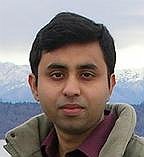
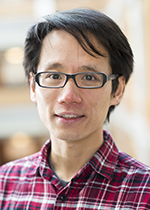
Shuvendu K. Lahiri is a researcher at Microsoft Research, focusing on formal verification, program synthesis, and software testing. His work bridges artificial intelligence with formal methods, particularly in blockchain security and automated code generation. 2025 : Published LLM-Vectorizer (verified loop vectorizer) and neural synthesis for SMT-assisted proof-oriented programming 2024 : Explored LLM-based test-driven code generation and natural precondition inference 2023 : Developed resource management specifications and contributed to test generation with pre-trained models 2022 : Advanced Solidity type systems and merge conflict resolution using language models His research combines large language models with formal verification tools to improve software correctness. He actively contributes to conferences like ICSE, PLDI, and ISSTA as author and committee member.
Alvin Cheung is an Associate Professor in the Computer Science Division at UC Berkeley's EECS department. He is affiliated with the Data Systems and Foundations group, Programming Systems group, Sky Lab, and SLICE Lab, and serves as a faculty affiliate at the Berkeley Institute for Data Science. He advises the Data Science Discovery Program and provides technical guidance to industry partners. His research spans data management, programming languages, and scalable software systems, with emphasis on helping users process large datasets efficiently. Key innovations include verified lifting (applying formal methods and ML to infer program properties) and systems for optimizing database-backed applications and geospatial analytics. Recent work explores LLM-driven code optimization and transpilation techniques. His publications (2023-2025) show strong trends in ML-enhanced systems, verified compilation, and data management tools. Articles frequently integrate formal methods, program synthesis, and hardware-aware optimizations across domains like databases, distributed computing, and HCI. Scientific Awards: ACSIC Rock Star Award (2025) Dahl-Nygaard Junior Prize (2024) VLDB Early Career Research Contribution Award (2023) IEEE TCDE Rising Star Award (2020) Sloan Fellowship (2019) NSF CAREER Award (2017) 20+ additional honors Advising & Grants: He mentors PhD/MS students (e.g., Lily Liu at OpenAI, Chenglong Wang at Microsoft Research). Research is funded by: NSF DOE ONR ARO Intel Notable grants include ONR Young Investigator Award and ARO Early Career Program Award. Labs & Teams: Leads projects in Berkeley's Data Systems/Programming Systems groups and collaborates with Sky Lab/SLICE Lab. Manages labs focused on verified compilation (e.g., Tenspiler) and data infrastructure (e.g., Spatialyze).
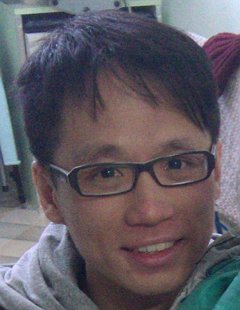
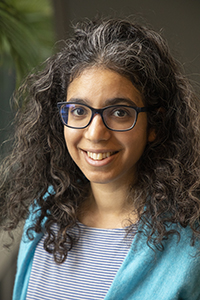
Sarah Fakhoury is a Senior Researcher in the Research in Software Engineering (RiSE) group at Microsoft Research, Redmond. Her work bridges formal methods, empirical software engineering, machine learning, and human-computer interaction to optimize developer cognitive effort in AI-assisted programming tools. Her research focuses on trustworthy AI for code generation , leveraging formal verification to ensure correctness in LLM-generated outputs. Key areas include program comprehension, source code readability, and empirical evaluation of developer-AI interaction. She develops tools like 3DGen for provably correct binary parsers and NL2Fix for natural language-based code repair. Her publications reveal strong trends in formal methods integration with AI (60% of recent work), empirical developer studies (30%), and readability/metrics innovation (10%). Keywords cluster around program verification, LLM evaluation, and cognitive load measurement. ACM/SIGSOFT Distinguished Paper Award (ICPC 2018) Fakhoury actively contributes to the academic community as PC member for ASE, ICSE, and ESEC/FSE. She co-organizes workshops like Muslims in ML at NeurIPS and mentors through SMeW. Her RiSE group collaboration with Shuvendu Lahiri and Madanlal Musuvathi drives Microsoft's trustworthy AI4Code initiatives, focusing on verifiable developer tools.
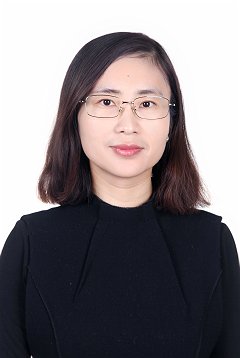
Lei Bu is a Professor and Vice Dean at the Software Institute , Nanjing University . He leads research in formal verification, cyber-physical systems, and software engineering, with a focus on bounded model checking and hybrid system analysis. B.Sc. and Ph.D. in Computer Science from Nanjing University (2004, 2010) Visiting student at Carnegie Mellon University and University of Texas at Dallas His research integrates formal methods and machine learning for verifying complex systems like IoT and software with real-time constraints. Key projects include BACH Toolset and BRICK for reachability analysis. Recent publications demonstrate expertise in hybrid system verification , cache side-channel detection , and parallel code analysis frameworks . His work bridges theoretical advancements with practical applications in safety-critical systems. Zhongchuang Software Talent Award (2023) CCF-IEEE CS Young Computer Scientist Award (2022) High-Tech Software Innovation Awards (2019-2023) As Principal Investigator, he leads major projects funded by National Science Foundation of China and Jiangsu Natural Science Foundation (2020-2027). Current tools include BACH for hybrid systems and MLB for Java symbolic execution.
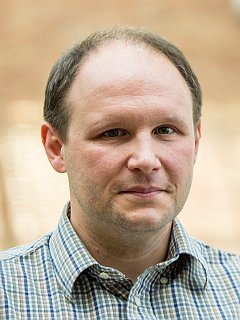
Professor Dan Hao is a distinguished faculty member at the Institute of Software, School of Computer Science, Peking University, where he has established himself as a leading researcher in software engineering. His extensive service to the academic community includes membership on the Steering Committee for The International Conference on Automated Software Engineering (ASE) since 2021, The ACM SIGSOFT International Symposium on Software Testing and Analysis since 2025, and The International Systems and Software Product Line Conference (SPLC) from 2018-2022. He has served as Program Co-Chair for multiple major conferences including ISSTA 2027, ICSME 2025, ICST 2023, SANER 2022, and ASE 2021. Professor Hao received his Bachelor's degree from Harbin Institute of Technology in 2002 and completed his Ph.D. at Peking University in 2008, followed by post-doctoral research at the same institution until 2009. His academic journey reflects a deep commitment to advancing software engineering research and education in China. Professor Hao's research primarily focuses on software testing and debugging, program comprehension, and software maintenance. His work has significantly contributed to compiler testing, fault localization, regression testing, and automated program repair. He has pioneered approaches in compiler auto-tuning, test-case prioritization, and history-guided testing techniques. His research bridges theoretical foundations with practical applications, addressing real-world challenges in large-scale software systems, particularly in online service environments. His publication record demonstrates a consistent trajectory of high-impact research in top-tier software engineering venues. Professor Hao's work shows increasing integration of machine learning techniques with traditional software engineering problems, particularly evident in his recent publications on LLM applications for code generation, neural theorem proving, and contrastive learning for vulnerability detection. His research maintains strong connections between theoretical rigor and practical applicability in industrial settings. ACM SIGSOFT Distinguished Paper Award for PDCAT: Preference-Driven Compiler Auto-Tuning at FSE 2025 Distinguished Paper Award for Formalizing, Mechanizing, and Verifying Class-Based Refinement Types at ECOOP 2024 ACM SIGSOFT Distinguished Paper Award for History-Guided Configuration Diversification for Compiler Test-Program Generation at ASE 2019 ACM SIGSOFT Distinguished Paper Award for History-driven Build Failure Fixing: How Far Are We? at ISSTA 2019 As an advisor, Professor Hao has mentored numerous graduate students, currently supervising 9 Ph.D. students and 7 Master's students. His former students have gone on to prestigious positions at institutions including King's College London, Tianjin University, Fudan University, and major technology companies like Huawei and China Construction Bank. His academic leadership extends through editorial roles as Deputy Editor-in-Chief of Software Testing, Verification and Reliability (STVR) and membership on the editorial boards of several premier journals including ACM Transactions on Software Engineering and Methodology, ACM Computing Surveys, and Empirical Software Engineering. Professor Hao leads a vibrant research group at Peking University's Institute of Software, focusing on cutting-edge problems at the intersection of traditional software engineering and artificial intelligence. His team actively collaborates with both academic institutions and industry partners to address practical challenges in software development and maintenance processes.
Zachary Tatlock is an Associate Professor at the Paul G. Allen School of Computer Science & Engineering , University of Washington , with a focus on Programming Languages . His research spans formal verification , compiler design , floating-point accuracy , and machine learning frameworks , unified by themes of making tricky code easier to write and ensuring correctness through rigorous proofs and empirical systems. His recent work includes unifying Datalog and equality saturation (PLDI 2023), exploring LLM-driven document markup (Programming with AI 2024), and advancing floating-point error analysis via interactive tools like Odyssey (UIST 2023). He leads the UW PLSE research group and co-organizes events like EGRAPHS and FPTalks . Key collaborations include verifying distributed systems in CakeML (ECOOP 2022) and developing egglog , an e-graph library with relational extensions (PLDI 2023). His teaching includes Solver-Aided Programming (CSE 507) and Grad PL (CSE 505), emphasizing both Greek (formalism) and graphs (empiricism) .
Abhik Roychoudhury is a Provost's Chair Professor of Computer Science at the National University of Singapore (NUS), where he has been working since 2001. He serves as the Editor-in-Chief of ACM Transactions on Software Engineering and Methodology (TOSEM) and chairs the FSE Steering Committee. Professor Roychoudhury leads the TSUNAMi center, a five-year research effort funded by the National Research Foundation in trust-worthy software, and is the Lead Principal Investigator of the Singapore Cyber-security Consortium. Professor Roychoudhury received his Ph.D. in Computer Science from the State University of New York at Stony Brook in 2000. His academic journey has been primarily at NUS, where he has built a distinguished career in software engineering research. His research focuses on software testing and analysis, software security, and trust-worthy software construction. Professor Roychoudhury's research group has developed scalable techniques for testing, debugging, and repair of programs using systematic semantic analysis. His work on automatic program repair has been particularly influential, contributing to the vision of self-healing software. Current research directions include integrating large language models with traditional program analysis techniques for autonomous software engineering, as exemplified by the AutoCodeRover project. Professor Roychoudhury's recent publications demonstrate a strong focus on automated program repair, with increasing integration of large language models and AI techniques. His work spans both theoretical foundations and practical applications, with numerous contributions to top software engineering conferences. The research shows a clear trajectory toward more autonomous software engineering systems that can understand code intent, generate repairs, and verify their correctness. IEEE TCSE New Directions Award (2022) ICSE 2023 Most Influential Paper Award ACM Distinguished Speaker (2013-2019) Fellow of the ACM Professor Roychoudhury has successfully mentored numerous Ph.D. students who have gone on to academic positions at prestigious institutions worldwide, including University College London, Max-Planck Institute, and University of Melbourne. His research is supported by significant grants, including a five-year program on Automated Program Repair at NUS funded by the National Research Foundation, and collaborations with industry partners through the Singapore Cyber-security Consortium. The TSUNAMi center represents a major research initiative with substantial funding for trust-worthy software research. Professor Roychoudhury leads an active research group focused on software analysis and repair. The group has developed several notable systems including AutoCodeRover, an autonomous software engineer that can resolve GitHub issues with minimal LLM cost. The group collaborates extensively with industry, as evidenced by the recent acquisition of AutoCodeRover by Sonar. Current research directions include next-generation fuzzing of stateful systems and the integration of AI techniques with formal methods for more reliable software.
Alvin Cheung is an Associate Professor in the Department of Computer Science at the University of California, Berkeley, where he is a member of the Data Systems and Foundations group and Programming Systems group. He also participates in the Sky Computing Lab and SpeciaLIzed Computing Ecosystems (SLICE) Lab, and serves as a faculty affiliate at the Berkeley Institute for Data Science. His research spans database systems, programming languages, and software engineering with applications across various domains. Professor Cheung's research focuses on creating systems that bridge the gap between data management and programming languages. His work centers on three main themes: verified lifting techniques for inferring program properties; designing new data processing and programming language techniques; and improving end-user data programming experiences through novel interfaces and code generators. His research integrates formal methods, deep learning, and program synthesis to solve practical challenges in data-intensive applications. His publications reveal a strong trend toward leveraging machine learning, particularly large language models, to enhance code generation, optimization, and understanding. Recent work increasingly focuses on verified approaches that combine formal reasoning with neural techniques, addressing challenges in database systems, compiler design, and programming language theory while maintaining correctness guarantees. ACSIC Rock Star Award (2025) AITO Dahl Nygaard Junior Prize (2024) VLDB Early Career Research Contributions Award (2023) Army Research Office Young Investigator Award (2022) Office of Naval Research Young Investigator Award (2021) Sloan Research Fellowship (2019) DOE Presidential Early Career Award for Scientists & Engineers (2019) Professor Cheung has advised numerous doctoral and master's students who have gone on to positions at leading technology companies including AWS, OpenAI, Microsoft Research, and Adobe Research. His research has been generously supported by multiple federal agencies including the National Science Foundation, Department of Energy, Office of Naval Research, Army Research Office, and Intel Corporation, reflecting the significance and impact of his work across both academic and industrial settings. He leads research efforts in the EPIC Data Lab, Sky Computing Lab, and SLICE Lab, where his team develops innovative approaches to data management, programming systems, and specialized computing ecosystems. Current projects focus on applying verified lifting techniques, developing new data processing frameworks, and creating user-friendly interfaces for data programming across diverse application domains.
Linyi Li is an Assistant Professor at the School of Computing Science, Simon Fraser University (SFU), and directs the Trustworthy Artificial Intelligence (TAI) Lab. He specializes in certifiably trustworthy deep learning systems and foundation models, bridging machine learning and computer security. His research focuses on providing rigorous guarantees for robustness, fairness, numerical reliability, and scientific evaluation of large language models. Affiliations: SFU (2023-present), University of Illinois Urbana-Champaign (PhD 2023), Tsinghua University (BSc 2018) Experience: Senior Research Scientist at ByteDance (2023-2024), internships at Microsoft, Fujitsu, and Carnegie Mellon University Research interests include certified robustness, fairness certification, adversarial machine learning, and automated testing for neural networks. Notable contributions include the InfiBench code LLM evaluation framework and the α/β-CROWN verifier winning VNN-COMP 2023. Awards: Rising Stars in Data Science (2022), AdvML Rising Star Award (2022), Qualcomm Innovation Fellowship finalist (2022). Lab activities focus on advancing trustworthy AI through principled evaluation, certification frameworks, and alignment with human values. Open PhD positions available starting 2025 Fall.
Corina Pasareanu is a Principal Scientist at Carnegie Mellon University's CyLab Security and Privacy Institute and serves as a Technical Professional Leader for Data Science at NASA Ames Research Center through KBR. She holds a PhD in Computer Science from Kansas State University (2001), an MS (1995) and BS (1994) from the University Politehnica of Bucharest. Her research focuses on formal methods for trustworthy AI , including model checking, symbolic execution, compositional verification, and probabilistic software analysis. She pioneers techniques for verifying autonomous systems, neural networks, and cryptographic applications, with emphasis on safety-critical domains like autonomous vehicles and aerospace systems. Recent publications demonstrate strong focus on AI safety verification , including adversarial robustness of large language models, vision-based autonomous systems, and neural network interpretability. Her work integrates formal methods with machine learning to address security challenges in emerging AI technologies. Awards and honors: ACM Fellow (2023) IEEE ASE Fellow ETAPS Test of Time Award (2021) ASE Most Influential Paper Award (2018) ESEC/FSE Test of Time Award (2018) ISSTA Retrospective Impact Paper Award (2018) She leads major projects funded by DARPA, NSF, AWS, and NASA including: Trinity: Neurosymbolic Learning and Reasoning (DARPA) Proving Timing Side Channel Absence (AWS) Safety of Shared Control in Autonomous Driving (AAIP) Verifiable Federated Learning (CyLab) She advises PhD students at CMU and co-leads the CyLab Security and Privacy Institute's research initiatives.
Nada Amin is an Assistant Professor of Computer Science at the Harvard John A. Paulson School of Engineering and Applied Sciences (SEAS). She leads the metareflection lab, focusing on neuro-symbolic programming, program synthesis, and meta-programming techniques. Her research combines programming languages (PL) with AI, particularly leveraging LLMs for verified program and proof synthesis. Education: PhD from EPFL (2016), MEng and BS from MIT (2008). Previous roles include University Lecturer at the University of Cambridge (2017–2019) and software engineering at Google (2009–2011). Awards include Distinguished Paper Awards at PLDI 2023 and an Outstanding Paper Award at NeurIPS’24. Research interests span neuro-symbolic systems, meta-programming, probabilistic reasoning, and precision medicine applications. Current projects include VerMCTS, Persimmon, and collapsing towers for secure compilation. She teaches courses like CS152 (Programming Languages) and CS252R (Advanced PL Seminars). Labs/Teams: Harvard PL Group; Metareflection Lab. Collaborates widely on PL+AI, drug repurposing for medicine, and multi-stage relational programming. Supervises ~40 researchers including PhD students, postdocs, and undergraduates.
Dong Jin Song is a full Professor at the National University of Singapore's School of Computing, Department of Computer Science. He joined NUS in 1998 and was promoted to Professor in 2016 after serving as Associate Professor (2005) and Assistant Professor. He has held various leadership roles including Deputy Head of CS Department (2023-2024), NUS Senate Member (2020-current), and Assistant Dean (Graduate Office, SoC). PhD, University of Queensland, Australia (1993-1995) BInfTech with First Class Honours, University of Queensland, Australia (1989-1992) - Major in Software Engineering Professor Dong's research spans formal methods, safety and security systems, probabilistic reasoning, sports analytics, and trusted machine learning. He is best known for co-founding the PAT verification system which has attracted thousands of registered users from over 150 countries and won the 20-year ICFEM Most Influential System Award in 2018. He also co-founded 'Silas: Trusted Machine Learning' and the Dependable Intelligence company. His work bridges formal verification with practical applications in security, AI, and even sports analytics where he developed Markov Decision Process models for tennis strategy analysis. His recent publications show a strong trend toward integrating formal methods with modern AI systems, particularly focusing on trustworthy AI, LLM verification, and security applications. The research spans multiple high-impact venues including ICML, NeurIPS, IEEE Transactions, and top security conferences like USENIX Security, reflecting his interdisciplinary approach that combines formal verification with machine learning, security, and practical applications. Professor Dong has received numerous honors including the ACM SIGSOFT Distinguished Paper Award for ICSE 2020, the 20-Year ICFEM Most Influential System Award (2018), and being named a Fellow of the Institute of Engineers Australia (2018). His awards reflect both theoretical contributions to formal methods and practical impact on software engineering. ACM SIGSOFT Distinguished Paper Award for ICSE 2020 NUS Research Recognition Award (2020) Fellow of Institute of Engineers Australia (2018) 20-Year ICFEM Most Influential System Award (2018) Best Paper Award at ICECCS (2015 and 2012) Professor Dong has successfully supervised 33 PhD students, many of whom have become tenured faculty members at leading universities worldwide including The University of Auckland, Aston University, Singapore Management University, and Monash University. His students have gone on to successful careers in both academia and industry at organizations like Google, Apple, HP Research Lab, and IBM. He has served on the editorial boards of prestigious journals including ACM Transactions on Software Engineering and Methodology and has been active in numerous conference organizing committees. Through his research group and commercial ventures (Dependable Intelligence), Professor Dong has built a strong team focused on formal verification, trusted AI systems, and practical applications of model checking. His work has evolved from foundational formal methods research to cutting-edge applications in AI safety and security, maintaining a consistent thread of rigorous verification throughout his career.
Yizheng Chen is an Assistant Professor in the Department of Computer Science at the University of Maryland, College Park, with a joint appointment at the University of Maryland Institute for Advanced Computer Studies (UMIACS). She holds a Ph.D. in Computer Science from Georgia Institute of Technology and completed postdoctoral research at UC Berkeley and Columbia University. Her research focuses on the intersection of Artificial Intelligence and Security , including: Developing AI techniques for security challenges (malware/vulnerability detection, fraud prevention) Enhancing robustness of machine learning models against adversarial attacks Securing AI coding assistants and LLM-based code generation Analyzing security/privacy risks in AI agents and web-based AI systems Creating datasets and benchmarks for vulnerability detection (e.g., DiverseVul) Her recent publications demonstrate strong emphasis on AI security applications , particularly in malware detection (Android/PDF systems), vulnerability analysis using language models, adversarial robustness techniques, and security implications of AI agents. Research consistently addresses practical security challenges through machine learning innovations. Awards and Honors: ACM CCS Best Paper Award Runner-up (2021) NSF CAREER Award Google ASPIRE Award Anita Borg Memorial Scholarship Top 10 Finalist, CSAW Applied Research Competition (2023, 2017) She leads a research group focused on AI security and actively recruits PhD students. Major grants include NSF CAREER and Google ASPIRE awards supporting work on secure code generation and LLM security.
Benjamin Delaware is an active Associate Professor in the Department of Computer Science within Purdue University's College of Science. His research focuses on programming languages and formal verification, with significant contributions to relational verification, proof automation, and oblivious computation. His research interests span Programming Languages , Program Verification , Formal Methods , Relational Verification , and Proof Automation . Delaware develops techniques for verifying program correctness using type systems, automated reasoning, and language-based security approaches. His work bridges theoretical foundations with practical tools for secure and reliable software systems. Analysis of his recent publications shows strong trends in leveraging large language models for verification tasks (2025), advancing relational verification through E-graphs (2023-2025), and developing type-based approaches for security and privacy (2022-2024). His work consistently addresses fundamental challenges in program equivalence, test generation, and oblivious computation. Distinguished Reviewer (PLDI 2023) Delaware actively serves as committee member and session chair across major programming language conferences (POPL, PLDI, SPLASH). His grant activities focus on NSF-funded research in programming language theory and verification tools. He has mentored students through research papers and conference contributions, though specific advisees aren't listed in the source material. His work involves collaboration with research groups focused on formal methods and programming language design, particularly in developing verification frameworks like KestRel and Taypsi. Current projects explore LLM-assisted verification and policy-agnostic oblivious computation.
Alvin Cheung is an Associate Professor at the University of California at Berkeley, affiliated with the Department of Electrical Engineering and Computer Sciences (EECS). He leads the Data Systems and Foundations group, Programming Systems group, Sky Lab, and SLICE Lab, while also serving as a faculty affiliate at the Berkeley Institute for Data Science. His research focuses on integrating data management, programming languages, and software systems to develop tools for scalable data processing pipelines and improved data programming experiences. PhD students advised: Sahil Bhatia, Mick Kittivorawong, Jongseok Park Research keywords include Data Management , Programming Languages , Program Synthesis , Formal Verification , and Machine Learning . His recent work explores Verified Lifting techniques for database applications, stencil computations, and cloud systems, alongside novel programming paradigms for geospatial video analytics and speculative decoding. His publications from 2023-2025 demonstrate trends in LLM-driven code optimization , automated SQL equivalence , and neural code generation across domains like tensor operations and geospatial video systems. Notable scientific achievements include the Dahl-Nygaard Prize (2024) , VLDB Early Career Award (2023) , and CHI Best Paper Award (2021) .