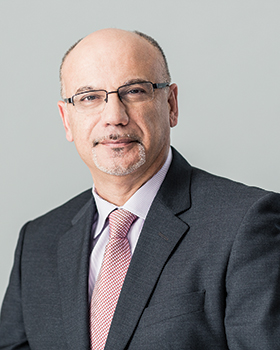
Raúl Mateos Gil is an Associate Professor at the Universidad de Alcalá, affiliated with the Department of Electronics. He specializes in electronic engineering applied to renewable energy systems through the GEISER research group. His work focuses on hardware/software co-simulation techniques for system-on-chip (SoC) design and verification, as evidenced by his doctoral research. Education: Doctorate in Electronics from Universidad de Alcalá (2006), thesis: Técnicas de cosimulación Hw/Sw para el diseño y verificación de sistemas CsoC advised by Dr. José Luis Lázaro Galilea. His research emphasizes renewable energy systems integration, with particular attention to electronic engineering solutions for energy conversion and embedded system optimization. No recent publications or grants are explicitly listed in the provided text. No scientific awards or academic advising records are mentioned in the current data.
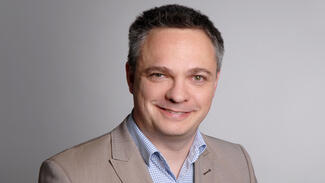
Álvaro Paricio García is an Assistant Professor at the Department of Automation within the School of Telematics Engineering at Universidad de Alcalá. He is affiliated with the NetIS Research Group (Networks and Intelligent Systems). His research focuses on smart city technologies, traffic engineering, optimization algorithms, and environmental engineering, with a particular emphasis on urban mobility, crowd evacuation systems, and emission reduction strategies. Education: He holds a PhD from Universidad de Alcalá, awarded in 2021 for his thesis Estrategias multi-mapa para el enrutamiento dinámico de tráfico urbano , supervised by Dr. Miguel Ángel López Carmona. Research Interests: His work integrates control systems, machine learning, and simulation-based optimization to address challenges in urban traffic management, crowd dynamics, and sustainable transportation. Key themes include: Design of low-emission zones for urban areas Development of adaptive evacuation systems using MPC (Model Predictive Control) Algorithmic innovations in traffic routing and multi-map strategies Article Trends: Recent publications (2021-2025) highlight his focus on: Wind farm layout optimization using metaheuristics Biometric identification via autoencoder-driven systems Dynamic low-emission zones and their policy implications Adaptive crowd evacuation systems like CellEVAC No scientific awards or grants were explicitly mentioned in the provided texts. He has not supervised any listed students. Labs/Teams: Active member of the NetIS Research Group, which develops networks and intelligent systems for urban and industrial applications.
Miljana L. Milić is a Full Professor at the Faculty of Electronics, University of Niš, Serbia, Department of Electronics. She has been an integral part of this institution since earning her degrees and advancing through academic ranks, culminating in her appointment as full professor in 2024. Education: PhD in Electronics, Faculty of Electronics, University of Niš (2009) Master’s in Electronics, Faculty of Electronics, University of Niš (2005) Bachelor’s in Electronics, Faculty of Electronics, University of Niš (2001) Her research interests span a broad spectrum of electronics engineering, with emphasis on VLSI design, analog and digital circuit diagnosis, cryptographic hardware security, timing analysis under aging, and performance optimization in neural prediction systems. She applies simulation, statistical methods, and AI techniques to solve complex problems in electronic systems design and reliability. The analysis of her recent publications reveals a strong focus on hardware-level innovation, including secure cryptographic cells, fault diagnosis in analog circuits, performance modeling under fading and shadowing, and timing degradation in VLSI systems. Her work bridges theoretical analysis with practical implementation in electronic design and communication systems. She leads the Laboratory for Design of Electronic Processes, Circuits and Automatic Control Systems, and is currently involved in one national research project. Her contributions include over 10 journal publications in high-impact venues. Scientific Contributions: Head of Laboratory for Design of Electronic Processes, Circuits and Automatic Control Systems Active participant in national research projects Author/co-author of 10+ journal papers with impact factor She mentors students through research supervision and contributes to academic leadership within her department. Her work continues to influence both academic research and practical applications in electronic systems engineering.
Jinhua Guo is an Associate Professor in the Department of Computer and Information Science at the University of Michigan-Dearborn's College of Engineering and Computer Science. He holds a Ph.D. from the University of Georgia and B.E./M.E. degrees in Computer Science from Dalian University of Technology. His research spans vehicular networking , mobile/cloud computing , cybersecurity , and optimization algorithms . His recent work focuses on data center energy optimization using neural networks, cache robustness in named data networks , and real-time task scheduling on multi-core processors . Earlier contributions include MAC protocols for vehicular networks and context-aware routing in VANETs . Scientific awards and grants include: NSF Grant (co-PI): Enhancing Pervasive/Mobile Computing Security Education (2014-2016) Amazon AWS in Education Grant (PI): 2012-2015 NSF Grant (PI): Mobile Computing Research for Automotive Applications (2005-2010) He has advised 14 graduate students, including: John P. Baugh (Ph.D., 2018) Vishal Singh (Ph.D., 2016) Jun Liu (Ph.D., 2015) Ryan Bankston (Ph.D. in progress)
Akshay Rajhans is a Chief Research Scientist and Head of the Advanced Research & Technology Office at MathWorks . His work bridges technical computing, model-based design, and AI-enabled cyber-physical systems (CPS), with a focus on verification, simulation, and industrial applications. He holds a Ph.D. in Electrical and Computer Engineering from Carnegie Mellon University (2013) and an M.S. in Electrical Engineering from University of Pennsylvania (2007).
Niels Erik Olesen is a Postdoc researcher at the Department of Biotechnology and Biomedicine, Technical University of Denmark (DTU), affiliated with the Nano Bio Integrated Systems group. He serves as Contact Person for the DTU project "Active Wearable Sensors for Monitoring of Levodopa in Parkinson’s Disease" (2023-2025) and is a Member of the International Electrotechnical Commission (2022-2026). His ORCID profile (0009-0001-3908-5043) and institutional email nieol@dtu.dk confirm his active DTU affiliation. Research interests center on electrochemical sensors and drug delivery systems. Early work (2012-2018) focused on biopharmaceutics, including thermodynamic modeling of cyclodextrin formulations, bile salt interactions, and drug-polymer solubility prediction using DSC/ITC techniques. Current research pivots to wearable sensor technology, specifically microneedle-based porous gold electrochemical sensors for real-time levodopa monitoring in Parkinson's disease patients, as evidenced by his active project and 2024 conference presentation. His 15 most recent publications (2015-2018) reveal strong methodological innovation in pharmaceutical formulation science. Key themes include DSC-based solubility prediction (7 articles), cyclodextrin-bile salt displacement mechanisms (4 articles), and polymer molecular weight effects on drug miscibility (3 articles). The shift toward electrochemical sensors is documented in his 2023 project but not yet reflected in publications, indicating emerging research direction. No scientific awards or fellowships were mentioned in the provided sources. Olesen leads the DTU research project on Parkinson's disease wearable sensors (100% focus on levodopa monitoring) and presented preliminary work as Guest Lecturer at a conference in November 2024. No student advisement is documented, though his project involves interdisciplinary collaboration. The International Electrotechnical Commission membership (2022-2026) suggests industry-standardization contributions. He operates within DTU's Nano Bio Integrated Systems group, focusing on nanoscale biointegration. His current project team develops microneedle-based electrochemical sensors for continuous levodopa monitoring, aiming to translate lab research into clinical Parkinson's management tools through wearable technology.
Gruia-Catalin Roman is a Professor in the Department of Computer Science at the University of New Mexico, within the College of Engineering. He has maintained a long-standing and impactful career in computer science research and education, with a focus on mobile computing, distributed systems, and the Internet of Things. His work bridges theoretical foundations and real-world applications, particularly in sensor networks and smart environments. Ph.D., Computer and Information Sciences, University of Pennsylvania, 1976 M.S., Computer and Information Sciences, University of Pennsylvania, 1974 B.S., Computer Science and Engineering, University of Pennsylvania, 1973 Roman's research interests center on enabling natural, responsive, and personalized interactions between people and smart environments. He explores middleware, formal methods, and human-centered computing to support IoT, mobile systems, and distributed applications. His work emphasizes paradigm shifts in how users interact with technology, particularly through spatial characteristics, augmented reality, and context-aware automation. The recent articles reflect a strong trajectory toward intelligent, user-aware IoT systems. Themes include conflict prediction, seamless automation, AR-based control, and abstraction layers like the Space Broker. These works demonstrate a shift from device-centric to human-centric computing, leveraging machine learning, middleware, and distributed algorithms to reduce user cognitive load and enhance personalization. SenSys 2022 Test of Time Award for early efforts to introduce sensor networking technology into clinical practice Roman has supervised 19 doctoral students, many of whom have pursued academic careers. He has secured significant research funding, including an NSF grant on context-assisted interactions in IoT with UT Austin. His leadership extends to organizing flagship conferences such as ICSE 2005 and FSE 2010, and serving on editorial boards of top software engineering journals. He is known for his innovative teaching, mentoring, and advocacy for active learning and multidisciplinary collaboration. Roman leads the Mobile Computing Laboratory (MobiLab), where students and researchers prototype and evaluate IoT interaction paradigms. The lab explores smart glasses, QR-based interfaces, and spatial control algorithms. His work often involves collaborations across institutions and disciplines, reflecting his commitment to impactful, real-world computing solutions.
David Gosset is a theoretical quantum computer scientist affiliated with the University of Waterloo and the Perimeter Institute for Theoretical Physics . He focuses on quantum algorithms, computational complexity, and the interplay between quantum many-body systems and computer science. PhD in Physics (Massachusetts Institute of Technology) BSc in Physics and Mathematics (University of British Columbia) His research investigates foundational questions about quantum computation, including the capabilities of shallow quantum circuits, classical simulation techniques, and the application of physics-inspired methods to computational problems. His work spans theoretical physics, quantum information science, and computer science. The trends in his publications emphasize quantum algorithm design, complexity theory, and the computational power of quantum systems. His awards include the Pat Goldberg Memorial Best Paper Award (2016) and the Sherman Fairchild Prize Postdoctoral Fellowship (2015-2016). Pat Goldberg Memorial Best Paper Award (IBM Research, 2016) Sherman Fairchild Prize Postdoctoral Fellowship in Theoretical Physics (Caltech, 2015-2016) Marble Presidential Fellowship (MIT, 2006-2007) Rudi Haering Medal in Physics (UBC, 2006)
Yakun Sophia Shao is an Associate Professor in the Department of Electrical Engineering and Computer Sciences (EECS) at the University of California, Berkeley. She holds a Ph.D. (2016) and M.S. (2014) in Computer Science from Harvard University, alongside a B.E. in Electrical Engineering from Zhejiang University, China. Her research focuses on computer architecture , particularly domain-specific accelerators , heterogeneous systems , and agile VLSI design methodologies . Key research centers: Agile Design of Efficient Processing Technologies (ADEPT), Berkeley Emerging Technologies Research (BETR), Berkeley Wireless Research Center (BWRC), SpeciaLIzed Computing Ecosystems (SLICE) Her work explores hardware-software co-design for efficiency in AI and robotics, including projects like Simba (chiplet-based AI accelerators) and Virgo (GPU matrix units). Notable tools developed include WIICA (workload characterization) and Chipyard (SoC frameworks). Selected honors include: 2024 CRA-WP Anita Borg Early Career Award 2023 NSF CAREER Award 2022 IEEE TCCA Young Computer Architect Award 2022 Intel Rising Star Faculty Award She teaches courses including EECS 151 (Digital Design & ICs) and EECS 251A (Advanced Digital Design).
Dr. Lars Schütze is a researcher at the Chair for Compiler Construction within the Faculty of Computer Science at Dresden University of Technology (TU Dresden). Holding a PhD in Computer Science from TU Dresden, he currently serves as a PostDoc specializing in domain-specific compilers for verifiable Full Homomorphic Encryption (vFHE) and hybrid quantum-classical computing systems. His academic credentials from TU Dresden include: Bachelor's degree in Computer Science Master's degree in Computer Science PhD in Computer Science (awarded February 2025) Schütze's research centers on advanced compiler design for emerging computational paradigms. His foundational work explores context-oriented and role-based programming languages, focusing on runtime optimization and dispatch mechanisms. Recent efforts pivot toward post-quantum security through homomorphic encryption compilers and hybrid quantum-classical computing frameworks. His research bridges theoretical language design with practical compiler implementation, emphasizing verifiable security and performance efficiency in next-generation computing environments. Publication analysis reveals a clear evolution from context-oriented programming (2017-2020) toward cryptographic compiler development (2022-2025). Early work optimized role-based dispatch systems, while recent publications establish compiler frameworks for Fully Homomorphic Encryption using MLIR infrastructure. His research consistently addresses performance bottlenecks in dynamic language features while transitioning toward quantum-resistant cryptography solutions. Scientific Awards: No awards documented in source materials Dr. Schütze supervises student theses in Homomorphic Encryption and Quantum-Classical Computing frameworks, offering projects spanning Bachelor to Master levels. His research is funded through institutional projects including (verifiable) Full Homomorphic Encryption and Hybrid Quantum-Classical Computation, though specific grant details remain undisclosed. He actively develops compiler infrastructure for encrypted computation and quantum-classical orchestration. As core personnel in TU Dresden's Chair for Compiler Construction, Schütze contributes to the RoSI project (role-based software infrastructures) and leads current initiatives in vFHE. His team collaborates on building domain-specific compiler toolchains that address quantum computing threats through post-quantum cryptographic solutions while advancing hybrid execution models for emerging hardware architectures.
Dr. Gerhard Schellhorn is a Senior Researcher at the Institute for Software & Systems Engineering, part of the Faculty of Applied Computer Science at the University of Augsburg. He collaborates extensively with Prof. Dr. Wolfgang Reif, the institute's director, and has maintained an active research career spanning multiple decades with continuous publications from 1994 through 2025. His research focuses on: Logic Calculi and Algebraic Specification Program Logics and Abstract State Machines Modular specification of concurrent systems with temporal logic and IO-Automata Interactive Verification and Proof Automation Refinement techniques including Data Refinement, ASM Refinement, Linearizability, and Opacity Dr. Schellhorn's recent work (2018-2025) demonstrates a consistent progression from theoretical foundations to practical applications in system verification. His publications reveal a strong emphasis on verifying concurrent and persistent systems, particularly file systems (Flashix), data structures (red-black trees), and memory models. A significant portion of his work utilizes the KIV verification system, which he has helped develop and apply to complex real-world systems. His research shows increasing relevance to modern computing challenges involving crash safety, persistent memory, and concurrent data structures. He has established extensive collaborations with researchers including Stefan Bodenmüller, Wolfgang Reif, Brijesh Dongol, Heike Wehrheim, and John Derrick, indicating his strong integration within the international formal methods community. Dr. Schellhorn also contributes to education at the University of Augsburg through courses in Software Engineering, Compiler Construction, Introduction to Robotics, and Formal Methods in Software Engineering.
Farid N. Najm is a Professor in the Edward S. Rogers Sr. Department of Electrical and Computer Engineering at the University of Toronto . He previously served as Department Chair (2009–2019) and Vice-Chair (2004–2007) . Dr. Najm earned his B.E. in Electrical Engineering from the American University of Beirut (AUB) in 1983, followed by M.S. and Ph.D. degrees in Electrical and Computer Engineering from the University of Illinois at Urbana-Champaign (UIUC) in 1986 and 1989, respectively. Former Assistant Professor and Associate Professor at UIUC (1989–1999) Research focus: Computer-Aided Design (CAD) for Integrated Circuits , emphasizing power dissipation, timing, and reliability His work addresses critical challenges in semiconductor design, including power grid verification and reliability checking . Dr. Najm has authored a widely recognized textbook Circuit Simulation (2010), which provides rigorous foundations for developing circuit simulators. Scientific Contributions & Awards Recipient of multiple Best Paper Awards at IEEE/ACM ICCAD (2020, 2019, 2016) Named IEEE Fellow (2003) and CAE Fellow (2010) Honored with the DAC Prolific Author Award (2013) and SRC Inventor Recognition Awards (2003, 2005)
Nai-Hui Chia is an Assistant Professor in the Department of Computer Science at Rice University. His academic journey includes postdoctoral fellowships at the University of Maryland's Joint Center for Quantum Information and Computer Science (QuICS) and UT Austin, following a Ph.D. in Computer Science and Engineering at Penn State University under Dr. Sean Hallgren and undergraduate studies at National Taiwan University. Ph.D.: Computer Science and Engineering, Penn State University, 2018 Bachelor's: National Taiwan University Chia's research focuses on quantum algorithms, quantum complexity theory, and quantum cryptography. He investigates quantum computing's capabilities, limits, and its transformative potential for computer science, particularly in computational tasks with quantum advantages, quantum depth verification, and circuit complexity. His work bridges theoretical exploration with practical applications in quantum machine learning and cryptographic security. Recent publications highlight advancements in adversarially robust quantum state learning (FOCS 2025), quantum depth verification (COLT 2025, TQC 2024), and quantum-inspired classical algorithms for low-rank matrix problems. His research also addresses fundamental questions in quantum complexity theory, including black-box simulation barriers and impossibility results for quantum zero-knowledge protocols. Honors include the NSF CAREER Award (2024), DOE Quantum Testbed Pathfinder (2023), Google Research Scholar (2023), and an NSF grant (2022). He serves on program committees for TQC 2024, CCC'23, and Crypto 2022, and organizes quantum computing sessions at IOS 2024 and QuantIPS 2023. Chia advises students like Yu-Ching Shen and Chia-Ying Lin, and has mentored postdocs including Jianqiang Li and Daniel Liang. His teaching includes courses on cryptography and quantum computing at Rice and Indiana University, and guest lectures at UT Austin. Outside academia, he enjoys sports and history.
Dr. rer. nat. Stefan Lankes is an academic researcher at the Chair of Automation of Complex Power Systems, RWTH Aachen University's Faculty of Electrical Engineering and Information Technology. His work focuses on operating systems, high-performance computing (HPC), cloud computing, and lightweight virtualization techniques for embedded and real-time systems. Stefan holds a PhD in Electrical Engineering (2003) for his dissertation on real-time distributed platforms. His career spans roles from Scientific Assistant (1998-2004) to Academic Director (since 2019), with key contributions to HPC infrastructure and simulation environments. Research highlights include Rust-based OS development ( HermitCore unikernel ), GPU virtualization in distributed systems, and energy-efficient embedded computing paradigms. He pioneered the FlippedOS digital teaching platform using virtual workstations for operating systems education. Scientific awards include the 2016 Digital Teaching Fellowship and the 2021 RWTH Lecturer distinction. His publications cover topics from NUMA memory management to real-time CORBA protocols, with recent works addressing unikernel security and CUDA virtualization. Stefan leads simulation infrastructure and HPC virtualization projects, with affiliations to the E.ON Energy Research Center and involvement in European workshops like Euro-Par. His work bridges system software innovation with practical applications in energy systems and supercomputing.
John Sartori is an Associate Professor in the Department of Electrical and Computer Engineering at the University of Minnesota , holding the Robert and Sydney Anderson Professorship. His research focuses on extending Moore's law through energy-efficient computing by addressing hardware bottlene | [truncated for display]