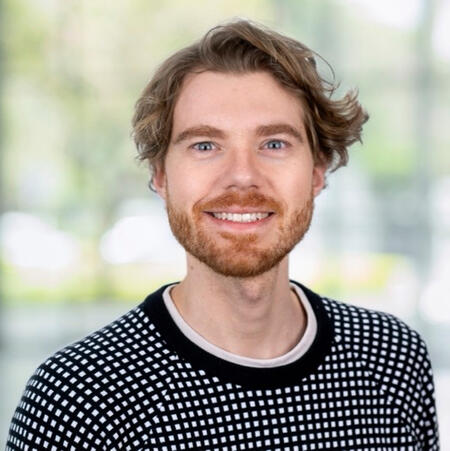
Michael Minock is an Associate Professor in Computing Science at Umeå University. His research focuses on the intersection of AI and relational databases, particularly in natural language interfaces, semantic tractability, and knowledge representation. He has led significant projects such as the VR grant (2015-04953) and EU STREP SpaceBook (2011–2014). Minock also co-founded C-Phrase Technologies AB and teaches courses on databases and large language models. B.S. in Computer Science (Honors), University of Michigan Ph.D. in Computer Science, UCLA His research explores the logical foundations of database query languages, emphasizing higher-order logic in natural language interfaces. Recent work integrates LLMs into database management systems. Key publication trends include query containment analysis, cooperative question answering, and context-aware navigation systems. Subfields span natural language processing, spatial databases, and semantic reasoning. Scientific Awards: Pell Grants Michigan Competitive Scholarship DARPA AASERT Award Minock's teaching includes courses on database management and LLM applications in IT. He actively contributes to open-access publications and maintains a strong interdisciplinary focus across AI, logic, and real-world database challenges.
Mitra Nasri is an Assistant Professor at the Eindhoven University of Technology, affiliated with the College of Engineering's Department of Electrical Engineering. She contributes to the High Tech Systems Center and EAISI Foundational, focusing on interconnected resource-aware intelligent systems. Research Focus: Real-Time Systems, Scheduling Algorithms, Embedded Systems, Fault-Tolerant Computing, and Cyber-Physical Systems. Key Contributions: Development of scheduling frameworks for multi-rate task chains, response-time analysis techniques, and containerization strategies for real-time distributed applications. Her recent work includes advancements in weakly-hard timing constraints, parallel global scheduling, and cloud integration for embedded systems. She actively collaborates on projects like SAM-FMS and COMP4DRONES. Scientific Awards: Best Paper Award - RTAS 2022 Best Paper Award - RTNS 2016 Outstanding Paper Awards at RTAS 2017, 2022 and RTSS 2020 She teaches courses in Real-Time Systems, Operating Systems, and Automotive Software, and participates in organizing conferences like Embedded Systems Week and CompSys.
Daniel Gratzer is an assistant professor in the Department of Computer Science at Aarhus University, affiliated with the Logic and Semantics group. He studies programming languages and type theories through category theory, focusing on dependent, modal, and homotopy type theory. He co-teaches graduate courses on type theory and maintains a forthcoming textbook with Carlo Angiuli. Daniel is visiting Oxford from August 2024 to February 2025. His research explores applications of modal type theory to synthetic (∞,1)-category theory, guarded type theory for denotational semantics, and categorical methods in program logics like Iris. He collaborates with researchers including Carlo Angiuli, Lars Birkedal, and Jonathan Sterling. Recent work includes publications at LICS 2025, FoSSaCS 2025, and LMCS 2025. He contributed to the development of proof assistants like mitten and formal verification tools for higher-order concurrent separation logic. Contact: gratzer@cs.au.dk
Yipeng Huang is an Assistant Professor in the Department of Computer Science at Rutgers University, School of Arts and Sciences. His research focuses on building and helping programmers use quantum, analog, and other emerging computer architectures for the post-Moore's Law era of computing. He teaches undergraduate and graduate courses including Computer Architecture (CS 211) and Quantum Computing: Programs and Systems (CS 558/443). Huang actively mentors graduate students and recruits undergraduates for research in quantum computing and computer architecture. His PhD advisees include Zirui Li, Jonathan Garcia-Mallen, Adeeb Kabir, Haoyan Luo, Enhyeok Jang, and Seungwoo Choi, with undergraduate researchers including Pooja Kedia and Winston Li. Huang's research spans quantum computing, computer architecture, and analog computing. His work examines quantum error correction, quantum software development, and hybrid analog-digital systems for scientific computation. He has published extensively on quantum error correction, quantum compilation frameworks, and analog accelerators for solving differential equations and linear algebra problems. Huang's recent publications show a strong focus on practical quantum computing systems, with several 2025 papers on high-dimensional quantum error correction, qudit simulation, and optimized quantum program generation. His work bridges theoretical quantum computing with practical implementation challenges. 2024 ISCA Distinguished Artifact Award for Tetris: A Compilation Framework for VQA Applications in Quantum Computing 2021 MICRO Top Picks honorable mention 2017 MICRO Top Picks honorable mention 2016 MICRO Top Picks Huang serves on program committees for major computer architecture conferences including ISCA, ASPLOS, HPCA, and MICRO. He is actively involved in science education outreach, organizing the Workshop on Broadly Accessible Quantum Computing and serving on committees for the Summer Science Program and FIRST Robotics Competition.
Elena Zucca is an Associate Professor in the Department of Computer Science, Bioengineering, Robotics and Systems Engineering (DIBRIS) at the University of Genoa, Italy. She has a strong research focus on programming languages, particularly in the areas of type systems, formal semantics, and coinduction. Her work bridges theoretical foundations with practical implementations, as evidenced by her publications on topics like Featherweight Java, corecursion, and soundness proofs for programming language features. Her research interests span the theoretical and practical aspects of programming languages. She investigates the formal semantics of programming constructs, particularly focusing on the boundaries between finite and infinite computations. Her work on coinduction and corecursion explores how to safely handle infinite data structures and computations. She has made significant contributions to understanding soundness in programming language features, especially in relation to resource-aware semantics. Her research often combines theoretical foundations with practical implementations, as seen in her work on Featherweight Java extensions and effect systems. Analysis of her recent publications reveals a consistent focus on advanced type systems and semantics. Her work explores the theoretical boundaries of programming language features while maintaining practical relevance. A recurring theme is the relationship between finite and infinite computations, with particular attention to soundness guarantees. Her research has evolved from foundational work on lambda calculus and object-oriented programming toward more specialized topics like graded types, coeffects, and resource-aware semantics. Elena Zucca has been actively involved in the programming languages research community, serving on program committees for major conferences including SPLASH, ECOOP, and POPL. She has mentored students through doctoral courses on Declarative Programming and (Co)Induction. Her research has been supported through participation in various academic programs, including the SEPL research program mentioned in her course materials. She teaches a diverse range of courses at the University of Genoa, from undergraduate to doctoral levels. Her teaching portfolio includes Automata Theory and Computability, Algorithms Analysis and Design, Principles and Paradigms of Programming Languages, and specialized doctoral courses on Declarative Programming and (Co)Induction. Her courses often reflect her research interests, covering theoretical foundations of programming languages, formal methods, and advanced programming paradigms.
Michael Coblenz is an Assistant Professor in the Computer Science Department at University of California, San Diego. His research focuses on integrating user-centered design into programming language development, creating safer languages for blockchain and scientific computing. He completed his Ph.D. at Carnegie Mellon University under Jonathan Aldrich and Brad A. Myers, followed by a Basili postdoctoral fellowship at University of Maryland. Specializes in usability of programming languages Created Obsidian language for safer smart contracts Developed PLIERS methodology for iterative language design Active in Rust usability and REST API quality research His work bridges programming languages and human-computer interaction, with recent projects including Kale (safer spreadsheets) and climate change-focused programming tools. He has served on program committees for SPLASH, VL/HCC, and HATRA conferences. 2025: Graduate Consortium Co-chair at VL/HCC 2024: HATRA Organizing Chair 2023: Doctoral Symposium Chair at SPLASH
Max Willsey is an Assistant Professor in the Department of Electrical Engineering and Computer Sciences at the University of California, Berkeley, since 2024. He specializes in program optimization, leveraging techniques from programming languages, databases, and systems to develop robust and accessible compiler frameworks. His research focuses on equality saturation, E-Graphs, and the integration of Datalog with compiler optimizations. He has contributed to advancements in unifying algorithmic approaches, enabling faster and more extensible program analysis. Teaching: CS 164 (Programming Languages and Compilers, Spring 2025), CS 265 (Compiler Optimization, Fall 2024), and CS 294-260 (Declarative Program Analysis and Optimization, Spring 2024). Research Highlights: Development of the egg and egglog projects, co-organizing the EGRAPHS workshop, and leading the EGRAPHS Community for e-graphs researchers. His recent articles highlight trends in unifying traditional hash joins with worst-case optimal joins, applying equality saturation to diverse domains like Datalog and tensor graph optimization, and advancing E-Graphs for program synthesis and formal verification. Scientific Awards: SIGMOD Record Research Highlight, 2024 MIT PL Review Selection, 2024 Distinguished Paper, OOPSLA 2021 and POPL 2021 NSF Graduate Research Fellowship Honorable Mention, 2018 Qualcomm Innovation Fellow, 2019 Service: Committee Member, PLDI 2025, POPL 2025, ASPLOS 2025 Co-organizer, EGRAPHS 2024 and 2023 workshops Interviewer, UC Berkeley Graduate Admissions Committee, 2024
Ayana T. Arce serves as Associate Professor of Physics within the Department of Physics at Duke University's Trinity College of Arts & Sciences, a position she has held since 2016 after advancing from Assistant Professor (2010-2016). Her research centers on experimental particle physics using the ATLAS detector at CERN's Large Hadron Collider, focusing on phenomena beyond the Standard Model including Higgs boson properties and jet substructure analysis. Education: Ph.D. in Physics, Harvard University (2006) B.S. in Physics, Princeton University (1998) Research Focus: Dr. Arce's work bridges theoretical predictions and experimental verification through precision measurements of proton-proton collisions. Her expertise spans trigger system development, heavy resonance searches, and calibration of large-radius jets—critical for identifying new physics signatures. She actively contributes to advancing analysis techniques for boosted objects and diboson resonances. Publication Trends: Her 15-year publication record (2008-2024) demonstrates consistent leadership in ATLAS collaboration efforts, evolving from foundational detector studies to cutting-edge Run 3 trigger systems. Recent work emphasizes real-time data processing for high-luminosity operations while maintaining rigorous statistical validation of Standard Model predictions. Grant Funding: Secured major support including: National Science Foundation REU Sites (2022-2027, 2018-2022, 2015-2019, 2009-2015) for undergraduate nuclear physics research Department of Energy grant (2013-2025) for High Energy Physics at Duke Brookhaven National Laboratory project (2024-2025) for ITK Module Assembly Collaborations: As a core ATLAS collaboration member at CERN, she participates in international data analysis working groups and contributes to detector upgrade projects for future LHC runs. Her external relationship with CERN is formally documented through Duke University's conflict of interest management system.
Toby Murray is a Professor in the School of Computing and Information Systems at the University of Melbourne, where he serves as Director of the Defence Science Institute and Co-Lead of the Computer Science Research Group. His work bridges formal methods, cybersecurity, and practical system security, with significant contributions to verified security and vulnerability detection. Murray's research focuses on building highly secure computing systems cost-effectively, with expertise in formal verification, information flow security, and vulnerability detection. His current research projects include Verisimilar (Verified, Secure Machine Learning), EDEFuzz (Detecting excessive data exposure in web applications), COVERN (Proving information flow security of concurrent programs), and Time Protection (Proving timing channel freedom for seL4). His work combines theoretical rigor with practical implementation, resulting in multiple open-source tools including SecC, Legion, and Underflow. Murray's recent publications demonstrate a consistent focus on verified security properties across diverse domains, from neural networks to concurrent systems. His work often bridges the gap between formal methods and practical security concerns, with increasing attention to machine learning security and policy implications of technical security measures. His publications span top venues in security, formal methods, and software engineering. Distinguished Paper Award at ICSE 2024 for EDEFuzz work on detecting excessive data exposure in web applications Extensive media commentary on cybersecurity issues including CrowdStrike outage analysis and social media regulation Regular contributions to The Conversation and Pursuit on cybersecurity policy matters Murray has advised numerous PhD students to completion, including Lianglu Pan (EDEFuzz), Zhiyuan Zhang, Mo Zhang, and Renlord Yang. He currently supervises multiple PhD students working on security verification, machine learning security, and web application security. His service includes being Program Chair for CSF'25, Associate Editor for IEEE Security & Privacy and ACM TOPS, and membership in IFIP's WG 1.7 and WG 2.3. His research group has developed multiple significant software tools including SecC (Verified Security for Concurrent C Programs), Legion (Principled Automatic Test Case Generation), and Underflow (Compositional Vulnerability Detection for C Programs), all available under open source licenses. Murray's work often involves discovering and reporting bugs in security analysis tools during his research, demonstrating the practical impact of his verification approaches.
Michael Raskin is a Lecturer (maître de conferences) at LaBRI, University of Bordeaux, where he conducts research in theoretical computer science with a focus on distributed systems and formal methods. His work bridges theoretical foundations with practical implementations, particularly in population protocols, temporal graphs, and Petri nets. His research interests span Theoretical Computer Science , Distributed Systems , Algorithms , and Formal Methods , with specific expertise in population protocols, temporal graph analysis, vector addition systems, and verification techniques for parameterized systems. His publications demonstrate a consistent focus on computational complexity, state complexity, and threshold phenomena in distributed models. Recent publication trends show a strong emphasis on temporal graph theory (with multiple papers on random temporal graphs and giant components), population protocol analysis (including modular protocols and leaderless rendez-vous systems), and verification techniques for parameterized systems. His work often combines mathematical rigor with practical implementation insights. Raskin has developed significant software projects including: Agnostic Lizard - A portable code walker for Common Lisp QueryFS - A filesystem defined through compiled queries His technical contributions span both theoretical advances and practical systems implementation, with a recurring theme of applying programming language techniques to systems problems. His work on Common Lisp tools demonstrates a commitment to practical language implementation alongside theoretical research.
Ichiro Hasuo is a Professor at the National Institute of Informatics (NII) in Tokyo, Japan, where he serves as Director of the Research Center for Mathematical Trust in Software and Systems. He holds a joint appointment at The Graduate University for Advanced Studies (SOKENDAI). Since 2016, he has been the Research Director of the JST ERATO Metamathematics for Systems Design Project, and founded Imiron Co., Ltd. in 2024. Education: PhD in Computer Science (cum laude) from Radboud University Nijmegen (2008) MSc in Mathematical and Computing Sciences from Tokyo Institute of Technology (2004) BSc in Mathematics from University of Tokyo (2002) His research focuses on foundational aspects of software science, particularly formal verification techniques using mathematical structures from category theory and coalgebra. He develops methods for ensuring reliability in cyber-physical systems and systems incorporating machine learning components. Current work emphasizes logical frameworks for autonomous vehicle safety and mathematical trust in complex systems. Hasuo's publications demonstrate consistent focus on theoretical foundations with practical applications. His recent work spans coalgebraic verification methods, temporal logic for hybrid systems, quantum programming semantics, and applications to autonomous driving systems. Key themes include compositional reasoning, probabilistic modeling, and the integration of discrete and continuous system verification. Awards and Honors: Best Paper Award at ICTAC 2024 Minister of Education, Culture, Sports, Science and Technology Commendation (2024) Distinguished Paper Award at CAV 2023 Outstanding Reviewer Award at EMSOFT 2022 Best Paper Award at ICECCS 2018 Best Paper Award at CONCUR 2014 Hiroshi Fujiwara Encouragement Prize (2012) PhD cum laude (2008) He leads multiple major research grants including: JST ASPIRE (2024-2029) for international collaboration on software trust JST START (2022-2025) for autonomous driving verification JST ERATO Metamathematics for Systems Design (2016-2025) Several JSPS KAKENHI grants As head of the MMM laboratory (Hasuo-Lab) at NII, he supervises PhD students and postdoctoral researchers in formal methods and mathematical systems design.
Prof. Jan Magott holds a research position at the Faculty of Information and Communication Technology of Wrocław University of Science and Technology , specifically within the Department of Computer Engineering . His work bridges formal methods in computer science with safety engineering applications. Focus on safety-critical systems across railway and aviation domains Expertise in computational intelligence and dependability analysis Research interests span: Formal verification of time-dependent systems Fault tree modeling with temporal constraints Functional Resonance Analysis Method (FRAM) applications Hospital safety and medical diagnostics optimization Urban transport reliability analysis Human factors in safety systems Recent publications show increasing focus on: Railway safety protocols and traffic management (2023) Medical error prevention in primary care (2021-2020) Formal timing analysis in software engineering (2016) Aviation incident modeling with fuzzy logic (2016) Key methodological contributions include: Time-dependent fault tree analysis Execution time modeling for real-time systems Fuzzy probability applications in safety engineering FRAM framework for complex system analysis
Nicolas Resch is an Assistant Professor at the Theoretical Computer Science Group within the Informatics Institute at the University of Amsterdam (UvA). His research focuses on coding theory, cryptography, and their intersections, with prior postdoctoral work at Centrum Wiskunde & Informatica (CWI) under Ronald Cramer. He earned his PhD from Carnegie Mellon University (CMU) advised by Venkatesan Guruswami and Bernhard Haeupler. Education: PhD (CMU), advised by Venkatesan Guruswami and Bernhard Haeupler. Resch's research addresses theoretical challenges in code-based cryptography, list decoding, and secure communication. His work includes advancements in randomness-efficient codes, smoothing bounds for lattices, and protocols for oblivious transfer and interactive coding. Articles reflect trends in post-quantum cryptography, error-correcting codes, and computational complexity. He has received the 2022 Veni award from NWO for his proposal "Secure and Efficient Code-Based Cryptography" and is invited to key workshops such as Oberwolfach (2025) and TIFR ICTS (2025). His supervision includes PhD students Lydia Tasiou and Martijn Brehm, alongside MSc and BSc advisees. Scientific Awards: 2022 Veni laureate (NWO) Resch teaches courses in information theory and modern cryptography at the UvA, with recent invitations to Simons Institute programs and Oberwolfach workshops. His work bridges theoretical foundations with practical cryptographic applications.
Christopher Hojny is an Assistant Professor at the Department of Mathematics and Computer Science at Eindhoven University of Technology , specializing in combinatorial optimization. He contributes to the EAISI Foundational group and co-develops the academic solver SCIP . His research focuses on symmetry handling in mixed-integer programming , theoretical properties of integer programs, and algorithm development for combinatorial optimization. Recent work explores applications in graph neural network verification , clustering problems, and network coding through mixed-integer programming frameworks. Key publication trends show expertise in Symmetry detection and mitigation techniques Relaxation complexity theory Applications to machine learning robustness Decision diagram-based scheduling Scientific contributions include Proof systems for symmetry certification Topological bounds tightening in GNNs Stable set problem symmetry handling SCIP solver extensions He supervises PhD students Cédric Roy (NWO project on Local Symmetries) and Sten Wessel (co-supervised with Frits Spieksma), while Jasper van Doornmalen (2019-2023) investigated symmetry propagation algorithms.
Eric Leclercq is a researcher at the University of Burgundy, affiliated with the LE2I Lab in Dijon, France. His work spans database systems, social network analysis, and biomedical data integration. He has contributed extensively to polystore systems, tensor decompositions, and category theory applications in data modeling. Fields of Interest : Database Systems, Data Mining, Social Network Analysis, Big Data Analytics, Semantic Web Leclercq's recent research focuses on formal frameworks for data lakes using category theory, multi-level tensor decomposition for social network stratification, and schema migration in multi-model systems. He has published in venues like CAiSE, IDEAS, and RCIS. His collaborations include Annabelle Gillet, Marinette Savonnet, and Nadine Cullot. Notable works include Lambda+ architecture for data processing, polarization analysis in social networks, and tools for tweet collection and biomedical data integration.