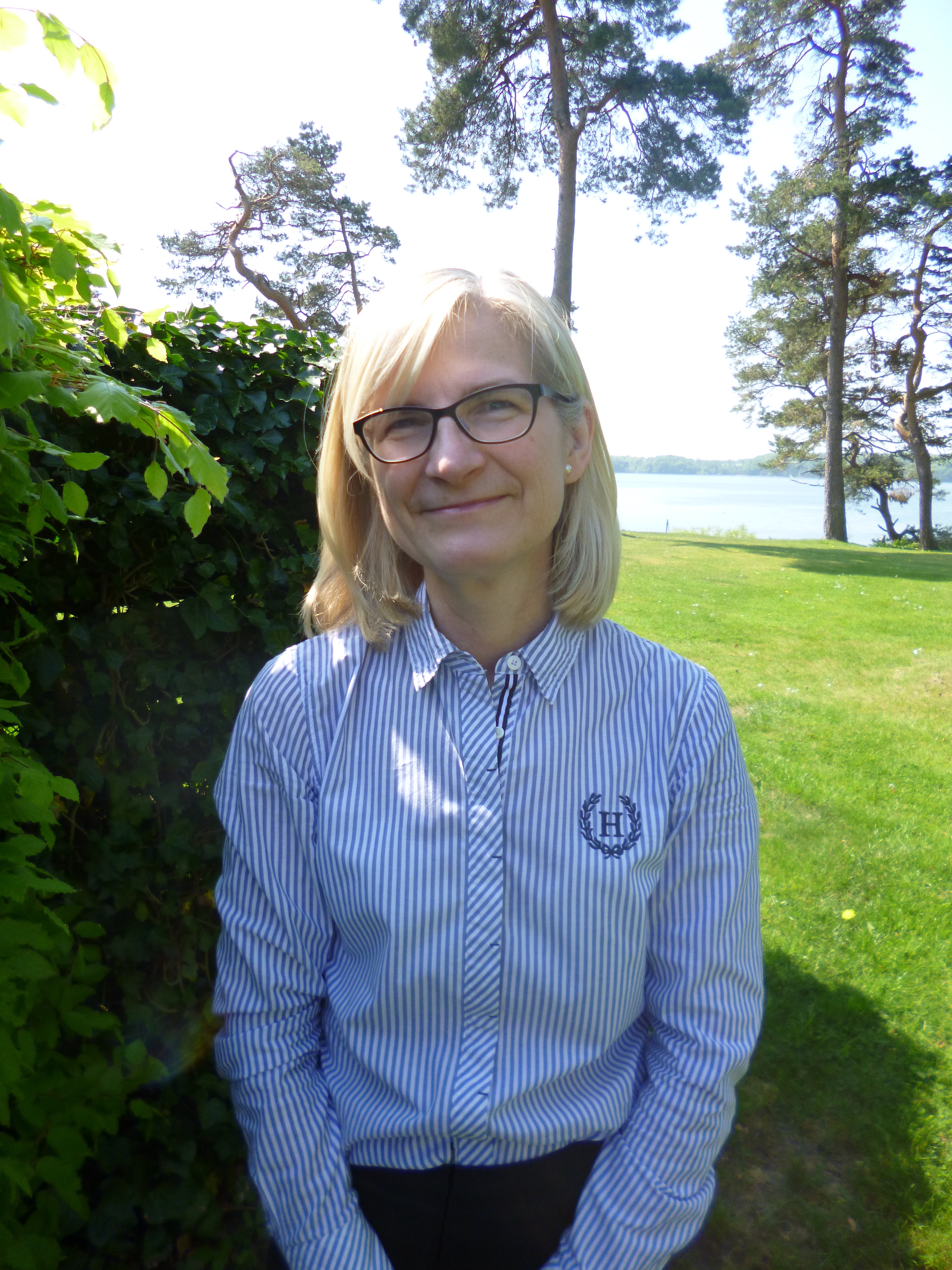
Anne Elisabeth Haxthausen is an Associate Professor at the Software Systems Engineering section within DTU Compute , Technical University of Denmark . Her work focuses on formal methods, railway control systems, and safety-critical software engineering. Founder and leader of the DTU Railway Verification Group Member of European Technical Working Group on Formal Methods in Railway Control Editorial board member for Springer Formal Aspects of Computing Journal Active in the Overture Language Board Her research emphasizes formal verification of railway interlocking systems, particularly through compositional approaches and automated tools. She has contributed to projects like RobustRailS, Overture, and RAISE, focusing on model-based development and verification. She serves as a tutor for bachelor students and contributes to the advisory committee for DTU's Computer Science and Engineering MSc program. Her recent publications explore challenges in verifying autonomous and AI-driven railway technologies.
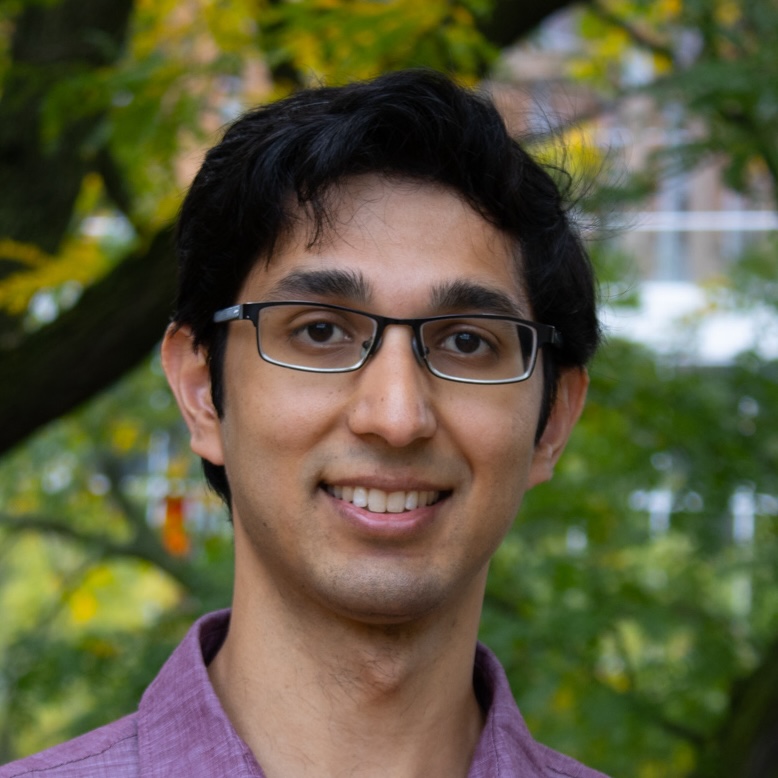
Tej Chajed is an Assistant Professor in the Department of Computer Science at the University of Wisconsin-Madison, where he conducts research in formal verification of systems software. His work focuses on building and proving the correctness of critical systems, particularly file systems and concurrent software. Dr. Chajed earned his PhD from MIT in the PDOS group, followed by a one-year postdoc at VMware Research before joining UW-Madison. His academic journey reflects a strong commitment to bridging theoretical formal methods with practical systems implementation. Chajed's research centers on formal verification techniques for systems software, with particular emphasis on concurrent and crash-safe systems . His work aims to eliminate bugs in critical software through mathematical proofs of correctness. Key contributions include DaisyNFS (a verified concurrent file system), the Perennial framework for reasoning about crash safety, and Goose for connecting proofs to Go code. His research spans the intersection of programming languages, operating systems, and formal methods, developing practical tools that bring verification to real-world systems. His recent publications demonstrate a consistent trajectory toward more practical and scalable verification techniques for increasingly complex systems. The research shows progression from foundational verification frameworks to applied work on specific systems like file systems, journaling, and distributed protocols. A notable trend is the focus on making verification more accessible and practical for systems developers, bridging the gap between theoretical formal methods and real-world software engineering. Dr. Chajed serves on numerous program committees including OSDI 2025 PC, PLDI 2024 PC, SySDW 2023 PC, ECOOP 2023 ERC, CPP 2023 PC, POPL 2023 PC, PLDI 2022 PC, POPL 2022 AEC, EuroDW 2021 PC, POPL 2021 AEC, PLDI 2020 AEC, POPL 2020 AEC, and SOSP 2019 AEC, reflecting his standing in the systems and programming languages research community. In teaching, Chajed has developed and instructed courses on systems verification, operating systems, and protocol verification. He previously helped create MIT's 6.826 (Principles of Computer Systems) during his PhD. His passion for technical communication was cultivated during his time as a Communication Fellow in the EECS Communication Lab at MIT, where he continues to offer guidance to students on writing and presentation skills. His research group at UW-Madison focuses on advancing the state of the art in systems verification, with current projects centered around practical verification frameworks for concurrent and crash-safe systems.
Srinivas Narayana is an Assistant Professor in the Department of Computer Science at Rutgers University, specializing in programmable networking, formal verification, and systems research. He holds a PhD from Princeton University and a B.Tech from IIT Madras, with postdoctoral work at MIT. His research focuses on building safe, high-performance networks through optimizing compilers, verified programming, and distributed system monitoring. He has received NSF grants, the CGO 2022 Distinguished Paper Award, and the 2017 SIGCOMM Best Paper Award. Education: PhD and MA in Computer Science, Princeton University (2016) B.Tech in Computer Science, IIT Madras (2010) Postdoctoral Research, MIT (2018) Research Interests: His work bridges networking and systems with a focus on compilers, formal methods, and programmable hardware. Notable projects include K2 compiler for eBPF, the eBPF verifier soundness work, and congestion control mechanisms like CCP. He explores parallel packet processing, privacy-preserving analytics, and load balancing strategies. Grants & Awards: NSF Awards #2422076, #1910796, #2019302 eBPF Foundation Grant Facebook Networking Research Award Network Programming Initiative (NPI) Funding Lab & Teams: Leads the NetSys group at Rutgers, collaborating with teams on projects like the eBPF verifier, verified packet processing, and network monitoring tools like Marple. His lab emphasizes open-source contributions and industry collaboration.
Dr. David Cock is a Senior Lecturer and Senior Researcher at ETH Zürich's Department of Computer Science, affiliated with the Systems Group. He holds a PhD from UNSW (2014) and a B.Sc. (hons) from UNSW (2004). His research focuses on formal verification, trustworthy systems, and hardware-software co-design, with notable contributions to projects like Enzian (a CPU/FPGA platform) and seL4 (formally verified kernel). He teaches Advanced Operating Systems and Informal Methods courses. Key achievements include the ACM Software System Award (2022) for seL4 and leadership in projects addressing hardware complexity and security. Research interests include formal methods for hardware modeling (Sockeye project), runtime verification, and mitigating timing channels. His work bridges theoretical foundations with practical systems, emphasizing secure and reliable computing platforms. Projects like Trustworthy BMC aim to enhance baseboard management systems' assurance. Collaborations span academia and industry, with open-source contributions to hardware designs and formal tools. Publications span formal verification, hardware modeling, and secure systems, with recent focus on heterogeneous computing and declarative hardware specifications. Teaching emphasizes practical formal techniques and OS design, leveraging real-world hardware (e.g., Barrelfish). His lab, the Systems Group, explores cutting-edge challenges in systems software and architecture.
Peter Sewell is Professor of Computer Science at the University of Cambridge Computer Laboratory, where he builds rigorous foundations for real-world computer systems to enhance robustness, security, and formal verification of hardware-software interactions. His educational background includes undergraduate studies at the University of Cambridge and University of Oxford, followed by a PhD from the University of Edinburgh in 1995 under Robin Milner's supervision. Professor Sewell's research focuses on concurrency models (x86, ARM, Power, C/C++11), verified compilation, formal semantics for C/linking/filesystems/TLS, and applied semantics tools. He pioneers executable ISA specifications through projects like Sail and Cerberus, addressing relaxed-memory concurrency and capability-based security architectures. His 2020-2026 publications reveal a clear trajectory toward formal verification of hardware security properties, with increasing emphasis on capability systems (Arm Morello, CHERI) and real-world applicability of concurrency models across ARM, RISC-V, and MIPS architectures. Scientific recognition: Royal Society University Research Fellowship (1999-2007) He leads major research initiatives in systems security formalization, supported by Cambridge positions and collaborative projects with industry partners. His work bridges theoretical formal methods and practical systems engineering through executable semantics frameworks. As a core member of Cambridge's Systems Research Group, he directs projects including Sail (ISA semantics), Cerberus (C semantics), and verification frameworks for capability architectures, fostering interdisciplinary collaboration across hardware and software security domains.
Dr. Hafizul Asad serves as a Lecturer in Dependability at City St George's, University of London, leveraging his PhD in Electrical Engineering (City University of London, 2016) and MS in Aerospace Engineering (University of Belgrade, 2008) to advance cybersecurity and formal verification research. His expertise bridges critical infrastructure protection and cyber-physical systems security, with significant contributions to IoT/IIoT security frameworks. His educational journey includes: PhD in Electrical Engineering, City, University of London (2012-2016) MS in Aerospace Engineering, University of Belgrade, Serbia (2007-2008) BSc in Electrical and Electronics Engineering, University of Engineering and Technology Peshawar, Pakistan (1999-2003) Asad's research centers on formal verification of hybrid systems and verifiable intrusion detection mechanisms for interconnected environments. He pioneers provably robust security architectures for IoT/IIoT systems, emphasizing mathematical verification to ensure system resilience against cyber threats. His work integrates diversity principles to create defense-in-depth strategies for critical infrastructure, with recent focus on wind turbine cyber-safety and industrial control system protection. Analysis of his 15 most recent publications (2014-2025) reveals an evolution from aerospace applications and analog circuit verification toward cutting-edge cybersecurity for cyber-physical systems. His 2023-2025 work demonstrates increasing specialization in IoT security and formal methods, while maintaining foundational contributions to diversity-based security architectures established in his 2015-2018 research. No scientific awards or prizes are documented in the provided materials, though he maintains professional standing as a British Computer Society member and Higher Education Academy Associate Fellow. Details regarding doctoral student supervision or specific research grants are not disclosed in the source text. His professional trajectory indicates significant project involvement, including the D3S security project at City University of London (2015-2018) and Rolls-Royce-funded Future Systems Simulator development at Cranfield University (2018-2019), though current laboratory affiliations remain unspecified.
Alexandre Bartel is a Professor in the Department of Computing Science at Umeå University, Sweden, specializing in software security and software engineering. His research focuses on system security and analysis of permission-based software stacks, particularly Android. With numerous publications in top-tier security and software engineering conferences and journals, Bartel has established himself as a leading researcher in vulnerability analysis and software security. Bartel's research interests primarily center around software security, with a particular emphasis on Java and Android ecosystems. His work delves into vulnerability analysis, deserialization attacks, control flow integrity, and security mechanisms for complex software systems. He investigates how to verify security properties through efficient algorithms and examines existing software layers from a security perspective. His research bridges theoretical security concepts with practical implementation challenges in real-world systems. Analysis of Bartel's recent publications reveals a strong focus on Java deserialization vulnerabilities, control flow integrity mechanisms, and Android security. His work demonstrates a consistent trajectory from fundamental vulnerability analysis to developing practical security solutions and benchmarks. The research spans both theoretical frameworks and empirical evaluations, with significant contributions to understanding long-term security adoption patterns and developing tools for vulnerability detection. Scientific Awards: Most influential Paper ICSE N-10 Award for IccTA: Detecting Inter-Component Privacy Leaks in Android Apps Bartel actively contributes to the academic community through service roles, having served on program committees for major conferences including ASE, ESEC/FSE, ICSE, and FSE. His research has practical implications for software developers and security practitioners, particularly in the areas of vulnerability detection and security mechanism implementation. While specific grant information isn't detailed in the provided materials, his extensive publication record suggests successful funding for his research initiatives. Though not explicitly detailed in the provided information, Bartel's research likely involves collaboration with students and researchers on projects related to software security analysis. His work on benchmarks like Gleipner and CONFUZZION suggests involvement in developing tools and resources for the security research community.
Tej Chajed is an Assistant Professor in the Department of Computer Sciences at the University of Wisconsin-Madison, focusing on formal verification of systems software. His research bridges theoretical foundations and practical implementations to ensure software correctness in concurrent and crash-safe systems. Research interests include formal verification, concurrency, crash safety, and programming languages, particularly using Coq, Perennial, and Goose frameworks. He has contributed to systems like DaisyNFS, a verified file system with sequential reasoning, and Verus, a foundation for systems verification. His work appears in top venues like SOSP, OSDI, and PLDI. 2025: Dafny PC Member 2024: PLDI Committee Member, CoqPL Co-chair 2023: CoqPL Co-chair, POPL Program Committee He actively mentors students and develops tools for systems verification education, including extensive Coq-based course materials.
Professor Sophia Drossopoulou is a Professor of Programming Languages in the Department of Computing at Imperial College London, part of the Faculty of Engineering. Her affiliations include the Centre for Cryptocurrency Research and Engineering and the Sound Programming Languages research group. She holds a visiting researcher position at Microsoft Research (UK) from May 2019 to May 2020. Her research focuses on foundational programming language design and formal methods, emphasizing concurrency, type systems, and program verification. Key areas include concurrent program reasoning (e.g., TaDA framework), memory management (reference capabilities, garbage collection), and secure systems (smart contracts, cyber-physical systems). She explores practical language extensions for performance optimization (e.g., cache locality) while maintaining safety guarantees through formal verification techniques. Her work spans theoretical contributions (formal semantics, logical frameworks) and applied systems (compilers, runtime verification tools like Zeno). Recent trends show strong engagement with actor-based models (Pony language), digital twins, and cybersecurity challenges in modern software systems. Awards and recognitions are not explicitly listed in the provided text, but her extensive publication record in top venues (ECOOP, POPL, TOPLAS) indicates academic impact. Her advising focuses on graduate students in systems programming and formal methods, though specific student names are not mentioned here. Labs and collaborations involve the Sound Programming Languages group at Imperial College, emphasizing interdisciplinary work between formal methods and practical language implementation. Current projects include improving concurrency semantics and verifying complex systems through compositional reasoning techniques.
Gabriela F. Ciocarlie is a Researcher at SRI International, focusing on advancing cybersecurity, IoT security, and formal verification techniques. Her work bridges theoretical computer science with practical applications in critical infrastructure protection and manufacturing systems. She has contributed to over 48 publications across conferences like CCS, NDSS, and IEEE venues. Her research interests span adversarial machine learning, secure manufacturing automation, and resilient biomanufacturing systems. Notable projects include developing frameworks for verifying manufacturing design integrity and creating end-to-end security solutions for cyber-physical systems. She has also pioneered work on deployable adversarial attacks against neural networks and automated attack investigation tools like autoMPI. Key collaborations include partnerships with institutions like Columbia University (former affiliation) and industry leaders. Her work often addresses real-world challenges such as pandemic-resilient biomanufacturing and securing critical infrastructure through cyber-physical integration.
Manos Kapritsos is an Associate Professor in the Department of Computer Science & Engineering at the University of Michigan, Ann Arbor. His research focuses on increasing the reliability of distributed systems through formal verification, fault-tolerant replication, and automated proof techniques. He has contributed to projects such as Aegean (replication beyond client-server models), I4 (automated inductive invariant inference), and Armada (concurrent code verification). His work emphasizes practical applications of formal methods to ensure system correctness and performance. Education details are not explicitly provided in the text, but his career trajectory suggests advanced academic training in computer science. His research interests include distributed systems, formal verification of protocols, and high-performance systems. Notable awards include the NSF CAREER Award (2021), Google Faculty Award (2017), and Distinguished Paper Awards at PLDI 2020 and USENIX Security 2017. Teaching includes courses on formal verification, operating systems, and distributed systems, reflecting his expertise in systems software. He has advised students through his GLaDOS research group, though specific advisee names are not listed. Key grants include NSF FMitF and Large grants to advance verification techniques for distributed systems. Recent articles focus on automating proofs for undecidable protocols (Basilisk), efficient replication communication (Scrooge), and formal latency analysis (Performal). His work bridges theory and practice, aiming to simplify end-to-end verification of complex systems.
Diego F. Aranha is an Associate Professor in the Department of Computer Science at Aarhus University . His research focuses on cryptographic systems, cybersecurity, and privacy-preserving technologies with applications in voting systems, post-quantum cryptography, and secure computation. He has contributed extensively to homomorphic encryption, secure multiparty computation (MPC), and cryptanalysis of cryptographic implementations. Key projects include: MPCC (2025-2028) : Multi-Party Computation in the Confidential Cloud SCI (2024-2027) : Secure Computation Infrastructures for the Retail Industry RENAIS (2021-2026) : Residue Number Systems for Cryptography His work emphasizes practical efficiency and formal verification of cryptographic protocols. Recent publications highlight advancements in lattice-based cryptography, secure voting schemes, and mitigating side-channel vulnerabilities in post-quantum algorithms. He actively collaborates on open-source cryptographic libraries and standards, with a focus on bridging theoretical security and real-world implementation challenges.
Rui Zhang is an Assistant Professor in Computer Science and Engineering , with research expertise spanning Natural Language Processing , Large Language Models , and Semantic Parsing . His recent work focuses on enhancing multimodal consistency , fairness in summarization , and mathematical reasoning capabilities of LLMs. Key Research Themes: Text-to-SQL and cross-domain semantic parsing Multimodal learning (vision-language models) Fairness and bias mitigation in NLP tasks Efficient model training and prompt optimization Scientific Awards: National Science Foundation CAREER Award (2024) Grants & Projects: CAREER: Trustworthy Human-Centered Summarization (NSF, 2024-2029) addressing LLM trustworthiness through user-centric summarization frameworks. Article Trends: Recent publications emphasize LLM collaboration , compressed reasoning models , and cross-domain knowledge alignment . He explores multi-agent systems , mathematical reasoning , and vision-language limitations , particularly in geometric perception. Applications span bioinformatics (Alzheimer's biomarker discovery) and democratic AI frameworks.
Alvin Cheung is an Associate Professor in the Computer Science Division at UC Berkeley's EECS department. He is affiliated with the Data Systems and Foundations group, Programming Systems group, Sky Lab, and SLICE Lab, and serves as a faculty affiliate at the Berkeley Institute for Data Science. He advises the Data Science Discovery Program and provides technical guidance to industry partners. His research spans data management, programming languages, and scalable software systems, with emphasis on helping users process large datasets efficiently. Key innovations include verified lifting (applying formal methods and ML to infer program properties) and systems for optimizing database-backed applications and geospatial analytics. Recent work explores LLM-driven code optimization and transpilation techniques. His publications (2023-2025) show strong trends in ML-enhanced systems, verified compilation, and data management tools. Articles frequently integrate formal methods, program synthesis, and hardware-aware optimizations across domains like databases, distributed computing, and HCI. Scientific Awards: ACSIC Rock Star Award (2025) Dahl-Nygaard Junior Prize (2024) VLDB Early Career Research Contribution Award (2023) IEEE TCDE Rising Star Award (2020) Sloan Fellowship (2019) NSF CAREER Award (2017) 20+ additional honors Advising & Grants: He mentors PhD/MS students (e.g., Lily Liu at OpenAI, Chenglong Wang at Microsoft Research). Research is funded by: NSF DOE ONR ARO Intel Notable grants include ONR Young Investigator Award and ARO Early Career Program Award. Labs & Teams: Leads projects in Berkeley's Data Systems/Programming Systems groups and collaborates with Sky Lab/SLICE Lab. Manages labs focused on verified compilation (e.g., Tenspiler) and data infrastructure (e.g., Spatialyze).
Clément Pit-Claudel is an Assistant Professor at École Polytechnique Fédérale de Lausanne (EPFL), leading the SYSTEMF lab focused on programming languages, formal methods, and systems engineering. His work bridges mathematical formalisms with practical system development to achieve full assurance in critical software and hardware. PhD in Computer Science from MIT (2016) William A. Martin Memorial Thesis Award recipient Former Senior Applied Scientist at Amazon AWS Teaching accolades including the Frederick C. Hennie III Teaching Award Research spans three axes: extensible proof-producing compilers for performance-critical systems, verified hardware compilation with cycle-accurate semantics, and interactive theorem prover tooling for democratizing verification technology. Key projects include Kôika for hardware verification, Alectryon for Coq proof visualization, and Fiat for correct-by-construction program synthesis. Recent publications address JavaScript regex verification (ICFP 2024), cryptographic server integration (PLDI 2024), and hardware simulation optimization (ASPLOS 2021). Articles demonstrate expertise in functional-to-imperative translation, domain-specific compiler extensions, and hardware-software co-verification. Scientific contributions recognized through: Distinguished artifact award (SLE 2020) MIT William A. Martin Thesis Award Frederick C. Hennie III Teaching Award Teaching philosophy emphasizes hands-on lab instruction , oral assessment , and automated tooling . Courses taught include Software Construction (undergraduate) and Interactive Theorem Proving (graduate) at EPFL. Research service includes program committee roles at Dafny, POPL, and SPLASH conferences.