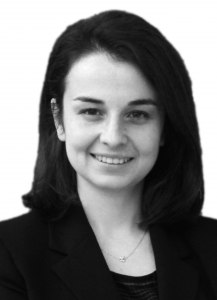
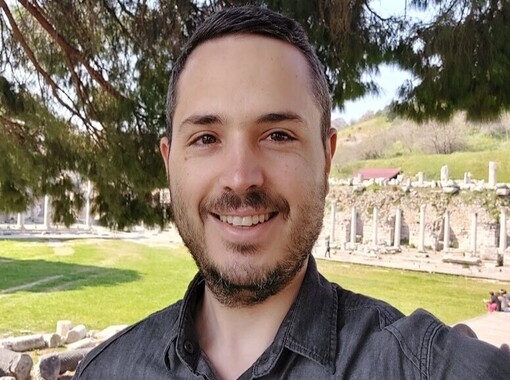
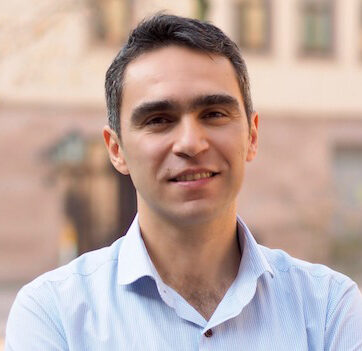
Prof. Dr. Mustafa Ersel Kamaşak is a Professor at the Department of Computer Engineering , Istanbul Technical University . His academic journey includes a PhD in Electrical and Computer Engineering from Purdue University and a MA in Electrical and Electronic Engineering from Bogazici University . His research interests span Signal Processing , Biomedical Engineering , Image Processing , Machine Learning , and Total Variation Regularization , with a focus on applications in Medical Imaging , Geospatial Analysis , and Logistics Optimization . His recent work includes 2024 studies on barcode detection and mandibular morphology analysis , 2023 research on Antarctic sea level monitoring , and 2022 projects on fluorescence microscopy restoration . Notable projects led by him include Automatic Detection and Transfer of Document Types (TTO, 2021), Telehealth Equipment Development (TTO, 2019-2021), and Directional Total Variation Model (TUBITAK, 2016-2017). His work has been cited 18 times (Scopus h-index: 22).
Prof. Dr. İmdat Kara is a full-time faculty member at Başkent University's Industrial Engineering Department, College of Engineering, with a career spanning over four decades. He holds a PhD in Industrial Engineering (1976), an MS in Operations Research (1974), and a BSc in Mathematics (1968) from Anadolu University and Middle East Technical University respectively. His research focuses on Operations Research , Modeling and Optimization , and Multi-Criteria Decision Making . With an H-Index of 11, he has published extensively on vehicle routing problems, team formation in sports, integer programming formulations, and process improvement. His work includes 113 journal articles and 973 books/chapters. 2016: Operational Research Association Honor Award His recent publications (2023-2021) address drilling process optimization, electricity network design, sports team harmony modeling, and advanced formulations for traveling repairman problems. He has supervised 11 PhD and 12 master's theses, including work on time window constraints, heterogeneous fleets, and demand-selective routing. Collaborators include leading researchers like Prof. Dr. Berna Dengiz and Prof. Dr. Yusuf Tansel İç.
Dr. Esra Dinler serves as an Assistant Professor in the Department of Industrial Engineering at Baskent University's Faculty of Engineering, where she teaches Production Planning, Operations Research, and Supply Chain Management courses. With a PhD from Gazi University (2015) and prior degrees from Baskent University, she maintains an active research profile with 15 journal articles, 17 conference papers, and 4 book chapters through 2025. Education PhD in Industrial Engineering, Gazi University, 2015 MSc in Industrial Engineering, Baskent University, 2007 BSc in Industrial Engineering, Baskent University, 2005 Research Focus Her work centers on Operations Research and Supply Chain Management , specializing in ergonomic job rotation for automotive assembly lines, fuzzy logic applications in defense project risk management, and combinatorial optimization for travel routing problems. She integrates multi-objective mathematical modeling with real-world industrial case studies, particularly addressing challenges in bearing manufacturing, fighter aircraft development, and hazardous material recycling. Publication Trends Recent publications (2023-2025) demonstrate increasing emphasis on intuitionistic fuzzy sets for decision-making under uncertainty and selective clustered traveling salesman problem variants. Her research bridges theoretical optimization techniques with practical applications in defense projects (e.g., obsolescence risk management) and sustainable operations, showing strong interdisciplinary collaboration across engineering domains. Academic Contributions Dr. Dinler's teaching portfolio includes END 434 (Production Planning), SOS 222 (Operations Research), and specialized courses in supply chain management. Her office hours and structured course schedule reflect dedicated student engagement, though no formal advisee lists or grant details appear in the source materials. With an h-index of 3, her scholarly impact focuses on translating complex optimization models into actionable industrial solutions.
Hilmi Berk Çelikoğlu is a full Professor specializing in Traffic Flow Theories and Transportation Network Modeling at Istanbul Technical University (ITU) Department of Civil Engineering. He has served as the head of the ITU ITS Research Lab since 2014 and previously held a Visiting Professor position at PennState Department of Computer Science & Maths between 2014-2015. His educational background includes B.Sc. (2000), M.Sc. (2002), and Ph.D. (2006) degrees, all from Istanbul Technical University in Transportation Engineering. Professor Çelikoğlu's research spans multiple critical areas in modern transportation systems. His primary focus includes Traffic Flow Theories and Transportation Network Modeling, with significant contributions to on-demand mobility systems and sustainable urban transportation solutions. He has pioneered work in dynamic network management, traffic flow control and simulation, and Intelligent Transportation Systems (ITS). His recent research has increasingly focused on the integration of electric vehicles into transportation networks, cooperative adaptive cruise control systems, and environmentally conscious transportation planning. His work bridges theoretical modeling with practical applications, particularly in the context of Istanbul's complex urban transportation challenges. His recent publications demonstrate a strong trend toward addressing contemporary transportation challenges, particularly the integration of emerging technologies like connected and autonomous vehicles into existing infrastructure. A significant portion of his work focuses on optimizing traffic flow in mixed environments containing both traditional human-driven vehicles and newer cooperative adaptive cruise control systems. His research also shows increasing emphasis on sustainability, with multiple studies examining emissions reduction, electric vehicle routing, and environmentally conscious transportation network design. Professor Çelikoğlu has received notable recognition for his work, including: Project Performance Award from TUBITAK (2018) Throughout his career, Professor Çelikoğlu has secured substantial research funding from prestigious organizations including TUBITAK, EU COST, and EU Horizon programs. His current research portfolio includes multiple active projects focusing on demand-based mobility systems, integrated mobility services, cooperative vehicle dynamics, and environmentally sensitive transportation network optimization. He has mentored numerous students and researchers through his leadership of the ITU ITS Research Lab, fostering the next generation of transportation engineers and researchers. Professor Çelikoğlu leads the ITU ITS Research Lab, which serves as a hub for cutting-edge transportation research. The lab focuses on applying advanced computational methods to solve complex transportation challenges, with particular expertise in traffic simulation, network modeling, and intelligent transportation systems. Under his leadership, the lab has become a center for innovation in transportation engineering, collaborating with both national and international partners to address pressing urban mobility issues.
Ferhan Cebi is a Professor at Istanbul Technical University's Department of Management Engineering, actively contributing to academia since 2000. With expertise in decision science, operations management, and Industry 4.0, he has published extensively in areas including supply chain networks, fuzzy logic applications, and insurance analytics. His research spans theoretical model development and real-world implementations. Academic credentials include: Doctorate in Management Engineering (ITU, 1997) MSc in Management Engineering (ITU, 1989) Licence in Chemical Engineering (ITU, 1985) Research interests focus on: Industry 4.0 transformation frameworks Fuzzy decision-making systems Supply chain optimization Insurance company performance analysis Smart logistics solutions Digital transformation in performing arts Recent publications demonstrate cross-disciplinary impact: 2024-2025 work on cosmetic product tracking systems Dynamic efficiency analysis for non-life insurance companies Industry 4.0 operational improvement models Container loading optimization algorithms Recognitions include: 2022 ITU Academic Performance Awards 1999 IMDA Best Congress Paper Active in academic service since 2000, he has held leadership roles including Deputy Head of Department (2008-2013) and Program Head (2004-2006). His h-index of 11 reflects significant research impact with over 467 Scopus citations.
Dr. İsmail Kayahan serves as a full-time Lecturer in the Department of Industrial Engineering within the Faculty of Engineering and Natural Sciences at Işık University. His academic journey began with a full scholarship for undergraduate studies in Systems Engineering at Yeditepe University, followed by doctoral research in the same field. His educational qualifications include: Doctor of Philosophy (PhD) in Systems Engineering, Yeditepe University (2010-2019) Bachelor of Science (BSc) in Systems Engineering, Yeditepe University (2004-2010), completed with a full scholarship Dr. Kayahan's research spans Industrial Engineering, Operations Research, Systems Engineering, and Data Mining. His work focuses on optimization problems in energy systems including wind power plant battery integration, hydro-chain scheduling, and stochastic model predictive control for wind-PHS systems. He has also investigated urban waste collection via vehicle routing and pharmacy assignment problems with equity considerations. He teaches core courses such as Introduction to Data Mining, Operations Research I/II, Computational Methods in Industrial Engineering, and Graduation Design Project across multiple academic years (2019-2025). His instructional approach covers both English and Turkish language offerings, reflecting Işık University's bilingual environment.
Raha Akhavan is a **Professor of Operations Management & Business Analytics** at the Sabanci School of Management, Sabanci University (Nov 2021–present). Previously, she served as Associate Professor at the same institution (2016–2021) and at Universidad de los Andes in Colombia (2014–2016), with earlier roles as an Assistant Professor (2009–2014) and a Senior Industrial Engineer at Intel Corporation (2006–2009). Education: Ph.D., Industrial and Systems Engineering, North Carolina State University (May 2011) M.Sc., Industrial and Systems Engineering (Operations Research co-major), North Carolina State University (August 2005) B.Sc., Industrial Engineering, Sharif University of Technology (December 2001) Research Interests : Stochastic modeling applied to health and humanitarian logistics, medical decision making, revenue management, vehicle routing problems, and manufacturing systems. Her work bridges theoretical operations research with practical applications in healthcare, disaster management, and environmental science. Publications : Over 30 peer-reviewed articles in top journals like Decision Analysis , Information Systems Research , and European Journal of Operational Research , focusing on dynamic policies for healthcare crises, disaster risk management, and optimization frameworks for logistics and infrastructure systems. Awards & Memberships : Member of INFORMS, IISE, IEEE, and ASQ. No specific awards listed, but her extensive publication record reflects recognition in her field. Grants & Labs : Active in collaborative projects involving disaster response, urban air quality modeling, and healthcare logistics. No specific grant details provided.
Yasemin Limon is an Assistant Professor at Bilkent University's Faculty of Business Administration, specializing in Operations Management with a focus on biopharmaceutical operations. She holds a Ph.D. and M.S. from the University of Wisconsin-Madison in Industrial Engineering and B.S./M.S. degrees from Middle East Technical University. Her research emphasizes supply chain management, contract design, and resource allocation in biopharmaceutical contexts. Education: Ph.D. in Industrial Engineering, University of Wisconsin-Madison (2019) M.S. in Manufacturing and Production Systems, University of Wisconsin-Madison B.S. & M.S. in Industrial Engineering, Middle East Technical University Research Interests: Contract Design for Biopharmaceutical Manufacturing Resource Allocation in Production Systems Supply Chain Optimization with Uncertainty Logistics and Routing in Healthcare Supply Chains Publications reflect a strong focus on biopharmaceutical operations, including contract frameworks, dynamic scheduling, and resource optimization. Her work bridges theoretical models with industry applications in biotechnology and manufacturing.
İpek Damla Akpınar is a Researcher in the Industrial Engineering Program at Başkent University, actively contributing to operations research with a focus on shared mobility systems and combinatorial optimization. Her work addresses critical challenges in vehicle routing, rebalancing logistics for bike/car sharing networks, and decision support modeling for sustainable transportation infrastructure. Her research spans Operations Research, Logistics and Supply Chain Management, Vehicle Routing, Shared Mobility Systems, Combinatorial Optimization, and Decision Support Systems. Key contributions include developing mathematical frameworks for heterogeneous fleet management, battery-constrained rebalancing in electric vehicle sharing, and fuzzy decision models for ERP software selection. She employs advanced metaheuristics like Variable Neighborhood Descent to solve complex routing problems with practical constraints. Analysis of her publication trends shows consistent specialization in optimization for shared mobility since 2019, with accelerating output in 2022-2025. Her recent work demonstrates increasing technical sophistication in handling heterogeneous vehicle fleets, battery management systems, and multi-objective decision scenarios. This trajectory positions her research at the intersection of sustainable urban mobility and advanced operations research methodologies, with clear applications in smart city infrastructure.
MÜJDE GENEVOIS is a Professor at Galatasaray University's Faculty of Engineering and Technology, Department of Industrial Engineering. She has been a faculty member since 1993, progressing from Research Assistant to full Professor, with significant administrative roles including Vice Dean (2023-2024) and Secretary General (2016-2023). Her educational background includes a Doctorate (1996-1999) and Postgraduate studies (1995-1996) from Institut National Ploytechnique de Grenoble in Industrial Engineering, and an Undergraduate degree (1989-1993) from Istanbul Technical University in Business Engineering. Professor Genevois specializes in supply chain management, particularly focusing on ATM cash optimization, sustainable manufacturing, and decision support systems. Her research integrates operations research, fuzzy logic, and mathematical programming to solve complex industrial problems. She has developed innovative approaches for cash management in banking systems, flexibility assessment in manufacturing, and sustainable product design. Her publication record shows a clear trajectory from theoretical operations research in early career to applied banking and sustainability research in recent years. The most recent articles demonstrate strong focus on ATM cash management optimization, bullwhip effect mitigation in supply chains, and application of computational intelligence in financial and healthcare domains. As an academic advisor, she has supervised 28 graduate theses across diverse topics including cash replenishment strategies, reverse logistics networks, sustainability in supplier selection, and flexibility portfolio management. She has led numerous research projects funded by Higher Education Institutions, with recent projects focusing on disease risk prediction, supply chain operations under uncertainty, and banking sector ATM and cash management systems. Professor Genevois maintains an active research laboratory focused on industrial engineering applications, with current work emphasizing machine learning applications in cash demand prediction, sustainable supply chain management, and healthcare operations optimization.
Selin Özpeynirci is a Professor in the Department of Industrial Engineering at the Faculty of Engineering, İzmir University of Economics, where she has been employed since February 2008. Her academic career began as a research assistant at Middle East Technical University's Department of Industrial Engineering from 2002 to 2007, where she also completed all her degrees. She has held visiting researcher positions at prestigious French institutions including Ecole Centrale Paris (2014-2015) and Centrale Supelec (2019-2020), supported by TÜBİTAK 2219 grants. Her educational background includes: B.S. in Industrial Engineering, Middle East Technical University (2002) M.S. in Industrial Engineering, Middle East Technical University (2004) Ph.D. in Industrial Engineering, Middle East Technical University (2007) Özpeynirci's research focuses on optimization methodologies applied to complex industrial systems. She specializes in multi-criteria decision making frameworks that address real-world constraints in production environments. Her work bridges theoretical advances in mathematical programming with practical applications in manufacturing scheduling and resource allocation. Current investigations emphasize interactive algorithms that incorporate human decision-maker preferences into computational models, particularly for sorting and selection problems with equity considerations. Analysis of her 15 most recent publications reveals a strong trajectory in inverse multiple criteria problems and constrained resource allocation. Her work consistently integrates flexible manufacturing systems concepts with advanced decision theory, showing increasing sophistication in handling preference uncertainty and balance requirements. The publications demonstrate methodological evolution from classical scheduling approaches toward hybrid interactive-optimization frameworks that accommodate human judgment in complex decision environments. Her scientific recognition includes: TÜBİTAK 2219 Research Grant for Ecole Centrale Paris (2014-2015) TÜBİTAK 2219 Research Grant for Centrale Supelec (2019-2020) Özpeynirci actively collaborates with international researchers including Vincent Mousseau (France), Özgür Özpeynirci (Turkey), and Burak Gokgur (Turkey) on projects spanning multiple criteria decision analysis and production systems optimization. Her current research agenda explores drone-integrated logistics and advanced decomposition methods for large-scale inverse sorting problems, supported by ongoing institutional affiliations and research grants. While specific lab information isn't provided in the source material, her work clearly operates within the industrial engineering research ecosystem focused on computational decision support systems.
Osman Gökalp is an Assistant Professor in the Department of Computer Engineering at Izmir Institute of Technology (IZTECH). He holds B.Sc., M.Sc., and Ph.D. degrees from Ege University's Computer Engineering department (2010, 2012, 2018). Previously, he served as a research assistant at Yaşar University (2011-2012) and Ege University (2014-2021), followed by an assistant professor position at Izmir Katip Çelebi University (2021-2024). His research focuses on evolutionary computation, metaheuristic algorithms, machine learning, and optimization problems with applications in medical imaging, cloud computing, and wireless sensor networks. Education: B.Sc. Computer Engineering, Ege University (2010) M.Sc. Computer Engineering, Ege University (2012) Ph.D. Computer Engineering, Ege University (2018) Research Interests: His work spans algorithm design for optimization problems, including metaheuristics like Greedy Construction and Differential Evolution. Notable areas include DNA motif discovery, task scheduling in cloud computing, and Alzheimer's disease detection via medical imaging. Projects: Contributions include repositories like 'WSN_Coverage_And_Connectivity' (Differential Evolution for sensor networks), 'CloudTaskSchedulingOptimization' (metaheuristics for cloud task scheduling), and 'MotifDiscovery' (DNA sequence analysis using GRASP metaheuristic). Labs/Teams: Active in IZTECH's Computer Engineering research groups, focusing on computational intelligence and algorithm development for real-world applications.
Assoc. Prof. Dr. Seda Yanık Özbay is an academic at Istanbul Technical University (ITU), affiliated with the Department of Industrial Engineering and the Department of Business Administration within the College of Engineering. She holds a PhD in Industrial Engineering from ITU and has extensive professional experience spanning academia and industry. Education: PhD in Industrial Engineering, Istanbul Technical University (2006–2011) Master’s in Engineering Management (Thesis), ITU (2002–2004) Bachelor’s in Industrial Engineering, ITU (1995–1999) Research Focus: Her work integrates machine learning, optimization, and decision science with applications in healthcare systems, sustainable logistics, transportation engineering, and educational technology. Notable areas include AI-driven disease diagnosis, supply chain optimization, and stakeholder-oriented decision frameworks for distance education. Recent publications emphasize ensemble methods in medical diagnostics and multi-criteria approaches to public transportation design. Articles Trends: Her 2020–2024 work showcases growth in AI applications (e.g., coronary disease prediction) and sustainability-focused solutions (e.g., micro-credentials in e-learning). Collaborations often bridge technical domains like neural networks with societal challenges in healthcare and education. Awards: No specific awards listed. Advising & Grants: While advising details are not explicitly stated, her publications reflect collaborative research with graduate students and industry partners. Research activities include grants related to logistics optimization and smart transportation systems. Labs/Teams: Engaged in interdisciplinary groups at ITU’s Industrial Engineering Department, focusing on operations research and applied AI solutions.
Şeyda Serdar Asan is an Associate Professor in the Department of Industrial Engineering at Istanbul Technical University (ITU), affiliated with the Faculty of Business Administration. She holds a PhD from Technische Universität Berlin. Her research focuses on supply chain networks, service systems, and medical tourism logistics, with recent work emphasizing circular supply chains for electric vehicles and sustainable drone delivery solutions. Education: PhD in Industrial Engineering, Technische Universität Berlin (2003–2009) MSc in Engineering Management, ITU (1999–2001) BSc in Industrial Engineering, ITU (1995–1999) Research Interests: Her work addresses challenges in service supply chains, risk assessment, and sustainability. She has pioneered models for medical tourism operations and circular economy applications in battery management. Recent studies include drone-assisted last-mile delivery under environmental constraints and supplier selection in healthcare logistics. Projects: Drone-Assisted Last-Mile Delivery Routing Model (2022–2024) Analysis of Health Tourism Demand in Turkey (2019–2020) Acorn-Based Sustainable Food Supply Chain (2023 ongoing) Advising & Grants: Dr. Asan has supervised over 15 theses, focusing on supply chain optimization, medical tourism, and sustainable logistics. She has secured grants totaling over ₺500k for projects on drone routing and healthcare logistics. Labs/Teams: She leads the ITU Supply Chain Innovation Lab, collaborating with industry partners on applied research in smart logistics and circular economy systems.
Barış Yıldız is an Assistant Professor in the Department of Industrial Engineering at Koç University, where he focuses on network design and optimization in transportation systems. His work addresses urban mobility, autonomous vehicles, and logistics challenges, emphasizing sustainable and efficient solutions. He leads projects funded by the European Research Council (ERC) and TÜBİTAK, including initiatives on crowdshipping, social aid distribution, and shared transportation networks. Research Interests: Urban logistics, autonomous and electric vehicles, optimization algorithms, machine learning applications in transportation, and multi-modal network design. His projects often integrate public transit systems to enhance delivery efficiency and reduce environmental impact. Key Projects: GoodMobility (ERC STG 2022) : Developing a network-centric logistics framework prioritizing public value over traditional business models. Social Aid Distribution Network (TÜBİTAK 1001) : Leveraging public transit for efficient in-kind donation delivery via volunteer couriers. Shared Network Design (TÜBİTAK 3502) : Optimizing shared transportation networks to reduce costs and emissions in urban logistics. Publications span transportation optimization, drone routing, electric vehicle infrastructure, and algorithmic innovation in logistics. His work is published in top journals like Transportation Research Part C and Operations Research .