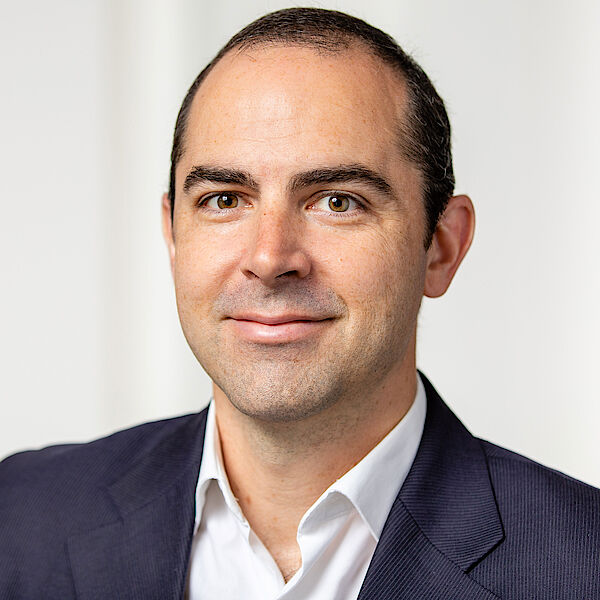
Ran Dai is a Professor in the Department of Aeronautics and Astronautics at Purdue University's College of Engineering. His research focuses on optimal control theory, trajectory optimization, and robotics applications, with an emphasis on aerospace systems and energy-efficient solutions. He leads the Autonomous Optimization Lab (AOL) and has contributed extensively to advancements in learning-based control, mixed-integer programming, and deployable space systems. His work spans applications such as spacecraft guidance, unmanned vehicle path planning, and energy management for solar-powered systems. Notable contributions include algorithms for fuel-optimal powered descent, real-time trajectory optimization, and origami-inspired deployable mechanisms. He holds a Ph.D. in Aerospace Engineering and has published over 100 peer-reviewed articles. Research interests include: Optimal control and trajectory optimization Reinforcement learning for decision-making Autonomous systems and robotics Energy-efficient aerospace engineering Recent work emphasizes meta-reinforcement learning frameworks and adaptive optimization engines for complex systems.
Maria Paz Linares Herreros is a Lecturer at the Universitat Politècnica de Catalunya (UPC), affiliated with the School of Mathematics and Statistics (FME) and the Department of Statistics and Operations Research. She is a member of the IMP (Information Modeling and Processing) research group and collaborates with inLab FIB on intelligent transportation systems. Research interests: Transportation systems, smart cities, traffic simulation, data-driven modeling, environmental impact assessment Specializes in applying machine learning and simulation to urban mobility challenges Her recent publications focus on: Parking availability prediction using deep learning Traffic emission modeling linked to urban policies Dynamic ride-sharing system optimization Integration of IoT data in transportation planning Scientific recognition: Recipient of the IV International Award on Transport Infrastructure Management Research (2018) Active contributor to projects like CitScale and Virtual Mobility Lab Collaborator in European initiatives like KIC Urban Mobility
Dr. Hakki Erhan Sevil is an Associate Professor in the Department of Intelligent Systems and Robotics at the University of West Florida, within the Hal Marcus College of Science and Engineering. He holds a Ph.D. in Mechanical Engineering from the University of Texas at Arlington and has extensive research experience in robotics, intelligent systems, and autonomous control. His work spans theoretical and applied domains, focusing on resilient and intelligent robotic systems. Ph.D., Mechanical Engineering, University of Texas at Arlington M.S., Mechanical Engineering, Izmir Institute of Technology B.S., Mechanical Engineering, Izmir Institute of Technology Dr. Sevil's research interests lie at the intersection of robotics, artificial intelligence, and control systems. He specializes in autonomous navigation, fault detection and isolation (FDI), multi-agent coordination, computer vision, and bio-inspired computational methods. His work emphasizes real-world implementation in unmanned and self-sustained systems, particularly in challenging environments. His recent publications and projects highlight a strong trend toward intelligent, resilient, and distributed robotic systems. Themes include entropy-based behavior modeling for UAV swarms, assistive robotics for household tasks, post-disaster damage assessment using aerial vision, and advanced guidance for GPS-denied navigation. These reflect a multidisciplinary approach combining machine learning, control theory, and robotics engineering. 2024 Faculty Excellence in Teaching Award, UWF 2024 Faculty Excellence in Undergraduate Research Mentoring Award, UWF DURIP Grant ($478,000) from ONR (with IHMC) USDA Grant ($728,000) with New Mexico State University US Air Force SBIR/STTR Grant ($110,000) with Catalano Aerospace AFWERX Funding for Distributed Behavior Research Dr. Sevil actively mentors Ph.D. and M.S. students and leads the Sevil Research Group, which has secured multiple internal and external grants from NSF, NASA, ARL, ONR, and USDA. He has served as PI and Co-PI on funded projects and advises student teams that have won national awards. His lab, the Intelligent Systems and Robotics Lab, is highlighted in university communications and national challenges. The group collaborates with IHMC, NMSU, and industry partners, fostering innovation in autonomous systems. The Sevil Research Group operates within the Intelligent Systems and Robotics Lab at UWF, conducting cutting-edge research in autonomous navigation, swarm intelligence, and resilient robotics. The lab collaborates with the Institute for Human and Machine Cognition (IHMC), New Mexico State University, and private aerospace firms. It supports student-led projects, participates in national robotics challenges, and maintains active GitHub repositories for open research dissemination.
Dr. Erika Marsillac is Dean and Professor of Supply Chain Management at Old Dominion University's Strome College of Business. She has led research and taught internationally since 2004, specializing in sustainable supply chains, renewable energy systems, and international partnerships. Her leadership includes overseeing academic programs and research initiatives focused on logistics, sustainability, and business innovation. Education: Ph.D. in Manufacturing Management, University of Toledo (2010) M.B.A. in Information Technology, Goldey-Beacom College (2002) M.B.A. in Comprehensive General MBA, Goldey-Beacom College (2000) B.A. in Psychology, Pennsylvania State University (1992) Research Focus: Dr. Marsillac's work centers on integrating sustainability into global supply chains, with emphasis on photovoltaic systems, circular economy models, and automotive industry transformations. She investigates variability in production systems, renewable energy infrastructure, and strategies for mass customization. Publication Trends: Her recent articles emphasize renewable energy supply chains (particularly photovoltaics), queueing theory applications in manufacturing, and sustainable operations. Methodologies include case studies, simulation modeling, and bibliometric analysis. Awards & Fellowships: EV Williams Fellowships for Service & Teaching (2022) Outstanding Faculty Service Award (2021) Provost Fellowship (2021) Distinguished Alumni Award (2015) Grants & Projects: Secured $368,600+ in funding for renewable energy and educational initiatives, including solar tracking systems, photovoltaic facilities, and business pedagogy enhancements.
Prof. Dr.-Ing. Frank Thielecke is a full Professor and the head of the Institute of Aircraft Systems Engineering (Flugzeug-Systemtechnik) at Technische Universität Hamburg (TUHH), Germany. His research is centered on advanced aircraft systems, avionics, flight control, and the integration of emerging technologies such as hydrogen and hybrid-electric propulsion. Institution: Technische Universität Hamburg Department: Institute of Aircraft Systems Engineering (Flugzeug-Systemtechnik) Email: frank.thielecke@tuhh.de Office: Neßpriel 5, Room 1.012, 21129 Hamburg His research interests include integrated modular avionics (IMA), model-based systems engineering (MBSE), aircraft load estimation, health monitoring, fault diagnosis, and sustainable aviation technologies. He leads a research group actively contributing to next-generation aircraft design, with a strong focus on digitalization, virtual testing, and system safety. The recent publications highlight a consistent trend in developing model-based tools and architectures for avionics and aircraft systems. Key themes include the design of IMA platforms, virtual integration, system validation, hydrogen aircraft systems, and control algorithms for UAVs and flexible aircraft. His work frequently appears in AIAA, DASC, DLRK, and CEAS conferences and journals. Prof. Thielecke has been involved in numerous collaborative research projects focusing on more-electric aircraft, fuel cell systems, and advanced actuation. He has contributed to the development of frameworks such as ASHLEY and SArA for avionics platform design and systems architecting. His team also works on noise reduction in hydraulic systems and condition monitoring for aircraft subsystems. He supervises a group of researchers and PhD students, many of whom co-author his publications. While specific student names are not listed, long-term collaborators like Oliver Luderer, Thimo Bielsky, Nils Külper, and Philipp Chrysalidis are likely doctoral candidates or postdoctoral researchers in his group. He has secured funding for projects related to hydrogen aircraft, hybrid propulsion, and digital avionics engineering. His lab, the Institute of Aircraft Systems Engineering, operates test benches for avionics, hydraulic systems, and flight control validation. The team uses advanced simulation, co-simulation (e.g., FMI), and hardware-in-the-loop techniques for virtual integration and testing. Ongoing work includes the development of tools for early validation of flight control platforms and automated requirement-based testing.
Dong Ngo Duy is an Associate Professor in the Department of Civil & Environmental Engineering at Monash University, where he serves as the Head of the Transport Section. He holds a PhD in Traffic Flow Theory and Simulation from Delft University of Technology and has held academic positions at the University of Leeds (UK), University of Canterbury (NZ), and now Monash University (Australia). PhD, Traffic Flow Theory, Technische Universiteit Delft (2006) MSc, Traffic Engineering, Linköpings Universitet (2002) His research focuses on Connected and Autonomous Vehicles (CAVs) , Traffic Flow Theory , Data Fusion , and Urban Network Optimization . He applies AI and machine learning to model, predict, and control multi-modal traffic systems, aiming to develop smart city platforms for sustainable transport in mega-cities. The recent trend in his publications (2022–2025) reflects a strong focus on intelligent transportation, including trajectory planning, risk-aware control, car-following modeling using neural symbolic regression, and intercity mobility analysis. His work bridges theoretical modeling with practical applications in emerging connected environments. Scientific Awards: UK Research Council (EPSRC) Advanced Fellow Award (2011–2016) in Connected and Autonomous Vehicles Dong Ngo Duy actively supervises PhD students and contributes to major research initiatives in intelligent transport systems. His work aligns with UN Sustainable Development Goals, particularly in sustainable cities and transport. He previously chaired the Connected Traffic Systems Lab at the University of Canterbury and continues to lead impactful research in transport innovation.
Ramazan Yeniçeri is a Lecturer at Istanbul Technical University's Department of Aeronautical Engineering. His research focuses on Unmanned Aerial Vehicles (UAVs), Field Programmable Gate Arrays (FPGAs), and computational fluid dynamics, with applications in hardware acceleration and autonomous flight systems. Academic Rank: Lecturer University: Istanbul Technical University Department: Aeronautical Engineering Research Interests: Yeniçeri's work bridges aerospace engineering and computer science, emphasizing: FPGA-based hardware acceleration for aerospace systems UAV communication networks (FANETs) and formation flight Dynamical modeling for 6-DoF systems Autopilot software and real-time operating systems Scientific Awards: He has received the BOEING Academic Work Encouragement Award (2017) and the Best Doctoral Thesis Award (2015) . Project Leadership: As Principal Investigator (PI), he leads projects like: "IHA Kayıt, Takip, Kontrol ve Hava Trafik Yönetim Sistemi" (2024–2025) "FPGA Tabanlı 6DoF Dinamik Hızlandırıcı Tasarımı" (2024) "EU Sürü İHA" (2020–2022) His recent publications highlight trends in UAV communication, FPGA acceleration, and multi-sensor tracking.
Alexandre Barreto serves as an Associate Professor in the Department of Cyber Security Engineering at George Mason University, specializing in cybersecurity applications for transportation systems and critical infrastructure. His work integrates air traffic management expertise with advanced security protocols to address defense and infrastructure vulnerabilities. Education PhD, Instituto Tecnológico de Aeronáutica, Brazil Barreto's research centers on transportation security (particularly aviation), cyber impact assessment, and blockchain applications for critical infrastructure. He develops secure protocols for air traffic systems like ADS-B and creates decision support frameworks for defense scenarios. His methodology combines machine learning, network security, and risk modeling to enhance resilience in smart grids and urban air mobility systems. Analysis of his 15 most recent publications reveals dominant themes in aviation cybersecurity (ADS-Bsec frameworks, Cyber-ARGUS), energy infrastructure protection (SIAD-AERO), and blockchain integration for air traffic management. Over 60% of his work focuses on securing air traffic surveillance systems, while emerging research explores carbon emissions prediction and deep space navigation applications. Advising and Grants No specific student advisement records or grant funding details were documented in the source material, though his classroom activities span graduate and undergraduate cybersecurity education.
Professor Stefan Thor Smith is a distinguished academic at the University of Reading , serving as a Professor in the Department of Energy and Environmental Engineering . His work bridges energy systems with urban sustainability , focusing on the integration of social and technical aspects of energy demand , urban energy system modeling , and climate change resilience . Academic Qualifications Postgraduate Certificate in Academic Practice (University of Reading, 2016) PhD in Built Environment (University of Nottingham, 2009) MSc in Computer Science (University of Glasgow, 2002) BSc in Physics (University of Nottingham, 2001) His research interests span the dynamics of energy demand in socio-technical systems, urban heat fluxes, pollution exposure modeling, and climate adaptation strategies. He has developed novel models for energy demand-side management , building environmental control , and urban climate interactions . Recent publications highlight his expertise in areas such as EV charging infrastructure , urban tree radiative performance , phase change material storage , and anthropogenic heat emissions . His work often involves interdisciplinary collaborations with institutions like the Centre for Research into Energy Demand Solutions and the Institute of Physics . Smith supervises a diverse group of postgraduate students and contributes extensively to teaching modules including Numerical Modelling and Programming and Urban Sustainability . His professional affiliations include the Institute of Physics , International Association of Urban Climatology , and the Higher Education Association .
Dr. Caniggia Viana serves as an Assistant Professor within the Department of Electrical and Computer Engineering at the Price Faculty of Engineering, University of Manitoba. His academic office is situated in Room E3-463 EITC on the Fort Garry campus in Winnipeg, Manitoba, Canada. Dr. Viana's academic background includes the following degrees: Bachelor of Science in Electrical Engineering from the Federal University of Rio Grande do Norte, Brazil, completed in 2017 Doctor of Philosophy from the University of Toronto, awarded in 2023 Dr. Viana's research focuses on reducing costs in automotive power conversion systems through hardware multifunctionalization, such as repurposing drive inverters for charging during vehicle downtime. His expertise spans dynamic modeling, power electronics system design, active power decoupling control, transformerless converters, and electromagnetic interference mitigation. This work targets critical challenges in electric vehicle efficiency, reliability, and cost-effectiveness while ensuring compliance with automotive industry standards. No specific scientific awards, fellowships, or medals were mentioned in the provided information regarding Dr. Viana's academic and research career. The available information does not detail any graduate students under Dr. Viana's supervision or research grants he has secured. His research appears to center on fundamental power electronics innovations rather than large-scale collaborative projects requiring explicit grant documentation in this source. While Dr. Viana's work has clear applications in automotive power systems, the provided text does not specify laboratory facilities, research teams, or institutional partnerships associated with his current position at the University of Manitoba.
Dr. Mohammed Elamassie is an Assistant Professor at Özyeğin University's Graduate School of Science and Engineering, Department of Electrical and Electronics Engineering. He co-directs the Centre of Excellence in Optical Wireless Communication Technologies (OKATEM) and holds senior memberships in IEEE and Optica. PhD in Electrical and Electronics Engineering (Özyeğin University, 2020) MSc in Electrical and Electronics Engineering (Islamic University of Gaza, 2011) BSc in Electrical and Electronics Engineering (Islamic University of Gaza, 2006) Dr. Elamassie's research focuses on optical wireless communication systems, with specific expertise in underwater visible light communication (UVLC), vehicular visible light communication (V2V), airborne free space optical (FSO) networks, and turbulence mitigation techniques. His work addresses atmospheric channel modeling, diversity techniques, and MIMO communication challenges across multiple mediums. Analysis of his 15 most recent publications reveals critical trends in UVLC turbulence modeling, FSO UAV optimization, RIS-aided systems, and vehicular communication reliability. These works demonstrate his leadership in developing practical solutions for channel degradation and mobility-induced challenges. Best Paper Award, IEEE Black Sea Conference (2019) IEEE Turkey PhD Thesis Award (2020) Senior Member, IEEE Senior Member, Optica Optica Traveling Lecturer/Speaker Dr. Elamassie serves as Review Editor for Frontiers in Communications and Networks, covering 'Non-Conventional Communications' and 'Wireless Communications' sections. He contributes to OKATEM's research on optical wireless technologies, focusing on practical implementations across underwater, vehicular, and airborne domains.
Guillermo Gallego is a Professor of Robotic Interactive Perception at the Faculty of Electrical Engineering and Computer Science , Technische Universität Berlin , holding the Einstein Center Digital Future (ECDF) Professorship since 2019. His research bridges robotics , computer vision , and applied mathematics , focusing on optimization methods for interdisciplinary imaging and control problems. Education : PhD in Electrical and Computer Engineering (Georgia Tech, 2011), MS in Mathematics (Georgia Tech, 2009), MS in Electrical Engineering (Georgia Tech, 2007), MS in Mathematical Engineering (Universidad Complutense de Madrid, 2005). Gallego's work explores event-based vision to enhance robot perception through low-latency sensing and real-time 3D reconstruction . He previously held postdoctoral positions at the Institute of Neuroinformatics (University of Zurich/ETH Zurich) and Technical University of Madrid (Marie Curie Experienced Researcher). His interdisciplinary projects span applications in ocean remote sensing , autonomous driving , and space exploration . Key scientific awards include the Fulbright Fellowship (2005-2010) and Marie Curie Experienced Researcher (2011-2014). His recent publications focus on event camera algorithms for optical flow , SLAM , and noise estimation , reflecting his leadership in event-based vision research. Collaborations include institutions like University of Zurich , Georgia Tech , and University of Pennsylvania . Research Grants : Funded through ECDF and Marie Curie programs. Labs : Affiliated with the Einstein Center Digital Future and Institute of Neuroinformatics (Zurich/ETH Zurich).
Peter Mooney is a Lecturer in the Department of Computer Science, Faculty of Science & Engineering at Maynooth University. His research focuses on Volunteered Geographic Information (VGI), OpenStreetMap, spatial data analysis, and geospatial data integration in applications such as environmental monitoring and pervasive health systems. Institution: Maynooth University School: Faculty of Science & Engineering Department: Computer Science Role: Lecturer Mooney's research explores the use of crowdsourced geospatial data, particularly through OpenStreetMap, analyzing data quality, community roles, and integration into location-based services. His work bridges technical analysis with policy considerations in geospatial data management. Recent publications highlight his contributions to understanding spatial data dynamics, including attribute changes in OpenStreetMap, characteristics of edited objects, and applications of VGI in environmental systems. He also investigates the intersection of haptics and GIS for novel interaction methods. Contact: peter.mooney@mu.ie
Sebastian Trimpe is a Full Professor and Head of the Institute for Data Science in Mechanical Engineering at RWTH Aachen University, concurrently serving as Co-Executive Director of the RWTH Center for Artificial Intelligence since 2023. Previously, he led a Max Planck Research Group at the Max Planck Institute for Intelligent Systems from 2018 to 2022. His educational background includes: Ph.D. in Dynamic Systems and Control from ETH Zurich (2013) Dipl.-Ing. (M.Sc.) in Electrical Engineering from TU Hamburg (2007) MBA in Technology Management from TU Hamburg (2007) B.Sc. in General Engineering from TU Hamburg (2005) Professor Trimpe's research integrates machine learning with control theory to address safety and efficiency challenges in autonomous systems. His work spans theoretical frameworks for robust decision-making under uncertainty and practical implementations in robotics, with particular emphasis on event-triggered control, distributed systems, and data-efficient learning methodologies. Key contributions include novel approaches to safe reinforcement learning and model predictive control with guaranteed stability. Analysis of his recent publications reveals a pronounced focus on bridging machine learning with control engineering, especially in safety-critical robotics applications. Common themes include distribution-aware learning for medical diagnostics, diffusion-based control approximation, and hardware-in-the-loop validation of theoretical frameworks, demonstrating strong alignment between algorithmic innovation and real-world deployment. His scientific achievements have been recognized with prestigious honors: IFAC World Congress Interactive Paper Prize (2011) Klaus Tschira Award for public understanding of science (2014) Best Paper Award at International Conference on Cyber-Physical Systems (2019) Future Prize by Ewald Marquardt Stiftung (2020) As institutional leader, he directs the Institute for Data Science in Mechanical Engineering and co-leads the RWTH AI Center, overseeing strategic research initiatives and industry collaborations. His academic service includes editorial roles for IEEE Control Systems Society conferences and participation in the Cluster of Excellence 'Internet of Production'. The Institute for Data Science in Mechanical Engineering operates as a multidisciplinary hub where fundamental research in learning-based control meets industrial applications. Current projects focus on drone swarm coordination, deformable object manipulation, and medical diagnostics systems, leveraging both simulation environments and physical testbeds like the Mini Wheelbot platform.
Jianfeng Gu is a Ph.D. Candidate and researcher at the Technical University of Munich (TUM), affiliated with the Department of Computer Science and specifically the Chair of Computer Architecture and Parallel Systems led by Prof. Martin Schulz. He maintains an active research profile with numerous publications and contributes to the academic community through teaching seminars on Cloud Computing. His academic path began with a Bachelor of Software Engineering from Sun Yat-sen University in China (2014-2018), followed by a Master of Engineering from the same institution (2018-2020). Since April 2021, he has been pursuing his Ph.D. at TUM, advancing research in computing systems and architectures. Gu's research focuses on Heterogeneous Serverless Computing for Deep Learning applications, specializing in GPU, FPGA, and NPU technologies within serverless environments. His work addresses critical challenges in resource allocation, auto-scaling, and performance optimization for serverless inference systems. Additionally, he investigates Real-time Autonomous Driving Systems , developing advanced perception techniques through sensor fusion (particularly stereo-LiDAR fusion) for high-precision depth sensing and object detection in autonomous vehicles. His interdisciplinary approach bridges hardware acceleration, cloud infrastructure, and AI applications. His publication trajectory shows a progression from foundational computer vision and autonomous driving research (2018-2020) toward increasingly sophisticated work on serverless computing and federated learning (2021-2025). Recent publications focus on efficient resource sharing in heterogeneous serverless environments, with particular attention to GPU and FPGA allocation strategies that maintain service level objectives while optimizing costs. His work demonstrates strong technical depth across multiple computing domains. Best Paper Award at IEEE/ACM DATE 2021 15+ publications with 185+ citations Research featured in top venues for computer architecture and cloud computing As a Ph.D. researcher, Gu teaches seminars on Cloud Computing (IN2107) and contributes to multiple research projects at TUM's Chair of Computer Architecture and Parallel Systems. His work is supported by the department's research infrastructure and collaborations with faculty including Prof. Martin Schulz and Prof. Michael Gerndt. Gu works within TUM's advanced computing research environment, contributing to projects related to high-performance computing, serverless architectures, and autonomous systems. His research group maintains specialized hardware and software infrastructure for evaluating modern HPC architectures and accelerators, including FPGA clusters and GPU resources for deep learning research.