Prof Noel O'Connor is a Full Professor at Dublin City University's School of Electronic Engineering, specializing in cutting-edge research at the intersection of artificial intelligence (AI), medical imaging, robotics, and smart city technologies. His work spans applications such as cardiac MRI reconstruction, robotic manipulation using reinforcement learning, and the development of the Smart DCU Digital Twin for autism-friendly university environments. Research interests include AI-driven medical diagnostics, multimodal data fusion, and adaptive systems. His contributions to cardiac MRI reconstruction and transformer-based medical imaging analysis reflect a strong focus on healthcare innovation. He also explores ethical AI practices to reduce social bias in foundation models. Recent work emphasizes smart infrastructure projects, such as optimizing parking recommendations for electric vehicles and enhancing accessibility through digital twin frameworks. His research often integrates real-time sensor data and multi-agent systems to address complex urban challenges. No scientific awards are listed. Collaborations include the ASU-DCU International Research Program on Sensors and Machine Learning. Advising details and grant information are not explicitly provided.
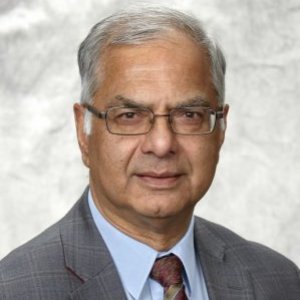
Dr. Vijay K. Sood is a Professor in the Department of Electrical, Computer and Software Engineering at Ontario Tech University. He holds a PhD in Power Electronics from Bradford University (UK), and has extensive experience in power systems, power electronics, and renewable energy integration. His research focuses on High Voltage Direct Current (HVDC) systems, Flexible AC Transmission Systems (FACTS), power electronics converters, and grid protection. He has received numerous awards, including Life Fellow of IEEE, Emeritus Fellow of the Canadian Academy of Engineers, and the 2000 IEEE Third Millennium Medal. Dr. Sood has authored/co-authored over 100 publications, including peer-reviewed articles in top journals like IEEE Transactions on Power Electronics and International Journal of Electrical Power & Energy Systems. His work addresses challenges in grid stability, renewable energy integration, and advanced control strategies for power systems. Education: PhD (Power Electronics), Bradford University, UK (1977) MASc (Electrical Machines), Strathclyde University, Scotland (1969) BSc (Electrical Engineering), Nairobi University, Kenya (1967) Awards: IEEE Third Millennium Medal (2000) Canadian Pacific Railway Engineering Award (2002) IEEE Regional Activities Board Achievement Awards (2001, 2006) His research emphasizes practical solutions for modern power systems, including HVDC controller design, synthetic inertia control for renewable grids, and advanced fault detection techniques. He has collaborated internationally on projects like the Energy System Observatory of Honduras and grid architecture models for multi-terminal DC systems.
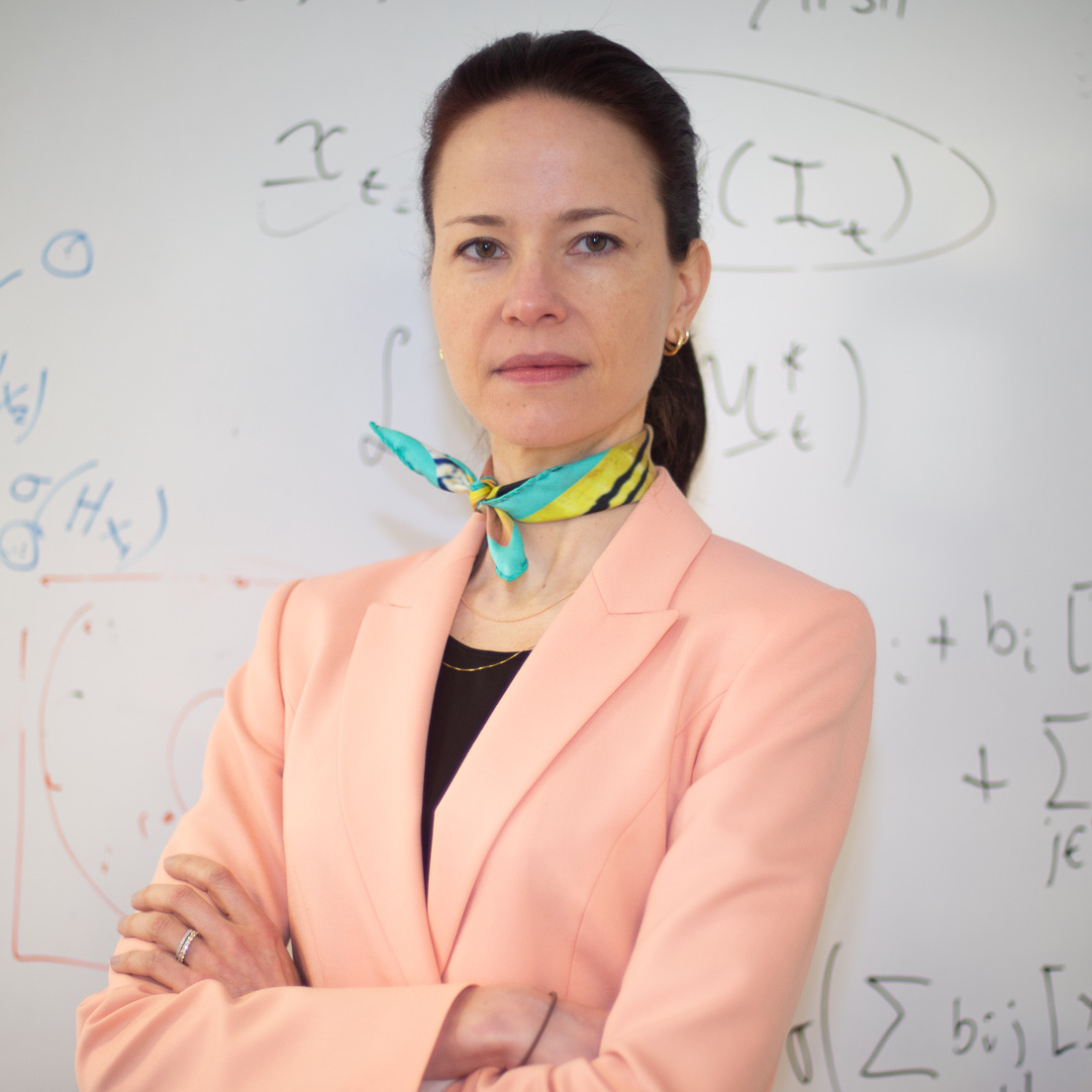
Professor Amanda Prorok leads the Prorok Lab at the University of Cambridge's Department of Computer Science and Technology, focusing on multi-agent and multi-robot systems. Her work integrates machine learning, planning, and control to coordinate intelligent agents in shared environments, with applications in transport, environmental monitoring, and search-and-rescue. She is a Fellow of Pembroke College and holds editorial roles at IEEE Robotics and Automation Letters and Autonomous Robots. Education: Ph.D., EPFL (Switzerland); Postdoctoral Research, University of Pennsylvania (USA). Research Interests: The lab pioneers methods like differentiable communication between learning agents and develops decentralized algorithms for navigation, coverage, and coordination. Key themes include neural diversity in collective learning, resilient swarm systems, and environment-aware control. Notable Achievements: ERC Starting Grant, Amazon Research Award, EPSRC New Investigator Award ABB Prize for Best Thesis in Computer Science (EPFL) Teaching: Leads Computing for Collective Intelligence (MPhil/Part III) modules. Lab & Infrastructure: The Prorok Lab operates the Cambridge RoboMaster platform and develops testbeds for connected vehicles and robot swarms. Recent work emphasizes scalable reinforcement learning and graph neural networks for decentralized decision-making.
Felix Leach is an Associate Professor of Engineering Science and Shell-Pocock Fellow at Keble College, University of Oxford. He holds a DPhil from Oxford (Oxon), is a Chartered Engineer (MIMechE), and a Fellow of the Higher Education Academy. His research focuses on thermal propulsion systems and air quality, with projects like Ammospray (green-ammonia propulsion) and OxAria (air pollution monitoring in Oxford). He collaborates with Jaguar Land Rover, Siemens, and local governments on emissions reduction and policy. Education: DPhil (Oxford), MEng. Awards include the 2021 ASME ICED Most Valuable Technical Paper Award and multiple SAE recognitions. He co-authored the prize-winning book *Racing Toward Zero: The Untold Story of Driving Green*. Research interests span engine efficiency, alternative fuels (hydrogen, ammonia), and public health impacts of emissions. He leads interdisciplinary projects combining experimental and computational methods, such as machine learning for flow field analysis and sensor networks for urban pollution monitoring. Grants include EPSRC, NIHR, and NERC funding. He advises on policy for Oxford City Council and serves as associate editor for the ASME Journal of Engineering for Gas Turbines and Power. His work bridges academic research, industry collaboration, and public engagement to address climate and air quality challenges.
James Bellingham is the Bloomberg Distinguished Professor of exploration robotics at Johns Hopkins University, holding primary appointments in the Department of Mechanical Engineering and the Applied Physics Laboratory's Asymmetric Operations Sector. He serves as executive director of the Johns Hopkins Institute for Assured Autonomy and is a member of the Data Science and AI Institute. With over 30 years of expertise, Bellingham pioneered small, high-performance autonomous underwater vehicles (AUVs), leading global expeditions across polar and oceanic regions. His work bridges robotics innovation with environmental monitoring, including oil spill response, Arctic exploration, and NASA collaborations for extraterrestrial oceanic exploration. Bellingham's educational background includes BS, MS, and PhD in physics from MIT. He previously led Woods Hole Oceanographic Institution's Marine Robotics Consortium, creating advanced prototyping facilities and fostering entrepreneurship in robotics. His leadership roles span institutional boards such as the Naval Studies Board and OceanX. His research focuses on advancing AUV capabilities for adaptive sampling, fault detection, and interdisciplinary oceanography. Over 50 publications demonstrate his technical contributions, including AUV design, environmental hazard mapping, and collaborative robotic systems. Awards include National Academy of Engineering induction and military honors for public service.
Associate Professor Liz Ratnam is a leading academic in the Department of Electrical and Computer Systems Engineering at Monash University, serving as Deputy Postgraduate Director of Education ECSE. Her expertise spans power systems control, energy optimization, and resilient grid design. She holds a BEng (Hons I) and PhD in Electrical Engineering from the University of Newcastle (2006 and 2016), with postdoctoral research at UC San Diego and Berkeley. She previously served as Senior Lecturer and Sub-Dean for Educational Programs at ANU's College of Engineering & Computer Science, supported by a Future Engineering Research Leader (FERL) Fellowship. Her current research focuses on advancing transactive energy markets, EV coordination in distribution networks, and secure grid operations. She leads major grants including the National Facility for Electricity Grid Security (ARC LIEF 2023) and projects on EV fast-charging infrastructure. Education Background: - BEng (Hons I) in Electrical Engineering, University of Newcastle (2006) - PhD in Electrical Engineering, University of Newcastle (2016) Research Interests: Resilient, carbon-neutral power grid design Control and optimization of energy systems Synchrophasor-based estimation for grid stability Transactive multi-agent systems for energy markets Electric vehicle integration and coordination in unbalanced grids Grants & Projects: ARC Linkage Infrastructure Grant LE23010058 (2023): National Facility for Electricity Grid Security ARC Discovery Project DP22010135 (2022): Neural Architecture Search for Deep Learning ARC Linkage Project LP21200473 (2022): Building Australia's EV Fast-Charging Infrastructure Awards & Memberships: Fellow of Engineers Australia Senior Member of IEEE FERL Fellowship (ANU)
Asgeir Tomasgard is a Professor of Operations Research at NTNU's Department of Industrial Economics and Technology Management. He serves as Director of NTNU Energy and NTNU Energy Transition Initiative, leading interdisciplinary efforts to model and analyze energy systems at the intersection of technology, economy, and society. His research focuses on decarbonization of transport, industry, and buildings using large-scale optimization models that address dynamics and uncertainty in energy transitions. Board member of Norwegian Climate Foundation, Energi21, and Gassco AS Member of European Academies Science Advice Council (EASAC) and European Work Group for Stochastic Optimization Leads initiatives to integrate renewable energy solutions and assess energy transition pathways He co-authored statements advocating for wind energy and electric vehicle adoption, emphasizing system-wide energy modeling to achieve climate goals. His work highlights the economic viability and necessity of renewable energy expansion alongside energy efficiency improvements.
Professor Tommy Chan is Chair in Civil Engineering at Queensland University of Technology's School of Civil and Environmental Engineering. With over $10M in research funding, his work focuses on structural health monitoring of bridges and infrastructure systems. His research group develops cutting-edge methods for assessing structural integrity using vibration analysis, optical sensors, and machine learning. Professor Chan leads major projects including the ARC-funded 'Next Generation Bridge Monitoring' initiative developing real-time monitoring systems for prestressed concrete bridges. His team's innovations include GNSS-based settlement monitoring and synergic identification methods for prestress force evaluation. Current research explores vehicle-bridge interactions, damage detection algorithms, and novel materials for impact protection. He has received numerous honors including the Vice Chancellors' Leadership Award and Top Supervisor Award. Professor Chan founded the Australian Network of Structural Health Monitoring and serves on editorial boards for multiple journals in structural engineering.
Sinisa Krajnovic is a Professor of Computational Fluid Dynamics and Head of the Department of Mechanics and Maritime Sciences at Chalmers University of Technology. His research focuses on vehicle aerodynamics, bluff-body flows, and time-dependent numerical simulations, particularly in ground vehicle flows (trains, cars, buses) and high-speed train dynamics. He leads studies on flow control mechanisms, bi-stable wake phenomena, and turbulence modeling using advanced CFD techniques like LES and PANS. Recent work emphasizes active flow control optimization, snow-resistance performance of bogies, and aerodynamic interactions in platoons. His 247+ publications span topics including high-speed train aerodynamics, ship airflow control, and bluff-body wake dynamics. Collaborations involve experimental validation and industrial applications in rail and marine transportation.
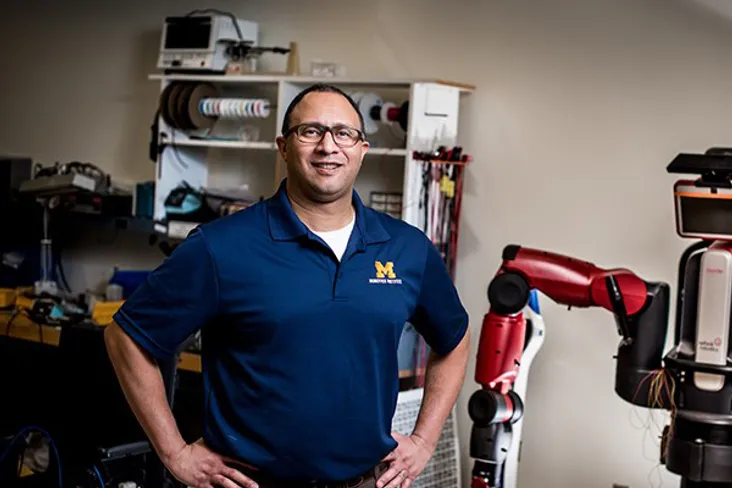
Affiliations & Roles Lionel P. Robert Jr. is a Professor of Information and Robotics at the University of Michigan, holding joint appointments in the School of Information and the College of Engineering's Robotics Department. He directs the Michigan Autonomous Vehicle Research Intergroup Collaboration (MAVRIC) and is an affiliate faculty member at the National Center for Institutional Diversity and Indiana University's Center for Computer-Mediated Communication. His roles include editorial board positions at journals like the Journal of Computer Information Systems and leadership in professional organizations such as ACM and IEEE. Education Ph.D. in Information Systems, Indiana University (BAT Fellow, KPMG Scholar) M.B. from Indiana University, Bloomington M.S. degrees from Clemson University and University of Louisiana, Lafayette B.S. from University of Louisiana, Lafayette Research Focus Robert's research bridges collaboration through technology, with a focus on human-robot interaction, autonomous vehicles, and virtual teams. His work addresses trust in automated systems, human-AV communication, and the sociotechnical implications of robotics in workplaces and public spaces. Recent projects explore explanations for automated vehicles, security robots' societal acceptance, and AI ethics in healthcare and labor. Key Contributions He has published over 100 peer-reviewed articles in journals like MIS Quarterly and conferences such as CHI and HRI. His research has been funded by NSF, Toyota Research Institute, and the Army Research Laboratory. Notable outcomes include frameworks for AV trust repair, models of human-robot team performance, and critiques of AI-driven labor practices. Awards & Recognition ACM Distinguished Member IEEE Senior Member Carnegie Junior Faculty Development Fellowship 3× Teaching Commendation (2006–2008) Grants & Labs Current grants include studies on explainable AI, human-AV trust dynamics, and security robot design. The MAVRIC lab focuses on AV-pedestrian interactions while the CCMC explores digital communication's societal impact.
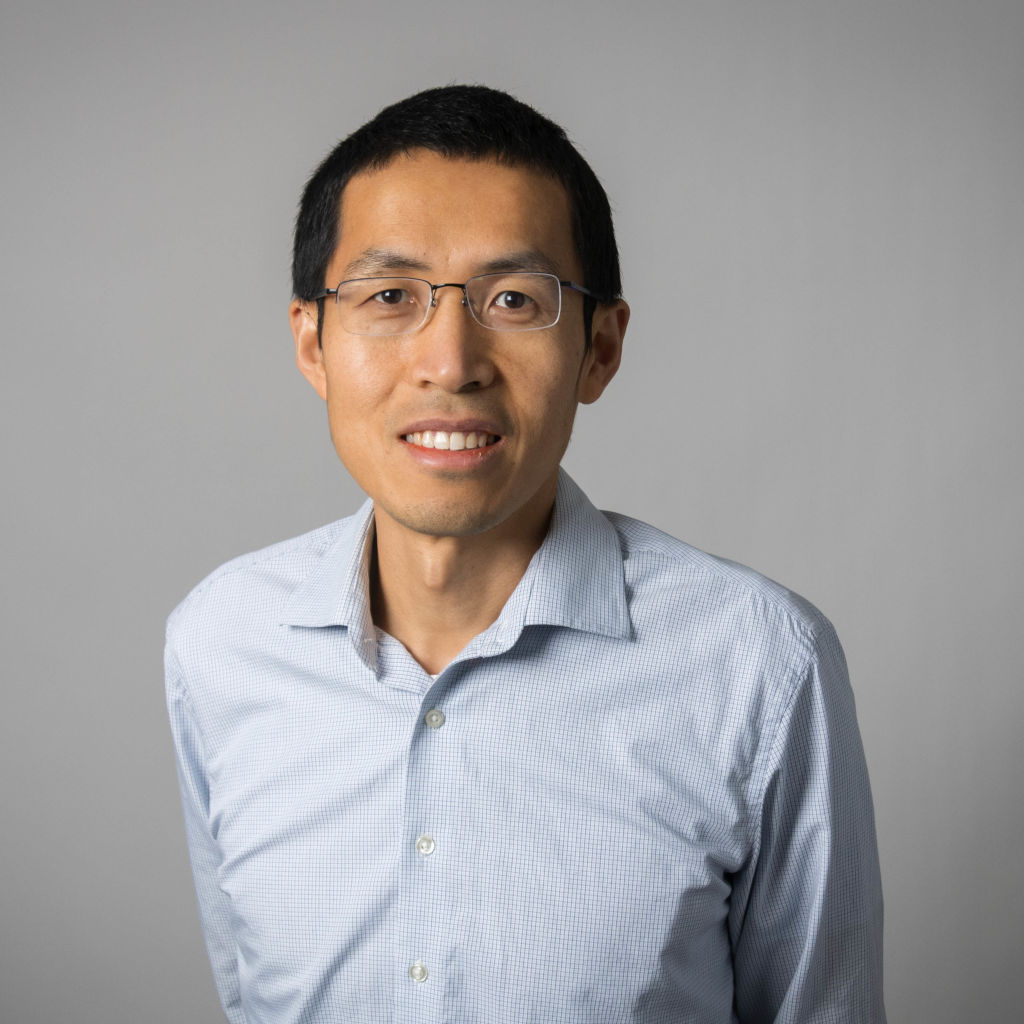
Dr. Chao Hu is the Collins Aerospace Professor in Engineering Innovation and Associate Professor at the University of Connecticut's Department of Mechanical Engineering within the College of Engineering. His research focuses on engineering design under uncertainty, battery health diagnostics, and structural health monitoring. He holds a B.E. from Tsinghua University (2007) and a Ph.D. from the University of Maryland (2011), with prior roles at Medtronic and Iowa State University. Research interests emphasize physics-informed machine learning for prognostics, battery degradation modeling, and reliability-based design optimization. Key publications include work on digital twin models for lithium-ion batteries, federated learning for fleet-wide fault diagnosis, and probabilistic machine learning pipelines for real-time state estimation. He has received awards like the ASME Design Automation Young Investigator Award and highly cited paper recognitions. Dr. Hu serves as Senior Editor for Engineering Optimization and Review Editor for Structural and Multidisciplinary Optimization . His work spans academic leadership in journals and industrial collaborations. Current projects include battery aging datasets (UConn-ILCC and UConn-ISU-ILCC), design for remanufacturing frameworks, and high-rate structural health monitoring techniques.
Michael Trick is the Senior Associate Dean for Faculty and Research and Higgins Professor of Operations Research at the Tepper School of Business, Carnegie Mellon University. His research focuses on combinatorial optimization, sports scheduling, constraint programming, and operations research applications. He has contributed to seminal work on sports timetabling (e.g., scheduling college basketball conferences) and the traveling tournament problem. Trick's work bridges theoretical advancements with practical applications, including integer programming, branch-and-price methods, and stochastic dynamic programming. He has led initiatives in operations research education and served as President of INFORMS, emphasizing the field's societal impact. His research also spans voting systems, optimization for newspaper zoning, and algorithmic design for complex scheduling problems. Trick's expertise spans academic leadership, research methodology, and cross-disciplinary applications. His articles address topics like auction design for spectrum allocation, bike-sharing logistics, and robust scheduling strategies. He collaborates across academia and industry, contributing to both theoretical advancements and real-world operational challenges. His work often highlights the practical utility of mathematical programming techniques in diverse domains.
Stavros Vougioukas is a Professor and Vice Chair in the Department of Biological and Agricultural Engineering at the University of California, Davis, within the College of Engineering. He is actively involved in research and graduate mentorship, focusing on agricultural robotics and automation for specialty crops. His work integrates engineering solutions to improve efficiency and sustainability in farming systems. His research interests include agricultural robotics , automation of harvesting processes , sensors and control systems , precision agriculture , and wireless sensor networks for orchard environments . He develops technologies for robotic and robot-aided harvesting, particularly in strawberries and orchard crops, emphasizing optimal management of inputs and yield monitoring. The recent publications reflect a strong trend in robotics integration , real-time sensing , and data-driven decision-making in agriculture. His work spans mechanical design, signal processing, path planning, and structural durability, indicating a multidisciplinary approach to solving agricultural challenges through engineering innovation. Scientific Awards and Recognition: $1.6M grant (2021) to develop innovative fruit-picking machines CITRIS Seed Award (2023) for engineering solutions in agriculture Professor Vougioukas mentors graduate students and leads funded research projects focused on automation and robotics in agriculture. He has secured significant grants, including a $1.6M award for fruit-picking robotics, demonstrating strong research leadership. His collaborations span institutions and disciplines, particularly in agricultural machinery design and sensor network deployment. He leads research efforts in agricultural automation, particularly through projects involving robot-aided harvesting , orchard navigation systems , and wearable worker tracking devices . His lab contributes to the development of intelligent systems for sustainable farming, integrating mechanical, electronic, and computational components.
Professor Xiao-Ping Zhang is a full-time Professor of Electrical Power Systems at the Department of Electronic, Electrical and Systems Engineering, School of Engineering, University of Birmingham, UK. He holds leadership roles as Director of Smart Grid at the Birmingham Energy Institute and Co-Director of the Birmingham Energy Storage Centre (sponsored by EPSRC), and leads the Electrical Power & Control Systems Group. PhD in Electrical Engineering, 1993 MSc in Electrical Engineering, 1990 BEng (Hons) in Electrical Engineering, 1988 His research focuses on the transformation of modern power systems, with core interests in Smart Grids, HVDC and FACTS technologies, renewable energy integration (wind and wave), control of PHEVs in power grids, energy markets using game theory, smart metering, distributed energy management, and wide-area grid awareness. He pioneered the concepts of 'Global Power & Energy Internet' and 'Energy Union,' the latter adopted by the European Commission, and envisioned the Midlands as the UK’s 'Energy Valley,' now realized through national initiatives. His recent publications reflect a strong trend in advancing HVDC/FACTS control, stability analysis in renewable-rich grids, energy storage integration, smart grid optimization, and market modeling. The articles span high-impact journals such as IEEE Transactions on Power Systems and IEEE Transactions on Smart Grid, demonstrating sustained leadership in electrical power engineering. IEEE Fellow IET Fellow Alexander-von-Humboldt Fellow Foreign Fellow of Chinese Society for Electrical Engineering (CSEE) Professor Zhang has secured substantial research grants from UK Government (Science City Initiative), EPSRC, FP7 EU Smart Energy Network Programme, and industry partners. He advises doctoral students in key areas of power systems and smart grids. He established two advanced laboratories at the University of Birmingham: the Smart Power Grid Laboratory and the Real-time Power Grid Simulation, Measurement, Protection and Control Laboratory. He also initiated the UK-China Smart Grid Workshop series, leading to 13 joint research projects. He is actively involved in professional leadership, serving as Editor for IEEE Transactions on Smart Grid and IEEE Transactions on Power Systems, IEEE PES Distinguished Lecturer, Secretary of IFAC Technical Committee on Power and Energy Systems Control, and Co-Chair of the IEEE PES Working Group on Test Systems for Economic Analysis. He has contributed to UK national energy policy, including reports for the Prime Minister’s Council for Science and Technology.
Professor Frank Kelly holds the Professor of the Mathematics of Systems at the University of Cambridge , affiliated with the Department of Pure Mathematics and Mathematical Statistics (DPMMS). His work bridges theoretical insights with practical applications in random processes , networks , and optimization . Academic Rank: Professor Department: DPMMS Research Themes: Stochastic systems, network resource allocation, mathematical modeling Kelly’s research focuses on stochastic networks , including congestion control in communication systems, fair bandwidth sharing , and electricity grid optimization . His work often incorporates proportional fairness principles and Markov models to analyze complex systems. Recent publications reveal a trajectory in network dynamics and resource allocation , with applications to electric vehicles, satellite routing, and virtualized networks. His work shows interdisciplinary impact across computer science , telecommunications , and energy systems . Kelly has contributed foundational works like Stochastic Networks (2014) and pioneered models for loss networks and congestion control . He maintains active collaborations and has advised on policy matters, including spectrum auctions and network regulation.