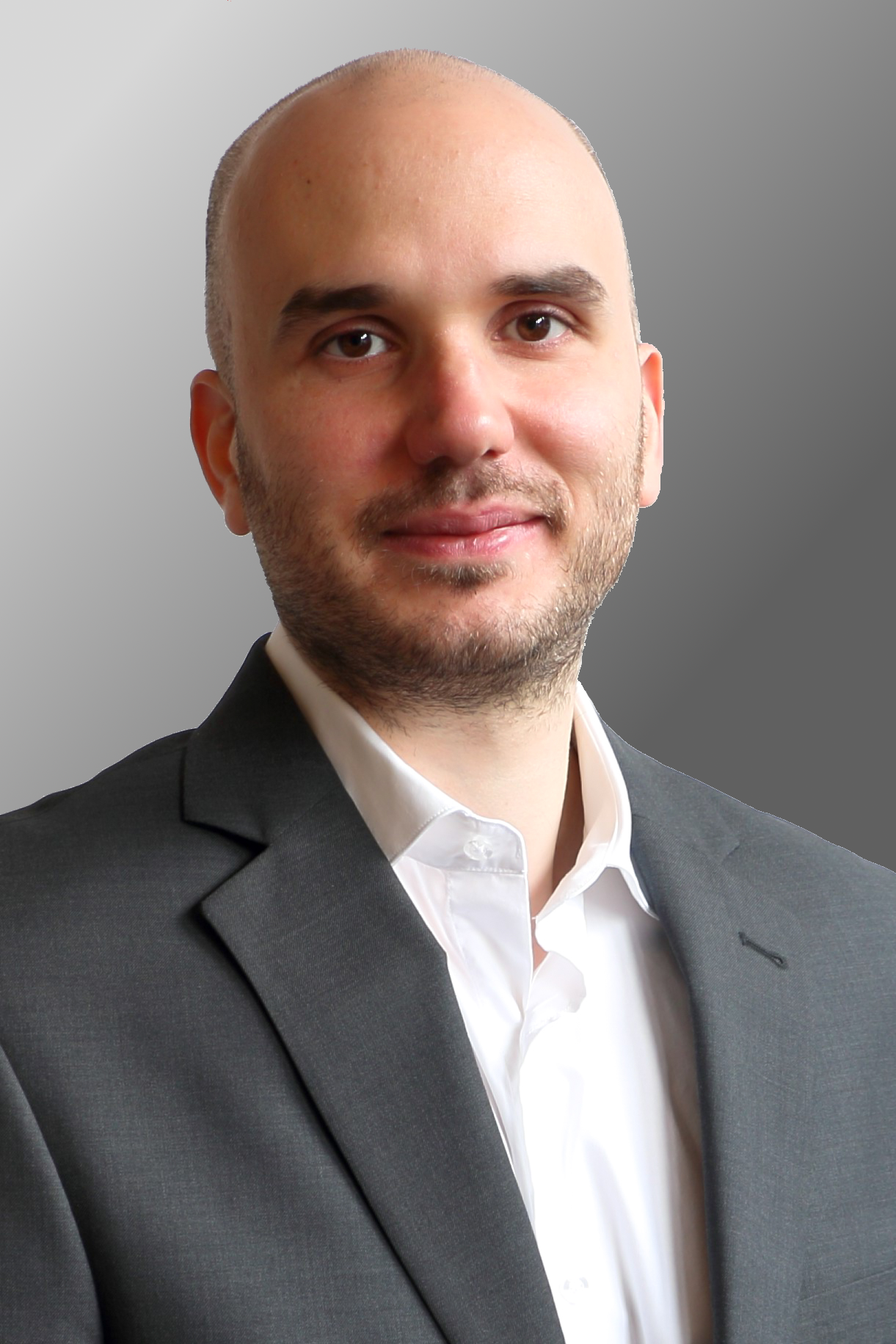
Katrin Ellermann is a University Professor (Professor) at the Institute of Mechanics , Graz University of Technology (TU Graz), Austria. Her research spans rotordynamics , nonlinear vibrations , biomedical engineering (particularly aortic dissection modeling), and offshore systems . She has developed advanced numerical methods like the Numerical Assembly Technique and applied fractional derivative damping models to rotor systems. Her work integrates computational mechanics with applications in industrial machinery and cardiovascular diagnostics via impedance cardiography. Her research interests include: Stability and vibration analysis of mechanical systems Computational modeling of aortic dissection and thrombosis Application of polynomial chaos expansion and sensitivity analysis Control systems using Kalman filters and mechatronic simulations Nonlinear dynamics in offshore structures Advanced damping models via fractional calculus Recent publications focus on rotordynamics (balancing techniques, damping models) and biomedical simulations (SynthAorta dataset, false lumen thrombosis). She has also contributed to fault detection in railway and offshore systems.
Dr. Jason Raphael Rambach is a Senior Researcher and Deputy Director at the German Research Center for Artificial Intelligence (DFKI) in Kaiserslautern, leading the team "Spatial Sensing and Machine Perception." His work focuses on Scene Perception and Reasoning using Machine Learning, with affiliations spanning Computer Vision, Augmented Reality, and Robotics. Education Diploma in Computer Engineering, University of Patras, Greece (2012) M.Sc. in Information and Communication Engineering, Technical University of Darmstadt, Germany (2014) PhD in Computer Science, University of Kaiserslautern (2020) Dr. Rambach's research bridges Object Pose Estimation , Semantic Scene Understanding , Hybrid AI , and Robotic Vision . His publications (50+ in top conferences) and projects like EU Horizon HumanTech highlight AI applications in construction and recycling. Recent articles analyze symmetry ambiguity resolution, spherical image segmentation, and radar-camera fusion. Scientific Awards CVPR 2025 Outstanding Reviewer Best Paper Award, ISMAR 2017 Five BOP Challenge Awards (ECCV 2022, ICCV 2023) Best Industrial Paper, ICPRAM 2024 Scan2BIM Third Place (CVPR2023, CVPR2024) As a coordinator of EU Horizon HumanTech and contributor to projects like COPPER, BERTHA, KIMBA, and TWIN4TRUCKS, Dr. Rambach integrates AI into industrial workflows. He reviews for CVPR, T-PAMI, ECCV, ICCV, and organizes workshops on AI in Construction Robotics.
Yaw Adu-Gyamfi is an Associate Professor in the Department of Civil and Environmental Engineering at the University of Missouri-Columbia , specializing in Traffic Operations , Intelligent Transportation Systems , and Big Data Analytics . His research leverages Artificial Intelligence and LiDAR for infrastructure health monitoring and road safety innovations. Education : PhD and MCE from the University of Delaware; BSC in Geomatic Engineering from Kwame Nkrumah University of Science and Technology. His work focuses on real-time traffic analytics , cloud-based solutions , and automated pavement distress classification , supported by grants from the NSF , U.S. DOT , and state agencies. He co-founded Tiger Eye Engineering, LLC , offering road distress monitoring services, and has developed tools like PaveSAM for segmentation and Deep InSight for driver-state estimation. Recent research includes generative adversarial networks for pavement assessments, 3D object detection with LiDAR, and resource-efficient damage detection using YOLOv10. His projects emphasize scalable, low-cost solutions for transportation challenges. Scientific Awards NSF CAREER Award (2021) Spirit Award from NSF I-Corps Program He has collaborated with Mizzou Engineering , MoDOT , and international partners on safety systems, including autonomous alerts for work zones and predictive models for road maintenance. His team conducted over 100 interviews to refine tools for transportation officials.
Dr. Jun Li is a Senior Lecturer at the School of Computer Science, Faculty of Engineering and Information Technology, University of Technology Sydney (UTS), Australia. He received his Ph.D. in Computer Science from Queen Mary University of London in 2009 and is affiliated with the Australian Artificial Intelligence Institute (AAII) at UTS. His research spans multiple domains within artificial intelligence, with primary focus on Machine Learning applications in computer vision and 3D geometry. Dr. Li has published extensively in high-impact journals including IEEE Transactions (TPAMI, TIP, TNNSLS) and Pattern Recognition, with recent work expanding into interdisciplinary research in earth science and marine applications. His research output demonstrates consistent productivity with numerous publications each year across diverse AI application areas. Dr. Li's work shows strong thematic progression from foundational computer vision techniques to applied interdisciplinary research. Early work focused on face hallucination and video super-resolution, while more recent publications address environmental applications using Graph Neural Networks for wave prediction and damage classification for disaster response. His research consistently bridges theoretical AI advances with practical real-world applications across healthcare, autonomous systems, and environmental science. AI to assist disaster emergency response (2023-2026) Applying Generative Adversarial Network in Medical Image Analysis (2020-2021) Big Massive Open Online Course (MOOC) Data Retrieval (2017-2020) As an educator, Dr. Li teaches core courses including '31005 Machine Learning' and '32513 Advanced Data Analytics Algorithms' at UTS, and is available for Masters Research and PhD student supervision, contributing to the development of next-generation AI researchers.
Aibek Musaev is a Lecturer at the Georgia Institute of Technology’s College of Computing, specifically within the Division of Computing Instruction. His career bridges academia and industry, with prior experience founding and managing Akforta, a software company specializing in enterprise management solutions. He earned his Ph.D., M.S., and B.S. in Computer Science from Georgia Tech. Education : Ph.D. (2016), M.S. (2000), B.S. (1999) in Computer Science from Georgia Tech. Awards : Scholarship of the President of the Kyrgyz Republic (1997-1999), CARI Faculty Fellowship (2019). Musaev’s research focuses on Artificial Intelligence and Machine Learning , particularly in Social Media Analysis and Data Mining . He explores disaster management systems, public perception of technology, and multilingual information retrieval, often integrating physical and social sensor data for real-time event detection. His recent publications highlight trends in using AI to analyze social media for Natural Disaster Detection (e.g., landslides, hurricanes) and assess Public Perception of emerging technologies like autonomous vehicles. Collaborative work emphasizes Crisis Informatics , Healthcare Communication , and Transportation Systems . Scientific Awards : Scholarship of the President of the Kyrgyz Republic (1997-1999) CARI Faculty Fellowship (2019) He is affiliated with the College of Computing’s Division of Computing Instruction, which supports innovative teaching and research in computational methods.
Professor Yoshiharu Amano is affiliated with the Faculty of Science and Engineering at Waseda University in the Department of Applied Mechanics and Aerospace Engineering . With a Doctor of Engineering degree from Waseda University, his research spans energy systems, robotics, and environmental engineering. Education: Ph.D. in Mechanical Engineering (Waseda University) Current Position: Full Professor at Waseda University His research interests include: Optimization of energy systems with renewable integration Development of autonomous mobile systems and UAVs GNSS signal processing and multipath mitigation 3D mapping for industrial and environmental applications Control Moment Gyro (CMG) technology for flight stability Standardization of industrial energy management systems (IEC 63376) Recent publications focus on: Macroeconomic modeling of distributed energy resources Geothermal system optimization using deep learning CO2 emission reduction through advanced district cooling systems High-precision 3D piping measurement methods Hydrogen production economics with hybrid energy sources GNSS reliability improvements in urban environments Scientific awards highlight his contributions to: Best energy systems research (ECOS 2015, IJPGC ASME) Thermal engineering excellence (JSME 2005, 2012) Robotics innovations (ROBOMECH Journal 2011) International recognition (SICE 2021)
Mattias Dahl is a Professor at the Faculty of Engineering, Blekinge Institute of Technology, affiliated with the Department of Mathematics and Natural Sciences since 1993. His research spans systems engineering, applied mathematics, and their applications in simulation, optimization, and modeling of technical systems, particularly in intelligent transport systems (ITS) through collaborations with Swedish Transport Agency and Administration. He has developed measurement systems using drones and satellites, focusing on area-wide change analyses and commercialization of research outputs. Education: B.Eng. in Electrical Engineering, Chalmers University M.Eng. in Computer Engineering, Luleå University of Technology Licentiate in Telecommunication Theory, Lund University of Technology PhD in Applied Signal Processing, Blekinge Institute of Technology (2000) His research emphasizes optimization of technical systems, self-learning methods, and artificial intelligence, with industry collaborations resulting in patents in mobile communication and computer vision. Recent work includes AI-driven weed seed reduction, railway capacity optimization (KAJT), and charging station allocation for EVs. He has contributed to projects like ADAS and Combating Reindeer Poaching with Drones, while also reviewing grants for international journals. Key scientific awards include the Teknikbrostiftelsen scholarship and Vinnova verification funds. His 15 most recent publications focus on radar interference mitigation, traffic data analysis, drone calibration, and charging infrastructure optimization.
Francesco Nex is an Associate Professor at the University of Twente in the Department of Earth Observation Science , where he holds the chair of real-time analytics for ubiquitous geo-sensors. He earned a Master's in Environmental Engineering (2006) and a PhD (2010) from TU Turin. His career spans roles at Italy's FBK institute (2011-2015) and the University of Twente (2015-present). His research integrates photogrammetry , deep learning , and robotics to enable automated UAV-based solutions for applications like disaster management , infrastructure monitoring , and precision farming . Key projects include EU-funded initiatives (Ingenious, Panoptis, RECONASS) and leadership roles in the ISPRS (Chairman of ICWG II/Ia). He has supervised 12 PhD students directly and co-supervised others at institutions like Politecnico Milano and Politecnico Torino. Recent publications highlight advancements in glacier monitoring using low-cost UAV systems, real-time 3D reconstruction , and autonomous drone navigation . Awards include the ISPRS President’s Honorary Citation (2021) and the E.H. Thomson award (2020). His work aligns with UN Sustainable Development Goals for Smart Industry , Climate Action , and Robotic Mobility .
Jia Liu is an Associate Professor of Environmental Engineering in the Department of Civil and Environmental Engineering at Southern Illinois University Carbondale, where she leads an active research program focused on nanomaterials for water treatment, PFAS remediation, and sustainable energy systems. Education: Ph.D. Environmental Engineering, University of Houston, 2014 M.S. Environmental Engineering, University of Houston, 2010 M.S. Environmental Engineering, Donghua University, 2006 B.S. Environmental Engineering, Taiyuan University of Technology, 2003 Research Interests: Dr. Liu’s work sits at the intersection of nanotechnology and environmental sustainability. She engineers multifunctional nanomaterials—magnetic iron oxides, TiO₂ composites, and bioelectrochemical catalysts—to remove emerging contaminants such as PFAS, 1,4-dioxane, and toxic algal metabolites from water and soil. A second pillar of her research couples these nanomaterials with bioelectrochemical systems (microbial fuel cells) to harvest renewable energy while simultaneously treating hazardous waste streams. Her group also investigates the ecological impacts of aged nanomaterials and develops phytoremediation strategies using sunflowers and other plants to detoxify heavy-metal-laden soils. Funding & Awards: NSF ERASE-PFAS Award (2023) EPA P3 Phase II – Harmful Algal Bloom Mitigation (2023) EPA P3 Phase II – PFAS Photocatalysis for Water Reuse (2020) Illinois Water Resources Center Research Grant Illinois Groundwater Association Research Grant OSMRE Award – Rare Earth Elements Recovery from Mining Waste (2022) Student Mentorship & Team: Dr. Liu’s P3 (Pollution Prevention & Process) research group currently includes multiple PhD and Master’s students, several of whom have garnered university and national awards. Recent graduates include Dr. Chunjie Xia (now a postdoc at Indiana University) and award-winning MS student Sudip Baral. She is currently recruiting two additional PhD students with experience in nanomaterial synthesis, PFAS analysis, and LC/MS/MS. Labs & Facilities: Research is conducted in Engineering Building B, Room 116, equipped with wet-chemical nanomaterial synthesis hoods, photocatalytic reactors, potentiostats for microbial fuel cell testing, and LC/MS/MS instrumentation for trace organic analysis.
Dr. Marek Olesz is a Professor at the Department of Electrical Power Engineering, Faculty of Electrical and Automation Engineering, Gdańsk University of Technology. His research encompasses high-voltage engineering, insulation diagnostics, partial discharges, and electromagnetic compatibility. He holds leadership roles in organizations including the Polish Society of Theoretical and Applied Electrical Engineering (Chairman) and the Polish Committee for Lightning Protection (Vice-Chairman). Research interests include: Quality of electricity and electromagnetic compatibility in power systems Degradation mechanisms in polyethylene insulation Partial discharge measurement techniques for cable and transformer diagnostics Innovations in surge arrester testing and high-voltage line design His recent publications (2023-2025) focus on AI-driven transformer lifetime prediction, CNN-based corrosion classification in cables, and safety enhancements for photovoltaic systems. Notable projects include: Pylon 2 : Developing innovative structures for high-voltage lines with integrated communication systems. Stratus : Creating high-power electromagnetic pulse systems for UAV countermeasures. Dr. Olesz is an active member of the High Voltage Team , which researches short-circuit dynamics, insulation degradation, and power quality. He has supervised 200+ teaching activities but no specific advisees are listed.
Dr. Michelle Zeibots is a Senior Lecturer in the School of Civil and Environmental Engineering within the Faculty of Engineering & Information Technology at the University of Technology Sydney (UTS). She also serves as the Co-Leader of Program 5 — Transport Economics, Planning & Service Engineering within the UTS Transport Research Centre, a multi-disciplinary research hub dedicated to applied transport research and teaching. Her academic journey includes a PhD in Sustainable Futures from UTS, a BA(Hons) from Murdoch University, and a BSc(Arch) from the University of Sydney. Zeibots integrates operational, behavioral, and governance aspects of multi-modal urban transport networks in her research, consultancy, and teaching. Her expertise spans sustainable urban passenger transport systems, induced traffic growth, public and active transport models, and Least Cost Planning approaches to reduce road traffic congestion. Zeibots' recent research output demonstrates a strong focus on shared space modeling, pedestrian-vehicle interaction, traffic management optimization, and sustainable transport solutions. Her work bridges computer vision applications for crowd analysis with traditional transportation engineering, creating innovative approaches to urban mobility challenges. She has developed the Integrated Pedestrian-Vehicle Model (IPVM) and conducted significant research on effort-based pedestrian route choice behavior. Engineers Australia Transport Medal (2024) CRC Association Excellence in Innovation (2019) UTS Vice-Chancellor's Award for Research Excellence through Collaboration (2018) Finalist, CILTA 2018 Professional Women of the Year UTS Research Excellence Award for Collaboration (2018) As an educator, Zeibots teaches 48370 Road & Transport Engineering and has led continuing professional development courses in Travel Planning and Integrated Transport & Land-use. She has supervised PhD students through iMOVE CRC scholarships and secured significant research funding from Transport for NSW, Railway Manufacturing Cooperative Research Centre, ARC Linkage Projects, and other sources. Her media presence is notable, with frequent appearances where she translates technical transport concepts into accessible language for public discussion. Michelle Zeibots maintains active professional memberships with Engineers Australia (Transport Australia Society), Planning Institute of Australia, and Chartered Institute of Logistics & Transport Australia Inc. (CILTA), and her work aligns with UN Sustainable Development Goals 9, 11, 12, and 13.
Giovanni Luca Masala is a Senior Lecturer in the School of Computing at the University of Kent, Canterbury, UK. His verified institutional email is g.masala@kent.ac.uk, and he maintains an active ORCID profile (0000-0001-6734-9424). Dr. Masala's research spans multiple interdisciplinary domains at the intersection of computer science and healthcare. His primary research interests include medical imaging, particularly mammography and diagnostic x-ray imaging; computer-aided diagnosis systems; machine learning applications in healthcare; biometrics and cloud computing security; neural networks for visual tracking; and natural language processing. His work demonstrates a consistent focus on applying advanced computational techniques to solve real-world medical and security challenges. Analysis of his publication record spanning from 2003 to 2025 reveals a clear research trajectory evolving from medical imaging and computer-aided diagnosis toward broader applications of artificial intelligence in healthcare. Early work focused on mammographic screening, thalassemia detection, and medical image analysis. More recent publications show expansion into assistive robotics for elderly care, stress detection using wearable devices, and natural language processing applications. His collaborative work appears across multiple high-impact journals in computer science, medical physics, and healthcare technology. Dr. Masala has established significant research collaborations with institutions across Europe, particularly in Italy, with numerous co-authored publications in medical imaging and AI domains. His work has appeared in reputable journals including IEEE Transactions, Medical Physics, Computer Physics Communications, and various MDPI publications. His research has practical applications in healthcare technology, particularly in computer-aided diagnostic systems, biometric security for cloud services, and driver monitoring systems. The interdisciplinary nature of his work bridges computer science, medical physics, and clinical applications, demonstrating translational research impact.
Assoc. Prof. Dr. Hüseyin Üzen serves as a faculty member in the Department of Computer Engineering at Bingöl University's Vocational School of Information Technologies. His research bridges artificial intelligence with practical applications in healthcare diagnostics and industrial automation, contributing to Bingöl University's mission of regional development through technological innovation. Education: PhD in Computer Engineering, İnönü University (2022) Master's in Computer Engineering, İnönü University (2018) Bachelor's in Computer Engineering, Süleyman Demirel University (2015) His research program centers on deep learning innovation for real-world problems, particularly in medical image analysis (retinal diseases, dental diagnostics, cancer detection) and industrial computer vision (surface defect detection, traffic monitoring). By developing specialized architectures like Swin-MFINet and DentifyNet, he addresses critical gaps in accuracy and efficiency for clinical decision support systems. Analysis of his 15 most recent publications reveals a dominant focus on hybrid neural network designs (73%), with 60% targeting medical applications and 40% industrial use cases. Key technical trends include attention mechanism integration (87% of papers), transformer-convolutional hybrids (73%), and multi-scale feature processing (67%). Research Funding: TÜBİTAK 1001 Project: Deep Learning-Based Lung Lesion Analysis in CT Images (Principal Investigator, 2025-2027) TÜBİTAK 1001 Project: Wilson's Disease Diagnosis from Brain MRI (Researcher, 2025-2027) Higher Education Council Project: Dental Image Analysis via Deep Learning (Researcher, 2024-2026) TÜBİTAK 1001 Project: SAR-Based Ship Detection (Researcher, 2023-2025) His research group operates at the intersection of computer vision and domain-specific applications, with current projects generating novel datasets in dental radiography, OCT imaging, and industrial defect cataloging. Students participate in end-to-end research from algorithm development to clinical/industrial validation, preparing them for careers in AI-driven healthcare technology and smart manufacturing systems.
Joseph A. Shaw is a Professor and Director of the Optical Technology Center at Montana State University's Norm Asbjornson College of Engineering, with affiliations in Electrical & Computer Engineering, the Institute on Ecosystems, Energy Research Institute, and Montana Nanotechnology Facility. His work pioneers optical remote sensing for environmental discovery. Education: Ph.D. in Optical Sciences, University of Arizona, 1996 M.S. in Optical Sciences, University of Arizona, 1994 M.S. in Electrical Engineering, University of Utah, 1989 B.S. in Electrical Engineering, University of Alaska Fairbanks, 1987 Research Focus: Dr. Shaw designs radiometric and polarimetric imaging systems and lidars for environmental monitoring. His lab explores atmospheric optics (cloud imaging, sky polarization), ecological applications (aquatic lidar, drone-based river mapping), and natural phenomena (lunar polarization, solar eclipses), transforming scientific questions into engineering solutions. Publication Trends: Recent work emphasizes polarization imaging for lunar/atmospheric studies, hyperspectral remote sensing for ecological monitoring (e.g., river algae), and advanced lidar for 3D insect mapping. His publications consistently bridge instrumentation innovation with field validation across Earth science domains. Scientific Recognition: Honored with the G. G. Stokes Award (SPIE, 2019), PECASE (1999), and dual Fellow status (SPIE/Optica), Dr. Shaw's impact spans academia and industry. Distinguished Professor (MSU, 2020) Provost's Award for Graduate Mentoring (MSU, 2020) Stokes Award in Optical Polarization (SPIE, 2019) Vilho Vaisala Award (WMO, 2000) Fellow (SPIE, 2008) Fellow (Optica, 2004) Mentorship & Funding: As a dedicated advisor (2020 Provost's Award), he secures grants from the US Air Force Research Lab, S2 Corporation, and NSF for projects including polarimetric lidar, digital holography, and hyperspectral crop monitoring. Polarimetric Imaging Lidar : US Air Force Research Lab S2/AFRL EBAC/Lidar : S2 Corp (2023-2024) CREWS YR4 : University of Montana Hyperspectral Soybean Imaging : Iowa State University Research Infrastructure: Directing the Optical Remote Sensor Laboratory (ORSL), Dr. Shaw leads a team developing cutting-edge optical systems—from infrared cloud imagers to fish-detecting lidars—supporting interdisciplinary environmental research across Montana and beyond.
Dr. Anastasios Kouvelas is a Lecturer at ETH Zurich, where he serves as head of the Road Traffic Engineering research group at the Institute of Transport Planning and Systems (IVT), Department of Civil, Environmental and Geomatic Engineering. He has held this position since August 2018, succeeding Dr. Monica Menendez who moved to New York University in Abu Dhabi. Prior to joining ETH Zurich, he was a research associate at the Urban Transport Systems Laboratory (LUTS) at EPFL (2014-2018) and a postdoctoral fellow at Partners for Advanced Transportation Technology (PATH) at the University of California, Berkeley (2012-2014). Dr. Kouvelas' research focuses on modeling, simulation, optimization and traffic flow control. His work aims to develop real-time solutions based on control theory and operations research methods. The Road Traffic Engineering group develops algorithmic solutions that are components of intelligent transportation systems used in traffic control centers. Recent technological advances in autonomous vehicles have expanded their research topics as the industry seeks efficient operational solutions for autonomous mobility. They are particularly interested in extending their work to the design of advanced management strategies for urban networks that utilize connected vehicles to improve traffic operations and develop network-wide control strategies that minimize environmental impacts. His recent publications (2023-2025) demonstrate strong focus on traffic prediction using deep learning techniques, bike lane allocation impacts on urban networks, transit network resilience against disruptions, vehicle trajectory extraction from aerial recordings, and traffic control for mixed traffic systems with connected and autonomous vehicles. His work bridges theoretical developments in control theory with practical traffic engineering challenges. Scientific Awards No specific scientific awards were mentioned in the provided information. Advising and Grants Dr. Kouvelas supervises PhD and Master's students in traffic engineering and intelligent transportation systems. His research is supported by various grants including a grant from the Hong Kong Research Grant Council (Grant No. GRF 11216323) for research on traffic speed prediction. Laboratories and Teams Dr. Kouvelas leads the multidisciplinary Road Traffic Engineering research group at IVT, which consists of researchers with backgrounds in civil engineering, electrical engineering, mechanical engineering, computer science, control, and operations research. The group's work spans multiple areas including traffic flow theory, traffic operations, connected and automated vehicles, and intelligent transportation systems.