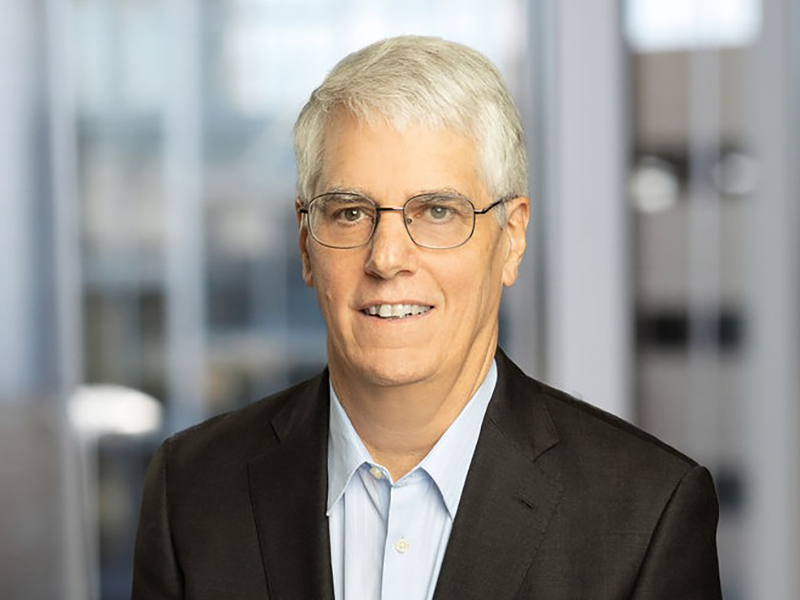
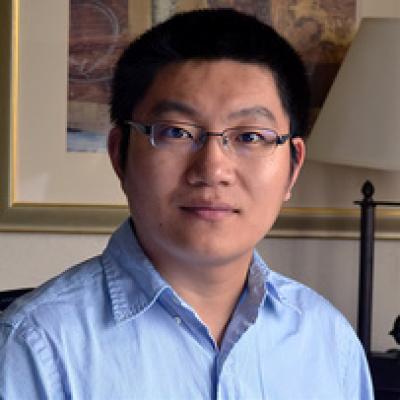
Dr. Robert D. Moser is a Professor at the University of Texas at Austin and holds the W.A. "Tex" Moncrief, Jr. Chair in Computational Engineering and Sciences I. He is affiliated with the Thermal and Fluid Systems program, the Institute for Computational Engineering and Sciences (ICES), and serves as Director of the DOE-funded Center for Predictive Engineering and Computational Sciences (PECOS). Ph.D. in Mechanical Engineering from Stanford University (1984) His research focuses on computational methods for turbulence modeling, cardiovascular fluid mechanics, and uncertainty quantification in complex physical simulations. He develops large-eddy simulation techniques for aerospace applications and biological flow analysis, while pioneering methods to characterize uncertainties in reentry vehicle simulations and turbulence modeling. Dr. Moser leads interdisciplinary research at PECOS and ICES, combining computational engineering with biomedical applications. His work spans theoretical turbulence physics, numerical methods for Navier-Stokes equations, and practical implementations for aerodynamic and medical device design.
Kristin Y. Pettersen is a Professor at the Department of Technical Cybernetics, Norwegian University of Science and Technology (NTNU), and a Professor II at the Norwegian Defence Research Institute (FFI). She is a co-founder of Eelume AS, a company specializing in underwater robotics solutions. Education: Civil Engineering and PhD in Technical Cybernetics from NTNU Her research focuses on advanced control systems for marine and underwater vehicles, particularly snake robots and autonomous underwater vehicles (AUVs). Key areas include formation control, path following, adaptive guidance algorithms, and safety-critical control in dynamic environments. Recent work explores machine learning integration and energy-shaping techniques for robust locomotion. Publications highlight trends in Model Predictive Control (MPC) , Collision Avoidance , and Task-Priority Operational Space Control for redundant and underactuated systems. Her work bridges theoretical control theory with practical applications in marine robotics, including autonomous inspections and cooperative transport. Labs/Teams: Collaborates with NTNU's Faculty of Information Technology and Electrical Engineering and co-founded Eelume AS, advancing subsea robotic manipulation technologies.
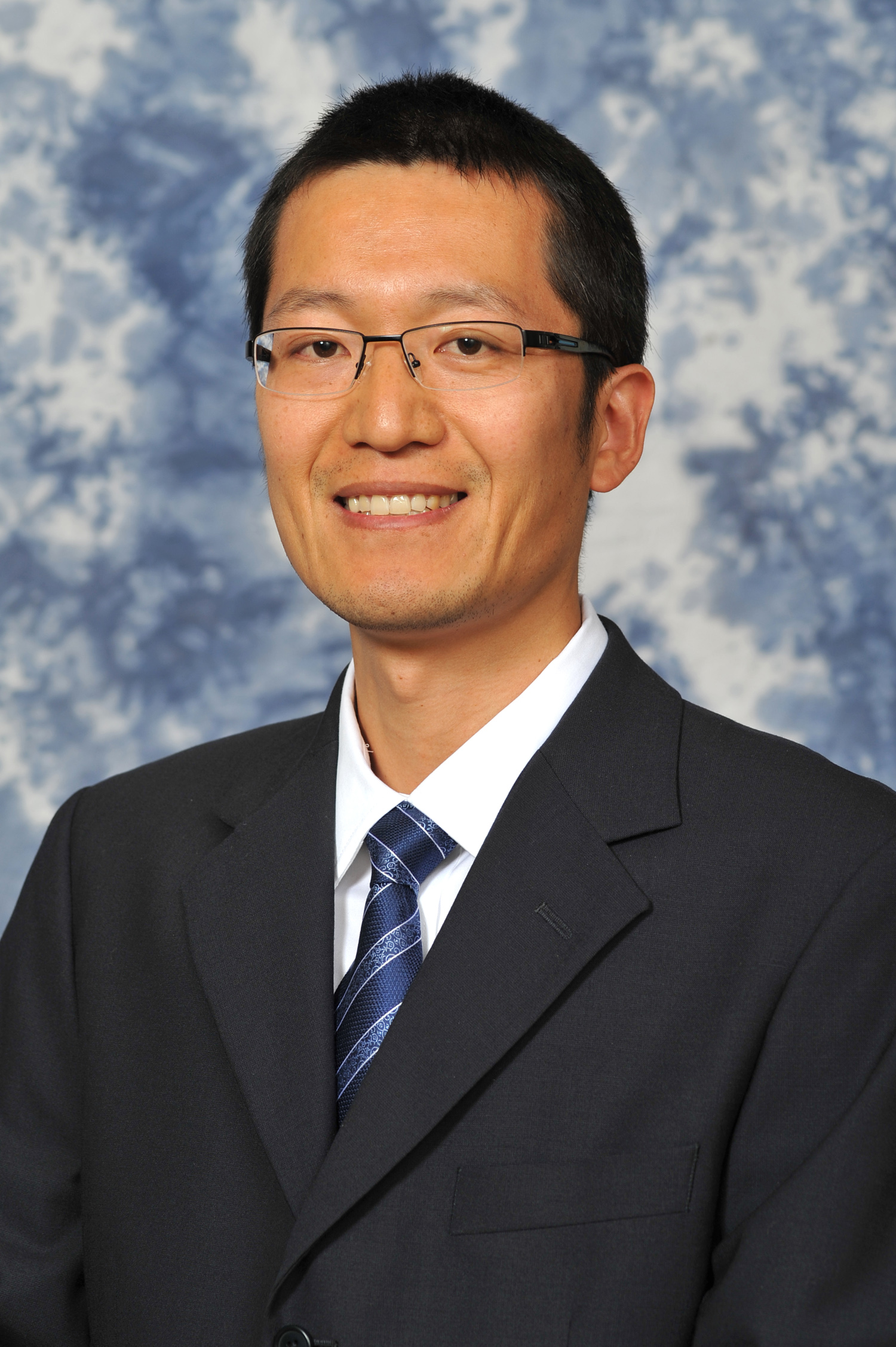
Weiqing Sun is a Professor in the Computer Science and Engineering Technology Program within the Department of Engineering Technology at the College of Engineering, University of Toledo. He serves as the Program Director for the Master's Programs in Cyber Security and is also the Cyber Security Faculty Fellow for UT DTAS (Division of Technology and Advanced Solutions). His office is located in NE 1627 at the University of Toledo. Dr. Sun earned his Ph.D. degree from the Computer Science Department at Stony Brook University (SUNY at Stony Brook) in 2008. He completed his undergraduate and master's education in China, holding both B.E. and M.E. degrees in Computer Science and Engineering from Tongji University, Shanghai. Dr. Sun's primary research focuses on computer and network security, with particular emphasis on malware defense and detection, security policy development, security testbed creation, and intrusion detection systems. His work extends to enhancing security across various critical infrastructure systems including smart grids, cloud computing environments, software-defined networks, unmanned aerial vehicles, healthcare information systems, and transportation networks. His research approach combines theoretical foundations with practical implementations, often developing simulation testbeds to evaluate security solutions in realistic scenarios. Analysis of Dr. Sun's publication record reveals a consistent focus on practical cybersecurity solutions across multiple domains. His work shows evolution from foundational security mechanisms toward specialized applications in emerging technologies like UAV networks, smart grids, and connected vehicles. A notable trend is his development of simulation testbeds for security evaluation, demonstrating his commitment to bridging theoretical security concepts with real-world implementation challenges. His research increasingly incorporates machine learning and deep learning techniques for intrusion detection and anomaly identification. Dr. Sun has been actively involved in mentoring students and developing curriculum in cybersecurity. His teaching portfolio includes advanced courses in computer and network security, software engineering, programming languages, and web services. He has contributed to cybersecurity education through the development of hands-on lab environments that provide practical security experience for students. His research has received support from the Ohio Department of Transportation and the University of Toledo, enabling his work on critical infrastructure security. Dr. Sun leads research initiatives focused on creating secure environments for emerging technologies and critical systems. Dr. Sun directs the Cyber Security Research Lab at the University of Toledo, where his team works on developing innovative security solutions for various platforms and systems. The lab focuses on practical security implementations, often creating simulation environments to test security mechanisms before real-world deployment.
Dr. Shabnam Sadeghi Esfahlani is an Associate Professor in Robotics at the School of Engineering and the Built Environment, Anglia Ruskin University , where she serves as Deputy Leader of the BORI research group and leads the Automation & Robotics MSc program. Her interdisciplinary expertise spans mechatronics, artificial intelligence, virtual reality, and serious games , with a focus on applications for rehabilitation, medical training, and autonomous systems . As a Chartered Engineer and Senior Fellow of the Higher Education Academy , she has secured significant funding from Innovate UK, Horizon 2020, and GCRF , with grants exceeding £3 million. Education PhD in Mechanical Engineering, Anglia Ruskin University BSc (First Class) in Statistics & Mathematical Science, Shahid Beheshty University Her research integrates AI with robotics for societal impact, exemplified by the open-source SROBO ground robot and projects like Rehabgame and the Assistive Feeding Robot . She has published over 45 peer-reviewed articles and contributes to academic communities as a journal guest editor and conference organizer . Key collaborations include IET, IMechE, and the Nuffield Foundation as a mentor for young students. Scientific Awards & Recognitions: Chartered Engineer (CEng), Engineering Council UK Senior Fellow (SFHEA), Higher Education Academy Student-Voted 'Made a Difference Award' (2018) Post-Graduate Certificate in Higher Education
Ricardo Aguilera Echeverria is an Associate Professor at the University of Technology Sydney (UTS), School of Electrical and Data Engineering . With a Ph.D. in Electrical Engineering from the University of Newcastle (2012), he has held academic positions at UNSW Australia (2014-2016) and UTS since 2016. His research focuses on model predictive control (MPC) applied to power electronics , renewable energy integration , and microgrid control systems . He actively supervises Masters and PhD students and has developed courses such as Control Studio A and Control Studio B . Education: PhD in Electrical Engineering (University of Newcastle, 2012) MSc in Electronics Engineering (Universidad Tecnica Federico Santa Maria, 2007) BSc in Electrical Engineering (Universidad de Antofagasta, 2003) Research Interests: Model Predictive Control (MPC) for power converters Microgrid stability and cybersecurity Second-life battery integration Hybrid DC-AC microgrid solutions Recent Research Trends: Advancements in modular multilevel matrix converters (M3C) for LFAC systems Development of per-phase instantaneous power theories for LVRT compensation Sliding mode observers (SMO) for cyberattack mitigation in AC microgrids Optimal control strategies for delta-connected CHB converters in energy storage Grants & Projects: Lead investigator in HORIZON Europe (2024-2027) on digital solutions for renewable energy systems ARC Discovery Project (DP240102646) on extending second-life battery life (2024-2026) Collaborative grants with Sovereign Propulsion Systems Pty Ltd and NSW Department of Industry for hybrid-electric vehicle control
Manuel Bejar Domínguez is a Professor at the Department of Sports and Information Technology, Universidad Pablo de Olavide. He earned his PhD in 2010 from the University of Seville with a thesis on Methodology and techniques for designing control systems of autonomous helicopters , supervised by Dr. Aníbal Ollero Baturone. His research focuses on Systems Engineering, Automation, and Robotics , particularly in UAV navigation and autonomous helicopter control . His 2007 publication with Federico Cuesta and Aníbal Ollero explores control systems and hierarchical behavior-based architectures for unmanned aerial vehicles, emphasizing image-matching algorithms and optical flow analysis for autonomous landing.
Xin Li is a Professor in the Department of Electrical and Computer Engineering at Duke University and serves as the Associate Vice Chancellor at Duke Kunshan University. He holds a Ph.D. from Carnegie Mellon University (2005) and has held leadership roles in research consortia like the FCRP Focus Research Center and the Center for Silicon System Implementation (CSSI). His research bridges integrated circuits , machine learning , and cyber-physical systems , with applications in autonomous driving, battery lifetime prediction, and smart buildings. Education : Ph.D., Carnegie Mellon University (2005); M.S., Fudan University (2001); B.S., Fudan University (1998) His work emphasizes robust design methodologies for analog/RF circuits, data-driven predictive modeling , and Bayesian inference for high-dimensional variation spaces. Recent publications focus on generative adversarial networks for circuit design, multi-view imputation for incomplete data, and knowledge-driven autonomous systems . He has received numerous accolades, including the NSF CAREER Award (2012) , IEEE Donald O. Pederson Best Paper Awards (2013, 2016) , and IEEE Fellow (2017) . He has served as Editor for journals like IEEE Transactions on Biomedical Engineering and as Chair for conferences including ISVLSI and CAD/Graphics.
Inna Sharf is a Professor at the Department of Mechanical Engineering, Faculty of Engineering, McGill University. She is affiliated with the Aerospace Mechatronics Laboratory, focusing on dynamics, control, and robotics. Her work spans space robotics, UAVs, forestry automation, and multibody systems. Ph.D., University of Toronto B.ASc., University of Toronto Her research interests include: Dynamics and control of robotic systems Space robotics for debris removal and on-orbit servicing Unmanned aerial vehicles (quadrotors, indoor airships) Forestry robotics for tree-harvesting automation Multibody dynamics and contact modeling Recent publications emphasize: Control algorithms for quadrotors and UAV swarms De-orbitation strategies using natural resonances Motion planning under dynamic constraints Thermalling and energy-efficient flight for gliders Collaborative payload transport and adaptive control Tether and net-based debris capture systems
Waseeq Siddiqui is a Doctoral Researcher at the Department of Energy and Mechanical Engineering, Aalto University. His academic affiliation aligns with the College of Engineering, focusing on interdisciplinary research in aerospace and mechanical engineering domains. Research Groups: Energy Conversion and Systems Email: waseeq.siddiqui@aalto.fi Phone: +358504340184 His research interests span computational fluid dynamics (CFD), aircraft stability analysis, and non-linear aerodynamic phenomena. Recent work includes studies on wing rock dynamics in blended wing–body aircraft and micro aerial vehicles, alongside crosswind stability control systems and vortex lattice method comparisons. Key trends in publications highlight advanced applications of CFD for both aviation and biomedical systems (e.g., vocal fold particle transport), with emphasis on numerical modeling and stability optimization in complex flight scenarios.
Panle Jia Barwick holds the Todd E. and Elizabeth H. Warnock Distinguished Chair Professorship in the Department of Economics at the University of Wisconsin-Madison. She maintains significant affiliations with multiple prestigious research institutions including the National Bureau of Economic Research (NBER) as a faculty research associate and the Center for Economic Policy Research (CEPR) as a research fellow. Her research spans multiple domains within economics, with primary expertise in Industrial Organization, Chinese Economy, Applied Microeconomics, Environmental Economics, and Applied Econometrics. Barwick's work demonstrates strong interdisciplinary connections between economic theory, empirical analysis, and real-world policy applications, particularly focusing on environmental challenges, industrial policy, and market dynamics in both developed and emerging economies. Her extensive publication record reveals a clear progression toward increasingly policy-relevant research, with recent work focusing on industrial policies, environmental economics, and transportation systems. She has developed sophisticated empirical frameworks to analyze network competition in airlines, the impact of pollution information disclosure, and the effectiveness of various government interventions in markets. Zellner Award for Best Dissertation, American Statistical Association Top five most cited article published in RAND from 2015-2017 As an academic leader, Barwick serves in editorial roles for several top economics journals including the American Economic Journal: Applied Economics, Journal of Economic Perspectives, Rand Journal of Economics, and International Journal of Industrial Organization. She also co-founded UW-Madison's Pan Asia Pacific Sustainability Initiative (PAPSI) and the Cornell Institute for China Economic Research (CICER), where she continues to serve on the board. Her teaching portfolio includes advanced courses in Industrial Organization and Applied Econometrics at both UW-Madison and Cornell University.
Xiaonan Lu is an Associate Professor of Electrical Engineering Technology at Purdue University's School of Engineering Technology, with a courtesy appointment in the Elmore Family School of Electrical and Computer Engineering. His research focuses on critical challenges in modern power systems dominated by inverter-based resources, particularly stability and control in microgrids and renewable-integrated grids. His research interests span power systems engineering with emphasis on small-signal stability analysis, dynamic modeling of hybrid AC/DC microgrids, and advanced control strategies for grid-forming and grid-following inverters. He investigates AI-assisted modeling techniques, resilience enhancement through hydrogen integration, and data-driven optimization of microgrid operations to address challenges in low-inertia power systems and distributed energy resource coordination. Analysis of his recent publications (2024-2025) reveals dominant trends toward AI-aided stability assessment, seamless control transitions between inverter modes, and quantifiable trade-offs in voltage regulation and power sharing. His work consistently addresses practical implementation challenges including communication delays, cyber resilience, and standardized testing methodologies for inverter-dominated systems.
Assoc. Prof. Dr. Murat Yılmaz is an Associate Professor at Istanbul Technical University's Faculty of Electrical and Electronics Engineering, Department of Electrical Engineering. His academic career spans over 15 years at Istanbul Technical University, including roles as Deputy Head of Department (2015-2020) and Vice Dean (2020-present). PhD in Electrical Engineering from Istanbul Technical University (1999-2006) Postdoctoral Researcher at University of Illinois at Urbana-Champaign (2007, 2011) His research focuses on: Power Electronics - advanced converter designs and semiconductor applications Electrical Machines - optimization of permanent magnet and reluctance motors Energy Storage Systems - battery efficiency and electrification infrastructure Electric Vehicles - cost-effective BRT systems and sensorless control methods Recent publications highlight his work on IPMSM optimization for light EVs (2025), battery chemistry performance analysis (2025), and PMaSynRM parameter estimation (2024). His research outputs demonstrate strong focus on sustainable energy solutions and motor control systems. Notable awards: 2022 IEEE PEMC Best Paper Award 2022 European Rover Challenge - 3rd Place & Best Robot Arm 2009 WORLD SOLAR CHALLENGE Best New Entrant Multiple TÜBİTAK Formula G awards (2006-2008) IEEE Senior Member (since 2020) Prof. Yılmaz leads multiple funded projects including: 2022-2023: Modeling & Design of Rover Systems for Space Exploration 2020-2021: Flexible SPA Web Applications Consultancy 2018-2021: Battery Charging Systems for Electric Vehicles
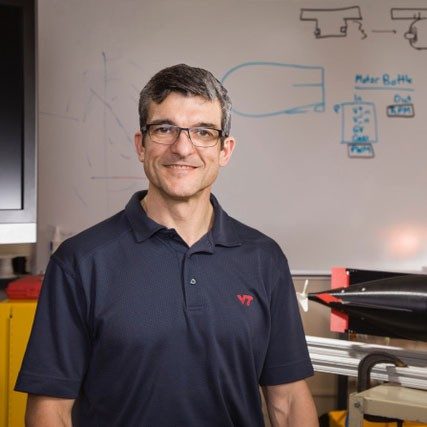
Daniel J. Stilwell is a Professor in the Bradley Department of Electrical and Computer Engineering at Virginia Polytechnic Institute and State University (Virginia Tech), and Co-Director of the Center for Marine Autonomy and Robotics. He holds affiliations including the Seale Coastal Observatory Faculty Fellow role. His research focuses on autonomous underwater vehicles (AUVs), marine robotics, control systems, and sensor networks. He earned his Ph.D. in Electrical Engineering from Johns Hopkins University (1999), M.S. from Virginia Tech (1993), and B.S. in Computer Engineering from the University of Massachusetts (1991). His notable contributions include advancements in AUV control, underwater acoustic communication, multi-agent systems, and sensor network optimization. Key projects include the "Unconventional Marine Platforms" funded by the Office of Naval Research and collaborative subsea mapping initiatives. His work bridges theoretical control systems with practical robotic applications in marine environments. Dr. Stilwell has received prestigious awards such as the NSF CAREER Award and ONR Young Investigator Program Award. His research emphasizes robust control strategies, adaptive systems, and decentralized learning algorithms. He leads efforts in experimental validation of AUV control systems and underwater sensor networks, contributing to both academic and military applications.
Hao Zhang is an Associate Professor in the Department of Computer Science at the Manning College of Information and Computer Sciences (CICS), University of Massachusetts Amherst. He directs the Human-Centered Robotics Laboratory (HCRLab), focusing on lifelong collaborative autonomy, robot adaptation, and human-robot teaming. His research integrates robotics, AI, and machine learning to develop algorithms for real-world applications like manufacturing, autonomous driving, and environmental monitoring. He holds an NSF CAREER Award and DARPA Young Faculty Award, among other recognitions. Dr. Zhang earned a PhD from the University of Tennessee, Knoxville (2014) and an MS from the Chinese Academy of Sciences (2009). His work addresses challenges in unstructured environments through innovations like self-reflective terrain adaptation and graph-based perception systems. He actively promotes equity in robotics through his PROGRESS outreach program. His research sponsors include NSF, DARPA, and industry partners such as Toyota. Publications span conferences like RSS, ICRA, and IROS, with best paper awards. He serves on editorial and program committees for top-tier journals/conferences including RA-L, NeurIPS, and AAAI.
Ramadan El Shatshat is an Associate Professor (Teaching Stream) and Director of the Electric Power Engineering Program at the University of Waterloo's Department of Electrical and Computer Engineering. He holds a PhD from the University of Waterloo (2001) and is a registered Professional Engineer in Ontario. His research focuses on distribution system engineering, smart grids, renewable energy integration, and electric vehicle impact analysis. Dr. El Shatshat has received multiple awards, including the James A. Field Teaching Excellence Award (2016) and the University of Waterloo Outstanding Performance Award (2010, 2017, 2021). He teaches courses like ECE 360 (Power Systems and Smart Grids) and ECE 668 (Distribution System Engineering). Education: PhD in Electrical Engineering, University of Waterloo (2001) MSc in Electrical Engineering, University of Garyounis, Libya (1992) BSc in Electrical Engineering, University of Garyounis, Libya (1984) Research Interests: Smart grids and microgrids Optimization for distribution systems Electric vehicles and renewable energy integration AI-based monitoring techniques Awards: 2021 University of Waterloo Outstanding Performance Award 2018 Marsland Faculty Fellowship 2016 James A. Field Teaching Excellence Award Advising & Grants: Supervised/co-supervised 26 students (undergraduate, master's, doctoral, and postdoctoral) His work spans over 50 peer-reviewed publications and patents in fault detection, voltage control, and EV integration.