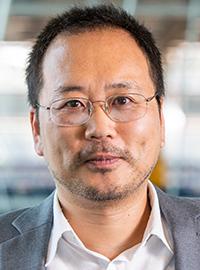
Sungmoon Jung is a Professor of Civil & Environmental Engineering at the Florida A&M University-Florida State University College of Engineering. His research focuses on wind effects on structures, hurricane resilience, wind energy, and vehicle safety. He leads the WISE Lab (Wind and Impact on Structures), which employs advanced computational and experimental methods to study structural dynamics under extreme loads. Education: Ph.D., University of Illinois at Urbana-Champaign, 2004 M.S., Seoul National University, 1999 B.S., Seoul National University, 1997 Research Interests: Wind engineering for buildings and infrastructure Hurricane-induced structural damage and community resilience Wind energy systems and optimization Vehicle crashworthiness and occupant safety Advanced materials for energy absorption and structural reinforcement Recent Research Trends: Recent work emphasizes data-driven approaches (e.g., machine learning for wind profile prediction) and experimental validation (e.g., crash simulations, material testing). Key themes include enhancing infrastructure resilience to hurricanes and improving vehicle safety through biomechanical modeling and component-level testing. Labs & Teams: The WISE Lab collaborates with industry and government agencies to develop practical solutions for wind-related challenges in construction and transportation. Current projects include optimizing offshore wind turbine designs and mitigating risks from storm surge and vehicle rollovers.
Matt Barrett is a Research Fellow at James Cook University, affiliated with the Australian Tropical Herbarium in Cairns, Queensland. His work merges botany and mycology, focusing on taxonomy, systematics, genomics, ecology, and biosecurity of Australian flora and fungi. His research includes resolving species limits in Triodia hummock grasses using genotyping-by-sequencing, developing the SpiKey app for species identification, and exploring genetic partitioning in landscapes to improve seed collection and rehabilitation practices. He also investigates myrtle rust impacts on Tristaniopsis exiliflora in the Wet Tropics, emphasizing canopy stability and stream margin conservation. Currently, Barrett leads a project funded by the Australian Biological Resources Study (ABRS) to revise brown-rot bracket fungi in Australia, leveraging genomic data to clarify phylogenetic relationships. His collaborations span institutions and disciplines, addressing challenges in plant conservation, fungal systematics, and ecological restoration. Notable projects include: Expanding SpiKey to a national Triodia identification tool Studying genetic diversity in Banded Iron Formation range flora Documenting neglected Australian wood-rotting fungi Linking germination profiles of threatened plants with rainfall patterns Contact: matt.barrett@jcu.edu.au
Michael Schiebout is a Professor of Biology at Union University, located in Jackson, Tennessee. He holds a Ph.D. from the University of Northern Colorado (2012), an M.S. from the same institution (2006), and a B.A. from Dordt College (1996). His research focuses on plant community responses to disturbances, floristic inventories, and invasive species impacts, with notable work on seagrass ecosystems and oak species classification. Education: Ph.D., University of Northern Colorado, 2012 M.S., University of Northern Colorado, 2006 B.A., Dordt College, 1996 Research Interests: Ecological restoration of degraded environments Plant response to invasive species and disturbances Long-term vegetation dynamics Recent Articles: His recent work includes studies on seagrass distribution in Florida lagoons and invasive species impacts in Puerto Rico, reflecting a focus on marine and terrestrial ecosystem health. Awards & Grants: Recipient of multiple NSF fellowships and grants International Program Development Grant (Union University, 2017) GAANN Fellowship (2008-2009) Students & Advising: Mentored undergraduate researchers on DNA barcoding of oak species and invasive plant competition Labs & Affiliations: Active in the Ecological Society of America and Tennessee Academy of Sciences, contributing to field studies in grasslands and coastal ecosystems.
Dr. Mac Alford is a Professor of Biology at the University of Southern Mississippi, specializing in plant systematics and floristics. His research focuses on tropical relatives of willows and cottonwoods (Salicaceae), Flacourtiaceae, and the Gulf Coastal Plain flora. He teaches courses in botany, evolution, and tropical ecology, and has authored over 30 peer-reviewed publications since 1996. Professional affiliations include the International Association for Plant Taxonomy and the Botanical Society of America. He speaks multiple languages, including Spanish, French, and Serbo-Croatian. His work integrates classical taxonomy with modern phylogenetic techniques using morphological, anatomical, and molecular data. Education: PhD in Plant Systematics, Cornell University (2005) MS in Botany, Duke University (1999) BS in Biology/Chemistry, Mississippi College (1997) Research Focus: Systematics of Salicaceae relatives, Miocene flora of Mississippi, DNA-based species delimitation, and conservation floristics of tropical regions. Key Contributions: Taxonomic revisions of Neosprucea (2008), Huerteales phylogeny (2009), and innovative methods for fossil flora analysis (2019–2024).
Sergio Arispe serves as an Associate Professor in the Department of Animal and Rangeland Sciences within Oregon State University's College of Agricultural Sciences. He is based at the Malheur County Extension Office in Ontario, Oregon, where he conducts research and extension activities focused on rangeland management and beef cattle production systems in eastern Oregon's sagebrush steppe ecosystem. Dr. Arispe's educational background includes a Ph.D. in Animal Biology from the University of California, Davis (2012), an M.S. in Agricultural Education from Texas A&M University (2003), and a B.S. in Animal Science from Texas A&M University-Kingsville (2001). His research program centers on the interplay between nutrition and reproduction in ruminants, with particular emphasis on grazing programs and their dynamic impacts on natural resources in the sagebrush steppe ecosystem of eastern Oregon. His work integrates advanced technologies including Structure-from-Motion (SfM) and LiDAR from Unmanned Aerial Vehicles for vegetation monitoring and biomass estimation. He has developed innovative approaches to fine fuels management using dormant season grazing to address invasive annual grasses and improve rangeland health. Analysis of his publication record reveals a strong focus on medusahead control, fine fuel management, invasive species ecology, and the application of remote sensing technologies in rangeland assessment. His work spans both fundamental ecological research and practical applications for land managers, with increasing emphasis on landscape-scale approaches to rangeland conservation. Search for Excellence, Oregon State University Extension Association (December 5, 2024) Communication Award: Publication, National Association of County Agricultural Agents (August 2024) International Tribunal Member for Thesis Defense, University of León (February 6, 2024) New Technology in Agricultural Extension Fellowship, eXtension Foundation (August 2020) Award for Excellence in Extension Education, College of Agricultural Sciences (February 26, 2020) Manning Becker Professional Development Award (multiple years) Dr. Arispe actively accepts graduate students for the Animal and Rangeland Sciences Department and has secured funding from multiple sources including Oregon Beef Council, USDA-NIFA, and the US Department of Interior for projects related to fine fuels management, rangeland restoration, and beef cattle production systems. His extension program focuses on equipping land managers and beef cattle producers with science-based information that promotes healthy land management on both private and public lands. He has developed numerous educational resources including the "Oregon's Outback: A Sustainable Rangeland-Based Beef Production Video Library," the "Nutrient Management and Planning Tool," and regular newsletters addressing livestock, fire, and rangeland management issues for Malheur County producers. His collaborative approach involves working with multiple stakeholders including ranchers, federal land managers, and international partners like the University of León in Spain.
Dr. Brian A Needelman is an Associate Professor in the Department of Environmental Science & Technology at the University of Maryland, College Park. He is affiliated with the College of Agriculture and Natural Resources, focusing on soil science, pedology, coastal wetlands, and socio-ecological resilience. His research integrates environmental science with policy to address climate change impacts on coastal systems, blue carbon dynamics, and sustainable agriculture. Dr. Needelman’s research interests include soil formation (pedology), precision agriculture, coastal resiliency, and the role of wetlands in carbon sequestration. He collaborates on initiatives such as the first modern soil survey of Israel and studies methane emissions in tidal marshes. His work emphasizes interdisciplinary approaches, combining field data with remote sensing and biogeochemical models to inform environmental decision-making. Recent publications highlight his contributions to modeling methane fluxes, optimizing cover crop performance, and enhancing carbon crediting frameworks for wetland restoration. His work bridges academic research with practical applications, such as improving soil survey tools and advancing climate mitigation strategies. Dr. Needelman has been involved in national soil judging competitions, reflecting his commitment to pedology education. His research often involves partnerships with governmental and non-governmental organizations to address socio-ecological challenges in coastal regions.
Niti Mishra is an Associate Professor in Geography & Environmental Science at University of Wisconsin-La Crosse, integrating field observations, drone technology, and satellite remote sensing to study environmental changes. His research focuses on Himalayan glaciology, wetland conservation, invasive species detection, and regional vegetation dynamics. Research Focus: Drone-based environmental monitoring Alpine ecosystem changes Machine learning for ecological applications Spatiotemporal vegetation analysis Recent work includes quantifying glacial melt in Nepal, detecting invasive species in Mississippi wetlands using UAVs, and analyzing urbanization patterns in Delhi. His research employs photogrammetry, machine learning, and time-series analysis to address environmental challenges.
Dr. Marek Matyjasik is a Professor in the Department of Earth and Environmental Sciences at Weber State University (WSU), part of the College of Science. His expertise spans groundwater hydrology, geochemical modeling, and environmental geochemistry. He holds a Ph.D. from Kent State University and prior degrees from Warsaw University, Poland. Dr. Matyjasik teaches courses such as Water Resources, Groundwater, and Engineering Geology, emphasizing online education innovation. His research focuses on groundwater flow dynamics, contaminant transport, and geochemical processes in fractured aquifers, arctic environments, and alpine wetlands. Key projects include: Groundwater-dependent ecosystems in Uinta Mountain wetlands Calcite dissolution in Arctic soils (Spitsbergen) Fracture bedrock flow modeling in Utah’s Emigration Canyon and Bingham Canyon Mine Artificial recharge studies in the Weber River Basin He collaborates with interdisciplinary teams from physics, geology, and other universities. Over 20 presentations and publications since 2002 reflect his work in hydrology, geochemistry, and environmental science. He advises undergraduate researchers, including Michele Sanders, Sara Summers, and Cassie Grether. His projects have been funded by agencies like the USDA Forest Service and Bureau of Reclamation. Dr. Matyjasik’s contributions bridge fieldwork, numerical modeling, and advanced microscopy (SEM/AFM) to address water resource sustainability and Earth surface processes.
Matthias Roth is a Professor of Geography at the National University of Singapore, specializing in urban climatology and climate change. His research examines how urbanization transforms local climates, with extensive observational studies of urban heat islands, energy balance, and turbulence properties across global cities. Professor Roth applies this knowledge to climate-sensitive urban design and mitigation strategies. His research interests focus on: Temporal and spatial dynamics of urban heat islands Turbulent transfer processes in urban environments Carbon dioxide and energy exchange mechanisms Urban climate modeling and satellite observations Recent publications demonstrate Roth's work in high-resolution urban weather modeling, global urban albedo trends, and land surface model evaluation. His research consistently addresses tropical urban environments and climate adaptation strategies. Honors include the prestigious 2023 Masatoshi Yoshino Award for contributions to urban climatology. As Principal Investigator of the Urban Climate Lab, Roth leads projects on urban flux measurements and climate modeling. He has held leadership roles including Past President of the International Association for Urban Climate and Associate Editor for Urban Climate and International Journal of Climatology.
Kyle Cavanaugh is an Assistant Professor at UCLA's College of Letters and Science specializing in coastal ecosystem dynamics. His research employs remote sensing and spatial analysis to study kelp forests, mangroves, and coastal vegetation responses to environmental change. Research interests include the impacts of marine heatwaves on kelp canopies, mangrove range expansion under climate change, and wildfire effects on coastal water quality. Recent work focuses on developing advanced monitoring technologies including hyperspectral imaging and digital twins for ecological projections. Publications demonstrate consistent focus on coastal resilience, with emerging themes in climate adaptation strategies and conservation technology. Recent articles examine thermal stress responses in marine forests, satellite-based biomass quantification, and restoration project evaluation following extreme weather events. Research employs diverse methodologies from field surveys to machine learning applications for habitat classification using PlanetScope imagery and CubeSat data.
Stephanie Pau is an Associate Professor at the University of California, Berkeley, holding a joint appointment in the Department of Environmental Science, Policy & Management and the Department of Geography. Her research focuses on understanding how terrestrial ecosystems respond to climate change, particularly through the integration of remote sensing technology with field measurements. She investigates plant-environment interactions, biodiversity’s role in ecosystem functions, and the application of satellite, drone, and ground-based observations to map ecological processes at landscape scales. Dr. Pau earned her Ph.D. in Geography from UCLA in 2009. Her work emphasizes the use of hyperspectral imaging and thermal sensing to quantify plant traits and stress responses, with recent projects examining tropical forest resilience, California rangeland management, and grassland functional diversity. She leads the Pau Lab, which bridges basic ecological research with societal challenges like biodiversity loss and climate mitigation. Key research themes include tropical tree phenology, grassland carbon dynamics, and the development of lineage-based functional types for Earth system models. Her lab’s findings contribute to advancing remote sensing methodologies and informing conservation strategies. Stephanie actively collaborates with global institutions and engages in science communication through public talks and workshops.
Maggi Kelly is a Professor and Cooperative Extension Specialist in the Department of Environmental Science, Policy and Management at the University of California, Berkeley. She leverages advanced geospatial technologies to address environmental challenges across California's complex landscapes, with strong emphasis on stakeholder engagement and practical application through UC Cooperative Extension. Her educational foundation includes: PhD in Geography, University of Colorado (1996) M.A. in Geography, University of North Carolina, Chapel Hill (1991) B.A. in Geography, University of California, Berkeley (1988) Professor Kelly's research integrates GIScience , remote sensing , and field-based monitoring to study environmental change drivers and consequences. She pioneers applications of lidar analysis , drone technology , and participatory webGIS for fire ecology, historical vegetation mapping, and international development projects. Her work bridges technical innovation with community engagement, transforming complex spatial data into actionable insights for resource managers. Recent publications demonstrate consistent output in top journals across environmental science, remote sensing, and ecology fields. Key trends include advancing drone applications in natural resources, developing multi-temporal analysis techniques for fire and vegetation monitoring, and creating collaborative geospatial tools for data-scarce regions. Her research spans California ecosystems to African savannas, emphasizing scalable methodological frameworks. Major recognitions include: Excellence in Education Award (California Geographic Information Association, 2008) for geospatial literacy training University of California Athletic Hall of Fame induction (2007) As a Cooperative Extension Specialist, Professor Kelly maintains strong connections between academic research and practical implementation. She teaches advanced GIS courses, supervises student research, and develops extension materials translating technical findings for stakeholders. Her lab serves as a hub for geospatial innovation where students gain proficiency in emerging technologies while addressing real-world environmental challenges. The Kelly Research and Outreach Lab focuses on developing and deploying geospatial solutions for environmental monitoring and decision-making. Current projects include drone-based ecosystem assessment, historical vegetation data rescue, and international work on spatial tools for sustainable development, all emphasizing participatory approaches that integrate local knowledge with scientific analysis.
Louis Longchamps is an Assistant Professor in the School of Integrative Plant Science (Soil and Crop Sciences Section) at Cornell University. He specializes in digital agronomy, precision agriculture, and farmer-centric on-farm experimentation. His work focuses on integrating farm data management systems with environmental sustainability goals. Education: PhD in Agronomy from Laval University (thesis on weed population spatial structure and site-specific weed management). Postdoctoral research at Colorado State University’s Department of Soil and Crop Sciences. Research Interests: Precision nitrogen management using remote sensing, reduction of nitrous oxide emissions via variable rate fertilization, co-creation of solutions with farmers for environmental stewardship, and leveraging AI/digital tools for farm decision-making. Recent projects include assessing on-farm experimentation practices in NY State and developing frameworks for pooling farm data across multiple sites. Outreach: Leads an integrated research-extension program focused on co-creating digital agriculture solutions with farmers. Engages in expanding on-farm experimentation through data contextualization and artificial intelligence applications. Labs/Teams: Associated with the Farmers DataLab initiative. Previously co-led a Living Laboratory project on the St. Lawrence River ecosystems.
Jonathan Russell-Anelli is a Senior Lecturer and Senior Extension Associate at Cornell University’s School of Integrative Plant Science (Soil and Crop Sciences Section). He specializes in urban soils, circular economies, and soil health, focusing on contaminant management and sustainable food production. His work bridges academic research with extension services, supporting climate resilience and adaptive management strategies. Education: Doctorate in Soil Science, Cornell University (2000) MS in Soil Science, Cornell University (1998) MS in Educational Psychology/Special Education, SUNY Albany (1987) BA in Anthropology, Hobart College (1986) Research Interests: Russell-Anelli investigates urban soil dynamics, including contaminant mitigation, nutrient cycling, and the safe reuse of urban waste in agriculture. His research emphasizes practical solutions for urban agriculture and climate adaptation. Extension & Outreach: He collaborates with the Cornell Cooperative Extension (CCE) and the USDA’s NRCS National Cooperative Soil Survey (NCSS) to provide soil management guidance. Recent projects include the Ithaca City Soil Survey and circular economy initiatives involving food waste compost and agricultural byproducts. Teaching: Teaches Soil Science (PLSCI 2600), Soil Genesis/Classification (PLSCI 3630), and Pedology (PLSCI 6630). Advocates for field-based learning and supports student research through independent studies and honors projects. Labs & Collaborations: Engages with Cornell’s Campus Area Farms, the Cornell University Agricultural Experiment Station, and the Dilmun Hill Student Farm. His work integrates academic, extension, and community partnerships to address urban environmental challenges.
Nicolas Francos serves as a Postdoctoral Research Associate at the University of Sydney's School of Life and Environmental Sciences and Sydney Institute of Agriculture (SIA), focusing on soil security and advanced methods for soil organic carbon sequestration estimation through spectroscopy and remote sensing techniques. His academic foundation includes: Bachelor's degree in Geography from Hebrew University of Jerusalem Master's and PhD from Tel-Aviv University specializing in multi-scale soil spectral modeling Francos' research centers on soil security, spectral-spatial soil variations, and modeling soil characteristics via spectroscopy, remote sensing, and digital soil maps. His work integrates laboratory analyses, field campaigns, and satellite imagery to develop ground-truthed methods for soil property estimation, particularly organic carbon and water-related metrics. Analysis of his 2022-2025 publications reveals consistent application of hyperspectral remote sensing to global soil challenges, with emphasis on organic carbon mapping, classification systems, and water infiltration. Key patterns include international collaborations across Australia, Israel, Italy, and the Czech Republic, alongside methodological innovations in spectral harmonization and UAV-based monitoring. No scientific awards were documented in the source material. Information regarding student advising or research grant management was not provided. Francos operates within the Sydney Institute of Agriculture framework, leveraging international research networks and advanced tools including UAVs, hyperspectral sensors, and soil spectral libraries for comprehensive soil monitoring systems.