Adam Butt is an Associate Professor in the Research School of Finance, Actuarial Studies & Statistics at The Australian National University. His work focuses on actuarial education and retirement income systems, particularly superannuation and financial decision-making. He has held grants from CSIRO Data 61 and the Centre for International Finance and Regulation, examining topics like retirement living standards and superannuation defaults. Education: Bachelor of Commerce (BCom) Master of Health Economics (MHE) Doctor of Philosophy (PhD) Fellow of the Institute of Actuaries of Australia (FIAA) Senior Fellow of the Higher Education Academy (SFHEA) Research Interests: Adam's research explores retirement income design, superannuation systems, investment strategies for retirees, and actuarial education. Recent work includes analyzing age pension means-testing impacts, retirement portfolio optimization, and pandemic-driven investment behavior. Grants & Projects: CSIRO Data 61: Superannuation and retirement living standards analysis CIFR: Default superannuation arrangements study ANU Projects: Includes retirement income strategy design, dynamic programming applications, and actuarial education reviews Advisory Role: Registered to supervise research students in actuarial and financial domains. His work bridges academic research with practical policy implications for retirement systems.
Robert Heinemann is a Senior Lecturer in the Department of Mechanical and Aerospace Engineering at the University of Manchester, affiliated with the School of MACE. His work focuses on advanced machining, tool condition monitoring, and sustainable manufacturing processes. He holds a PhD from the University of Manchester Institute of Science and Technology (2004) and has extensive research experience in drilling technology, carbon-based coatings, and environmental benign machining. Education: Diplom Ingenieur (Dipl.-Ing. FH) in Mechanical Engineering, University of Paderborn, Germany (1999) MSc in Electronic Engineering and Engineering Management, University of Paderborn/Bolton University (2001) PhD in Mechanical Engineering, University of Manchester Institute of Science and Technology (2004) Research interests include: Drilling and reaming technology for minimally invasive surgery Development of diamond-like carbon coatings for cutting tools Process and tool optimization for aerospace and biomedical applications Environmental sustainability in manufacturing design His research outputs emphasize adaptive drilling strategies, deep learning applications in process monitoring, and sustainable manufacturing practices aligned with UN SDGs. He leads the Laser Processing Research Centre (LPRC), focusing on laser-based machining innovations. Scientific achievements include a Leverhulme Trust Early Career Fellowship (2010) and contributions to over 40 peer-reviewed articles. He advises 9 postgraduate research students and collaborates on multi-disciplinary projects addressing industrial challenges in composites and precision engineering.
James Mitchell is a Professor of Public Policy at the University of Edinburgh’s School of Social and Political Science . He holds a MA (Political Studies) from the University of Aberdeen and a D.Phil. (Oxford). His research focuses on British politics, devolution, public policy, territorial politics, and Scottish nationalism. He has supervised over 30 years of PhDs and Masters in public policy, devolution, and constitutional politics. Key research themes include fiscal accountability in Scotland, party membership surges post-referendum, and multi-level governance. Research Projects: ESRC-funded study on SNP and Scottish Greens’ post-referendum membership growth Investigation of fiscal devolution’s accountability gaps Analysis of Scotland’s constitutional questions and local governance Research Interests: Mitchell explores territorial politics, public service reform, and political behavior in sub-state governments. He has contributed to debates on Scottish independence, EU referendum impacts, and intergovernmental relations. Recent work includes studies on the SNP leadership contest (2023) and Holyrood’s fiscal structures. Grants & Awards: He has secured grants from the Economic and Social Research Council (ESRC) for projects on party membership and constitutional dynamics. No specific scientific awards are listed, but his work is widely cited in political science and public policy. Labs & Teams: He is part of the Territorial Politics Research Group and has collaborated on regional economic forecasting and governance studies. His work often bridges academia and policy, influencing debates on devolution and public finance.
Shunyuan Zhang is an Assistant Professor at Harvard Business School with research focusing on AI algorithms, economic inequality, and computer vision applications in business contexts. His work examines how algorithmic systems impact economic outcomes, particularly in sharing economy platforms like Airbnb. His research interests include AI algorithms, economic inequality, pricing algorithms, machine learning, computer vision, and the sharing economy. Zhang's work often combines technical computer vision approaches with economic analysis to understand platform dynamics. Zhang's recent publications demonstrate a strong focus on the intersection of AI, fairness, and economic outcomes. His work analyzes how algorithmic pricing affects racial disparities on platforms like Airbnb, and how visual content impacts demand in the sharing economy. His research employs sophisticated methodologies including deep learning, structural modeling, and causal inference. He has published in top journals and working paper series, with notable work including 'Can an AI Algorithm Mitigate Racial Economic Inequality? An Analysis in the Context of Airbnb' and 'What Makes a Good Image? Airbnb Demand Analytics Leveraging Interpretable Image Features.' Zhang collaborates extensively with leading researchers at Carnegie Mellon University and University of Toronto, particularly on topics related to algorithmic fairness and platform economics. His work has significant implications for both academic understanding and practical policy recommendations regarding algorithmic systems in marketplace contexts.
Juan Carlos Diaz-Perez is a Professor in the Department of Horticulture at the University of Georgia's College of Agricultural & Environmental Sciences. His research focuses on vegetable production systems, including conventional, organic, and sustainable practices, with an emphasis on plasticulture technologies and environmental physiology. He leads studies on crop-environmental interactions, preharvest factors affecting postharvest quality, and sustainable farming techniques like biodegradable mulches and cover crops. Dr. Diaz-Perez holds a B.S. in Agriculture & Plant Science from the University of Guadalajara, Mexico (1983), and advanced degrees in Plant Physiology from the University of California, Davis (M.S. 1989, Ph.D. 1994). He teaches HORT 3010: Introduction to Vegetables on the Tifton campus. His work spans 14% teaching, 81% research, and 5% service, with affiliations at the Institute for Integrative Precision Agriculture and the UGA CAES Vegetables Team. His research explores shade net and mulch impacts on vegetable growth, nutrient management in corn and onions, and organic production innovations. Collaborations include studies on pest management strategies, soil health improvement, and high tunnel vegetable systems. His lab facilities are located at the Tifton CAES Campus, with ongoing projects addressing climate-smart agricultural practices.
Andrew M. Olney is Professor in both the Institute for Intelligent Systems and Department of Psychology at the University of Memphis. His work bridges artificial intelligence, cognitive science, and education, with a primary focus on natural language interfaces for learning. His educational background includes a Ph.D. in Computer Science from the University of Memphis (2006), an M.S. in Evolutionary and Adaptive Systems from the University of Sussex (2001), and a B.A. in Linguistics with Cognitive Science from University College London (1998). Dr. Olney's research centers on intelligent tutoring systems and natural language processing applications in education. His specific interests include vector space models, dialogue systems, unsupervised grammar induction, and computational representations of meaning. He has made significant contributions to conversational intelligent tutoring systems and task-oriented natural language interfaces, with particular emphasis on dyadic interaction and engagement in learning contexts. Analysis of his recent publications reveals a consistent focus on leveraging AI for educational enhancement, particularly through automated content creation, question generation, and adaptive learning systems. His work spans multiple disciplines including computer science, cognitive science, linguistics, and education, demonstrating strong interdisciplinary integration. Scientific Awards and Recognition: Best Paper Award, Proceedings of Empowering Education with LLMs (2023) Associate Editor, International Journal of Artificial Intelligence in Education (Impact Factor 4.9) Dr. Olney has been actively involved in mentoring graduate students and securing research funding. He has served as Principal Investigator on $6M of federal grants within a total of $18M in federal grant funding. His service includes former editorship of the Journal of Educational Data Mining (2017-2022) and former leadership roles as Director/Associate Director of the Institute for Intelligent Systems (2006-2017). He currently coordinates both the Cognitive Science Graduate Certificate and Undergraduate Minor in Cognitive Science at the University of Memphis. His BrainTrust project, funded by the NSF, addresses the knowledge engineering bottleneck for intelligent tutoring systems through innovative approaches to virtual student simulation and knowledge representation.
Dr. Wenping Qiu is a Research Professor and Director of the Center for Grapevine Biotechnology at the William H. Darr College of Agriculture, Missouri State University. He leads the Midwest Center of the National Clean Plant Network-Grapevine, focusing on virus-tested grapevine services and disease resistance research. His work addresses significant losses in the grape industry through molecular biology and biotechnology. Education: PhD in Plant Pathology/Biotechnology, North Carolina State University (1997) MS in Virology, Wuhan Institute of Virology, Chinese Academy of Sciences (1988) BS in Biology, Henan Teacher’s University, China (1985) Research Interests: Molecular and genetic mechanisms of disease resistance in grapevines, virus discovery (e.g., Grapevine vein clearing virus), vector transmission, and breeding resistant cultivars like Norton-Cabernet Sauvignon hybrids. His team also evaluates virus suppression strategies and genomic approaches in grapevine. Awards and Honors: Recipient of the MSU Foundation Award in Research (2020) Clif & Gail Smart Endowed Professorship (2012–2019) Named one of the 100 Talents in Ningxia Hui Autonomous Region, China (2010) Advising and Mentorship: Trained numerous students in plant science, biotechnology, and transferrable career skills. Collaborates with industry to advance sustainable grape cultivation. Labs & Affiliations: Directs the Center for Grapevine Biotechnology and collaborates with the National Clean Plant Network. Engages in international research networks like the International Council for the Study of Virus and Virus-like Diseases of Grapevine.
Prof. Dr. Georg Hein is a Professor in the Department of Mathematics at the University of Duisburg-Essen, Campus Essen. His office is located at WSC-O-3.58, Thea-Leymann-Str. 9, 45117 Essen, with office hours held every Tuesday from 2-3 PM and by appointment. He serves as Director of the Research Group Hein, focusing on Algebraic Geometry. His research centers on Algebraic Geometry with specific expertise in vector bundles, moduli spaces, elliptic surfaces, and sheaf theory. Hein's work demonstrates deep engagement with stability conditions, Fourier-Mukai transforms, and geometric invariant theory. His publications reveal a consistent focus on foundational structures in algebraic geometry, particularly through the lens of vector bundles on curves and surfaces. Analysis of his 15 most recent publications (2017-2007) shows a strong thematic continuity in moduli space theory and vector bundle classification. His work bridges abstract algebraic constructions with computational approaches, as evidenced by algorithmic developments for elliptic surfaces and lattice-theoretic investigations. The publications collectively emphasize stability criteria across diverse geometric contexts. Hein actively supervises PhD students including Asbjørn Michelsen, with former advisees Quyet Thang Truong and Dr. Dario Weißmann. He contributes to academic outreach through the Essen Math Circle for students, organizing weekly sessions for grades 5-13 covering advanced mathematical topics beyond standard curricula. His teaching portfolio includes courses such as Mathematische Miniaturen and Topologie .
Guofu Niu is a Professor in the Department of Electrical and Computer Engineering at Auburn University, holding the Ed and Peggy Reynolds Family endowed chair. His research specializes in semiconductor device physics, compact modeling of SiGe heterojunction bipolar transistors (HBTs), FinFETs, and cryogenic electronics for RF and power applications. Key research areas include RF linearity characterization, avalanche effects, thermal noise, and low-temperature device performance. He has developed advanced models (e.g., Mextram) for circuit simulation tools, enhancing the accuracy of semiconductor design workflows. Publications focus on nano-scale device reliability, tunneling currents, and optimization of RF amplifiers, with applications in 5G technology and extreme-environment electronics. Collaborative projects span industry and academia to advance semiconductor modeling frameworks.
Jakub Macina is a Doctoral Fellow at the ETH AI Center and a PhD Candidate at ETH Zürich . He works in the intersection of Natural Language Processing and Learning Sciences as part of the Language, Reasoning and Education Lab (led by Prof. Mrinmaya Sachan) and the Professorship for Learning Sciences and Higher Education (led by Prof. Manu Kapur). Forbes 30 Under 30 in Science & Education 2023 Recipient of ETH AI Center Fellowship ( Co-founder of a health-tech startup with seed investment Research Interests : Focus on generative large language models (LLMs), dialogue tutoring systems , pedagogical alignment of AI models, and mathematical reasoning . His work explores: Reinforcement learning for pedagogical steering LLM evaluation frameworks Socratic question generation Stepwise error detection and remediation Student-teacher interaction modeling Publications span top conferences like EMNLP , ACL , NeurIPS , and RecSys , with particular emphasis on educational applications of LLMs and dialogue-based learning systems . Scientific Awards : Forbes 30 Under 30 in Science and Education (2023) 2nd Place in ACM IT SPY Computer Science Master's Thesis Competition (2017) ETH AI Center Fellowship (2021) Leadership & Teaching includes: Managing team of 6 data scientists Teaching Assistant for Machine Learning and NLP courses at ETH Zurich Developing large-scale ML pipelines for recommender systems Open-source contributions to Discourse and Google Summer of Code projects
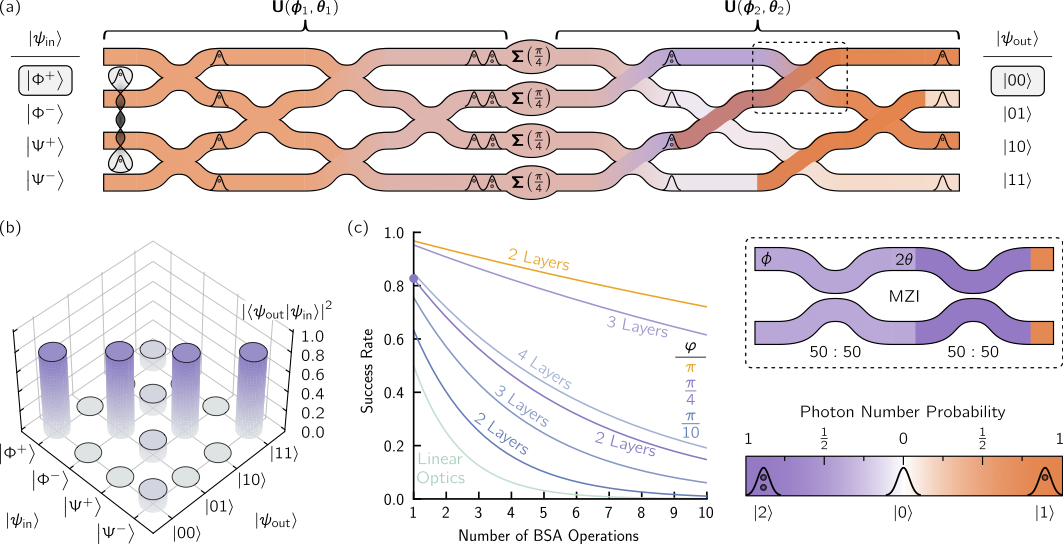
Bhavin J. Shastri is an Assistant Professor in the Department of Physics, Engineering Physics and Astronomy at Queen's University in Canada. His research explores the physics of light for computing , pushing frontiers in information and signal processing through photonic computing and quantum/neuromorphic photonics . He is affiliated with the Centre for Nanophotonics and NUCLEUS , a pan-Canadian photonic computing program funded by NSERC CREATE, bridging artificial intelligence and quantum information . Canada Research Chair & Principal Investigator Faculty Affiliate at Vector Institute (2020-) Editorial Board Member of JPhys Photonics (2019-) Member of IEEE Photonics Society Technical Affairs Council (2019-) Visiting Researcher Scholar at Princeton University (2018-) Shastri Lab members have access to world-class shared facilities, including the Centre for Nanophotonics (CFI-Innovation Fund), Nanofabrication Kingston , the Centre for Advanced Computing , and the Digital Research Alliance of Canada . The lab takes an interdisciplinary approach combining nanophotonics with complex systems on emerging substrates. His research focuses on silicon photonics , nanophonic processors , and photonic integrated circuits with applications to deep learning , nonlinear programming , and quantum information science . His articles show consistent exploration of quantum photonic neural networks , photonic memory systems , and optical signal processing for machine learning and quantum technologies . 2020 IUPAP Young Scientist Prize in Optics 2014 Banting Postdoctoral Fellowship 2012 D. W. Ambridge Prize 2011 IEEE Photonics Society Graduate Student Fellowship 2011 NSERC Postdoctoral Fellowship Multiple Best Student Paper Awards Shastri's lab supervises Ph.D. candidates and postdoctoral fellows working on quantum photonics , neuromorphic computing , and photonic AI systems . His recent work includes photonic tensor cores for scientific computing , quantum photonic neural networks , and all-optical memory systems. Shastri Lab designs programmable nanophotonic processors with potential to outperform microelectronic processors in energy efficiency and computational speeds by seven and four orders of magnitude respectively. Their work spans from device design to system-level implementations in optical computing for machine learning and quantum information processing .
Diane M. Styers is an Associate Professor in the Department of Geosciences and Natural Resources at Western Carolina University's College of Arts and Sciences. Her work integrates geospatial technologies with community engagement to address global climate resilience challenges through human-centered research approaches. Her educational qualifications include: Postdoctoral Research in Remote Sensing and Geospatial Analysis, University of Washington Ph.D. in Forest Ecology, Auburn University M.A. in Geography, Georgia State University B.S. in Human Development & Family Studies, University of North Carolina at Greensboro Dr. Styers specializes in public participatory GIS (PPGIS) to incorporate local landscape knowledge into climate adaptation strategies. Her technical expertise spans LiDAR data analysis, object-based image analysis (OBIA), MODIS/Landsat time series, multi-sensor integration, forest ecology, and dendroecology. She investigates how social-ecological processes drive landscape changes affecting Earth's resources, with particular focus on community resilience against climate-related risks. Her publication record reveals strong thematic trends in applying geospatial methods to socio-ecological systems, with increasing emphasis on rivercane conservation, forest community dynamics in Appalachia, biodiversity education using NEON data, and vector-borne disease mapping. Recent works demonstrate sophisticated integration of remote sensing with community-based adaptation frameworks. Dr. Styers actively mentors students through co-authored publications and teaches diverse courses including Introduction to Geospatial Analysis, Remote Sensing, GIS applications, and field-based programs like Sustainability in Costa Rica. Her instructional approach emphasizes authentic science engagement using big data resources.
Donato Romano serves as Associate Professor at The BioRobotics Institute of Scuola Superiore Sant'Anna, Italy, where he coordinates the Bio-Robotic Ecosystems Lab and co-founded the spin-off company HUBILIFE srl. His interdisciplinary work bridges robotics, biology, and AI to develop biohybrid systems for biodiversity preservation, sustainable environmental management, and life support in extreme scenarios including space exploration. With over 90 publications and an H-index of 27 (Scopus, March 2025), he has established significant academic leadership through editorial roles across 12+ international journals. Romano's educational foundation includes advanced degrees with honors: an M.Sc. in Agriculture Science and Technologies (2014) and a PhD in BioRobotics (2018), both from Scuola Superiore Sant'Anna. His academic journey includes visiting scholar positions at Khalifa University and substantial industry-academia collaboration through HUBILIFE srl, which commercializes bioinspired devices for human daily life improvement. His research program focuses on bioinspired and biomimetic robotics with particular emphasis on animal-robot interaction, biohybrid systems, and natural intelligence. Key projects address critical global challenges: SENSORBEES develops biohybrid environmental surveillance for ecological monitoring; REGOLIFE investigates lunar soil-terrestrial organism interactions for space agriculture; and OCEAN ROBOCTO explores marine ecosystem solutions. This work demonstrates a strategic progression from fundamental behavioral studies toward applied ecological and extraterrestrial systems. Analysis of his recent publications reveals strong trends in AI-driven behavioral analysis, with deep learning increasingly applied to entomological studies and pest management. The research spans agricultural applications (precision monitoring traps, larval detection systems), ecological conservation (biodiversity surveillance), and extreme-environment adaptation (lunar regolith studies). A distinctive feature is the consistent integration of biohybrid approaches where living organisms and robotic systems create synergistic capabilities exceeding either component alone. Romano's scientific recognition includes election as Junior Fellow of the Italian Academy of Engineering and Technology (2025), the Lucani fuori dal Comune award (2024), and multiple best-thesis prizes. His editorial leadership spans high-impact journals including IEEE Transactions on Medical Robotics and Bionics and Pest Management Science, where he serves as Associate Editor. As principal investigator, Romano coordinates major international projects totaling over €15M in funding: HORIZON-EIC's SENSORBEES (2024-2029), ASI's REGOLIFE (2024-2027), National Geographic's OCEAN ROBOCTO (2024-2026), and PRIN's COSMIC (2023-2025). His teaching portfolio includes PhD courses in Biosystems for Biorobotics and M.Sc. instruction in Bionics Engineering at Scuola Superiore Sant'Anna and University of Pisa. The Bio-Robotic Ecosystems Lab under Romano's direction pioneers biohybrid technologies where living organisms and robotic systems create integrated solutions. Current initiatives include SENSORBEES' environmental monitoring swarms, REGOLIFE's moonworm colonization systems, and HUBILIFE's commercial vector-control devices. The lab maintains active collaborations with space agencies, agricultural institutes, and conservation organizations, positioning biohybrid systems as next-generation tools for planetary-scale challenges.
Associate Professor Jean-Paul Paluzzi is part of the Biology Department at York University's Faculty of Science, serving as Graduate Program Director. His research focuses on neuroendocrine mechanisms in blood-feeding arthropods like mosquitoes and ticks, particularly how hormones regulate physiological processes such as osmoregulation and reproduction. His lab uses multidisciplinary approaches (physiological, genetic, molecular) to study signaling pathways in disease vectors like Aedes aegypti (yellow fever mosquito) and Ixodes scapularis (Lyme disease vector). Key research areas include neurohormonal control of epithelial tissues, stress responses, and the functional roles of proteins involved in neuroendocrine communication. Recent work explores CAPA neuropeptides' anti-diuretic effects, aquaporin regulation, and receptor characterization. His lab's findings aim to advance strategies for controlling disease-transmitting insects. Paluzzi leads the Paluzzi Lab and has contributed to over 50 peer-reviewed articles. His work aligns with UN Sustainable Development Goal 'Life on Land' by addressing vector-borne disease challenges.
Dr. Swati Chandna is a Senior Lecturer at the School of Computing and Mathematical Sciences, Birkbeck, University of London. She holds an honorary position as an Honorary Lecturer in Statistics at University College London (UCL) from January 2023 to January 2026. She earned her PhD in Statistics from Imperial College London in 2013. Her research focuses on statistical modeling, network analysis, and bioinformatics, with notable contributions to stochastic networks, single-cell genomic data analysis, and complex-valued signal processing. Teaching responsibilities include modules such as Bayesian Methods, Analysing Data, Statistical Analysis, and Project Applied Statistics. She serves as Admissions Tutor for Graduate Certificate and Diploma in Statistics for Data Science and as School Ethics Lead at Birkbeck. Her work bridges theoretical statistics with practical applications in genomics, environmental modeling, and biomedical research. Dr. Chandna’s recent research explores topics like covariate-driven network estimation, stochastic modeling of genomic data, and bootstrap techniques in source separation. Her publications reflect interdisciplinary collaboration across statistics, computer science, and life sciences.