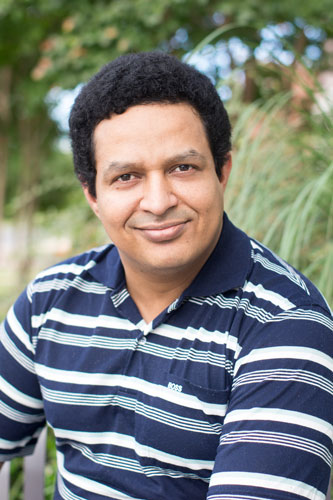
Thiago Batista Soeiro serves as a Full Professor with exceptional scholarly impact, evidenced by over 200 research publications and an h-index of 27. His work fundamentally advances power electronics applications in transportation and energy systems, particularly through innovations in electric vehicle infrastructure and sustainable power conversion technologies. Despite the absence of explicit institutional affiliation in source materials, his research permeates critical IEEE journals and conferences. Professor Soeiro's research portfolio centers on: Power converter design for electric vehicle charging systems AI-driven battery health estimation using electrochemical impedance spectroscopy Wireless power transfer optimization for automotive applications High-efficiency topologies for more electric aircraft Hydrogen energy system integration Advanced semiconductor utilization in grid-connected systems Analysis of his 2023-2025 publications reveals accelerating innovation in wide-voltage-range converters, predictive battery management, and fault-tolerant power systems. His work increasingly bridges machine learning with power electronics, notably through computation-light AI models for battery diagnostics, while maintaining strong focus on practical implementation challenges in EV charging and aircraft electrification. No scientific awards or honors were documented in the available materials. Similarly, information regarding student supervision, research grants, laboratory facilities, or collaborative teams was not provided in the source texts.
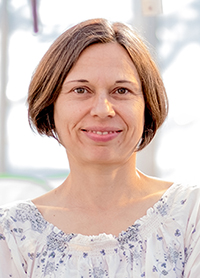
Zsofia Szendrei is a Professor in the Department of Entomology at Michigan State University (MSU), affiliated with the College of Agriculture & Natural Resources. Her work spans teaching (10%), research (40%), and extension (50%), focusing on vegetable production entomology. She leads the Szendrei Lab, which explores chemical ecology, biological control, and sustainable pest management. Her research emphasizes reducing reliance on synthetic pesticides through integrated approaches like habitat manipulation and molecular detection of trophic interactions. She collaborates closely with growers and extension educators to implement practical solutions for vegetable pest challenges. Education: M.Sc. in Horticulture (Hungary, 2001), Ph.D. in Entomology (MSU, 2005). Professional roles include Co-Editor-in-Chief of American Entomologist (2021–present) and leadership in MSU's Extension programs. She prioritizes student mentorship, fostering creativity and hands-on research in a collaborative lab environment. Key research themes include agroecology, pest-behavioral interactions, and pollinator conservation. Her extension efforts target reducing insecticide use while maintaining crop profitability. Recent work investigates heatwave impacts on crop-pest dynamics and pollinator protection. She has authored/co-authored over 50 peer-reviewed articles, with a focus on topics like cover crops, pathogen management, and invasive species. Her lab’s findings inform both academic discourse and real-world agricultural practices.
Professor Hilary Bambrick is a distinguished environmental epidemiologist and anthropologist at the Australian National University (ANU), leading the National Centre for Epidemiology and Population Health. She specializes in climate change and health, focusing on adaptation strategies, vector-borne diseases, and urban resilience. Her work bridges research, policy, and practice, with significant contributions to global health initiatives like the WHO and UNDP. Bambrick has over 180 publications and $11M in research funding, addressing climate impacts on vulnerable populations, including First Nations communities and Pacific Island nations. She serves on the Climate Council of Australia and the Australia Institute, advocating for evidence-based climate policies. Her research integrates epidemiology, anthropology, and environmental science to enhance health resilience in changing climates. Education: PhD (ANU, 2003), BA (Hons), BSc, Grad Cert Higher Ed. Key Research Focus: Climate change health impacts, adaptation strategies, vector-borne diseases, urban design, and health equity. She leads interdisciplinary projects on climate litigation, heatwaves, and infectious disease forecasting. Grants & Funding: Over $11 million in research grants, including projects on bushfire preparedness, dengue transmission modeling, and climate-sensitive disease surveillance. Labs/Teams: National Centre for Epidemiology and Population Health (ANU), collaborating with global networks like the Lancet Countdown and MJA-Lancet Countdown.
Prof. Dr.-Ing. Hans-Georg Herzog is a Professor of Energy Conversion Technology at the Technical University of Munich (TUM), School of Engineering and Design. He has headed the Energy Conversion Technology group at TUM since 2002 and is a Senior Member of IEEE and member of VDE and VDI professional organizations. His research focuses on energy-efficient electromechanical drives and related technologies critical for modern electric and hybrid vehicles. Prof. Herzog's research interests encompass energy-efficient electromechanical drives, with key expertise in design and optimization of hybrid-electric and battery-electric powertrains, automated design methods for electromechanical actuators, energy and power management systems, and analysis of loss mechanisms in soft magnetic materials. His work bridges fundamental electromagnetic theory with practical automotive applications, particularly in fault-tolerant systems and reliability engineering for electric propulsion. His recent publication trends show a strong focus on vehicular power systems, with particular emphasis on electronic fuses, fault diagnosis in multiphase machines, wireless power transfer, and reliability analysis of electric aircraft propulsion systems. The research spans from fundamental electromagnetic modeling to practical automotive applications, with increasing attention to autonomous driving power requirements and next-generation vehicle electrical architectures. Prize for Good Teaching of the Free State of Bavaria (2010) Prof. Herzog leads a substantial research team including doctoral candidates and postdoctoral researchers who contribute to his extensive publication record. His research group collaborates with automotive industry partners on various grants focused on electric vehicle technology, power system reliability, and advanced electromagnetic systems. The team regularly develops novel methodologies for machine design, fault tolerance analysis, and power system optimization. The research is conducted within TUM's Energy Technology Workshop with specialized facilities for electrical machine testing, power electronics development, and automotive power system simulation. The team maintains strong connections with industry partners in the automotive and aerospace sectors, facilitating technology transfer from academic research to practical applications.
Gireeja Ranade is an Assistant Teaching Professor in the Department of Electrical Engineering and Computer Sciences at the University of California, Berkeley. She previously served as a Researcher at Microsoft Research AI in the Adaptive Systems and Interaction Group. Her educational background includes a PhD in Electrical Engineering and Computer Science from UC Berkeley and an undergraduate degree from MIT. Research Focus Prof. Ranade's research spans control theory, information theory, and machine learning, with applications in wireless communication, algorithmic fairness, and misinformation analysis. Her work addresses fundamental challenges in system stabilization under uncertainty, real-time control optimization, and equitable resource allocation. She maintains strong collaborations across disciplines, resulting in publications at premier venues like IEEE Transactions on Automatic Control, PNAS, and The Web Conference. Her recent publications demonstrate a consistent focus on robustness in control systems, fairness in algorithmic decision-making, and analysis of information propagation in online ecosystems. The work frequently combines theoretical rigor with practical implementations in robotics, networking, and social systems. Awards and Recognition 2017 UC Berkeley Electrical Engineering Award for Outstanding Teaching 2020 UC Berkeley Award for Extraordinary Teaching in Extraordinary Times Academic Leadership Prof. Ranade leads a dynamic research group including PhD candidates, master's students, and undergraduates. She has advised over 25 students on projects ranging from neural network controllers to fairness metrics in resource allocation. She founded the CalMentors program, which connects UC Berkeley students with K-12 learners for tutoring support during the COVID-19 pandemic. Educational Innovation She co-designed and teaches UC Berkeley's introductory EECS 16A/B sequence, integrating linear algebra with applications in machine learning and circuit design. She has also developed courses on optimization (EECS127/227A) and data science (Data 102), with publicly available lecture videos demonstrating her teaching methodology.
Ragib Hasan is a Professor in the Department of Computer Science at the University of Alabama at Birmingham (UAB), affiliated with the College of Arts and Sciences. His research focuses on cybersecurity, with specialties in cloud security, IoT systems, digital forensics, and biomedical device security. He leads the Secure and Trustworthy Computing Lab (SECRETLab) and contributes to the UAB Center for Cyber Security and NIST Cloud Forensics Working Group. Education: M.S. and Ph.D. in Computer Science from the University of Illinois at Urbana-Champaign, followed by a postdoctoral fellowship at Johns Hopkins University. Affiliations: NIST Cloud Forensics Working Group, UAB Center for Cyber Security. His research addresses threats in smart cities, autonomous vehicles, and healthcare technologies. Key interests include securing IoT networks, mitigating cyberattacks on critical infrastructure, and advancing forensic methodologies in cloud environments. Recent work emphasizes threat modeling for connected vehicles, medical devices, and AI-driven systems. Dr. Hasan’s funding comes from the Department of Homeland Security, NSF, ONR, and industry partners like Facebook, Google, and Amazon. His awards include the NSF CAREER Award (2014), Google RISE Award (2013), and Deutsche-Welle Best of Blogs (2014) for his BanglaBraille initiative. Grants & Projects: Supported by DHS, NSF, and corporate collaborations. Outreach: Founded Wikimedia Bangladesh, Shikkhok.com (STEM education platform), and contributed to Bangla and English Wikipedia. His lab develops frameworks like StreetBit for pedestrian safety and InSight for emergency alert systems, integrating Bluetooth beacon technology to enhance urban security and sustainability.
Laurie Williams serves as a Goodnight Distinguished University Professor in the Computer Science Department within the College of Engineering at North Carolina State University. She co-directs both the NCSU Secure Computing Institute and the NC State Science of Security Lablet, demonstrating deep institutional leadership in cybersecurity research. With over 260 refereed publications, her work establishes her as a prominent figure in software security academia. Her research spans critical areas including software security, agile development practices (particularly continuous deployment), software reliability, and software supply chain security. Williams focuses on practical security solutions addressing modern challenges like malicious dependencies in open-source ecosystems, AI-generated code vulnerabilities, and runtime protection mechanisms. Her work bridges theoretical security principles with industry-relevant applications. Recent publications reveal strong trends toward software supply chain security, with multiple 2024-2025 papers addressing vulnerability exploitability, malicious commit detection, and metrics-driven security control selection. Her research increasingly incorporates machine learning for threat detection while maintaining focus on human factors in secure development practices. IEEE Fellow (2018) National Science Foundation CAREER Award (2004) ACM SIGSOFT Influential Educator Award (2009) Multiple IBM Faculty Awards (2002-2012) NCSU Alumni Association Outstanding Research Award (2015-2016) Williams leads multiple major NSF-funded projects including the $5.7M SaTC Frontiers grant on secure software supply chains and the Science of Security Lablet with $3.6M in DoD funding. Her research emphasizes practical industry impact through collaborations with Cisco and Laboratory for Analytic Sciences. She actively mentors through the NCSU Research Leadership Academy and maintains significant educational outreach in software security. Her laboratory work centers on the Secure Computing Institute and Science of Security Lablet, where her team develops frameworks for vulnerability prediction, supply chain risk assessment, and secure development methodologies. Current projects focus on machine learning integrity, cognitive modeling for security decisions, and empirical analysis of build/deployment logs for anomaly detection.
Arash Joorabchi is an Assistant Professor at the Department of Electronic and Computer Engineering, Faculty of Science and Engineering, University of Limerick, Ireland. His research focuses on the intersection of machine learning, educational technology, and digital library systems, with particular emphasis on automated assessment, text mining, and knowledge organization techniques. Research Trends: Analysis of his publications reveals sustained contributions to automated short-answer grading, Arabic text classification, and semantic integration of Wikipedia with academic resources. Key methodologies include sentence transformers, hybrid text representation models, and citation-based indexing techniques. Technical Domains: His work spans natural language processing, educational data mining, metadata management, and semantic web technologies. Specific applications include Q&A platform analysis, library resource discovery, and curriculum development systems.
Dr Stathis Tingas is a Lecturer at Edinburgh Napier University's School of Computing Engineering and the Built Environment. His research focuses on hydrogen fuel systems, combustion engineering, and sustainable transportation technologies. With numerous publications in high-impact journals and conference proceedings, Dr Tingas has established himself as a significant contributor to the field of alternative energy systems. Dr Tingas' research interests center on hydrogen and ammonia as alternative fuels for transportation, with particular emphasis on combustion characteristics, engine performance, and emissions control. His work spans theoretical modeling, computational analysis, and practical applications for decarbonizing various transportation sectors including aviation, heavy-duty vehicles, and maritime transport. Recent publications demonstrate his focus on hybrid propulsion systems combining fuel cells with traditional engine technologies. Dr Tingas' publication record shows consistent productivity with research outputs spanning from fundamental combustion science to applied engineering solutions. His work often employs computational singular perturbation techniques for analyzing complex combustion phenomena, with recent focus shifting toward practical applications of hydrogen and ammonia fuels in real-world engine systems. The trend in his publications indicates growing emphasis on zero-emission transportation solutions aligned with net-zero targets. Dr Tingas serves as a second supervisor for PhD students, including Richard Wallace who is working on subsurface hydrogen storage simulation. He has successfully secured multiple research grants from UK government bodies including the Department for Science, Innovation & Technology, Scottish Government, and the Royal Society of Edinburgh, with projects totaling over £500,000 in funding. His current research portfolio includes projects focused on accelerating clean energy technology development, creating sustainable cities, advancing electromobility, and developing zero-carbon hydrogen engines for heavy transport applications. These projects demonstrate his commitment to addressing practical challenges in the transition to sustainable energy systems.
Philipp Schlatter is a Professor in the Department of Mechanics at KTH Royal Institute of Technology. His research focuses on fluid mechanics, turbulence, and computational fluid dynamics (CFD), with expertise in high-performance computing and direct numerical simulations (DNS). He leads projects involving scalable CFD frameworks like Neko and Nek5000, and investigates turbulent boundary layers, flow control, and coherent flow structures. His work includes experimental and numerical studies of wing profiles, rotating systems, and transition dynamics. Schlatter teaches courses on computational fluid dynamics and turbulence, emphasizing both theoretical and practical aspects of fluid mechanics. Key research interests include developing numerical methods for high-fidelity simulations, understanding turbulence mechanisms, and optimizing flow control strategies. His contributions span aerodynamics, heat transfer, and the application of machine learning to fluid dynamics problems. Schlatter collaborates extensively on interdisciplinary projects, leveraging advanced computing resources to address complex fluid flow phenomena. Publications highlight advancements in DNS frameworks, Bayesian optimization for flow control, and analysis of turbulent structures in pipe and boundary layer flows. His research also addresses challenges in measurement techniques and uncertainty quantification in CFD simulations.
Assoc Prof Wu Hongjun is an Associate Professor at the Division of Mathematical Sciences, School of Physical & Mathematical Sciences, Nanyang Technological University (NTU). His research focuses on cryptography and information security, with notable contributions to lightweight authenticated encryption algorithms like TinyJAMBU and ACORN, as well as cryptanalysis of stream ciphers (e.g., ZUC, HC-128) and hash functions (e.g., JH, SHA-3 candidates). His academic career includes over 15 years of contributions to cryptographic standards, IoT security frameworks, and secure cloud data management. Key areas of expertise encompass symmetric-key cryptography, algorithm design for resource-constrained devices, and vulnerability analysis of cryptographic primitives. Prof Wu has authored influential papers on authenticated encryption modes (AEGIS, MORUS), lightweight cipher optimizations (ACORN), and cryptanalysis techniques applied to Feistel networks and stream ciphers. His work bridges theoretical cryptography with practical implementations across telecommunications, IoT, and cloud computing domains.
Ali Ramezani-Kebrya is an Associate Professor with tenure in the Department of Informatics at the University of Oslo (UiO), where he leads research in machine learning theory. He holds dual Principal Investigator roles at the Norwegian Center for Knowledge-driven Machine Learning (Integreat) and SFI Visual Intelligence, and is an active member of the European Laboratory for Learning and Intelligent Systems (ELLIS) Society. His service includes Area Chair positions for NeurIPS and AISTATS, and Action Editor for Transactions on Machine Learning Research. His research focuses on theoretical foundations of deep learning with emphasis on understanding input data distribution encoding in neural network layers. Key themes include minimizing statistical risk under resource constraints, addressing distribution shifts in distributed settings, and developing practical tools for robust federated learning. Current applications span emotion recognition, marine data analysis, and neuroscience, reflecting his commitment to real-world machine learning challenges as evidenced by his FRIPRO-funded Machine Learning in Real World (MLReal) project. Recent publication trends reveal three dominant threads: (1) label/covariate shift mitigation in distributed systems through entropy regularization and density ratio estimation; (2) communication-efficient optimization via layer-wise quantization and adaptive compression techniques achieving 150% speedups; and (3) robustness guarantees against tailored attacks and distribution shifts. These works consistently bridge theoretical bounds with empirical validation across domains from GAN training to federated settings. Scientific recognition includes: FRIPRO Grant for Early Career Scientists (2025) for MLReal project SFI Visual Intelligence Spotlight Publication award (2023) for federated learning work He actively mentors 11 graduate students across Oslo and Tromsø universities, with recent PhD placements at Apple and NVIDIA. Current grant portfolio features the FRIPRO Early Career award and leadership roles in two major Norwegian research centers. His lab maintains strong industry collaborations through Vector Institute and EPFL, with recent hiring for PhD and postdoc positions in physics-informed machine learning.
Heidi Brown is a Professor and Program Director at the University of Arizona , affiliated with multiple programs including the Mel and Enid Zuckerman College of Public Health, Entomology and Insect Science, Remote Sensing and Spatial Analysis, and the School of Geography and Development. PhD in Epidemiology of Microbial Diseases (Yale University) MPH in International Health Promotion (George Washington University) Postdoctoral experience at Oxford University (Zoology) and CDC (Bacterial Diseases Branch) Her research focuses on infectious disease epidemiology , emphasizing the spatial and temporal dynamics of diseases, vector-borne/zoonotic transmission, and environmental determinants of health. She integrates epidemiological and spatial analysis to address climate change impacts on disease patterns. Recent publications highlight her work linking climate variability to infectious diseases like Campylobacter, stakeholder engagement in climate adaptation, and dual hazard response strategies during the 2020 heat-COVID overlap. Her 2019 Fulbright in Brazil and 2023 sabbatical at Heidelberg Institute of Global Health underscore her international expertise. Scientific Awards: Fulbright (2019) She leads projects such as Adaptation Mal-Adaptation Assessment , Climate and Health Adaptation Monitoring Program (CHAMP) , and initiatives on heat health resilience. Her work bridges academic research with practical implementation for state and local health departments.
Stefano Grivet-Talocia is a Full Professor at the Department of Electronics and Telecommunications at the Polytechnic University of Turin, where he also serves as Director of the Doctoral School and President of the Doctoral School Council. He is a member of the Interdepartmental Center SmartData@PoliTO - Big Data and Data Science Laboratory, the University Committee for Research, Technology Transfer and Services to the Territory, and the Commission for the Promotion of Library, Archive and Museum Heritage. His academic career spans over two decades at Politecnico di Torino, where he has established himself as a leading researcher in electromagnetic modeling and signal integrity. Grivet-Talocia earned his Laurea degree (summa cum laude) in Electronic Engineering in 1994 and his Ph.D. in Electronic and Communication Engineering in 1998, both from the Polytechnic University of Turin. Between 1994 and 1996, he conducted research at NASA/Goddard Space Flight Center in Greenbelt, Maryland. His educational background laid the foundation for his expertise in electromagnetic modeling, wavelet analysis, and signal processing. His research focuses on behavioral modeling, electromagnetic compatibility, macromodeling, model order reduction, numerical modeling, passivity, power integrity, signal integrity, transmission lines, and wavelets . Grivet-Talocia is particularly renowned for his work on passive macromodeling of interconnect structures, development of the TOPLine technique for transmission line simulation, and pioneering contributions to passivity enforcement algorithms. He has co-authored the first book entirely dedicated to Macromodeling (2016) and developed innovative approaches to waveform relaxation and wavelet-based signal processing. His recent publications (2024-2025) demonstrate continued leadership in model order reduction, with significant contributions to data-driven modeling of linear and nonlinear systems, power integrity analysis, and electromagnetic compatibility. His work spans both theoretical advances in numerical methods and practical applications in circuit design, with strong industry relevance particularly for semiconductor and electronic design automation companies. IEEE Fellow (2018-present) Three Intel SRS Grants (2022-2024) Three IBM SUR Grant Awards (2007-2009) Best Associate Editor Award - IEEE Transactions on Components, Packaging and Manufacturing Technology (2020) Multiple Best Conference Paper Awards (2006-2020) URSI Young Scientist Awards (1999) Ranked among the "top 2% worldwide researchers" (Stanford) since 2019 Grivet-Talocia actively supervises doctoral students including Michele Cusano, Sara Paknezhad Panahi, Antonio Carlucci, and Kun Zhao. He has secured numerous research grants from competitive national calls (PRIN) and commercial contracts with industry partners including Intel, IBM, Nokia, Hitachi, Infineon, and Cadence. His technology transfer activities include co-founding the spin-off IdemWorks (2007-2016), which was acquired by CST in 2016. He also developed the autoCircuits web service for automated circuit problem generation, widely used in electrical engineering education. He leads the EMC Group (Electromagnetic Compatibility) at DET and has been instrumental in establishing the Compact Dynamical Modeling research area. His work has practical applications in high-speed electronics design, with algorithms embedded in commercial tools like IBM PowerSPICE. Grivet-Talocia maintains strong industry connections through his research projects and serves as Associate Editor for IEEE Transactions on Components, Packaging and Manufacturing Technology.
Toshiharu Sugawara is a Professor in the Department of Computer Science and Engineering at Waseda University's Faculty of Science and Engineering, School of Fundamental Science and Engineering, a position he has held since April 2007. With a Ph.D. in Engineering from Waseda University, his research spans multiple domains in artificial intelligence and multi-agent systems, maintaining active collaborations across international institutions and contributing significantly to the field through numerous publications and awards. Dr. Sugawara received his BS and MS degrees in Mathematics from Waseda University in 1980 and 1982, respectively, followed by his Ph.D. in 1992. Before joining Waseda University as faculty, he worked as a Research Scientist at NTT Laboratories from 1982 to 2007, with a visiting researcher position at the University of Massachusetts at Amherst in 1992-1993. He also held part-time lecturer positions at University of Electro-Communications (2003-2007), Waseda University (2004-2006), and Tokyo University of Agriculture and Technology (1990-1991). His research interests focus on artificial intelligence with particular expertise in multi-agent systems, machine learning, cooperation and coordination mechanisms, soft computing, computational social science, and social informatics. His work bridges theoretical foundations with practical applications in network management and information systems. Recent publications demonstrate a strong trajectory toward interpretable multi-agent reinforcement learning, efficient path planning algorithms, and modeling social behaviors in complex networks. His research group has made significant contributions to multi-agent path finding, cooperative task execution, and understanding virtual economies in social media platforms. Dr. Sugawara has received numerous prestigious awards including multiple Best Paper Awards at JAWS conferences (2014, 2015, 2018), ACM SAC 2015, and various research paper awards from Japanese academic societies. His work on multi-agent systems has been consistently recognized for its theoretical rigor and practical impact. As an advisor, Dr. Sugawara has mentored numerous students who have become prominent researchers in their own right, with many co-authoring papers that have received awards. His laboratory maintains strong collaborations with industry partners, particularly in the areas of network management and intelligent systems. Current research directions include developing interpretable multi-agent reinforcement learning frameworks, optimizing multi-agent coordination in constrained environments, and analyzing social dynamics in virtual economies.