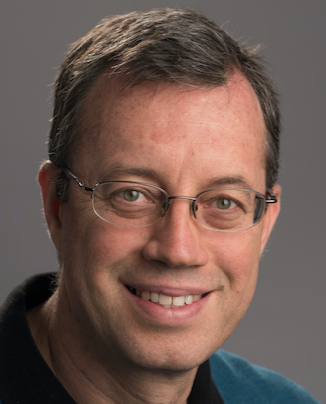
Professor Guy Williams is a leading academic at the University of Cambridge with a focus on imaging science and clinical neurosciences, affiliated with Downing College and the Wolfson Brain Imaging Centre . Holding a PhD in Physics from his initial Natural Sciences degree, he specializes in nuclear magnetic resonance (NMR) and MRI techniques for brain imaging. Education: BA, PhD in Physics His research centers on non-invasive imaging of brain structure and function, particularly in traumatic brain injury (TBI) and dementia. His work involves developing novel MRI pulse sequences and advanced data analysis algorithms, including AI-based diagnostic tools. He leads studies on white matter integrity post-trauma, longitudinal dementia assessment, and applications of MRI in disorders of consciousness and addiction. Recent publications highlight collaborations in traumatic brain injury outcomes, AI-guided dementia prediction, and neuroimaging of post-COVID cognitive deficits. His team's work on ultra-high field laminar fMRI and distortion correction methods has advanced clinical neuroscience applications. Key techniques include diffusion tensor imaging (DTI), 7 Tesla MRI, and positron emission tomography (PET/MR). His research spans from basic NMR physics to clinical translation, with a strong emphasis on multi-site studies and real-world diagnostic implementation.
Sushmita Ruj is an Associate Professor in the School of Computer Science and Engineering at the University of New South Wales (UNSW), Sydney. She serves as the Faculty of Engineering Lead for the UNSW Institute for Cybersecurity (IfCyber) and as the Taste of Research (ToR) Coordinator within the School of Computer Science and Engineering. Her academic journey includes previous positions as a Senior Research Scientist at CSIRO's Data61 (2019-2022), Associate Professor at the Indian Statistical Institute, Kolkata, and Assistant Professor at the Indian Institute of Technology (IIT), Indore. Dr. Ruj's primary research interests focus on applied cryptography, post-quantum cryptography, cybersecurity, blockchains, and data privacy. She designs practical, efficient, and provably secure protocols for real-life applications, with particular emphasis on critical infrastructure including smart grids, cloud computing, ad hoc networks, and data sharing frameworks. As quantum technology advances, her work increasingly focuses on developing quantum-safe algorithms to ensure a more secure Internet infrastructure. Her research spans multiple domains including cryptographic key management, proofs of storage, verifiable computation, vector commitments, and privacy-enhancing technologies for cloud and IoT environments. Her recent publications demonstrate a strong trend toward post-quantum cryptography solutions, with particular emphasis on blockchain applications, DNS security, and privacy-preserving protocols for industrial IoT. The research shows increasing focus on practical implementations of theoretical cryptographic concepts, with applications across multiple sectors including finance, healthcare, and critical infrastructure. Her work bridges the gap between theoretical cryptography and real-world security challenges, with growing emphasis on the transition from classical to quantum-resistant systems. Best Paper Award at ACISP 2024 JNCA Best Survey Award (2023) NSW Innovation Award (iAward) Merit Winner (2022) Women in Science Award from CSIRO (2020) ACM Senior Member (2016) IEEE Senior Member (2015) Samsung GRO award (2014) Dr. Ruj has successfully mentored numerous PhD and Master's students, with many of her former students now holding academic positions at institutions like IIT Indore, TU Wien, and CISPA Helmholtz Center. She has secured significant competitive funding including multiple Australian Research Council (ARC) grants, Samsung GRO Award, NetApp Faculty Fellowship, Cisco Academic Grant, and IBM Research grant. Her current research portfolio includes projects on blockchain-based quantum-safe digital medical passports, embedding trust in digital IDs, and resilience of supply chain unstructured data. As Faculty of Engineering Lead for IfCyber, Dr. Ruj plays a key role in UNSW's cybersecurity research initiatives. She has served on editorial boards for prestigious journals including IEEE Transactions on Information Forensics and Security and has held leadership positions in major conferences such as ACISP 2021 and Indocrypt 2020. She was also a member of the working group on "Blockchain For Cybersecurity" for the National Blockchain Roadmap of Australia and the first Blockchain Working group set up by the Reserve Bank of India.
Elena Simperl is a Professor of Computer Science and Deputy Head of Department for Enterprise and Engagement at King's College London's Department of Informatics. She co-directs the King's Institute for Artificial Intelligence and serves as Director of Research for the Open Data Institute. As a Hans Fischer Senior Fellow at the Technical University of Munich's Institute for Advanced Study, she leads the Trustworthy Knowledge Graphs focus group and contributes to advancing human-centric AI research across European institutions. Professor Simperl obtained her doctoral degree in Computer Science from the Free University of Berlin and her diploma from the Technical University of Munich. Prior to joining King's, she held academic positions in Germany, Austria, and at the University of Southampton, and was a Turing Fellow. Her career trajectory demonstrates consistent leadership in bridging academic research with practical applications in data ecosystems. Her research sits at the critical intersection of AI and social computing, focusing on human-centric approaches to building sociotechnical systems that integrate data, algorithms, and human capabilities. She investigates how to make knowledge engineering more accessible, how to leverage collective intelligence for data quality improvement, and how to design participatory AI systems that address societal challenges like misinformation. Her work spans knowledge graphs, semantic technologies, crowdsourcing, and open data, with particular emphasis on the social dimensions of data-intensive systems and the governance frameworks needed for trustworthy AI deployment. Analysis of her recent publications reveals a strong evolution toward integrating large language models with traditional knowledge engineering practices while maintaining human oversight. There's a clear trajectory from foundational work on knowledge representation toward increasingly applied research addressing real-world challenges in media ecosystems, citizen science, and data governance, with growing attention to policy implications of AI technologies. Fellow of the British Computer Society Fellow of the Royal Society of Arts Hans Fischer Senior Fellow at TUM-IAS (2023) Ranked among top 100 most influential scholars in knowledge engineering of the last decade Included in Women in AI 2000 ranking Professor Simperl has led 14 major European and national research projects totaling millions in funding, including MediaFutures (a Horizon 2020 program tackling online misinformation), QROWD, ODINE, Data Pitch, and ACTION. She currently co-chairs the Croissant working group in ML Commons developing data standards for AI, and serves as president of the Semantic Web Science Association. Her research has directly influenced the development of data ecosystems supporting startups and citizen science initiatives across Europe, demonstrating exceptional ability to translate theoretical advances into practical impact. As Director of Research at the Open Data Institute, she oversees initiatives connecting data entrepreneurs with artists and civic organizations. Her leadership in the MediaFutures project established a data-driven innovation hub that supported 51 startups/SMEs and 43 artists through three open calls, creating a sustainable model for arts-technology collaborations addressing media challenges. Her work with the ODINE project helped create a European ecosystem for data-driven startups, demonstrating her commitment to building practical applications of open data principles.
Professor Behzad Fatahi is a distinguished academic in Civil and Environmental Engineering at the University of Technology Sydney (UTS), specializing in geotechnical engineering, railway infrastructure, and sustainable construction technologies. With a career spanning over 16 years at UTS, he has served as Deputy Head of School - Teaching and Learning (2024-present), Head of Discipline (2020-2024), and School Research Coordinator (2012-2017). His research focuses on unsaturated soil mechanics , dynamic soil-structure interaction , and green infrastructure solutions . Academic Appointments : Professor (2024-present), Associate Professor (2017-2024), Senior Lecturer (2011-2017), Lecturer (2008-2011) Research Leadership : Supervised 21 PhD students to completion, developed groundbreaking techniques for landfill waste reuse and tyre-derived aggregates in railway construction His work on seismic resilience of LNG tanks and bioengineered soil stabilization has received international recognition, including the 2023 Best Research Paper Award at the Australasian Association for Engineering Education conference. Professor Fatahi's industry experience includes geotechnical engineering roles at Coffey International and SES Engineering prior to academia. Key Research Contributions : Developed green corridor models for railway lines using coupled flow-deformation equations Pioneered AI-integrated teaching frameworks for civil engineering education Advanced machine learning techniques for intelligent compaction and structural buckling analysis As a Category 1 supervisor , he mentors graduate researchers in Civil Engineering , Geomechanics , and Earthquake Engineering . His peer-reviewed work (>240 publications) demonstrates technical excellence and innovation across multiple geotechnical domains.
Phillip J. Ansell is an Associate Professor in the Department of Aerospace Engineering at the University of Illinois at Urbana-Champaign (UIUC), affiliated with the Grainger College of Engineering. He directs the Center for Sustainable Aviation and the Center for High-Efficiency Electrical Technologies for Aircraft. His academic positions include Assistant Professor (2015–2021) and current role as Associate Professor since 2021. He teaches courses such as AE 416 (Applied Aerodynamics), AE 419 (Aircraft Flight Mechanics), and AE 515 (Wing Theory). Education: BS, The Pennsylvania State University, Aerospace Engineering, 2008 MS, UIUC, Aerospace Engineering, 2010 PhD, UIUC, Aerospace Engineering, 2013 Research Interests: Focuses on applied aerodynamics, sustainable aviation, distributed propulsion, flow control, and aircraft electrification. His work integrates experimental fluid mechanics and computational models to advance aviation sustainability. Key projects include hydrogen propulsion systems, cryogenics in aviation, and unsteady aerodynamics for rotorcraft. Research Contributions: Authored/co-authored books like Aircraft Cryogenics (Springer, 2024). His articles address sustainable aviation frameworks, hydrogen-electric propulsion, and high-lift aerodynamics. Recent trends emphasize decarbonization pathways and system-of-systems analysis. Awards & Honors: Dean's Award for Excellence in Research (2025) NASA Innovative Advanced Concepts Fellow (2025) AIAA Associate Fellow (2024) Forbes 30 Under 30 (2016) Advising & Grants: Advises graduate students on propulsion and aerodynamics. Secured grants from AFOSR, ARO, and NASA. Active in AIAA committees, including Electrified Aircraft Technology Technical Committee (Chair, 2020–2023). Labs & Teams: Leads the Aerodynamics and Unsteady Flows Research Group, using UIUC’s wind tunnel facilities. Collaborates on projects like the Five Circles of Sustainable Aviation framework and cryogenic propulsion systems.
Aaron J. Elmore is an Associate Professor in the Department of Computer Science and the College of the University of Chicago. His research focuses on cloud computing, databases, and distributed systems, with an emphasis on resource-efficient database execution and collaborative analytics. PhD in Computer Science from University of California, Santa Barbara MS in Computer Science from University of Chicago Research interests include: Elastic databases and multitenancy (Database-as-a-Service) Resource-efficient systems (CrocodileDB, DenseStore, EdgeTSD) Database versioning (Datahub, Decible, OrpheusDB) Data discovery (DataSwamp, Relic) Recent publications highlight advancements in cloud-native query execution, dynamic compression frameworks, and time-series anomaly detection. His work often bridges systems design with practical data science applications. Scientific awards include: NSF CAREER Award (2021) Multiple Google and Intel research grants ACM SIGMOD Best Demo Honorable Mention Aaron has advised multiple PhD students including Jun Hyuk Chang and Riki Otaki, with former advisees now at institutions like MIT, Harvard, and UC Berkeley. He leads the ChiDATA research group and collaborates with Systems Group and CERES Center.
Bruce H. Alexander, PhD, serves as Professor and Division Head of Environmental Health Sciences at the University of Minnesota's School of Public Health. His educational background includes a PhD in Epidemiology from the University of Washington (1994), an MS in Environmental Health from Colorado State University (1987), and a BS in the same field from Colorado State University (1984). Dr. Alexander is an occupational and environmental epidemiologist whose research spans environmental determinants of cancer and respiratory disease, injury prevention and control, One Health approaches, agricultural population health, and global health initiatives. His work emphasizes multidisciplinary approaches to address complex public health problems and building public health research and practice capacity. His expertise encompasses occupational and environmental epidemiology, environmental exposures, infectious disease, injuries, occupational health, One Health frameworks, global health, and agricultural health. Analysis of his recent publications (2019-2024) reveals a continued focus on occupational exposures, environmental health risks, and injury epidemiology across diverse populations and settings. His research demonstrates methodological diversity including cohort studies, systematic reviews, and meta-analyses addressing chemical exposures, UV radiation risks, temperature-related injuries, and mineral particle exposures in mining contexts. Scientific Recognition Member, Delta Omega Honorary Society in Public Health Mayo Professor of Public Health, School of Public Health, University of Minnesota (2016) Faculty Excellence Award, Division of Environmental and Occupational Health, University of Minnesota (2002) Dr. Alexander maintains active professional affiliations with major epidemiological organizations including the Society for Epidemiologic Research, International Society for Environmental Epidemiology, American College of Epidemiology, International Commission on Occupational Health, and Delta Omega. His work through the Upper Midwest Agricultural Safety and Health Center (UMASH) and Midwest Center for Occupational Health and Safety demonstrates commitment to translating research into practice for worker safety and health.
Pardis Emami-Naeini is an Assistant Professor of Computer Science at Duke University, with joint appointments in the Sanford School of Public Policy and the Department of Electrical and Computer Engineering. She serves as the Director of the Duke Interdisciplinary Security, Privacy, and Interaction Research (InSPIre) lab and is a Duke Science and Technology Scholar. Her interdisciplinary work bridges computer science, public policy, and electrical engineering, with a focus on developing usable privacy and security solutions that empower individuals from diverse sociodemographic backgrounds. Dr. Emami-Naeini earned her Ph.D. in Computer Science from Carnegie Mellon University in 2020, followed by postdoctoral research at the University of Washington (2020-2022). Her research sits at the intersection of security, privacy, and human-computer interaction, with particular expertise in IoT security, technology-enabled abuse, reproductive health privacy, and smart city security. She has published extensively at flagship venues including IEEE S&P, CHI, CSCW, and SOUPS, with her work covered by major media outlets such as Wired and The Wall Street Journal. Her recent publications reveal a clear trajectory toward examining the human dimensions of security and privacy in emerging technologies, from LLM chatbots for mental health to social robots and period-tracking apps in the post-Roe v. Wade landscape. Her work consistently emphasizes the need for privacy-aware design that accounts for diverse user needs and contexts, particularly for vulnerable populations. Google Systems and ML Research Gift Award (2025) Google AI Research Scholar Program Award (2024) Top 5% Instructor in Duke Trinity College (2024) ORAU Ralph E. Powe Junior Faculty Enhancement Award (2023) Duke Science and Technology Scholar (2022) IEEE S&P paper highlighted in IEEE Security and Privacy Magazine (2021) CyLab Presidential Fellowship (2019) Dr. Emami-Naeini actively mentors several Ph.D. students including Jabari Kwesi, Jessie Cao, and Hiba Laabadli, as well as undergraduate and master's students. Her research has influenced key organizations including the National Institute of Standards and Technology (NIST), Consumer Reports, and the World Economic Forum in creating usable security and privacy labels for smart devices. She serves on numerous program committees including USENIX Security and CHI, and has participated in NSF grant review panels, demonstrating her growing leadership in the security and privacy community. Her InSPIre lab conducts user-centered research to uncover security and privacy needs of diverse stakeholders, with a particular focus on marginalized communities. The lab's work spans multiple domains including intimate partner violence, reproductive health, virtual reality, and smart cities, always with a strong emphasis on translating research findings into practical tools and policy recommendations.
Sapha Barkati, MD, MSc is an Assistant Professor at the Department of Medicine, Faculty of Medicine and Health Sciences, McGill University , and an Investigator at the RI-MUHC Glen site . Her work bridges clinical practice and research in tropical medicine, focusing on parasitic diseases affecting vulnerable populations. Affiliations: Assistant Professor, McGill University Investigator, Research Institute of the McGill University Health Centre (RI-MUHC) McGill International Tuberculosis Centre Research Focus: Specializes in neglected tropical diseases like strongyloidiasis and tegumentary leishmaniasis, particularly among migrants and immunocompromised individuals. Studies include: Physician awareness of Strongyloides screening Prevalence patterns in non-endemic countries HTLV-1 co-infection treatment response Cost-effective screening strategies Scientific Contributions: Key publications address tropical disease management in non-endemic settings, mpox outbreak dynamics, and SARS-CoV-2 immunity patterns. Her work emphasizes evidence-based guidelines for: Parasite screening in transplant recipients Leishmaniasis treatment protocols Traveler disease prevention Collaborative Networks: Partners with institutions like Universidad Peruana Cayetano Heredia and participates in GeoSentinel surveillance. Leads studies on: Covid-19 health disparities Vaccine effectiveness against variants Remote patient monitoring systems
Yongjoo Park is an Assistant Professor in the Department of Computer Science at the University of Illinois at Urbana-Champaign (UIUC), affiliated with the Grainger College of Engineering. He leads research in data-intensive AI systems as a member of the Data and Information Systems (DAIS) lab, focusing on novel data systems that bridge database theory and practical AI applications. His work emphasizes open-source contributions through GitHub and direct societal impact. Research interests center on systems for data-intensive AI , particularly efficient Retrieval-Augmented Generation (RAG) systems for exploratory AI, data science versioning, and in-storage computing. Key projects include Kishu (the world's first undoable Jupyter notebook with time-travel capabilities), CARE (a causal-relational system for structured/unstructured data), and AirDB/AirIndex (serverless transactions and automatic index optimization). His group develops tools enabling scalable, optimized AI workflows from storage layers to LLM inference. Recent publications reveal a strong focus on interactive data systems (85% of recent work), with significant contributions to notebook environments (Kishu), vector databases (ISCA'25), and RAG optimization. Awards highlight technical innovation, including SIGMOD 2025 Best Demo Award and NSF CAREER funding. His open-source philosophy drives GitHub releases of all major systems. SIGMOD 2025 Best Demo Award (Kishu) NSF CAREER Award (Novel data science systems) SIGMOD'23 Best Artifact Award Honorable Mention (DeepOLA) IBM-Illinois Project Selection (VectorDB/RAG) Mentorship spans 12 current PhD/MS students and 6 graduated advisees, including Supawit Chockchowwat (now Postdoc at Google, future Assistant Professor at CMKL University). He teaches advanced courses like CS511 (Advanced Data Management) and recruits 1-2 new PhD students annually, prioritizing data systems research. His lab emphasizes diversity, individual respect, and concrete outcomes in a collaborative workspace.
Jaline L Gerardin is an Associate Professor in Preventive Medicine (Epidemiology) and McCormick School of Engineering at Northwestern University. She is affiliated with the Center for Global Health, Institute for Public Health and Medicine (IPHAM), Northwestern Institute on Complex Systems, and Robert J. Havey, MD Institute for Global Health. Her career focuses on malaria modeling and public health interventions. Current affiliations: Northwestern University, IPHAM, NICO, Center for Global Health Prior role: Malaria lead at Institute for Disease Modeling Research Focus: Gerardin specializes in malaria transmission modeling and public health intervention optimization . Her work addresses subnational tailoring of malaria strategies, intervention mix analysis for elimination, and ethical modeling practices. She integrates multidisciplinary data (entomology, immunology, demography) into agent-based models to guide policy in resource-limited settings. Article Trends: Recent publications emphasize subnational malaria intervention prioritization (Guinea, Nigeria), diagnostic performance evaluation, human mobility impacts on transmission, and wastewater surveillance applications for disease modeling. Leadership Roles: Co-chair: American Society of Tropical Medicine and Hygiene symposia Member: WHO working groups, Malaria Modeling Consortium Advisor: WHO Malaria Multi-Model Comparison initiatives Education: PhD from University of California, San Francisco (2013)
Jesse Hoey is a Professor in the David R. Cheriton School of Computer Science at the University of Waterloo and leader of the Computational Health Informatics Lab (CHIL). He serves as a Faculty Affiliate at the Vector Institute and is Editor-in-Chief of the IEEE Transactions on Affective Computing. His research spans affective computing, health informatics, and socially assistive robotics, with a particular focus on developing technologies for elderly care and cognitive assistive applications. Hoey's research interests center around affective intelligence, Bayesian affect control theory (BayesACT), and decision-theoretic planning in uncertain domains. His work integrates social psychology with artificial intelligence to create emotionally aware systems that can interact naturally with humans, particularly those with cognitive impairments such as Alzheimer's disease. He has developed models for social interaction, emotion recognition, and uncertainty management in human-robot collaboration. His recent publications demonstrate a strong trend toward medical applications of AI, particularly in ultrasound analysis and healthcare technology. Many of his papers focus on self-supervised learning techniques for medical imaging and the application of affective computing principles to assistive technologies for dementia care. His work bridges theoretical AI with practical healthcare applications, showing increasing emphasis on real-world implementation. Editor-in-Chief of IEEE Transactions on Affective Computing Hoey has supervised numerous PhD and Master's students through the Computational Health Informatics Lab, with research spanning socially assistive robotics, affective computing, and health informatics. His lab has received funding for projects related to AI for dementia care, smart home technologies, and emotion-aware systems. The CHIL lab collaborates with healthcare institutions including the Toronto Rehabilitation Institute. The Computational Health Informatics Lab (CHIL) focuses on developing intelligent systems that understand and respond to human emotions and social contexts. Current projects include emotionally aligned social robots for dementia care, self-supervised learning for medical ultrasound, and models of social organization as uncertainty management. The lab combines theoretical work in Bayesian modeling with practical applications in healthcare technology.
Stefano Grivet Talocia is a Full Professor in the Department of Electronics and Telecommunications at Polytechnic University of Turin. He serves as Director of the Doctoral School, is a member of the Interdepartmental Center SmartData@PoliTO - Big Data and Data Science Laboratory, and holds positions on the University Committee for Research and the Commission for the Promotion of Library, Archive and Museum Heritage. He is also President of the Doctoral School Council. His educational background includes a Laurea degree (summa cum laude) in Electronic Engineering (1994) and a Ph.D. in Electronic and Communication Engineering (1998), both from Polytechnic University of Torino. From 1994 to 1996, he worked at NASA/Goddard Space Flight Center in Greenbelt, MD, USA. Professor Grivet Talocia's research focuses on passive macro-modeling of concentrated and distributed interconnect structures for Signal/Power Integrity, order reduction techniques, and modeling and simulation of fields, circuits, and their interactions. His work spans several key areas including fast simulation of transmission lines (TOPLine technique), macromodeling and model order reduction, simulation methods for fields and circuits, passivity enforcement of lumped macromodels, waveform relaxation techniques, and wavelet applications. His research has significant applications in electromagnetic compatibility and signal integrity verification of complex electronic systems. His recent publications demonstrate strong trends in model order reduction techniques applied to power integrity verification, advanced macromodeling for electromagnetic compatibility, nonlinear circuit analysis, uncertainty quantification in PCB design, and power electronics modeling. These works consistently address practical engineering challenges in high-speed electronic design with emphasis on computational efficiency and accuracy. URSI Young Scientist Award (1999) Best symposium paper (2006) Three IBM Shared University Research Awards (2007-2009) IEEE Transactions on Advanced Packaging Best Paper Award (2007) Best EPEP conference paper awards (2007, 2008) Best Associate Editor Award - IEEE Transactions (2020) Best Conference Paper Award (2020) Three Intel SRS Grants (2022-2024) IEEE Fellow (2018) Professor Grivet Talocia actively supervises PhD students working on cutting-edge topics including machine learning applications in signal integrity, model reduction techniques, and electromagnetic compatibility. He has secured significant research funding through competitive grants including PRIN projects and multiple industry-sponsored research contracts with major technology companies such as IBM, Intel, Nokia, Hitachi, and Infineon. His technology transfer activities include co-founding the spin-off IdemWorks (acquired by CST in 2016) and maintaining active collaborations with industry partners. He leads the EMC Group (Electromagnetic Compatibility) within the Department of Electronics and Telecommunications and has developed the autoCircuits web service for automated generation of circuit theory problems. His research has been recognized by inclusion in the top 2% worldwide researcher catalog (Stanford) since 2019.
Ion Stoica is a Professor in the Electrical Engineering and Computer Sciences Department at the University of California, Berkeley, where he holds the Xu Bao Chancellor Chair. He serves as Director of the Sky Computing Lab and is Executive Chairman of both Databricks and Anyscale. His research spans distributed systems, cloud computing, and AI systems, with significant contributions to large-scale data processing frameworks. Stoica's research interests focus on the intersection of AI and systems, with emphasis on developing practical implementations that bridge theoretical foundations with real-world deployability. His work addresses fundamental challenges in distributed computing, resource management, and large-scale machine learning systems. Current projects include Ray (a distributed execution framework), vLLM (a high-throughput inference engine for LLMs), Chatbot Arena (an open platform for human preference evaluations), and SkyPilot (a framework for running AI workloads across clouds). His research output demonstrates a consistent trajectory toward more efficient, scalable systems for modern AI workloads, particularly focusing on optimizing inference performance, resource utilization, and cross-cloud deployment. Recent publications reflect growing interest in large language model serving, video generation optimization, and agent-based systems. ACM Fellow SIGOPS Hall of Fame Award (2015) SIGCOMM Test of Time Award (2011) ACM Doctoral Dissertation Award (2001) Member of National Academy of Engineering Honorary Member of the Romanian Academy Stoica has advised an extensive number of doctoral students who have gone on to prominent positions in academia and industry, including assistant professorships at Stanford, MIT, Carnegie Mellon, and other top institutions. He has received significant research funding through his lab activities and startup ventures. His research group has been particularly successful in translating academic research into widely adopted open-source technologies and commercial products. Stoica leads the Sky Computing Lab at UC Berkeley, which focuses on developing systems for AI workloads across multiple clouds. His research group has produced numerous influential open-source projects including Apache Spark, Apache Mesos, and Alluxio, which have become industry standards for large-scale data processing. The lab maintains strong industry partnerships while pursuing fundamental research in distributed systems and AI infrastructure.
Christopher Ferrie is an Associate Professor at the University of Technology Sydney (UTS), where he is affiliated with the Faculty of Engineering and Information Technology and the Centre for Quantum Software and Information (QSI). His academic career spans quantum information science, machine learning, and scientific education, with a strong emphasis on both theoretical research and public engagement through science communication. Full-time faculty member at UTS Active researcher in quantum information science Director of the Centre for Quantum Software and Information Author of numerous scientific publications and popular science books Dr. Ferrie earned his PhD in Applied Mathematics from the Institute for Quantum Computing and University of Waterloo in Canada in 2012. His doctoral work focused on quantum information and laid the foundation for his subsequent research career in quantum computing and related fields. Dr. Ferrie's research interests span several interconnected domains within quantum information science. His primary focus is on quantum estimation and control, with particular emphasis on applying machine learning techniques to solve statistical problems in quantum information science. He investigates how quantum systems can be characterized, controlled, and optimized for practical applications. His work bridges theoretical quantum physics with practical implementations, exploring how quantum phenomena can be harnessed for computational advantage. Recent research directions include quantum machine learning, quantum neural networks, and quantum optimization algorithms, with applications ranging from quantum state tomography to solving combinatorial optimization problems. Analysis of Dr. Ferrie's recent publications reveals a strong focus on practical quantum computing challenges. His work consistently addresses the intersection of quantum information theory and machine learning, with particular emphasis on making quantum algorithms more efficient, interpretable, and robust against noise. A significant portion of his recent research explores variational quantum algorithms and their optimization, reflecting the current priorities in near-term quantum computing. His publications also demonstrate growing interest in quantum machine learning applications and the development of techniques for quantum error mitigation and characterization. Dr. Ferrie has secured multiple research grants supporting his work in quantum computing and related fields. His funded projects span quantum control, quantum probability, quantum machine learning, and statistical decision theory, reflecting the breadth of his research program. While specific major awards aren't detailed in the available information, his sustained funding and publication record indicate significant recognition within the quantum information science community. Dr. Ferrie is actively involved in research supervision and teaching, with current funding supporting multiple PhD students and postdoctoral researchers. His teaching responsibilities include courses on quantum computing, where he introduces students to the fundamentals of quantum information processing. His research group at the Centre for Quantum Software and Information focuses on developing novel quantum algorithms and exploring the practical implementation challenges of quantum computing. The Centre for Quantum Software and Information at UTS serves as the primary research environment for Dr. Ferrie's work. This center brings together researchers working on various aspects of quantum computing, from hardware development to algorithm design and applications. Dr. Ferrie's team within the center focuses specifically on quantum software development, quantum algorithm design, and the application of machine learning techniques to quantum information problems. The collaborative environment enables interdisciplinary research that bridges theoretical quantum physics with practical computing applications.