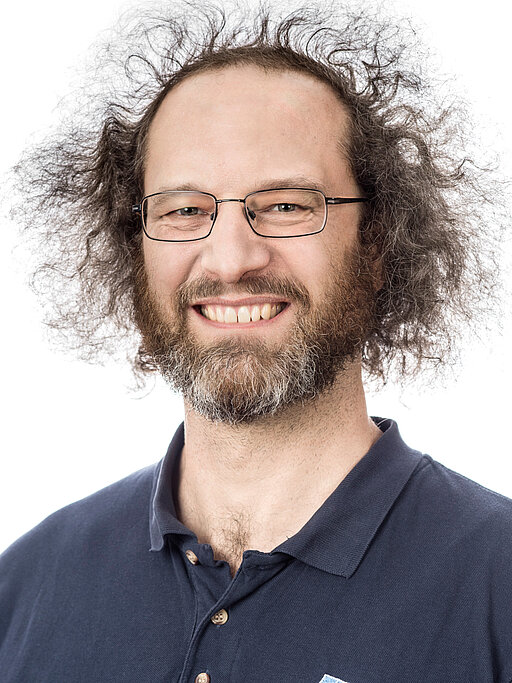
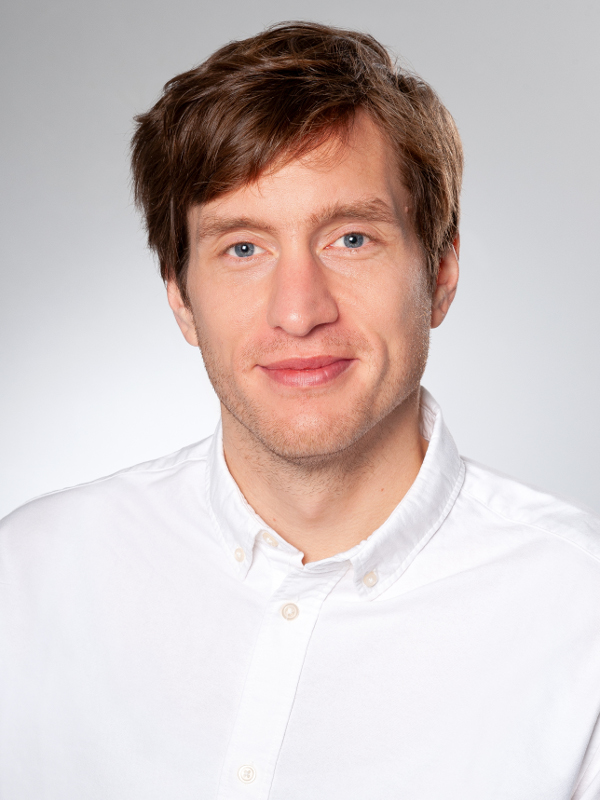
Prof. Juergen Gall is a Professor at the University of Bonn, affiliated with the TRA Mathematics, Modelling and Simulation of Complex Systems and the Department of Information Systems and Artificial Intelligence. He leads the Computer Vision Group at the Lamarr Institute for Machine Learning and Artificial Intelligence. His research focuses on action recognition, video understanding, anticipation, human pose estimation, and applications in plant science, earth science, and neuroscience. He has contributed to numerous projects and conferences, including organizing workshops on machine learning for Earth systems and holistic video understanding. His work spans over 200 publications in top venues like CVPR, ICCV, and NeurIPS. He oversees software tools like MANTA and STING-BEE, and has developed datasets such as Humans in Kitchens and PoseTrack21. Research interests emphasize advancing computer vision for real-world challenges, with a focus on multi-modal learning and deep learning applications. Recent articles explore parameter-efficient models, diffusion-based anticipation, and multi-view matching for plant analysis. His contributions bridge academia and industry, addressing agricultural and environmental monitoring needs.
Prof. Gaetan Borot is a Professor at Humboldt University of Berlin, affiliated with the Faculty of Mathematics and Natural Sciences and the Department of Pure Mathematics, Mathematical Physics . His research focuses on mathematical physics, particularly topological recursion, quantum algebra/topology, enumerative geometry, and integrability. He leads a research group exploring the interplay between theoretical physics and advanced geometric and algebraic techniques. Currently on leave until September 2025, he maintains active involvement in academic leadership and research initiatives. Research Interests: Borot’s work bridges algebraic geometry, combinatorics, and quantum field theory. He develops topological recursion techniques to address problems in random matrices, moduli spaces, and string theory. His group investigates topics like W-algebras, geometric quantization, and non-perturbative methods in gauge theories. Recent trends include applications to supersymmetric theories and Liouville conformal field theory. Academic Contributions: Borot advises PhD and master’s students on projects like Hurwitz theory, spectral networks, and geometric quantization. He collaborates on research training groups (RTGs) such as Rethinking QFT and From Geometry to Numbers , and contributes to the College of Mathematics and Physics Berlin. His outreach efforts include public lectures and exhibitions explaining complex mathematical concepts. Teaching: Borot teaches advanced courses in mathematical physics, differential geometry, and analysis. Upcoming lectures include Analysis III for Physicists and a master’s seminar on differential geometry.
Professor Stefan Waldmann holds the Chair of Mathematics X (Mathematical Physics) at the University of Würzburg, where he leads the Mathematical Physics research team. His academic career spans from his doctoral work at Albert-Ludwigs-Universität Freiburg through faculty positions at multiple institutions including Erlangen, Leuven, and Frankfurt, before settling at Würzburg. He maintains an active research program in mathematical physics with numerous publications and collaborations across Europe. Waldmann's research interests focus on the mathematical foundations of quantum theory, particularly in the areas of deformation quantization, star products, symplectic and Poisson geometry. His work bridges abstract mathematical structures with physical applications, exploring how classical systems transition to quantum mechanical descriptions. He has made significant contributions to understanding the convergence properties of star products, representation theory of *-algebras, and Morita theory in deformation quantization contexts. His research also extends to coisotropic submanifolds, phase space reduction techniques, and applications to noncommutative spacetime models. The most recent publications demonstrate a consistent focus on advancing deformation quantization theory while addressing specific geometric contexts like Riemann surfaces, Lie groups, and Poincaré disc. His work shows increasing interest in convergence properties of star products and their applications to mathematical physics problems, with recent papers exploring homotopy structures, rigidity phenomena, and phase transitions in Poisson geometrical settings. The research shows a clear trajectory from formal deformation theory toward more strictly convergent mathematical frameworks. Prix du Concours annuel 2018 of the Académie royale des Sciences, des Lettres et des Beaux-Arts de Belgique Professor Waldmann has supervised numerous doctoral and master's students throughout his career, primarily at the University of Freiburg before his appointment at Würzburg. His supervision record includes over 20 theses on topics spanning deformation quantization, Poisson geometry, and mathematical aspects of quantum theory. He has organized multiple international workshops and conferences including the 'Math in the Mill' series and specialized workshops on Poisson geometry, deformation theory, and representation theory. His research has been supported through collaborations with institutions across Europe including Barcelona, Delft, and Mulhouse. At the University of Würzburg, Waldmann leads the Mathematical Physics research group within the Institute of Mathematics, focusing on deformation quantization and its applications to theoretical physics. The group maintains active collaborations with international partners and regularly hosts visiting researchers. Waldmann has also authored several influential textbooks including 'Linear Algebra 1 & 2', 'Topology: An Introduction', and 'Poisson-Geometrie und Deformationsquantisierung', which have become standard references in mathematical physics education.
Reemt Hinrichs is a researcher at the Institute for Information Processing (TNT) at Leibniz University Hannover, where he focuses on signal processing applications across biomedical engineering, audio technology, and structural health monitoring. He completed his Dr.-Ing. (PhD) at TNT in 2023 after working as a research assistant since January 2018. Dr. Hinrichs earned his Master's Degree in Mechatronics from Leibniz University Hannover in May 2017, completing his thesis on "System-theoretical modeling of a structural sound signal path" at the Institute for Information Processing. His academic journey reflects a consistent focus on signal processing theory applied to practical engineering challenges. His primary research interests center around Signal Coding , particularly for Cochlear Implants , along with broader expertise in Digital Signal Processing and Nonlinear System Theory . His work spans multiple application domains including biomedical engineering (cochlear implants), audio processing (guitar effects modeling), and structural health monitoring (acoustic emissions analysis for infrastructure). Dr. Hinrichs' publication record demonstrates a strong focus on compression algorithms for cochlear implants, with numerous papers on neural network-based approaches for zero-delay compression of electrical stimulation patterns. He has also made significant contributions to guitar effects modeling using convolutional neural networks and structural health monitoring through acoustic emission analysis. His research bridges theoretical signal processing with practical applications across diverse domains, showing particular strength in applying deep learning techniques to specialized signal processing challenges. With approximately 60 theses supervised, Dr. Hinrichs has been actively involved in mentoring students across various research topics including cochlear implant technology, structural modeling, and audio signal processing. His supervision portfolio includes work on nonlinear prediction of electrode excitation patterns, geometry-dependent modeling of transfer functions, and automatic extraction of guitar effects. His current research focuses on "deep learning models for the compression of electrode excitation patterns of cochlear implants," continuing his long-standing expertise in this specialized area of biomedical signal processing while expanding into new applications of neural network architectures for real-time signal compression.
Prof. Dr. David Bommes is a leading researcher in computer graphics and geometry processing, currently a Professor at the University of Bern . His expertise lies in mesh generation, particularly quadrilateral and hexahedral meshing, numerical optimization, and automatic differentiation techniques. His research focuses on developing robust algorithms for generating high-quality meshes from complex geometries, with applications in CAD, architecture, and simulation. He has made significant contributions to the fields of surface and volume parametrization, directional field synthesis, and geometry processing optimization. Prof. Bommes has received notable recognition, including the Best Paper Award (1st place) at SGP 2022 and the Graphics Replicability Stamp for his work on TinyAD, a lightweight automatic differentiation library for geometry processing. His publications span top-tier venues such as SIGGRAPH, Eurographics, and ACM Transactions on Graphics, covering topics from automatic differentiation and geodesic computation to advanced meshing techniques. He actively collaborates with leading institutions and researchers worldwide.
Enrique S. Quintana-Ortí is a Professor at the Technical University of Valencia and Jaume I University , Spain, specializing in Computer Science of Systems and Computers . His work bridges High-Performance Computing (HPC) , Parallel Computing , and Deep Learning , with a focus on optimizing Matrix Algorithms for modern architectures. Key research areas: Quantized Inference , GEMM-Based Convolutions , GPU Acceleration , and Performance Portability across ARM, RISC-V, and NVIDIA processors. Recent projects include RED-SEA (European interconnect solutions), GreenLightningAI (decoupled AI systems), and Ginkgo (GPU-based linear algebra frameworks). His publications (2023–2025) emphasize edge computing , mixed-precision techniques , and energy-efficient AI . Collaborative efforts span institutions like Xilinx , Fujitsu , and co-authors such as Adrián Castelló , Héctor Martínez , and Francisco D. Igual .
Gerhard Kramer is a Professor and Alexander von Humboldt Professor at the Technical University of Munich (TUM), holding the Chair of Communications Engineering within the TUM School of Computation, Information and Technology. He serves as Vice President for Research and Innovation at TUM since 2019. His research focuses on communications engineering, information theory, and their applications to wireless, optical fiber, and telecommunication networks. He has made significant contributions to channel capacity analysis, coding techniques, and network optimization. Education: Studied Electrical Engineering at the University of Manitoba (Canada), PhD in Electrical Engineering from ETH Zurich (1998). Professional Experience includes roles at Endora Tech AG (1998-2000), Bell Labs (2000-2008), and the University of Southern California (2009-2010) before joining TUM in 2010. Research interests include information theory fundamentals, coding for communication systems, optical fiber channel analysis, and wireless network design. His work emphasizes improving data transmission efficiency, reliability, and network scalability in modern communication systems. Notable awards include the IEEE Fellow (2010), Alexander von Humboldt Professorship (2010), and membership in the Bavarian Academy of Sciences (2015). His recent publications explore topics like non-coherent communication, optical fiber channel capacity, and neural network-based interference cancellation. He supervises a large team of doctoral researchers and postdocs, with over 25 completed doctoral theses and numerous ongoing projects. His labs and collaborations include initiatives on 6G communication systems, quantum communication networks, and Shannon coding techniques.
Mehrdad Mohannazadeh is a postdoctoral researcher at the Department of Computational Hydrosystems (CHS) within the Helmholtz Centre for Environmental Research - UFZ in Leipzig, Germany. His work focuses on hydrological modelling , machine learning , and applied mathematics , particularly for analyzing and improving flood prediction models. Education : Ph.D. in Computer Sciences (2019-2023), Bielefeld University M.Sc. in Applied Mathematics (2016-2018), University of Applied Sciences Mittweida B.E. in Electrical Engineering (Electronics) (2007-2012), Shahid Beheshti University His research involves modifying hydrological models for better forecasting, working with projects like MOSES , HI-CAM II , 4DHydro , and SCENIC . His publications emphasize interpretable neural networks , probabilistic classification , and climate change impacts on water systems. Recent work includes high-resolution drought monitoring in Germany and seasonal hydrological forecasting for Andean-Amazonian basins. He contributes to UFZ Young Scientist Award winning initiatives and European forest model evaluations.
Prof. Dr. Barbara Hammer is a full professor of Machine Learning at Bielefeld University, Faculty of Engineering, and leads the Machine Learning Group at the Center for Cognitive Interaction Technology (CITEC). She is actively involved in multiple interdisciplinary research centers including the Bielefeld Center for Data Science (BiCDaS), the Research Institute for Cognition and Robotics, and the Institute for Bioinformatics Infrastructure (BIBI). She holds leadership roles in major research initiatives such as the TRR 318 'Constructing Explainability', the graduate school Data-NinJA on Trustworthy AI, and the research network SAIL on sustainable AI systems. Her research focuses on intelligent data analysis , explainable and trustworthy AI , and machine learning in dynamic environments . She investigates foundational algorithms for learning from complex, non-Euclidean, and evolving data streams, with applications in urban infrastructure (especially water systems), life sciences, and socio-technical systems. Her work bridges algorithmic innovation with societal impact, particularly in fairness, ethics, and human-AI interaction. The recent publications highlight a strong trend towards explainability in dynamic environments , concept drift detection and explanation , fairness in streaming data , and real-world applications in critical infrastructure . Her team develops both theoretical frameworks and practical tools, such as EPyT-Flow for water network simulation, and contributes to high-impact AI challenges in health, environment, and industry. ERC Synergy Grant – Smart Water Futures LAMARR Fellow She advises several PhD and Master’s students and leads numerous funded projects from the European Union, DFG, and national agencies. Her leadership extends to editorial roles, including on the IEEE TPAMI editorial board. She is also deeply involved in academic governance, serving on examination boards, habilitation committees, and interdisciplinary research centers, reflecting her central role in shaping AI research and education at Bielefeld and beyond.
Dr. Olga Kondrateva is a researcher specializing in small satellite networks , with a focus on machine learning applications for data transmission optimization . Her work addresses critical challenges in low-Earth-orbit (LEO) satellite communication , including short contact times , bandwidth limitations , and high packet loss probabilities . Key contributions include novel techniques for joint source-and-channel coding , incremental neural network updates , and mathematical optimization frameworks like Benders decomposition for scalable satellite network planning. Education: PhD (implied by "Dr." prefix) Research Interests Olga’s research bridges machine learning and network optimization in constrained satellite environments. She develops methods to enhance reliability and efficiency of onboard neural networks, prioritizes model parameter updates, and designs communication protocols for Earth observation missions . Her work often leverages vector quantization and linear programming to address unique challenges like intermittent connectivity and dynamic mission requirements . Publication Trends Her recent publications (2022–2024) emphasize progressive neural network updates , fault tolerance , and throughput optimization in LEO satellite networks. Themes include bandwidth-efficient transmission , model compression , and incremental learning to adapt to changing mission needs.
Sebastian Thrun is a Professor at Stanford University, USA, with a prolific research career spanning robotics, artificial intelligence, and machine learning. His work has significantly impacted autonomous vehicle technology, computer vision, and medical AI applications. Thrun's research interests focus on robotics, particularly simultaneous localization and mapping (SLAM), autonomous driving systems, and probabilistic state estimation techniques. His work extends to deep learning applications in medical imaging, notably achieving dermatologist-level skin cancer classification. He has pioneered approaches in meta-learning, vector quantization, and efficient clustering algorithms using multi-armed bandits. His recent publications demonstrate a strong trend toward improving efficiency in machine learning algorithms, particularly in areas like decision trees, vector quantization, and nearest neighbor search. Thrun has also made significant contributions to medical AI, applying deep learning to skin cancer detection and molecular property prediction. Max Planck Research Award (2011) Thrun has advised numerous PhD students who have become prominent researchers in robotics and AI, including David Stavens, Anna Petrovskaya, and Jesse Levinson. His research has been supported by significant grants, particularly for autonomous vehicle development, including Stanford's entry in the DARPA Urban Challenge (Junior). His work bridges theoretical advances with practical applications across multiple domains. Thrun has led research teams focused on autonomous driving systems, 3D reconstruction, and medical AI applications. His work on the DARPA Urban Challenge demonstrated advanced capabilities in urban autonomous navigation, while his more recent research explores the intersection of deep learning and efficiency optimization in machine learning algorithms.
Professor Gaëtan Borot is a faculty member at the Institute of Mathematics, Faculty of Mathematics and Natural Sciences, Humboldt-Universität zu Berlin. He leads a research group in Mathematical Physics with connections to quantum field theory, string theory, and geometric analysis. His work is supported by multiple Research Training Groups including Rethinking QFT (2019-2029), From geometry to numbers (2024-2029), and the College of Mathematics and Physics Berlin (2020-2029). Professor Borot's research centers around topological recursion and its applications across mathematical physics. His work connects enumerative geometry, quantum algebra, moduli spaces, and random matrix theory through a unifying framework that reveals deep connections between seemingly disparate fields. He investigates how topological recursion provides methods to study quantization of geometric objects and field theories, with applications ranging from Gromov-Witten theory to statistical physics models on random surfaces. Analysis of his recent publications (2021-2024) shows a strong focus on the mathematical structures underlying conformal field theories, particularly Liouville CFT, where he explores Virasoro representations, scattering matrices, and equations of motion. His work on topological recursion continues to expand into new domains including cohomological field theories, Hurwitz theory, and spectral curves, demonstrating the versatility of this algebraic structure across mathematical physics. Professor Borot actively supervises PhD students including Giacomo Umer (who successfully defended in May 2025), Davide Scazzuso, and Niklas Martensen, along with numerous master's and bachelor's students. He organizes the Mathematical Physics Seminar held weekly in Adlershof and has taught courses on integrable systems, random matrix theory, and differential geometry. Despite currently being on leave until September 2025, he continues to supervise thesis projects with availability starting October 2025.
Carlos I. Perez-Sanchez is a postdoctoral researcher at the Institute for Theoretical Physics , University of Heidelberg, working under Răzvan Gurău . He previously held postdoctoral positions at the University of Warsaw (2021) and completed his PhD in mathematics at the University of Münster under Raimar Wulkenhaar. His research spans mathematical physics , focusing on random noncommutative geometry , tensor field theory , and their intersections with quantum gravity , functional renormalization , and bootstrap methods . His work on noncommutative geometry involves quantizing spectral triples via random matrices and unitary matrix ensembles to model gauge-Higgs theories and quantum gravity. He has advanced tensor field theory through topological recursion and Ward-Takahashi identities , bridging combinatorial structures with physical partition functions. His recent focus on functional renormalization (Wetterich equation) explores the renormalization group flow in multi-trace matrix models and free algebra frameworks. Publications include 15 recent articles (2025–2018) on topics like loop equations , Borel summability , and quiver-based noncommutative geometries . He co-organized workshops such as The QFT Path (2024) and Random Geometry in Heidelberg (2022), and has delivered talks at institutions in Bordeaux, Vienna, Warsaw, and Okinawa. His teaching includes Theoretical Statistical Physics and Large-N Methods in Field Theory at Heidelberg.
Prof. Roger Bielawski is a Professor at the Institute of Differential Geometry within the Faculty of Mathematics and Physics at Leibniz University Hannover. He serves as Spokesperson of the Riemann Center for Geometry and Physics and is a member of its leadership. His research focuses on differential geometry, mathematical physics, and hyperkähler manifolds, with contributions to monopole theory, complex geometry, and geometric analysis. He has organized major conferences such as the 2019 'Geometric and Analytic Aspects of Moduli Spaces' and the 2011 'Variational Problems in Differential Geometry.' His work bridges algebraic geometry, geometric analysis, and theoretical physics, emphasizing structures like spectral curves, integrable systems, and geometric moduli spaces. Roles: Spokesperson (Riemann Center), Professor (Institute of Differential Geometry), Deputy Representative (Faculty Council). Research Interests: Hyperkähler metrics, monopole dynamics, geometric structures in algebraic geometry, and integrable systems. Publications span over three decades, with recent works addressing vector bundles on real curves, quiver representations, and hypercomplex limits. He actively contributes to academic governance and maintains collaborative networks through the Riemann Center and Institute initiatives.
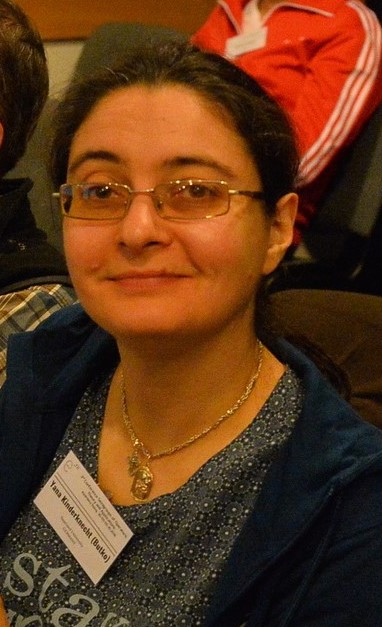
Dr. Yana Kinderknecht (née Butko) is an Associate Professor at the Department of Mathematics , Universität des Saarlandes . Her work bridges Functional Analysis , Stochastic Analysis , and Mathematical Physics , with a focus on Partial Differential Equations (PDEs) and Operator Theory . She has authored 22 publications since 2004, including preprints in zbMATH Open , and actively contributes to Chernoff approximation methods for semigroups.