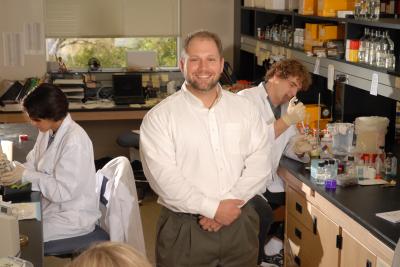
Dr. Scott Napper is a Professor in the Department of Biochemistry, Microbiology & Immunology at the University of Saskatchewan, with a concurrent appointment as Senior Scientist at VIDO-Intervac. His work bridges structural biochemistry and immunology to address challenges in protein misfolding diseases, vaccine development, and host-pathogen signaling. Ph.D., Department of Biochemistry, 1999, University of Saskatchewan B.Sc. Honours, Department of Biochemistry, 1994, University of Saskatchewan Dr. Napper's research focuses on: Vaccine development for prion diseases and proteinopathies Kinome analysis for infectious disease mechanisms Peptide array technology for high-throughput signaling studies Science education outreach to secondary and undergraduate students Recent publications highlight his work in: Prion disease immunization strategies Host kinome responses to prebiotics Epitope immunogenicity prediction Comparative stress response analysis in livestock Scientific recognition includes: Three-time recipient of University of Saskatchewan Teaching Excellence Award His research program integrates computational approaches with experimental validation to identify therapeutic targets in: Infectious diseases of humans and animals Cancer signaling pathways Protein misfolding disorders Food contaminant toxicity
Elissa A Hallem is a Professor in the Department of Microbiology, Immunology, and Molecular Genetics at the David Geffen School of Medicine, University of California, Los Angeles (UCLA) . Her research lies at the intersection of neurobiology and parasitology , focusing on the sensory neural circuits that drive host-seeking behavior in skin-penetrating nematodes like Strongyloides stercoralis , a human-parasitic worm. She also investigates chemosensation , host-pathogen interactions , and sensory plasticity using both parasitic nematodes and the free-living Caenorhabditis elegans as comparative models. Education BA in Biology and Chemistry from Williams College (1999) PhD in Neuroscience from Yale University (2005) Postdoctoral training in Biology at Caltech (2010) Research Focus Her work addresses fundamental questions about how sensory circuits enable parasitic worms to detect and infect hosts. Key findings reveal the neural basis of heat seeking , chemosensory valence , and experience-dependent plasticity in nematodes. She has developed genetic tools for Strongyloides and studies steroid hormone pathways in Pristionchus pacificus . Scientific Awards 2023: UCLA Life Sciences Excellence in Research Award 2020: UCLA Faculty Mentor Award 2016: HHMI Faculty Scholar Award 2015: Burroughs-Wellcome Fund Investigators in the Pathogenesis of Disease Award 2014: NIH Director's New Innovator Award 2012: MacArthur Fellowship 2011: Rita Allen Foundation Fellowship Lab Overview The Hallem Lab at UCLA emphasizes inclusive research and tool development for parasitic nematode studies, aiming to uncover novel strategies for preventing infections through understanding sensory-driven parasitic mechanisms.
Corinne Wallace is an Adjunct Assistant Professor in the Department of Civil Engineering at McMaster University , with research expertise at the intersection of water security, climate change, public health, and gender equity. Her work spans both technical engineering analysis and community-engaged studies, particularly focusing on marginalized populations in Canada, East Africa, and South America. Dr. Wallace's research interests include: Water-Health Nexus Climate Change Impacts on Disease Gender Equity in Water Access Indigenous Water Governance Mosquito-Borne Disease Modeling Rainwater Harvesting Systems Her publication trends show increasing focus on climate-health interactions (2025), gender-water linkages (2024), and machine learning applications for water quality analysis (2025). She employs mixed-methods approaches and works closely with First Nations communities and international development organizations. Dr. Wallace utilizes art-science communication strategies like the Virtual Water Gallery to transform water and climate knowledge dissemination. Her recent work explores EDI (Equity, Diversity, Inclusion) implementation in large research networks and conceptual frameworks for climate-water equity.
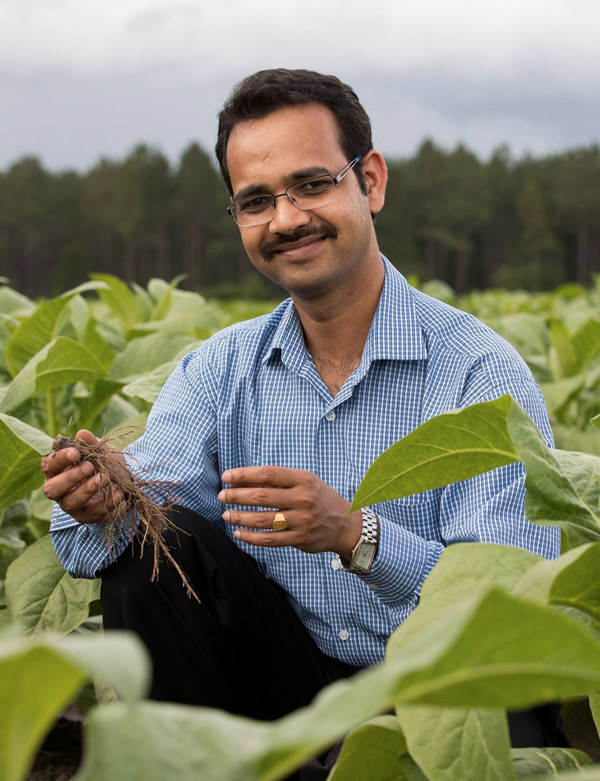
Dr. Sudeep Bag is an Associate Professor in the Department of Plant Pathology at the University of Georgia, part of the College of Agricultural and Environmental Sciences. His primary research focuses on developing management strategies for virus diseases in economically important crops, particularly through interdisciplinary approaches involving genomics and molecular biology. He holds a Ph.D. in Plant Pathology from Washington State University and completed postdoctoral training at the University of California, Davis, and Oregon State University. Dr. Bag's research emphasizes the etiology, epidemiology, and genomics of emerging viral pathogens in vegetable crops, with a focus on understanding host-virus-vector interactions to mitigate disease. His work includes developing genomic tools for managing diseases like spotted wilt virus in peanut and cotton leafroll dwarf virus in cotton. He has secured significant grants from organizations such as the USDA, Georgia Commodity Commissions, and the National Peanut Board to support his research. Key areas of investigation include: Genomic diversity of tospoviruses and other plant viruses Molecular diagnostics for quarantine pathogens Host resistance breeding and gene silencing technologies Ecology of whitefly and aphid vectors Dr. Bag has authored over 90 peer-reviewed publications, including studies in Plant Disease , Viruses , and Journal of General Virology . His work has been recognized with the 2023 Student Career Success Influencer Award for his mentorship of students. Professional roles include: Adjunct Professor at the University of Kelaniya, Sri Lanka Member of the UGA Graduate Program Faculty in Plant Pathology His lab (UGA-Plant Virology Lab) collaborates actively with industry and governmental agencies to address viral threats to Georgia’s agricultural crops.
Barry W. Alto is an Associate Professor specializing in Medical Entomology and Arbovirology at the University of Florida's Institute of Food and Agricultural Sciences (UF/IFAS), based at the Florida Medical Entomology Laboratory (FMEL) in Vero Beach, Florida. His research focuses on medical entomology and arbovirology, with particular expertise in mosquito vector biology, mosquito-borne diseases, vector ecology, and biological control of mosquitoes. Dr. Alto's work has significant implications for public health, especially regarding the transmission and control of vector-borne diseases. His recent publications demonstrate expertise in arbovirus ecology and mosquito vector systems, with particular attention to invasive species like Anopheles stephensi and the ecology of arboviruses including Keystone virus. His research often examines the complex relationships between mosquito vectors, pathogens, and environmental factors that influence disease transmission. Among his scientific contributions are detailed studies on mosquito vectors of malaria, biological control using predatory mosquitoes like Toxorhynchites rutilus , and emerging arboviruses affecting the southeastern United States. Dr. Alto has mentored graduate students including Ph.D. candidate Abdullah A. Alomar, with whom he has co-authored multiple publications on mosquito vectors and arboviruses. His work contributes significantly to the understanding of vector-borne disease systems and potential control strategies.
Michael Johansson serves as a Research Professor at Northeastern University's Roux Institute, maintaining offices in London, UK and Portland, ME. His work bridges public health research and operational response through advanced statistical and mathematical modeling of infectious diseases, with primary focus on vector-borne pathogens including dengue, Zika, chikungunya, and West Nile virus. Previously with the CDC in Puerto Rico for over a decade, he co-founded the Epidemic Prediction Initiative and led modeling efforts during Zika, COVID-19, and dengue emergencies. His research integrates biological, ecological, climatic, socioeconomic, and behavioral factors to understand disease emergence and transmission dynamics. Key methodologies include network-based forecasting models, climate-disease interaction analysis, and development of early warning systems. Current work emphasizes improving surveillance, burden estimation, and control strategy evaluation for arboviral diseases through quantitative tools. Recent publications demonstrate expertise in dengue synchronization across the Americas, West Nile virus forecasting, and addressing biases in mobility data for outbreak modeling. His work spans from molecular-level antibody response analysis to global risk mapping, consistently emphasizing operational implementation of research findings. Johansson actively contributes to public health practice through conference presentations including the 2025 American Mosquito Control Association Annual Meeting. His modeling frameworks have directly informed CDC emergency responses and the development of collaborative forecasting initiatives that pioneer open, transparent disease prediction.
Mathilde Gendrin is a Junior Group Leader at Institut Pasteur de la Guyane since 2017. Her research focuses on the critical role of mosquito microbiota in regulating vectorial capacity for malaria and other diseases, bridging laboratory and field-based approaches. 2019: HDR from Université de Paris 2010: PhD from Université Pierre et Marie Curie 2005: MSc from Université Pierre et Marie Curie 2004: MSc from ENS Lyon Dr. Gendrin’s research explores: Host-pathogen-microbiota tripartite interactions Sex-specific nutritional requirements in mosquitoes B vitamin synthesis by microbiota Microbiota manipulation to block malaria transmission Vector fitness trade-offs under microbiota perturbation The 15 most recent publications reveal a consistent theme of microbial regulation of mosquito physiology, with emphasis on gnotobiotic models , vitamin metabolism , and transmission-blocking strategies . Her work has appeared in Nature Communications , Cell Host & Microbe , and Frontiers in Microbiology . Notable scientific contributions include: Establishing germ-free mosquito protocols for stage-specific studies Identifying biotin toxicity thresholds in Aedes aegypti Mapping microbiota-antibody response interactions She collaborates with teams at Imperial College and EPFL , and her projects are funded by LabEx IBEID and ANR PILGRIM . Dr. Gendrin leads the Reshaping the microbiota of mosquitoes project to model wild microbiota in laboratory settings.
Dr. Kyle Koch serves as an Associate Extension Educator in the Department of Entomology at the University of Nebraska-Lincoln's College of Agricultural Sciences and Natural Resources. His 100% Extension appointment focuses on field crops entomology, with expertise in insect ecology, pest management, and plant-insect interactions. Dr. Koch plays a key role in Nebraska Extension's statewide issue teams, developing educational programs and resources for agricultural stakeholders across the state. Dr. Koch's educational background includes: B.S. in Biology from Creighton University, Omaha, NE (2009) M.S. in Entomology from University of Nebraska-Lincoln (2013) Ph.D. in Entomology from University of Nebraska-Lincoln (2017) Dr. Koch's research centers on insect-plant interactions, particularly focusing on aphid pests in agricultural systems. His work examines the molecular, biochemical, and behavioral aspects of how insects interact with host plants, with special emphasis on switchgrass, sorghum, and soybean systems. He investigates plant defense mechanisms against aphids, including constitutive and inducible resistance, as well as plant tolerance strategies. His research integrates molecular biology, biochemistry, and behavioral ecology to develop sustainable pest management approaches for agricultural systems. Analysis of Dr. Koch's publication record reveals a strong focus on aphid-plant interactions across multiple crop systems, with particular expertise in electrical penetration graph (EPG) technology for studying insect feeding behavior. His work spans molecular mechanisms of plant defense, behavioral ecology of insect pests, and applied pest management strategies. A significant portion of his research involves switchgrass as a bioenergy crop and its interactions with cereal aphids, reflecting both fundamental and applied research interests. Dr. Koch has received numerous awards and honors throughout his career: North American Colleges and Teachers of Agriculture Graduate Student Teaching Award of Merit (2016) Dean's Fellowship, University of Nebraska-Lincoln (2015) Milton E. Mohr Research Fellowship, University of Nebraska-Lincoln, Center for Biotechnology (2014) Milton E. Mohr Teaching Fellowship, University of Nebraska-Lincoln, Center for Biotechnology (2014) Milton E. Mohr Teaching Fellowship, University of Nebraska-Lincoln, Center for Biotechnology (2012) North Central Branch Meeting of the Entomological Society of America, Student Competition, Oral 10-minute paper (1st Place) (2012) President's Prize Student Competition at the Annual Meeting of the Entomological Society of America (2011) As an Extension Educator, Dr. Koch leads and innovates Nebraska's identification, surveillance, and mapping of invasive and threatening arthropod species, particularly those of economic importance. He trains extension personnel, UNL students, faculty, and staff in new insect diagnostic technologies and engages Nebraskans in citizen science projects focused on invasive species. His professional responsibilities include developing rapid and innovative insect diagnostics and providing state-wide leadership in entomology extension programming. Dr. Koch is an active member of the Entomological Society of America (ESA) and collaborates with researchers across multiple institutions on projects related to insect-plant interactions and pest management. His work often involves interdisciplinary teams combining expertise in entomology, plant science, molecular biology, and agricultural extension.
Dr. Jonathan Davies is an Associate Professor at the University of British Columbia's Faculty of Forestry, with dual affiliations in the Department of Botany and Department of Forest and Conservation Sciences. His research focuses on phylogenetic ecology, integrating evolutionary biology with ecological systems to address biodiversity conservation and climate change challenges. Academic Rank: Associate Professor Departments: Botany; Forest and Conservation Sciences Research Center: Biodiversity Research Center Email: j.davies@ubc.ca Research Interests : At the intersection of ecology and evolution, Davies' work explores phylogenetic approaches to conservation science, climate change biology, and disease ecology. His lab investigates: Climate change impacts on biodiversity and disease emergence Phylogenetic dilution effects in forest pest dynamics Evolutionary patterns in plant-herbivore interactions Statistical methods for phylogenetic analysis Global biodiversity patterns and diversification rates Eco-phylogenetics of protected area effectiveness
Heather J. McAuslane is Professor in the Department of Entomology and Nematology at the University of Florida , where she also serves as Associate Dean in the College of Agricultural and Life Sciences . Her research focuses on plant-insect interactions and chemical ecology , particularly for pests affecting Florida’s horticultural and agricultural systems. Academic Rank: Professor University: University of Florida School: College of Agricultural and Life Sciences Department: Entomology and Nematology Department McAuslane’s work addresses insect pest management for species such as Calpodes ethlius (larger canna leafroller), Parasitoids and Predators of oleander caterpillars, and the Bemisia tabaci whitefly vector. She emphasizes biological control , cultural management , and chemical ecology in her publications. Her research often integrates host plant resistance , insect behavior , and sustainable pest control strategies. Her recent articles (2017–2025) span topics including leaf-rolling Lepidoptera , whitefly-transmitted plant viruses , and insect-plant interactions . These works appear in the Featured Creatures series and journals like Florida Entomologist and Environmental Entomology , with keywords such as Entomology , Agricultural Sciences , and Ecology , and sub-fields like Insect Pest Management , Lepidopteran Biology , and Vector-Borne Plant Pathogens . She co-authored the Better Mentorship, Better Student Experience series (2024), highlighting her commitment to academic mentorship . Her publications frequently address practical control methods for pests impacting crops like canna, oleander, and tomato, including parasitism , pathogen-induced mortality , and chemical control .
Professor Geoff Gurr is a leading academic in Applied Ecology at Charles Sturt University's School of Agricultural, Environmental and Veterinary Sciences. He holds a distinguished position as a Professor specializing in Agriculture, with extensive leadership experience including former roles as Associate Dean Research and Director of the Rural Management Research Institute at the University of Sydney. His academic journey began with a BSc (Hons) from Plymouth, followed by a PhD from London, DIC from Imperial College, GradCert from Sydney, and DSc from Charles Sturt University. Professor Gurr's research focuses on developing ecologically-based strategies to harmonize agriculture with the environment. His work spans biological control of insect pests, plant defense mechanisms, insect-vectored plant pathogens, and chemical and molecular ecology. He has pioneered approaches for promoting natural enemies of pests while delivering additional ecosystem services that build resilience in farming systems. These methods have been adopted across tens of thousands of farms in Australia and internationally, with companion cropping becoming nationally-recommended policy in Chinese rice agriculture. His research portfolio demonstrates consistent high-impact output across entomology, sustainable agriculture, and ecological engineering. Professor Gurr has published over 200 scientific papers in prestigious journals including Nature Plants, Nature Genetics, Nature Communications, PNAS, and Annual Review of Entomology. His work shows strong interdisciplinary connections between agricultural science, ecology, and molecular biology, with particular emphasis on translating research into practical farming applications that benefit both producers and the environment. Engagement Australia's excellence award for Outstanding Research Engagement (2020) Thousand Talents fellowship for work in China Fellow of the Royal Society NSW Fellow of the Royal Entomological Society Nation's top researcher for 'Insects & Arthropods' in The Australian special reports (2020, 2021) Professor Gurr has successfully supervised 43 HDR students (38 as principal supervisor) and has secured nearly $20 million in research funding from diverse sources including the Australian Research Council, Australian Centre for International Agricultural Research, rural research and development corporations, CRCs, and international donors like the McKnight Foundation. His current projects on vineyards, regenerative agriculture, beneficial insect ecology, sesame, and hazelnuts are funded by Wine Australia, the Drought Innovation Hub, the Gulbali Institute, and Agrifutures. He maintains extensive international collaborations, with over 91% of his publications co-authored with international researchers, reflecting his significant global research network.
Emily S. Durkin is an Assistant Professor at the University of Tampa, where she teaches parasitology and leads research on the ecology and evolution of parasitic relationships. Her work focuses on the behavior of facultatively parasitic mites, particularly Macrocheles muscaedomesticae , and their interactions with fruit fly hosts. She investigates how parasitic lifestyles evolved from free-living ancestors and explores the heritability of parasitic behaviors. Her research interests span parasitology, evolutionary biology, and behavioral ecology, with a particular emphasis on understanding the genetic and environmental factors shaping parasitic strategies. She employs experimental evolution approaches to study how traits like host-association behaviors and infectivity evolve in mites. Dr. Durkin’s articles highlight trends in parasitic mite behavior, host-parasite coevolution, and the ecological impacts of parasitism. Her work bridges fundamental questions in evolutionary ecology with practical insights into vector biology and pathogen transmission. No scientific awards or advising records are explicitly mentioned in the provided text.
Scott Bernhardt is a Professional Practice Associate Professor in the Department of Biology at Utah State University (USU), where he directs the undergraduate Public Health program. He holds a PhD in Microbiology from Colorado State University (2009) and an MPH in Hospital and Molecular Epidemiology from the University of Michigan (2002). PhD, Microbiology, Colorado State University, 2009 MPH, Hospital and Molecular Epidemiology, University of Michigan, 2002 BS, Public Health, Utah State University, 1998 His research focuses on population genetics and vector competence of arthropod-borne diseases, particularly in sand flies, fleas, and mosquitoes. He integrates molecular biology and animal models to study genomic and anatomical factors in disease transmission and applies vector control techniques to agricultural analysis. Teaching interests include epidemiology, infectious diseases, and the general education course Plagues, Pests, and People . His 15 most recent publications span medical entomology, molecular diagnostics, and public health epidemiology, with keywords like Vector Biology , Infectious Disease Surveillance , and Genomic Adaptation , emphasizing sand fly resistance, mosquito RNA evolution, and climate-related health risks. American Society of Microbiology Post-doctoral Fellowship, 2009 CDC Fellowship Training Program, 2004 Oak Ridge Institute for Science and Education Fellow, 2002 Inland Northwest Research Alliance Fellow, 1999 He has mentored graduate students including Rose Sepesy, Nadya Keweshan, Shawna Hennings, and David Denlinger. His teaching history includes courses on epidemiology, industrial hygiene, and public health seminars from 2011 to 2024.
Tracy Rosebrock serves as Assistant Professor of Biology at Stonehill College, where she was honored with the 2022 Louise F. Hegarty Award for Excellence in Teaching. Her teaching excellence is characterized by compassionate mentorship, challenging yet supportive pedagogy, and an open-door policy that has made her a trusted advisor. Students consistently praise her ability to simplify complex biological concepts while inspiring academic excellence and fostering a positive learning environment. Professor Rosebrock's research spans two critical areas of pathogen-host interactions: tuberculosis immunology and plant-microbe dynamics. Her tuberculosis work investigates macrophage signaling pathways, antibiotic resistance mechanisms in mycobacteria, and antibody-mediated immune responses. In plant pathology, she examines ubiquitin-mediated immune regulation, bacterial effector proteins that suppress host defenses, and viral disease emergence. This dual focus demonstrates her interdisciplinary approach to understanding fundamental biological defense mechanisms across kingdoms. Her publication record from 2002-2019 reveals consistent contributions to understanding host-pathogen conflicts, with recent work emphasizing immune signaling in tuberculosis control and ubiquitin pathways in plant immunity. These research trajectories highlight her commitment to addressing both human health challenges and agricultural security through molecular investigation. Scientific Recognition: Louise F. Hegarty Award for Excellence in Teaching (2022) - Stonehill College's highest teaching honor, awarded for transformative student impact and pedagogical excellence As an academic advisor, Professor Rosebrock maintains an exceptionally supportive relationship with students, described as "a listening ear, a shoulder to cry on, and a mentor." Her teaching philosophy integrates Aristotle's principle that "educating the mind without educating the heart is no education at all," creating classrooms where students feel empowered to reach their highest potential. While specific research grants aren't detailed in available materials, her sustained publication output indicates active research programs in microbiological and plant pathological systems.
David Roos is a Professor of Biology at the University of Pennsylvania within the College of Arts & Sciences. His research focuses on Genetic Analysis of Parasite Biology and Mechanisms of Drug Action and Resistance , leveraging bioinformatics and functional genomics to study eukaryotic pathogens, vectors, and their interactions with hosts. Recent publications highlight his work in bioinformatics resource development ( VEuPathDB , FungiDB ), pharmacokinetic methods ( Immunocapture LC–MS ), and global health challenges (e.g., Artemisinin Resistance ). Key subfields include parasite genomics, database tools, and analytical chemistry. For correspondence, contact droos@sas.upenn.edu . Further details on his research and publications are available via his lab website and affiliated databases.