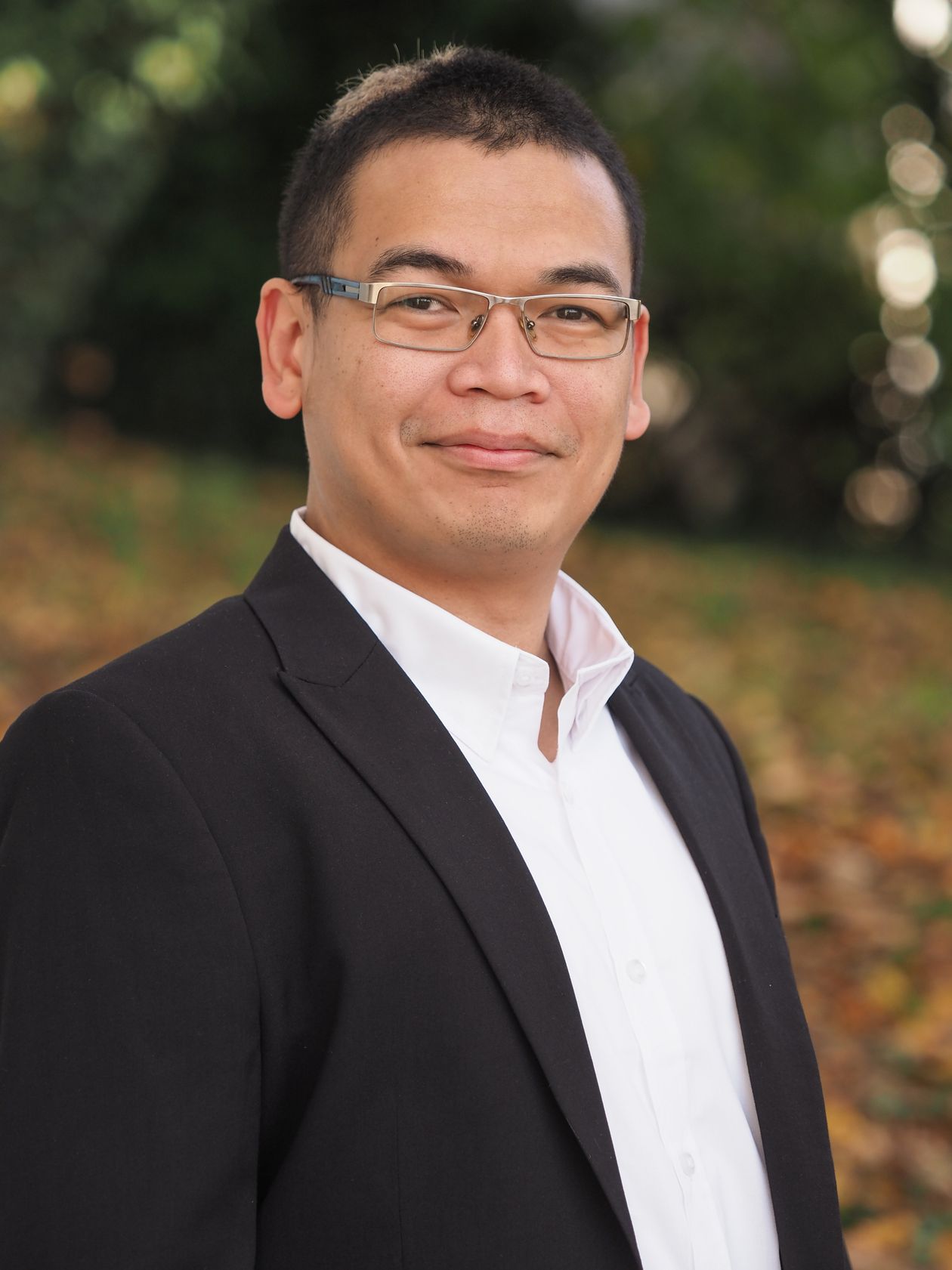
Paul Stephan is a researcher at the University of Konstanz, Department of Mathematics and Statistics, specializing in partial differential equations and variational problems on limiting function spaces. He focuses on coercive inequalities, boundary value problems with critical data, and applications in energy systems modeling. Supervised by Prof. Dr. Franz Gmeineder Collaborates with Prof. Dr. Robert Denk Former student research assistant at HTWG Konstanz (Faculty of Mechanical Engineering) His research bridges advanced mathematical analysis with practical applications in energy systems. Recent work includes partial regularity for quasiconvex functionals, KMS inequalities, and decentralized energy grid modeling. Scientific recognition includes the MPI Prize and MfO Prize for best presentation at Stukon (2024), LUKS Prize for teaching excellence (2024), and VEUK Prize for outstanding thesis (2023). Teaching roles span Analysis I/II, Function Theory, and mathematics preparatory courses. He also organizes seminars on Fourier analysis and contributes to science communication through Campuls.Online articles.
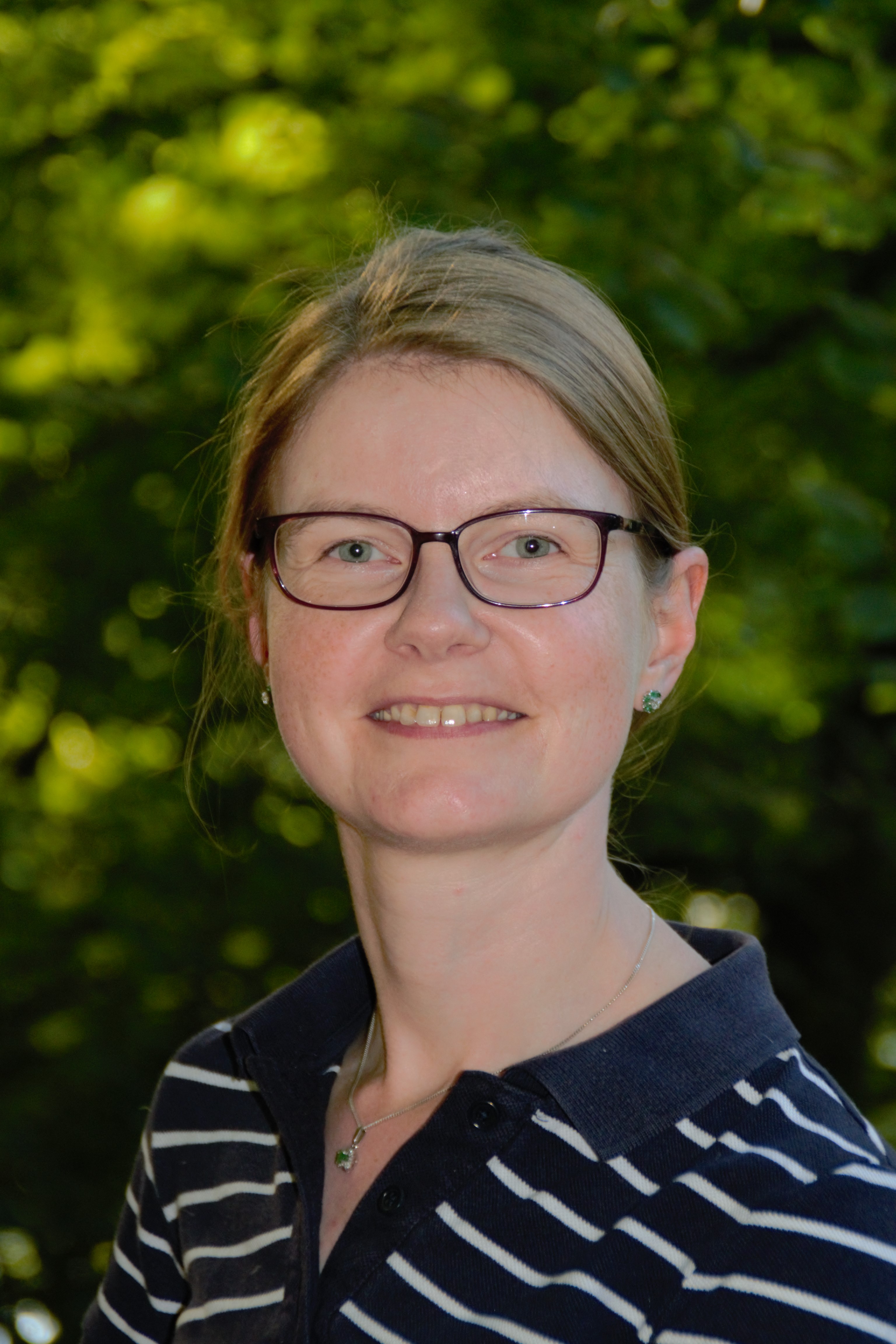
Benedetta Franceschiello is an Associate Professor at HES-SO Valais-Wallis, part of the School of Engineering (Haute Ecole d'Ingénierie) in Sion, Switzerland. She holds a position in the Department of Information Technology and Engineering, teaching linear algebra courses across multiple bachelor programs including Industrial Systems, Biomedical Engineering, and Environmental Engineering. Her research focuses on computational neuroscience, mathematical modeling of visual perception, and medical imaging techniques like MRI and EEG. Key interests include geometric optical illusions, neural dynamics, and the application of advanced mathematical methods to neuroimaging challenges. She has developed models linking cortical processes to perceptual phenomena, integrating psychophysics with computational neuroscience. Franceschiello's work addresses topics such as MRI signal reliability in brain network analysis, optimization techniques for medical image reconstruction (e.g., LASSO algorithms), and the use of machine learning for analyzing eye-tracking data in neurological disorders like spatial neglect. She has contributed to conferences including ISMRM, ARVO, and OHBM, and her research spans interdisciplinary areas combining mathematics, engineering, and neuroscience. Her recent studies emphasize the synergistic effects of physical stimulus properties in generating visual illusions and the development of automated 3D eye segmentation methods using MRI. Franceschiello's contributions bridge theoretical models with clinical applications, aiming to improve diagnostic tools and neuroimaging standards.
Prof. Vojislav Dukić is a regular professor at the Faculty of Forestry, University of Banja Luka. His work focuses on forest ecology, dendrochronology, and sustainable forest management with a specialization in old-growth forests and climate impacts. He leads research on forest dynamics, biodiversity conservation, and silvicultural practices in Bosnia and Herzegovina's ecosystems. Affiliated with the Department of Forest Management and Planning. Active in projects like the ‘WISDOM methodology’ and ‘Master Plan for Afforestation’. Research interests include old-growth forest dynamics, climate-forest interactions, and wood material properties. He has published over 50 peer-reviewed articles, with recent work emphasizing Dinaric Alps ecosystems and carbon stock assessments. His studies combine fieldwork with remote sensing and statistical modeling to address forest management challenges. Notable contributions include analyses of Janj and Lom old-growth forests, climate-growth relationships in silver fir, and Serbian spruce wood properties. He collaborates with international teams on projects funded by EU and national grants, emphasizing regional forest sustainability.
Anthony Christopher Davison is a Professor at the Institute of Mathematics within the School of Basic Sciences at École polytechnique fédérale de Lausanne (EPFL). He maintains an active research program in statistical methodology with a particular focus on extreme value theory and its applications across various domains including climate science, environmental statistics, and insurance. His work bridges theoretical developments with practical applications, addressing challenging problems in multivariate and spatial extremes. His research interests span Extreme Value Theory , Statistical Modeling , Multivariate Statistics , Spatial Statistics , and Bayesian Inference . Professor Davison has made significant contributions to the understanding of extremal dependence structures, developing novel methodologies for modeling multivariate extremes using structural equation models, graphical representations, and flexible nonparametric approaches. His work often addresses the challenges of non-stationarity in extreme events, particularly relevant in climate change contexts. Analysis of his recent publications reveals a consistent focus on advancing methodological frameworks for extreme value analysis while maintaining strong connections to real-world applications. His work demonstrates increasing sophistication in handling high-dimensional extremal dependence structures and addressing challenges in causal inference for extreme events. The publications span theoretical developments in statistical methodology alongside applications in climate science, environmental risk assessment, and insurance modeling. Professor Davison has supervised numerous doctoral students including Mario Krali, Timmy Rong Tian Tse, and Sonia Alouini, whose theses address cutting-edge problems in extreme value theory. His research has been supported by various funding bodies including the Swiss National Science Foundation and other Swiss foundations.
Sigmund Selberg is a Professor at the Department of Mathematics, University of Bergen, Norway. His research focuses on the mathematical analysis of nonlinear partial differential equations (PDEs), particularly dispersive equations, wave equations, and systems like Dirac-Klein-Gordon and Maxwell-Dirac. He investigates well-posedness, spatial analyticity, and asymptotic behavior of solutions, often in low-regularity contexts. His work spans theoretical aspects of PDEs including: Global existence and uniqueness for critical nonlinearities Ill-posedness below regularity thresholds Dispersive estimates for KP and KdV-type equations Analytic properties of solutions in relativistic field theories No awards, research grants, or student advising details are mentioned in the source material. Collaborative work includes publications with researchers from NTNU and international institutions.
Kevin Skadron is the Harry Douglas Forsyth Professor of Computer Science at the University of Virginia's School of Engineering and Applied Science, where he has been faculty since 1999. He previously served as department chair from 2012-2021 and has made significant contributions to computer architecture research. Dr. Skadron received his B.S. in Electrical and Computer Engineering and B.A. in Economics from Rice University in 1994, and his Ph.D. in Computer Science from Princeton University in 1999. He spent the 2007-08 academic year on sabbatical at NVIDIA Research. His research focuses on computer architecture, particularly novel heterogeneous processor organizations, accelerator architecture, processing in memory, and automata processing. He has pioneered work in processing-in-memory (PIM) architectures, automata processing for pattern matching, and heterogeneous computing systems. His work addresses critical challenges in thermal management, power delivery, process variations, and wear-out in modern computing systems. Current projects include Fulcrum, Gearbox, Sieve, and DRAM-CAM architectures, along with the development of the PIMeval simulation framework and PIMbench benchmark suite. Skadron's recent publications reveal a strong focus on processing-in-memory architectures, with numerous papers on PIM design, benchmarking, and applications. His research also emphasizes automata processing for pattern matching, with contributions to FPGA-based implementations and programming models. Many of his recent works address graph processing acceleration, bioinformatics applications, and memory system optimization, demonstrating the practical impact of his theoretical contributions. Dr. Skadron has received numerous accolades including the 2023 SRC/SIA University Research Award for lifetime research contributions to the U.S. semiconductor industry, the 2011 ACM SIGARCH Maurice Wilkes Award, and is a Fellow of both IEEE and ACM. He was also named a University of Virginia Teaching Fellow for 2003-04. Skadron has advised numerous graduate students, with recent PhD graduates now working at leading companies like IBM, AMD, Apple, and Black Sesame. His research has been supported by the National Science Foundation, Semiconductor Research Corporation, DARPA, and industry partners including NVIDIA, Intel, and Micron. He co-founded IEEE Computer Architecture Letters and served as editor-in-chief from 2010-2012. He is actively involved in the UVA Center for Automata Processing (CAP) and has served as director for the SRC JUMP 1.0 Center for Research on Intelligent Storage and Processing in Memory (CRISP). He is currently a member of the SRC JUMP 2.0 Center for Research on Processing in Storage and Memory (PRISM).
Rainer Polak is an Associate Professor at the Department of Musicology, University of Oslo, and a key researcher at the RITMO Centre for Interdisciplinary Studies in Rhythm, Time and Motion. His work bridges ethnomusicology, cognitive science, and neuroscience through studies of West African drumming and dance. Current projects: DjembeDance (2023–2027, funded by the Research Council of Norway) Past affiliations: MPI for Empirical Aesthetics (2017–2022), Hochschule für Musik und Tanz Köln (2011–2016) Research focuses on West African rhythm , exploring biological, social, and cultural dimensions of musical timing. He emphasizes multimodal performance and cross-cultural comparisons, collaborating with experts in music theory (Justin London), computational science (Nori Jacoby), and cognitive neuroscience (Sylvie Nozaradan). His recent articles analyze neural correlates of rhythm perception, comparative tapping synchronization, and non-isochronous meter in Malian music. While no explicit awards are listed, his work includes organizing concert tours and CD productions to promote Malian artists in the Global North.
Vivato Andriamiarana serves as a Researcher at the Methods Center within the Faculty of Economics and Social Sciences at Eberhard Karls University of Tübingen, specializing in advanced statistical methodologies for dynamic latent variable modeling since 2020. Her work focuses on methodological rigor in complex data structures. Education: BS in Statistics and Econometrics Modeling (2011-2014), University of Antananarivo MS in Macroeconomics and Modeling (2014-2015), University of Antananarivo Studies in Applied Mathematics (2016-2017), University of Antananarivo MS in Economics and Finance (2017-2019), Université Lumière Lyon 2 Studies in Econometrics and Statistics (2019-2020), Institut de Science Financière et d'Assurances - Lyon 1 Her research centers on Dynamic Latent Variable Models with emphasis on finite sample properties, sparse estimation techniques, and network modeling for intensive longitudinal data. She employs variational inference methods to address computational challenges in high-dimensional statistical frameworks, contributing to methodological advancements in structural equation modeling. Recent publications demonstrate consistent focus on validation of dynamic modeling approaches, particularly examining Bayesian regularization requirements and sample size constraints in multilevel latent class structural equation models. Her work bridges theoretical statistics with practical applications in social science research. Professional Context: DLV Project Member (since 2020) Collaborates with Methods Center faculty including Prof. Kelava and Dr. Kilian Works within interdisciplinary team developing quantitative research methodologies
Prof. Dr. Anja Janßen is a university lecturer and professor at the Faculty of Mathematics, Otto von Guericke University Magdeburg since 2020. She was previously an Associate Professor at KTH Royal Institute of Technology Stockholm (2017-2020), Postdoctoral Researcher at University of Copenhagen (2015-2017), and held postdoctoral and teaching roles at University of Hamburg (2011-2015). She earned her Doctoral Degree in Mathematics (2010) and Diploma in Business Mathematics (2006) from University of Göttingen and Hamburg respectively. Doctoral Degree, Mathematics, University of Göttingen (2010) Diploma in Business Mathematics, University of Hamburg (2006) Anja Janßen specializes in Extreme Value Theory and Dependence Modeling . Her research focuses on analyzing rare events in multivariate observations and time series, particularly how model assumptions like GARCH/SV financial models or regular variation frameworks shape extreme event structures. She develops extremal inference techniques that incorporate these structures into estimation methods. Her recent publications (2020-2024) investigate threshold selection procedures, k-means clustering applications for extremes, spectral tail processes, and max-stable approximations for regularly varying time series. These works span statistical methodology, probability theory, and financial mathematics applications. Associate Editor for Extremes Journal Associate Editor for Stochastic Models Journal She teaches courses including Stochastic Processes, Extreme Value Statistics, Probability Theory, and Statistical Methods, with a focus on e-learning formats since 2020. Office hours are by appointment via email.
Prof. Johannes Zimmer is Chair of Analysis and Modelling at the Department of Mathematics, School of Computation, Information and Technology at the Technical University of Munich (TUM). His research focuses on mathematical modeling and analysis of complex systems, with particular expertise in differential equations, variational problems, stochastic models, and nonequilibrium dynamics. His primary research interests include: Mathematical Modelling of physical systems Applied Analysis of differential equations and variational problems Stochastic models and scale-bridging techniques Nonequilibrium problems in statistical mechanics Hydrodynamic limits and fluctuations in particle systems Prof. Zimmer's recent work demonstrates a strong focus on connecting microscopic particle systems to macroscopic evolution equations, with applications in statistical physics, thermodynamics, and multiscale modeling. His research often combines rigorous mathematical analysis with physical insights from nonequilibrium statistical mechanics. A notable trend in his recent publications is the development of frameworks that bridge Hamiltonian dynamics with dissipative structures, as well as the application of machine learning techniques to coarse-graining problems in statistical physics. Among his scientific contributions are advancements in understanding: GENERIC formalism for non-equilibrium thermodynamics Dean-Kawasaki models for density fluctuations Fast-slow Hamiltonian systems and their thermodynamic interpretation Statistical-physics-informed neural networks Prof. Zimmer actively supervises students and collaborates with researchers across disciplines, including physicists, applied mathematicians, and computational scientists. His work often involves international collaborations with institutions in Europe and beyond. He teaches advanced mathematics courses at TUM, including Higher Mathematics for Mechanical and Chemical Engineering students, and leads seminars on mathematical modeling and nonequilibrium systems.
Dr. Ivor Simpson is an Associate Professor in Informatics at the University of Sussex, affiliated with the School of Engineering and Informatics and part of the AI research group. He serves as the Academic Lead for Sussex AI and convenes the MRes in Advanced Artificial Intelligence. His academic career includes prior roles as a Senior Lecturer (2022–present) and Lecturer (2020–2022) in Artificial Intelligence at the same institution. His educational background includes a DPhil in Medical Image Analysis from the University of Oxford (2008–2012) and an MEng in Computer Science from the University of Southampton (2004–2008). Prior to his academic appointments, he worked as a Senior Research Scientist and Head of Machine Learning at Anthropics Technology (2014–2019) and as a Research Associate at University College London (2012–2014). Ivor’s research lies at the intersection of machine learning and applied statistics, with a focus on probabilistic modeling for imaging and temporal data. His work emphasizes uncertainty quantification, interpretable AI, and deep generative models, applied to medical image analysis, computer vision, and ecological monitoring. He is particularly interested in inverse problems, morphometry, image registration, and multi-modal MRI analysis. His recent publications (2022–2025) reflect a strong trend toward uncertainty-aware models in medical imaging, ecoacoustics, and computer vision. Topics include compressed sensing MRI, variational autoencoders, deep ensembles, and interactive ecoacoustic dashboards. These works demonstrate interdisciplinary collaboration and methodological innovation, particularly in quantifying spatial uncertainty and building interpretable representations. MICCAI Young Scientist Award (2013) for work on probabilistic non-linear registration Dr. Simpson actively supervises students, currently serving as primary supervisor for 6 PhD candidates and secondary supervisor for several others. He has led or participated in multiple research grants from EPSRC, NERC, and Innovate UK, supporting projects in ecoacoustics, MRI modeling, and machine learning applications. His teaching includes advanced machine learning, computer vision, and the MRes in Advanced AI. He leads a research team focused on interdisciplinary AI applications and collaborates widely across academia and industry.
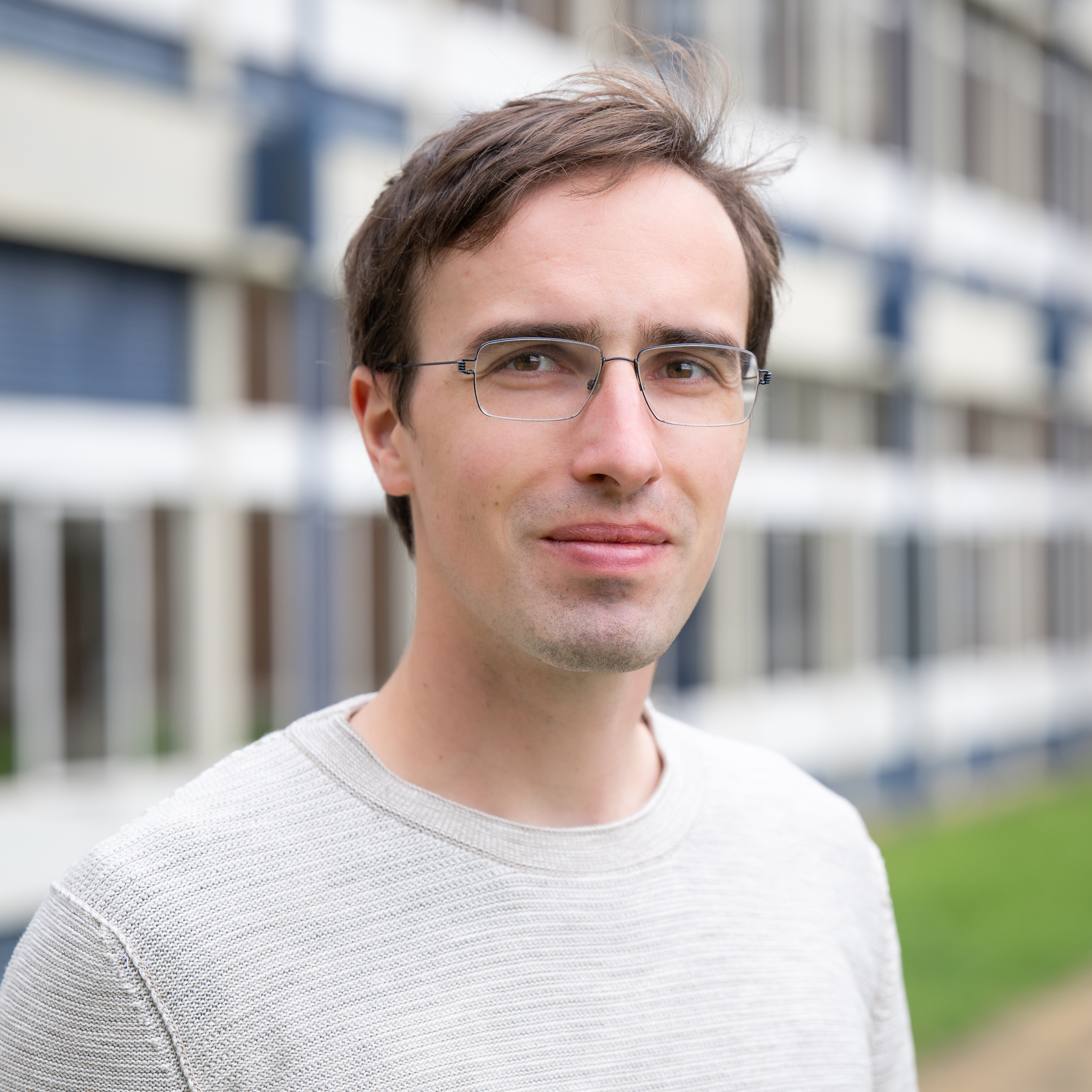
Lukas Koch is an Assistant Professor in Mathematics at the University of Sussex , School of Mathematical and Physical Sciences. He transitioned from a postdoctoral position at the Max Planck Institute for Mathematics in the Sciences (2021–2024) to his current permanent role as of 2024. His academic credentials include an MMath (2013–2017) and PhD (2017–2021) from the University of Oxford . Education MMath, University of Oxford PhD, University of Oxford Postdoctoral Training Max Planck Institute for Mathematics in the Sciences Research Interests : Dr. Koch specializes in the Calculus of Variations and Optimal Transport , focusing on Regularity Theory for nonlinear PDEs and functionals with $(p,q)$-growth. His work addresses boundary regularity, Lavrentiev gaps, and numerical approximation schemes for elliptic systems. Publication Trends : His research spans Analysis of PDEs and Calculus of Variations , with recent articles exploring entropic optimal transport , p-Laplace homogenization , and Jacobian equations in critical Sobolev spaces. Collaborations include notable mathematicians like Felix Otto, André Guerra, and Sauli Lindberg. Teaching Experience : He has taught Linear Algebra , Calculus of Variations , and advanced courses on Nonlinear Potential Theory at institutions including the University of Sussex, University of Leipzig, and Max Planck Institute. His teaching spans undergraduate to graduate levels.
Robin Clark is a Professor in the Department of Linguistics at the University of Pennsylvania. His research integrates computational modeling, game theory, and neuroscience to study language evolution, semantics, and social coordination mechanisms. Research Interests: Agent-based modeling of language evolution and social dynamics Game-theoretic approaches to linguistic meaning and discourse Neural basis of quantifier interpretation and numerical cognition Computational analysis of historical language change Cross-disciplinary studies connecting linguistics with cognitive neuroscience Awards: Received Best Paper Award at the Computational Social Science Society of America (2015) for work on emergent language variation. Research Trends: Clark's publications demonstrate consistent focus on evolutionary models of language, game-theoretic semantics, and neurocognitive foundations of quantification. Recent work emphasizes agent-based simulations of social-linguistic phenomena, while earlier research established foundations in clinical neurolinguistics and formal semantics.
Vincenzo Recupero is an Associate Professor in the Department of Mathematical Sciences "GL Lagrange" (DISMA) at Politecnico di Torino, Italy. His research and teaching are centered on advanced topics in mathematical analysis, with a focus on functional, nonlinear, and quaternionic analysis, as well as partial differential equations and hysteresis models. He teaches core mathematics courses such as Mathematical Analysis II and Mathematical Methods for Engineering to undergraduate students in computer, mechanical, and engineering physics programs, and also lectures in PhD programs on variational evolution problems. His research interests span Quaternionic and Hypercomplex Analysis , motivated by applications in quantum mechanics; Partial Differential Equations in Phase Transition Models such as Penrose-Fife and Stefan systems; and Rate-Independent Processes and Moreau Sweeping Processes , with applications in elastoplasticity, hysteresis, and crowd dynamics. His work emphasizes the well-posedness and continuity of solution operators under various topologies, ensuring robustness and applicability of mathematical models. The recent publications (2011–2023) reflect a consistent focus on sweeping processes, BV solutions, and quaternionic operator semigroups, with increasing sophistication in algebraic and functional-analytic frameworks. These works appear in prestigious journals such as Transactions of the American Mathematical Society and Journal of Differential Equations , indicating strong theoretical contributions to nonlinear analysis and mathematical physics. He is actively involved in the academic community, serving on program committees for international conferences like the International Symposium on Hysteresis Modeling and Micromagnetics (HMM 2025) and chairing organizing committees for summer schools on multi-rate processes and slow-fast systems. His research is aligned with ERC sectors in analysis, mathematical physics, and dynamical systems, and contributes to UN SDGs on quality education and reduced inequalities. Scientific Service and Leadership: Program Committee, International Symposium on Hysteresis Modeling and Micromagnetics (HMM 2025) Program Committee, Two-day Workshop on Nonlinear Analysis Chairman, Organizing Committee, Summer School on Multi-Rate Processes, Slow-Fast Systems and Hysteresis (2019) Program Committee, Control of State Constrained Dynamical Systems (2017) Chairman, Organizing Committee, Summer School on Multi-Rate Processes, Slow-Fast Systems and Hysteresis (2017) He has held external research appointments, including as a Researcher at Tongji University (2013). He is a member of the College of Computer, Film and Mechatronics Engineering and part of the Nonlinear Analysis and Calculus of Variations research group at DISMA. While no formal advisees are listed, his collaborative work includes prominent mathematicians such as Riccardo Ghiloni, Pavel Krejci, and Filippo Santambrogio.
Jörg-Uwe Löbus is a Senior Lecturer in the Department of Mathematics at Linköping University, Sweden, within the Faculty of Science and Engineering. He is affiliated with the Division of Applied Mathematics (TIMA) and holds the Swedish Docent title in mathematics. His academic career includes long-term positions in Germany and visiting appointments in the United States. Research Interests: His work lies at the intersection of stochastic analysis and mathematical physics. He focuses on infinite-dimensional stochastic calculus, diffusion processes, particle systems, and their connections to partial differential equations. He investigates quasi-invariance of probability measures under stochastic flows, convergence of stochastic processes (including Mosco-type convergence), and particle approximations to PDEs, especially in kinetic theory such as the Boltzmann equation. Publication Trends: His recent publications (2016–2024) show a sustained focus on the interplay between stochastic processes and PDEs. Key themes include quasi-invariance under non-linear flows, analysis of Boltzmann-type equations, and infinite-dimensional diffusions. His work appears in high-impact journals such as SIAM Journal on Mathematical Analysis , Memoirs of the American Mathematical Society , and Analysis and Applications . Scientific Awards: Third prize in the International Mathematical Olympiad 1976 (Vienna, Austria) Advising and Grants: There is no publicly listed information on students advised or research grants obtained. However, his sustained research output and senior academic position suggest active involvement in research supervision and funding activities, likely within Swedish or German research councils. Labs and Research Teams: He is affiliated with the Division of Applied Mathematics (TIMA) at Linköping University, which conducts research in computational mathematics, mathematical statistics, and optimization. His work contributes to the theoretical foundations of stochastic modeling within this division.


-jm-rainer_dxo---klein.jpg)