Prof. Dr. Biliana Yontcheva is Professor of Economics at the University of Hamburg's Faculty of Business, Economics and Social Sciences, specializing in Health Economics and Empirical Methods. Her research explores market outcomes through spatial econometrics, price transmission dynamics, and competition analysis across diverse sectors including healthcare, gasoline markets, and professional services. Focus on empirical modeling of market structures Expertise in spatial competition and entry models Key contributions to understanding asymmetric cost pass-through Analyzes consumer information effects on pricing Recent publications examine market delineation methodologies , vertical integration impacts , and income inequality-product variety relationships . Collaborates with researchers across Europe on topics like transition economy dynamics and regulatory frameworks. The team includes academic assistant Birte Stadtlich at the Economics Department.
Prof. Vladimir Spokoiny is a leading figure in stochastic algorithms and nonparametric statistics at the Weierstrass Institute for Applied Analysis and Stochastics (WIAS) and Humboldt University of Berlin . His work bridges mathematical statistics with practical applications in finance, medicine, and machine learning. Born in 1959 in Moscow, USSR PhD from Lomonosov Moscow State University (1988) Habilitation from Humboldt University (1996) Head of WIAS research group since 2000 Professor at Humboldt University since 2002 Spokoiny's research focuses on adaptive nonparametric methods, high-dimensional data analysis, and statistical finance. His innovations in local homogeneity testing and propagation-separation methods have advanced volatility modeling, image analysis, and manifold learning. He employs Bayesian optimization frameworks and stochastic control techniques for financial instrument pricing. Recent scientific contributions include generalized bootstrap procedures for Bures-Wasserstein barycenters (2024), dimension-free Laplace approximation bounds (2023), and structure-adaptive manifold estimation (2022). His 19+ PhD students and editorial roles in top journals like The Annals of Statistics demonstrate sustained academic impact. International Statistical Institute member American Statistical Association fellow Institute of Mathematical Statistics member Bernoulli Society member
Stefania Degaetano-Ortlieb is an Associate Professor of English Linguistics and Corpus Linguistics at Saarland University's Department of Language Science and Technology. She serves as Principal Investigator for the Collaborative Research Center (SFB 1102) 'Information Density and Linguistic Encoding,' leading Project B1 on diachronic information density in English scientific writing (17th century-present). Her interdisciplinary work bridges computational methods with sociolinguistics, focusing on register variation, language change, and digital humanities. Research interests center on text mining, data analytics, and probabilistic modeling of language variation. Key areas include: Diachronic evolution of scientific registers and linguistic densification Information-theoretic approaches to language efficiency Computational sociolinguistics and register diversification AI applications in humanities education (e.g., ChatGPT integration) Her publications show a strong trend toward quantitative diachronic analysis, with recent work emphasizing: interpretable AI models for linguistic change detection; propagandistic narrative analysis in conflict zones; and multi-word expression dynamics in scientific discourse. Cross-disciplinary collaborations frequently intersect with history, psychology, and media studies. Awards include the Fellowship Excellence Program for Young Female Scientists (2015-2018). Current grants: EU Horizon MSCA Doctoral Network 'CASCADE' (€521K to UdS, 2024-2027) Data-Pin Project for AI in education (€50K, 2023-2024) SFB 1102 Project B1 (€595K, 2022-2026) Advises PhD candidates in the EU CASCADE project on computational semantic change. Leads a research team exploring Russian media narratives, personality modeling in LLMs, and multi-word expressions. Directs teaching modules integrating AI tools for humanities students.
Jens Krause is a Professor and Head of Department at the Leibniz Institute of Freshwater Ecology and Inland Fisheries (IGB) in Berlin, leading the Research Group on Mechanisms and Functions of Group-Living. He holds a full professorship in Fish Ecology at Humboldt-Universität zu Berlin, Faculty of Life Sciences, Thaer-Institute, and since 2018 has been an Adjunct Professor at Technical University Berlin within the Excellence Cluster 'Science of Intelligence'. His research is centered on collective intelligence, social networks, decision-making, and behavioural ecology in fish and other animals. Full Professor in Fish Ecology, Humboldt-Universität zu Berlin Adjunct Professor at Technical University Berlin (since 2018) Head of Department, IGB Berlin PhD, University of Cambridge Diploma, Free University Berlin His work integrates experimental biology, network analysis, and biomimetic robotics to understand how animals make collective decisions. His expertise spans animal behaviour, evolution, and ecological physiology, with a strong focus on group-living dynamics. Recent research explores group hunting, predator evasion, social foraging, and the impact of environmental stressors on collective behaviour. The analysis of his recent publications reveals a strong trend in understanding collective behaviour in fish, including escape waves, social foraging, group hunting in marlins and sailfish, and the use of robotic agents to study social integration. His interdisciplinary approach combines marine biology, physics, robotics, and data science to uncover the mechanisms behind collective intelligence in both animal and human systems. Editorial Board, Behavioral Ecology Editorial Board, Fish and Fisheries Executive Board, Excellence Cluster 'Science of Intelligence' Advisory Board, Bimini Biological Field Station Foundation He advises numerous PhD students and postdoctoral researchers, and leads major research projects, including 'Developing exploration behaviour' funded by the Excellence Cluster. His work has been supported by extensive collaborations across Europe and North America, and he frequently publishes in top-tier journals such as Nature , Science Advances , Proceedings of the Royal Society , and Current Biology . His lab employs cutting-edge methods including automated tracking, social network analysis, and interactive robotics to study animal groups. His research group, 'Mechanisms and Functions of Group-Living', is embedded within the Excellence Cluster 'Science of Intelligence', where they investigate collective cognition, social information use, and the role of individual differences in group performance. The team combines field studies with laboratory experiments and computational modelling to understand the evolution and function of collective behaviour across species.
Niels Dingemanse is a tenured Professor of Behavioural Ecology at Ludwig Maximilians University (LMU) in Munich, Germany, and leads the Evolutionary Ecology of Variation research group at the Max Planck Institute for Ornithology. His academic journey includes roles as a Postdoctoral Research Fellow at the University of Groningen and the University of Wales, Bangor. He holds a PhD in natural sciences from Utrecht University (2003) and an M.Sc. in Ecology from the University of Groningen (1997). His research focuses on evolutionary and behavioural ecology, particularly the ecological and evolutionary significance of individual variation in behaviour, physiology, and life-history traits. Key themes include personality evolution, indirect genetic effects, and the integration of genomic approaches with ecological field studies. Dingemanse has contributed to projects like the Great Tit HapMap initiative, exploring genomic variation across continental scales. Publications emphasize interdisciplinary methods, combining field experiments with genomic and statistical tools. His work addresses topics such as mate choice evolution, the role of environmental fluctuations in shaping social plasticity, and the genetic basis of vocal rhythms in birds. Grants and fellowships include the Veni Innovational Research Incentives Scheme (Netherlands Organisation for Scientific Research) and ALW open competition grants. He has advised numerous postdoctoral researchers and leads collaborative projects across Europe.
Professor Martin Peifer is a computational cancer genomics researcher at the University of Cologne, where he leads the Department of Translational Genomics. He serves as Principal Investigator of the Peifer Lab, which focuses on developing computational methods to analyze cancer genome sequencing data. His work is deeply integrated with the Center for Data and Simulation Science and he is an active member of the International Cancer Genome Consortium and the Pan-Cancer Analysis of Whole Genomes project. Peifer's research interests center on computational approaches to understanding cancer biology, with particular emphasis on tumor evolution and genome instability mechanisms. His lab develops methods to analyze somatic genome alterations including point mutations, copy number changes, and rearrangements. They also create computational tools for integrative genome analyses, tumor evolution reconstruction, and single-cell sequencing data analysis (both RNA and DNA). His interdisciplinary team applies high-performance computing and machine learning to interpret complex cancer sequencing data, aiming to better understand tumorigenesis, clonal evolution, and therapy resistance. Analysis of Peifer's extensive publication record reveals a strong focus on neuroblastoma and lung cancer genomics, with particular attention to tumor evolution patterns and genomic instability mechanisms. His work spans multiple cancer types but maintains consistent themes of computational methodology development and application to understand cancer progression and treatment resistance. The publications demonstrate increasing sophistication in analyzing intra-tumor heterogeneity and clonal dynamics over time. Peifer leads an active research group including postdoctoral fellows (Joel Kaufmann, Dr. Stephanie Pabel, Agnieszka Rumińska) and PhD students (Magdalena Seiffert, Justinas Valiulis). His lab is involved in the Collaborative Research Center 1399 focused on Mechanisms of Drug Sensitivity and Resistance in Small Cell Lung Cancer, indicating significant grant funding and collaborative research efforts. The Peifer Lab operates at the intersection of computational biology and cancer research, maintaining an interdisciplinary approach that combines bioinformatics, machine learning, and high-performance computing to address complex questions in cancer genomics. Their work has significant implications for understanding cancer evolution and developing more effective treatment strategies.
James Urquhart Allingham is a Research Scientist at Google DeepMind , working on the Gemini project. He completed his PhD in the Machine Learning Group at the University of Cambridge under the supervision of José Miguel Hernández-Lobato, with funding from EPSRC, the Michael E. Fisher Studentship in Machine Learning, and the Qualcomm Innovation Fellowship. He was also part of the ELLIS PhD program, advised by Eric Nalisnick at AMLab UvA. Current affiliation: Google DeepMind (Research Scientist) PhD: University of Cambridge (Machine Learning Group) Academic networks: ELLIS PhD program, Darwin College His research focuses on the intersection of Bayesian deep learning and probabilistic methods in deep learning. Key areas include deep generative models , zero-shot classification , prompt engineering , Monte Carlo gradient estimation , and applications to sustainability and climate change . His work has explored energy-based models , neural architecture search , and equivariance in convolutional networks . Selected scientific awards and grants include the Michael E. Fisher Studentship , Qualcomm Innovation Fellowship , and MPhil in Advanced Computer Science with Distinction . He has collaborated with institutions such as the Amsterdam Machine Learning Group (AMLAB) and University of the Witwatersrand .
Prof. Karsten Urban is a Full Professor of Numerical Mathematics at the University of Ulm, leading the Institute for Numerical Mathematics. He holds roles such as Dean of Studies in Computational Science and Engineering (CSE) and Deputy Spokesman for the Research Association for Scientific Computing in Baden-Württemberg. He is an active member of prestigious societies including the Deutsche Mathematikervereinigung (DMV) and SIAM. His academic journey includes a PhD from RWTH Aachen (1995), Habilitation (2001), and a full professorship at Ulm since 2005. Research focuses on numerical methods for PDEs, reduced basis techniques, multiscale simulations in fluid mechanics, biomechanics, quantum sciences, and financial mathematics. He has pioneered wavelet-based methods and collaborated with industries on ship propulsion and energy trading models. His work integrates mathematical rigor with real-world applications, emphasizing model reduction and computational efficiency. Editorial Roles: Managing Editor of Advances in Computational Mathematics , Editor of SN Partial Differential Equations and Applications . Awards: Teaching award of Baden-Württemberg (2005), Science-Economy Cooperation Awards (2004, 2008). Administrative Roles: Member of the University Council and ASIIN expert committee. Supervises doctoral students in numerical analysis, quantum simulations, and biomechanics. Active in interdisciplinary projects, including quantum systems (IQST) and fracture healing modeling in collaboration with biomechanics experts. His contributions bridge academia and industry, driving innovation in computational methods.
Giorgio Ferrari is a Full Professor for Mathematical Finance at the Institute for Mathematical Economics (IMW), Faculty of Economics, Bielefeld University. His research bridges stochastic control theory with applications in economics, finance, actuarial science, and epidemiology. Education: B.Sc. and M.Sc. in Physics and Mathematical Physics from the University of Rome La Sapienza, Ph.D. in Mathematics for Economic-Financial Applications (2012). Academic Appointments: Post-Doctoral Researcher (2012–2015), Substitute Full Professor (2015), Junior Professor (W1) (2016–2017), Associate Professor (2017–2023), and Full Professor (2023–present) at Bielefeld University. Research Interests focus on Singular Stochastic Control , Optimal Stopping , and Stochastic Games , with applications to economic policy, financial markets, and epidemic modeling. His work extends to Mean-Field Games for large-scale strategic interactions and Free-Boundary Problems for investment decision-making under uncertainty. Scientific Contributions include groundbreaking publications in Stochastic Processes and their Applications , Mathematical Finance , and SIAM Journal on Control and Optimization . His research projects, such as the DFG SFB 1283 subproject C4 and the Research Training Group 2865 , address uncertainty in dynamic economies through game-theoretic and stochastic frameworks. Notable Awards: AMASES Best Young Researcher Paper (2014), YITP Research Prize (2017), and multiple research fellowships from the University of Padova. Leadership: Director of the Bielefeld Graduate School in Theoretical Sciences (2023–present) and Principal Investigator in major DFG-funded initiatives.
Prof. Gerhard Jäger holds the Chair of General Linguistics at the Faculty of Humanities, University of Tübingen . He serves as a Principal Investigator (PI) in the Clusters of Excellence Human Origins and Machine Learning for Science , and leads projects like Phylomilia (funded by Volkswagen Foundation) and CrossLingference (ERC Advanced Grant). His career spans multiple institutions, including Bielefeld University (2004-2009) and Stanford University (visiting scholar, 2004). Habilitation (2002) at Humboldt University Berlin with thesis on Anaphora and Type Logical Grammar PhD (1996) at Humboldt University Berlin on Dynamic Semantics His research bridges computational linguistics , phylogenetic analysis , and game theory , focusing on Bayesian models , language evolution , and cross-linguistic typology . Recent work explores phylogenetic inference from acoustic speech data and geographic influences on language trees . Key contributions include 15+ recent publications on topics spanning phylogenetic typology , cognate detection , and Bayesian language modeling . These works employ machine learning , statistical inference , and evolutionary game theory to analyze language change , typological variation , and linguistic stability . Honors include ERC Advanced Grant , Volkswagen Foundation funding , and DFG-Humanities Centre for Advanced Studies participation. He has taught courses in Computational Historical Linguistics , Phylogenetic Methods , and Bayesian Data Analysis across institutions like Tübingen, Bielefeld, and Stanford. He actively contributes to academic communities through workshop organization (e.g., Quantitative Theoretical Linguistics , Game Theory in Pragmatics ) and serves on the faculty council at Tübingen. His team collaborates with institutions like Max Planck Institute for Evolutionary Anthropology , University of Pennsylvania , and LMU Munich .
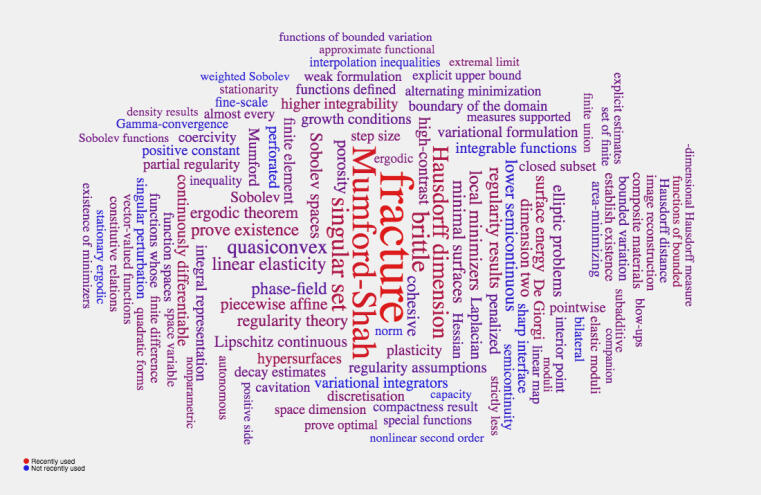
Professor Caterina Ida Zeppieri is a distinguished mathematician at the Westfälische Wilhelms-University Münster (University of Münster) in Germany, where she leads the Research Group 'Analysis and Modelling' within the Institute for Analysis and Numerics. She has maintained a continuous academic presence since at least the Winter semester 2012/13 through to upcoming semesters in 2025/26, consistently teaching advanced mathematics courses and supervising research activities. Her research focuses on fundamental aspects of mathematical analysis with significant applications to materials science. She specializes in Calculus of Variations, Elliptic PDEs, Gamma-convergence, Homogenization theory, Free-discontinuity problems, Nonlinear elasticity, and Plasticity. Her work bridges theoretical mathematics with practical applications in understanding material behavior, particularly fracture mechanics and composite materials. Professor Zeppieri's publication record demonstrates a consistent and impactful research trajectory from 2007 through forthcoming publications in 2025. Her recent work shows a strong emphasis on stochastic homogenization techniques applied to free-discontinuity problems and singularly-perturbed functionals, revealing sophisticated mathematical approaches to modeling complex material behaviors across multiple scales. She regularly collaborates with leading researchers including Filippo Cagnetti, Gianni Dal Maso, and Lucia Scardia, contributing to significant advances in the mathematical understanding of material science phenomena. Her research has been published in top-tier mathematics journals including Calculus of Variations and Partial Differential Equations, Archive for Rational Mechanics and Analysis, and SIAM Journal on Mathematical Analysis. Within the department, Professor Zeppieri plays an active role in teaching advanced courses such as Partial Differential Equations, Calculus of Variations, and Advanced Topics in the Calculus of Variation, while participating in the department's Advanced Seminar in Applied Mathematics and Colloquium on Applied Mathematics.
Sebastian Stich is a tenured faculty member at the CISPA Helmholtz Center for Information Security , where he leads research in Trustworthy Information Processing . He has been a tenure-track faculty since 2021 and was promoted to tenured professor in 2025. He is also a member of the European Lab for Learning and Intelligent Systems (ELLIS) . Education: PhD in Computer Science, ETH Zurich (2010–2014) MSc and BSc in Mathematics, ETH Zurich (2005–2010) Research Scientist, EPFL (2016–2021) Research at CORE/ICTEAM, UCLouvain (2014–2016) His research centers on optimization for machine learning , with a focus on federated, decentralized, and distributed learning . He investigates methods for communication efficiency , adaptive stochastic optimization , privacy-preserving training , and generalization theory . His work bridges theoretical guarantees with practical scalability. His recent publications (2023–2025) consistently address gradient compression , error feedback , local updates , and decentralized consensus , demonstrating a strong trend toward making distributed learning more efficient, robust, and scalable—especially under heterogeneous data and limited bandwidth. Scientific Awards: ERC Consolidator Grant 2024 (CollectiveMinds) Google Research Scholar Award (2023) Meta Privacy-Enhancing Technologies Research Award (2022) Sebastian Stich actively advises PhD students and postdocs, including Anton Rodomanov , Xiaowen Jiang , and Yuan Gao . He has secured competitive grants such as the ERC CollectiveMinds project, supporting collaborative research on scalable federated learning. He teaches advanced courses at Saarland University and serves as an area chair for NeurIPS, ICML, and ICLR. He leads a research group at CISPA focused on trustworthy and efficient machine learning systems , contributing to both foundational theory and real-world applications in privacy and security.
Jochen Wolf is Chair of the Evolutionary Biology Division at Ludwig-Maximilians-Universität München (LMU) and a Max Planck Fellow of the Max Planck Institute for Biological Intelligence since 2022. His research integrates evolutionary biology, genomics, and ecology to address fundamental questions about speciation, adaptation, and biodiversity across multiple biological systems. Dr. Wolf's research program applies an integrative approach to understand microevolutionary processes and genetic mechanisms underlying species divergence. His work combines large-scale genomic analyses with laboratory and field experiments to characterize genomic divergence across populations and species. Key empirical systems include natural populations of birds (particularly corvids, swallows, and cuckoos), marine mammals (pinnipeds and killer whales), plant communities, and experimental evolution in fission yeast. His research spans multiple scales from immediate microevolutionary processes to broader evolutionary patterns across time. His recent publications reveal a sophisticated integration of genomic, epigenetic, and ecological perspectives. A notable trend shows increasing focus on structural genomic variation, chromosomal rearrangements, and epigenetic mechanisms as drivers of evolutionary processes. His work demonstrates how these molecular mechanisms interact with ecological factors to shape patterns of biodiversity and adaptation. Dr. Wolf's research has gained significant recognition through publications in top-tier journals including Nature, Science, and Nature Ecology & Evolution. His groundbreaking studies on crow hybrid zones, killer whale ecotypes, and experimental evolution of speciation have been featured in prominent media outlets such as The New Yorker, The Guardian, Scientific American, and Der Spiegel, demonstrating the broad impact of his work. As Principal Investigator, Dr. Wolf actively mentors doctoral students and postdoctoral researchers, fostering the next generation of evolutionary biologists. His lab maintains strong international collaborations, particularly through affiliations with SciLifeLab in Uppsala. Research in his group is supported by multiple funding sources including German Research Foundation grants and European Union programs, enabling both fundamental research and applications to conservation biology. The Wolf lab operates within LMU's Division of Evolutionary Biology, which provides access to state-of-the-art facilities including the Leibniz Supercomputing Centre. The lab maintains strong connections with the Max Planck Institute for Biological Intelligence and SciLifeLab in Uppsala, creating a rich collaborative environment for interdisciplinary research in evolutionary genomics. This network enables comprehensive studies spanning from molecular mechanisms to ecological and evolutionary consequences across diverse biological systems.
Dr. Tobias Binninger is a researcher at the Institute of Energy Technologies (IET) within Forschungszentrum Jülich GmbH, Germany. His work focuses on theoretical and computational modeling of materials for electrochemical energy systems , particularly in the context of catalysts and solid-state electrolytes. His research spans topics such as electrochemical interfaces , redox reactions , quantum capacitance , and nanoparticle stability , as reflected in his publications in high-impact journals. He has contributed significantly to understanding the Oxygen Evolution Reaction (OER) mechanisms and solid-state electrolyte materials through advanced computational methods like quantum annealing and density functional theory. Recent studies highlight his focus on electrolyte correlation effects , metal-support interactions , and co-electrolysis cell design for CO 2 reduction. Despite lacking explicit details on awards or mentoring, his work addresses critical challenges in energy storage , catalyst degradation , and quantum modeling of electrochemical systems .
Professor Dr. Martin Grepl is a faculty member at RWTH Aachen University, where he holds the Lehr- und Forschungsgebiet Optimierung mit partiellen Differentialgleichungen (Teaching and Research Area in Optimization with Partial Differential Equations). He has been affiliated with RWTH Aachen since 2009, first as a Professor (W1) and since 2014 as a Professor (W2). Education: Diplom-Ingenieur (Aerospace Engineering), University of Stuttgart (2000) Master of Science (Mechanical Engineering), MIT (2001) Doctor of Philosophy (Mechanical Engineering), MIT (2005) His research focuses on numerical methods for partial differential equations (PDEs) , particularly model order reduction , reduced basis methods , finite element methods , and optimal control for parametrized PDEs. He also investigates parameter estimation , inverse problems , and control constraints in elliptic and parabolic PDE systems. The scientific awards he has received include the Studienstiftung des deutschen Volkes (1997-2000), a Fellowship from the Dr. Jürgen Ulderup-Stiftung (1998-1999), and the Lehrpreis der Fachschaft Mathematik/Physik/Informatik (2011). His work spans applications in manufacturing , medical physics , and fluid dynamics , as evidenced by his patents and collaborative research. His publications demonstrate expertise in reduced basis methods for nonaffine/nonlinear PDEs , trust region optimization , and error bounds for real-time and many-query scenarios. His collaborations often involve interdisciplinary applications, including thermal conduction , welding processes , and glomerular filtration modeling .