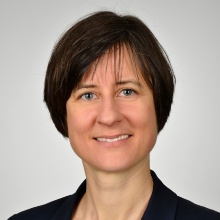
Eszter Ronai is an Assistant Professor in the Department of Linguistics at Northwestern University, leading the Experimental Meaning Group. She holds a PhD from the University of Chicago and a BA from the University of Cambridge. Her research focuses on psycholinguistics, experimental semantics-pragmatics, and the role of discourse context in pragmatic inferences, with special attention to Hungarian linguistics. Her work explores scalar implicature, intonational meaning, and adjectival semantics. Education: PhD in Linguistics, University of Chicago BA in Linguistics, University of Cambridge Her research investigates how people process non-literal meanings like scalar implicature and examines cross-linguistic differences, particularly in Hungarian. She has published extensively on topics such as intonation’s role in scalar diversity, pragmatic inferences under Question Under Discussion (QUD), and syntactic processing in flexible word-order languages. Her recent articles highlight trends in experimental pragmatics, including studies on adjectival scales, exclusive modifiers, and the integration of phonetic and contextual information. She collaborates widely, with projects on intonation’s impact on scalar inferences and the cognitive mechanisms behind pragmatic calculations. Students: Thomas Sostarics Cassie Davenport Wesley Orth Rebekah Stanhope Kate Sandberg Ronai’s lab, the Experimental Meaning Group, conducts interdisciplinary research at the intersection of linguistics, psychology, and cognitive science. Her work has been supported by grants and presented at leading conferences like SALT, LSA, and AMLaP.
Dr. Ratree Wayland is a Professor in the Department of Linguistics at the University of Florida, affiliated with the College of Liberal Arts and Sciences. Her research focuses on cross-language speech perception/production, lexical tone processing, Southeast Asian languages, speech biomarkers, and natural language processing. She teaches courses such as LIN 3201 (Sounds of Human Language), LIN 4205 (Fundamental Phonetics), and LIN 6208 (Phonetics for Linguists). Dr. Wayland is the author of the textbook Phonetics: A Practical Introduction (Cambridge University Press, 2019), which provides comprehensive coverage of articulatory, acoustic, and perceptual aspects of speech. Her work integrates empirical methods with computational tools to explore speech production, perception, and their applications in clinical and linguistic research. Her research interests include sociophonetic variation, tone sandhi phenomena in languages such as Lahu Nyi and Mandarin, and the use of speech as biomarkers for neurological disorders like Parkinson's disease. She employs advanced methodologies including electromagnetic articulography and neural network analysis to quantify phonetic features. Dr. Wayland's contributions span theoretical linguistics, applied phonetics, and interdisciplinary studies linking speech to biomedical applications. Notable projects include studying perceptual asymmetries in lexical tone perception among tonal and non-tonal language speakers, analyzing lenition in L2 Spanish and Parkinson's patients, and developing pseudo-palate technologies for speech analysis. Her publications frequently address cross-linguistic speech patterns, acoustic correlates of speech disorders, and the role of musical training in tone perception.
Seth Goss is an Associate Professor of Japanese at Emory University , where he has been affiliated since 2015. He serves as Director of the East Asian Studies Program and Director of Undergraduate Studies (DUS) for the same program. As a member of the REALC faculty, he teaches courses on Japanese language and linguistics.
Donka Minkova is a Distinguished Research Professor and Associate Dean of Humanities at the University of California, Los Angeles (UCLA), Department of English, a position she has held since 2012. She has been a professor since 1992 and is a leading authority in English historical linguistics with extensive contributions to the field. Her educational background includes a Ph.D. from the University of Sofia. This foundational training underpins her decades-long research career focused on diachronic analysis of the English language. Professor Minkova's research centers on historical phonology, English metrics, and syntactic evolution across Old and Middle English periods. She investigates sound changes like affrication and ambisyllabicity, vowel reductions, and metrical structures in verse traditions. Her work bridges linguistic theory with literary analysis, particularly in medieval texts, revealing how phonological shifts influence poetic form and scribal practices. She examines language change through multiple lenses including manuscript evidence, dialect variation, and genre-specific adaptations. Analysis of her 15 most recent publications (2013-2019) reveals consistent thematic focus on diachronic phonology and metrics. Key patterns include reconstruction of stress systems, evolution of consonant clusters into affricates, syllabification processes, and prosody-meter relationships in historical contexts. Her scholarship demonstrates rigorous methodology combining textual analysis with theoretical linguistics, often challenging established narratives about English language development. Her scientific awards include: Annual Fellowship at the Institute for Advanced Studies in the Humanities at the University of Edinburgh University of California President’s Research Fellowship in the Humanities John Simon Guggenheim Foundation Fellowship Professor Minkova has held significant administrative roles including Vice-Chair and Chair of UCLA's Committee on Academic Personnel (CAP), system-wide UCAP leadership, and UCLA Council on Research positions. She co-founded the influential Studies in the History of the English Language (SHEL) conference series in 2000 and serves on editorial boards for eight major journals including Diachronica and Journal of English Linguistics . While specific grant details aren't enumerated, her prestigious fellowships represent substantial research funding. She actively shapes the field through conference organization and editorial oversight but no dedicated research labs or teams are documented in available materials.
Dr. Monica de la Fuente Iglesias is an Assistant Professor of Spanish Linguistics and Translation/Interpreting Studies at the University of Texas at Arlington's Modern Languages department since September 2020. She holds a Ph.D. and M.A. in Hispanic Linguistics from the University of Minnesota (2020 and 2016) and a B.A. in Translation/Interpreting from the University of Vigo, Spain (2013). Her research focuses on sociolinguistics, language contact in Spanish, bilingualism, and phonetics/phonology. Notable awards include the 2022 College of Liberal Arts Outstanding Teaching Award and 2020 Outstanding Graduate Teaching Award. Her work explores Galician-Spanish bilingualism, Andean Spanish phonology, and second language acquisition processes. She has received grants for fieldwork in Peru and Galicia, including funding from the Galician Regional Government and the Spanish Ministry of Education. Teaching specialties include business Spanish, legal interpreting, and translation methodologies. She currently directs the Certificate in Spanish Interpreting program and chairs the department’s Scholarship Committee. Education: Ph.D./M.A. Hispanic Linguistics (University of Minnesota), B.A. Translation/Interpreting (University of Vigo) Certifications: Sworn Translator/Interpreter (Spanish Ministry), CARLA Fellow Grants: 9 awarded since 2009 including Summer Research Fellowships and travel grants Service: Organized conferences like the Cultural Construction Conference (2020-2023), participates in hiring committees Her research bridges sociolinguistic theory with applied practices, examining how language contact shapes phonetic patterns and how bilingualism influences speech production. Recent work analyzes vowel variation in Galician Spanish and voicing patterns in Peruvian Andean Spanish.
Hanyong Park is an Associate Professor in the Department of Linguistics at the University of Wisconsin–Milwaukee's College of Letters & Science. His research examines speech perception, second language acquisition, and cross-linguistic processing. He holds a Ph.D. in Linguistics from Indiana University (2004), an M.A. in Linguistics from Indiana University (1998), and a B.A. in Biology and Anthropology from Grinnell College (1993). Park investigates perceptual category mapping between languages, acoustic cue sensitivity in phonological learning, and prosodic realization in Korean syntax. Current projects explore L2 perceptual development using visual analogue scaling and high-variability phonetic training paradigms. He teaches courses in phonetics, general linguistics, and second language acquisition at undergraduate and graduate levels.
Sabine Zerbian is a Professor of English Phonology at the University of Stuttgart's Institute of Linguistics, affiliated with the Division of English Linguistics (IfLA). Her research focuses on typological variation, learner variation, and contact variation in phonology, with special attention to South African English and the phonology/tonology of Southern Bantu languages like Tswana and Sepedi. She also investigates experimental phonology and heritage language maintenance. Key projects include the RUEG Corpus (Recording US Heritage Russian in Germany), exploring intonation patterns in heritage and monolingual Russian speakers. Her work spans intonation analysis, prosodic boundary phenomena, and tonal processes in Bantu languages. She has collaborated on the BULB project for under-resourced language documentation using innovative technologies. Her publications address topics such as pre-boundary lengthening in German, word order variation in heritage Russian, and prosodic marking of focus across South African English varieties. She teaches courses on English phonetics and phonology, and her office hours are arranged via email.
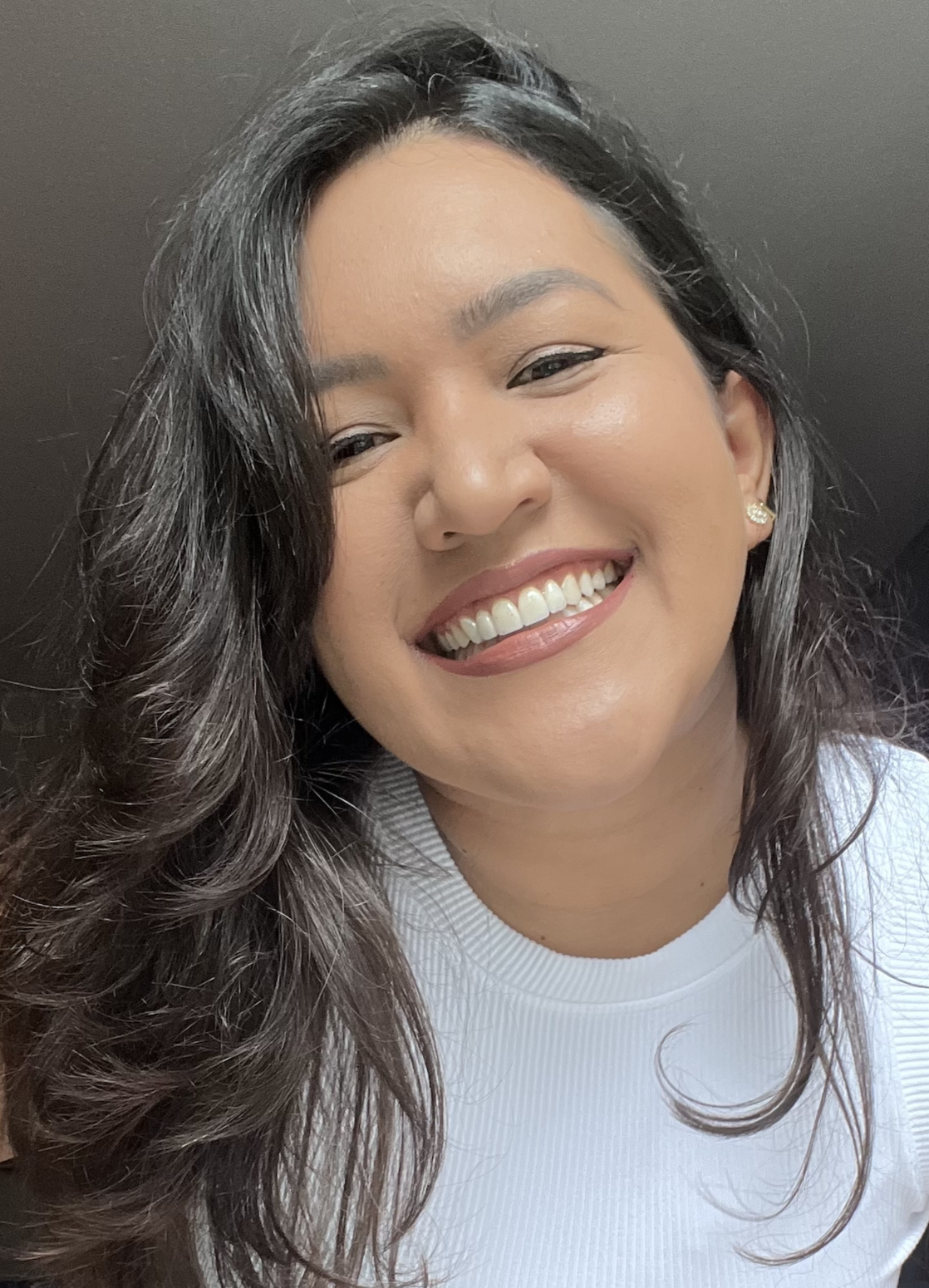
Eugênia Fernandes is an Assistant Professor of Portuguese and Brazilian/Lusophone Studies at Florida International University's Department of Modern Languages. She coordinates the Portuguese Program and holds a PhD in Linguistics from the University of Brasília (2015). Research Focus: Portuguese as a Second Language, curriculum design for less commonly-taught languages (LCTLs), pluricentric Portuguese, and multilingual practices. Key Projects: Co-developed Plural: Português Pluricêntrico (2021, 2nd ed. 2023) and associated workbook (2024) through a Title VI grant. Publications: Peer-reviewed works on pluricentric language pedagogy, heritage language instruction, and virtual exchange initiatives. Current Leadership: President of the American Organization of Teachers of Portuguese (AOTP). Her research demonstrates a focus on dynamic systems theory, language variation, and digital pedagogy. Articles frequently address pluricentric Portuguese challenges, heritage learner needs, and cross-cultural virtual exchanges. She emphasizes curriculum innovation for LCTLs through open educational resources. Scientific Awards: Notable Faculty Recognition (FIU, 2025) Excellence in Teaching LCTLs Honorable Mention (CLASP, 2025) Excellence in Service Award (ACTFL, 2023) National Interest Waiver for National Security (2023) Academic Publication of the Year (AOTP, 2022) Dr. Fernandes has secured grant funding including the Title VI grant for her open educational resources project and serves as a national authority on Portuguese language pedagogy through her AOTP leadership.
Sophia Alexandra Malamud is an Associate Professor of Linguistics in the Department of Computer Science at Brandeis University's Michtom School of Computer Science. She is also affiliated with the Department of Anthropology, the Interdepartmental Program in Linguistics and Computational Linguistics, the Benjamin and Mae Volen National Center for Complex Systems, and the Department of Philosophy at Brandeis University. Dr. Malamud directs the Meaning In Language Research Group (MILa) and is part of the Laboratory for Linguistics and Computation. University of Pennsylvania (Ph.D.) University of Pennsylvania (B.A.) Dr. Malamud specializes in theoretical linguistics with a focus on language meaning, including formal semantics, formal pragmatics, discourse functions of syntax, and the semantics-pragmatics interface. Her research spans multiple languages including English, Russian, Mandarin, and Heritage Russian. She investigates topics such as discourse coherence and word order, indexicality, impersonal pronouns, passives and impersonals, semantics of plurals, and pragmatics of speech acts. Recently, she has expanded into language acquisition and attrition, particularly heritage language knowledge. Her current projects examine utterance-final particles in Mandarin, tag questions in American English, and pragmatic phenomena in monolingual and bilingual Russian speech. Analysis of Dr. Malamud's recent publications reveals a strong focus on the semantics-pragmatics interface, particularly on speech act modifiers, clause types, and indirectness across languages. Her work demonstrates consistent application of formal models, especially Decision and Game theory, to linguistic phenomena. There's a clear progression from theoretical work on semantics and pragmatics toward empirical corpus-based research, particularly with the BiRCh project creating a parsed and audio-aligned corpus of bilingual Russian child speech. Her publications show increasing collaboration with researchers across disciplines and institutions. NSF Linguistics Award #1651083 for Parsed and Audio-aligned Corpus of Bilingual Russian Child Speech (BiRCh) Mandel Center Grant for Annotated corpus of child, emigre, and heritage Russian Multiple Theodore and Jane Norman Fund awards Center for German and European Studies research awards Dr. Malamud has successfully mentored numerous students through thesis projects at various levels, from undergraduate to doctoral research. Her grant portfolio demonstrates significant success in securing external funding, particularly from the NSF, with the BiRCh project representing a major multi-year, multi-investigator effort. She has developed innovative community-engaged learning approaches, such as the Waltham Speech Project, which creates linguistic resources while providing students with hands-on research experience. Her teaching spans foundational courses like Introduction to Linguistics to specialized topics like Heritage Language Experience and Language Acquisition. Dr. Malamud leads the Meaning In Language Research Group (MILa), which focuses on cross-linguistic exploration of formal semantics, formal pragmatics, and the semantics-pragmatics interface. The group pursues corpus-based investigations of written and spoken language, observational and experimental studies of language use and acquisition, and develops annotated corpora of spoken languages. MILa is part of the Brandeis Laboratory for Linguistics and Computation and collaborates with researchers at MIT, University of Maryland, University of St. Gallen, and Mokpo National University.
Joan A. Sereno is a Professor of Linguistics at the University of Kansas, with a focus on psycholinguistics and neurolinguistics. She also serves as Division Director of Behavioral and Cognitive Sciences at the National Science Foundation (NSF). Her research explores language processing, second language acquisition, and the intersection of speech perception and production with neurobiological mechanisms. She holds a B.S. and B.A. from Northern Illinois University, and M.A. and Ph.D. in Linguistics from Brown University. Education: B.S. in Psychology, Northern Illinois University, 1982 B.A. in Philosophy, Northern Illinois University, 1982 M.A. in Linguistics, Brown University, 1986 Ph.D. in Linguistics, Brown University, 1988 Research Interests: Psycholinguistic and neurolinguistic investigation of language structure Second language acquisition, particularly non-native language contrast training Speech perception and production, including tonal languages like Mandarin Acoustic phonetics and spoken word recognition Awards and Honors: William T. Kemper Foundation Fellowship for Teaching Excellence (2006) Gene A. Budig Teaching Professor Award (2011–2012) Outstanding College Alumni Award, Northern Illinois University (2009) Alexander von Humboldt Research Fellowship (1999–2002) Grants and Funded Projects: NSF-funded studies on speech categorization and Mandarin tone processing NIH-funded fetal language discrimination research (2013–2014) University of Kansas grants supporting perceptual learning and cross-modal studies Labs/Teams: Active in the KU Linguistics Department’s research clusters, including the Multilingual Speech Lab and collaborations with the National Science Foundation.
Jie Zhang is a Professor in the Department of Linguistics at the University of Kansas and serves as Associate Dean of the College of Liberal Arts and Sciences. His research examines phonology, phonetics, and psycholinguistics with a focus on tonal patterns in Chinese languages. Recent work explores the cognitive processing of phonological alternations and tone perception using experimental methods. His publications demonstrate consistent focus on Mandarin tone systems, particularly Tone 3 sandhi patterns and their neural correlates during production and perception. Research integrates EEG measurements with behavioral experiments to model phonological knowledge representation. Phi Beta Delta Honor Society for International Scholars (2017-present) Young Scholar Award, International Association of Chinese Linguistics (2006) Silver Anniversary Distinguished Teaching Award (2005) As Principal Investigator on NSF and Chiang Ching-Kuo Foundation grants, he leads collaborative projects on phonological alternation across institutions in Hong Kong and Taiwan. He directs experimental linguistics research involving EEG labs and cross-institutional teams investigating tone sandhi neural encoding.
Marie K. Huffman is an Associate Professor in the Department of Linguistics at Stony Brook University, specializing in phonetics with a focus on how pronunciation adapts to linguistic and communicative contexts. She holds a Ph.D. from UCLA (1989). Her research examines the interaction between first (L1) and second (L2) language systems, particularly in adult learners, and how speakers adjust pronunciation based on dialect and communicative settings. She co-leads a National Science Foundation-funded project on language adaptation in multilingual university environments, involving Psychology, Linguistics, and Asian Studies. Key research interests include phonetic drift in bilingual contexts, L2 category formation, and the role of prosody in speech processing. Her work bridges experimental phonetics and sociolinguistics, emphasizing practical applications in language learning and communication. Major grants include NSF awards for integrating teaching and research, particularly in second language phonetics. She has published extensively on topics such as non-native accent processing, vowel systems in L2 learners, and the impact of dialogue dynamics on speech adaptation. Collaborative projects include co-editing The Oxford Handbook of Laboratory Phonology (2012) and studies on nasalization and velopharyngeal function in speech production.
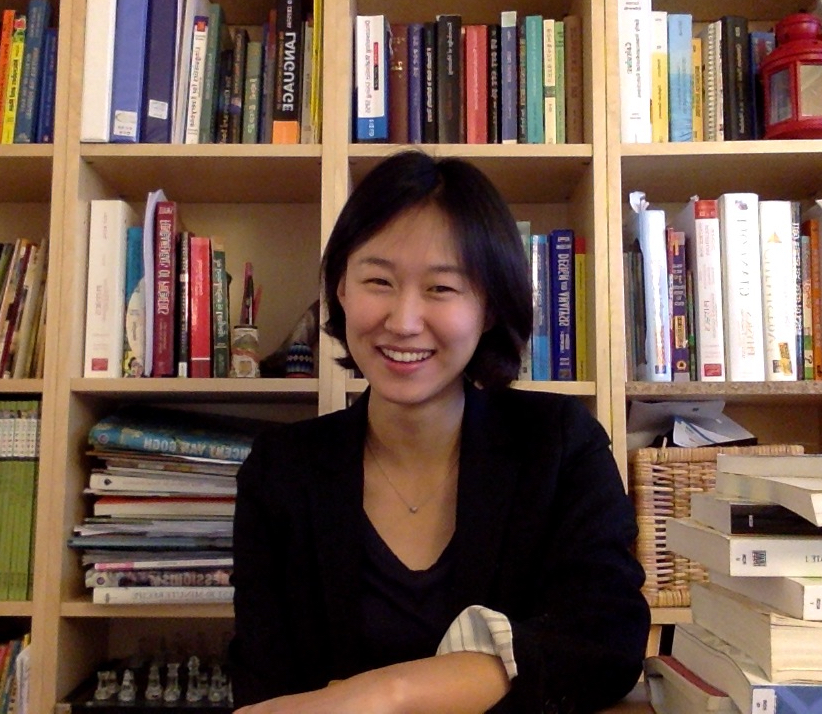
Jiwon Hwang is an Assistant Professor and Director of Asian Languages in the Department of Asian & Asian American Studies at Stony Brook University (SBU). She holds a Ph.D. in Linguistics from SBU, specializing in second language acquisition, phonetics, phonology, and psycholinguistics. Her research focuses on second language speech characteristics, speech production/perception mechanisms, and sociocultural/cognitive factors in language learning and intercultural communication. Since joining AAAS at SBU in 2013, Dr. Hwang has taught Korean language and linguistics courses while expanding her research into intercultural communicative language teaching. She currently leads a U.S. Department of Education-funded project on intercultural engagement in language learning. Her work bridges theoretical linguistics and applied education, emphasizing practical pedagogical strategies for language learners. Her scholarship spans studies on bilingual phonetic learning, cross-linguistic prosody processing, and the impact of sociocultural contexts on language acquisition. Recent research highlights include examining intercultural engagement in beginner language courses and investigating perceptual advantages in tone language speakers. Advising and grants: Dr. Hwang’s funded project explores intercultural engagement’s role in enhancing language proficiency. Her work integrates empirical phonetics studies with pedagogical innovation, reflecting a commitment to both academic rigor and practical classroom application.
Pärtel Lippus is a Professor of Estonian Phonetics at the University of Tartu's Institute of Estonian and General Linguistics, part of the Faculty of Humanities and Arts. He holds a PhD in Linguistics from the University of Tartu (2011) and has been a leading researcher in Estonian phonetics, speech prosody, and language variation. His academic roles include editorial positions at journals like Phonetica and the Estonian Journal of Linguistics , and leadership in national and international research projects such as the PER ASPERA phonetics laboratory. Education: Doctorate in Linguistics (2011), University of Tartu; Magister (2005), University of Tartu; Exchange studies in Helsinki University's Phonetics Department (2004). Research focuses on Estonian phonetics, prosody, and cross-linguistic speech perception. Notable contributions include work on vowel quantity contrasts, prosodic phrasing, and the acoustic analysis of palatalization. Awards include the 2022 SayEst phonetic app award and the 2003 Estonian President's Folklore Prize. Key projects include leading the phonetics lab in the PER ASPERA project (2016–2022) and organizing international conferences like the ISAPh 2024 Symposium. His work integrates corpus linguistics, experimental phonetics, and computational methods in language research.
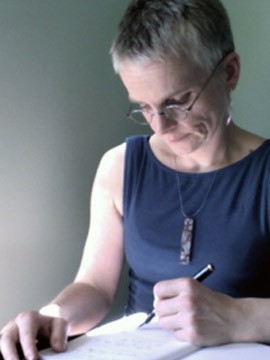
Martina Wiltschko is an Honorary Affiliate Professor in the Department of Linguistics at the University of British Columbia, Faculty of Arts. She is currently on leave and holds a research position with ICREA at Universitat Pompeu Fabra (UPF). Educational Background: Wiltschko earned her PhD and MA from the University of Vienna, where her dissertation focused on 'IDs in Syntax and Discourse: An analysis of Extraposition in German' under supervisors Edwin Williams and Wolfgang U. Dressler. Her graduate training emphasized theoretical linguistics with specialization in syntactic theory and interface issues (syntax-morphology, syntax-semantics, and syntax-pragmatics). Research Interests: Her work centers on syntax, grammatical categories, and linguistic fieldwork. She developed the 'universal spine hypothesis' for discovering functional categories and is extending this to discourse markers in her monograph 'Interactional Structure. Towards a formal typology of discourse markers.' Her research integrates fieldwork on Upriver Halkomelem (Salish), Blackfoot (Algonquian), and Ktunaxa (Kutenai) with theoretical linguistics. Publications: Wiltschko's extensive publication record (2014-2018) demonstrates consistent focus on syntactic variation, response particles, and formal typology across Germanic, Salish, Algonquian, and Sino-Tibetan languages. Her 15 most recent articles reflect methodological innovation in field linguistics and theoretical modeling. Additional Activities: She contributes to departmental strengths in fieldwork-theory integration and maintains profiles on Google Scholar, ResearchGate, and Academia.edu related to her Syntax of Speech Acts project.