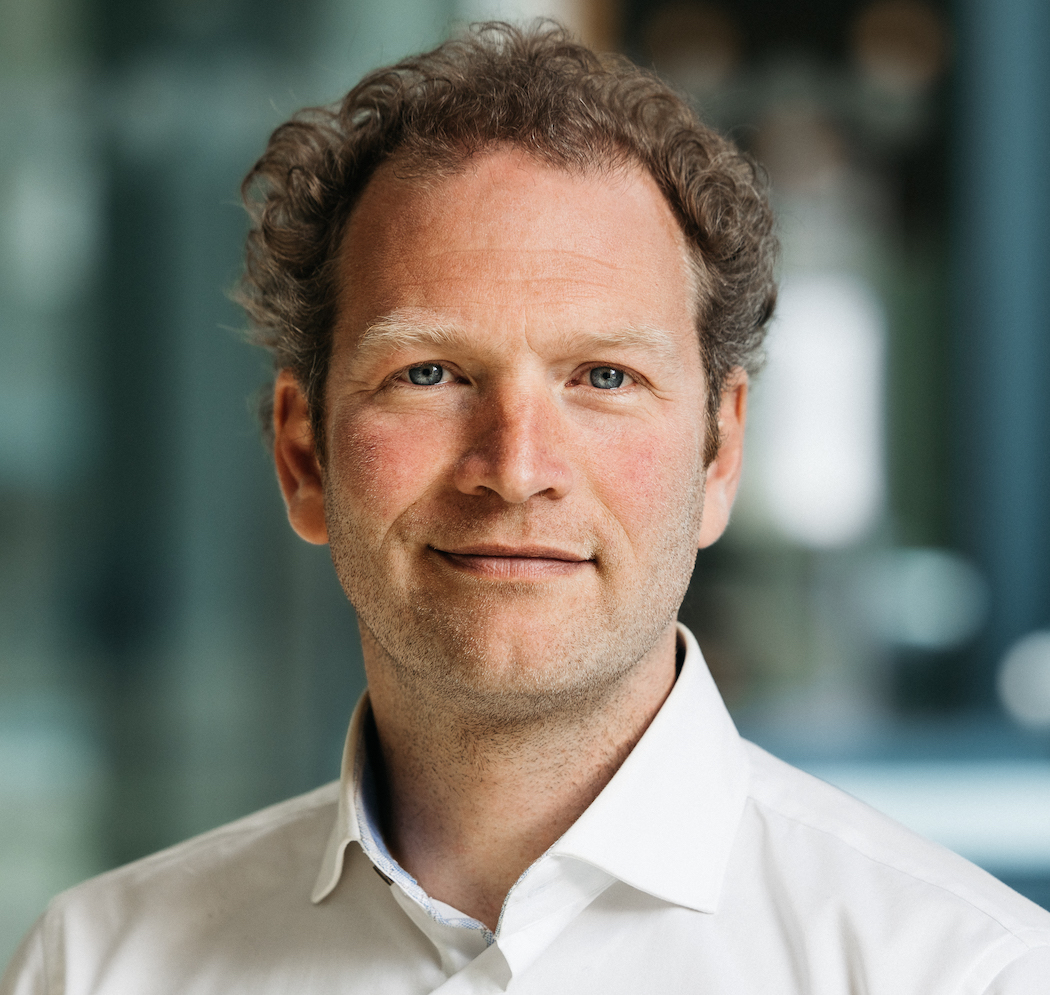
Katharina Riebel is an Associate Professor at the Institute of Biology Leiden (IBL) within Leiden University, specializing in animal behavior, cognition, and vocal learning. Her work bridges evolutionary biology and experimental psychology, focusing on sexual selection and multimodal signaling in birds. Her research explores how phenotypic plasticity and learning shape mating signals and preferences, with a particular emphasis on acoustic communication cultural transmission in songbirds urban ecological impacts on avian acoustics . She has contributed to foundational studies in bird song, including temporal variation in song structure and cultural evolution. Recent work, such as the 2019 publication on Frontiers in Ecology and Evolution , examines multimodal percepts in mating signals. Her 2004 Journal of Avian Biology paper quantified trill-flourish dynamics in chaffinch song. Scientific awards include the Human Frontier Science Program award (2016) . She advises PhD candidates like Jiangnan Sun and former advisee Jing Wei .
Dr. Thibault Coppe is an Assistant Professor of Educational Sciences at the University of Groningen's Faculty of Behavioural and Social Sciences. His research focuses on second-career teachers, teacher professional development, and social network theory. He contributes to academic discourse through peer-reviewed articles and book chapters, and serves as Associate Editor for 'Les Cahiers de Recherche du Girsef'. Research interests include teacher agency, social capital dynamics in schools, and mixed-method methodologies. Recent work critiques evidence-based educational policies and explores migrant student support mechanisms through teacher relational agency. Coppe teaches courses on educational evaluation, qualitative methods, and reflective practice at the master's level. He supervises master's theses and has advised on pre-service teacher training programs. His 2025 publications highlight critical perspectives on randomized controlled trials in education and the evolving role of second-career educators. Collaborative research projects involve international partnerships examining teacher networks across Scotland, Finland, and Sweden. He actively bridges academic research with practical classroom applications through reflective writing interventions and professional development models.
Thijs W. van de Laar is an Assistant Professor at the Eindhoven University of Technology in the Department of Electrical Engineering , affiliated with the Bayesian Intelligent Autonomous Systems lab (BIASlab) and the EAISI Foundational and High Tech Systems groups. His research focuses on intelligent systems for decision-making under dynamic conditions, particularly through scalable probabilistic programming implementations of Active Inference. Academic Background : PhD (2019, TU/e) in automated Bayesian signal processing algorithm design; MSc in natural sciences (biophysics, science communication, Radboud University). Van de Laar's research integrates probabilistic programming with active inference to develop autonomous agents capable of real-time adaptation. Key methodologies include variational message passing , factor graph representations , and free energy minimization . His recent publications examine active inference formalisms, factor graph applications in AI, and uncertainty reduction strategies. Collaborative work spans hearing aid technology, autonomous navigation, and synthetic intelligence development.
Henriette de Swart is a full Professor of French Linguistics and Semantics at Utrecht University , affiliated with the Institute for Language Sciences . Her research spans cross-linguistic semantics , focusing on tense and aspect , negation , and bare nominals , while integrating artificial intelligence methodologies. She has made significant contributions to bidirectional optimality theory and language evolution studies.
James Townsend, also known as Jamie, is a machine learning researcher at the Amsterdam Machine Learning Lab (AMLab) within the Informatics Institute at the University of Amsterdam. He completed his PhD in 2020 at the UCL AI Centre in London under the supervision of Professor David Barber. His educational background includes a PhD in lossless compression with latent variable models from University College London, with prior research contributions to the Autograd library and early development of JAX during a Google Brain internship in 2018. Townsend's research centers on deep generative models and lossless compression, extending to unsupervised learning, approximate inference, Monte Carlo methods, optimization, and machine learning software systems. His work bridges theoretical information theory with practical implementation, particularly in neural compression techniques. He has significantly contributed to open-source tools including Autograd and JAX, demonstrating expertise in automatic differentiation systems. His publication record spans high-impact venues like NeurIPS, ICLR, and ICML, with recent work focusing on innovative compression paradigms for complex data structures including graphs and multisets. Key contributions include shuffle coding, reversible programming for compression verification, and multiset compression techniques that challenge conventional approaches. Scientific recognition includes: Best Paper Award at Deep Generative Models and Downstream Applications Workshop (2021) Townsend actively participates in the research community through invited talks at Stanford's Information Theory Forum and the Languages for Inference workshop. His collaborations span academic institutions and industry partners like Google Brain, with current work centered on advancing lossless compression through deep learning at the AMLab. He maintains an active open-source presence via GitHub (@j-towns) and technical discourse on Twitter (@_j_towns), while publishing through Google Scholar under his formal name James Townsend.
Hamdi Joudeh is an Associate Professor in the Department of Electrical Engineering at Eindhoven University of Technology (TU/e). He is affiliated with the Information and Communication Theory (ICT) Lab and the Signal Processing Systems (SPS) Group. His research focuses on information theory, communications, and signal processing, with applications in wireless networks and radar systems. He holds a Ph.D. in Electrical Engineering from Imperial College London and has held research positions at Technische Universität Berlin and Imperial College London. His research interests include quantum sensing, error exponents, MIMO systems, and channel coding. He leads projects such as the IT-JCAS (Information Theoretic Foundations of Joint Communication and Sensing) and ANTERRA (Beam Prediction for Fast-Moving LEO), addressing challenges in 5G/6G communication and radar technologies. He has received an ERC Starting Grant (2023) for his work on environment-scanning mobile networks. Education: Ph.D. in Electrical Engineering (Imperial College London), M.Sc. in Communications and Signal Processing (Imperial College London) Editorial Roles: Editorial board member of IEEE Transactions on Signal Processing , IEEE Communications Letters , and EURASIP Journal on Wireless Communications and Networking Labs/Teams: ICT Lab, SPS Group, and leads projects at TU/e’s Center for Wireless Technology Grants: ERC Starting Grant, TKI-HTSM/22.0547/TKI2212P11 RAIDAR, and others His recent work explores the intersection of communication and sensing, including quantum radar processing and robust beamforming techniques. He has published extensively on topics like error exponents, MIMO channel analysis, and interference management, with over 40 peer-reviewed articles.
Haojie Lu is a Researcher in the Department of Epidemiology at Erasmus MC, specializing in genetic epidemiology with focus on genome-wide association studies and Mendelian randomization. Affiliated with the School of Medicine, Lu contributes to major international consortia in cardiovascular and skeletal genetics research. Erasmus MC, School of Medicine, Department of Epidemiology Lu's research centers on genetic determinants of complex traits including bone mineral density, coronary artery calcification, and facial morphology. The work integrates statistical genetics with clinical epidemiology to identify causal relationships and druggable pathways. Key methodological approaches include multi-ancestry GWAS, variance component analysis, and causal inference techniques. Recent publications demonstrate consistent focus on cardiovascular-skeletal crosstalk and facial phenomics. The 2023 Nature Genetics paper on coronary artery calcification represents a major multi-ancestry effort identifying 121 loci, while facial morphology studies in Nature Communications reveal novel genetic architecture. Research shows strong emphasis on translational potential through druggable target identification. Scientific collaborations span multiple international consortia as evidenced by large co-authorship networks in high-impact publications. The work shows particular strength in integrating diverse datasets across European and multi-ancestry populations. Lu actively contributes to methodological development in genetic epidemiology, particularly in variance explanation frameworks and causal inference models. Current research directions include expanding multi-ancestry datasets and translating genetic findings into clinical applications for cardiovascular and skeletal disorders.
Gerton Lunter is a Professor of Medical Statistics at the University of Groningen's Faculty of Medical Sciences, affiliated with the Department of Epidemiology. He holds a visiting professorship in Computational Biology and Artificial Intelligence at the Weatherall Institute of Molecular Medicine, University of Oxford. His expertise spans Bayesian statistics, statistical genetics, functional genomics, and machine learning applied to evolutionary biology and healthcare challenges. Education: PhD in Mathematics (Dynamical Systems), University of Groningen (1999) MSc Mathematics and Theoretical Physics (cum laude), University of Groningen (1994) Research Focus: Integrates computational methods with medical and genetic data to address complex biological problems. Key areas include: Statistical modeling of genetic variation Machine learning for healthcare diagnostics Evolutionary dynamics of genomic mutations Multi-morbidity and lifestyle epidemiology Recent Work Trends: Publications emphasize interdisciplinary approaches, combining genomic data analysis with clinical applications (e.g., cancer immunotherapy prediction, maternal hypertension patterns, and rare disease diagnostics). His work bridges computational innovation with real-world medical challenges. Affiliations & Roles: Current roles include group leadership at Genomics plc and former positions as a postdoctoral researcher at University of Oxford's Department of Statistics and Philips Research Laboratories. He has contributed to initiatives like the AIHACKCOVID challenge. Team & Infrastructure: Leads research groups focusing on computational biology and statistical learning, collaborating across disciplines to leverage large-scale genomic datasets.
Dr. Julia Engelmann is a Tenure-track Scientist in the Marine Microbiology and Biogeochemistry (MMB) department at the Royal Netherlands Institute for Sea Research (NIOZ) , specializing in causal network modeling, metagenomics, and bioinformatics. Her research focuses on understanding marine microbial interactions through high-throughput data analysis and computational models, particularly in the North Sea, Wadden Sea, and Antarctic waters, with implications for climate change studies. Education: PhD in Bioinformatics (2008) and Diploma in Biology (2004) from German universities. Academic Positions: Senior Scientist at NIOZ (2017-present), Assistant Professor (2013-2017), and Postdoctoral roles in computational diagnostics and oncology. Engelmann applies statistical methods to infer causal relationships between marine microorganisms from observational data, using Bayesian networks and conditional independence analysis. Her work bridges computational biology with experimental validation, aiming to design synthetic microbial consortia for applications like plastic degradation. She contributes to meta-barcoding and metagenomic analyses , developing pipelines like Cascabel for reproducible sequence data processing. Her recent publications examine methane dynamics, microbial lipid biosynthesis, and plastisphere diversity in coastal and polar systems. Scientific Awards NWO Women in Science Excel (WISE) tenure track award Engelmann's research integrates environmental factors (temperature, CO2) into microbial interaction models to predict climate change impacts, collaborating with international teams on Antarctic expeditions.
Thijs van de Laar is an Assistant Professor at the BIASlab (Bayesian Intelligence and Autonomous Systems Laboratory) within the Department of Electrical Engineering at Eindhoven University of Technology. His research bridges advanced computational principles with real-world applications in uncertainty modeling. Education: PhD in Machine Learning (2019), Eindhoven University of Technology MSc in Natural Sciences (2010), Radboud University Nijmegen Research Focus: Bayesian machine learning, active inference, and probabilistic programming, with applications in autonomous agent control, hearing loss compensation, and efficient real-time decision-making systems. His work integrates insights from physics and neuroscience to develop novel computational frameworks. Software Contributions: Key contributor to ForneyLab.jl, a Julia toolbox for automated Bayesian inference through message passing on factor graphs. Also developed Herring.jl, a Poisson node extension for probabilistic modeling. Publications: His 15 most recent articles focus on variational message passing, active inference agents, epistemic value in graphical models, and factor graph-based algorithm design. These works span disciplines including artificial intelligence, control theory, and biomedical engineering.
Quentin Changeat is an Assistant Professor at the Kapteyn Astronomical Institute, University of Groningen, and an Honorary Research Fellow in the Department of Physics and Astronomy at University College London. His research bridges exoplanet atmospheric studies and computational astrophysics, with affiliations spanning multiple international institutions. Research Interests: Dr. Changeat focuses on the physics and chemistry of exoplanet atmospheres, leveraging data from the James Webb Space Telescope (JWST), Hubble Space Telescope (HST), and Spitzer. His work emphasizes atmospheric retrieval techniques, machine learning applications, and the development of open-source tools like TauREx for spectral analysis. He is actively involved in the ESA Ariel mission, which aims to survey 1000 exoplanets by 2029. Publication Trends: His 15 most recent articles (2019–2024) reveal a strong emphasis on JWST/HST data analysis, atmospheric retrievals of hot Jupiters, and population-level studies. Key themes include thermal inversions, phase-curve degeneracies, and the development of statistical frameworks for large-scale exoplanet characterization. Machine learning and interdisciplinary collaborations feature prominently in his methodology. Awards: Honorary Research Fellow, University College London Academic Contributions: He leads educational initiatives like the ARES Summer School and ORBYTS program, mentors PhD students in exoplanet research, and develops datasets for community use (e.g., Ariel Data Challenge). His lab focuses on atmospheric retrieval algorithms and collaborates with teams at UCL, Flatiron Institute, and ESA.
Maria Aloni is an Associate Professor of Logic and Language at the Institute for Logic, Language and Computation (ILLC) and the Department of Philosophy at the University of Amsterdam. She holds dual affiliations with the Formal Semantics & Philosophical Logic (FSPL) research unit as her primary affiliation and the Epistemology & Philosophy of Science (EPS) unit as her secondary affiliation. Her research bridges formal semantics, philosophical logic, and the philosophy of language, with particular expertise in quantification, modality, and the interpretation of indefinite expressions. She currently leads the N∅thing is Logical (NihiL) project, which investigates cognitive tendencies to neglect empty representations and their effects on reasoning and interpretation. Aloni completed her PhD at the University of Amsterdam in 2001 with the thesis "Quantification under Conceptual Covers," which won the prestigious E. W. Beth Dissertation Prize in 2002. Her academic trajectory includes significant research funding: an NWO Veni grant (2004-2007) for "Semantic Structure and Dynamics in Natural Language Interpretation," an NWO Vidi grant (2007-2012) as Principal Investigator for "Indefinites and beyond. Evolutionary pragmatics and typological semantics," and the current NWO Open Competition Grant (since 2023) for the NihiL project. Her research spans formal semantics and pragmatics, with specific expertise in quantification, modals, propositional attitudes, reference, indefinites, disjunction, indexicals, questions, imperatives, and various semantic phenomena including free choice, exhaustification, and presupposition. She employs diverse methodologies including formal modeling, corpus analysis, and experimental approaches to investigate how linguistic meaning is constructed and interpreted across different contexts and languages. Aloni's recent publications demonstrate a consistent focus on the "neglect-zero" hypothesis, examining how cognitive tendencies to ignore empty representations affect interpretation of quantifiers, disjunction, and free choice phenomena. Her work also explores cross-linguistic and diachronic dimensions of indefinites, investigating how pragmatic inferences become conventionalized in language through historical processes. Scientific awards: E. W. Beth Dissertation Prize (2002) for "Quantification under Conceptual Covers" As an educator, Aloni coordinates the MoL Graduation Trajectory for Master of Logic students and teaches courses including "Introduction to Logic" and specialized seminars on semantics and philosophy. She has supervised numerous Master's theses in the Logic program, with recent students exploring topics related to free choice phenomena, perspective shifts, and linguistic semantics. Her research is supported by significant grants from the Netherlands Organisation for Scientific Research (NWO) and previously from the European Union. Aloni is a key member of the Formal Semantics & Philosophical Logic research unit at ILLC and collaborates extensively with international researchers. Her current NihiL project brings together interdisciplinary perspectives from linguistics, philosophy, and cognitive science to investigate the cognitive foundations of logical reasoning and its divergence from everyday reasoning patterns.
Floris Roelofsen is a Professor at the Institute for Logic, Language, and Computation (ILLC), part of the Faculty of Science, Mathematics and Computer Science at the University of Amsterdam. His research centers on expanding semantic theories beyond truth-conditional content, particularly in the interpretation of questions and the formal modeling of meaning through inquisitive semantics. He also investigates sign languages, especially the Sign Language of the Netherlands (NGT), aiming to deepen linguistic understanding and reduce communication barriers between deaf and hearing communities. Professor, ILLC, University of Amsterdam (2023–present) Associate Professor, ILLC, University of Amsterdam (2015–2023) Assistant Professor, ILLC, University of Amsterdam (2013–2015) Postdoctoral Researcher, ILLC (2010–2013) Visiting Assistant Professor, UMass Amherst (2009–2010) Roelofsen’s research interests include inquisitive semantics, formal semantics, questions in language, sign language linguistics, and computational models of meaning. He explores how linguistic meaning goes beyond truth conditions to include information-seeking functions, and how sign languages make grammatical structures visually accessible. His work integrates theoretical linguistics, logic, philosophy, and artificial intelligence. The most recent publications reflect a growing trend toward interdisciplinary research combining formal semantics with computational and experimental methods, particularly in sign language processing, annotation, and translation technology. Themes include polar questions in NGT, sign spotting, text-to-sign translation, and the semantics of attitude predicates across languages. NWO VICI Grant (2021, 1.5 million euro) ERC Starting Grant (2016, 1.4 million euro) NWO VIDI Grant (2015, 800,000 euro) NWO VENI Grant (2012, 250,000 euro) Roelofsen has advised 6 PhD students and 6 postdoctoral researchers, and supervised over 10 master’s and bachelor’s theses. He leads the SignLab Amsterdam initiative, which develops machine translation tools using animated avatars to translate Dutch and English into NGT. He is also the principal investigator of major projects such as 'Language Sciences for Social Good' and the NWO VICI project on questions in sign language. His editorial work includes serving as Associate Editor for the Journal of Semantics since 2018.
Gunter Senft is a prominent linguistic anthropologist and researcher affiliated with the Max Planck Institute for Psycholinguistics in the Department of Language and Cognition. He also holds the title of Extraordinary Professor for General Linguistics at the University of Cologne. His work focuses on Austronesian and Papuan languages, particularly Kilivila, the language of the Trobriand Islanders. He has conducted extensive fieldwork in Papua New Guinea over multiple decades. His research interests include: Nominal classification Semantics and pragmatics Conceptualization of space Anthropological linguistics Language, culture, and cognition Endangered languages The body of Gunter Senft's recent publications reveals a consistent focus on the interplay between language, culture, and cognition, particularly through detailed ethnographic and linguistic studies of Oceanic languages. His work spans theoretical pragmatics, narrative structures, spatial reference, and language documentation. A recurring theme is the documentation and analysis of oral traditions and cultural practices, especially from the Trobriand Islands, emphasizing the importance of preserving endangered linguistic systems. His interdisciplinary approach integrates linguistic analysis with anthropological insight, contributing to broader debates on linguistic relativity and cognitive diversity. Scientific recognition includes: AVT/Anéla Award for best dissertation in linguistics in the Netherlands (2012) Otto-Hahn Medal of the Max Planck Society for outstanding scientific achievements (2013) Gunter Senft has played a significant role in academic mentorship and evaluation. He has supervised multiple PhD candidates and served on numerous doctoral committees across institutions such as Radboud University Nijmegen, Universität Heidelberg, and the University of Cologne. His advisory work spans topics in linguistic typology, semantics, and anthropological linguistics. He has also contributed to major archival projects, including digital collections of sound recordings, photographs, and ethnographic materials from Papua New Guinea. These efforts reflect a deep commitment to both scholarly research and the preservation of linguistic and cultural heritage. He has been involved in collaborative research initiatives, including seminars and workshops on semantics and pragmatics with leading scholars such as Stephen C. Levinson and Asifa Majid at Radboud University. His outreach includes participation in public exhibitions, media interviews, and digital dissemination of research materials through the MPI Language Archive and Europeana.
Mathijs de Weerdt is a Full Professor at Delft University of Technology, leading the Algorithmics Group within the Faculty of Electrical Engineering, Mathematics and Computer Science. His research focuses on developing advanced algorithms for planning and scheduling under uncertainty, with applications in energy systems, railway logistics, satellite operations, and agricultural supply chains. He bridges fundamental AI research with practical implementations through collaborations with Dutch National Railways (NS), Shell Recharge, and industry partners. Education: PhD in Multi-Agent Plan Merging (2003), MSc in Computer Science (Utrecht University, cum laude) Research Interests: Robustness in AI, Scalability of Optimization Algorithms, and Multi-Party Coordination His work integrates Stochastic Programming , Reinforcement Learning , and Constraint Programming to address challenges in energy transition and transportation. Recent 15 most recent publications emphasize surrogate modeling for EV charging optimization, multi-agent pathfinding in railways, and dynamic programming for decision trees. Scientific Awards: Recipient of the Erasmus Energy Forum Science Award (2016), Best Teacher Award in Delft Computer Science (2015), and honorable mentions for dissertation and paper awards. As a promotor , he guides over 20 PhD candidates in projects spanning smart grid algorithms, train unit shunting, and strawberry supply chain optimization. He leads large-scale initiatives like the NWO ESI-FAR project and co-chairs the Dutch AI Coalition's Energy & Sustainability working group.