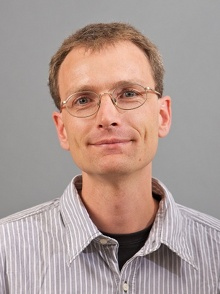
Olaf Ronneberger is an associate professor at the Albert-Ludwigs-Universität Freiburg and works at Google DeepMind . His research focuses on deep learning architectures , AI applications to scientific problems , and protein structure prediction . He leads seminars on deep learning and 3D image analysis, emphasizing vision-language integration and generative models. His publications include foundational work on U-Net architectures for biomedical image segmentation, AlphaFold 3 for biomolecular interaction prediction, and Gemini models for multimodal AI systems. Key subfields span medical imaging , protein folding , and vision-language models . Co-developer of U-Net , a widely used biomedical image segmentation framework. Contributor to AlphaFold 3 for structural biology. Research on Gemini 1.5/2.5 models for multimodal reasoning.
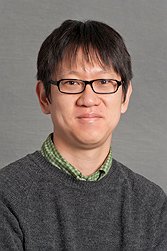
Ario Sadafi is a researcher at the Technical University of Munich (TUM) , affiliated with the Chair of Computer Science Applications in Medicine under Prof. Nassir Navab. His work spans medical image analysis , machine learning , and computational pathology , with a strong focus on developing AI-driven solutions for microscopic imaging in hematology and oncology. Research Focus: Multiple Instance Learning for weakly supervised medical image classification. Explainable AI for biomedical single-cell imaging. Continual and cross-domain learning for robust diagnostic models. Microscopic image analysis for blood cell disorders and leukemia subtyping. Teaching Contributions: Sadafi has been actively involved in teaching courses such as Computer Aided Medical Procedures , Medical Augmented Reality , and Deep Learning for Medical Applications . He also supervises practical courses and seminars in 3D Computer Vision and Machine Learning in Medical Imaging . Labs & Collaborations: He works closely with the MEDIA (Medical Image Analysis) and NARVIS labs at TUM, contributing to projects in surgical data science , generative models , and robotics & ultrasound . Publications Impact: His research output (2018–2025) emphasizes AI-driven hematology , with applications in red/white blood cell classification, leukemia subtype diagnosis, and interpretable deep learning models for clinical use.
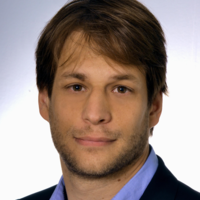
Prof. Dr.-Ing. Jürgen Teich is a full Professor and Chair for Hardware-Software Co-Design at the Department of Computer Science, Friedrich Alexander University Erlangen-Nuremberg (FAU). He serves as Head of Department Computer Science and Vice Dean of the Technical Faculty since August 2024, and has been Speaker of the FAU Research Center Embedded System Initiative (FAU ESI) since 2023. His educational background includes: Diploma degree in Electrical Engineering, University of Kaiserslautern (1989) Dr.-Ing. degree in Electrical Engineering, University of Saarland (1993) Habilitation (PD Dr.-Ing.) entitled "Synthesis and Optimization of Digital Hardware/Software Systems" (1996) Prof. Teich's research focuses on Embedded Systems , Invasive Computing , Hardware-Software Co-Design , and Reconfigurable Computing . His work spans from theoretical foundations to practical implementations, with particular emphasis on resource-constrained systems, many-core architectures, and energy-efficient computing. He has pioneered research in invasive computing paradigms that enable more efficient use of many-core processors by allowing applications to dynamically claim resources. His recent publications reveal a strong trend toward energy-efficient AI deployment on embedded devices , security of embedded systems , and novel memory technologies . There's a clear focus on practical implementations of machine learning on microcontrollers (TinyML), hardware acceleration for data processing, and innovative approaches to power management in self-powered systems. Among his notable scientific awards are: IEEE Fellow (since 2018) Member of Academia Europaea, Section Informatics (since 2011) Member of the National Academy of Science and Engineering (acatech) (since 2018) Member of the German Society of Humboldtians (since 2021) Prof. Teich has been Principal Investigator for numerous DFG-funded projects including SFB/Transregio 89 "Invasive Computing" (2010-2022), SFB 694, and multiple priority programs. He has coordinated large collaborative research efforts across Germany and internationally, with significant funding from DFG and other sources. His research group has produced influential work in embedded systems design and co-design methodologies. He leads the Hardware-Software Co-Design research group at FAU, which focuses on innovative approaches to embedded system design, invasive computing architectures, and efficient implementation of machine learning on resource-constrained devices. The group maintains strong collaborations with industry partners including Intel, Xilinx, and automotive companies.
Shin Yoo is a tenured Full Professor in the School of Computing at Korea Advanced Institute of Science and Technology (KAIST), where he leads the Computational Intelligence for Software Engineering (COINSE) research group. He received his PhD from King's College London in 2009 under the supervision of Prof. Mark Harman. Currently, he serves as the General Chair for ASE 2025, which will be held in Seoul, Korea. Professor Yoo earned his PhD in Computer Science from King's College London (2009), following an MSc in Software Engineering with Distinction from the same institution (2006). His academic journey includes positions as Tenured Associate Professor (2021-2025), Associate Professor (2018-2021), and Assistant Professor (2015-2018) at KAIST, as well as Lecturer and Research Associate positions at University College London and King's College London. His research focuses on the intersection of software engineering and artificial intelligence, particularly in search-based software engineering, software testing, automated debugging, SE4AI (Software Engineering for AI), and AI4SE (AI for Software Engineering). Professor Yoo's work bridges theoretical foundations with practical applications, developing innovative techniques for fault localization, test case generation, and debugging using machine learning and genetic programming approaches. His research has significant implications for improving software reliability and development efficiency in both traditional software systems and AI-powered applications. Professor Yoo's recent publications demonstrate a clear trend toward leveraging large language models and deep learning techniques for software engineering tasks. His work spans fault localization, automated debugging, GUI testing, and program analysis, with increasing focus on the challenges and opportunities presented by AI systems. His research shows a consistent evolution from traditional search-based software engineering to AI/ML-enhanced approaches, reflecting the broader trends in the field. ACM SIGEVO HUMIES Silver Medal (2017) for human competitive application of genetic programming to fault localization research IEEE TCSE Most Influential Paper Award (ICST 2024) for work on mutation-based fault localization Professor Yoo has supervised five PhD students to completion, with his former students now holding positions as assistant professors, post-doctoral researchers, and software engineers at institutions including Kyoungpook National University, Max-Planck Institute Security & Privacy, Università della Svizzera Italiana, Roku Korea, and NUS. He currently serves as an associate editor for the Journal of Empirical Software Engineering and ACM Transactions on Software Engineering and Methodology, and has held significant leadership roles in major software engineering conferences including Program Co-chair for SSBSE (2014), ICST (2018), and ICSE NIER track (2020), General Chair for SSBSE (2022), and Testing & Analysis Area Chair for ICSE (2024). As leader of the Computational Intelligence for Software Engineering (COINSE) group at KAIST, Professor Yoo directs research that combines computational intelligence techniques with software engineering challenges. The group focuses on developing novel approaches to software testing, debugging, and analysis using search-based and AI-driven methods. Their work spans both theoretical foundations and practical implementations, with strong connections to industry challenges and applications.
Prof. Dr. Haris Gačanin is a faculty member at RWTH Aachen University, affiliated with the Institute for Distributed Signal Processing under the College of Electrical Engineering. His research focuses on integrating machine learning with wireless communication systems, particularly in industrial IoT, edge computing, and network optimization. Current academic rank: Professor Contact: harisg@dsp.rwth-aachen.de Research Interests: Wireless systems, machine learning, signal processing, and network optimization. Key contributions include: Adaptive resource allocation in IIoT and vehicular networks AI-driven channel estimation and feedback mechanisms Security-oriented emitter identification via metric learning Federated/transfer learning for edge environments Hardware-efficient deep learning models for mmWave and THz communications Methodological Focus: Combines reinforcement learning, attention mechanisms, and robust neural architectures with practical implementations on FPGA and vehicular systems.
Marcel Kollovieh is a researcher at the Technical University of Munich (TUM), affiliated with the TUM School of Computation, Information and Technology and the Department of Computer Science . He is part of the Data Analytics and Machine Learning (DAML) Lab under the mentorship of Prof. Dr. Stephan Günnemann. Education B.Sc. and M.Sc. in Informatics from TUM Research Interests : Marcel focuses on generative models (including variational autoencoders, diffusion models, and score-based models), graphs , and time series , with additional work on hierarchical structures , robustness , and Bayesian learning . His publications span conferences like ICML , ICLR , and NeurIPS , alongside journals such as TMLR . Themes include token merging , flow matching , and adversarial robustness in temporal data, alongside probabilistic clustering and diffusion models . Lab and Team : Marcel works within the DAML Lab at TUM.
Bo Wang is an active academic researcher primarily affiliated with multiple Chinese institutions, with strong connections to Tsinghua University, Beijing Jiaotong University, and other leading Chinese universities. His research spans artificial intelligence, machine learning, computer vision, medical image analysis, and intelligent control systems, demonstrating significant interdisciplinary work across computer science, engineering, and biomedical applications. Primary institutional affiliation: School of Computer Science and Technology at multiple Chinese universities Active research areas: AI/ML applications in healthcare, computer vision, federated learning, and intelligent control systems Extensive publication record across top-tier venues in multiple disciplines Wang's research interests focus on the intersection of artificial intelligence and practical applications. His work demonstrates strong expertise in developing novel machine learning architectures for medical image analysis, including applications in CT imaging, MRI, and sperm tracking. He has made significant contributions to federated learning approaches for large language models, sliding mode control systems, and molecular optimization frameworks. His research consistently bridges theoretical advances with practical implementations across healthcare, manufacturing, and environmental monitoring domains. Analysis of Wang's recent publications reveals a strong trend toward interdisciplinary AI applications, particularly in medical imaging and bioinformatics. His work on VAE-GANMDA for microbe-drug association prediction, ACE-QSM for accelerating MRI acquisition, and text-guided molecular optimization demonstrates innovative approaches at the intersection of AI and life sciences. Wang also maintains active research in industrial applications including digital twin technology for energy systems and robust scheduling approaches for multi-factory production. Notable research contributions include: FLFT: A Large-Scale Pre-Training Model Distributed Fine-Tuning Method with Federated Learning VAE-GANMDA: Microbe-drug association prediction model ACE-QSM: Accelerating quantitative susceptibility mapping using diffusion models Digital twin-empowered power consumption prediction systems Wang actively collaborates with researchers across China and internationally, with publications spanning computer science, engineering, medical imaging, and environmental science journals. His work demonstrates strong technical depth across multiple AI methodologies while maintaining focus on practical applications that address real-world challenges in healthcare, manufacturing, and environmental monitoring.
Peter Palensky is a leading researcher in smart grids, power system cybersecurity, and cyber-physical systems. His recent work focuses on digital twins for power systems, quantum computing applications in energy analysis, and secure blockchain frameworks for distributed energy resources. He collaborates extensively with institutions across Europe, particularly in Dutch and Mongolian grid stability projects. Research areas include Smart grid resilience against cyber attacks Quantum-enhanced power flow analysis Electric vehicle grid integration (V2G) Machine learning for energy systems optimization High-voltage direct current (HVDC) security His publications emphasize practical implementations, such as hardware-in-the-loop testing for photovoltaic systems and real-time simulation models for energy storage. Recent articles explore large-scale synthetic data generation for grid analysis, dynamic tariff impacts on EV charging, and advanced control strategies for offshore MMC grids.
Zaiwen Feng is a researcher actively contributing to data governance, semantic modeling, and causal inference. His work focuses on knowledge graphs, graph-based methods, and service-oriented architectures through collaborations with institutions like the University of Queensland and universities in China. Research Focus : Graph Differential Dependencies, Entity Resolution, Causal Effect Estimation, and Ontology Alignment Methodologies : Machine Learning, Variational Autoencoders, Prompt Engineering, and Semantic Retrieval Application Areas : Biomedical Data, Property Graph Recommendation, and Process Model Repositories Key trends in his publications include automated semantic modeling , neural approaches for entity resolution , and causal inference with graph structures . He frequently collaborates with researchers like Keqing He, Wolfgang Mayer, and Selasi Kwashie across conferences such as HPCC, BIBM, and WISE.
Michel Besserve is a Senior Research Scientist in the Empirical Inference department at the Max Planck Institute for Intelligent Systems in Tübingen, Germany. His research bridges machine learning theory with applications in neuroscience and complex systems analysis. He leads a research group focused on developing causal machine learning tools to uncover the internal structure and transformations of complex artificial, physical, and socioeconomic systems. Dr. Besserve's primary research interests center on causal machine learning and its applications to understanding complex systems. His work investigates how causality can provide principled ways to study and improve AI algorithms, particularly focusing on the identifiability of causal models and the principle of Independence of Causal Mechanisms (ICM). He develops theoretical frameworks and practical tools for causal inference in complex equilibrium systems, neural circuits, and socioeconomic contexts. His research has significant implications for building trustworthy and interpretable AI systems that can reliably handle real-world complexity. Analysis of Dr. Besserve's recent publications reveals a strong focus on causal representation learning, with significant contributions to independent mechanism analysis and the identifiability of nonlinear generative models. His work spans both theoretical foundations and practical applications, connecting machine learning with neuroscience to understand brain function through causal inference. The interdisciplinary nature of his research is evident in publications spanning top machine learning conferences (NeurIPS, ICML, ICLR) and leading neuroscience journals (Nature, PLOS Biology). Dr. Besserve has established productive collaborations across multiple institutions, particularly with researchers at the Max Planck Institute and ETH Zurich. His work demonstrates how integrating causal principles with machine learning can address fundamental challenges in AI robustness and interpretability, with applications ranging from brain network analysis to economic modeling. His research group focuses on developing the Causal Computational Model (CCM) framework, which aims to create digital representations of real-world systems that integrate data, domain knowledge, and interpretable causal structure. This work has potential applications in climate modeling, industrial digital twins, and economic simulation.
Yubao Liu is a Professor at Sun Yat-sen University's School of Data and Computer Science, Department of Computer Science, with a prolific research career spanning over two decades in computer science. His work demonstrates significant contributions to database systems, data mining, and spatio-temporal analysis. Professor Liu's research interests focus on Data Mining , Database Systems , Traffic Flow Prediction , and Graph Neural Networks . His recent work has concentrated on developing advanced techniques for large-scale traffic flow prediction, crowd flow analysis, and spatio-temporal modeling using deep learning approaches. His research bridges theoretical computer science with practical applications in transportation systems and urban computing. Liu's publication record shows consistent high-impact contributions, with recent work emphasizing graph-based neural network architectures for traffic forecasting problems. His research demonstrates a clear evolution from foundational database work to cutting-edge applications of deep learning in transportation and social network analysis. Professor Liu has collaborated extensively with researchers including Weiyang Kong, Kaiqi Wu, Sen Zhang, Genan Dai, and Youming Ge, indicating a strong research group focused on spatio-temporal data analysis and deep learning applications. His academic advising is evident through publications where his students appear as first authors, suggesting an active mentorship role in training the next generation of computer scientists specializing in data-intensive applications.
Iwan Schie serves as Working Group Leader at the Leibniz Institute of Photonic Technology (Leibniz-IPHT) in Jena, Germany, where he leads the Spectroscopy / Imaging Multimodal Instrumentation research group. His work bridges analytical chemistry, biomedical engineering, and clinical applications with a focus on developing Raman spectroscopy-based diagnostic tools. Dr. Schie maintains an active research program with numerous publications in high-impact journals across multiple disciplines. Dr. Schie's research centers on Raman spectroscopy applications in medical diagnostics and environmental monitoring. His work demonstrates particular expertise in developing multimodal imaging systems that combine Raman spectroscopy with complementary techniques like optical coherence tomography and fluorescence imaging. His research spans both fundamental methodological development and clinical translation, with several studies focusing on cancer diagnostics across multiple organ systems including head and neck, bladder, and colon cancers. The environmental applications of his work include microplastic detection and pollen analysis. Analysis of Dr. Schie's publication record reveals a clear trajectory toward clinical implementation of Raman spectroscopy technologies. His recent work increasingly focuses on regulatory-compliant medical device development, with multiple studies conducted in accordance with European Medical Device Regulation standards. The publications demonstrate progression from ex vivo validation studies to in vivo clinical applications, with particular emphasis on workflow integration within surgical settings. His collaborative approach is evident through extensive co-authorship networks spanning physics, engineering, and clinical medicine. Dr. Schie has made significant contributions to advancing Raman spectroscopy methodology, with publications addressing critical challenges in device stability, spectral analysis, and multimodal integration. His work on establishing clinical workflows represents important steps toward routine clinical adoption of these technologies. The practical impact of his research is demonstrated through development of systems like the invaScope Raman endoscopy platform for bladder tumor diagnosis. As Working Group Leader at Leibniz-IPHT, Dr. Schie oversees research activities in spectroscopy and multimodal imaging instrumentation. His team develops advanced optical systems for biomedical applications with particular focus on real-time tissue characterization during surgical procedures. The research environment supports both fundamental methodological development and applied clinical translation, with strong emphasis on regulatory compliance for medical device development.
Julia Siekiera is a Researcher at the Institute of Computer Science at Johannes Gutenberg University Mainz since May 2019. She holds an M.Sc. (2017-2019) and B.Sc. (2014-2017) in Computer Science from the same institution. Her research focuses on Deep Learning in Population Genomics, Variational Autoencoders, Text Classification, and Active Learning. She has contributed to publications addressing drug side effect detection via social media analysis and Bayesian active learning techniques in text classification. Education Background: M.Sc. Computer Science, Johannes Gutenberg University Mainz (2017-2019) B.Sc. Computer Science, Johannes Gutenberg University Mainz (2014-2017) Her work bridges machine learning methodologies with biomedical applications, particularly leveraging active learning strategies to enhance data efficiency in healthcare contexts. Recent publications highlight innovative approaches to mining unstructured data for health insights. Awards include DAAD Scholarship, Humboldt Research Fellowship, and PRIME Research Scholarships. She has served as a teaching tutor in Complexity Theory, Programming Languages, and Introduction to Programming courses.
Alessandro Palma is a researcher affiliated with Sapienza University of Rome , Italy, focusing on Cybersecurity and Information Security Governance . His work involves attack graph analysis, incident management compliance, and network vulnerability evaluation. Palma collaborates extensively with researchers like Marco Angelini, Silvia Bonomi, and Fabian J. Theis. Recent publications highlight his contributions to: Attack Graph Scalability (2025): Developing frameworks for evaluating network security. Incident Management Compliance (2024): Creating systems for quantitative process assessment. Multi-Modal Single-Cell Generation (2025): Applying machine learning to computational biology. His research integrates graph theory , visual analytics , and machine learning to address cybersecurity challenges in IoT and federated data systems. No scientific awards or student advisement information is publicly available in the provided data.
Prof. Dr. Alexander Schönhuth is a Professor at Bielefeld University, affiliated with the Faculty of Engineering, the Center for Biotechnology (CeBiTec), and the Institute for Bioinformatics Infrastructure (BIBI). He leads the Genome Data Science Group and serves as Head of Microbial Analyses and Services at BIBI. His academic roles include serving on the Faculty Conference as Personal Deputy for Prof. Dr. Helge Rhodin and as a Member of the Habilitation Committee. He provides academic student advisory services for the Master of Science in Computer Science program. Prof. Schönhuth's research focuses on the intersection of bioinformatics, computational biology, and data science, with particular emphasis on genome data analysis and precision medicine. His work spans multiple domains including metagenome assembly, viral haplotype reconstruction, single-cell sequencing analysis, and the application of machine learning techniques to complex genetic diseases. He has developed numerous computational methods and tools such as StrainXpress, Strainline, VeChat, and ProSolo that address specific challenges in genomic data analysis. His recent publications reveal a strong trend toward integrating advanced machine learning approaches, particularly deep learning and graph-based methods, with genomic data analysis. His work bridges the gap between theoretical computational methods and practical applications in healthcare, especially in precision medicine and oncology. The research demonstrates a consistent focus on developing scalable, accurate computational methods for analyzing complex genomic datasets, with increasing attention to clinical applications. Prof. Schönhuth has secured significant research funding, including ongoing European Union support for the "Smart pathology slide scanner for diagnosis and patient-specific treatment recommendation in oncology" project (2025-2027) and previously completed the "ALgorithms for PAngenome Computational Analysis" (ALPACA) project (2021-2024), which was funded by the European Union under the Marie Skłodowska-Curie program. His research collaborations span multiple institutions across Europe including Centre National de la Recherche Scientifique, Comenius University Bratislava, Dutch Research Council, and others. He leads the Genome Data Science Group within the Faculty of Engineering and is closely associated with the Bielefeld Center for Data Science (BiCDaS). His laboratory work focuses on developing computational methods for genomic data analysis, with particular attention to strain-aware metagenome assembly, viral quasispecies analysis, and precision medicine applications. The group maintains strong connections with both computational and biological research communities, facilitating interdisciplinary approaches to complex genomic challenges.