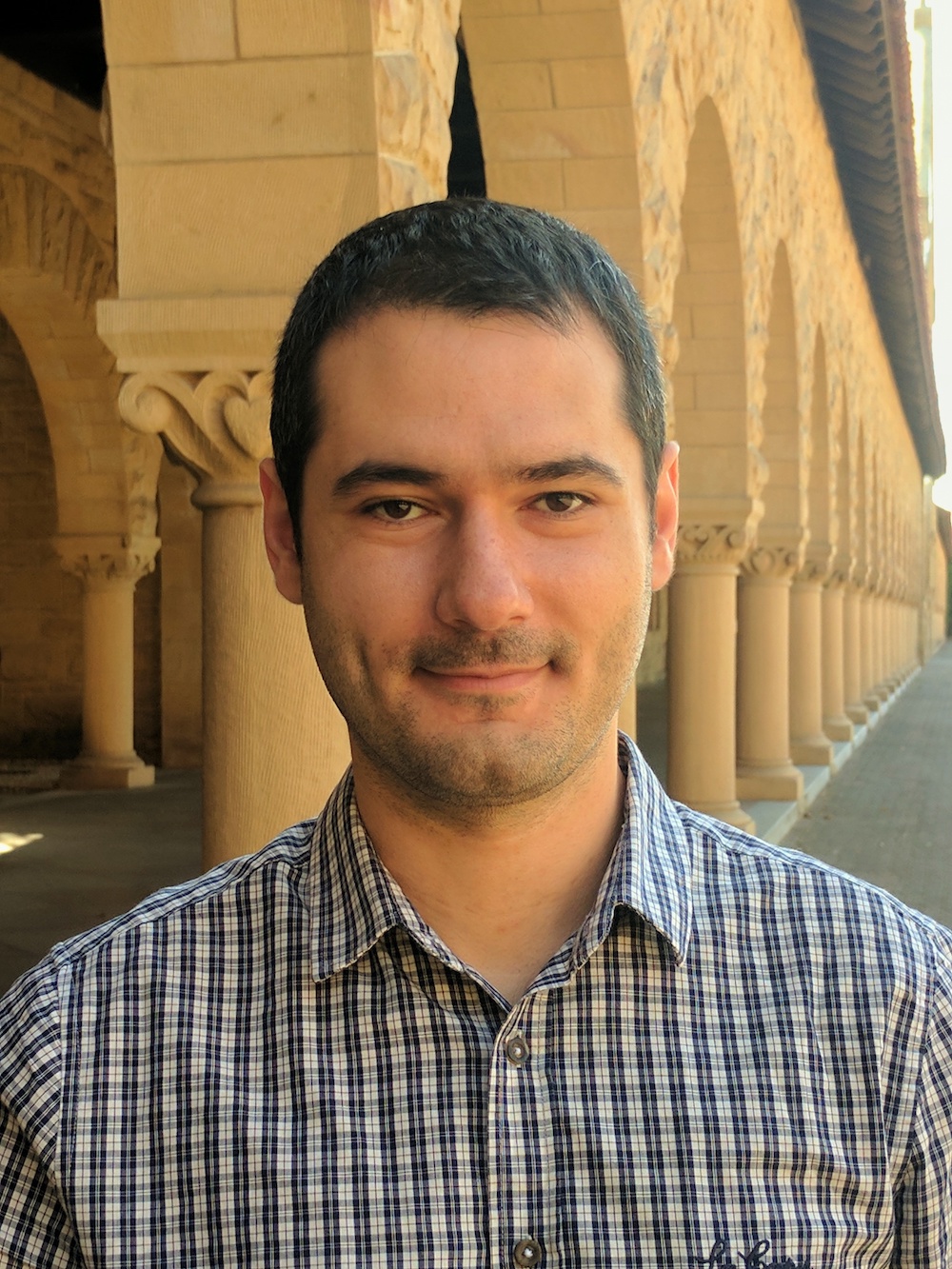
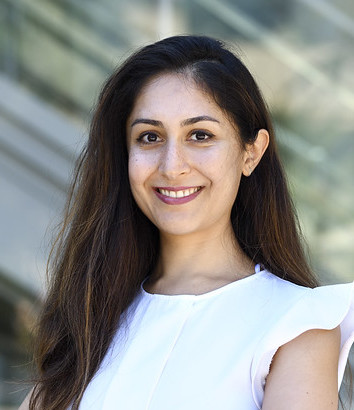
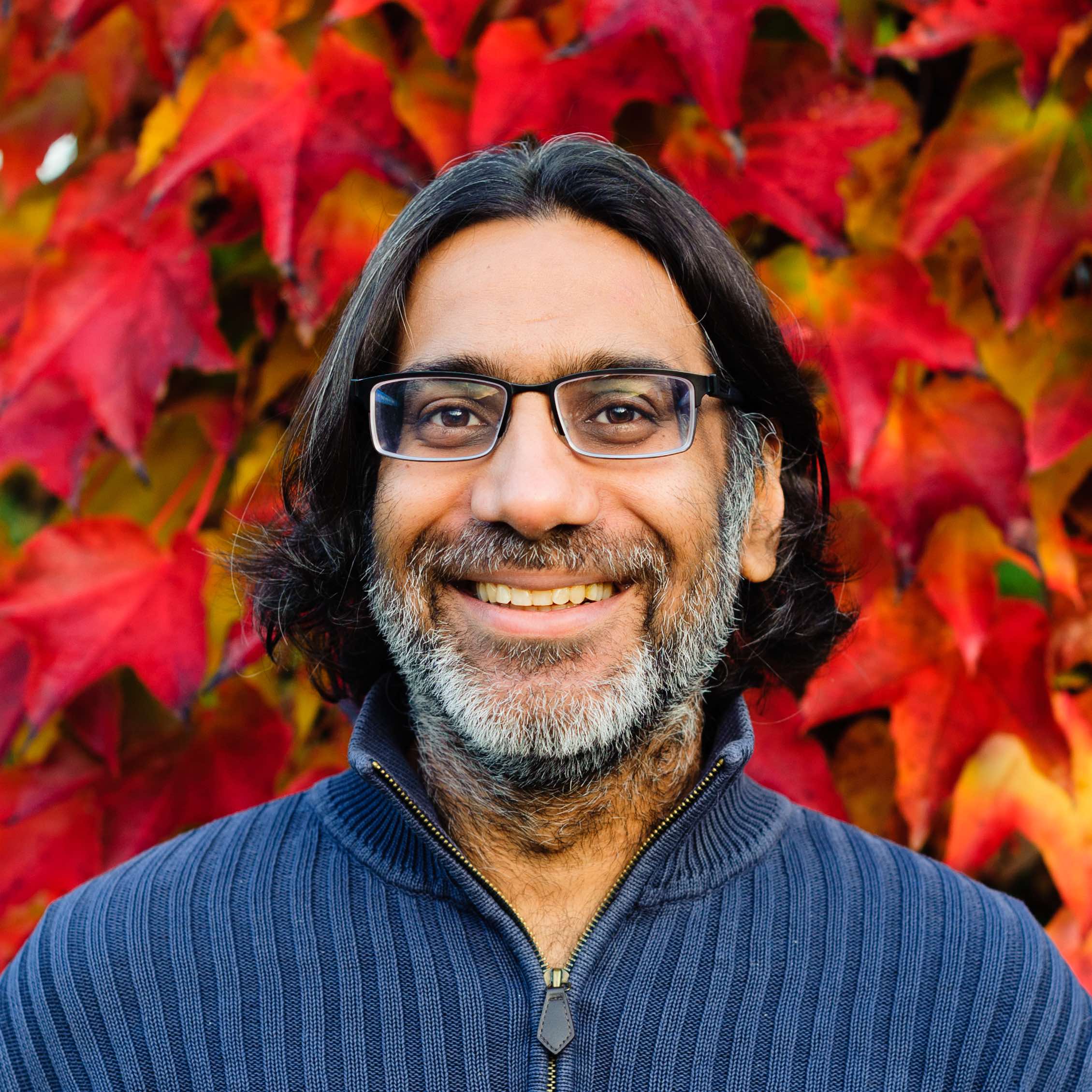
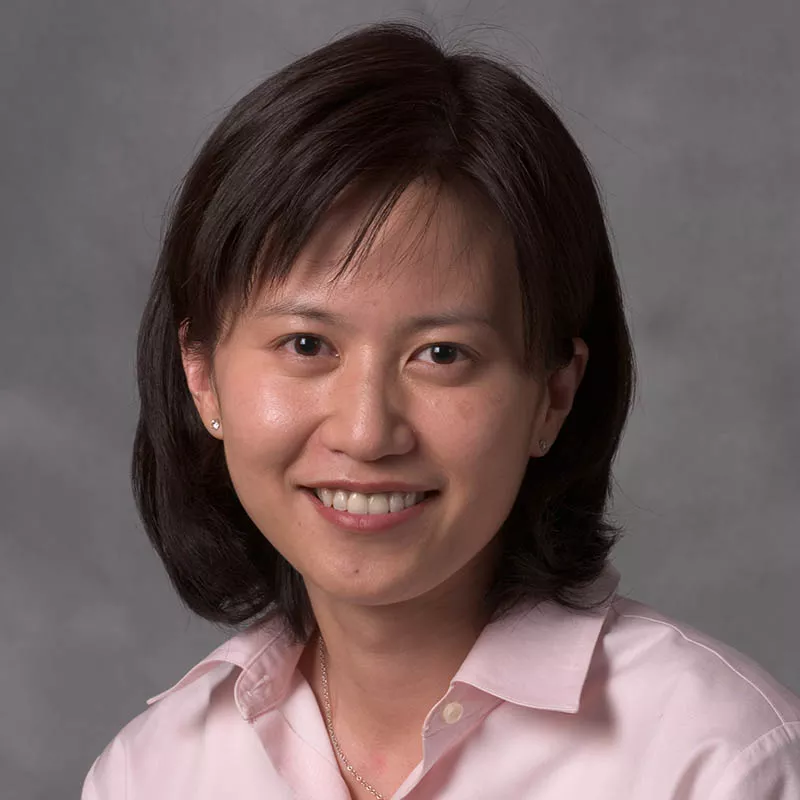
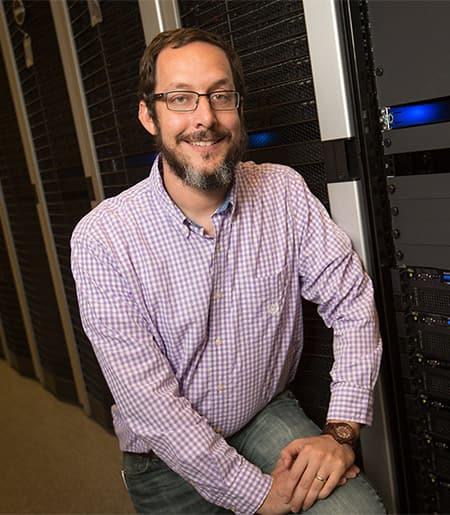
Murat Erdogdu is an Assistant Professor at the University of Toronto, jointly appointed in the Department of Computer Science and Department of Statistical Sciences . He is also a faculty member at the Vector Institute and holds the CIFAR Chair in Artificial Intelligence . PhD in Statistics, Stanford University (advised by Mohsen Bayati and Andrea Montanari) MSc in Computer Science, Stanford University BSc in Electrical Engineering and Mathematics, Bogazici University His research focuses on machine learning theory , high-dimensional statistics , and optimization . He has contributed to understanding gradient-based algorithms, sampling methods, and feature learning in structured data. Recent publications address problems in: Heavy-tailed sampling Mean-field Langevin dynamics Robust feature learning Minimax regression Stochastic optimization under infinite noise Scientific Awards: CIFAR Chair in Artificial Intelligence ICLR 2023 Spotlight NeurIPS 2019 & 2021 Spotlights He teaches graduate courses like STA 414/2104 (Statistical Methods for Machine Learning II) and STA 4273 (Modern Learning Theory) , emphasizing probabilistic modeling and theoretical analysis.
Catherine Butler is a Senior Fellow of the Higher Education Academy and Programme Director of the DClinPsy Programme at the University of Bath's Department of Psychology. She holds external examiner roles at Cardiff University, University College London, and others. Her academic journey includes a Doctor of Clinical Psychology from the University of East London, an MBA from the Open University, and advanced training in Systemic Supervision at the University of Exeter. Her research focuses on Inclusion, Whiteness, Gender and Sexual Minorities, Intersectionality, and Systemic Therapy, with contributions to anti-racism and climate crisis studies. Key projects include exploring systemic therapy supervision, validation of therapeutic scales, and shared learning courses with clinical psychology trainees. Dr. Butler’s scholarly work addresses topics such as gender dysphoria in neurodivergent populations, relapse experiences in addiction therapy, and systemic training in clinical psychology programs. She has been recognized for her contributions through awards like the Senior Fellow of the Higher Education Academy. Her professional activities include roles on the British Psychological Society committee, conference presentations, and advisory roles in academic and clinical settings. She has supervised 18 doctoral students and led projects funded by UK charities such as the Association for Family Therapy.
Baharan Mirzasoleiman is an Assistant Professor in the Department of Computer Science at the University of California, Los Angeles (UCLA), where she leads the BigML research group. Prior to joining UCLA, she was a postdoctoral research fellow in Computer Science at Stanford University working with Jure Leskovec. She received her Ph.D. in Computer Science from ETH Zurich advised by Andreas Krause. Her research focuses on addressing sustainability, reliability, and efficiency of machine learning, with particular emphasis on improving big data quality by developing theoretically rigorous methods to select the most beneficial data for efficient and robust learning. Her work spans several critical areas including data efficiency, robustness against label noise and data poisoning, and addressing spurious correlations in machine learning models. She has made significant contributions to understanding how neural networks exploit spurious features that correlate with certain categories during training but fail to generalize to minority groups. Professor Mirzasoleiman's research demonstrates how theoretically grounded approaches can lead to practical improvements in model robustness and efficiency across various applications including medical diagnosis and environmental sensing. Her work has resulted in the development of the SpuCo package, a Python library that provides modular implementations of state-of-the-art methods to address spurious correlations, along with controllable synthetic datasets like SpuCoMNIST and large-scale vision datasets like SpuCoAnimals. She has received numerous prestigious awards including the ETH medal for Outstanding Doctoral Thesis, being selected as a Rising Star in EECS by MIT, an NSF Career Award, a UCLA Hellman Fellows Award, and an Okawa Research Award. Her students have also received multiple fellowships and awards including Amazon Doctoral Student Fellowships and an OpenAI Superalignment Fast Grant. Professor Mirzasoleiman actively contributes to the academic community through invited talks at major conferences including ICML, ICLR, NeurIPS, and KDD, as well as co-organizing workshops on new frontiers in adversarial machine learning and sparsity in neural networks. She has developed educational resources including tutorials on Foundations of Data-efficient Learning presented at ICML 2024.
Pranav Anand is a Professor in the Department of Linguistics at the University of California, Santa Cruz (UCSC). He currently serves as the Faculty Director of the Humanities Institute at UCSC since July 2023. His research focuses on the interplay between context, interpretation, and grammatical perspective, particularly in areas like de re/de se contrasts, evaluative predication, and indexical shift. He has contributed to studies on narrative structures, evidential restrictions, and the syntax-semantics interface in sluicing. Dr. Anand has taught a variety of courses including Ling 119: Narratives , Ling 231: Semantics A , and special topics like Invented Languages: From Elvish to Esperanto . His work bridges theoretical linguistics with computational methods, evidenced by collaborations in projects such as the Santa Cruz sluicing dataset and analyses of political discourse in online commentary. His research has been published in journals like Linguistics and Philosophy , Language , and Discourse and Society , with a focus on semantics, pragmatics, and narrative linguistics. He has also contributed to computational linguistics initiatives, including the development of annotated corpora for sentiment analysis and argumentation studies. Dr. Anand's academic contributions span both theoretical exploration and applied computational linguistics, reflecting his interdisciplinary approach to understanding language structure and usage.
Suzanne S. Lee is an Associate Professor of Finance at the Scheller College of Business, Georgia Institute of Technology, where she has been a faculty member since 2005. She also serves as the Ph.D. Coordinator, playing a key role in graduate education and research training. Her educational background is highly quantitative and interdisciplinary: Ph.D., University of Chicago MBA, University of Chicago M.S. in Statistics, University of Chicago Dr. Lee's research lies at the intersection of asset pricing and financial econometrics, with a strong focus on jump processes, market microstructure, and derivative markets. She investigates how sudden price movements (jumps) impact asset returns, risk, and information flow in financial markets. Her work extends to cryptocurrency, currency markets, and carry trade strategies, combining theoretical rigor with empirical validation using high-frequency data. The analysis of her recent publications (2008–2024) reveals a consistent and influential research program centered on detecting and modeling jumps in financial time series. Her work spans equity, currency, and cryptocurrency markets, often employing advanced nonparametric and econometric techniques. A recurring theme is the role of jumps in pricing anomalies, risk measurement, and market efficiency, with increasing attention to digital assets in recent years. Dr. Lee is actively engaged in the academic community through editorial service: Associate Editor, Journal of Banking and Finance Associate Editor, Asia-Pacific Journal of Financial Studies She has presented her research at premier conferences such as the American Finance Association, European Finance Association, Econometric Society, and Society for Financial Econometrics. Her publications appear in the most prestigious journals in finance and econometrics, including the Journal of Finance , Review of Financial Studies , Journal of Financial Economics , and Journal of Econometrics . While specific grant details are not listed, her sustained publication record in top journals indicates significant research funding and academic impact. She advises Ph.D. students through her role as Ph.D. Coordinator, though individual advisees are not named in the text. Dr. Lee's work contributes to both theoretical and applied finance, improving our understanding of market dynamics, risk modeling, and asset pricing under extreme events. Her research has practical implications for risk management, trading strategies, and financial regulation.
Stefano NASINI is an Associate Professor at the University of Lille 3, specializing in Quantitative Methods within the Economics and Mathematics Sciences. He holds a HDR (Habilitation à Diriger des Recherches) from the University of Lille 3 (2021), a Ph.D. in Statistics and Operations Research from the Polytechnic University of Catalonia (2015), and a Master in Statistics (2011). His research focuses on optimization, complex networks, statistical inference, and microeconomic applications. He has held academic positions including a post-doctoral role at IESE Business School (2014–2016) and a visiting researcher role at the University of Lisbon (2014). His work spans scheduling optimization, network analysis, financial contagion modeling, and energy system planning. Key contributions include specialized algorithms for large-scale optimization problems and frameworks for decentralized portfolio management. He is a member of the LEM research group and teaches courses in optimization, econometrics, and social network analysis at the Grande École and MSc levels. Publications highlight interdisciplinary applications, including network-based diffusion models, multi-market financial strategies, and dynamic choice analysis. His research bridges theoretical advancements in operations research with practical challenges in economics, energy, and transportation systems. No scientific awards are explicitly listed in the provided materials. His advising roles and grants are not detailed here, but his extensive publication record reflects active collaboration within academic and applied domains.
Benoit Forget is the Korea Electric Power Professor of Nuclear Engineering and the Department Head of Nuclear Science and Engineering at MIT. He joined MIT in 2008 and leads the MIT Computational Reactor Physics Group (CRPG), which focuses on advancing computational methods for reactor simulation. His research spans Monte Carlo and deterministic transport methods, multiphysics coupling, and uncertainty quantification. He co-developed OpenMC and OpenMOC, open-source tools for reactor analysis. Forget holds a PhD from Georgia Tech and has received awards including the 2013 Landis Young Member Engineering Achievement Award. He teaches courses such as 22.05 Neutron Science and Reactor Physics, and actively contributes to MIT’s computational science initiatives. Educations: PhD in Nuclear Engineering (Georgia Tech, 2006), MS and BS in Energy Engineering (École Polytechnique de Montréal, 2003). Research Interests: Computational reactor physics, radiative transport, high-performance computing, Monte Carlo and deterministic methods, multiphysics coupling, nuclear data uncertainty. Labs/Teams: MIT Computational Reactor Physics Group (CRPG), Consortium for Advanced Simulation of Light Water Reactors (CASL).
David Bindel is an Associate Professor in the Department of Mathematics at Cornell University, affiliated with the College of Arts and Sciences, College of Engineering, and Cornell Ann S. Bowers College of Computing and Information Science. He earned his Ph.D. in Mathematics from the University of California, Berkeley in 2006. His research focuses on applied numerical linear algebra, eigenvalue problems, and their applications in plasma physics, network analysis, and nonlinear systems. He develops methods for analyzing complex systems, including magnetic confinement in stellarators, stability of MHD systems, and community detection in networks. His work bridges theoretical foundations with practical computational tools, such as formal verification of linear algebra algorithms and scalable Gaussian process models. Bindel’s research explores the interplay between structure and computation, leveraging eigenvalue analysis to address challenges in computer vision, opinion dynamics, and engineering design. He has contributed to advancements in numerical methods for large-scale systems, including iterative solvers, spectral approximation techniques, and stochastic optimization. His interdisciplinary approach spans applied mathematics, computer science, and physics, with applications in fusion energy, machine learning, and network science. Recent work highlights include high-order expansions for magnetic confinement, adaptive filtering for dynamical systems, and Bayesian optimization strategies. His publications emphasize rigorous analysis alongside computational scalability, addressing both theoretical and practical aspects of modern scientific computing. Despite no explicitly listed awards, his contributions reflect significant impact in his fields.
Dr. Mathew Todres is a Senior Lecturer in Management at the School of Business, Faculty of Business and Law, University of Wollongong. His research focuses on Management, Change Management, International Business Management, and Strategic Management, with a particular emphasis on Social Entrepreneurship and Workplace Value Congruence. He has conducted action research in Social Enterprise Development and published in journals such as the Social Enterprise Journal and Journal of Business Ethics . Dr. Todres currently supervises PhD candidates Douglas Opoku Agyeman (Micro Entrepreneurship in West Africa) and Grant Hughes (Sports Management). He has received a University of Wollongong Faculty of Business Start-Up Grant (2018). His peer-reviewed work spans organizational behavior, narrative analysis, and social enterprise innovation. His research interests include autoethnographic analysis, narratological analysis, and the application of social theory to entrepreneurial practices. Dr. Todres has contributed to journals such as Medical Education and serves as a reviewer for Journal of Spirituality, Leadership, and Management , among others. His work bridges theoretical frameworks with practical applications in organizational dynamics and social impact initiatives.
Christian Wolf is an Assistant Professor at the Massachusetts Institute of Technology (MIT) Department of Economics and a Faculty Research Fellow at the National Bureau of Economic Research (NBER). His work bridges macroeconomics, monetary economics, and econometric methodology. Research Interests: Wolf specializes in macroeconomics and monetary policy , with a focus on econometric techniques like structural vector autoregressions (VARs) and local projections . His research explores policy counterfactuals, heterogeneous-agent models, and fiscal-monetary interactions. Recent Publications: His work spans topics such as equivalence between fiscal and monetary tools in HANK models, robust identification in VARs, and the interplay between inequality and macroeconomic dynamics. Articles appear in journals like Econometrica , Journal of Political Economy , and American Economic Review . Awards: Faculty Research Fellow, NBER Contact: ckwolf@mit.edu | Office: E52-554, MIT
David Landriault is a Professor in the Department of Statistics and Actuarial Science at the University of Waterloo, Canada, and a Canada Research Chair in Risk Theory. His research focuses on Actuarial Science, Quantitative Risk Management, Applied Probability, and Stochastic Processes, particularly in ruin theory, drawdown analysis, and stochastic control for insurance and finance applications. Education: PhD in Mathematics (2005), MSc in Mathematics (2003), BSc in Actuarial Science (2002) from Laval University. Affiliations: University of Waterloo (postdoctoral fellowship, 2006); Canada Research Chair in Risk Theory. Research Interests Risk and Ruin Theory Stochastic Control in Insurance and Finance Drawdown and Occupation Time Analysis Regime-Switching Models Reinsurance Design and Optimization Time-Dependent Risk Models Scientific Awards Fellow of the Canadian Institute of Actuaries (F.C.I.A.), 2009 Fellow of the Society of Actuaries (F.S.A.), 2006
Philippe Mueller is a Professor of Finance at Warwick Business School (University of Warwick) and a leading researcher in macro-finance, international finance, and asset pricing. He previously held positions at the London School of Economics (2008–2017) and earned his PhD from Columbia University. His research focuses on factors driving asset prices, foreign exchange markets, corporate credit, and central bank policies. Mueller has published in top journals such as the Journal of Finance and Journal of Financial Economics , and his work on corporate bond pricing won the Fama-DFA Prize (2023). Education: PhD in Finance and Economics, Columbia University, 2008 MBF, Master of Science in Banking and Finance, Université de Lausanne, 2002 lic. rer. pol., Universität Bern, 1999 Research Interests: His primary research areas include asset pricing, financial econometrics, and international finance with a focus on fixed income markets, corporate credit provision, and monetary policy impacts. Recent work examines intraday foreign exchange patterns, central bank swap lines, and volatility dynamics in fixed income and currency markets. Teaching & Grants: Mueller teaches advanced courses in asset pricing and fixed income at Warwick. He has secured grants from the BA/Leverhulme Trust, BIS Research Fellowship, and INQUIRE Europe. His work is supported by collaborations with institutions like the Swiss National Bank and ECB. Awards & Recognition: Fama-DFA Prize for best asset pricing paper (2023) BIS Research Fellowship (2025–2027) Walter Wasserfallen Prize (2000) Professional Activities: He serves on programme committees for major finance conferences (EFA, WFA) and referees for top journals including Journal of Political Economy and Econometrica .
Junjian Qi serves as the Hohbach Endowed Associate Professor in the Department of Electrical Engineering and Computer Science at South Dakota State University's College of Engineering, holding this position since 2023. His academic journey includes prior appointments as Assistant Professor at Stevens Institute of Technology (2020-2023) and University of Central Florida (2017-2020), along with research roles at Argonne National Laboratory and University of Tennessee. His educational background includes: Ph.D. in electrical engineering from Tsinghua University, Beijing, China (2013) B.E. in electrical engineering from Shandong University, Jinan, China (2008) Dr. Qi's research centers on electric power systems resilience, with particular expertise in cascading failure mechanisms, microgrid control architectures, cyber-physical security vulnerabilities, and synchrophasor applications. His work integrates advanced data analytics and machine learning techniques to enhance grid stability against extreme weather events and cyber threats. Current investigations focus on developing distributed control strategies for inverter-dominated grids and modeling system interdependencies during failure propagation. Analysis of his 15 most recent publications (2021-2024) reveals a strong methodological shift toward data-driven approaches for power system challenges. Key trends include machine learning applications for cascading failure prediction, novel distributed control frameworks for AC/DC microgrids, and cybersecurity enhancements for inverter-based resources. His work consistently bridges theoretical models with real-world utility data, particularly evident in multiple Best Paper Award-winning publications analyzing actual outage sequences. Dr. Qi's scientific recognition includes: NSF CAREER Award (2020) Three consecutive Best Paper Awards at IEEE PES General Meetings (2022-2024) World's Top 2% Scientist designation in energy (2020-2023) IEEE PES Outstanding Working Group Award (2023) Multiple journal Best Paper Awards (IEEE Transactions on Power Systems, Journal of Modern Power Systems) He currently leads significant research initiatives including an NSF CAREER project ($500k) on cascading failure analysis and an NSF collaborative grant ($219k) for grid stability, alongside previous DOE funding ($1.8M) for cybersecurity of distributed energy resources. His service includes editorial roles for IEEE Transactions on Power Systems and IEEE Power Engineering Letters, plus leadership in IEEE PES technical committees focused on voltage control and smart grid security.
Alexandre RUBESAM is an Associate Professor at IÉSEG School of Management (France), specializing in Finance with a focus on asset pricing, financial econometrics, and quantitative trading. He holds a Ph.D. in Finance from Cass Business School (UK), an MSc in Statistics from the State University of Campinas (Brazil), and a Bachelor in Statistics from the same university. Education: Ph.D., Finance, Cass Business School, UK (2008) MSc., Statistics, State University of Campinas, Brazil (2004) Bachelor, Statistics, State University of Campinas, Brazil (2001) His research interests span behavioral finance, risk management, machine learning applications in finance, and portfolio optimization. Notably, he explores topics like market herding during crises, volatility forecasting, and the low-beta anomaly through behavioral lenses. Prof. Rubesam has authored influential papers on information transmission in financial markets, risk parity strategies, and the efficacy of linear models in volatility prediction. His work bridges theoretical finance with practical applications, such as developing machine learning-based portfolio construction methods for emerging markets. Awards: 2007 Dimitris N. Chorafas Foundation Prize 2006 Best Paper Award, Cass Business School His professional roles include Chief Risk Officer at Itaú-Unibanco (2013–2017) and Quantitative Researcher/Trader at Principia Capital Management (2009–2011). He is a member of LEM (Laboratory of Economics and Management) and teaches courses on financial programming, risk management, and portfolio analysis.
Antti Honkela is a Professor of Data Science at the University of Helsinki's Department of Computer Science, within the Faculty of Science. He also serves as the Coordinating Professor for the Privacy-preserving and Secure AI Research Programme at the Finnish Center for Artificial Intelligence (FCAI), and as Deputy Director of the Master's Programme in Data Science. His roles include membership in the Health and Social Data Permit Authority (Findata) and as an Action Editor for Transactions on Machine Learning Research. Honkela's research focuses on privacy-preserving machine learning, differential privacy, Bayesian methods, and their applications in computational biology and healthcare. He leads projects such as the European Lighthouse in Secure and Safe AI (ELSA) and the Data Literacy for Responsible Decision-making initiative. His work emphasizes developing robust frameworks for privacy-aware AI, including differentially private synthetic data and federated learning. Honkela has advised numerous PhD and Master's students, and his contributions span theoretical advancements and practical implementations, such as the D3p Python package for differentially private probabilistic programming. Key contributions include advancements in Bayesian inference from synthetic data, privacy accounting mechanisms, and computational methods for genomic epidemiology. His interdisciplinary approach bridges machine learning, statistics, and healthcare, addressing challenges in data privacy and secure AI deployment.