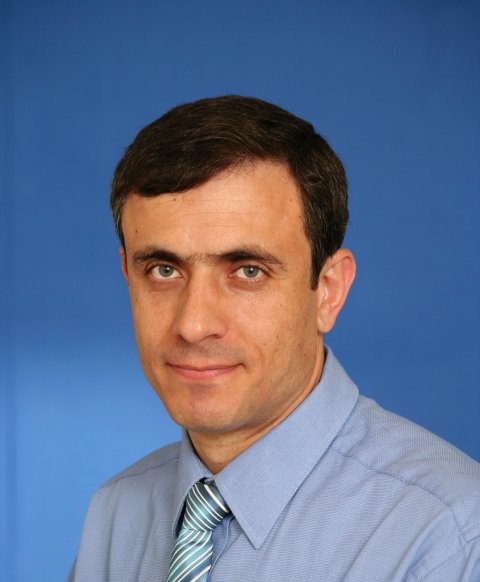
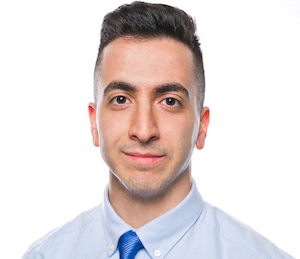
Luca Peretti is an Associate Professor in Electric Machines and Drives at KTH Royal Institute of Technology, affiliated with the School of Electrical Engineering and Computer Science and the Department of Electrical Engineering, Division of Electric Power and Energy Systems. He works as a researcher in the EMD (Electric Machines and Drives) group and serves as Partner Director for KTH's strategic partnership with ABB. Education: M.Sc. in Electronic Engineering (2005) from University of Udine, Ph.D. from University of Padova (2008) Professional Experience: Postdoc at University of Padova (2009-2010), Principal Scientist at ABB Corporate Research (2010-2018), Associate Professor at KTH (2018-present) His research focuses on: Automatic parameter estimation in electric machines Multiphase drive systems Sensorless control algorithms Loss segregation in drive systems Condition monitoring of industrial and transportation applications Recent publications demonstrate expertise in variable phase-pole machines, harmonic plane decomposition, predictive control algorithms, and advanced modeling of permanent magnet motors. Key application areas include transportation electrification, wind energy systems, and industrial drive technologies. Scientific roles include: Associate Editor, IET Electric Power Applications Journal (2019-present) Theme Co-Leader, Swedish Electromobility Center (2020-present) Member, IEEE (2021-present) and IET (2006-present) He leads the strategic partnership with ABB and contributes to doctoral program committees at University of Padova.
Frede Blaabjerg is a Professor at Aalborg University (AAU Energy) , affiliated with the Faculty of Engineering and Science . Since 1998, he has pioneered power electronics research in applications such as wind turbines , photovoltaic (PV) systems , reliability engineering , and Power-2-X technologies. Education : PhD in Electrical Engineering (1995, Aalborg University) Honorary Degrees : Honoris Causa at University Politehnica Timisoara (2017) and Tallinn Technical University (2018) His research focuses on power electronics control , system optimization , and reliability for renewable energy and electric mobility . Recent work includes grid-forming converters , virtual synchronous generators , and smart EV charging systems. Key publication trends span 15+ years , with over 3,733 peer-reviewed articles and 900+ journal papers in power electronics , renewables , and energy storage . Notable book series: Control of Power Electronic Converters and Systems (4 volumes, Elsevier). Scientific Awards : 46 IEEE Prize Paper Awards 2020 IEEE Edison Medal 2019 Global Energy Prize 2014 IEEE William E. Newell Power Electronics Award Leadership Roles : Editor-in-Chief, IEEE Transactions on Power Electronics (2006–2012) Chairman, Danish Council for Research and Innovation Policy (2020–) President, IEEE Power Electronics Society (2019–2020)
Zhi-Pei Liang is the Franklin W. Woeltge Professor in the Department of Electrical and Computer Engineering at the University of Illinois at Urbana-Champaign, with joint appointments in the Department of Bioengineering, Beckman Institute for Advanced Science and Technology, and Coordinated Science Laboratory. His research spans biomedical engineering, medical imaging, and signal processing with a focus on advancing magnetic resonance imaging and spectroscopy technologies. His educational background includes a Ph.D. in Biomedical Engineering from Case Western Reserve University (1989) and a B.S. in Electrical Engineering from South-China University of Technology (1982), followed by postdoctoral training at UIUC (1989-1991). Professor Liang's research interests center on magnetic resonance imaging and spectroscopy , with particular emphasis on ultrafast imaging techniques , model-based reconstruction methods , and the integration of physics-based modeling with machine learning . His pioneering work on SPICE (SPectroscopic Imaging by exploiting spatiospectral CorrElation) has revolutionized high-resolution metabolic brain imaging by enabling label-free molecular imaging through the marriage of spin physics and machine learning. His research spans pattern recognition, parameter estimation, image formation theory, and algorithms for medical imaging applications. Analysis of his recent publications reveals a strong focus on high-resolution metabolic imaging , particularly using SPICE methodology to map brain metabolism with unprecedented detail. His work bridges fundamental physics of magnetic resonance with advanced computational methods to overcome traditional limitations in imaging speed and resolution. Current research directions include J-resolved spectroscopic imaging, deuterium-based metabolic mapping, and multimodal integration of PET and MRSI for studying neurological disorders. Elected to International Academy of Medical and Biological Engineering (2012) Gold Medal, International Society for Magnetic Resonance in Medicine (2022) Technical Achievement Award, IEEE Engineering in Medicine and Biology Society (2014) Fellow, National Academy of Inventors (2021) Author of influential book 'Principles of Magnetic Resonance Imaging' (1999) President of IEEE Engineering in Medicine and Biology Society (2011-2012) Professor Liang has advised numerous students and postdocs in biomedical imaging research and has received multiple teaching honors including the Ronald W. Pratt Outstanding Teaching Award (2005) and multiple listings among UIUC's Excellent Teachers. His research has been supported by various grants from NIH, NSF, and other funding agencies. He leads the SPICE (Spectroscopic Imaging by exploiting spatiospectral Correlation) research group which focuses on developing novel imaging techniques that combine physics-based modeling with machine learning for ultrafast metabolic imaging. His laboratory, part of the Beckman Institute's Integrative Imaging Theme, collaborates extensively with clinical researchers at Carle Illinois College of Medicine and other institutions to translate advanced imaging techniques into clinical applications for neurological disorders, cancer, and metabolic diseases. Current projects focus on high-resolution mapping of brain metabolism in Alzheimer's disease, stroke, and brain tumors using novel MR spectroscopic imaging techniques.
Michele Salvi is an Associate Professor in Mathematics at Università degli Studi di Tor Vergata in Rome. He previously held a Marie Skłodowska-Curie fellowship, conducting research in Berlin, Munich, and Paris. His work focuses on Probability Theory, with emphasis on random processes in random media, random graphs, and statistical mechanics, bridging applications in Physics, Computer Science, and Biology. Random processes in random media Random graphs Mathematics of Neural Networks Stochastic homogenization Mixing times for Markov chains Statistical mechanics Salvi’s recent publications highlight interdisciplinary trends, particularly in the spectral analysis of deep neural networks, scale-free percolation dynamics, and spanning tree geometry in random environments. His collaborations span Europe, with projects involving probabilistic models in epidemiology, reinforcement learning, and stochastic homogenization. He has received the Marie Skłodowska-Curie fellowship, reflecting his international research experience. His work is aligned with the Department of Mathematics at Tor Vergata, which holds the "Department of Excellence" MatMod@TOV 2023-2027 grant.
Cathy Wu is the Class of 1954 Career Development Associate Professor in Civil and Environmental Engineering at MIT, affiliated with the Institute for Data, Systems, and Society (IDSS). Her research bridges machine learning, optimization, and urban systems, with a focus on mixed autonomy systems in mobility. She holds degrees from MIT (B.S., M.Eng in EECS) and a Ph.D. from UC Berkeley (EECS). Education: B.S. and M.Eng in Electrical Engineering and Computer Science, MIT (2012-2013) Ph.D. in Electrical Engineering and Computer Science, UC Berkeley (2018) Research Interests: Reinforcement Learning and Machine Learning Large-scale Optimization and Control Theory Mobility Systems and Urban Infrastructure Implications of AI and Automation Her work emphasizes interdisciplinary collaboration, involving transportation, computer science, and public policy. She founded the Interdisciplinary Research Initiative within the ACM Future of Computing Academy to advance cross-disciplinary computing research. Key Projects: Includes Flow (open-source RL framework for traffic control), eco-driving incentive mechanisms, and mixed autonomy traffic optimization. Her articles address congestion mitigation, autonomous vehicle integration, and scalable supervision strategies. Awards: Recipient of fellowships, best paper awards, and teaching honors (specific names unlisted). Engagement: Collaborations with institutions like Microsoft Research, OpenAI, and Caltrans. Active in policy-oriented initiatives and education through IDSS programs.
Timothy Jacobs is Professor and Head of Multidisciplinary Engineering at Texas A&M University, with joint appointment in Mechanical Engineering. His research advances combustion science, emission control, and alternative fuel applications. Education: Ph.D. Mechanical Engineering, University of Michigan (2005) M.S. Mechanical Engineering, University of Michigan (2002) B.S.E. Mechanical Engineering, University of Michigan (1999) Research focuses on fundamental combustion processes in natural gas engines, developing low-temperature combustion strategies and aftertreatment integration. Recent work optimizes prechamber ignition systems for large-bore engines and hydrogen production via piston reactors. Experimental diagnostics characterize cycle variability, unburned emissions, and flame dynamics. Publications demonstrate expertise in combustion modeling, engine control algorithms, and emission formation mechanisms. Applied research supports decarbonization of power generation and marine propulsion. Awards recognize teaching excellence and research leadership, including ASME Fellowship and university professorships. Secures funding for engine technology development from federal agencies and industry partners.
Professor Tim Rogers is affiliated with the University of Bath as a faculty member in the Department of Mathematical Sciences . He is actively involved in research spanning complex systems, network theory, and stochastic processes. PhD in Random Matrix Theory from King's College London (2010) His research focuses on emergent behavior in random systems , including: Collective Behavior : Crowd dynamics, lane formation, and noise-enhanced synchronization Epidemics & Networks : Spread prediction, node risk assessment, and misinformation impacts Ecology & Evolution : Trait emergence, species boundaries, and demographic noise effects Random Matrix Theory : Spectral analysis and applications to complex systems Publication trends reflect interdisciplinary work bridging Physics, Biology, and Mathematics , with a focus on network structures , stochastic modeling , and emergence phenomena . Scientific awards include: 2015 : Editor's Choice for Europhys. Lett. 109, 28005 2016 : Highlight of Journal of Physics A 2017 : Editor's Suggestion for Phys. Rev. E 92, 032708 He has supervised numerous PhD students and postdocs on projects related to stochastic dynamics , network modeling , and mathematical biology , with ongoing grants from agencies like EPSRC and The Leverhulme Trust .
Ravi Seshadri is an Associate Professor in the Transport Division at the Department of Technology, Management and Economics, Technical University of Denmark (DTU). His research focuses on designing equitable, efficient, and sustainable mobility solutions with a focus on fiscal instruments like congestion pricing and tradable permits, as well as emerging mobility modes such as shared and demand-responsive transit. He employs methods from transportation network equilibria, dynamic traffic assignment, and agent-based simulation. His research interests span transportation economics, urban planning, and intelligent transportation systems. Key areas include evaluating the impacts of automated mobility-on-demand systems, optimizing tolling strategies using predictive control and reinforcement learning, and integrating multi-modal transportation networks through game-theoretical frameworks. His work emphasizes real-world applications in urban freight systems, e-commerce logistics, and sustainable urban mobility policies. Recent projects include studying congestion pricing schemes via agent-based microsimulation, analyzing behavioral responses to decarbonization policies, and developing frameworks for tradable credit systems with peer-to-peer trading. He has contributed to both theoretical advancements (e.g., robust traffic assignment models) and applied tools like the SimMobility simulation platform. Ravi's research demonstrates a strong focus on bridging transportation engineering with policy analysis, using cutting-edge computational methods to address complex urban mobility challenges. His work spans academic publications, industry collaborations, and policy consultations to advance sustainable transportation systems.
Prof. Dr. Haris Gačanin is a faculty member at RWTH Aachen University, affiliated with the Institute for Distributed Signal Processing under the College of Electrical Engineering. His research focuses on integrating machine learning with wireless communication systems, particularly in industrial IoT, edge computing, and network optimization. Current academic rank: Professor Contact: harisg@dsp.rwth-aachen.de Research Interests: Wireless systems, machine learning, signal processing, and network optimization. Key contributions include: Adaptive resource allocation in IIoT and vehicular networks AI-driven channel estimation and feedback mechanisms Security-oriented emitter identification via metric learning Federated/transfer learning for edge environments Hardware-efficient deep learning models for mmWave and THz communications Methodological Focus: Combines reinforcement learning, attention mechanisms, and robust neural architectures with practical implementations on FPGA and vehicular systems.
Prof. Dr.-Ing. Katharina Schmitz serves as Institute Director and Vice Dean at the Institute for Fluid Power Drives and Systems, RWTH Aachen University. Her leadership within the Production Technology Cluster and extensive contributions to fluid power engineering establish her as a leading authority in mechanical engineering research and education. Her research spans fluid power systems, hydraulic component design, tribology, and physics-informed machine learning applications. She pioneers sustainable propulsion solutions through bio-hybrid fuels research while addressing fundamental challenges in polymer material behavior under hydraulic stresses. Current work focuses on carbon-neutral heavy-duty transportation, physics-based neural networks for lubrication modeling, and advanced control systems for electro-hydraulic actuators. Analysis of her 15 most recent publications reveals a dominant trend toward integrating physics-based modeling with deep learning to solve complex engineering problems. Her team consistently develops novel frameworks for cavitation prediction, flow rate determination, and material compatibility assessment - significantly advancing fluid power system reliability, efficiency, and digitalization. Scientific recognition includes: GfT Förderpreis 2023 for experimental and simulative investigation of partially hydrostatic relieved contacts in variable speed axial piston machines As head of the Institute for Fluid Power Drives and Systems, she leads cutting-edge research in sustainable fluid power technologies. The institute maintains strong industry partnerships while driving innovation in hydraulic component design, digital twins for condition monitoring, and next-generation propulsion systems through its position within RWTH Aachen's Production Technology Cluster.
Walid Hubbi is Associate Professor in Electrical and Computer Engineering at NJIT. He holds a PhD from Queen's University Belfast and degrees from the University of London and Aleppo University. His research focuses on power system analysis and control, particularly optimization techniques for reactive power compensation, load flow methodologies, and stability enhancement. Key contributions include fuzzy logic controllers for static VAR compensators, neural network applications for load modeling, and optimal placement strategies for grid control devices. His publications consistently address practical challenges in transmission efficiency, voltage stability, and measurement accuracy using computational intelligence and optimization frameworks.
Dr. Mecit Cetin is a Professor at Old Dominion University (ODU) and Director of the Transportation Research Institute (TRI). He specializes in Intelligent Transportation Systems (ITS), connected/automated vehicles, traffic flow theory, and infrastructure resilience. His academic background includes a Ph.D. in Transportation Engineering from Rensselaer Polytechnic Institute (2002), an M.S. in Civil Engineering (1999), and a B.S. from Boğaziçi University (1995). Research focuses on big data analytics for traffic prediction, congestion pricing, and floodwater detection using LIDAR and computer vision. He has secured over $3M in grants including Federal funding for SMARTc systems and state projects on truck turnaround reduction. Notable awards include the 2011 Best Paper Award at the World Congress on Intelligent Transport Systems and multiple Shining Star Awards from ODU. Key projects include developing auction-based tolling systems for connected vehicles, enhancing traffic signal control with probe data, and modeling secondary incident impacts. His work bridges transportation engineering with emerging technologies like IoT and AI. Dr. Cetin collaborates with state agencies (VDOT) and institutions like EVMS. His lab develops tools for urban flood monitoring, eco-routing algorithms, and safety service patrol optimization using discrete-event simulation.
Ashkan Yousefpour is a Computer Scientist with a PhD from the University of Texas at Dallas , where he contributed to the FLOW project. He served as a Lecturer and research assistant at UT Dallas, while also working as a Visiting Researcher at UC Berkeley . His research spans Fog/Edge Computing , Federated Learning , Reinforcement Learning , and Distributed Systems . Current Role: AI Scientist at Meta Academic Affiliation: Department of Computer Science, University of Texas at Dallas Research Interests include: Minimizing IoT service delay through fog offloading Developing failure-resilient distributed neural networks (ResiliNet) Advancing privacy-preserving machine learning (Opacus, Papaya) Optimizing traffic flow with autonomous vehicles via reinforcement learning Advising : Supervised multiple graduate students including Ashish Patil , Harshavardhan Nalajala , and Brian Nguyen . Collaborated with researchers like Professor Alexandre Bayen (UC Berkeley) and Professor Cathy Wu (MIT) on traffic control frameworks such as Flow .
Chiara Colombaroni is a Researcher (Ricercatore a Tempo Determinato di Tipo A) at the Department of Civil, Building and Environmental Engineering at Sapienza University of Rome, within the Faculty of Civil and Industrial Engineering. She holds a PhD in Infrastructures and Transportation from Sapienza (2011) and Master’s and Bachelor’s degrees in Transportation Systems Engineering (2006 and 2003). Colombaroni specializes in transportation engineering, with a focus on traffic modeling, logistics optimization, and intelligent transportation systems (ITS). She has led and contributed to numerous national and international projects, including research on container operations, road safety, and smart mobility solutions through initiatives like ITS Italia 2020. Her work integrates advanced methodologies like machine learning, big data analysis, and simulation-optimization techniques to address urban mobility challenges. She teaches courses such as Programming for Transport Systems and Freight Transport and Logistics at Sapienza, and supervises doctoral research in transportation systems. Her research outputs span over 17 indexed publications, with an H-index of 8 and impactful contributions to journals like Transportation Research Part C and IET Intelligent Transport Systems. Education: PhD in Infrastructures and Transportation, Sapienza University (2011) MSc in Transportation Systems Engineering, Sapienza University (2006) BSc in Transportation Engineering, Sapienza University (2003) Research Focus: Urban traffic simulation and optimization Intelligent transportation systems (ITS) Logistics and supply chain optimization Big data applications in transportation Electric vehicle integration and sustainable mobility Recent Trends in Articles: Her recent work emphasizes leveraging machine learning for traffic pattern analysis, optimizing urban logistics with electric vehicles, and integrating IoT for waste management. Projects like the ‘Two-Echelon Electric Vehicle Routing Problem’ and ‘Industry 4.0 in Waste Management’ highlight her focus on sustainable and tech-driven solutions. She also explores post-COVID mobility trends and smart city infrastructure design. Grants & Projects: Coordinated the Qatar Strategic Transport Model Update project (2017–present) Contributed to the EU-funded MULTITUDE project on traffic simulation validation (2010–2013) Participated in the ‘PASSIAMO’ project for smart mobility in Lazio (POR FESR 2014–2020) Labs/Teams: Member of the Sapienza Transport and Logistics Research Center (CTL) Collaborated with institutions like CNIT, ENEA, and international partners (e.g., University of South California)
Dr. Balázs Varga is a Research Fellow at the Department of Control for Transportation and Vehicle Systems, Budapest University of Technology and Economics (BME). He holds a PhD in Transportation and Vehicle Sciences (2021) and an MSc in Vehicle Engineering (2015) from BME. His industry experience includes roles at AVL Hungary as a Software and Function Developer (2016–2018) and academic positions at Chalmers University of Technology (2015) and SZTAKI (2012–2014). Current Role: Research Fellow (2021–present) Teaching: Programming, Control Theory, Traffic Modeling (English language course) Research Interests: Varga specializes in road traffic modeling and control, focusing on AI-based traffic estimation and dynamic traffic management. His work integrates machine learning with mesoscopic and microscopic traffic simulation tools like SUMO to optimize urban mobility and reduce emissions. Projects: He leads the 2020–2024 national development project 'Dynamic, adaptive traffic control services and evaluation tools based on digitally connected data sources' (2019-1.1.1-PIACI KFI). This initiative leverages connected data sources for real-time traffic control and policy evaluation. Key Publications Trends: His recent articles explore topics such as graph neural networks for sensor placement, multiobjective control of emissions, and mixed-reality V2X testing. These works emphasize data-driven approaches, emission reduction, and simulation frameworks for autonomous vehicles.