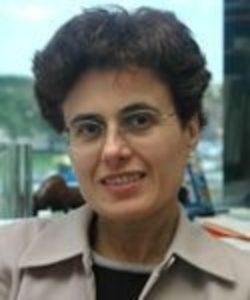
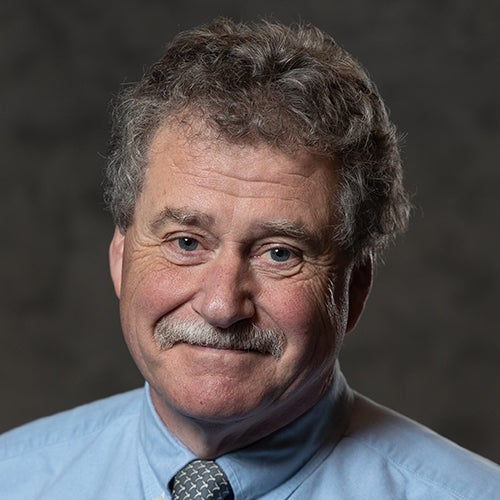
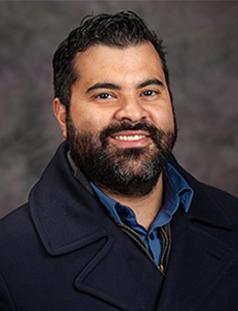
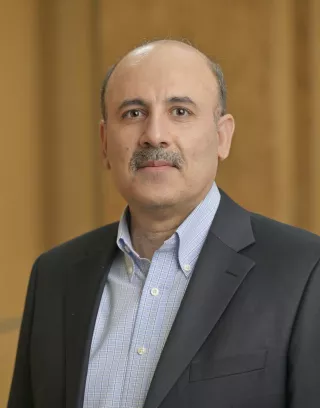
Dr. Berrin Tansel is a Professor in the Department of Civil and Environmental Engineering at Florida International University (FIU). Her expertise spans environmental engineering, wastewater treatment, contaminant transport, and environmental sustainability. She holds advanced degrees from the University of Wisconsin-Madison (PhD, MS) and Middle East Technical University (BS). Prior to FIU, she worked on projects like the Boston Harbor cleanup and NASA's closed-loop water recycling systems for space travel. Dr. Tansel is a Diplomate of the American Academy of Water Resources Engineers and a Board Certified Environmental Engineer. She has received prestigious awards including the 2023 Pohland Medal and 2021 Science Award from AAEES. Her research focuses on PFAS contamination, biosolids management, and oil spill mitigation. She currently serves on boards like the Board of Scientific Counselors at US EPA and is Editor-in-Chief of Environmental Challenges . Her work combines theoretical and applied engineering, addressing challenges in landfill stabilization, biogas quality, and hazardous materials management. She actively engages in policy and education initiatives through roles like commissioner at ABET and program evaluator for engineering accreditation.
Travis Mulliniks is Glenn & Mildred Harvey Associate Professor and Associate Department Head in the Department of Animal and Rangeland Sciences at Oregon State University. His research program focuses on improving beef production efficiency through nutritional physiology, reproductive management, and genetic selection strategies. Research concentrates on: Metabolic efficiency in beef cattle systems Supplementation strategies for rangeland livestock Genetic basis of production traits Precision livestock technologies Recent publications (2024-2025) examine virtual fencing impacts on livestock stress responses, genetic disorders affecting muscle metabolism, and nutritional interventions for reproductive efficiency. Academic Leadership: Oversees graduate training in animal science disciplines and manages departmental academic programs.
Robert Hull is the Henry Burlage Jr. Professor of Engineering and Vice President for Research at Rensselaer Polytechnic Institute (RPI), leading the Center for Materials, Devices, and Integrated Systems (CMDIS). He joined RPI in 2008 as Department Head of Materials Science and Engineering. Previously, he held roles at Bell Laboratories, the University of Virginia (including directing an NSF MRSEC Center and UVA’s Institute for Nanoscale and Quantum Science), and held visiting appointments at the University of Tokyo. He earned his Ph.D. in Materials Science from Oxford University (1983) and a B.Sc. in Physics from Oxford (1980). His research focuses on nanotechnology, electronic materials, and semiconductors, with expertise in thin film growth mechanisms, nanoscale self-assembly, and materials characterization using advanced microscopy. He has authored nearly 300 publications and serves as an associate editor for Applied Physics Reviews . His honors include Fellowships from the American Physical Society and Materials Research Society (MRS), and he served as MRS President (1997). Hull’s leadership spans interdisciplinary research initiatives, including collaborations in energy systems, nanoelectronics, and advanced manufacturing. He oversees RPI’s core facilities, including the Micro/Nano Fabrication Clean Room and Nanoscale Materials Characterization Core, and drives partnerships with industry and federal labs.
Dr. Adrian Correndo is an Assistant Professor and holds the Pick Family Chair in Sustainable Cropping Systems at the Department of Plant Agriculture, Ontario Agricultural College, University of Guelph in Guelph, Ontario, Canada. His research focuses on developing and evaluating sustainable cropping systems that address the challenge of producing food, fuel, and fiber without degrading natural resources. Dr. Correndo's educational background includes: B.S. in Agronomy from the University of Buenos Aires M.S. in Soil Science from the University of Buenos Aires Ph.D. in Agronomy from Kansas State University Dr. Correndo's research spans sustainable agriculture, soil science, and data analytics. His work heavily relies on maintaining and leveraging long-term trials at the Elora Research Station, where management practices such as tillage, crop rotation, cover crops, and fertilization management are studied. He is particularly interested in developing accessible digital tools that apply modern data analytics like machine learning and Bayesian statistics to agricultural challenges. His research bridges the gap between statistical methodology and practical farming applications, with a strong emphasis on reproducible programming and open-source software development. His publication record demonstrates a clear trajectory toward integrating advanced statistical methods with agricultural research. The majority of his work focuses on maize and soybean production systems, soil fertility, and nutrient management. A significant portion of his recent publications involves developing R packages and digital tools that make complex statistical analyses accessible to farmers and agricultural professionals. His research shows a strong commitment to creating practical, science-based solutions for sustainable farming systems in Ontario and beyond. Dr. Correndo has been awarded the prestigious Pick Family Chair in Sustainable Cropping Systems, established by Martin and Denise Pick to develop effective, simple-to-use cropping systems that address soil degradation. Before joining the University of Guelph, Dr. Correndo worked on research and extension in soil fertility and crop nutrition as the Assistant Agronomist (2008-2018) for the Latin America Southern Cone Program of the International Plant Nutrition Institute (IPNI), and from 2018 to 2023 at Kansas State University as a Graduate Research Assistant while pursuing his Ph.D. in Agronomy (2018-2021), and as a Post-doctoral Fellow (2022-2023) working on corn and soybean production research and extension. Dr. Correndo is actively involved with the Elora Research Station, where he maintains long-term trials examining various agricultural management practices. He emphasizes teamwork and mentoring as essential components of his professional and personal philosophy, working to inspire and support the next generation of agricultural leaders.
Dr. Faran Ali is an Assistant Professor at the University of Northern British Columbia (UNBC), affiliated with the Department of Geography, Earth, and Environmental Sciences, Engineering, and the NRES Graduate Program. He holds a PhD from the University of Saskatchewan, an MSc from the IHE Delft Institute for Water Education, and a BSc from the University of Engineering and Technology, Lahore. His research focuses on sediment transport dynamics, climate change impacts on hydrology, and fluvial geomorphology in mountainous regions like the Indus and Mississippi River basins. Dr. Ali's expertise includes spatially distributed erosion modeling, sediment budget construction, and the effects of natural and anthropogenic disturbances on river systems. He employs GIS, remote sensing, and large-scale flume simulations to investigate hyporheic flow and sediment dynamics in gravel-bed rivers. His work bridges hydrology, environmental science, and engineering to address challenges in water resource management and environmental sustainability. He supervises graduate students in the MSc Natural Resources and Environmental Studies (NRES) and MASc programs. His research has explored suspended sediment dynamics, climate change adaptation strategies for river basins, and the integration of models with geospatial technologies for environmental assessment. Dr. Ali is based at UNBC's Prince George campus and actively contributes to interdisciplinary environmental research in British Columbia and globally.
John Bechtold is a Professor in the Department of Mathematical Sciences at New Jersey Institute of Technology (NJIT). His research focuses on combustion theory, fluid dynamics, and applied mathematics, with particular emphasis on premixed flames, diffusion processes, and high-pressure combustion phenomena. He has led multiple National Science Foundation-funded projects, including studies on mathematical models of premixed flames and computational environments for mathematical sciences. His work explores flame propagation dynamics, instabilities in expanding flames, and interactions between flames and surrounding flows. Notable contributions include asymptotic theories for dense fluid combustion, high-pressure flame structures, and flame-flow reversal mechanisms. Collaborative efforts involve analyzing cellular instabilities, spherical flame dynamics, and pressure-driven oscillations in flames. Bechtold’s research has been published in top journals such as the Journal of Fluid Mechanics and Combustion and Flame . His projects emphasize interdisciplinary approaches, combining mathematical modeling with experimental validation to understand complex combustion phenomena. Current activities include examining confinement effects on flame propagation and non-adiabatic flame behavior under varying flow conditions.
Christopher M. Gunn is an Associate Professor in the Department of Economics at Carleton University, part of the Faculty of Public and Global Affairs. He holds a B.A.Sc. from the University of British Columbia, and an M.A. and Ph.D. from McMaster University. His research focuses on macroeconomics, credit and banking, and technological change, with expertise in expectations-driven business cycles, real-financial linkages, and technological adoption. Recent work examines the impact of news shocks on economic variables, inventory dynamics, and financial accelerator mechanisms. His publications appear in journals such as Journal of Money, Credit and Banking and Journal of Monetary Economics. Research Contributions Include: 'What Drives Inventory Accumulation?' (2022) linking inventory behavior to news about economic fundamentals 'Charge-offs, Defaults and the Financial Accelerator' (2022) exploring bank balance sheet effects 'An Expectations-driven Interpretation of the Great Recession' (2013) analyzing the role of belief-driven fluctuations Professional Activities: Office: D-891 Loeb Building Contact: chris.gunn@carleton.ca Active in Carleton University's economics research community
Chad D. Lee is Professor of Grain Crops and Director of the Grain and Forage Center of Excellence at University of Kentucky. His research focuses on optimizing corn, soybean and small grain production systems with emphasis on no-till approaches that balance yield with soil quality enhancement. Holds a PhD in Crop & Soil Sciences from Michigan State University (2002), MS in Agronomy from University of Nebraska-Lincoln (1998), and BS from Berea College (1996). Leads the Grain and Forage Center of Excellence, coordinating research on intensive agriculture and environmental quality across Kentucky. Research investigates management strategies for corn, soybean and small grains in conservation systems. Current projects examine cover crop integration, nutrient management optimization, and soil health assessment in grain cropping systems. Lee coordinates the Kentucky corn hybrid performance trials. Recent publications analyze long-term management impacts on soybean yields, cover crop nitrogen dynamics, and precision irrigation strategies. Research demonstrates consistent focus on practical solutions for sustainable grain production. Teaching includes grain and oilseed production courses. Extension activities provide statewide leadership for grain crop management information dissemination. Engages with commodity organizations to translate research into farming practice. Professional activities focus on developing integrated approaches to productivity and sustainability in grain systems.
Tianshu Feng is an Assistant Professor in the Department of Systems Engineering and Operations Research at George Mason University's College of Engineering and Computing. His research focuses on data-driven approaches in machine learning, statistical modeling, and explainable AI, with applications in healthcare, finance, transportation, and bioinformatics. PhD in Industrial Engineering, University of Washington BS in Statistics, University of Science and Technology of China His work emphasizes developing flexible and robust models through interdisciplinary collaboration. Key research areas include model fairness, active learning, and data exploration. Recent projects include predicting drug responses using neural networks and improving credit decision transparency via Shapley decomposition. His publications span topics like federated learning privacy, zero-inflated transportation models, and gene-environment interactions in diabetes research. He previously worked as a Quantitative Analytics Specialist at Wells Fargo before joining academia.
Brian Thomas is a Research Professor in the Mechanical Engineering department at the Colorado School of Mines (Mines), where he has been since 2015. He holds a B.Eng. from McGill University and a PhD from the University of British Columbia, both in Metallurgical Process Engineering. His research focuses on computational modeling of metals processing, particularly the continuous casting of steel, integrating experimental and computational methods to improve process understanding and quality control. He is also the C.J. Gauthier Professor Emeritus and former Director of the Continuous Casting Consortium (now Continuous Casting Center) at the University of Illinois at Urbana-Champaign. Education: B.Eng., Metallurgical Process Engineering, McGill University PhD, Metallurgical Process Engineering, University of British Columbia Research Interests: Computational modeling of multiphase flow and solidification in steel casting Defect formation and mitigation in continuous casting processes Thermal and mechanical behavior during steel solidification Development of advanced control systems for metallurgical processes His work has led to fundamental insights into continuous casting dynamics, including air gap measurement, bubble behavior, and metallurgical length control. He leads the Continuous Casting Center, a collaborative initiative focused on advancing steel manufacturing technologies. Labs & Collaborations: Continuous Casting Center (Mines), previously leading the Metals Processing Simulation Laboratory at UIUC.
Dr. Dan Wise is a Teaching Professor in the Department of Mechanical Engineering at Colorado State University's Walter Scott, Jr. College of Engineering. With over 25 years of experience as a U.S. Navy Engineering Duty Officer and senior roles at Siemens Government Technologies and DRS Technologies, he specializes in thermal-fluids, energy systems, and marine HVAC design. His research focuses on applied thermodynamics, internal combustion engines, and sustainable energy solutions for military and industrial applications. His educational background includes a Ph.D. in Mechanical Engineering from Colorado State University (2013), an Executive Master of International Business from St. Louis University (2013), and M.S./B.S. degrees in Mechanical Engineering from Oklahoma State University. Dr. Wise teaches courses including Thermodynamics, Internal Combustion Engines, and Energy Engineering. Recent publications demonstrate his focus on fuel characterization, submersible power systems, and marine propulsion efficiency. His work bridges theoretical thermodynamics with practical naval and energy engineering challenges.
Richard Fowles is a Professor of Economics at the University of Utah, holding this position since July 2016. Previously, he served as Visiting Assistant Professor (1987–1990), Assistant Professor (1990–1995), and Associate Professor (1995–2016). His research focuses on applied Bayesian statistical methods, particularly in analyzing non-experimental data, model uncertainty, and policy evaluation. He holds BS and PhD degrees in Philosophy and Economics, both from the University of Utah. His work spans transportation safety (motorcycle/helmet laws, cell phone effects on crashes), criminal justice (bail reform impacts, Miranda rights effects), and environmental risk (avalanche forecasting via BART models). He has contributed to policy analysis in Thailand’s road safety and Thailand’s aesthetic clinics market. His methodologies emphasize Bayesian approaches and sturdy inference techniques. Recent articles highlight policy evaluations, such as the Davis County Jail Diversion Program and Cook County bail reform, alongside technological advancements like driverless cars’ potential to reduce fatalities. His earlier work includes foundational Bayesian model selection and econometric analyses of crime rates and wage inequality. No scientific awards are explicitly listed, but his contributions to econometric methods and policy analysis are substantial. His advising and grants are not detailed in the provided texts. He is associated with the University of Utah’s Economics department, with no mentioned labs or collaborative teams.
Lisa Kakinami is an Associate Professor at Concordia University, affiliated with the Department of Health, Kinesiology & Applied Physiology, the Montreal Health Statistics Centre, and the PERFORM Centre. She holds a PhD in Epidemiology from the University of Rochester School of Medicine and Dentistry and completed a postdoctoral fellowship at McGill University. Her research focuses on obesity and cardiovascular disease risk from epidemiological and applied biostatistical perspectives, emphasizing weight history, eating behaviors, social and built environments, and socioeconomic determinants of health. Publications across 2025-2023 reveal trends in biostatistical methodologies for obesity/health analysis, environmental epidemiology (neighborhood safety, built environment), mental health in youth, and technology validation for dietary tracking. Key subfields include compensatory behavior modeling , cardiometabolic risk stratification , chronobiology of exercise , and social network analysis . Social Science and Medicine (2018): Income and leisure-time physical activity Biostatistics (2021): Adiposity phenotyping vs. BMI Environmental Health (2018): Neighborhood built environment and obesity She has been recognized as a Fellow of Science College for her research contributions. Her supervised students frequently appear as co-authors in Frontiers in Psychology , Appetite , and Preventive Medicine publications. Current projects examine weight history’s health consequences and neighborhood socioeconomic influences on cardiometabolic outcomes.
George C. Alexandropoulos George C. Alexandropoulos is an Associate Professor at the Department of Informatics and Telecommunications, School of Sciences, National and Kapodistrian University of Athens (NKUA). He also holds an adjunct professorship at the University of Illinois Chicago. His research focuses on wireless communication systems, signal processing, and reconfigurable intelligent surfaces (RIS), with contributions to integrated sensing and communications (ISAC), millimeter-wave/THz systems, and distributed machine learning. Education Ph.D. in Computer Engineering and Informatics, University of Patras, Greece (2010) M.A.Sc. in Signal and Communications Processing Systems, University of Patras, Greece (2005) Engineering Diploma (5 years), Computer Engineering and Informatics, University of Patras, Greece (2003) Research Interests Alexandropoulos' work spans algorithmic design for wireless networks, optimization of multi-antenna systems, and full-duplex radios. He is particularly known for pioneering contributions to reconfigurable metasurfaces, including their application in ISAC and 6G networks. His research emphasizes practical implementations, such as prototypes for AoA estimation and field trials for RIS deployment. Articles His publications highlight advancements in secure ISAC, fluid RIS design, and edge-intelligence networks. Recent work explores challenges in THz RIS hardware and OTA edge inference using metasurface-integrated neural networks. Scientific Awards IEEE ComSoc Leonard G. Abraham Prize (2024) IEEE Marconi Prize Paper Award (2021) NKUA Research Excellence Award (2023-2024) Advising & Grants Alexandropoulos has led several EU and industry projects, including contributions to Huawei's 5G standards and TII's AI research. His work often involves interdisciplinary teams and practical prototyping. Labs & Teams He is affiliated with the Communications and Signal Processing division at NKUA and collaborates with institutions like ATHENA Research Center and the Technology Innovation Institute (Abu Dhabi).
Richard Cebula is a Professor in the Department of Economics at the Haslam College of Business, University of Tennessee, Knoxville. His expertise spans Applied Economics, Economic Freedom, Health Economics, Labor Economics, and Public Economics. He investigates topics ranging from tax policies and fiscal impacts to sports economics and regional economic dynamics. His research frequently employs advanced econometric methods like Bayesian modeling and coarsened exact matching (CEM). Recent studies include analysis of energy market shocks during the Russia-Ukraine war, the NFL draft's economic implications, and the relationship between rent levels and health insurance enrollment in Virginia. He has also explored migration patterns influenced by coal dust exposure, post-Great Recession geographic mobility linked to tax freedom measures, and the role of mixed ownership reforms in corporate overinvestment. His work spans macroeconomic policy, banking sector failures (with focus on small banks), and the interplay between tax policies and interest rate yields. Notable contributions include critiques of runaway college costs, empirical analyses of federal budget deficits' impact on interest rates, and theoretical inquiries into tax evasion mechanisms like the FairTax plan. Awards and grants are not explicitly listed in the provided materials. His research collaborates with institutions like the University of Tennessee's Haslam College of Business and engages with real-world policy issues such as homelessness determinants, ESG responsibilities in firms, and the economic impact of the pandemic on jock tax revenues.