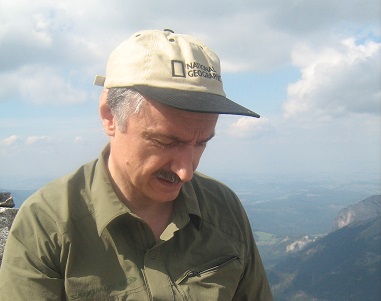
Prof. Igors Gorbovickis is an Associate Professor of Mathematics at the Department of Mathematics, School of Computer Science and Engineering, Constructor University (formerly Jacobs University Bremen). His research focuses on complex dynamical systems, including topics such as renormalization theory, bifurcation analysis, Julia sets, and applications to mathematical physics. He also contributes to discrete geometry, particularly exploring conjectures like the Kneser-Poulsen problem. His work bridges pure mathematics with interdisciplinary applications, emphasizing rigorous analysis of nonlinear systems and geometric configurations. Key areas of investigation include critical point accumulations, Hausdorff dimension estimates, and equidistribution phenomena in parameter spaces. Recent publications highlight advancements in understanding chaotic systems, circle maps, and the interplay between algebraic structures and dynamical behavior. Prof. Gorbovickis collaborates internationally, with co-authored papers appearing in journals like Advances in Mathematics , Ergodic Theory and Dynamical Systems , and Nonlinearity . His office is located at Research I, Room 128 on the Constructor University campus in Bremen, Germany.
Jan de Gier is a Professor at the School of Mathematics and Statistics, The University of Melbourne . He is also the Founding Director of MATRIX , Australia’s residential research institute in the mathematical sciences, and a former Deputy Director and Chief Investigator in the Australian Research Council Centre of Excellence for Mathematical and Statistical Frontiers (ACEMS) . Additionally, he co-founded the Australian and New Zealand Association for Mathematical Physics (ANZAMP) in 2011 and served as its inaugural Chair. His research focuses on solvable lattice models at the intersection of mathematical physics and statistical mechanics . Key areas include the application of quantum integrability , algebraic structures like the Yang-Baxter equation, Hecke algebras, and quantum groups, as well as analytical methods such as complex analysis and elliptic curves. His work bridges pure and applied mathematics through connections between enumerative combinatorics , representation theory , and real-world phenomena like traffic flow modeling via exclusion processes . The 15 most recent articles reflect his expertise in integrable systems , non-equilibrium statistical mechanics , and algebraic combinatorics . Topics span Macdonald polynomials , stochastic duality , quantum spin chains , and traffic modeling , with methodologies involving matrix product forms , exact solutions , and critical phenomena analysis. He has contributed to editorial efforts through the AustMS Gazette and MATRIX Annals, and has been involved in public science communication via opinion pieces on mathematics funding and applications. His work emphasizes the importance of fundamental research in driving technological innovation, as highlighted in media articles discussing pi calculation , zero-knowledge proofs , and mathematics education .
Professor Tomasz Kapitaniak is a distinguished academic in the field of nonlinear dynamics and theoretical mechanics. He serves as a Professor of Theoretical and Applied Mechanics and Head of the Division of Dynamics at the Faculty of Mechanical Engineering, Technical University of Lodz, Poland. His career spans over three decades at the university, where he has made significant contributions to the understanding of nonlinear systems, chaos theory, and mechanical oscillations. Professor Kapitaniak holds advanced degrees in both mechanics and applied mathematics from the Technical University of Lodz and the University of Lodz. His educational background includes: M.Sc. in mechanics, Faculty of Mechanical Engineering, Technical University of Lodz (1982) M.Sc. in applied mathematics, Faculty of Mathematics, Physics and Chemistry, University of Lodz (1985) Ph.D. in mechanics, Faculty of Mechanical Engineering, Technical University of Lodz (1985) D.Sc. in mechanics, Faculty of Mechanical Engineering, Technical University of Lodz (1988) Professor of technical science, title given by the President of Poland (1995) His research focuses on nonlinear dynamics, with particular emphasis on mechanical oscillations, stability, bifurcations and chaos, stochastic dynamics, and applications of nonlinear dynamics in mechanical engineering. Professor Kapitaniak is renowned for his work on the development of methods for controlling chaos without feedback, identification of new types of bifurcations, synchronization mechanisms in coupled mechanical oscillators, and explaining the origin of randomness in mechanical systems. His research has evolved from fundamental theoretical work to increasingly applied studies involving complex networks, biological systems, and engineering applications. Professor Kapitaniak has published over 300 scientific papers in renowned journals, cited over 8,000 times. His work exhibits a consistent focus on understanding complex nonlinear phenomena across various physical systems. The trend in his recent publications shows continued exploration of synchronization phenomena, extreme events in dynamical systems, and applications of nonlinear dynamics to biological, mechanical, and physical systems. His most recent work demonstrates a growing interest in multistability, chimera states, and the prediction of tipping phenomena in complex systems. Among his notable scientific achievements and distinctions are: Election as a member of the Polish Academy of Sciences (corresponding member in 2013, ordinary member in 2019) Election to Academia Europaea in 2021 Honorary doctorates from Saratov State University (Russia, 2001) and Lublin University of Technology (Poland, 2014) Multiple prestigious fellowships including the British Council Fellowship (1989), King Abdul Aziz Award Fellowship (1990), and Fulbright Fellowship (1997) Editorial roles including Associate editor of Chaos, Solitons and Fractals since 1990 and member of editorial boards of several other prestigious journals Throughout his career, Professor Kapitaniak has been actively involved in mentoring the next generation of researchers, having supervised numerous PhD students including Jerzy Wojewoda, Anton van Wyk, Barbara Błażejczyk-Okolewska, Andrzej Stefański, Andrzej Kozłowski, and Przemysław Szumiński. He has secured significant research funding from various national and international sources including the Ministry of Science and Higher Education (Poland), Deutscher Akademischer Austauschdienst, The Royal Society of London, and others. His research team has maintained strong international collaborations with institutions worldwide, including universities in the United States, United Kingdom, Germany, Brazil, Russia, and Ukraine. He leads the Division of Dynamics at the Technical University of Lodz, which serves as a hub for research in nonlinear dynamics, mechanical oscillations, and related fields. The division maintains strong international collaborations with institutions worldwide and continues to produce cutting-edge research in the field of nonlinear dynamics and its applications.
Scott Rodney is a faculty member at Cape Breton University in the Department of Math, Physics and Geology. He holds a PhD in Mathematics from McMaster University (2007), where he studied under E. T. Sawyer, McKay Professor of Mathematics, focusing on Partial Differential Equations and Harmonic Analysis. His active NSERC-supported research program centers on degenerate elliptic equations and Sobolev inequalities. Bachelor’s in Mathematics from Concordia University (Montreal, PQ) PhD in Mathematics from McMaster University (2007) Dr. Rodney’s research spans Partial Differential Equations, Harmonic Analysis, and Functional Analysis, with an emphasis on degenerate elliptic equations, Orlicz spaces, and regularity theory. His work explores existence, uniqueness, and boundedness of solutions, alongside embeddings of degenerate Sobolev spaces. The 15 most recent articles highlight his focus on degenerate elliptic equations, Orlicz spaces, and variable exponent settings. These works address existence theory, regularity, embedding theorems, and applications of matrix weights. One 2021 article bridges mathematics with educational research, analyzing student cognition of counterexamples.
Miroslav Bulíček is an Associate Professor at the Mathematical Institute of the Faculty of Mathematics and Physics, Charles University in Prague, Czech Republic. He has been with Charles University since 2006, progressing from Researcher to Senior Assistant Professor (2012-2021) and currently serving as Associate Professor since January 2022. He is also a Senior Researcher at the University Center for Mathematical Modeling, Applied Analysis and Computational Mathematics (MathMac) since 2014. His educational background includes a habilitation in Mathematics-Mathematical Analysis from Charles University (2021), a Ph.D. in Mathematical and Computational Modeling from Charles University (2003-2006), and a Master's degree in Mathematical modeling in physics and technology from Charles University (1998-2003). Bulíček's research focuses on Partial differential equations, Continuum thermodynamics, and Mathematical modelling . His work primarily addresses the mathematical analysis of nonlinear systems describing flows of incompressible fluids, with particular emphasis on thermodynamically compatible models, implicit constitutive relations, and viscoelastic rate-type fluids. He has made significant contributions to the understanding of existence, uniqueness, and regularity of solutions to complex fluid models, especially those describing far-from-equilibrium systems in continuum thermodynamics. His recent publications demonstrate a strong focus on advanced mathematical analysis of fluid models with applications in material sciences. The research trends show increasing sophistication in handling non-Newtonian fluids, stress-diffusion phenomena, and thermodynamically consistent models. His work bridges pure mathematical analysis with practical applications in continuum mechanics, particularly in the analysis of viscoelastic rate-type fluids with stress diffusion. NEURON Fund for Support of Science Award (2012) for the project "Qualitative analysis of incompressible Navier-Stokes-Fourier equations" Czech Mathematical Society Award for young researchers (2014) for publications during 2009-2013 Bulíček has successfully supervised multiple PhD students including Mark Dostalík, Michael Zelina, Michal Bathory, and Tomáš Los. He serves as principal investigator for the GAČR project 20-11027X "Mathematical analysis of partial differential equations describing far-from-equilibrium open systems in continuum thermodynamics" (2020-present). His research has been supported by various grants including GAČR project 18-12719S, GAČR 16-03230S, and ERC-CZ no. LL1202, demonstrating sustained funding for his research program. He is actively involved in the University Center for Mathematical Modeling (MathMac) and has organized several international conferences and workshops, including the "Modelling, partial differential equations analysis and computational mathematics in material sciences" conference in Prague (2024) and the "Mathematical Aspects of Fluid Flows" EMS School in Kácov (2024), contributing significantly to the mathematical community in fluid dynamics and partial differential equations.
Hong Wang is a Professor in the Department of Mathematics at the University of South Carolina, part of the McCausland College of Arts and Sciences. He specializes in numerical analysis and differential equations, with a focus on numerical methods for fractional and variable-order equations. His work addresses complex boundary conditions, optimal control, and scientific computing challenges in advection-diffusion systems. Education Ph.D. in Mathematics, University of Wyoming (1992) Research Interests His research emphasizes numerical approximation techniques for differential/integral equations, particularly fractional diffusion-wave equations, variable-order models, and stochastic systems. Key areas include finite element methods, spectral methods, and fast algorithms for solving high-dimensional and time-dependent problems. He explores applications in optimal control, viscoelasticity, and multi-scale modeling. Recent Work Trends Recent publications highlight advancements in fractional calculus applications, including variable-exponent diffusion, distributed-order equations, and stochastic fractional differential equations. His work often combines theoretical analysis with computational efficiency, addressing challenges like nonsmooth parameters and singular density functions. Grants and Advising No specific grants or advisees are listed, but his research collaborations span computational mathematics, applied physics, and engineering systems. Labs/Teams No dedicated lab or team is explicitly mentioned, though his research aligns with computational and applied mathematics groups at the University of South Carolina.
Michael Nussbaum is a Professor of Mathematics at Cornell University, affiliated with the College of Arts and Sciences. He holds a Ph.D. (1979) and Dr. Sc. (1990) from the Academy of Sciences Berlin (Germany). His research focuses on quantum statistics, applying mathematical statistics to analyze quantum experiments and developing asymptotic methods for hypothesis testing, equivalence theory of statistical experiments, and nonparametric models. Key contributions include work on quantum Chernoff bounds, Gaussian approximation of quantum models, and asymptotic equivalence between statistical experiments. Recent research emphasizes quantum hypothesis testing, low-rank quantum state estimation, and asymptotic equivalence with quantum Gaussian white noise. Supported by an NSF Grant (DMS-1915884), his work bridges operator algebras, quantum information, and noncommutative probability. Publications span foundational topics like nonparametric regression, spectral density estimation, and functional empirical processes. He teaches courses such as Statistical Theory and Application in the Real World and supervises graduate research. His lab explores interdisciplinary applications of asymptotic statistical methods in quantum engineering and communication technologies.
Roman Frigg is Professor of Philosophy at the London School of Economics and Political Science (LSE) , affiliated with the Department of Philosophy, Logic and Scientific Method . He serves as Director of the Centre for Philosophy of Natural and Social Science (CPNSS) and Co-Director of the Centre for the Analysis of the Time Series (CATS) . Holding a PhD from the University of London and MScs in theoretical physics and philosophy from the University of Basel, his research spans philosophy of science , statistical mechanics , and climate modeling . Education : PhD (University of London), MSc (University of Basel: Theoretical Physics, Philosophy) His work addresses foundational questions in statistical mechanics and thermodynamics , including equilibrium theory, entropy interpretation, and relations between Boltzmannian and Gibbsian frameworks. Recent publications focus on probabilistic forecasts in chaotic climate models , culminating in the co-authored book The Fundamentals of Thermodynamics (Springer, 2025). Articles explore topics like the Ergodic Hierarchy , GRW quantum theory , and robustness analysis in climate science. Roman has made significant contributions to reconciling deterministic dynamics with objective probability via Humean interpretations. His collaborations with Charlotte Werndl, Carl Hoefer, and David Lavis have produced key insights into typicality , chaos-randomness relations , and non-equilibrium thermodynamics . Scientific Awards : Friedrich Wilhelm Bessel Research Award (Alexander von Humboldt Foundation) Roman supervises PhD students on topics ranging from scientific representation to quantum mechanics and climate policy uncertainty . His website provides access to his publications and teaching materials.
Craig Cowan is an Associate Professor in the Department of Mathematics at the University of Manitoba, located in Winnipeg, Manitoba. He is affiliated with the Faculty of Science and focuses on research in Analysis of Partial Differential Equations, particularly elliptic equations with nonlinear gradient terms and critical advection. His work explores existence, regularity, and symmetry properties of solutions to supercritical problems, often involving mixed local/nonlocal operators and Neumann boundary conditions. Research interests include: Elliptic systems, Fourth-order equations, Supercritical growth phenomena, and Nonlinear advection-diffusion models. His studies frequently address questions of regularity of extremal solutions, stability of entire solutions, and Liouville-type theorems. Publications since 2021 reflect a focus on advancing methodologies for supercritical problems via variational principles and fixed-point arguments, with applications to nonradial domains and perturbed geometries. Recent work examines singular solutions, Neumann problems with mixed diffusion, and Hénon-type equations. No academic awards or formal advisees are listed in the provided materials. His research has consistently addressed challenges in nonlinear PDEs across diverse domains, emphasizing both theoretical developments and technical estimates for gradient-dependent systems.
Takuya Sobukawa is a Professor at Waseda University's Global Education Center since 2014. His academic journey includes professorships at Okayama University (1997–2010, 2010–2014) and Hyogo University of Teacher Education (1997–2010). His research spans Real Analysis , Interpolation/Extrapolation Theory , and Mathematics Education . He has led significant grants on function spaces and operator theory, with a focus on Morrey, Lorentz, and Orlicz spaces. Education: M.SC. and Ph.D. from Keio University (1986–1992). His publications bridge complex interpolation , stochastic convolutions , and harmonic analysis . Recent works include Morrey space preduals (2019) and applications to PDEs. He has presented globally, including at RUDN University (2017) and Kyoto University RIMS (2004), and contributed to projects on ICT in mathematics education and English-math integration . Notable grants include JSPS-funded studies on variable-exponent function spaces (2012–2015) and geometric constants in Banach spaces (2007–2009).
Alessandro Fedeli is an Associate Professor in the Department of Naval, Electrical, Electronic and Telecommunications Engineering (DITEN) at the University of Genoa, Italy. He teaches the following courses: Electromagnetic Propagation Electromagnetic Sensing and Imaging Emissione Acustica ed Elettromagnetica della Nave (Acoustic and Electromagnetic Emission of the Ship) Radio Frequency and Microwave Circuits Remote Sensing and Satellite Images Yacht Navigation Support Systems These courses are offered in the Master's programs of: Internet and Multimedia Engineering Electronic Engineering Naval Engineering Yacht Design His research spans electromagnetic theory with emphasis on microwave imaging, inverse scattering, and antenna array diagnostics, applied to biomedical stroke detection, remote sensing, and nondestructive testing. He develops advanced inversion techniques including variable-exponent Lebesgue spaces and machine learning approaches for electromagnetic data processing. Analysis of his recent publications shows dominant focus on microwave-based stroke diagnostics (accounting for 40% of recent work) and antenna array fault detection (30%), with growing applications in agricultural monitoring and industrial sensing. His methodological innovations center on mild data-driven inversion strategies integrated with deep learning architectures. No scientific awards were mentioned in the available information. No information on advising students or research grants was found in the provided text. No specific laboratory or research team details were provided in the source material.
Prof. Dr. Sebastian Mentemeier is a permanent Professor (W2) in the Department of Mathematics 2 at the Institute for Mathematics, Mathematics Education and Computer Science Education, University of Hildesheim, Germany, a position he has held since October 2019. He also holds significant administrative roles as Vice Dean and Dean of Studies in Faculty 4 (Mathematics, Natural Sciences, Economics & Computer Science), and is a member of the Institute's Board and the Central Commission for Studies and Teaching. His research is centered on advanced probability theory, with a focus on branching processes, products of random matrices, and extreme value theory for time series. His research interests include: Non-Gaussian limit theorems Branching processes, particularly Multitype Branching Random Walks Products of random matrices Extreme value theory for time series Heavy-tailed random variables Conditional limit theorems His recent publications, spanning from 2012 to 2022, demonstrate a consistent and high-impact research trajectory in theoretical probability. The articles reveal a strong trend in analyzing the asymptotic behavior of complex stochastic systems, particularly those defined by recursive equations and random matrix products. His work frequently intersects with statistical mechanics and time series analysis, often investigating the tail behavior and limit laws of solutions to stochastic fixed-point equations, with a particular emphasis on heavy-tailed and multivariate settings. Prof. Mentemeier has been a Principal Investigator on two major DFG projects: 'Nonlinear stochastic fixed-point equations with applications in statistical mechanics' (2017-2023) and 'Products of Random Matrices, Noncommutative Branching Random Walks, and Multitype Branching Random Walks in Random Environments' (since 2021). He is an active member of the academic community, serving as a referee for journals such as Stochastic Processes and their Applications and Journal of Theoretical Probability , and has co-organized international conferences on recursive stochastic processes and branching models. He supervises PhD and Master's students, although specific names are not listed on his profile. He has led a research group within the Department of Mathematics 2 and is a key member of the Institute's academic board. His work is conducted within the broader context of the Faculty of Mathematics, Natural Sciences, Economics & Computer Science at the University of Hildesheim.
Assoc. Prof. Dušan Pokorný, Ph.D., is a faculty member at the Department of Mathematics , Faculty of Mathematics and Physics , Charles University , Prague, Czech Republic. His teaching focuses on Mathematical Analysis , Real Functions , and Ordinary Differential Equations , with materials including detailed exercise sets, solved examples, and video tutorials on topics like power series, implicit functions, and extrema of functions of several variables. He supervises bachelor's and master's theses in fractal geometry, integral geometry, and real analysis. His research interests include convex functions, curvature measures, WDC sets, and geometric properties of metric spaces. Publications span journals like Real Analysis Exchange , Journal of Mathematical Analysis and Applications , and Advances in Mathematics , often in collaboration with researchers such as Jan Rataj and Luděk Zajíček. Teaching materials and preprints of recent works are accessible via his homepage .
Lars Erik Persson is a Senior Professor at Karlstad University and part-time Professor at UiT The Arctic University of Norway. He holds honorary professorships at Eurasian National University and Uppsala University (Emeritus). His research focuses on Homogenization Theory, Inequalities, Functional Analysis, and Partial Differential Equations, with significant contributions to Mathematics Education and Engineering Mathematics. Persson has supervised 71 PhD students and 14 Licentiate students, a record in Nordic countries. **Education**: PhD in Mathematics (1974), Docent degree (1987). **Awards**: Orlicz Medal (2003), Louise Petren Award (2002), Ångpanneföreningens Award (2008), and international recognition from Kazakhstan and the Czech Mathematical Society. **Publications**: Over 320 scientific works, including 15 books and collaborations with 170+ researchers globally. **Research Interests**: Homogenization Theory, Inequalities, Functional Analysis, PDEs, and their applications. His work bridges pure and applied mathematics, influencing engineering and education. **Current Roles**: Active in international conferences, doctoral supervision, and co-editing journals like *Mathematical Inequalities & Applications*. **Awards & Honors**: Extensive list includes medals for contributions to female mathematicians, societal knowledge transfer, and interdisciplinary research. **Labs/Teams**: Founded the Centre of Applied Mathematics at Luleå University and directed the Interdisciplinary Mathematics Centre at Uppsala.
Prof. Marek Balcerzak is a Research and Teaching Professor at the Department of Applications of Modern Mathematical Analysis , Lodz University of Technology. His work bridges mathematical analysis, topology, and applied dynamical systems. Research Interests: Real analysis, measure theory, Baire category, ideal convergence, Cantor sets, and applications to dynamical systems and control theory. Publication Trends: Recent articles focus on Baire category, ideal convergence, and Lyapunov exponent applications in chaos theory. His work spans pure mathematics (e.g., equi-Lebesgue families) and engineering (e.g., neural network control systems). Advising: Supervised 13 PhD students, including Piotr Nowakowski (Cantor sets), Szymon Głąb (descriptive set theory), and Paolo Leonetti (ideal convergence). Authored four textbooks, including Foundations of Ergodic Theory (2022). Scientific Contributions: Developed density operators, solved problems in Marczewski-Burstin representations, and extended Birkhoff integral convergence theorems. His interdisciplinary work connects mathematical analysis with control systems and nonlinear dynamics.