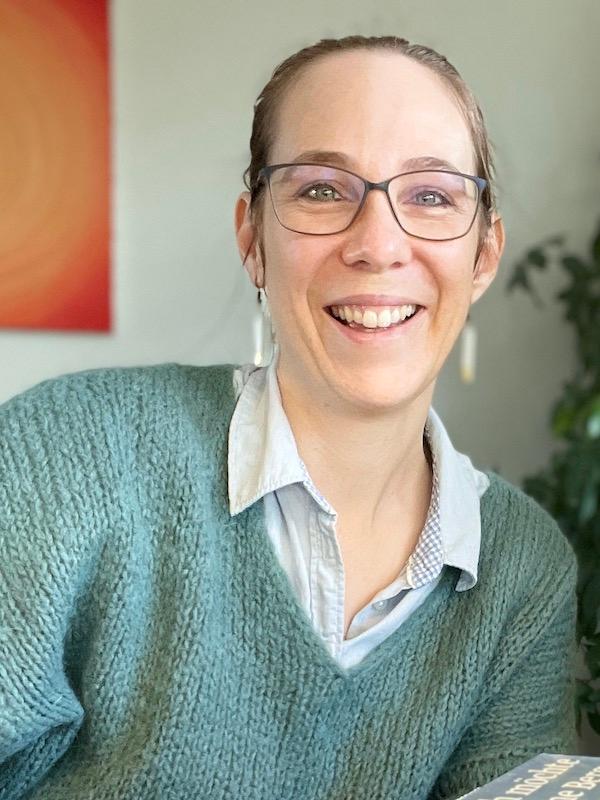
Dr. Christina Haag is a postdoctoral researcher at the Institute for Implementation Science in Health Care , affiliated with the Faculty of Medicine at the University of Zurich . She leads interdisciplinary projects at the intersection of mental health, digital health, and computational linguistics, focusing on chronic illnesses like multiple sclerosis (MS). Her work leverages free text, sensor data, and advanced analysis techniques such as hierarchical modeling and natural language processing (NLP). Doctorate from the Institute of Psychology, University of Zurich Research experience at the MRC Cognition & Brain Sciences Unit, University of Cambridge Her research explores: Daily-life mental and physical health indicators in MS Development of NLP methods for text classification and topic modeling Digital biomarker creation using wearable sensor data Mindfulness interventions for affective executive control Implementation of remote monitoring tools in healthcare Her recent publications highlight trends in applying NLP and machine learning to unstructured health data, analyzing MS activity patterns, and refining interdisciplinary research methodologies. She contributes to DSI communities including AI & Law , Health , and Ethics , and collaborates on projects like BarKA-MS and DSI-Approach . She is a core member of the UZH Digital & Mobile Health Group , working under Prof. Viktor von Wyl.
PD Dr. Günter Hoch is a Senior Lecturer in the Department of Environmental Sciences – Botany at the University of Basel , Switzerland. His research centers on the ecophysiology of trees , with a particular emphasis on carbon storage dynamics , drought stress responses , and the resilience of forest ecosystems to climate change. Research Focus: Carbon allocation and storage in trees under carbon limitation Physiological controls of non-structural carbohydrate reserves (e.g., starch, lipids) Drought-induced tree mortality and recovery mechanisms Whole-tree carbon balance and growth under environmental stress Scaling from individual tree responses to ecosystem-level processes Approach: His team integrates field observations , experimental manipulations , and biophysical modeling to understand how trees regulate carbon reserves and water relations under stress. A key goal is to identify biomarkers (e.g., starch concentrations in sapwood) that reflect the carbon status and health of trees. Recent Work: His publications span high-impact journals like Nature Reviews Earth & Environment , New Phytologist , and Global Change Biology , addressing topics such as hydraulic failure, carbon starvation, and the impacts of extreme droughts (e.g., 2018 Central European drought) on forest ecosystems. Collaborations: He contributes to large-scale networks like TreeNet , a Swiss initiative monitoring drought and growth indicators in forests, and collaborates internationally on projects linking plant ecophysiology to biogeochemical cycles. Contact: guenter.hoch@unibas.ch | Tel: +41 (0)61 207 35 14
Clarissa Alicia Kroll is a Research Fellow affiliated with the Professorship for Climate Dynamics at ETH Zurich's Department of Environmental Systems Science. Her research focuses on tropical atmospheric circulation, stratospheric water vapor dynamics, and process-based model evaluation. She holds an ETH Postdoctoral Fellowship (2024) and contributes to high-performance computing projects involving km-scale weather and climate simulations on systems like Alps and Daint. Her work spans interdisciplinary fields including climate dynamics, atmospheric chemistry, and medical physics. Key research areas include the impact of volcanic eruptions on stratospheric moisture, hydrometeor transport pathways in the tropical tropopause layer, and improving computational models for MRI-guided radiation therapy. Research Highlights: Analysis of indirect stratospheric moisture changes post-volcanic eruptions Development of high-resolution climate models (ICON-Sapphire) Investigation of spatial distortion effects in medical imaging Publications reflect her dual expertise in climate science and medical physics, with recent contributions to Communications Earth and Environment , Environmental Research Letters , and Geoscientific Model Development . She actively collaborates with global research networks on both climate systems and computational healthcare technologies.
Christoph Raible is a Professor at the Climate and Environmental Physics department within the Physics Institute at the University of Bern, Switzerland, a position he has held since 2011. He also maintains a strong affiliation with the Oeschger Centre for Climate Change Research (OCCR) at the University of Bern, where he has been a Senior Lecturer since 2011. His research focuses on atmospheric dynamics, climate modeling, and understanding past and future climate change patterns. Professor Raible's research interests encompass Processes of the Climate System, Atmosphere-Ocean-Sea Ice Interaction, Climate Modelling, Atmospheric Dynamics, Past and Future Climate Change, Predictability, Tropical and Extra Tropical Cyclones, and Climate Impacts. His work bridges theoretical climate science with practical applications, particularly in understanding extreme weather events and their implications for society. He has developed expertise in analyzing historical climate patterns to inform future projections, with particular attention to European climate systems and their global connections. Analysis of his recent publications reveals a strong focus on paleoclimatology, climate modeling, and the societal impacts of climate change. His research spans from reconstructing historical climate patterns using proxy data to projecting future climate scenarios under various forcing conditions. Key themes include Mediterranean droughts, Atlantic Meridional Overturning Circulation variability, glacial climate dynamics, and the health impacts of climate change. His methodological approach combines advanced climate modeling techniques with statistical analysis of observational data. Professor Raible has been actively involved in numerous significant research projects including the NCCR Climate program (serving as Work Package leader), the SNF Sinergia project on solar influence on terrestrial climate, and collaborative projects with SwissRe on climate change impacts. He has also contributed to major international climate initiatives including the CH2018 Climate Scenarios for Switzerland. His teaching responsibilities include graduate-level courses on atmospheric circulation and climate modeling at the University of Bern.
Stéphane Commend is an Associate HES Professor at the Fribourg School of Engineering and Architecture (HEIA-FR) under HES-SO Valais-Wallis. He also holds a lecturer role at the School of Engineering and Management of the Canton of Vaud. His primary research focuses on geotechnics, numerical simulations, and probabilistic modeling applied to infrastructure projects like tunneling and deep excavations. Education and affiliations include roles across multiple HES-SO institutions, with a strong emphasis on integrating advanced computational methods into geotechnical engineering. Notable projects include the Grand Paris Express tunnel project, Bayesian inference for wood constitutive modeling, and probabilistic risk analysis for urban construction. Research interests span soil-structure interaction, finite element modeling, and uncertainty quantification. Recent work emphasizes Bayesian methods for parameter calibration, machine learning in excavation design, and natural hazard vulnerability assessment. Key contributions include frameworks linking ZSOIL and UQLab for reliability analysis, and prototypes like SLIDE-PM for mudflow impact modeling. Current projects (e.g., iBAG and OptiSoil) focus on optimizing construction methods using AI and data-driven approaches. He leads collaborative teams across HES-SO institutes and academic partners like EPFL and CETU. Key Projects: iBAG Project (2022–2025): Bayesian methods in geotechnics OptiSoil (2019–2025): Machine learning for excavation design TULIP Project: TBM-pile interaction probabilistic analysis
Jonathan S. Skinner is a Professor at Dartmouth College, Department of Economics, and a professor at the Dartmouth Institute for Health Policy and Clinical Practice within the Geisel School of Medicine. He serves as the Aging Program Director at the National Bureau of Economic Research (NBER) and has contributed extensively to understanding healthcare productivity, technology adoption, and policy implications for aging populations. Key research areas: Health Economics, Economics of Aging, Public Policy Current projects focus on Medicare/Medicaid spending, geographic healthcare disparities, and pandemic impacts on vulnerable populations. Publications (2023–2010) reveal trends in healthcare fraud networks , racial segregation in hospital admissions , and end-of-life expenditures . His work often integrates Medicare claims data and network analysis to assess systemic inefficiencies. Recent scientific collaborations include partnerships with institutions such as the NBER and JAMA Network Open. He has analyzed regional mortality disparities and technology diffusion in clinical settings, with implications for public health strategy.
Cécile Münch-Alligné is a Professor in Hydraulic Energy at the University of Applied Sciences and Arts Western Switzerland (HES-SO) in Sion, where she serves as the Head of the Hydroelectricity Research Group and the Renewable Energy Program. She leads the Hydro Alps Lab, which conducts applied research in hydropower combining experimental and numerical approaches. Her work focuses on enhancing the flexibility of both small and large hydropower plants, with particular emphasis on adapting these systems to the evolving energy landscape and integration of renewable energy sources. Her educational background includes a BSc in Energy and Environmental Techniques, an MSc in Engineering, and a BSc in Industrial Systems, all from HES-SO Valais-Wallis. Her research spans multiple domains within hydraulic engineering and renewable energy systems, with particular expertise in CFD simulation, numerical methods, and hydraulic machine design. Münch-Alligné's research interests primarily center around improving hydropower flexibility through innovative approaches such as hydraulic short-circuit operating modes, variable speed operation, and energy recovery systems in water networks. She investigates both large-scale pumped storage power plants and micro-hydropower systems for urban water networks, with a strong focus on practical implementation and commercialization of research findings. Her work bridges theoretical modeling with experimental validation to address real-world challenges in the energy transition. Her research has been published extensively in leading journals, covering topics from Pelton turbine dynamics and Francis turbine vortex analysis to micro-turbine implementations in drinking water networks. The publications reveal a clear trend toward enhancing operational flexibility of hydropower systems to better integrate with intermittent renewable energy sources, with increasing emphasis on practical demonstration projects and commercial applications. As Principal Investigator, she has led multiple significant research projects including the SCCER 4 WP 3.2.0 2017-2020 (Supply of Electricity), Hydrolienne pour canaux artificiels Centrale de Lavey, and SOLUTION DE TRANSFERT D'ENERGIE PAR POMPAGE-TURBINAGE A PETITE ECHELLE. These projects, totaling over 2 million CHF in funding from sources including CTI, OFEN, and industrial partners, demonstrate her ability to secure substantial research funding and collaborate effectively with both academic and industry partners. Münch-Alligné leads the Hydro Alps Lab research team, which includes numerous researchers such as Steiner Amandus, Walpen Olivier, Vaccari Aldo, and others. Her collaborative approach extends to partnerships with institutions like Stahleinbau GmbH and The Ark Energy, facilitating the transfer of knowledge from research to industry application. The lab's work spans from fundamental fluid dynamics research to full-scale demonstration projects, creating a comprehensive pipeline from theory to practical implementation.
Grzegorz Chrupała is an Associate Professor at the Department of Cognitive Science and Artificial Intelligence , Tilburg University, where he leads research in computational approaches to multimodal communication. Previously, he was a postdoctoral researcher at Saarland University's Spoken Language Systems group and earned his PhD from Dublin City University's School of Computing. His research bridges biological and artificial computation , focusing on enabling machines to learn language from multimodal data (speech, gestures, visual-auditory stimuli) as children do naturally. This involves developing and interpreting deep learning architectures, analyzing emergent representations, and advancing speech technology for under-resourced languages. Key themes include Visually grounded speech modeling Feature attribution and model interpretability Human-inspired learning paradigms BlackboxNLP workshop leadership His recent publications examine speech model reliability , lexical tone encoding , and contextual dependencies in NLP systems. He mentors a team of PhD candidates and alumni working on topics like user-centric interpretability, bioacoustics, and disentangled speech representations. He also serves on the board of the Dutch Open Speech Technology Foundation, chairs Interspeech 2025 tutorials, and contributes as an Action Editor for TACL.
Katharina Hartmuth is a Researcher at ETH Zurich's Department of Environmental Systems Science, specializing in Arctic climate dynamics and weather systems. Her work focuses on understanding seasonal variability, extreme climate events, and the role of atmospheric processes in a changing climate. Key research areas include Arctic moisture transport, weather system dynamics, and the interplay between atmospheric and oceanic fluxes in polar regions. Her recent publications analyze Arctic extremes, moisture pathways, and isotopic signatures in cyclonic systems. These studies contribute to advancing climate models and predicting future climate impacts in polar environments. Collaborations involve interdisciplinary teams examining Arctic and Southern Ocean meteorology. No scientific awards are listed, and no advising roles or grants are specified in the available data. Her research aligns with ETH Zurich's broader environmental systems science initiatives.
Tobias Geyer is a Research Professor and Privatdozent at ETH Zurich's Department of Information Technology and Electrical Engineering, with an adjunct role as Extraordinary Professor at Stellenbosch University, South Africa. He leads ABB's R&D platform for medium-voltage drives (ACS6000/6080) and serves as a Corporate Executive Engineer for power converter control methods. His career spans roles at GE Research, the University of Auckland, and ABB's Corporate Research Centre. Education: Dipl.-Ing. (ETH Zurich, 2000), Ph.D. (ETH Zurich, 2005), Habilitation (ETH Zurich, 2017). Research focuses on model predictive control (MPC), high-power converters, and grid integration strategies. Key areas include optimized pulse patterns, thermal management, and control of medium-voltage drives. Notable achievements include the IEEE Fellow distinction (2022), Semikron Innovation Award (2021), and five prize paper awards. He authored a seminal book on MPC in power electronics and serves on editorial boards for top journals. Current projects emphasize digitalization, predictive maintenance, and special applications in oil/gas and offshore wind sectors.
Professor Bradley J. Nelson is a leading academic at the Swiss Federal Institute of Technology Zurich (ETH Zurich) , affiliated with the Department of Mechanical and Process Engineering . His work bridges robotics, biomedical engineering, and nanotechnology, focusing on magnetic microrobotics and electromagnetic navigation systems for medical applications. Research Interests : Microrobotics, biomedical engineering, magnetic navigation, targeted drug delivery, and continuum robots. Collaborations : Extensive partnerships with institutions like Advanced Science , Nature Communications , and Science Robotics . Recent Work : Developments in variable stiffness catheters, nanomotors, and electromagnetic navigation systems for medical devices. Awards : No specific awards mentioned in the provided texts. Grants and Advising : No explicit details provided, but his role as a professor suggests leadership in research and mentoring. Labs and Teams : Works within ETH Zurich’s Department of Mechanical and Process Engineering , contributing to cutting-edge research in magnetic microrobotics and biomedical device navigation.
Marina Zapater Sancho is a researcher at the Embedded Systems Laboratory (ESL) within the School of Engineering at École Polytechnique Fédérale de Lausanne (EPFL) . She specializes in computer architecture, with a focus on energy-efficient systems, AI accelerators, and memory-centric computing paradigms. Research Interests: Compute-Near-Memory (CnM) : Pioneering architectures like SideDRAM and processing-near-bank designs to reduce energy consumption and latency in DRAM systems. AI Accelerators : Frameworks such as LIONHEART for analog-digital hybrid systems, and Gem5-AcceSys for exploring interconnects in ML accelerators. System Simulation : Contributions to RISC-V full-system simulation validation (gXR5) and component-level calibration methodologies. Her work bridges software and hardware, addressing challenges in heterogeneous systems, thermal management in 2.5D/3D packages, and virtual memory optimization for cache-intensive workloads. Recent trends emphasize energy-proportional computing and edge AI deployment . Grants & Collaborations: Funded by EU H2020 programs and the ACCESS-AI Chip Center (Hong Kong), her research is conducted within the ESL team led by Prof. David Atienza Alonso.
Tim Ruben Davidson is a Researcher at the Digital Life Lab (DLAB) within the School of Computer and Communication Sciences at EPFL. His current role is Doctoral Assistant, pursuing a doctoral program in Computer and Communication Sciences. His research focuses on advanced machine learning topics including deep generative models, agentic systems, synthetic data applications, and representation learning. His work bridges theoretical advancements in AI with practical implications, particularly in understanding AI agency, synthetic data generation, and latent space structures. Key research trends in his articles include exploring AI self-awareness, evaluating AI-driven peer review systems, and optimizing generative models through geometric and topological approaches. He has contributed to foundational studies on hyperspherical VAEs and reparameterization techniques on Lie groups, advancing mathematical foundations of neural networks. His work is published in top-tier venues and reflects interdisciplinary engagement between computer science, mathematics, and ethical AI considerations.
Dr. Ivana Kovacevic is a Lecturer at the Department of Information Technology and Electrical Engineering at ETH Zürich. Her research focuses on power electronics, semiconductor device modeling, and electromagnetic analysis of wide bandgap devices. ETH Zürich, Department of Information Technology and Electrical Engineering Contact: kovacevic@aps.ee.ethz.ch Her research explores SiC power MOSFETs, emphasizing their dynamic performance, reliability, and optimization through advanced modeling techniques like the Partial Element Equivalent Circuit (PEEC) method. She investigates parasitic extraction, thermal behavior, and stability issues in power modules, contributing to design improvements for high-efficiency systems. Her publications highlight trends in electromagnetic modeling, device-circuit interactions, and reliability analysis under extreme conditions. Key subfields include gate resistance dynamics, frequency-dependent capacitances, and multi-chip module design. Current projects involve virtual prototyping for power electronics and mission profile-based optimization of wearable power systems.
Dr. Tamar Kohn is a Full Professor at EPFL, leading the Laboratory of Environmental Virology (LEV) within the Institute of Environmental Engineering (IIE), School of Architecture, Civil and Environmental Engineering (ENAC). She holds additional roles as Director of the IIE-GE unit and serves on the ENAC School Direction. Her expertise focuses on environmental virology, waterborne pathogens, and disinfection mechanisms. Education: 2000–2004: PhD in Environmental Engineering, Johns Hopkins University 1999: Diploma in Environmental Sciences, ETH Zurich 2004–2006: Postdoc at UC Berkeley Research Interests: Her work investigates viral behavior outside hosts, particularly in water and air. Key areas include viral inactivation mechanisms, environmental stability of pathogens, and applications in wastewater surveillance. She explores how factors like pH, salinity, organic compounds, and microbial interactions influence virus survival and transmission. Key Contributions: Recent studies highlight aerosol pH's role in influenza stability, bacterial promotion of viral inactivation in lakes, and mpox monitoring via wastewater. Her lab also models virus transport in Lake Geneva under climate change scenarios. Advising & Grants: Supervised over 20 PhD students, including Chaojie Li (2023), Aline Schaub (2024), and Margot Olive (2022). Her research leverages advanced techniques like mass spectrometry and metagenomics for pathogen detection. Labs/Teams: Leads the LEV lab, collaborating on projects combining virology, environmental chemistry, and engineering to combat waterborne and airborne diseases.