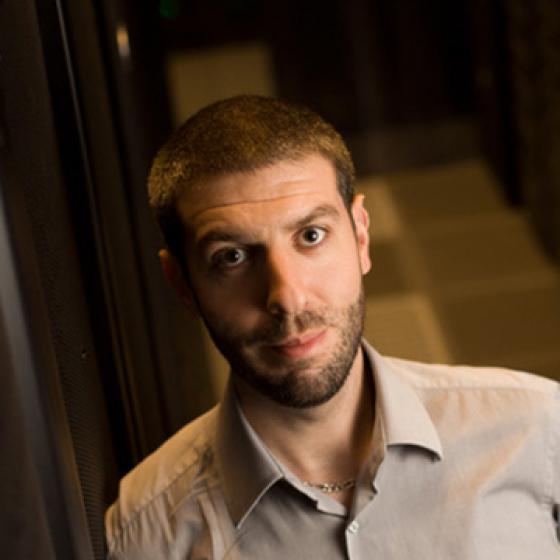
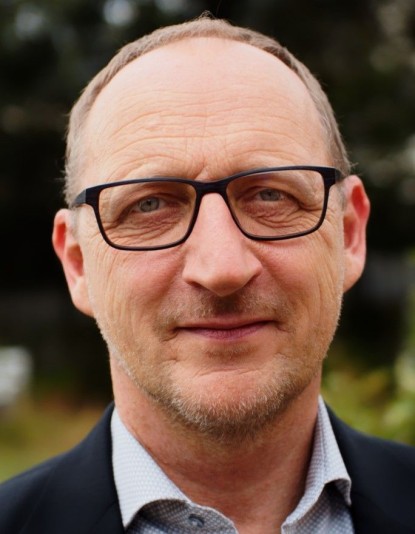
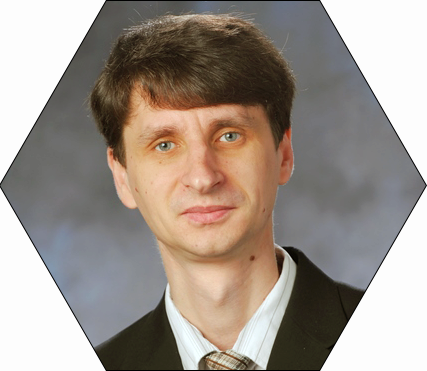
Assaad Masri is an ARC-Australian Professorial Fellow in the School of Aerospace, Mechanical and Mechatronic Engineering at the University of Sydney. He leads research in clean combustion, turbulent combustion of gaseous/liquid fuels, and laser diagnostics. His work focuses on improving energy efficiency and reducing emissions from engines and industrial processes. Education: BE and PhD from the University of Sydney. Research interests include combustion diagnostics, biofuel optimization, and micro-combustor development. He has published over 150 papers and secured $8M in research funding. His team designs benchmark burners for combustion studies and employs advanced laser diagnostics. Notable awards: Silver Combustion Medal (Combustion Institute). Member of editorial boards for Progress in Energy and Combustion Science and other journals. Current projects involve biofuel ignition, spray atomization, and combustion safety. His lab, the Clean Combustion Research Group, develops tools for engineers to optimize combustor designs.
Ibuki Kusano is an Associate Professor in the Department of Industrial Engineering at IQS School of Engineering, Universitat Ramon Llull. His research is centered on structural and aerodynamic optimization of civil infrastructure, particularly long-span bridges, with a strong emphasis on probabilistic and reliability-based design methodologies. His research interests include: Probabilistic Optimisation of Structures Aerodynamics of Suspension Bridges Optimisation Based on Surrogate Models Co-Kriging Computational Fluid Dynamics (CFD) Reliability-Based Design Optimization His recent publications demonstrate a consistent focus on integrating advanced computational techniques—such as machine learning, surrogate modeling, and CFD—with structural engineering to improve the safety, efficiency, and performance of bridge systems. The research trends highlight a shift toward data-driven and probabilistic frameworks for predicting wind-induced responses, flutter stability, and energy generation in offshore wind farms. His scientific contributions have been supported by research grants from AGAUR (Agència de Gestió d'Ajuts Universitaris i de Recerca) through the GEPI research group. He is actively involved in interdisciplinary projects such as offshore wind farm data analysis using machine learning for energy prediction. While no formal awards are listed, his h-index of 7 and 325 citations reflect a solid research impact. Kusano contributes to academic training through the Master’s and Bachelor’s programs in Industrial Engineering at IQS, and his work is conducted within the GEPI – Industrial Products Engineering Group, which focuses on additive manufacturing, reverse engineering, and material characterization.
Olivier Desjardins is a Professor in the Sibley School of Mechanical and Aerospace Engineering at Cornell University, where he has been a faculty member since July 2011. He previously served on the Mechanical Engineering faculty at the University of Colorado at Boulder. His research is centered on high-fidelity computational modeling of turbulent, reacting, and multiphase flows with applications in energy, propulsion, and combustion systems. Ph.D., Mechanical Engineering, Stanford University, 2008 M.Sc., Aeronautics & Astronautics, SUPAERO (ENSAE), Toulouse, 2003 M.Sc., Mechanical Engineering, Stanford University, 2003 Dr. Desjardins’ research focuses on developing and applying advanced numerical methods such as large-eddy simulation (LES) and direct numerical simulation (DNS) to study complex fluid dynamics involving liquid-gas interfaces, atomization, and interfacial instabilities. His work spans fundamental fluid mechanics and practical applications in combustors and biomass reactors. Key areas include turbulence modeling, surface tension effects, and multiscale simulations of spray formation and breakup. His recent publications (2021–2025) demonstrate a strong emphasis on improving the accuracy and efficiency of volume-of-fluid (VOF) methods, including interface reconstruction, subgrid-scale modeling, and machine learning-enhanced simulations. There is a clear trend toward integrating physics-informed models, adjoint-based control, and rigorous experimental validation, especially in air-blast atomization and droplet dynamics. His group also contributes to open-source frameworks like OpenFOAM. NSF CAREER Award (2014) Junior Award, International Conference on Multiphase Flow (2016) Distinguished Paper Award, 33rd International Symposium on Combustion (2010) Research Excellence Award, Cornell College of Engineering (2020) Robert '55 and Vanne '57 Cowie Teaching Award, Cornell (2016) Outstanding Graduate Education Award, University of Colorado (2008) Dr. Desjardins has led multiple federally funded research projects, including those supported by the National Science Foundation. His work often involves collaboration with experimentalists and validation against physical data, including radiography and shadowgraph imaging. He has advised graduate students in mechanical engineering and computational science, contributing to advancements in multiphase flow modeling. His research group develops open, reproducible methodologies for simulating complex interfacial flows. His lab focuses on computational modeling of multiphase systems, particularly through the development of high-fidelity simulation frameworks. The team works on algorithm development for interface tracking, turbulence modeling, and multiscale coupling, with applications in energy systems and aerospace engineering. Projects include microgravity droplet dynamics (ISS-related), spray control, and catalytic biomass conversion.
Luca Brandt is a Full Professor in the Department of Environment, Land and Infrastructure Engineering (DIATI) at Politecnico di Torino, Italy. His research is centered on computational fluid dynamics (CFD), multiphase flows, and high-fidelity numerical simulations. He teaches both undergraduate and graduate courses in Fluid Mechanics and Multiphase Flows and serves on the academic collegia for Mechanical, Aerospace, and Environmental Engineering programs. His research interests include: Computational Fluid Dynamics (CFD) Fluid Mechanics and Turbulence Multiphase and Particle-Laden Flows Heat and Mass Transfer Numerical Algorithm Development Environmental and Biological Fluid Mechanics The recent publications highlight a strong focus on interface-resolved simulations of complex flows involving bubbles, droplets, particles, and biofluids. His work spans fundamental fluid dynamics, environmental modeling (e.g., microplastics), biomedical applications (e.g., blood flow), and industrial systems (e.g., fusion reactors, separation devices). The recurring themes are turbulence modulation, interfacial dynamics, and efficient numerical methods. His scientific awards include: ERC Consolidator Grant (2013) Outstanding Young Researcher Award, Swedish Research Council (2014) International Panetti-Ferrari Prize and Golden Medal, Accademia dei Lincei (2022) Luca Brandt actively supervises PhD students, including Chang Xu in Civil and Environmental Engineering, and leads the EU-funded FluxBEATS project (2024–2027). His work contributes to SDGs related to clean energy, sustainable cities, and industry innovation. He is involved in developing open scientific codes and models for multiphase systems. He leads research in the Hydraulics area at DIATI and collaborates across disciplines in environmental, mechanical, and biomedical engineering.
Fabian Denner is an Associate Professor at the Department of Mechanical Engineering, Polytechnique Montréal. His work focuses on modeling multiphase flows and related physical phenomena, including cavitation, acoustic wave dynamics, and high-performance computing (HPC). He develops advanced numerical methods and software tools for simulating incompressible and compressible flows, with applications in medicine, chemical engineering, and aerospace. His research group addresses challenges in predicting cavitation effects, liquid jet breakup, and acoustic modulation in accelerating flows. Education Dipl.-Eng. in Automotive Engineering, University of Stuttgart (2009) Ph.D. in Mechanical Engineering, Imperial College London (2013) Research Interests His expertise spans: Numerical modeling of multiphase flows Acoustic wave propagation and modulation Cavitation dynamics and biomedical applications High-performance computing (HPC) for fluid dynamics Liquid jet atomization and particle-laden flows Surface tension and interface reconstruction techniques Publications and Software Fabian has published extensively in leading journals like Physics of Fluids , Journal of Computational Physics , and Journal of Fluid Mechanics . He co-developed software frameworks such as Wave-DNA and APECSS for simulating complex fluid dynamics and acoustic phenomena. Scientific Recognition Margaret Fishenden Centenary Memorial Prize (2015) Leadership Roles Vice-director, Canadian Society for Mechanical Engineering - Fluid Engineering Technical Committee Co-director, Editorial Advisory Committee of Canadian Journal of Chemical Engineering Active contributor to international conferences (APS DFD, ICMF, IUTAM)
Prof. Dr. Jan Bender holds a professorship in Computer Animation at RWTH Aachen University's College of Engineering. As a leading researcher in physics-based simulation methods, his work focuses on developing advanced numerical techniques for fluid dynamics, deformable solids, and multi-physics interactions through Smoothed Particle Hydrodynamics (SPH) and Finite Element Methods (FEM). Key Contributions: Invented PF-FLIP for two-phase flows, developed SymX symbolic framework for energy-based simulations, created STARK unified solver for robotics applications, and introduced implicit boundary handling for SPH Methodologies: Specializes in hybrid Eulerian/Lagrangian approaches, differentiable physics, adaptive discretization, and machine learning integration for simulation acceleration Research Impact: 2023 & 2024 Best Paper Awards in VMV and SCA conferences. His work enables billion-particle fluid simulations and realistic multi-body interactions for robotics, with applications in welding, thermal spraying, and soft robotics. Collaborations: Works extensively with robotics institutes (Gazebo Fluids extension) and materials science departments (TIG welding, thermal spray modeling). Maintains open-source code repositories for simulation frameworks.
Prof. Peter Stephan is a Full Professor of Technical Thermodynamics and Director of the Institute for Technical Thermodynamics at Technische Universität Darmstadt. He holds leadership roles in multiple research initiatives, including the Cluster of Excellence 259 (Smart Interfaces), Collaborative Research Centre 1194 (Transport and Wetting Processes), and the Research Field Energy and Environment. Stephan's expertise spans heat and mass transfer, energy conversion, and interfacial transport phenomena. Education: He earned his Dipl.-Ing. in Mechanical Engineering (1988) from TU München and his Dr.-Ing. from Universität Stuttgart (1992). His professional experience includes roles at Daimler-Benz and the European Commission’s Joint Research Centre before joining TU Darmstadt in 1997. Research focuses on energy systems, boiling/evaporation dynamics, and thermal storage. He leads experimental and numerical studies on nucleate boiling, drop impingement, and interfacial phenomena. His work also addresses sustainable energy solutions, such as hydrogen and iron-based energy carriers. Editorial roles include Editor-in-Chief of the VDI Heat Atlas and editorial board memberships at journals like Journal of Heat and Mass Transfer . He chairs multiple national and international committees, including the VDI-GVC working group on Heat and Mass Transfer. His research emphasizes bridging microscale phenomena (e.g., microlayer formation) with macroscale applications (e.g., thermal energy storage systems). Recent studies explore exergy optimization in ironmaking and nanofiber-coated surfaces for condensation.
Tor Anders Nygaard is a Professor at the Department of Mechanics, University of Oslo. His research focuses on aerodynamics, structural mechanics, and offshore wind energy systems. He specializes in the design and analysis of floating offshore wind turbines, including rotor dynamics, mooring systems, and hydrodynamic loading. Nygaard leads projects like OC6 (aerodynamic validation) and REDWIN (cost reduction in offshore wind), and collaborates internationally on initiatives such as the Offshore Code Comparison Collaboration (OC4). His work emphasizes experimental validation, computational fluid dynamics (CFD), and the integration of structural and geotechnical design for sustainable energy solutions. Key projects include the OC6 project (aerodynamic loading validation), REDWIN (cost reduction strategies), and DIMSELO (sea load analysis). He has contributed to advancements in floating platform design, mooring line dynamics, and the application of advanced numerical methods like VOF (Volume of Fluid) simulations for wave modeling. Nygaard’s research bridges theoretical modeling with practical field data, ensuring robust solutions for offshore renewable energy challenges. His publications span journals like Wind Energy Science , Renewable Energy , and Journal of Physics , with a focus on interdisciplinary topics such as fatigue analysis, fluid-structure interaction, and the optimization of offshore structures. Nygaard’s contributions have been pivotal in advancing the technical and economic feasibility of offshore wind energy systems.
Prof. Dr. Dieter Bothe is a full Professor at TU Darmstadt and head of the Mathematical Modeling and Analysis (MMA) lab. He holds a habilitation in mathematics from Universität Paderborn (2000) and previously served as Chair for Mathematics/CCES at RWTH Aachen (2005–2009). His research focuses on multiphase flow modeling, mathematical analysis, and computational fluid dynamics, with emphasis on interfacial phenomena, surfactant dynamics, and thermodynamic frameworks. Key roles include coordinating the DFG-Priority Programme SPP 1506 (2010–2017) and currently co-coordinating the DFG-CRC 1194. He serves on editorial boards for Nonlinear Analysis: Real World Applications and International Journal of Multiphase Flow . His work bridges theoretical rigor with industrial applications, particularly in viscoelastic two-phase flows and subgrid-scale modeling. Education : - Study in Mathematics/Computer Science/Physics at Universität Paderborn (graduated 1993) - Habilitation in Mathematics (2000) Research Themes : - Multiphase flow dynamics - Thermodynamic modeling of interfacial systems - Numerical methods (VOF, Level Set) - Surfactant and mass transfer processes His computational frameworks, such as the plicRDF-isoAdvector VOF method and OpenFOAM modules, advance wetting simulations and industrial flow modeling. Recent work emphasizes scale-bridging model hierarchies and data-driven subgrid-scale approaches for convection-dominated flows. Grants & Leadership : - Coordinator of the research profile 'Thermo-Fluids & Interfacial Phenomena' (since 2021) - Member of TU Darmstadt's Scientific Advisory Council Bothe's lab (MMA) develops innovative methods for complex fluid systems, addressing challenges in capillary phenomena, viscoelastic flows, and reactive bubbly flows. His contributions span fundamental analysis and applied engineering solutions.
Thomas Abadie is an Assistant Professor at the University of Birmingham's School of Chemical Engineering. His research focuses on fluid mechanics, multiphase flows, and interfacial phenomena with applications in environmental and industrial challenges. He employs experimental techniques (e.g., Particle Imaging Velocimetry) and numerical methods (e.g., interface capturing/tracking) to study bubble dynamics, complex fluids, and mass transfer processes. His work spans scales from microreactors to industrial aeration systems. Abadie holds a PhD in Fluid Mechanics (2013) and an MSc in Fluid Mechanics, Energy, and Transport Phenomena from the University of Toulouse (2010). He teaches courses on transport phenomena and supervises undergraduate and graduate research projects. His research explores topics such as viscoelastic fluid dynamics, Richtmyer-Meshkov instabilities, and graphene synthesis. Recent studies emphasize machine learning integration with multiphase flow modeling and data-driven approaches to drop size distributions. His work bridges computational methodologies with real-world applications in energy and environmental systems. Abadie serves as a reviewer for journals like Chemical Engineering Science and Journal of Fluid Mechanics , and consults on CFD and multiphase systems. His collaborations span academia and industry, addressing challenges in wastewater treatment and renewable energy systems.
Arie H. Huijgen is an active researcher at Eindhoven University of Technology's Department of Chemical Engineering and Chemistry, specializing in computational fluid dynamics for particle and droplet interactions. His work bridges fundamental fluid mechanics with industrial applications in spray drying and waste treatment. His research focuses on non-Newtonian fluid behavior , wet particle collisions , and droplet dynamics using advanced simulation techniques like Direct Numerical Simulation (DNS) and Volume of Fluid (VoF) methods. Key interests include rheology effects, shear thinning, and liquid bridge formation in collision scenarios. Huijgen has co-authored five peer-reviewed publications since 2024, with two forthcoming 2026 papers in Chemical Engineering Science . His work demonstrates strong trends in industrial process optimization through high-fidelity simulations, particularly for systems involving power-law fluids and complex particle interactions. He actively contributes to the scientific community through conference presentations, including six recent activities at major events like AIChE. Corresponding author on multiple publications Creator of research datasets for reproducibility Collaborator with prominent researchers (Kuipers, Baltussen)
Professor Boris Balakin is affiliated with the Department of Mechanical Engineering and Maritime Studies at Western Norway University of Applied Sciences (HVL). His research focuses on multiphysics phenomena in industrial systems, including boiling, heat transfer, multiphase flows, turbulence, electrochemistry, and particle deposition. Specializes in CFD-DEM, Eulerian two-fluid, and VOF methods for multiphase flow modeling. Investigates renewable energy applications like nanosystems for solar and geothermal energy. Conducts non-invasive experimental validation using CT and PEPT techniques. Research Trends: Recent publications emphasize nanofluids for solar thermal systems, CFD modeling of industrial multiphase flows, and flow assurance in pipelines. Key subfields include photothermal conversion, particle agglomeration, and erosion analysis. Academic Leadership: Supervises PhD candidates in projects related to heat transfer, CFD modeling, and flow assurance. Teaches advanced courses like MAS536 CFD in Energy Technology and contributes to research groups on Solar Nano and Nanofluids for Energy and Process Technology .
Dr. Yinxuan Qiu is a Postdoctoral Research Fellow at the School of Chemical Engineering, Faculty of Engineering, Architecture and Information Technology, The University of Queensland. Her research spans chemical engineering, metallurgical engineering, environmental engineering, and biomedical engineering domains. Education: PhD in Chemical Engineering (Monash University), Masters (Washington University in St. Louis), Masters (Beijing General Research Institute for Nonferrous Metals), and Bachelors (China University of Petroleum). Qiu's research focuses on: Computational modeling of particle dynamics (DEM-VOF simulations, hopper discharge analysis) Metal separation and recycling technologies (solvent extraction, hydrometallurgy) Carbon-neutral industrial processes (CO2 electrolysis for blast furnace carbon recycling) Medical device optimization (axial flow blood pump simulation) Advanced analytical methods for mineral characterization Her recent publications demonstrate expertise in: Hydrodynamic modeling of multiphase systems Process optimization for sustainable metallurgy Development of green technologies for CO2 emission reduction Heavy metal recovery from industrial waste Computational analysis of flow patterns and jamming Current research is funded by HBIS Group Co, Ltd (2022-2025) for hydrogen-based shaft furnace modeling. She is available for research supervision and has published 9 academic works including 8 journal articles and 1 conference paper.
Matteo Bucci is the Esther and Harold E. Edgerton Associate Professor of Nuclear Science and Engineering at the Massachusetts Institute of Technology (MIT), School of Engineering. His work bridges nuclear and aerospace applications, focusing on boiling heat transfer, advanced diagnostics, and surface engineering. He serves as Editor of Applied Thermal Engineering and Deputy Editor-in-Chief of AI Thermal Fluids . Role: Associate Professor, MIT School of Engineering Founding Editor: AI Thermal Fluids Founder: NSF Thermal Transport Café Co-Founder: Startup Ferveret (data center cooling) Research Interests : Bucci's group investigates boiling heat transfer mechanisms under extreme conditions, such as high-pressure environments in nuclear reactors and microgravity in space propulsion. They develop non-intrusive diagnostics like infrared thermography and phase-detection tools, combined with machine learning for real-time data processing. Key areas include: Cryogenic boiling for space systems Surface engineering to enhance critical heat flux (CHF) Machine learning algorithms for diagnostics Micro- and nano-structuring of reactor materials Accident Tolerant Fuel (ATF) coatings Autonomous experimental systems Article Trends : His publications highlight interdisciplinary approaches combining nuclear engineering, machine learning, and microfluidics. Recent work focuses on AI-driven diagnostics, surface optimization for CHF enhancement, and cryogenic/space applications. Scientific Awards : Ruth and Joel Spira Award for Excellence in Teaching (2020) DOE Distinguished Early Career Award (2022) ANS PAI Outstanding Faculty Award (2018, 2023) UIT-Fluent Award (2006) ANS THD Best Paper Award (2012) CFD4NRS Best Poster (2016) Labs & Teams : Bucci leads the MIT Red Lab, collaborating with institutions like the CANES Center for Advanced Nuclear Energy Systems and VIR2AL International Research Institute. His team includes researchers exploring boiling physics, diagnostics, and cooling technologies.
Dr. Alexander Alexeev is a Professor in the Department of Mechanical Engineering at Georgia Institute of Technology, where he joined in 2008 as an assistant professor. His research focuses on computational fluid mechanics, soft materials, and biomimetic microfluidic systems. Ph.D., Technion-Israel Institute of Technology (2003) M.Sc., Technion-Israel Institute of Technology (1999) Dipl.-Ing. in Mechanical Engineering, St. Petersburg State Polytechnic University (1994) Dr. Alexeev's research interests center on developing synthetic systems inspired by biological microorganisms to perform complex functions in microfluidic devices. His work includes: Modeling bio-inspired micro-robots with flagella-like propulsion Designing responsive membranes for drug delivery systems Studying fluid-structure interactions in compliant materials Investigating thermocapillary flows in thin liquid films Simulating microscale particle dynamics in patterned substrates His methodological approach integrates advanced computational techniques such as: Lattice Boltzmann method Lattice spring method Dissipative particle dynamics Multiphase flow modeling (VOF, level set, immersed boundary) Scientific awards and recognitions include: David and Olga Pnueli Prize for Ph.D. Thesis (2004) Excellence Graduate School Scholarship (2001-2002) Aaron and Ovadia Barazani Award (2000) Miriam and Aaron Gutwirth Award (1999)