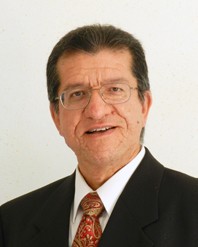
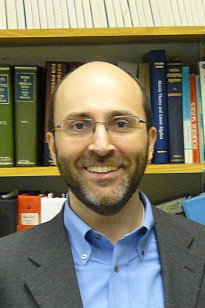
Jens Lienig has been a Professor at Technische Universität Dresden since 2002, where he directs the Chair of Development and Design of Precision Engineering and Electronics. His research spans Electronic Design Automation (EDA), electromigration analysis, 3D IC design, constraint-driven methodologies, and precision device development. He holds memberships in IEEE, VDE/VDI GMM, and technical committees, and has led conferences like ISPD 2021 as General Chair. Research interests focus on: Reliability Engineering : Electromigration-aware IC design, thermal/stress modeling in interconnects. Advanced Design Automation : 3D physical design algorithms, analog layout generators, constraint propagation. Precision Devices : MEMS sensors, peristaltic pumps, SAW motors, pyroelectric detectors. Recent articles (2019–2025) emphasize electromigration robustness, aerosol sensor signal processing, and open-source EDA tools. Over 15 doctoral students have completed under his supervision, including dissertations on electromigration, MEMS, and infrared sensors.
Professor Sheng Chen at the University of Southampton holds a prestigious academic rank in the Electronics and Computer Science department. His research interests span wireless communication systems, machine learning for signal processing, underwater robotics, and digital twin technology. IEEE Fellow Royal Academy of Engineering Fellow Chartered Engineer Research Focus: Professor Chen specializes in advanced wireless communication systems including MIMO technologies, channel estimation techniques, and next-generation 6G protocols. His work extends to industrial cybersecurity applications and underwater stereo matching algorithms. Recent Contributions: His latest publications demonstrate expertise in memristor-based signal processing circuits, label distribution learning using renormalization group theory, and innovative interference mitigation strategies in dynamic TDD systems. Current research projects: Optimising control system integrity (Royal Academy of Engineering), NEWCOM (European Union)
Alex Doboli is a Professor in the Department of Electrical and Computer Engineering at Stony Brook University, State University of New York. He is also affiliated with SUNY Korea’s Department of ECE. His academic journey includes a Ph.D. in Computer Engineering from the University of Cincinnati (2000) and earlier degrees from Politehnica University Timisoara, Romania (B.Eng. 1990, Doctorate 1997). He served as junior faculty at Politehnica University before joining Stony Brook in 2000. His research focuses on Electronic Design Automation (EDA) , Cyber-Physical Systems , and Human-inspired Machine Learning . Key areas include analog/mixed-signal design, innovation methodologies, and data-driven design approaches. He has authored over 170 peer-reviewed publications and co-authored a textbook on mixed-signal design. His lab, the Mixed-Domain Embedded Systems Laboratory , explores team behavior modeling, IoT integration, and cognitive architectures. Dr. Doboli has advised 17 Ph.D. and 12 M.S. students. Notable awards include the IBM Partnership Award (2001) and the Traian Lalescu Award (1987). He serves as an Associate Editor for Integration, the VLSI Journal and holds leadership roles in professional organizations like the IEEE Long Island Circuits and Systems Society. His teaching spans undergraduate and graduate courses in programming, algorithms, VLSI design, and machine learning. Current courses include ESE 327: Fundamental Algorithms for Machine Learning and ESE 589: Learning Systems for Engineering Applications . Recent research highlights include automated dialog systems (diaLogic), IoT-human behavior integration frameworks, and studies on artistic understanding in neural networks. His work bridges EDA, machine learning, and embedded systems to advance design innovation and human-centric technologies.
Shoba Krishnan is a Professor in the Department of Electrical and Computer Engineering at Santa Clara University's School of Engineering. Her work spans analog and mixed-signal integrated circuit design, carbon nanotube interconnect modeling, and engineering education initiatives. Education: B. Tech., Jawaharlal Nehru Technological University (1987) M.S., Michigan State University (1990) Ph.D., Michigan State University (1993) Her research focuses on high-speed data communication ICs, particularly clock/data I/O circuits, and explores carbon nanotubes as interconnect materials. She's expanding into bio-engineering instrumentation and renewable energy power electronics. Publications highlight work on low-power high-speed drivers, carbon nanotube via resistance analysis, microwave frequency modeling, and BIST structures for transceivers. She advises IEEE and Engineers Without Borders chapters at SCU.
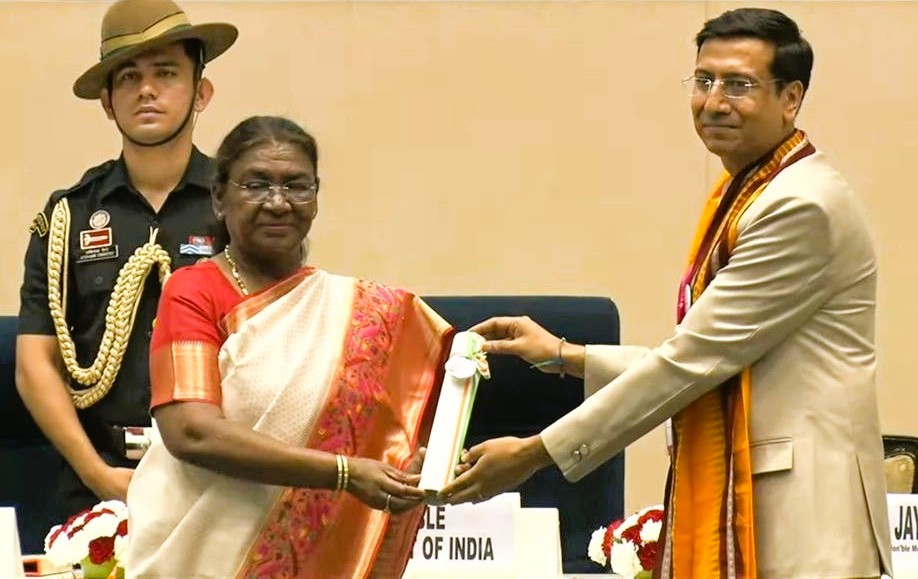
Prof. Kapil Ahuja is a Full Professor in the Department of Computer Science & Engineering at the Indian Institute of Technology Indore (IIT Indore), where he heads the Mathematics of Data Science and Simulation (MODSS) research lab. After completing dual Master's degrees and a Ph.D. from Virginia Tech (USA) followed by postdoctoral work at the Max Planck Institute in Germany, he has held visiting positions at UT Austin, IMT Atlantique, Sandia National Labs, TU Dresden, and TU Braunschweig. His administrative roles include founding Dean of International Affairs and former Head of Computer Science & Engineering at IIT Indore. Education: Ph.D. in Mathematics, Virginia Tech (2011) M.S. in Mathematics, Virginia Tech (2009) M.S. in Computer Science, Virginia Tech (2007) B.Tech. in Mechanical Engineering, IIT (BHU) Varanasi (2001) Research Focus: Prof. Ahuja's work bridges theoretical advances with real-world applications, emphasizing machine learning algorithms for plant/cancer studies, game-theoretic poverty reduction models, exascale climate modeling solvers, and drone trajectory optimization. His interdisciplinary approach integrates numerical linear algebra with network science to solve complex systems problems across healthcare, agriculture, and climate science, supported by 4.85 Crores INR in external funding. Publication Trends: Recent work demonstrates growing emphasis on AI-driven optimization for physical systems (drones, climate models) and biomedical applications (cancer classification). His publications increasingly feature cross-disciplinary collaborations between computer science, biology, and economics, with notable contributions in explainable AI for healthcare and resource allocation algorithms for social networks. Scientific Recognition: National Teacher's Award (2024) from the President of India Five-time recipient of IIT Indore's Best Teacher Award (2013-2023) Best Poster Award at International Workshop on Game Theory & Networks (2019) Steeneck Graduate Research Fellowship (Virginia Tech, 2011) Multiple SIAM travel awards for international conferences Mentorship & Service: Prof. Ahuja has graduated 5 Ph.D. and 4 M.S. (Research) students while mentoring 75 B.Tech. projects. He serves as Associate Editor for Applied Intelligence Journal (Springer Nature) and Knowledge and Information Systems, organizes international conferences, and reviews for 35+ academic sources. His administrative leadership significantly expanded IIT Indore's global partnerships through the Research Park initiative. Research Infrastructure: The MODSS lab maintains active collaborations with Oak Ridge National Lab, Sandia National Labs, and European institutions. Current projects include AI-optimized drone swarms for agricultural monitoring and game-theoretic models for poverty intervention, utilizing high-performance computing resources for large-scale simulations.
Hayssam El-Razouk serves as Associate Professor in the Electrical and Computer Engineering Department at California State University, Fresno within the Lyles College of Engineering. He holds a PhD in Electrical and Computer Engineering from Western University (2015) and maintains active industry connections through prior roles at IBM Canada and RedIron Technologies. Education: PhD in Electrical and Computer Engineering, Western University, London, Ontario, Canada (2015) MESc in Electrical and Computer Engineering, Western University, London, Ontario, Canada (2006) BEng in Electrical and Computer Engineering, Beirut Arab University, Beirut, Lebanon (2002) - First Rank Research Focus: Dr. El-Razouk's work centers on Hardware Security and Cryptographic Hardware , with significant contributions to VLSI Circuits Design for finite field arithmetic. His research bridges theoretical cryptography with practical implementations, emphasizing defect tolerance in digital circuits, data compression techniques, and pseudo-random sequence generation for secure communications. Current projects address emerging threats in embedded systems and IoT security. Publication Trends: Analysis of his 15 most recent publications (2025-2016) reveals consistent specialization in GF(2^m) arithmetic optimization using Gaussian Normal Basis and Polynomial Basis representations. His work demonstrates progressive refinement from foundational finite field operations (2016-2019) toward integrated security solutions (2020-2025), with increasing focus on side-channel attack resistance and hardware-software co-design for real-world applications including automotive systems and smart homes. Scientific Recognition: Natural Sciences and Engineering Research Council (NSERC) Canada Graduate Scholarship-Doctoral (2011-2015) Best Presenter Award, IEEE CCWC 2023 Best Paper Award, IEEE CCWC 2021 Outstanding Faculty Publication Award, CSU Fresno (2019, 2020) Jamal Abdul Nassir Golden Medal Distinction Award (2002) Research Funding and Mentorship: Dr. El-Razouk secured a $378,002 Department of Defense grant (W911NF-21-1-0210) in 2021 for hardware security research. He teaches core courses including ECE 150 (Cloud and Cybersecurity) and ECE 156 (Cryptography), supervising senior design projects on topics like RFID security and temperature monitoring systems. As an IEEE and ASEE member, he actively contributes to conference program committees and journal reviews.
Fereydoun Daneshgaran is a Professor and Chairman of the Electrical & Computer Engineering Department at California State University, Los Angeles, where he has served since 2006. He also directs the fiber and nonlinear optics research laboratory and has held various academic leadership positions including chairman of the Communications group and acting chairman of the ECE Department. Dr. Daneshgaran's educational background includes: Ph.D. in Communications, VLSI, and Optimization from UCLA (1992) M.S. (Magna Cum Laude) in Communications, Solid State Electronics, and Control Systems from Cal State LA (1985) B.S. (Magna Cum Laude) in Electrical and Mechanical Engineering from Cal State LA (1983) Dr. Daneshgaran's primary research interests focus on wireless communications, digital communications, and information theory. His work spans multiple specialized areas including coding theory (particularly Turbo Codes and LDPC codes), quantum key distribution, cognitive radio, and network localization. His research has significant applications in wireless networking protocols, particularly IEEE 802.11 standards, with numerous publications analyzing throughput performance under various network conditions. He has also made substantial contributions to optical communications and signal processing techniques. Dr. Daneshgaran's publication record shows a progression from foundational work in Viterbi decoding and turbo codes to more recent applications in quantum communications and advanced wireless network protocols. His research consistently bridges theoretical communications theory with practical implementations, as evidenced by both his extensive journal publications and industry experience. His scientific achievements include: Best Paper Award at First International Conference on Advances in Satellite and Space Communications (SPACOMM 2009) U.S. Patent No. US 2007/0079223 A1 for "A method and system for Information processing" Dr. Daneshgaran has supervised numerous Ph.D. students and visiting scholars, primarily from Politecnico University of Turin (POLITO), Italy, fostering international research collaborations. His academic leadership extends to developing and teaching the entire graduate sequence in digital communications at Cal State LA, along with specialized courses in wireless communications, cognitive radio, and optical communication systems. He has also maintained industry connections through various consulting roles and entrepreneurial ventures in communications technology. As director of the fiber and nonlinear optics research laboratory from 1994 to 2015, Dr. Daneshgaran led research in optical communications and related technologies. His work has bridged theoretical communications research with practical implementations, as evidenced by both his academic publications and industry experience founding companies like EuroConcepts S.r.l. and Quantum Bit Communications, LLC.
Takanobu Watanabe is a Professor at the Faculty of Science and Engineering , Waseda University , specializing in Electronic materials , Computational physics , and Nanotechnology . With a career spanning over two decades at Waseda and affiliations with institutions like the Japan Science and Technology Agency , his work focuses on thermal management and thermoelectric devices for next-generation electronics. PhD in Engineering from Waseda University Professional memberships: IEEE, Japan Society of Applied Physics, Japan Physical Society His research explores phonon transport , thermal boundary resistance , and nanoscale thermoelectric generators , with significant contributions to GaN-based semiconductor thermal management and SiGe/GeSn alloy properties . His recent work leverages machine learning molecular dynamics for interface analysis. Key trends in his publications include: Thermal boundary resistance optimization across metal-dielectric interfaces Advancements in cavity-free thermoelectric architectures Phonon lifetime and dispersion studies in SiGe alloys Surface and interface engineering for power generation enhancement Scientific awards: Waseda Research Award (2018) Waseda Teaching Award (2016) JSAP Young Scientist Presentation Award (2000) Inoue Research Award (1999) His team has demonstrated scalable thermoelectric power densities up to 27.9 nW/cm² and 4.2 mW/cm² through CMOS-compatible fabrication techniques. Collaborative projects span institutions like JST , University of Tokyo , and Osaka University . Current research at his lab explores anisotropic conductivity control in carbon nanotubes, interface bonding mechanisms in GaN-diamond systems, and strain engineering in silicon nanowires. Future work targets autonomous IoT energy harvesting and self-powered wearable devices .
Graziano Vernizzi serves as Professor in the Department of Physics and Astronomy at Siena University (formerly Siena College) since 2016, having previously held Associate Professor (2013-2016) and Assistant Professor (2010-2013) positions at the same institution. His academic journey includes a Research Professor role at Northwestern University (2006-2010) and prestigious postdoctoral appointments at the Niels Bohr Institute, University of Oxford, CEA/Saclay, Spinoza Institute, and Northwestern University. His educational background includes: B.S. in Physics, University of Parma, Italy (1995) Ph.D. in Physics, University of Parma, Italy (2000) Vernizzi's research integrates computational and theoretical physics to address nanoscale phenomena, with core interests in Random Matrix Theory, biophysics (RNA/ssDNA structures and membrane theory), soft condensed matter physics, and nanoscale science. He develops computational models to analyze complex systems where theoretical frameworks are essential for interpreting experimental data, driving technological innovation and expanding career opportunities in emerging scientific fields. His methodology frequently bridges mathematical rigor with physical applications across disciplinary boundaries. Analysis of his publication trends reveals consistent interdisciplinary work connecting mathematics, physics, and engineering. Key recurring themes include topological constraints in biological and electronic systems, statistical mechanics approaches to soft matter, and algorithmic innovations for verification problems. His research demonstrates particular strength in applying abstract mathematical concepts like random matrix theory to concrete biophysical and engineering challenges, resulting in publications spanning Physical Review journals, Soft Matter, and specialized engineering conferences. His scientific recognition includes: Trust-Co Excellence Honor for advancing the mission of Siena College (Trustco Bank, 2015) No information regarding student advising, research grants, or dedicated laboratory facilities was provided in the source material. His professional activities focus on computational research, course development in nanoscale physics, and interdisciplinary collaboration without mention of specific research teams or experimental facilities.