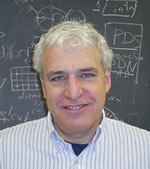
Ambrose Adebayo AdegbegeView profile
Professor
Ambrose Adegbege serves as Professor of Electrical and Computer Engineering and Coordinator for Engineering Science at The College of New Jersey (TCNJ), where he directs the Laboratory for Embedded Control and Optimization (LECO). A Professional Engineer and IEEE member, he holds leadership roles including Faculty Advisor for the National Society for Black Engineers since 2013. Education: Ph.D. in Electrical and Electronic Engineering, The University of Manchester (2011) M.Sc. in Electrical and Electronics Engineering, The University of Manchester (2006) B.Sc. in Electronic and Electrical Engineering, Obafemi Awolowo University (2004) Professor Adegbege's research centers on constrained control systems , fast optimization algorithms , and analog VLSI circuits for embedded implementations . His work bridges theoretical control theory with hardware design, focusing on real-time model predictive control (MPC) for input-constrained systems. Key innovations include analog solvers for MPC, inexact optimization methods, and anti-windup techniques that maintain stability under physical limitations. Analysis of his 15 most recent publications (2018-2026) reveals a dominant focus on hardware-accelerated MPC implementations, with 70% addressing analog/digital architectures for real-time control. His work consistently tackles computational bottlenecks through novel primal-dual dynamics (40% of publications) and constrained optimization (60%), demonstrating strong industry relevance in robotics and renewable energy systems. Scientific Awards: Fulbright Fellowship (2023) Carnegie African Diaspora Fellowship (2021) Excellence in Student Mentoring Award (2023) SOSA Award (2023) Four consecutive Engineering Research Prizes (2018-2021) Secured $432,235 in external funding including an NSF grant for ultra-fast embedded control architectures ($196,380) and a DOD instrumentation grant ($235,855). His mentoring excellence is evidenced by sustained NSBE leadership and student co-authorship on 12 publications since 2018. Current research in LECO integrates FPGA and analog VLSI to overcome computational barriers in safety-critical control systems. LECO advances embedded control through three core thrusts: analog optimization circuits, constrained primal-dual dynamics, and hardware/software co-design. Recent projects include quadruple-tank system implementations and renewable energy grid controllers developed with MIT collaborators during his Masdar Institute postdoc.