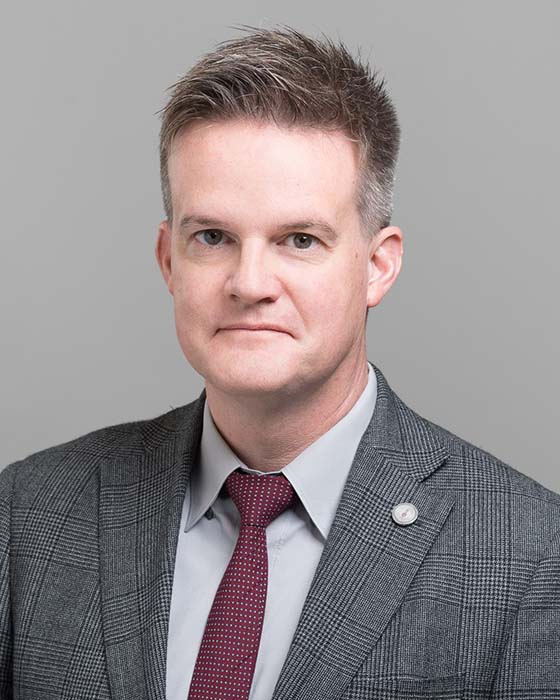
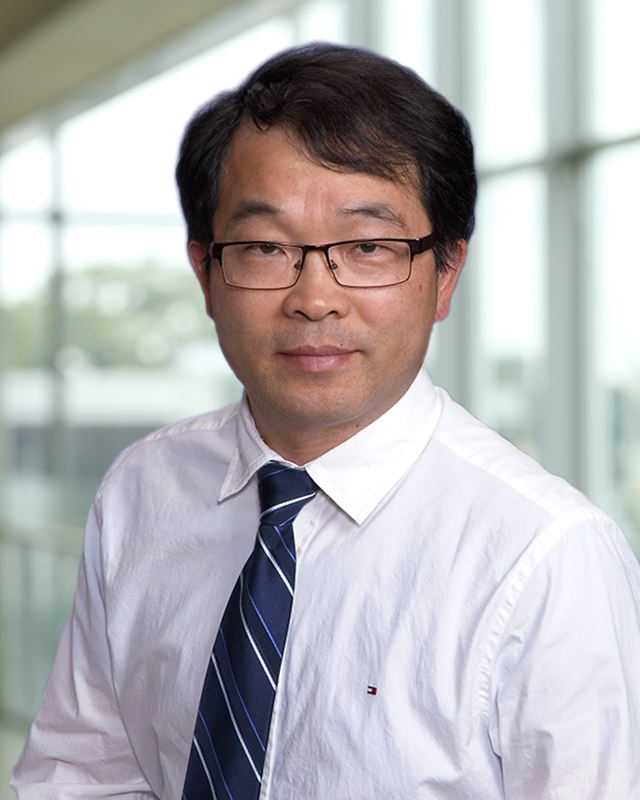
Professor Jason H. Anderson is a faculty member in the Department of Electrical & Computer Engineering (ECE) at the University of Toronto, affiliated with the Faculty of Applied Science & Engineering. He specializes in computer engineering, with a focus on field-programmable gate arrays (FPGAs) and related computer-aided design (CAD) tools. BSc in Computer Engineering from the University of Manitoba MASc and PhD in Electrical & Computer Engineering from the University of Toronto His research spans FPGA architecture, circuit design, and CAD tool development. He has contributed to strategic R&D projects through his academic and industry roles. Scientific awards include multiple Best Paper Awards at IEEE and ACM conferences (2017, 2014, 2011, 2010, 2009), the Xilinx Ross Freeman Award (2000), and teaching accolades such as the Gordon Slemon Award (2012) and several ECE Departmental Teaching Awards (2009-2014). He served as General Chair and Program Chair for leading FPGA conferences. As Chief Scientific Advisor and Co-Founder of LegUp Computing Inc., he bridges academic research with industry innovation. He is a licensed Professional Engineer in Ontario and an active IEEE/ACM member.
Nicola Nicolici is a Professor in the Department of Electrical and Computer Engineering at McMaster University. His research focuses on methods and algorithms for the design of digital integrated circuits and systems, with significant contributions in manufacturing test, post-silicon validation and debug. His work has expanded to include embedded systems, low-energy computing, and custom hardware-accelerated computing systems. Professor Nicolici's research interests span multiple areas of digital system design and validation. His early work focused on manufacturing test methodologies and power-aware testing strategies for integrated circuits. More recently, he has made significant contributions to post-silicon validation techniques, including constrained-random stimuli generation, trace signal selection, and bit-flip detection. His research has evolved to address emerging challenges in embedded computing systems, low-energy design, and specialized hardware acceleration for various applications including deep neural networks and signal processing. His recent publications reveal a strong trend toward hardware acceleration for specialized computing tasks. The research spans matrix multiplication algorithms (Strassen and Karatsuba), memory system optimization (DDR5 calibration), FPGA-based radar processing, and neural network acceleration. His work consistently bridges theoretical algorithm development with practical hardware implementation considerations, particularly focusing on precision analysis, fault tolerance, and energy efficiency. The research demonstrates a clear progression from traditional digital circuit testing to more complex system-level validation and acceleration techniques. Professor Nicolici has been actively involved in teaching courses related to system-on-chip design and test, digital systems, and embedded systems. His teaching portfolio includes advanced courses such as System-on-Chip (SOC) Design and Test and Digital Systems Design , reflecting his expertise in the field. While specific grant information isn't detailed in the provided text, his extensive publication record suggests ongoing research funding support. His research has contributed significantly to the fields of digital circuit testing, post-silicon validation, and hardware acceleration. The work has practical applications in semiconductor manufacturing, embedded systems design, and specialized computing architectures. His recent focus on neural network acceleration and memory system optimization reflects the evolving landscape of computer architecture research.
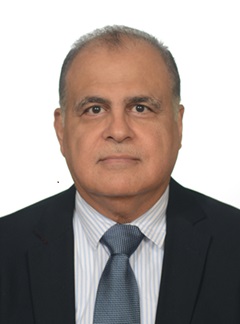
Dr. Esam Abdel-Raheem is a Professor in the Department of Electrical and Computer Engineering at the University of Windsor, Faculty of Engineering. His research focuses on digital signal processing, biomedical engineering, cognitive radio networks, and VLSI design. He holds a Ph.D. from the University of Victoria (1995) and is a Professional Engineer (P.Eng.) in Ontario and a Senior Member of IEEE. Education: B.Sc. Electrical Engineering, Ain Shams University (1984) M.Sc. Electrical Engineering, Ain Shams University (1989) Ph.D. Electrical Engineering, University of Victoria (1995) Research Interests: Dr. Abdel-Raheem’s work spans signal processing for communications, biomedical signal processing, and VLSI implementations. He has pioneered algorithms for cognitive radio networks and adaptive filtering. His recent studies leverage deep learning for medical diagnostics (e.g., lung nodule detection, Parkinson’s disease voice analysis) and cognitive radio spectrum sensing. Publications Trends: Recent work emphasizes biomedical applications (e.g., CT scan analysis, diabetic retinopathy detection) and machine learning integration in communications (e.g., federated learning for traffic crowdsourcing). His articles often bridge theoretical signal processing with practical implementations in hardware (e.g., FPGA-based filters). Awards/Grants: Not explicitly listed in the text, though his senior IEEE membership and prolific publications suggest sustained professional recognition. Lab/Teams: While not detailed, his research themes imply involvement in interdisciplinary teams focusing on biomedical engineering, telecommunications, and VLSI design.
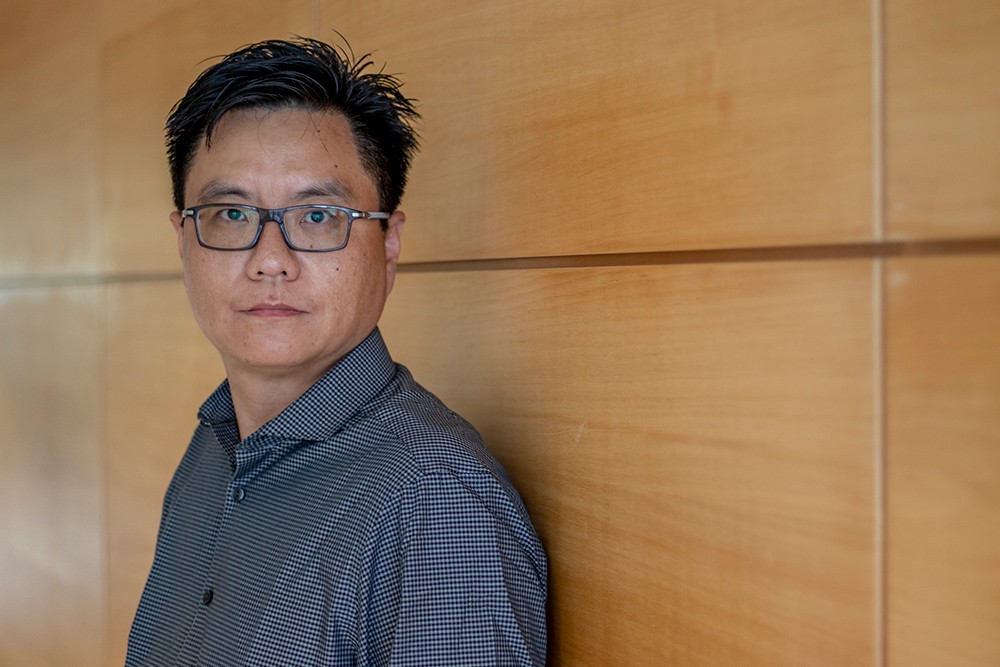
Dr. Andy Ye is an Associate Professor in the Department of Electrical, Computer, and Biomedical Engineering at Ryerson University, where he conducts research and teaches courses in advanced digital systems. Education : PhD (2004), MASc (1999), and BASc (1996) from the University of Toronto Research Interests focus on: Field-programmable gate array (FPGA) architectures Computer-Aided Design (CAD) tools for FPGAs and VLSI Logic synthesis and hardware implementation Digital communication algorithms and computer vision systems Publication Trends demonstrate expertise in FPGA area modeling, motion estimation architectures, and VLSI design optimization across multiple IEEE and ACM venues. Scientific Achievements : Best Paper Award (2016) at International Conference on Field Programmable Logic and Applications Teaching Contributions include graduate-level FPGA design (EE 8219), low-power digital circuits (ELE 734), and fundamental network theory (ELE 302). He maintains active supervision availability for students.
James Barby is an Associate Professor in the Department of Electrical and Computer Engineering at the University of Waterloo. His research focuses on mixed-mode modeling, analog/mixed-signal circuits, and VLSI systems simulation. He holds a PhD from the University of Waterloo (1986) and has extensive academic credentials including a Master's (1981) and Bachelor's (1979) from Ontario institutions. PhD: University of Waterloo, 1986 MASc: University of Waterloo, 1981 BTech: Ryerson Polytechnical Institute, 1979 Dr. Barby's research interests include switched network simulation for communications/power electronics, transistor model approximations, and analysis methods for digital/analog VLSI systems. His work bridges theoretical modeling with practical circuit design applications. Selected publications span IEEE journals and conferences from 1990–1995, emphasizing mixed-mode simulation methodologies and ASIC design challenges. He has contributed to benchmarking frameworks for circuit simulators and functional analog simulators for multilevel systems. Teaching includes MTE 220 (Sensors and Instrumentation) in recent years. Currently not accepting graduate students.
Dr. Chunhong Chen is a Professor in the Department of Electrical and Computer Engineering at the University of Windsor's Faculty of Engineering. He holds a PhD from Fudan University and is a P. Eng of Ontario and IEEE Senior Member. His research focuses on digital integrated circuit synthesis, VLSI CAD, high-performance low-power systems, and nanoelectronic circuit design. Education: PhD, Fudan University Recent work includes hybrid signal probability estimation methods, statistical delay modeling for nanoelectronics, and area-efficient cryptographic circuit design using hybrid SET-MOS technology. His research emphasizes practical applications in low-power systems and nanoscale device optimization. Dr. Chen's publications demonstrate expertise in both foundational theory and applied engineering solutions. He leads the Research Centre for Integrated Microsystems (RCIM), focusing on advanced microsystem integration challenges.
Anestis Dounavis is an Associate Professor in the Department of Electrical and Computer Engineering at the Faculty of Engineering, University of Western Ontario. He holds a Ph.D. and is a licensed Professional Engineer (P.Eng.). Research Interests Design Automation of VLSI Circuits Modeling and Simulation of High-Speed Interconnects Signal Integrity (Board, Package, and Chip Level) Electromagnetic Interference and Immunity Analysis Mixed Signal Simulation Model-Order Reduction Techniques Simulation of Microelectromechanical (MEMS) and Optoelectronic Systems His work focuses on developing efficient algorithms for transient analysis of power distribution networks, electromagnetic compatibility, and passive macromodeling techniques. He has published extensively in top-tier IEEE journals, with recent articles spanning waveform relaxation methods, parameterized reduction, and sensitivity analysis. Notable scientific awards include: Ontario Ministry of Research and Innovation Early Research Award (2009) Carleton University Medal for Ph.D. Excellence (2004) Ottawa Centre for Research and Innovation Futures Award (2004) INTEL Best Student Paper Award (2003) University Medal at Master’s Level (2000) He has declined prestigious postdoctoral fellowships, including an NSERC Post-doctoral Fellowship (2003). Teaching recognitions include the University Student Council’s Teaching Honour Roll (2009-2010).
Steven Wilton is a Professor in the Department of Electrical & Computer Engineering at the University of British Columbia , where he also serves as Department Head (2019–2023, reappointed in 2024). He holds a BASc from the University of Victoria , and MASc and PhD from the University of Toronto . Education BASc (Victoria) MASc (Toronto) PhD (Toronto) His research focuses on Field-Programmable Gate Arrays (FPGAs) and Computer-Aided Design (CAD) algorithms . He explores FPGA architectures, post-silicon debugging, and programmable logic for System-on-a-Chip (SoC) design , aiming to enhance FPGA efficiency and accessibility for small/medium electronics companies. As part of the UBC SoC Research Group and ICICS , he contributes to advanced computing systems. He is also a Professional Engineer (BC) and IEEE Fellow , recognized for his work in electrical and computer engineering. Scientific Awards IEEE Fellow Dr. Wilton supervises graduate students like Andrew David Gunter (PhD in Electrical and Computer Engineering) and teaches courses including ELEC 402 , CPEN 311 , and CPEN 513 . His affiliations include the Institute for Computing, Information and Cognitive Systems (ICICS) and the Quantum Computing Research Cluster .
Professor Mohamed Bakr serves as Chair of the Department of Electrical and Computer Engineering at McMaster University's Faculty of Engineering (2022-2025). An expert in computational electromagnetics and optimization, his research spans microwave circuit design, photonic devices, and AI applications in high-frequency systems. His educational background includes: B.Sc. (Honors) in Electronics and Communications Engineering, Cairo University (1992) M.Sc. in Engineering Mathematics, Cairo University (1996) Ph.D. in Electrical and Computer Engineering, McMaster University (2000) Research focuses on optimization-driven electromagnetic modeling , with applications in electrified transportation, micro-nano systems, and smart analysis of RF/microwave structures. His work integrates neural networks with time-domain simulation methods for efficient circuit design. Key recognitions: NSERC Post-Doctoral Fellowship (2000-2001) Chrysler Innovation Award recipient (2014) Stanford top 2% cited scientist (2020-2022) President's Award for Teaching Excellence (2021) Actively mentors graduate students and leads research in the Computational Electromagnetics Research Laboratory (CERL). Current teaching includes ECE 733 (Nonlinear Optimization) and core electromagnetics courses (ELECENG 2FH4, 3FK4).