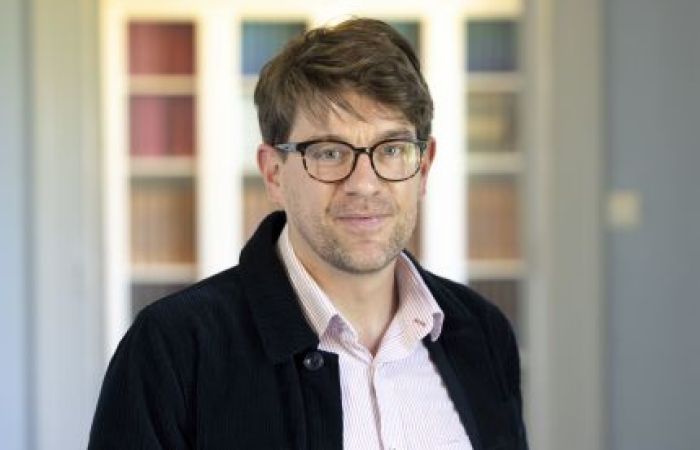
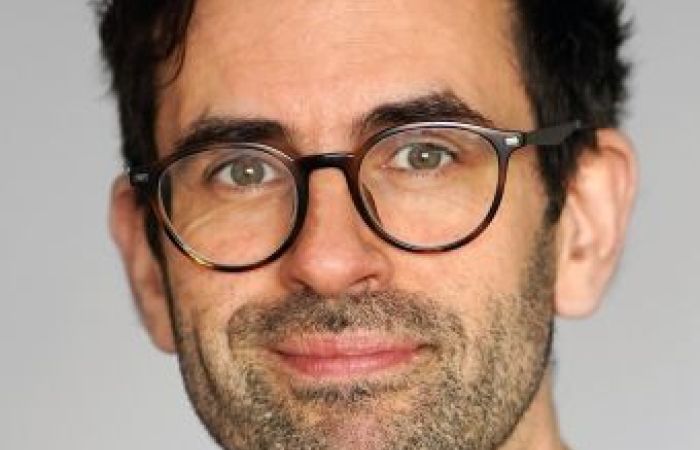
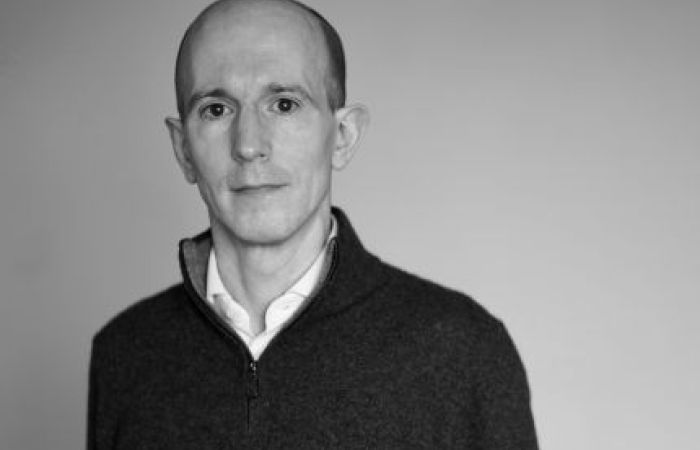
Mathias Thaler is Professor of Political Theory at the University of Edinburgh's School of Social and Political Science . His work bridges contemporary political theory with urgent environmental and philosophical questions. Key research areas: Utopian/Dystopian Studies, Environmental Politics, Just War Theory, Art-Philosophy Interface, Ideological Critique Editorial leadership: Co-edited Political Violence and the Imagination (Routledge 2020) and On the Uses and Abuses of Political Apologies (Palgrave 2014) Recent publications: No Other Planet (Cambridge 2022) explores utopian responses to climate crisis Major grants: Marie Curie Career Integration Grant (2013–2017), Leverhulme Trust Fellowship (2020–2021), AHRC Networking Grant (2023–2024) Current affiliations: Fellow at Swedish Collegium for Advanced Study and Netherlands Institute for Advanced Study (2024–2025)
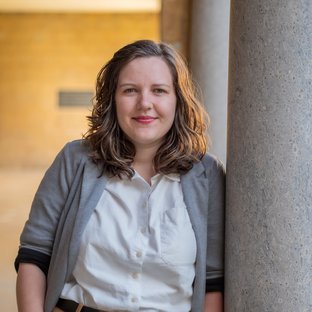
Alina Utrata is a Career Development Research Fellow at St John’s College, Oxford, and an associate member of the Department of Politics and International Relations. She holds a PhD in Politics and International Studies from the University of Cambridge, an MA in Conflict Transformation and Social Justice from Queen’s University Belfast, and a BA in History from Stanford University. Her research focuses on the political theory of technology corporations, examining their influence over citizens and states through control of technological systems like cloud computing and digital payment systems. She also explores historical parallels between Silicon Valley’s space colonization projects and colonial-era corporate entities like the British East India Company. Her work bridges political theory, international relations, and geography, with recent publications in the American Political Science Review and Boston Review . She is a recipient of the Gates-Cambridge Scholarship and the Lisa Smirl PhD Prize. In addition to her academic role, Utrata hosts the Anti-Dystopians podcast, discussing the political implications of technology. She has taught at the University of Cambridge, supervising undergraduates in political theory and history.
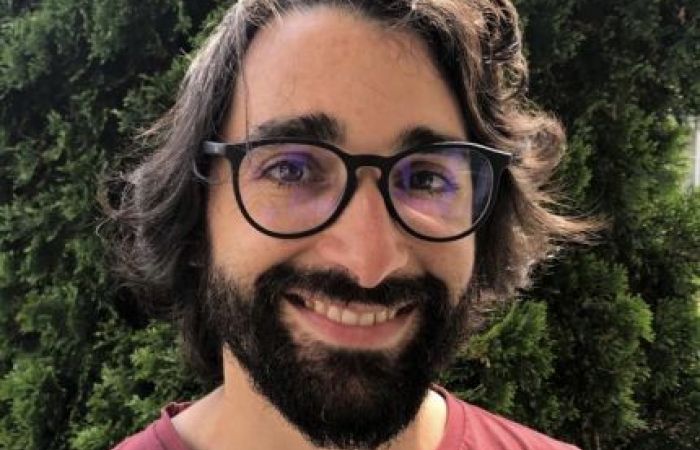
Professor Alistair Duff is a faculty member in the School of Arts and Creative Industries at Edinburgh Napier University , specializing in information policy and its societal implications. His research spans the intersection of technology, ethics, and public governance. Key Research Themes: Information society theory, digital ethics, privacy in the age of surveillance, and the role of public institutions like libraries in fostering citizenship. Notable Projects: Informing the Good Society (AHRC-funded), analysis of census data in policy-making, and studies on ePunditry. Media Engagement: Regularly contributes to public discourse through interviews (e.g., Radio Sputnik, Sunday Express) and expert testimony to the Scottish Parliament Justice Committee . Students Supervised: Nicole van Deursen (HI-Risk method), Aonghus Ferguson (Tony Blair interviews), Hayes Mabweazara (Zimbabwe journalism). Scientific Contributions: Published extensively on topics like Silicon Valley’s societal impact, Bentham’s panopticon in modern surveillance, and the normative theory of information society.
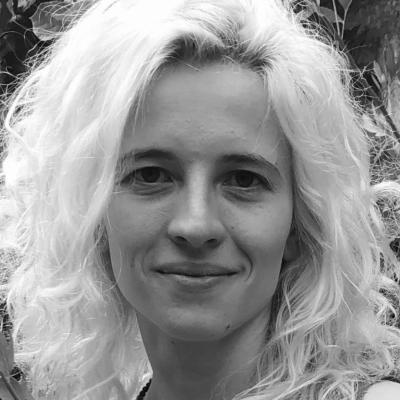
Dr. Jonathan Skinner is a Reader (equivalent to Associate Professor) in English and Comparative Literary Studies at the University of Warwick's Faculty of Arts, where he researches and teaches ecocriticism, contemporary poetry, and creative writing. He founded and edits the journal ecopoetics , exploring intersections between writing and ecology. His research examines: Ecopoetic theory and environmental literature Intersections of sound studies and ethnopoetics North American avant-garde poetry (Olson, Kyger, Eigner) Translation and transnational poetics Third Landscape theory and urban wildness He leads a research network facilitating cross-cultural poetry exchanges along avian migration routes. Skinner's publications predominantly explore ecocritical frameworks through poetry analysis, with recent work examining climate change poetics, multispecies communication, and Anthropocene aesthetics. His scholarship connects literary studies with environmental science, acoustics, and landscape theory. He currently supervises five PhD students researching multispecies poetics and environmental literature through AHRC-funded projects, and has successfully supervised two doctoral candidates studying deindustrialization and extractive urbanism. Previously supervised MA theses span modernist poetry, ecocriticism, and creative writing.
Harry Warwick is a Teaching Professor in Twentieth-Century and Contemporary Literature at the Department of English and Comparative Literary Studies, University of Warwick. His research focuses on British and American speculative literature and cinema, environmental and energy humanities, and critical theory. Education: BA, University of Southampton MA, University of Southampton PhD, University of Southampton His scholarship examines speculative fiction and film through lenses of energy infrastructure, capitalist enclosure, and utopian/dystopian social worlds. Recent publications analyze Battersea Power Station's symbolism, Marxian interpretations of "cognitive estrangement," and critiques of neoliberalism in media. Scientific Awards: Leverhulme Early Career Fellowship in English Warwick's 2023 monograph Dystopia and Dispossession in the Hollywood Science-Fiction Film, 1979-2017 investigates enclosure theory in sci-fi aesthetics, while his ongoing project A Second Modernity explores energy futures in speculative culture.
Dr Andrew Woodhouse is a Lecturer in Law at the University of Liverpool and Director of the Liverpool Public Law Unit. He holds an academic position within the School of Law and Social Justice, Faculty of Humanities and Social Sciences. His research focuses on critical approaches to EU and UK public law, particularly through Marxist and political economy lenses, examining the EU’s climate policies and the role of national parliaments in EU governance. He completed his PhD in 2018 on national parliaments and EU law, leading to publications in top journals like the Common Market Law Review and European Law Review. Woodhouse has held visiting roles at the University of Antwerp and the University of Michigan (Grotius Research Scholar, 2019), and is currently a visiting fellow at the Amsterdam Centre for European Law and Governance (UvA). His recent work critiques the EU Emissions Trading System using commodity-form theory, arguing for democratic control over decarbonisation. He teaches EU law, public law, and comparative constitutional law, supervising critical dissertations and PhDs in these areas. Professional activities include organizing the EU Law and Critique of Capitalism webinar series (2021), and serving on the Education Team for the LLM program. His scholarly awards include the Grotius Research Scholarship (2019).
Michael Albert is a Lecturer in Global Environmental Politics at the University of Edinburgh's School of Social and Political Science. He holds a PhD from Johns Hopkins University and previously taught at SOAS University of London. His research focuses on climate, energy, and food system transformations through Marxist and Neo-Gramscian frameworks, emphasizing transdisciplinary approaches. Key areas include green capitalism, degrowth, renewable energy geopolitics, and abolitionist ecological security. His first book, Navigating the Polycrisis: Mapping the Futures of Capitalism and the Earth , explores intersecting crises (climate, capitalism, energy, etc.) and utopian/dystopian futures. Current projects address mental health crises linked to ecological instability and far-right populism. He is affiliated with the Energy, Environment and Sustainability International Relations Research Group. Albert’s research outputs span journals like Global Environmental Politics , Review of International Political Economy , and Globalizations . He actively participates in conferences and public engagements, including talks on post-growth IR and climate assemblies.
Alison Baker is a Senior Lecturer at the University of East London within the School of Childhood and Social Care. She specializes in Education and teaches modules on inclusion, Primary English, children's literature, and reflective practice in Primary Teaching. PhD candidate researching white working-class children in children's fantasy fiction Areas of expertise: Social class representation, reading for pleasure, inclusive pedagogy Research Focus: Investigates how social class portrayal in fantasy literature impacts children's reading engagement, with particular attention to working-class disempowerment in fictional narratives. Her work bridges literary analysis with educational practice through projects like the UEL Goodreads discussion group. Key Publications: Contributions on social class in Harry Potter, children's comics, and critical reading pedagogy. Notable works include analyses of social capital in fantasy fiction and the use of social media for teacher development. External Roles: Served as Children's Programme Coordinator at Eastercon 2019 (Ytterbium) and currently sits on the Editorial Board of the Journal of Historical Fiction.
Oreet Ashery is Professor of Contemporary Art at the Ruskin School of Art, University of Oxford, where she serves as Director of the MFA programme and Director of Studies in Fine Art at Exeter College. A visual artist whose practice navigates both institutional and grassroots contexts, Ashery's work engages with bodies, worldbuilding, autoethnography, gender and technology through multiplatform projects spanning video, 2D image-making, performance and assemblage. Her research focuses on the intersection of digital culture and mortality, speculative fiction, and gender politics. Characterized by the use of speculative fiction and humor, her work often occupies utopian, discursive and incongruous spaces. She has developed significant projects exploring digital death, grief, and the politics of representation, particularly through her award-winning web-series Revisiting Genesis and her film Dying Under Your Eyes which documents her father's passing. Her practice bridges academic research and public engagement through projects like Death Cafés that bring conversations about mortality into community spaces. Ashery's artistic output shows a consistent trajectory from early performance works exploring identity and cultural politics to more recent projects examining digital legacy and mortality. Her work increasingly engages with medical humanities and the representation of illness, as evidenced by the Wellcome Collection-commissioned Misbehaving Bodies: Jo Spence & Oreet Ashery exhibition (2019-2020) which examined illness representation through collaborative work with the late photographer Jo Spence. Oxford- UdK Berlin Award (2022) Turner Prize Bursary (2020) 10th Jarman Film Award (2017) As a supervisor, Ashery guides doctoral students working at the intersections of performance, visual art, and critical theory. She has secured significant commissions from institutions including KW Institute for Contemporary Art, Wellcome Collection, and Stanley Picker Gallery. Her leadership of the MFA program at the Ruskin School of Art demonstrates her commitment to developing the next generation of artists while maintaining an active studio practice that informs her pedagogical approach.
Dr Harrison Smith is a Lecturer in Digital Media & Society at the University of Sheffield's School of Sociological Studies, Politics and International Relations. He holds a PhD from the University of Toronto’s Faculty of Information, alongside MA and BA degrees in Sociology from Queen’s University, Canada. His research focuses on the political economy of data analytics, particularly in smart cities and consumer surveillance contexts. Education: PhD in Information Studies, University of Toronto (Canada) MA in Sociology, Queen’s University (Canada) BA (Hons) in Sociology, Queen’s University (Canada) Smith’s research examines how data infrastructures shape socio-economic inequality through processes like surveillance, classification, and market segmentation. Key areas include location-based marketing, 5G data infrastructures, and industry consolidation in data analytics. His work critiques how digital technologies reconfigure urban spaces and labor markets, particularly in 'smart city' contexts. Recent publications explore the metaverse's industrial implications, blockchain’s role in dispute resolution, and surveillance practices at music festivals. His teaching includes leading the module SCS2016: The Sociology of the Media. Smith’s expertise bridges media theory, urban informatics, and critical data studies, emphasizing ethical and political dimensions of digital technologies in everyday life.
Dr. Idalina Baptista serves as Associate Professor in Urban Anthropology at the University of Oxford's Department for Continuing Education, where she teaches urban theory in the MSc and DPhil in Sustainable Urban Development programs. A Fellow of Kellogg College and member of the Oxford Network for the Future of Cities, she bridges academic research with real-world urban challenges through her extensive fieldwork in African cities. Her academic credentials include a PhD in City and Regional Planning (2009) and Master of Landscape Architecture (1999) from the University of California, Berkeley, and a BEng in Environmental Engineering (1996) from Portugal's New University of Lisbon. This interdisciplinary foundation informs her critical approach to urban development. Baptista's research pioneers decolonial perspectives on African urbanization, focusing on energy infrastructure governance in Maputo, Mozambique. She examines how prepayment electricity systems reshape social relations, how colonial legacies influence contemporary urban landscapes, and how community energy initiatives can advance energy justice. Her work challenges Anglo-American urban models through ethnographic and archival methodologies, emphasizing localized knowledge production for sustainable urban futures. Analysis of her 2018-2024 publications reveals consistent thematic focus on energy access inequalities, infrastructure informality, and post-colonial governance in sub-Saharan Africa. Her articles demonstrate methodological innovation through socio-technical analysis of electricity practices, contributing significantly to debates on urban political ecology and energy transitions in the Global South. She actively supervises doctoral candidates including Yaseen Albarim and Patrick Brown, while leading major research initiatives such as the Electric Urbanism project on prepayment systems in Mozambique, the CESET project on community energy across Ethiopia/Malawi/Mozambique, and a British Academy-funded study on energy access in conflict-affected urban areas. Her past experience as an environmental planning consultant and NGO member grounds her academic work in practical policy engagement.
Dr. Sophia Buck is a Junior Research Fellow in Modern Languages at Lady Margaret Hall (LMH), University of Oxford . Her academic journey spans German Literature and Philosophy studies at Heidelberg, Prague, and Oxford, culminating in a DPhil at Merton College (2019–2023). She is affiliated with the research network ‘Kulturtransfer und kulturelle Identität’ and serves as an elected member of the International Walter Benjamin Society .
Professor Antony Taylor is a historian of nineteenth- and twentieth-century Britain at Sheffield Hallam University , affiliated with the Humanities Research Centre and the Department of Humanities within the College of Social Sciences and Arts . His research spans popular politics, radicalism, and transnational exchanges. Specializes in British republicanism , anti-monarchism , and radical historical memory Explores intersections between sensation fiction and political violence Current work on transnational welfare reform in Britain, Scandinavia, and New Zealand Teaching: Courses on The Cold War Era , London’s literary history , and Australia’s colonial history . Supervises postgraduate research on topics including transnational fascism and environmental politics . Notable publications: London's Burning (2012), Godless Edens (2015) Contributor to national press and media commentary on British political history
Lukas Engelmann is a Senior Lecturer at the University of Edinburgh , specifically within the Science, Technology and Innovation Studies department under the School of Social and Political Science . His research focuses on the history and sociology of biomedicine , with particular interest in epidemiological reasoning , visual cultures of disease , digital epidemiology , and decolonial approaches to medical history . The Epidemy Lab , which he founded, explores the historical development of epidemiology and its contemporary influence on data-driven public health and pandemic policy-making . Engelmann's work has been funded by prestigious grants including an ERC Starting Grant (2021-2025) for his research on the history of epidemiological reasoning, and support from the Wellcome Trust for projects examining the social dimensions of digital health . His book 'Mapping AIDS' (2018) established him as a leading scholar in medical visualization , while 'Sulphuric Utopias' (2020) with Christos Lynteris explores the technological history of maritime sanitation and its political implications. Recent publications emphasize the visual and data practices that have shaped epidemiology, including works on epidemic modeling during the COVID-19 pandemic , the history of plague mapping , and the ethical implications of digital phenotyping . He has also contributed to interdisciplinary discussions on syndemics , co-infection epistemology , and the commercialization of bacteriology in the early 20th century. His scientific contributions have earned recognition through editorial roles in journals like Big Data and Society , and collaborative projects such as 'Working with Diagrams' (2022) which investigates the epistemological role of visual tools in medical knowledge production. Scientific Awards and Funding: ERC Starting Grant (2021-2025) Wellcome Trust Institutional Support Fund British Academy/Leverhulme Small Research Grant Chancellor's Fellowship (University of Edinburgh) 'Sulphuric Utopias' listed in The Guardian's 30 Books to Understand the World (2020)
Dr Jared Holley is a Lecturer in Political Theory at the University of Edinburgh's School of Social and Political Science. He specializes in the history of political thought, focusing on modern concepts of freedom, domination, and their global intellectual histories. As Co-Director of the Centre for Ethics and Critical Thought (CRITIQUE), he explores how historical ideas inform contemporary resistance movements. His current research examines anticolonial solidarity, grounded in the global history of anticolonial political thought and debates across the global North and South. He teaches courses including 'Political Thinkers and Histories' and 'Theories of Solidarity,' and supervises PhD students in political thought history. His 2024 book, Rousseau’s Politics of Taste , analyzes Enlightenment political aesthetics. Holley’s work bridges Western/European traditions and non-Western world philosophies, emphasizing decolonial thought and racial equality. Research interests include global intellectual histories, anticolonial solidarity, and the intersection of political theory with decolonial frameworks. He regularly teaches 'Anticolonial Political Thought' and contributes to interdisciplinary dialogues on ethics and critical theory through CRITIQUE. His publications explore themes like metropolitan domination, solidarity practices, and the legacy of thinkers like Anténor Firmin. Holley’s scholarship aims to connect historical ideas with contemporary struggles for justice and equality.