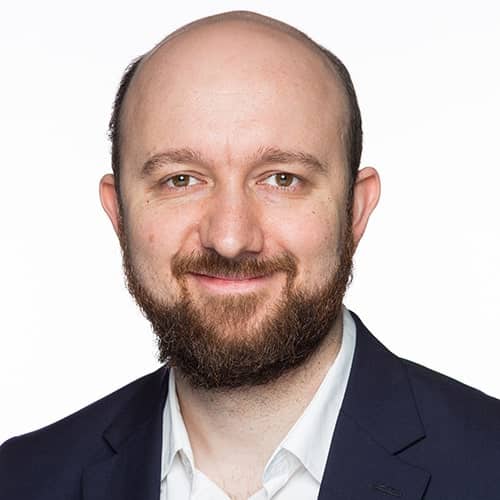
Mikael B. Skov is a Vice Dean and Professor at the Technical Faculty of IT and Design of Aalborg University , Denmark. His research spans human-AI interaction, robotics, and user experience, with a focus on trust signaling in clinical AI, swarm robotics, and sound zones for domestic environments. Role: Vice Dean for Research Department: Computer Science Research Interests: Skov investigates how humans interact with AI and robots in healthcare and domestic settings, emphasizing trust calibration, alert design, and acoustic comfort. His work includes developing frameworks for UX maturity in robotics organizations and studying long-term adoption of sound zone systems. Recent Projects: As principal/co-investigator, he leads the HERD project on human-AI collaboration in robot swarms (2021–2025) and supervises Data og Bæredygtig Mad (2020–2023), an HCI perspective on sustainable food systems. Publications: His 2024 work includes studies on AI explanations in clinical training, music applications with intermittent interactions, and multi-robot supervision. Earlier projects (2001–2020) focused on mobile device usability, UX practices, and context-aware computing.
Prithvi Ravi Kantan is a full-time Researcher at Aalborg University's Department of Architecture, Design and Media Technology within The Technical Faculty of IT and Design. His work focuses on developing sound-based and multimodal feedback systems for motor rehabilitation, integrating principles from music technology and biomedical engineering. Education: PhD in Embodied Sonification Design (2021-2023) M.Sc. in Sound and Music Computing (2018-2020) B.E. in Electronics and Telecommunications (2009-2013) Research interests include real-time auditory feedback systems for neurological rehabilitation, user-centered design of clinical technologies, and the application of generative music in data sonification. He actively contributes to projects like HearWalk (2023-2027), exploring sound-facilitated motor learning in cerebral palsy patients. Notable achievements include winning the Danish Sound Day Research Pitch Battle (2023) and receiving the Best Student Paper Award at ICAD 2024. His work aligns with UN SDG 3 (Good Health) and SDG 4 (Quality Education). Teaching responsibilities include coordinating bachelor and master-level courses in PBL-based learning, emphasizing interdisciplinary approaches. He has supervised multiple student projects and contributed to over 39 publications since 2013.
Hasti Seifi is an Affiliated Associate Professor at the Department of Computer Science (DIKU), University of Copenhagen, specializing in Human-Centred Computing. Her research focuses on haptics, augmented reality, and human-robot interaction. Institution: University of Copenhagen Department: Department of Computer Science Section: Human-Centred Computing Research interests include: Designing innovative haptic feedback systems Exploring tactile experiences in augmented reality Developing human-robot interaction frameworks Creating generative models for haptic design Investigating social touch technologies Advancing mid-air and ultrasound haptic interfaces Recent publications demonstrate a strong focus on: Generative haptic modeling for AR/XR systems Human-robot interaction dynamics Text input in extended reality environments Visual-haptic multisensory integration Ultrasound mid-air haptic design tools Social touch technologies
Morten Søndergaard is an Associate Professor at Aalborg University’s Department of Communication and Psychology, affiliated with the Faculty of Social Sciences and Humanities. He is part of the Art, Aesthetics & Health Research Laboratory and the MASSHINE initiative. His research focuses on sound art, media art curation, and transdisciplinary practices, emphasizing the exclusion mechanisms in 20th-century art systems and unarchived avant-garde movements. Søndergaard has curated exhibitions globally, including at Kiasma and ZKM, and co-founded the POM conference series and ISACS symposia. He leads the Erasmus Master of Excellence in Media Arts Cultures, collaborating with institutions in Austria, Poland, and Hong Kong. His work bridges art, science, and technology, with recent projects exploring sonic archives and participatory curatorial frameworks. Key collaborations include roles with the European NeMe network, SUNY College New York, and the Momentum Biennial. He has organized over 20 projects since 2008, including the 2025 Momentum Biennial as head curator. His teaching spans media art theory, sound art practices, and curatorial methodologies at both bachelor and master levels. Søndergaard’s research outputs include over 145 publications, with a focus on sound art’s theoretical and practical dimensions. His current projects emphasize ‘uncurating’ methodologies and the reactivation of marginalized avant-garde practices. Notable activities include editorial roles, international conference organization, and advisory roles in art and science networks. His work has been featured in media outlets like Artdaily and the Biennial Foundation, highlighting his contributions to contemporary art discourse and curatorial innovation.
Professor Hans Gellersen is a faculty member at the Department of Computer Science, Aarhus University. His research focuses on human-computer interaction, virtual/augmented reality, eye tracking, and multimodal interaction. He leads projects exploring gaze-based interfaces, natural input techniques, and XR applications. Key interests include improving interaction efficiency in 3D environments and addressing accessibility challenges in extended reality systems. Recent work emphasizes dynamic eye dominance analysis for foveated rendering, multimodal input cascades (hand-head-eye), and gaze-assisted 3D object manipulation. He investigates user performance in VR/AR systems, calibration methods for eye tracking, and collaborative mixed reality tools. Notable contributions include frameworks for spatial interfaces, gesture fusion, and accessibility adaptations for users with movement disorders. His publications span top venues like CHI, IEEE VR, and ACM Transactions on Computer-Human Interaction. Research themes include gaze-hand coordination, implicit calibration systems, and reconfigurable collaboration spaces. Current projects explore seamless interaction techniques that combine gaze with physical movements and environmental cues.
Abayomi Baiyere serves as an Associate Professor in the Department of Digitalization at Copenhagen Business School (CBS), where he conducts cutting-edge research at the intersection of digital technologies and organizational transformation. His work significantly contributes to UN Sustainable Development Goals through digitally-enabled societal impact initiatives and has yielded 69 research outputs including high-impact publications in premier journals like Information Systems Journal and Information Systems Research . His research program focuses on: Digital transformation frameworks (notably the MIND framework for capability assessment) Platform design and governance mechanisms Smart service systems development Workplace transformation through digital subtraction logic Digital strategy implementation challenges Analysis of his 15 most recent publications (2024-2025) reveals a strong theoretical grounding in institutional and practice-based perspectives, with increasing emphasis on ethical dimensions of digital transformation, AI implementation constraints, and methodological innovations in computational research. His work consistently bridges conceptual rigor with practical applicability for organizational leaders. Dr. Baiyere actively shapes academic discourse through editorial roles including co-editing The Routledge Companion to Management Information Systems (2025) and organizing key events like the African IS Paper Development Workshop (2020). His public engagement includes 6 media contributions discussing digital workplace transformation and strategic implementation challenges, demonstrating commitment to translating research into practical insights for broader audiences. Within CBS, he has supervised 8 academic works while contributing to the department's international recognition in digitalization research. His activities reflect deep engagement with both theoretical advancement in information systems and practical solutions for organizational digital maturity.
Teresa Hirzle is a Tenure Track Assistant Professor at the Department of Computer Science , University of Copenhagen , specializing in Human-Centred Computing . Her research focuses on Human-Computer Interaction (HCI) , Virtual Reality (VR) , Extended Reality (XR) , and Gaze-Based Interaction . Research Interests: Designing interaction techniques for immersive environments Eye movement analysis for educational applications Addressing digital eye strain in interactive systems Evaluating user experience in VR/AR Recent Research Trends: Her recent publications examine AI representation in VR co-creation, VR sickness in locomotion, eye strain in gaze-driven systems, and hybrid applications of comics/AR. She also explores pedagogical implications of eye tracking in remote learning. Contact: Email: tehi@di.ku.dk Office: Sigurdsgade 41, 2200 København N.
Raghavendra Selvan, an Assistant Professor (Tenure Track) at the University of Copenhagen, holds joint appointments in the Machine Learning Section (Department of Computer Science), Kiehn Lab (Department of Neuroscience), and the Data Science Laboratory. His academic journey includes a PhD in Medical Image Analysis (2018), MSc in Communication Engineering (2015), and BSc in Electronics and Communication Engineering (2009). PhD - Medical Image Analysis, University of Copenhagen (2018) MSc - Communication Engineering, Chalmers University (2015) BSc - Electronics and Communication Engineering, BMS Institute of Technology, India (2009) His research focuses on Bayesian Machine Learning with emphasis on Medical Image Analysis, Graph-based Learning, Tensor Networks, Approximate Inference, and Multi-Object Tracking Theory. Recent publications highlight his contributions to environmentally sustainable AI practices, efficient deep learning in medical imaging, and novel applications of tensor networks. Key research areas: Green AI and Environmental Sustainability Medical Image Analysis Graph Neural Networks Crystal Structure Prediction Model Compression Materials Science Applications
Kaj Grønbæk is a Professor and Head of Department at Aarhus University's Department of Computer Science. His research focuses on Augmented Reality , Human-Robot Interaction , and Interaction Design , with specific interest in hybrid user interfaces and immersive authoring systems. Academic Rank: Professor Department: Department of Computer Science Email: kgronbak@cs.au.dk Research Interests : Combines Augmented Reality with Pervasive Computing to create novel Interactive Rooms and Urban Environments . Specializes in Experimental Systems Development and Mobile Interfaces . Article Trends : Recent publications focus on Virtual Reality applications in industrial settings, Augmented Reality for robotics, and Haptic Feedback mechanisms. The work spans Human-Computer Interaction , Immersive Technologies , and Collaborative Systems . Scientific Awards : Best Student Paper Award (2017) CHI 2021 Best Paper Award ISS 2019 Best Paper Award Red Dot Design Award for 'Wisdom Well' (2007) Grants & Projects : Leads DIGITAL RESEARCH CENTRE DENMARK (2020-2025) and MADE FAST WS5 project (2020-2024). Participates in CoronaLytics and HealthD360 initiatives.
Thomas Bjørner is an Associate Professor at Aalborg University's Department of Architecture, Design and Media Technology within The Technical Faculty of IT and Design. He serves as Head of the Media Innovation & Game Research (Me-Ga) unit and co-founded the research network for qualitative methods (since 2007) with 40+ company collaborations. Specializes in qualitative/mixed methods for technology evaluation Teaches PhD courses in advanced qualitative methods EU expert evaluator for research grants His research focuses on gamified learning , VR for social communication , and technology acceptance studies , often addressing UN Sustainable Development Goals. Recent projects include: Audio-only VR for blind gamers Generative AI integration in education Plastic crisis awareness games Smart city implementation barriers Scientific Awards: Serious Game Competition Award (2022) International conference prizes (2020, 2018) With over 121 publications including two textbooks, his work emphasizes applied qualitative methods with improved validity in technology contexts, particularly for youth education and media research.
Ken Pfeuffer is an Associate Professor in the Department of Computer Science at Aarhus University, affiliated with the Faculty of Science. His research focuses on Human-Computer Interaction (HCI) , particularly in Virtual Reality (VR) , Augmented Reality (AR) , and Extended Reality (XR) systems. He leads projects like the Interdisciplinary Center for Extended Reality (ICXR) and the XCB Lab , exploring multimodal interaction techniques, eye tracking, and user authentication in immersive environments. His work emphasizes gaze-based interaction , multimodal input fusion , and user interface design for AR/VR applications. Recent studies investigate consumer behavior in virtual retail environments and the integration of touch, gaze, and gesture inputs for natural user experiences. Pfeuffer collaborates on adaptive UI toolkits and practical methods for mobile eye-tracking systems, prioritizing real-world usability and accessibility. Key contributions include Depth3DSketch for VR sketching, PinchCatcher for multi-selection, and EyeGuide for gaze-assisted 3D sketching. His research bridges theoretical HCI principles with industry applications, addressing challenges in immersion , accuracy , and user safety in XR systems.
Mostafa Mohammadi is an Assistant Professor at the Department of Health Science and Technology, Aalborg University, affiliated with the Faculty of Medicine and Center for Rehabilitation Robotics. His research focuses on neurorehabilitation robotics, human-computer interaction, and telerehabilitation technologies for individuals with disabilities. Ph.D. in Biomedical Engineering (Aalborg University, 2018-2022) M.Sc. in Biomedical Engineering (Polytechnic University of Milan, 2015-2017) B.Sc. in Mechanical Engineering (Sharif University of Technology, 2011-2015) His work spans exoskeleton design, assistive robotics, and innovative interfaces like tongue-computer interfacing. Recent projects include the eMotivo digital health solution funded by Innovation Fund Denmark and intelligent tendon-driven exoskeletons for severe disabilities. Research outputs (33 total) emphasize adaptive robotics, motor impairment solutions, and wearable technologies. Collaborations span robotics, biomedical engineering, and clinical disciplines. Teaching includes courses in rehabilitation robotics, human-computer interaction, and digital systems for biomedical engineering. Scientific activities align with UN Sustainable Development Goals for quality education and reduced inequalities. Notable contributions include advancements in myoelectric interfaces and neurorehabilitation technologies.
Michael Wessely is a Tenure Track Assistant Professor at the Department of Computer Science, Aarhus University (AU), Denmark. His research focuses on innovative human-computer interaction technologies, particularly in oral user interfaces and multi-material fabrication. Research Highlights: Development of intraoral pH sensors (BIOral), customizable oral interfaces (MouthIO), and programmable light sources (PortaChrome). Key Collaborations: Works with interdisciplinary teams including biomedical engineers (Y. Song, H. Xu) and HCI experts (S. Mueller, E. Hoggan). Recent Impact: 2024 publications demonstrate expertise in 3D printing and integrated sensing systems. In 2023, he received recognition for ChromaNails - a reprogrammable nail polish interface technology.
Tuukka Ruotsalo serves as Associate Professor in the Machine Learning Section at the Department of Computer Science, University of Copenhagen. His research bridges human cognition with computational systems through brain-computer interfaces and physiological computing. As Academy Research Fellow at University of Helsinki (2019-2024), he maintained dual institutional affiliations while leading cutting-edge work in neuro-linguistic modeling and affective relevance. His research focuses on brain-computer interfaces for information retrieval , where he pioneers methods to decode cognitive states from neural signals to improve search systems. Key areas include affective relevance modeling that integrates emotional states into search algorithms, and neuro-linguistic reconstruction that translates brain activity into language. His work on fairness-relevance tradeoffs in recommender systems established Pareto frontier evaluation frameworks now widely adopted in ethical AI research. Recent publications demonstrate how physiological signals like EEG and galvanic skin response can create more adaptive human-information interaction systems. Ruotsalo's scientific recognition includes the prestigious Academy Research Fellow position. His publications in IEEE Transactions on Human-Machine Systems , Journal of the Association for Information Science and Technology , and Communications Biology reveal growing interdisciplinary impact. His advising spans cognitive neuroscience and machine learning students, with notable collaborations across the SCIENCE AI Centre. Current projects include the TreeSense initiative for remote sensing of global tree resources and development of quantum-inspired neural architectures. His lab leverages the department's powerful compute cluster for large-scale physiological data analysis.
Ben Wagner is a leading academic in digital rights and technology governance, holding multiple prestigious positions: University Professor of Human Rights & Technology at IT:U, Director of the AI Futures Lab on Rights and Justice at TU Delft, and Professor of Media, Technology and Society at Inholland University of Applied Sciences. He leads the Digital Rights Research Team (DRRT) and co-founded the Sustainable Media Lab (SML) in The Hague, contributing to bridging research and education. He is also a visiting researcher at Oxford University's Human Centred Computing Group and serves on the advisory board of the journal Patterns . Inholland University of Applied Sciences – Professor, Media, Technology & Society (since 2021) TU Delft – Director, AI Futures Lab on Rights and Justice IT:U – University Professor, Human Rights & Technology European University Viadrina – Founding Director, Center for Internet & Human Rights Vienna University of Economics – Director, Sustainable Computing Lab ENISA – Advisory Group Member Ben Wagner earned his PhD in Political and Social Sciences from the European University Institute in Florence in 2013, with a dissertation on freedom of expression and online content regulation. He has held research positions at Cambridge University, University of Pennsylvania, Technical University of Berlin, and European University Viadrina. His research centers on digital rights, AI governance, freedom of expression online, and the societal impact of technology. He investigates how digital infrastructures shape human rights and advocates for sustainable, accountable systems. His work spans legal, technical, and social dimensions, focusing on public sector data practices, content moderation, ethical AI, and digital inclusion. He actively promotes citizen control over technological change and interdisciplinary collaboration. The recent publications reflect a strong focus on the ethical and governance challenges of AI and data science, digital rights frameworks, and platform accountability. Themes include the gap between policy and practice in public data use, global AI ethics, content governance on social media, and co-designing digital rights labels. His work emphasizes systemic accountability, hybrid digital-physical spaces, and embedding rights into technological design. Ben Wagner is an expert advisor to the European Parliament, European Commission, OSCE, Council of Europe, and UNESCO. He is a member of the policy advisory board for ECHOES (European Cloud for Heritage OpEn Science) and contributes to high-impact publications and international discourse. His research is widely covered in global media including CNN, The Guardian, Bloomberg TV, Der Spiegel, ORF, and SWR2. He advises on and contributes to major research initiatives such as ReSocial and fabricated. He is involved in developing a new Master’s program in Data-Driven Business at Inholland and leads efforts to integrate digital rights into education and innovation. His inaugural lecture, 'The Ground Beneath our Feet,' highlights the instability of digital infrastructures and the urgent need to embed digital rights at their core. Ben co-founded the Digital Rights Research Team and the Sustainable Media Lab at Inholland, fostering collaboration across faculties and sectors. These labs focus on creating a digitally responsible society through interdisciplinary research in design, policy, and technology. The AI Futures Lab at TU Delft explores justice-oriented futures for AI, while his work at IT:U advances human rights in digital contexts.