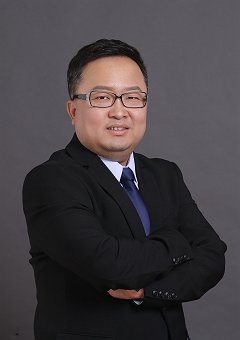
Lingling Fan is an Associate Professor (100 Young Academic Leaders of Nankai University) at Nankai University, China. Her research focuses on software security analysis, software testing and analysis, and big data-driven analysis, with significant contributions to mobile application security, particularly in Android security and accessibility. Her research interests include: Software Security Analysis, with emphasis on mobile application security and vulnerability detection Software Testing and Analysis, particularly for Android applications and accessibility issues Big Data-driven Analysis for security and quality assessment of software systems Dr. Fan's publication record shows strong trends in automated security testing, vulnerability detection in open-source ecosystems, and accessibility analysis for mobile applications. Her work spans multiple disciplines including software engineering, security, and human-computer interaction, with a particular focus on practical applications for Android ecosystem and measurable real-world impact. Her notable scientific awards include: ACM SIGSOFT Distinguished Paper Award (ASE 2022) ACM SIGSOFT Distinguished Paper Award (ICSE 2021) ACM SIGSOFT Distinguished Paper Award (ICSE 2018) Research Tool Award at NASAC 2018 National Scholarship from The Ministry of Education, China (2018) ACM SIGSOFT CAPS Award (ASE 2018) Dr. Fan has served in various academic service roles including as a program committee member for major conferences such as ASE, ICSE, FSE, and ISSRE. She has also been a reviewer for prestigious journals including IEEE Transactions on Information Forensics and Security (TIFS), IEEE Transactions on Dependable and Secure Computing (TDSC), IEEE Transactions on Software Engineering (TSE), and ACM Transactions on Software Engineering and Methodology (TOSEM).
Dr. Guoqiang Li is an Associate Professor in the School of Computer Science at Shanghai Jiao Tong University, where he conducts research at the intersection of formal methods, programming languages, and security. His academic journey includes prior positions as Assistant Professor (2009-2013) and subsequent promotion to Associate Professor (2014-present) at the same institution. He has held international appointments including a postdoctoral fellowship at Nagoya University (2008-2009), an academic visit at the University of Oxford (2015-2016), and a Guest Associate Professorship at Kyushu University's Research and Development Center for Smart Mobility (2016-2020). Dr. Li earned his B.S. from Taiyuan University of Technology (2001), M.S. from Shanghai Jiao Tong University (2005), and Ph.D. from Japan Advanced Institute of Science and Technology (2008). His educational background reflects a strong foundation in both Chinese and Japanese academic traditions. His research focuses on formal verification, programming language theory, zero-knowledge proofs, knowledge reasoning, and intelligent system verification and security. Over the past decade, his work has evolved from traditional formal methods applied to timed automata and process calculi to contemporary topics including neural network verification, zero-knowledge proof systems, and the application of large language models to program analysis. His publication record demonstrates a clear progression toward addressing verification challenges in increasingly complex modern systems. Dr. Li's recent publications reveal a strategic research trajectory: early work centered on timed automata and formal verification of concurrent systems, while current research addresses the verification of AI systems, zero-knowledge cryptographic protocols, and LLM-enhanced program analysis. This evolution reflects his commitment to applying rigorous formal methods to emerging computational challenges. Distinguished Paper Award at ICSE 2020 for 'Unblind Your Apps: Predicting Natural-Language Labels for Mobile GUI Components by Deep Learning' Consistent publication in top-tier venues including ASE, ICSE, FSE, and OOPSLA Recognition through multiple National Natural Science Foundation of China (NSFC) grants as Principal Investigator Dr. Li actively contributes to the academic community as a Senior Member of the China Computer Federation, Deputy Director of Theoretical Computer Science for the Shanghai Computer Society, and committee member for multiple technical organizations. He serves as Organization Chair for SEKM'20-22 and FMAC'17, Publicity Chair for TASE'21-23, and has participated in program committees for numerous international conferences. His teaching portfolio includes undergraduate and graduate courses in algorithm design, mathematical foundations, and scientific writing, demonstrating his commitment to both theoretical computer science education and practical application.
Matthew Lease is a Professor at the School of Information, University of Texas at Austin, where he serves as Director of Doctoral Studies and Assistant Graduate Advisor. He is a Distinguished Member of the Association for Computing Machinery (ACM), a Senior Member of the Association for the Advancement of Artificial Intelligence (AAAI), and an Amazon Scholar. Lease co-directs the $20M NSF-Simons AI Institute for Cosmic Origins (CosmicAI) and is a faculty founder and leader of UT's Good Systems, an eight-year, $20M university-wide Grand Challenge aimed at designing responsible AI technologies. In 2023-2024, he was invited four times to address the Texas Legislature on responsible AI. Ph.D. Computer Science, Brown University, 2010 M.Sc. Computer Science, Brown University, 2004 B.Sc. Computer Science, University of Washington, 1999 Lease directs the UT Austin Laboratory for Artificial Intelligence and Human-Centered Computing (AI&HCC), where his research spans artificial intelligence modeling and human-computer interaction design. His work focuses on creating novel datasets, building AI models, and evaluating both model performance and their impact on end-users. When automated AI falls short, his team designs human-in-the-loop approaches, leveraging AI model explanations and creative user interfaces. To promote fair AI, they focus on better annotation techniques to avoid bias and develop modeling strategies to mitigate dataset biases. Their work tackles real-world problems as part of UT Austin's Good Systems Grand Challenge, with an ongoing emphasis on content moderation—exploring automated, human-in-the-loop, and human-safe practices to combat disinformation, hate speech, and online polarization. Lease's recent publications (2021-2024) demonstrate a strong focus on human-centered AI, particularly in the areas of fair and explainable AI, content moderation, fact-checking, and crowdsourcing. His research integrates technical AI development with human factors considerations, emphasizing the importance of designing AI systems that work effectively with human users. The publications reveal a consistent theme of addressing bias in AI systems, improving human-AI collaboration, and developing methods to ensure the ethical deployment of AI technologies in sensitive domains like content moderation and misinformation detection. His work shows progression from foundational techniques in crowdsourcing and human computation toward more sophisticated approaches that consider psychological impacts and ethical implications. 2024 Test of Time Paper Award, AAAI Conference on Human Computation and Crowdsourcing (HCOMP) 2024 Most Influential Paper Award, IEEE/ACM International Conference on Automated Software Engineering (ASE) 2024 Best Paper Honorable Mention, ACM Conference on Computer Supported Cooperative Work (CSCW) 2022 Best Student Paper, Conference on Information Systems and Technology (CIST) 2020 Conference Award Track, Journal of Artificial Intelligence Research (JAIR) 2019 Best Student Paper, European Conference for Information Retrieval (ECIR) Early Career awards from DARPA, NSF, and IMLS Lease has secured significant funding for his research, including the $20M NSF-Simons AI Institute for Cosmic Origins and the $20M Good Systems Grand Challenge. His lab, AI&HCC, has developed numerous tools and methodologies for human-AI collaboration, particularly in the context of content moderation and fact-checking. He has advised numerous students who have gone on to publish in top-tier conferences and journals in AI, HCI, and NLP. Lease actively collaborates with industry partners including Amazon, where he serves as an Amazon Scholar, and has served on advisory boards for JASIS&T, Texas Advanced Computing Center (TACC), and UT Austin-Amazon Science Hub. His research has led to practical tools like SQUARE for aggregating crowd responses and methods for transparent AI evaluation. Lease leads the UT Austin Laboratory for Artificial Intelligence and Human-Centered Computing (AI&HCC), which has developed innovative approaches to human-AI collaboration. The lab's work on content moderation addresses critical challenges in online safety, including the psychological well-being of content moderators who face traumatic material. Their research on fair and explainable AI has produced methods for detecting toxic speech while maintaining accuracy across demographic groups. The lab actively collaborates with fact-checking organizations through co-design processes to create tools that meet real-world needs. As part of UT Austin's Good Systems initiative, the lab is developing AI technologies that prioritize human values and social responsibility from the outset of the design process.
Professor Tamas Kiss is a distinguished academic at the University of Westminster, serving as Professor of Distributed Computing at the School of Computer Science and Engineering. He holds dual leadership roles as Director of the Research Centre for Parallel Computing and Director of Research and Knowledge Exchange at his School. Since 2020, he has been Editor in Chief of the Journal of Grid Computing published by Springer Nature. His research focuses on cloud orchestration at the application level, cloud native application development, and edge-fog-cloud systems management. He has developed significant solutions including the MiCADO cloud orchestrator for microservices-based applications, the CloudSME and CloudiFacturing platforms for manufacturing companies, and the PITHIA e-Science Centre for space physics research. These innovations have been adopted by over 100 companies, generating substantial economic impact. Professor Kiss has secured over £65 million in research funding and led more than 20 European and UK-funded projects. His publication record includes over 150 scientific papers in top journals and conferences. Current major projects include STEP-UP (UKRI EPSRC), Swarmchestrate, ARCAFF, HARPOCRATES, and PITHIA-NRF. His research outputs demonstrate a clear progression from foundational grid computing work to current focus on cloud-edge continuum orchestration and industry 4.0 applications. The most recent publications (2023-2025) emphasize decentralized application frameworks, privacy-preserving machine learning at the edge, and interoperable data analytics for digital twin manufacturing. Professor Kiss actively supervises doctoral researchers working on cutting-edge topics including swarm-based orchestration, federated learning in resource-constrained environments, and NFC implementation in industrial IoT systems. His leadership extends to directing the Centre for Parallel Computing, which focuses on cloud computing, distributed computing, high performance computing, and cloud-based simulation for manufacturing.
Sen Chen is a Professor at Nankai University, holding positions in both the College of Cryptology and Cyber Science and the College of Computer Science. He leads the Nankai Software Security Laboratory (NKSSecLab) and is a member of Professor Zheli Liu's research group. Previously, he served as a tenured associate professor and research professor at Tianjin University (2021-2024), and as a research assistant professor at Nanyang Technological University (NTU), Singapore. Dr. Chen's research focuses on software security and software supply chain security, with particular emphasis on vulnerability analysis and malware detection. His work spans multiple domains including mobile security, AI security, open-source security, and intelligent software development and testing. His research has led to significant contributions in automated security vulnerability detection, software composition analysis, and security tool development for various platforms including Android, Java, and blockchain systems. Analysis of Dr. Chen's recent publications (2023-2025) reveals a strong focus on software supply chain security, with particular attention to vulnerability detection and remediation in open-source ecosystems. His work demonstrates expertise in applying advanced machine learning techniques to security problems, especially in the context of Android applications and containerized environments. There's a clear trajectory toward addressing emerging challenges in AI security and large language model supply chains, reflecting his ability to adapt research directions to evolving technological landscapes. ACM SIGSOFT Distinguished Paper Award (FSE 2024) ACM SIGSOFT Distinguished Paper Award (ASE 2023) First Place of the 13th Challenge Cup China College Students' Entrepreneurship Competition ACM SIGSOFT Distinguished Paper Award (ICSE 2023) Prototype Research Tool Award 2nd Place (Freestyle) in CCF ChinaSoft 2022 First Place of The 8th China International College Students' 'Internet+' Innovation and Entrepreneurship Competition ACM SIGSOFT Distinguished Paper Award (ASE 2022) ACM China Rising Star Award (ACM Tianjin Council) ACM SIGSOFT Distinguished Paper Award (ICSE 2021) First Class of Progress of Science and Technology Prize of Tianjin, 2020 Dr. Chen has successfully secured funding from multiple prestigious sources including key R&D programs, general and pre-research projects of the National Natural Science Foundation of China, and the Populus euphratica Forest Fund. His theoretical research has been applied by major companies such as State Grid, China Automotive Industry Corporation, and Huawei. He has mentored students to win national gold medals in both the 'Internet Plus' and Challenge Cup programs, demonstrating his commitment to student development and practical application of research. Dr. Chen leads NKSSecLab (Nankai Software Security Laboratory), which focuses on cutting-edge research in software security and supply chain security. The lab has developed several notable tools including SCTruster (a digital trust chain platform for software supply chain security) and LiDetector. The lab maintains strong international collaborations with institutions like Nanyang Technological University in Singapore and has established itself as a leading research group in software security within China.
Dr. Stephen U. Egarievwe serves as Associate Dean for Research in the School of Engineering and Professor in the Department of Industrial Engineering at Morgan State University. He also directs the Center for Research and Education in Digital Engineering (CREDE) and coordinates the Interdisciplinary Consortium for Research and Educational Access in Science and Engineering (InCREASE). Education: B.Sc. (Honors) in Engineering Physics with Nuclear Engineering option - Obafemi Awolowo University M.Sc. in Physics & Astronomy (Solar Energy) - University of Nigeria M.S. in Nuclear Engineering - University of Tennessee M.S. in Computer Science (Operating Systems and Robotics) - Vanderbilt University M.A. in Physics (Nuclear Detectors) - Fisk University M.S. in Computer Science (Software Engineering and HCI) - Nova Southeastern University Ph.D. in Applied Physics - Alabama A&M University Dr. Egarievwe's research spans three interconnected domains. His nuclear safety work focuses on room-temperature detectors, UAV-based radiation surveys, and nuclear cybersecurity. In STEM education, he advances research capacity at HBCUs and minority-serving institutions through curriculum development and large-scale consortium building. His digital engineering research explores digital twins, simulation, and data virtualization techniques for educational applications. Dr. Egarievwe has published over 150 journal and conference articles including book chapters, with research trends showing increasing integration of nuclear detection technologies with digital engineering approaches and educational applications. Scientific Recognition: Co-winner of the 2009 R&D 100 Award (top 100 scientific/engineering products) SLAC Scholar designation ABET-IDEAL Scholar recognition Reviewer for over 10 world-class technical journals As Partnership Coordinator for the InCREASE consortium, Dr. Egarievwe leads initiatives to increase utilization of national user facilities by minority-serving institutions. He has secured significant grant funding for HBCU research capacity building and serves on external review committees for Savannah River National Laboratory, Brookhaven National Laboratory, and Stony Brook University's diversity programs. His laboratory work through CREDE focuses on developing practical applications of digital engineering for nuclear safety and STEM education.
Dr. David Buján Carballal is a Lecturer and Researcher at the University of Deusto in Spain. He holds a BSc, MSc, and PhD in Computer Sciences from the University of Deusto, with a dissertation focusing on semantic technologies in Grid computing. His research spans Blockchain, Cloud/Grid computing, Linked Data, and Semantic Technologies. He teaches Web Engineering, Operating Systems, and Distributed Systems, and works at the Mobile Communications Research Group (MORElab) within DeustoTech Institute and Telefónica Deusto Chair. Education: BSc in Computing - Faculty of Engineering, University of Deusto MSc in e-Business - University of Deusto PhD in Computer Sciences - University of Deusto (2016) Research focuses on integrating semantic technologies with distributed systems, including blockchain applications and cybersecurity in connected industries. He actively participates in national projects (ALASTRIA network) and international conferences like HAIS, SOCO, and IoT. His work includes developing context-aware tourism platforms and remote laboratory systems (WebLab-Deployer). Advising & Grants: Involved in national/international research projects and private contracts. Served on program committees for conferences such as CAEPIA and JENUI. Extensive collaboration with institutions like the University of Manchester, UCM, and the University of Westminster. Labs/Teams: Lead researcher at MORElab, part of DeustoTech’s Mobile Communications group.
Eleanor Toye Scott is a Research Fellow at the University of Cambridge's Department of Computer Science and Technology, affiliated with the Energy and Environment Group and the Cambridge Centre for Carbon Credits (4C). She holds a PhD in Experimental Psychology from the University of Cambridge and has held roles at start-ups like Sibelius Software and Cambridge Cognition. Her work focuses on the intersection of environmental science, technology policy, risk management, and organizational behavior. Currently, she manages the University's carbon credit purchasing initiative and explores governance challenges in voluntary carbon markets. Her research examines how technological systems integrate into societal frameworks, including studies on domestic technology use, tangible interfaces, and digital infrastructure risks. She collaborates with the Judge Business School on projects involving enterprise risk management and digital transformation governance. Her research interests include: Environmental policy and carbon credit frameworks Risk management in technology adoption Human-centered design for domestic and educational technologies Corporate governance of critical infrastructure Prior work includes projects on mobile services (using cameraphones), tangible user interfaces for education, and studies on gender dynamics in domestic technology programming. She co-authored influential papers on collaborative learning tools and model risk management in digital systems. Eleanor's work bridges technical innovation with ethical and societal implications, emphasizing interdisciplinary approaches to sustainability and governance challenges.
Anna Sågvall Hein is a Professor in Computational Linguistics at Uppsala University's Department of Linguistics and Philology. She concurrently serves as CEO and Head of the Board of Convertus AB, a Uppsala University spin-off specializing in machine translation technology since its 2006 founding. Her research centers on Machine Translation and Computational Linguistics , with significant contributions to Swedish-Turkish language pair systems, parallel corpus development, and grammar checking methodologies. Her work bridges theoretical linguistics with industrial applications, particularly in resource-scarce language scenarios and controlled language environments. Publication analysis reveals consistent focus on machine translation architecture evolution, parallel corpus construction for minority languages, and human-computer interaction in mobile text processing. Her MATS system development demonstrates a 'glass box' transparency approach to translation engineering. She leads major initiatives including the PLUG project (Parallel Corpora in Linköping, Uppsala, Göteborg) and the Supporting Research Environment for Swedish and Turkish. Her industry role at Convertus AB drives commercialization of academic language technology research through practical machine translation solutions.
Christian Pölitz is a researcher specializing in artificial intelligence and machine learning with current affiliation at Microsoft Research. Previously associated with Dortmund University of Technology where he completed his PhD in 2016, his research bridges theoretical machine learning with practical applications in programming assistance and data manipulation. His publication record demonstrates sustained contributions to the field spanning over 15 years. Dr. Pölitz's research focuses on the intersection of AI systems and human workflows, particularly examining how large language models can effectively assist with data-centric tasks and programming activities. His recent work (2022-2025) investigates critical aspects of LLM evaluation, human-AI collaboration in programming contexts, and the development of benchmarks for natural language interfaces to data tools like Excel. This represents an evolution from his earlier work (2010-2017) which centered on domain adaptation, topic modeling, and semantic relatedness. Analysis of his publication trends reveals a strategic shift toward contemporary AI challenges, with significant contributions to understanding how generative AI transforms knowledge work. His collaborations with Microsoft researchers including Advait Sarkar, Ben Zorn, and Andrew Gordon indicate his integration into teams exploring the practical implications of AI 'copilots' in professional environments. His work often features in top-tier venues including AAAI, NAACL, EMNLP, and IEEE/ACM conferences. While specific awards aren't documented in the provided information, his consistent publication record in prestigious venues demonstrates recognition within the AI research community. His collaborative approach is evident through numerous co-authorships across academic and industrial research settings, suggesting an active role in interdisciplinary research teams focused on advancing practical AI applications.
Benedict Carey is a Casual Academic in the Faculty of Arts and Social Sciences at the University of Technology Sydney (UTS), and a doctoral candidate at the Hochschule für Musik und Theater Hamburg (HfMT Hamburg, Germany). His academic career includes teaching roles at National Institute of Dramatic Art (NIDA), Sydney Conservatorium of Music, University of Sydney School of Architecture, and UNSW School of Art and Design. He has extensive experience in audio engineering, lighting design, and computer technology in academic and performance settings. His research focuses on the intersection of music technology and digital media, including projects like the 'Sonic Environments for Healing' initiative at UKE Hamburg and the development of the 'Huosphere' networked light/sound system. Key technical areas include virtual reality interfaces for music composition, networked notation systems, and real-time spectral analysis applications. His work bridges music production, human-computer interaction, and therapeutic sound design. Benedict has taught courses in programming, sound design, and music technology at multiple institutions, including courses on interactive media at HfMT Hamburg. His funded research interests span IoT applications in music, machine learning for composition, and rapid prototyping in digital media. Notable collaborations include DAAD exchange projects on internet-based music performance and a German-Australian-US research network for innovative composition systems.
Dr. Adam Procter is a Principal Teaching Fellow of Games and Interaction Design at the Winchester School of Art, University of Southampton. He leads the BA (Hons) Games Design & Art programme within the Department of Art and Media Technology. His research focuses on playful technology and games to stimulate critical thinking and teamwork through studio-based activities. He designs satirical ecogames addressing climate crises and infrastructure challenges, notably for the Playdate device's crank interface. Research Groups: Southampton Institute for Arts and Humanities, Web Science Institute Key Research Areas: Ethical technology, Human-Centred Design, Games for debate Teaching specializations include Games Design, Interaction Design, and Immersive Media. Projects include 'Empowering infrastructure-users through creative gameplay' and 'WSA Playful Augmented Reality'. Awards include the Vice-Chancellor's Teaching Award (2015) and Vice-Chancellor's Award (2022).
Stijn Ossevoort is a Lecturer at the Lucerne School of Design, Film and Art (HSLU DFK), specializing in Design Management and Sustainability. He holds an MSc from Delft University of Technology and an MA from the Royal College of Art. His research explores design's impact on worldview, integrating theoretical biology and environmental psychology. He advises clients like Prada, Nike, and Philips on future-focused design strategies and collaborates on projects like the OPEN FACTORY initiative. His work includes exhibitions, peer-reviewed articles, and reports on topics ranging from agile production processes to participatory art installations. Research interests include sustainability, system thinking, and the philosophical implications of technology. Key projects involve rethinking material innovation, cross-disciplinary collaboration in manufacturing, and the ethical dimensions of durable product design. His doctoral thesis examines design's role in shaping human perception of the environment through a multidisciplinary lens. Publications span interactive art, wearable technology, and sustainable design methodologies. Notable works include contributions to Mixed and Augmented Reality and Pervasive Computing , alongside exhibitions addressing materialization in innovation processes. Teaching focuses on design management, creative problem-solving, and the integration of sustainability into design practices.
Lucy Simko is an Assistant Professor of Computer Science at Barnard College, Columbia University. She holds a PhD in Computer Science and Engineering from the University of Washington (2022), advised by Tadayoshi Kohno, and previously served as a postdoctoral researcher at George Washington University under Adam Aviv and Yasemin Acar. Research Focus: Simko's work centers on understanding how marginalized and under-served populations interact with computer security and privacy mechanisms. Her research combines qualitative methods to explore vulnerability through socio-ecological frameworks, including studies on geopolitical conflict, disaster response, and migration. She emphasizes actionable solutions that address systemic inequities in technology access and design. Teaching: Simko teaches advanced courses in usable security (e.g., Building Usable Security and Usable Security and Privacy ), focusing on hands-on design and ethical considerations. She actively mentors Barnard and Columbia undergraduate/masters students in research projects, prioritizing funded graduate students. Current Projects: Ongoing research includes studies on digital security among US immigrants, online proctoring evasion strategies, and privacy ecosystems in low-resource communities. She co-directs the Barnard Usable Security lab and collaborates with institutions globally to address security challenges faced by vulnerable groups. Grants & Funding: Her work is supported by projects like the NSF SaTC grant on privacy ecosystems for marginalized populations. She emphasizes interdisciplinary collaboration in her projects, often involving sociologists, policymakers, and community advocates.
Peter Wetz is a researcher affiliated with the Institute of Software Technology and Interactive Systems at TU Wien. His work focuses on semantic data processing, environmental data systems, and interactive data exploration. He has contributed to frameworks like YABench for RDF stream processing and StatSpace for statistical data integration. His research integrates Linked Data, real-time environmental monitoring, and user-friendly data visualization tools. Notable projects include Linked Widgets and Open Mashup Platform, aiming to lower barriers for data exploration. He has authored over 20 publications between 2013–2017, emphasizing interdisciplinary approaches to data management and semantic technologies. Key Areas: Semantic Web, Environmental Data, Stream Processing Tools Developed: YABench, StatSpace, Linked Widgets Platform