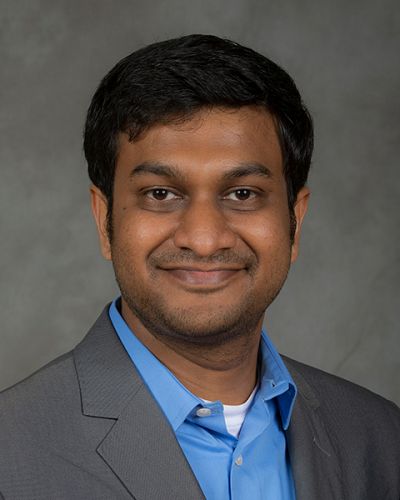
Christopher McCarthyView profile
Associate Professor
Christopher McCarthy is an Associate Professor in the Department of Computing Technologies within the School of Science, Computing and Emerging Technologies at Swinburne University of Technology. His research focuses on computer vision algorithms applied to robotics, intelligent transport systems, and assistive technologies, particularly for people with low vision. He serves as Stream Leader in Swinburne’s Innovative Planet Research Institute, leading the Intelligent Transport stream, and is a Chief Investigator in the Australian Cobotics Centre funded by the ARC. He has held research roles at CSIRO Data61, the Bionics Institute, and the University of Melbourne, contributing to bionic eye technology under the Bionic Vision Australia consortium. His research interests include: Computer Vision and AI for real-time systems Robot perception and navigation Assistive technologies for low-vision and blind users Intelligent transport systems and video analytics Human-machine interaction and cyber-human teams His recent publications reflect strong trends in deep learning, continual learning, and real-world deployment of vision systems in transport and healthcare. He has led numerous field trials and evaluations to assess system performance in real-world contexts. His work is highly interdisciplinary, combining computer science with engineering, medicine, and urban planning. Christopher McCarthy has received multiple awards, including: FSET Research Collaboration Award Excellence in Industry Engagement Special Commendation – VC Research Impact Finalist – National Disability Award in Technology Best Paper Award (IEEE) Excellence in Teaching (University of Melbourne) He has supervised over 20 HDR students in areas including robotics, AI, assistive tech, and transport analytics. He has led major research grants from ARC, Defence, SmartCrete CRC, iMOVE, and city councils. He also served as Academic Director for Work-Integrated Learning (2016–2023) and coordinated professional placements. His teaching includes core computer science units such as Computer Systems and Object-Oriented Programming. He maintains ongoing affiliations with: Bionics Institute (Honorary Member) Bionic Vision Australia (Affiliate) Data61 (Honorary Member) Royal Children's Hospital, Melbourne International Task Force for Vision Restoration Outcomes (Chair)