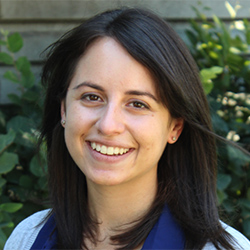
Soyoung Choi is an Assistant Professor in the Department of Kinesiology and Community Health at the University of Illinois. She holds affiliations with the Carl R. Woese Institute for Genomic Biology and the Beckman Institute for Advanced Science and Technology. Her research focuses on improving healthcare accessibility for individuals with visual impairments through digital health technologies, physical activity interventions, and inclusive design strategies. Key research areas include mHealth accessibility for blind users, sleep health in visually impaired populations, and participatory design of health interventions. She employs both quantitative and qualitative methods, including scoping reviews and participatory action research. Her work addresses disparities in health technology access and promotes equitable health outcomes for disabled individuals. Choi collaborates across disciplines to advance understanding of disability health, digital health adoption barriers, and aging with visual impairments. Her research has been published in journals such as Adapted Physical Activity Quarterly , Journal of American College Health , and JMIR Formative Research .
Yee Man (Margaret) Ng is an Associate Professor in Journalism and the Institute of Communications Research at the University of Illinois. She combines data science methodologies with communication research to study social media dynamics, digital journalism, and technology adoption patterns. Her research interests include: Computational social science Social media analytics Data visualization techniques Communication technology impacts Journalism innovation Post-adoption technology behavior Ng's methodology integrates big data analysis, machine learning algorithms, and traditional survey/experimental approaches. Current work extends diffusion of innovations theory by examining social media users' discontinuance and readoption behaviors. Academic contributions span both empirical research and educational practice. She has taught courses like: JOUR 460 - Data Storytelling JOUR 410 - Data Storytelling for Journalism JOUR 425 - Multimedia Editing and Design JOUR 199 - Hands-on Media Technology Her publications analyze topics ranging from YouTube's recommendation algorithms to digital sustainability in news media, with particular focus on: Platform migration patterns Algorithmic content moderation Political communication dynamics Media technology adoption Regional web usage differences Incivility measurement techniques
Jasmin Niess is an Associate Professor in the Design of Information Systems group at the University of Oslo. Her research explores how interactive technologies can support reflection, emotional awareness, and self-regulation. Research develops frameworks and tools for reflective technologies, examining how personal data visualizations can foster self-compassion and emotional awareness. Current projects investigate perception of AI systems and metrics for measuring reflective thought in technology interactions. Recent publications propose scales for assessing reflection and rumination in technology use, design principles for self-compassionate visualizations, and studies on user perceptions of conversational agents. Contributes to research groups on Designing Technologies for Democracy and Design of Information Systems.
Maia Jacobs is an Assistant Professor of Computer Science and Preventive Medicine at Northwestern University. Her research focuses on human-centered computing to design health technologies that adapt to longitudinal health needs. She holds a Ph.D. in Human-Centered Computing from Georgia Institute of Technology and a B.S. in Industrial and Systems Engineering from the University of Wisconsin-Madison. Her work emphasizes user-centered design principles to create equitable and adaptive health interventions. Key research areas include wearable health tools, voice assistants for mental health, telehealth cancer care, and AI integration in healthcare workflows. She collaborates with low-income communities and informal caregivers to ensure technologies address real-world healthcare challenges. Recent publications explore AI-physician collaboration in oncology, burnout support for frontline workers, and ethical design of voice-assisted mental health services. Her projects often involve co-design with marginalized groups to promote health equity. Jacobs’ interdisciplinary approach bridges computer science, behavioral science, and clinical practice to advance personalized healthcare solutions.
Jeyeon Jo is an Assistant Professor in the Department of Textiles, Merchandising and Interiors at the University of Georgia's College of Family and Consumer Sciences. Her research focuses on wearable sensors, assistive technology, and ergonomic design, with an emphasis on sustainable materials and healthcare applications. She holds a Ph.D. in Human Centered Design from Cornell University (2023), an M.S. in Fashion Design (2017), and a B.S. in Clothing and Textiles (2014), both from Seoul National University. **Education:** Ph.D. Human Centered Design, Cornell University (2023) M.S. Fashion Design, Seoul National University (2017) B.S. Clothing and Textiles, Seoul National University (2014) **Research Interests:** Jeyeon develops wearable healthcare solutions using stretchable fiber optics and passive RFID, with a focus on optimizing user comfort and performance. Her work spans assistive technologies, firefighting gear ergonomics, and cross-cultural studies of clothing's sociocultural role. Recent projects include sustainable textile prototyping (LeatherBoard) and gait-monitoring systems (RFInsole). **Awards:** Human Service Studies Graduate Fellowship (Cornell, 2022) Best Brief at ISWC 2021 (2021) Roberta G. & John B. De Vries Graduate Award (Cornell, 2020) **Grants & Advising:** Currently no grants explicitly listed; actively advising students in wearable tech and textile engineering. Editorial roles include Fashion and Textiles (2024–present) and Korean Fashion & Textile Research Journal (2025–2026).
Shiwei Fang is an Assistant Professor in the Department of Computer & Cyber Sciences within the School of Computer and Cyber Sciences at the University of North Georgia. He holds a Ph.D. in Computer Science from the University of North Carolina (2021) and a B.E. in Computer Science from the State University of New York (2015). His research focuses on IoT systems, cybersecurity, sensor networks, and edge computing, with notable contributions to multimodal analytics, privacy visualization tools, and geospatial tracking datasets. He advises the Graduate Student Organization and serves on the SCCS Academic Web Oversight Committee. Education: Ph.D., Computer Science, University of North Carolina, 2021 B.E., Computer Science, State University of New York, 2015 Research interests include IoT security, context-aware systems, and sensor fusion. His work on IoBT-MAX and GDTM datasets highlights expertise in experimentation frameworks and geospatial tracking. Recent publications explore privacy risks in IoT, AR-based privacy visualization, and efficient inference models for edge computing. He has contributed to over 25 peer-reviewed articles since 2015, with a focus on real-world IoT applications and hardware-software co-design. Service roles include faculty advising and committee participation. He teaches courses like CSCI 3170/5170 on Computer Organization, bridging theoretical computer science with practical hardware concepts.
Prof. Jan-Niklas Voigt-Antons is a Professor of Applied Computer Science specializing in Immersive Media at Hamm-Lippstadt University of Applied Sciences. His work focuses on Extended Reality (XR), Virtual Reality (VR), Augmented Reality (AR), and their applications in healthcare, education, and human-machine interaction. He holds a Dr.-Ing (Engineering Doctorate) and has extensive industry experience with organizations like Daimler AG, Telekom Innovation Laboratories, and the German Research Center for Artificial Intelligence (DFKI). Research interests include user experience (UX) design, emotion analysis in virtual environments, and accessibility for aging populations. He has led projects on wearable health tech, AR/VR usability, and immersive training systems. Notable areas of impact include developing guidelines for inclusive XR interfaces and advancing telemedicine through immersive technologies. Prof. Voigt-Antons has collaborated with Charité – Universitätsmedizin Berlin on healthcare applications and has contributed to standardization efforts in telecommunications. His technical competencies include agile project management, statistical analysis, and mobile application development for iOS/Android. He advises on UX evaluations, usability testing, and physiological data analysis for industry partners. Key achievements include creating the Story Time Dataset for video quality research and developing the ColorTable system for flavor perception studies. His work emphasizes real-world deployment, with projects addressing mobility challenges for seniors in rural areas and improving dementia care through tablet-based interventions.
Luigi Manfredi is a Senior Lecturer and Principal Investigator at the University of Dundee's Respiratory Medicine and Gastroenterology department. He completed his PhD and Post-Doc at the Biorobotics Institute in Pisa, Italy, before joining Dundee in 2011 as Project Coordinator for the ERC-funded CODIR project and Co-Investigator for CARPE. His research focuses on developing soft materials and endorobots for GI tract screening and treatment. Key achievements include winning the Surgical Innovation Award (2013) and Dundee Venture Competition (2020) for low-cost colonoscope proposals. Education: PGCAPHE Fellowship Module with Advance HE (2022–2024). Research expertise spans actuators, colonoscopy technologies, bio-inspired robotics, and shape-memory alloys. He has led projects like SoftEn (EPSRC-funded) and Softech High Growth Phase 1. Over 56 publications highlight contributions to medical robotics and endoscopic innovation. Recent work emphasizes ergonomics in robotic endoscopy, monocular depth estimation for autonomous colonoscopy, and AI-driven solutions for colorectal screening. Editorial roles include Frontiers in Robotics and AI. Active collaborations involve global institutions, focusing on self-supervised depth estimation and lumen detection technologies.
Jörg Müller is a Professor in the Department of Computer Science at the University of Bayreuth, Germany. His research focuses on Human-Computer Interaction (HCI), Virtual Reality (VR), and Augmented Reality (AR), with a strong emphasis on interaction techniques, public displays, and multimodal interfaces. He has held academic positions at multiple institutions including Aarhus University, HIIG, and RWTH Aachen University. His work spans technical contributions in haptic interfaces, biomechanical modeling, and user behavior analysis in VR environments. Notable projects include OptiTrap for acoustic levitation displays, SIM2VR for biomechanical testing in VR, and the boomRoom system for mid-air sound interaction. Müller collaborates extensively with industry partners like Telekom Laboratories and Siemens. Research interests include: interaction design for immersive environments, embodied interaction, and the social impact of extended reality technologies. His publications demonstrate leadership in CHI, UIST, and IEEE Visualization venues, with over 120 peer-reviewed articles since 2006. Current research priorities include optimizing VR workspace ergonomics, developing tactile feedback systems for mid-air interaction, and exploring public display networks for urban environments. Müller leads the Interactive Systems group at Bayreuth, supervising PhD students in VR engineering and spatial computing.
Gaël Bonnin is a Professor of Marketing at NEOMA Business School, France, where he has held the role of Director of Research from 2020 to 2023. He teaches technology innovation, marketing strategies, design, and qualitative research methods across undergraduate, graduate, and doctoral programs (DBA/PhD). His research focuses on product/place design, technology adoption, and narrative approaches to market construction, with notable contributions to healthcare servicescape optimization, consumer resistance to misinformation, and senior engagement with new technologies. Director of Research (2020–2023), NEOMA Business School Co-led EU-funded projects on companion robots, agricultural robotics, and AR tourism applications Published in International Journal of Hospitality Management , Advances in Consumer Research , and Journal of Retailing and Consumer Services Research highlights include analyzing sensory elements (colors/music/scent) in hospital environments to reduce patient anxiety, studying emotional responses to fake news warnings, and evaluating anthropomorphic design impacts on robot acceptance among elderly populations. His work bridges consumer behavior theory with practical applications in retail, healthcare, and technology sectors. Key contributions span over 30 years, including book chapters on B2B technology branding, neutralization strategies in piracy contexts, and design marginalization in retail spaces. He frequently presents at conferences like ACR, IMP, and CAUTHE, emphasizing interdisciplinary approaches to market dynamics.
Alessio Malizia is a Professor of User Experience Design at the University of Hertfordshire, UK, and concurrently holds a full Professorship at the Computer Science Department of the University of Pisa, Italy. His research focuses on Human-Centered Systems, Human-Centered AI, and Design Fictions, emphasizing ethical AI, user participation, and the integration of visual programming languages. He has held roles at institutions including Sapienza University of Rome, IBM, Silicon Graphics, and Xerox PARC, where he researched neural networks and gestural interfaces. His work bridges academia and industry, addressing challenges in healthcare, agriculture, and education. Malizia’s career includes visiting research at Xerox PARC, associate professorship at the University Carlos III of Madrid, and senior lecturer roles at Brunel University London. He is an ACM Distinguished Speaker and actively promotes democratizing AI through tools like BlocklyBias and PyFlowML. His research spans touchless interfaces, collaborative design methodologies, and AI explainability. Key contributions include frameworks for socio-technical process modeling in agriculture, tools for bias detection in AI data, and visual languages fostering user participation in ML systems. His work on telemedicine and healthcare AI emphasizes co-design and trusted AI systems. Recent studies explore end-user development for smart environments, digital agriculture, and computational thinking education through tools like TAPASPlay. Awards: ACM Distinguished Speaker Key Interests: Human-AI Interaction, UX Design, AI Ethics, IoT Ecosystems, and Co-Creation Methodologies Notable Projects: Figmant, ModeLLer, and the Chatbot Usability Scale validation His grants and collaborations focus on improving AI transparency, user-centered design processes, and participatory innovation in technology adoption across sectors.
Professor Jamie Carlson is a Professor of Marketing and Deputy Head of School - Research at the Newcastle Business School, University of Newcastle. His expertise lies at the intersection of marketing, consumer behavior, and technology, with a focus on how organizations can better engage customers in increasingly digital environments. He has held significant leadership roles including Assistant Dean Research and Engagement (2018-2020) and Head of Marketing Discipline (2017-2018). Professor Carlson's educational background includes: PhD (Management) from the University of Newcastle Bachelor of Business (Honours) from the University of Newcastle Bachelor of Business from the University of Newcastle Professor Carlson's research program focuses on customer experience management, particularly at the customer-technology interface. His work spans three core areas: understanding customer engagement with physical and virtual channels, examining service design and consumer behavior in service industries, and investigating consumer adoption of e-health services. He emphasizes how consumers actively shape their consumption journeys, seeking both individualized and communal brand experiences across touchpoints, and how technology both creates value and presents challenges for consumer well-being. An analysis of Professor Carlson's recent publications reveals a strong emphasis on digital transformation in marketing, with particular focus on omnichannel retailing, metaverse applications, social media engagement, and the psychological aspects of consumer behavior in digital environments. His work demonstrates increasing interdisciplinary collaboration, connecting marketing with information systems, psychology, and healthcare domains to address complex consumer behavior questions in our technology-driven world. Professor Carlson has received numerous prestigious awards for his scholarly contributions: 2025 Jay Lindquist Best Conference Paper Award at the Academy of Marketing Science World Marketing Congress 2023 Best paper in Digital and Social Media Marketing Track at Academy of Marketing Multiple Top Cited/Downloaded Article recognitions from International Journal of Information Management (2022) 2022 Best paper award in the Australasian Marketing Journal Multiple best paper awards at Academy of Marketing conferences (2014-2017) 2010 Vice-Chancellor's Citation for Outstanding Contribution to Student Learning As a principal supervisor for PhD, DBA, and Honours students, Professor Carlson has mentored numerous successful researchers who have gone on to academic positions at institutions worldwide including Maastricht University (Netherlands), Dortmund University (Germany), Macquarie University, UTS, and the University of Adelaide. His students have received faculty medals, best paper awards, and the prestigious Arizona State University Center for Service Leadership Research Scholarship. His supervision focuses on customer engagement in digital media, service experience management, relationship quality, emotional appeals in advertising, and drivers of group travel behavior. Professor Carlson's research is conducted through multinational and interdisciplinary collaborations aligned with the Australian government's 'Growth Through Innovation' agenda and the UN Sustainable Development Goals. His work connects marketing with information systems, psychology, and healthcare to develop frameworks for understanding e-service quality, online flow experiences, customer engagement, and value creation in digital environments.
Ken Pfeuffer is an Associate Professor in the Department of Computer Science at Aarhus University, affiliated with the Faculty of Science. His research focuses on Human-Computer Interaction (HCI) , particularly in Virtual Reality (VR) , Augmented Reality (AR) , and Extended Reality (XR) systems. He leads projects like the Interdisciplinary Center for Extended Reality (ICXR) and the XCB Lab , exploring multimodal interaction techniques, eye tracking, and user authentication in immersive environments. His work emphasizes gaze-based interaction , multimodal input fusion , and user interface design for AR/VR applications. Recent studies investigate consumer behavior in virtual retail environments and the integration of touch, gaze, and gesture inputs for natural user experiences. Pfeuffer collaborates on adaptive UI toolkits and practical methods for mobile eye-tracking systems, prioritizing real-world usability and accessibility. Key contributions include Depth3DSketch for VR sketching, PinchCatcher for multi-selection, and EyeGuide for gaze-assisted 3D sketching. His research bridges theoretical HCI principles with industry applications, addressing challenges in immersion , accuracy , and user safety in XR systems.
Yalong Yang is an Assistant Professor at the School of Interactive Computing at Georgia Institute of Technology. His research focuses on immersive analytics, virtual reality (VR), and augmented reality (AR) interfaces, with a particular emphasis on spatial interaction, hybrid user interfaces, and data visualization techniques. He explores how embodied interactions and immersive environments enhance understanding in domains like education, sports analytics, and collaborative decision-making. Key research themes include hybrid immersive systems (combining VR/AR with physical devices), asymmetric collaboration in mixed environments, and AI-driven tools for programming education. His work spans both theoretical frameworks and applied systems, such as SPHERE for scalable personalized feedback in coding classrooms and VizGroup for collaborative learning analytics. Yang’s recent publications highlight trends in spatial hybrid interfaces, navigation in immersive environments, and the integration of generative AI in educational technologies. His projects often involve evaluating interaction techniques (e.g., label placement in AR) and comparing performance across desktop and VR platforms. Notable contributions include the SportsXR initiative for immersive analytics in sports, and systems like CompositingVis for creating complex visualizations in 3D spaces. His work addresses challenges in situated analytics, wearable technologies for outdoor activities, and audience analysis in VR exhibitions.
Pasquale Cascarano is a fixed-term Assistant Professor at the University of Bologna , affiliated with the Department of the Arts . His research bridges computer science with creative industries (cinema, art, fashion) and biomedical applications, focusing on Artificial Intelligence and Extended Reality paradigms. He collaborates with national and international institutions on interdisciplinary projects. Institutional Affiliation: University of Bologna Academic Role: Assistant Professor (fixed-term) Research Interests center on integrating AI and XR into creative sectors and healthcare, with emphasis on: Generative AI for immersive environments Medical imaging and diagnostics Digital heritage preservation XR-based educational tools 3D visualization techniques Creative technology applications Recent Publications highlight trends in: Medical XR for surgical training AI-driven image restoration LLM integration with AR/VR Privacy in collaborative AR Fashion and cultural heritage digitization Deep learning for video enhancement