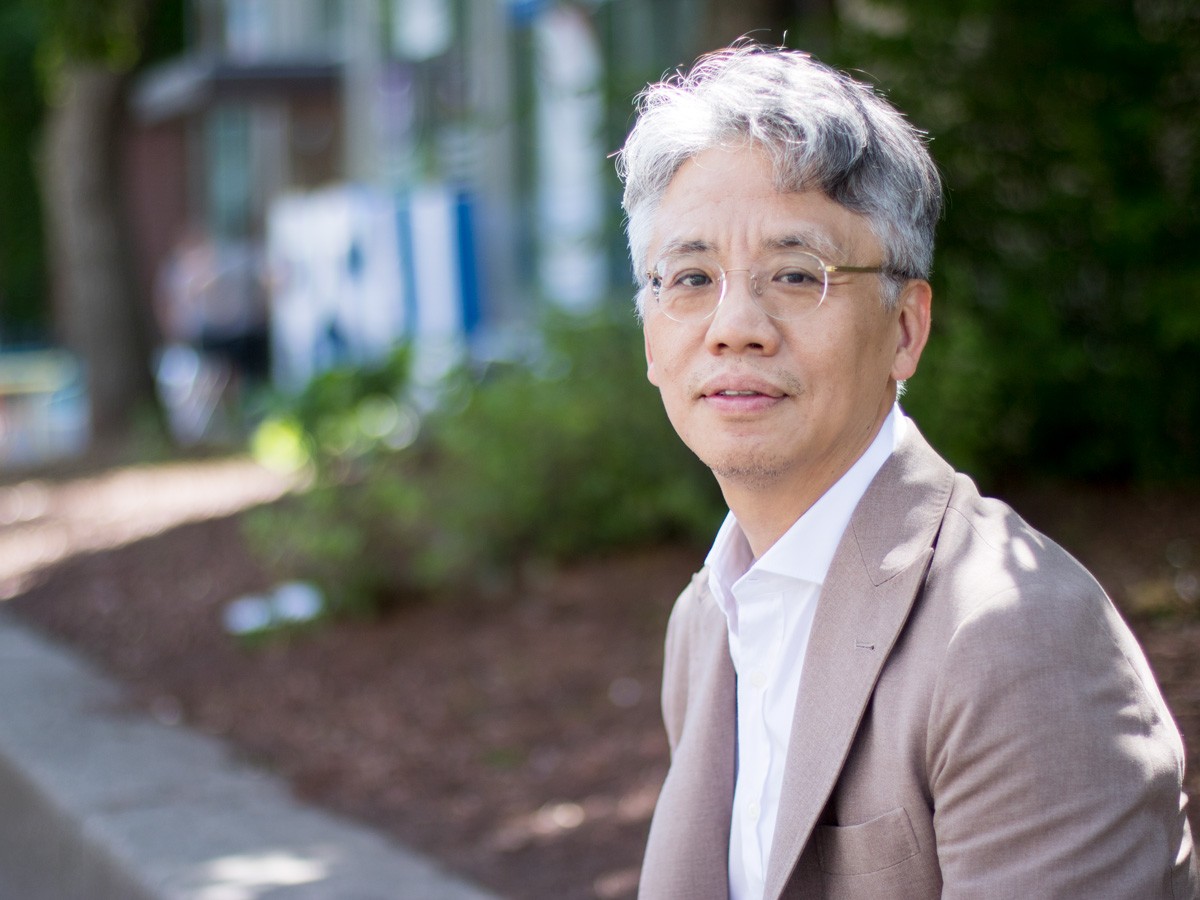
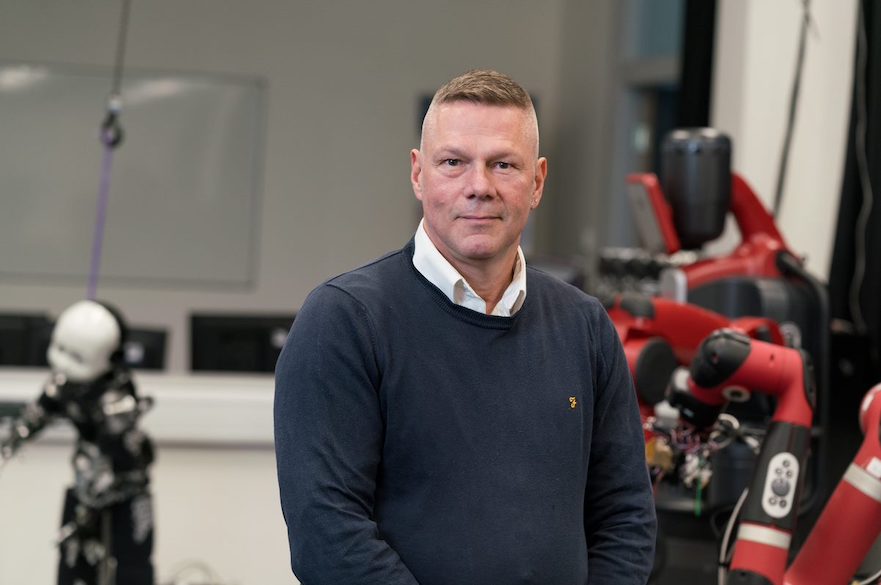
Bernhard Jenny is an Associate Professor at Monash University's Faculty of Information Technology, specializing in immersive visualization and geospatial data. He holds a PhD in Cartography from ETH Zurich and has held previous roles at Oregon State University and RMIT University. His research focuses on virtual reality (VR), augmented reality (AR), and cartographic innovations for geospatial data representation. Education: Doctor of Sciences in Cartography, ETH Zurich (2010) Postgraduate Certificate in Computer Science, ETH Zurich (2005) Master of Science in Surveying, EPFL (2000) Research Interests: Combines cartography, computer graphics, and human-computer interaction to explore VR/AR applications for geospatial data. Current work includes immersive analytics, terrain visualization, adaptive map projections, and storytelling with geospatial data. Recent Articles: Focus on ambient occlusion for terrain shading, grammars for immersive visualization transitions, and AR/VR interfaces for spatial data. Awards: Henry Johns Award (2007, 2011, 2012) ETH Medal (2010) Best Paper Honorable Mentions (ACM CHI, DIS) Grants & Projects: Leads initiatives like the 'Immersive Analytics' extension and 'National Geographic Relief Shading' project. Collaborates on neural networks for cartographic relief shading and sustainable development goals (SDGs). Labs & Teams: Heads the Embodied Visualisation Lab at Monash, focusing on immersive analytics and geovisualization tools.
Tanja Blascheck is a PostDoc Researcher and Margarete von Wrangell Fellow at the Institute for Visualization and Interactive Systems (VIS) at the University of Stuttgart. Her work focuses on visual analytics , eye tracking , and microvisualizations for smartwatches and other wearable devices.
Gedas Adomavicius is a Professor at the University of Minnesota ’s Carlson School of Management , holding the Larson Endowed Chair for Excellence in Business Education. He obtained his PhD in Computer Science from New York University (2002) , with prior degrees in Mathematics (BS/MS, Vilnius University, 1995) and Computer Science (MS, NYU, 1998). Research Focus: Personalization technologies, recommender systems, and machine learning for decision-making in information-intensive environments. Key Contributions: Pioneered techniques for improving recommendation stability, reducing biases, and integrating contextual information into recommendation algorithms. Grants & Recognition: Recipient of the U.S. National Science Foundation CAREER award, INFORMS Information Systems Society Distinguished Fellow Award, and Association for Information Systems Fellow Award. Publications: His work spans leading journals across computer science, information systems, and biomedical informatics. Key trends include advancements in recommender systems (context-aware, multi-stakeholder, and bias-aware models), machine learning for health analytics , and e-market mechanism design . He has over 33,000 citations according to Google Scholar. Education: Diploma (BS/MS) in Mathematics from Vilnius University, 1995 MS in Computer Science from New York University, 1998 PhD in Computer Science from New York University, 2002 Awards & Grants: INFORMS Information Systems Society Distinguished Fellow Award Association for Information Systems Fellow Award National Science Foundation CAREER award Academic Leadership: Served as Senior Editor for Information Systems Research and MIS Quarterly , and as department chair and academic director of the MSBA program at the Carlson School.
Professor Steven J. Murdoch is a faculty member at the University College London (UCL) in the Department of Computer Science . He holds a Royal Society University Research Fellow position and leads the Information Security Research Group . He is affiliated with Christ’s College as a bye-fellow, and is a Fellow of the Institution of Engineering and Technology (IET) and the BCS . His work bridges security engineering , privacy-enhancing technologies , and legal-technical intersections . Academic Leadership : Program chair and general chair for major conferences like Privacy Enhancing Technologies Symposium and Financial Cryptography . Research Contributions : Notable for exposing vulnerabilities in EMV protocols , designing blockchain-based fair exchange protocols , and analyzing malware delivery ecosystems . Scientific Awards : Received the IRTF Applied Networking Research Prize 2020 for internet-wide scanning methodologies. Professional Impact : Active in Tor Project and critical infrastructure analysis, including the Post Office Horizon scandal . Email: s.murdoch@ucl.ac.uk .
Dr. Joon Chung is a Professor in the Department of Aerospace Engineering at Toronto Metropolitan University, specializing in aircraft design optimization and immersive simulation technologies. His educational background includes: PhD from the University of Toronto (1997) MASc from the University of Toronto (1993) BSc from Iowa State University (1990) Chung's research integrates Multidisciplinary Design Optimization (MDO) with cutting-edge VR/AR applications to solve holistic aircraft design challenges. His work spans flight simulation, Human Machine Interfaces (HMI), and aircraft interior customization, focusing on how immersive technologies can optimize aerodynamics, control systems, and user experience across pilot training, maintenance, and customer configuration processes. He actively supervises graduate students and leads the MIMS (Mixed-Reality Immersive Motion Simulation) Lab, one of Canada's pioneering research groups developing VR/AR solutions for aerospace engineering applications.
Kasper Hornbæk is a Professor of Human-Computer Interaction at the Department of Computer Science, University of Copenhagen. Since obtaining his Ph.D. from the same university in 2002, he has focused on creating innovative user interfaces, improving HCI methodologies, and developing theoretical frameworks to enhance user interaction with digital systems. His work spans extended reality, usability evaluation, and the philosophical foundations of HCI theory. Research Focus Design of interactive systems leveraging bodily interaction and extended reality (XR) Advancements in usability and user experience (UX) analysis Critical examination of theory development in HCI Professional Recognition CHI Academy member (2022) Editorial Contributions Co-editor of ACM Transactions on Computer-Human Interaction Member of the editorial board of Human-Computer Interaction journal
David Brown is a Professor in Interactive Systems for Social Inclusion at Nottingham Trent University's School of Science & Technology, Department of Computer Science. He serves as Director of the Computing and Informatics Research Centre (CIRC) and Research Group Leader for the Interactive Systems Research Group (ISRG). Director, Computing and Informatics Research Centre Research Group Leader, Interactive Systems Research Group Governor, Oak Field School for students with severe learning disabilities Conference Chair, International Conference on Disability, Virtual Reality and Associated Technology (ICDVRAT21) Associate Editor, Frontiers: Virtual Reality in Medicine Professor Brown's research focuses on developing inclusive technologies for people with disabilities. His work spans accessibility for students with learning, physical and sensory impairments; virtual reality applications for rehabilitation; multimodal affect recognition systems; social robotics for education; accessible visual programming toolkits; and serious games for developing physical and cognitive skills. His research is characterized by strong interdisciplinary collaboration and practical application in educational and healthcare settings. His recent publications demonstrate a consistent focus on applying emerging technologies like virtual reality, machine learning, and social robotics to address real-world challenges in accessibility and inclusion. The research shows a clear trajectory toward increasingly sophisticated multimodal systems that can detect user states and adapt accordingly, with applications ranging from autism support to mental health interventions. Extensive EU-funded research projects including Horizon 2020, Erasmus+, and EPSRC grants Notable projects: DIVERSIA, MaTHiSiS, Pathway, AI-TOP, EDUROB, No One Left Behind, Real Life, RISE Professor Brown has supervised numerous PhD students and collaborates extensively with international partners across Europe and Asia. His work bridges computer science, psychology, education, and healthcare to create technologies that promote social inclusion and improve quality of life for people with disabilities.
Professor Marilyn Lennon is a leading academic in the Department of Computer and Information Sciences at the University of Strathclyde , holding the title of Professor in Digital Health and Care. She founded and directs the Digital Health and Wellness Group (DHaWG) , focusing on multidisciplinary research for designing, evaluating, and implementing digital technologies that enhance individual and population health and wellbeing. First class BSc in Psychology (University of Glasgow, 1998) PhD in Computing Science (University of Glasgow, 2002) Postgraduate diploma in academic practice (Fellow of Higher Education Academy) With over two decades of experience in Human-Computer Interaction (HCI) , usability, and user-centered design, her research spans wearable and mobile technologies for home healthcare, including remote monitoring (predictive falls monitoring), remote diagnosis (colon capsule technology evaluations), and smart home solutions for social care. She specializes in addressing technical and social barriers to real-world health technology implementation, emphasizing robust yet rapid evaluation methods. Recent publications highlight her work in 3D healthcare visualization, telehealth implementation, and medication management systems. Her research combines lab-based usability testing with real-world ('in the wild') evaluations of technologies like smart home systems and telehealth solutions. Key trends include cross-disciplinary collaboration, accessibility for sensory-impaired individuals, and AI-driven healthcare innovations. Scientific Awards MyCity: Glasgow - Gamechanger Award (Gold Medal) 2025 Images of Research 2025 Shortlist Emerald Outstanding Paper Award 2013 Best Paper Award (most replicable scientific paper) 2013 As course director for the Masters in Digital Health Systems , she has supervised 5 PhD students (2 completed) and over 100 honors projects. Current projects include the No Need to Fall initiative funded by the Health Foundation (£400k) and the PREMIO project co-creating clinical trials in advanced breast cancer. She maintains active collaborations with NHS, charities, and international institutions like the University of Waterloo.
Arnab Nandi is a Professor in the Department of Computer Science & Engineering at The Ohio State University. His work bridges human interaction with data infrastructure, focusing on database systems, LLM-augmented analytics, and immersive query interfaces. Education: PhD in Computer Science & Engineering from the University of Michigan Leadership: Co-founder of OHI/O Hackathon Program and STEAM Factory interdisciplinary network Research spans human-in-the-loop data analytics , vibe querying (natural language + gestural interfaces), LLM integration into education, and climate response systems . Key projects include Omni (multimodal exploration), GestureDB , and Icarus (clinical pipelines). Recent publications analyze LLM-driven query stacks (HILDA 2025), video analytics (SIGMOD 2022), and data sunglasses for cognitive limits (HILDA 2025). Awards include NSF CAREER Google Faculty Research Award IEEE TCDE Early Career Award ACM Distinguished Member Advises students in database innovation , with alumni at Amazon, AWS, Roblox, and Meta. Teaches CSE 3241 (Database Systems), CSE 5889 (Software Startups), and CSE 5242 (Advanced Databases).
Emily Oh Navarro is a Continuing Lecturer in the Department of Informatics at the Donald Bren School of Information and Computer Sciences, University of California, Irvine. She has been actively involved in software engineering education, focusing on innovative teaching methods and simulation-based learning environments. Dr. Navarro earned her Ph.D. in Information and Computer Sciences from UC Irvine in 2006, with her dissertation titled "SimSE: A Software Engineering Simulation Environment for Software Process Education." She also holds an M.S. in Information and Computer Sciences and a B.S. in Biological Sciences, both from UC Irvine. Dr. Navarro's research primarily focuses on software engineering education, particularly using simulation and game-based approaches to teach software processes. Her work centers around SimSE, an educational software engineering simulation environment designed to help students learn and practice software engineering processes in an interactive, graphical setting. She has extensively explored how learning theories can be applied to improve software engineering education, investigating various educational approaches and their effectiveness. Her research demonstrates how simulation environments can overcome the limitations of traditional lectures and small-scale class projects by allowing students to experience complex software engineering processes that would be infeasible to practice in real-world academic settings. Dr. Navarro's publications reveal a consistent focus on simulation-based learning tools for software engineering education. Her work spans from theoretical explorations of learning theories to practical implementations of educational tools like SimSE and Problems and Programmers. She has conducted multi-site evaluations of her educational tools, demonstrating their effectiveness across different institutions and student populations. Her research shows progression from conceptual frameworks to practical implementations and rigorous evaluations, establishing her as a significant contributor to the field of software engineering education. Dr. Navarro teaches numerous courses in software engineering and design, including: Informatics 43: Introduction to Software Engineering Informatics 113: Requirements Analysis and Engineering Informatics 117: Project in Software System Design Informatics 121: Software Design I Informatics 122: Software Design II Informatics 191: Senior Design Project ICS 45J: Programming in Java ICS 139W: Critical Writing on Information Technology SWE 241P: Applied Data Structures and Algorithms SWE 245P: GUI Programming SWE 246P: Mobile Programming SWE 272P: Project Management Her teaching methodology reflects her research interests, emphasizing practical experience with software engineering processes through simulation-based learning. While specific information about her advising and grants is limited in available materials, her extensive research on educational methods suggests involvement in educational research projects and likely mentorship of students in software engineering projects. Dr. Navarro's primary research contribution is the SimSE project, which has evolved through multiple iterations and evaluations. This simulation environment represents a significant innovation in software engineering education, addressing the critical gap between theoretical knowledge and practical application in software process management. Her work continues to influence how software engineering is taught at UC Irvine and potentially at other institutions through her multi-site evaluations.
Prof. Dr. Wolfgang Hillert is a leading physicist at the University of Hamburg , serving as the Bjørn-Wiik Professor for Accelerator Physics since 2016. Affiliated with the Institute of Experimental Physics under the Faculty of Mathematics, Informatics and Natural Sciences, he specializes in Accelerator Physics , Superconducting Accelerator Technology , and Free-Electron Lasers (FEL) . His work focuses on polarized electron beams, SRF cavity optimization, and gravitational wave detection methods. Education: Physics degree from University of Bonn (1987), Promotion in Atmospheric Physics (1992), Habilitation in Physics (2001) Leadership Roles: Head of Accelerator Physics Group (2016–present), Managing Director of Institute of Experimental Physics (2019–2021) Research Trends: His recent work spans superconducting RF cavities for gravitational wave detectors ( 2025 ), resonant slow extraction in electron boosters, and atomic layer deposition of superconducting thin films. Publications highlight advancements in beam dynamics , cryogenic systems , and terahertz generation . Teaching & Outreach: He has lectured on Accelerator Physics since 2002 and engaged in public science communication, including talks on Physics of Music (2005–2021) and teacher training programs at DESY. Labs & Collaborations: Leads the Accelerator Physics Group at DESY, collaborates on projects like XFELO and BGO-OD beamline , and contributes to international schools (CAS) and symposia.
Kalina Bontcheva is a Senior Researcher in the Natural Language Processing Group within the Department of Computer Science at the University of Sheffield. She holds an EPSRC Career Acceleration Fellowship (working part-time since October 2015) focused on personalized summarization of social media content. Her research spans multiple EU-funded projects including PHEME (computing veracity of social media), TrendMiner, DecarboNet, and uComp, with significant contributions to the GATE (General Architecture for Text Engineering) open-source NLP infrastructure since 1999. Dr. Bontcheva's research interests focus on the intersection of natural language processing and social media analysis. Her work encompasses NLP for social media, semantic search, information extraction from social platforms, crowdsourcing of NLP corpora, collaborative text annotation, semantic technologies, and text mining and analytics. She has particular expertise in developing methods for personalized, abstractive multi-document summarization across different social media platforms, addressing the challenges of noisy, jargon-filled and dynamic content. Her interdisciplinary approach combines machine learning, semantic technologies, and social dimension analysis to create systems that adapt to individual users' information seeking goals. Analysis of her recent publications reveals a strong focus on social media processing challenges, with emphasis on Twitter analysis, temporal expression recognition, and handling noisy text. Her work consistently addresses the unique characteristics of social media content and develops specialized techniques for information extraction, sentiment analysis, and user geolocation within these platforms. The GATE framework serves as the foundation for much of her tool development, demonstrating her commitment to creating reusable, open-source NLP infrastructure. Her most significant award is the EPSRC Career Acceleration Fellowship, which supports her work on personalized social media summarization. This prestigious fellowship includes a substantial budget of £560k and involves collaborations with industry partners including The Press Association, British Telecom, and Fizzback. Dr. Bontcheva has led numerous major research projects throughout her career. She was Principal Investigator on three EU-funded projects (MUSING, TAO, and ServiceFinder) between 2006-2009, coordinating the TAO consortium with seven partner institutions. She currently leads the PHEME EU project and serves as PI for TrendMiner and DecarboNet European projects, while also contributing as Co-I on the uComp project. Her project portfolio demonstrates consistent success in securing competitive research funding across multiple domains within NLP and semantic technologies. She works within the Natural Language Processing Group at the University of Sheffield, which has been central to the development of the GATE infrastructure. Her work connects with various initiatives including the GATE Cloud platform and the TextVRE project for e-humanities textual studies. She has established collaborations with organizations including the Press Association, British Telecom, Oxford Internet Institute, and Sheffield's Department of Journalism to ensure her research addresses real-world needs across different user communities.
Dr. Jun Hu is an Associate Professor in Design Research on Social Computing at the Department of Industrial Design, Eindhoven University of Technology (TU/e). He serves as the Scientific Director for the Engineering Doctorate program in Designing Human-System Interaction and is the chair of the working group "Aesthetics and empowerment" of IFIP TC14. Additionally, he holds positions as a Distinguished Adjunct Professor at Jiangnan University and a Guest Professor at Zhejiang University. Dr. Hu earned his Ph.D. degree in Interaction Design and an Engineering Doctorate degree in User-system Interaction, both from TU/e. He also holds a B.Sc degree in Mathematics and an M.Eng degree in Computer Science. He is a System Analyst and a Senior Programmer with qualifications from the Ministry of Human Resources and Social Security, and the Ministry of Industry and Information Technology of China. His research focuses on the intersection of Human-Computer Interaction, Social Computing, and Design Research, with particular interests in data physicalization, empowering systems, and health informatics. Dr. Hu's work explores how technology can be designed to support human needs in social contexts, with applications in health, stress management, and physical activity motivation. His approach often combines aesthetic considerations with functional design to create systems that empower users. Analysis of Dr. Hu's recent publications reveals a strong focus on data physicalization, social aspects of personal informatics, and health applications of interactive systems. His work spans from theoretical frameworks for understanding user interaction with physicalized data to practical applications in stress management for children and motivation for physical activity. There's a clear trend toward integrating AI capabilities into human-centered design approaches while maintaining a focus on user empowerment. Senior Member of ACM Distinguished Adjunct Professor at Jiangnan University Guest Professor at Zhejiang University Editor-in-chief for EAI Endorsed Transactions on Pervasive Health and Technology Associate editor for Behaviour & Information Technology and Entertainment Computing Editor for the International Journal of Arts and Technology Dr. Hu has supervised numerous students through the Engineering Doctorate program and has been involved in various research grants, particularly in the areas of health technology and human-system interaction. He has served in leadership roles including head of the Designed Intelligence group at ID TU/e from 2015-2017 and currently chairs the working group "Aesthetics and empowerment" of IFIP TC14. He coordinates the TU/e DESIS Lab in the DESIS Network and serves on multiple editorial boards. Dr. Hu is actively involved with the Design Of Empowering Systems research group and the EAISI Health initiative at TU/e. His work often involves interdisciplinary collaboration across computer science, design, and healthcare domains, focusing on creating systems that empower users through thoughtful integration of technology into everyday contexts. He also serves as Chairman of the Foundation for Design Promotion in Europe and China and is a board member of the International Chinese Association of Computer Human Interaction (ICACHI).
Ronald J. Glotzbach is an Associate Professor at Purdue University's West Lafayette campus within the School of Applied and Creative Computing . His work focuses on web programming and development , leading projects that integrate dynamic content, databases, and educational technologies . He has taught courses such as CGT 356 (Web Programming), CGT 353 (Interactive Media), and CGT 456 (Advanced Web Programming). B.S. in Computer Graphics Technology M.S. in Technology Ph.D. in Curriculum and Instruction (pursuing) His research explores leading-edge web technologies for delivering interactive content, emphasizing web-enabling software, dynamic media integration, and mobile programming . Key trends in his publications include RSS technologies in education , web-based evaluation systems , and geospatial data tools for environmental sciences. Scientific awards include: Outstanding Professor (2003, 2004) CGT Dwyer Award for Outstanding Undergraduate Teaching (2005) CGT Outstanding Un-Tenured Faculty Award (2008) Professor Glotzbach has led numerous student teams in CGT projects , served as SIGGRAPH Student Volunteer Chair (2003-2005) , and collaborated with industry partners like Boeing (F-15 Distributed Mission Trainer) and Microsoft (XML Documents Testing Team) . He also provided expert testimony in a copyright case (2006) for Wargo & French, LLP.
Orit Shaer is a Professor and co-Chair of Computer Science at Wellesley College , where she founded and directs the Human-Computer Interaction (HCI) Lab . Her work bridges tangible interaction, human-AI collaboration, and mixed-reality interfaces, focusing on transforming work and learning environments through embodied technologies. Education : B.A. from Academic College of Tel-Aviv, M.S. and Ph.D. in Computer Science from Tufts University Research interests center on novel human-computer interaction paradigms : Human-AI collaboration frameworks Tangible and embodied interface design Mixed-reality applications for productivity Genomics collaboration tools STEAM education technologies Recent publications highlight human-AI co-creation (CHI 2024), temporal dynamics in automated work (CHIWork 2024), and pandemic-era remote interaction studies (IEEE Pervasive Computing 2021). Awarded: NSF CAREER Award Agilent Technologies Research Award Google App Engine Education Award Pinanski Prize for Excellent Teaching Best Paper Honorable Mention (ACM CHI 2014) Honorable Mention (CHIWork 2022) She co-founded the international CHIWork Symposium and chairs the ACM TEI conference. Her NSF IRES grant (2022) supports US-German collaboration on human-automation interaction.