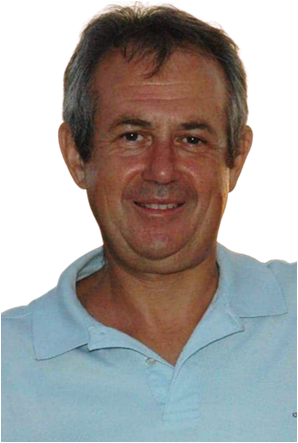
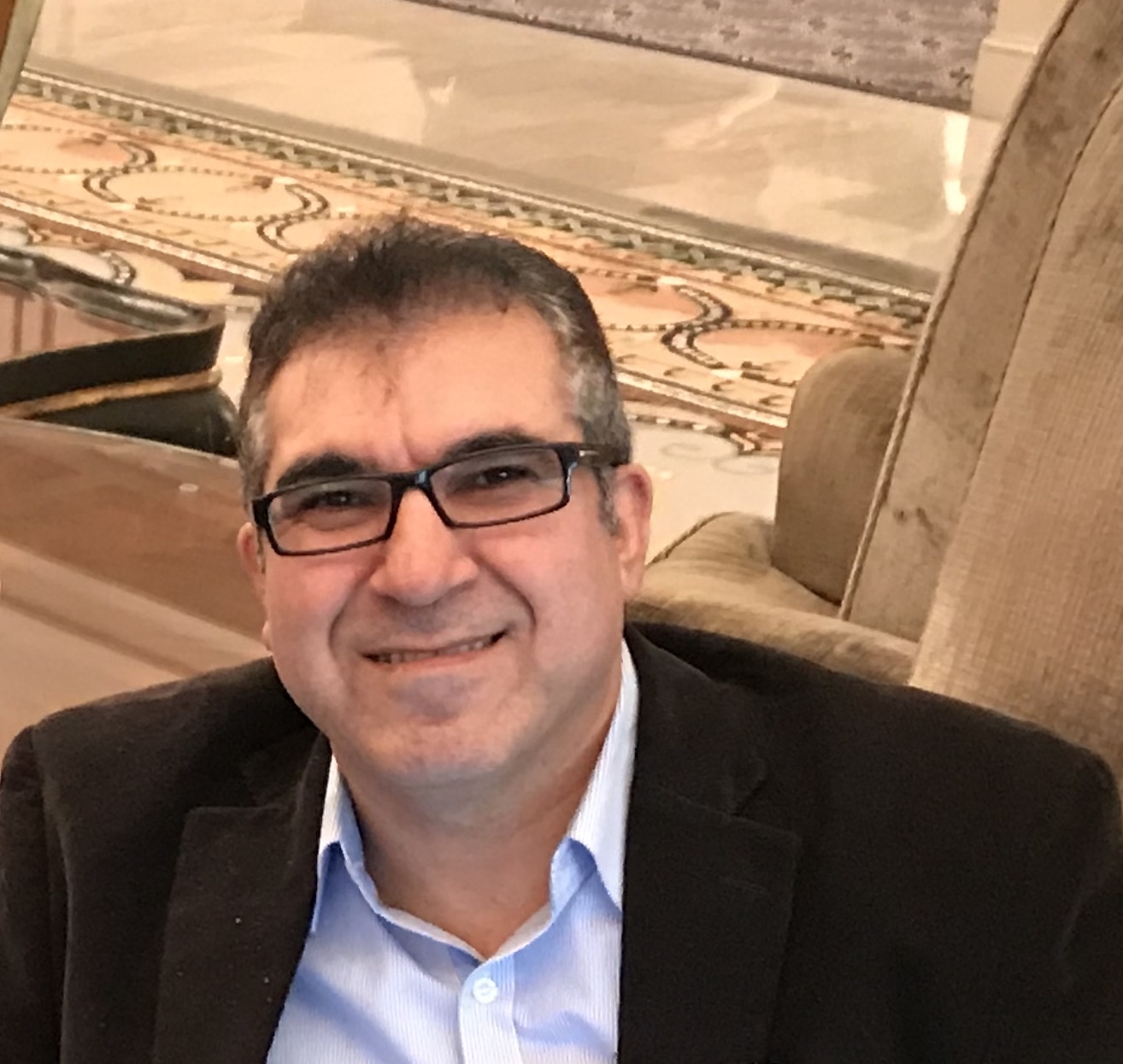
Elaine Wallace is a Professor of Marketing at the School of Business, Maynooth University. Previously, she held roles as Associate Professor and Head of Department at the University of Galway, alongside industry experience in marketing roles at Siemens, Unilever, and other companies. She earned a PhD in Commerce (Branding) from the University of Birmingham, followed by an M.B.S. in Marketing and a Bachelor of Commerce from University College Galway. Her research focuses on branding dynamics, particularly consumer interactions with brands on social media, frontline employee behavior, and the impact of technology on self-concept. Key themes include brand sabotage, employee burnout, and the role of social networks in consumption. She advises Accenture on brand equity and serves as an Associate Editor for Journal of Product & Brand Management . Publications span journals like Journal of Business Research and European Journal of Marketing , with funding from Enterprise Ireland and the Irish Research Council. Awards include the Dean’s Award for Inclusive Teaching and recognition for Universal Design in Learning. She actively participates in global conferences and editorial boards, co-authored the textbook Creating Powerful Brands , and contributes to teaching innovation through modules on branding and universal design. Education: PhD in Commerce (Branding), University of Birmingham M.B.S. in Marketing, University College Galway Bachelor of Commerce, University College Galway Awards: Dean's Award for Inclusive Teaching (2022) Emerald Literati Outstanding Paper Award (2016) Westinghouse Marketing Fellowship (1993) Grants: Enterprise Ireland Irish Research Council Her work bridges academic and industry collaboration, with advisory roles for organizations like TASC on digital inequality and contributions to international research groups such as Zaragoza University’s GENERES. Elaine also serves as a PhD examiner across Europe and holds a Digital Badge in Universal Design for Teaching and Learning.
Caroline Chanel is a Professor at ISAE-SUPAERO (DCAS), holding the CASAC Chair since 2022. She has extensive experience in research and teaching, with roles including Associate Professor (2019-2024), Research Engineer (2013-2019), and HDR accreditation (2023). Her research focuses on embedded decision-making for autonomous systems, including proactive architectures, multi-robot cooperation, and human-machine interaction. She leads and participates in high-profile projects like SAMURAI (AID), CHIP-GT (ANR-DFG), and HAICO (CASAC Chair). She has supervised numerous PhD students and post-doctoral researchers, collaborating with institutions like ONERA, INRAe, and international partners. Education: PhD in Control and Embedded Systems (University of Toulouse 2013), Master's in Automatic Systems (Université Paul Sabatier 2008-2009), and Engineer Diploma from PUCRS (2002-2008). Awards include the Amelia Earhart Fellowship (2011) and ISAE-SUPAERO Foundation PhD Fellowship (2013). Research interests span decision-making algorithms, multi-agent systems, and neuroergonomics. Key projects address UAV navigation, blockchain integration for autonomous systems, and physiological computing for human-robot interaction. Teaching responsibilities include modules on autonomous systems, control systems, and neuroergonomics at ISAE-SUPAERO's engineering and master's programs. She co-leads the DECISIO doctoral team (ISAE-ONERA) and is involved in executive roles for conferences like EDSYS'.
Mike Just is an Associate Professor in the School of Mathematical & Computer Sciences at Heriot-Watt University. His career spans academia, industry, and government, with roles including Research Scientist at Entrust (1998–2002), Government of Canada (2002–2008), Research Fellow at the University of Edinburgh (2008), and Lecturer/Senior Lecturer at Glasgow Caledonian University (2010–2015). Education: PhD in Computer Science, Carleton University (1998) Research Interests: Mike focuses on computer security, applying Human-Computer Interaction (HCI) and Machine Learning (ML) to solve security challenges. His work includes authentication protocols, mobile device security, and IoT security. Key areas involve evaluating security solutions, designing usability methodologies, and modeling attacks on systems like partial passwords and smartphone authentication. Awards: EICC Best Paper Award 2022 Advising & Grants: Mike has contributed to numerous projects and grants, including collaborations on IoT security and ethical cybersecurity practices. His involvement in conferences like the IEEE European Symposium on Security and Privacy highlights his leadership in the field. Labs/Teams: His research often involves interdisciplinary teams focusing on IoT security, ML-driven intrusion detection, and usable security solutions. Collaborations span academia and industry, emphasizing practical applications of theoretical security frameworks.
Dongmei Li, Ph.D., is a Professor in three departments at the University of Rochester School of Medicine and Dentistry: Clinical and Translational Research, Obstetrics and Gynecology, and Public Health Sciences. She directs the Biomedical Data Science Certificate Program and leads the Biostatistics and Informatics Core for the FDA/NCI-funded WNY Center for Research on Flavored Tobacco Products (CRoFT). Her research focuses on statistical methods for genomic data analysis, public health implications of tobacco products, and leveraging social media for health surveillance. Dr. Li holds a PhD in Biostatistics from The Ohio State University (2009) and has collaborated on numerous national grants, including a 10M CMS grant on diabetes studies. Her work spans multidisciplinary teams across medicine, nursing, biomedical engineering, and public health. Her research interests include epigenetic biomarkers in respiratory diseases, vaping-related health outcomes, and social media analytics for public health. Notable projects include developing methods to identify e-cigarette brands, analyzing FDA flavor policies' impact, and mapping senescent cells in aging studies. Dr. Li has authored over 160 peer-reviewed articles, focusing on topics like exosomal miRNA profiles in e-cigarette users, social media perceptions of vaping policies, and antibody responses to SARS-CoV-2 vaccines in vulnerable populations. She mentors a dynamic team of students and researchers, with recent awards including the 2023 Schwartz Discover Grant. Her lab conducts translational research in four key areas: exosomal biomarkers, national survey data analysis, social media health surveillance, and AI-driven health communication strategies.
Papageorgas Panagiotis is a tenured Professor in the Department of Electrical & Electronics Engineering at the University of West Attica, where he directs the Laboratory of Smart Technologies, Renewable Energy Sources and Quality. He holds a B.Sc. in Physics (1984) and a Ph.D. in Physics (1995) from the National and Kapodistrian University of Athens (NKUA). His career includes research roles at NKUA's Departments of Electronics and Applied Physics (1985–1994) and Informatics and Telecommunications (1994–2002), followed by a professorship at the Piraeus University of Applied Sciences (PUAS) until 2018. Research focuses on embedded systems, wireless sensor networks (WSNs), IoT, smart grids, and cyber-physical systems (CPS). He has authored/co-authored over 100 publications addressing topics like energy efficiency, smart cities, and environmental monitoring. His work spans applications in renewable energy systems, sensor network architectures, and low-power wide-area networks (LPWAN). Teaching responsibilities include undergraduate courses in Electronics I, Modern Microcomputer Systems, and Mechatronics, as well as postgraduate modules on Embedded Systems, Cyber-Physical Systems, and Wireless Sensor Networks. He actively participates in international conferences like the Technologies and Materials for Renewable Energy, Environment and Sustainability (TMREES) series. Key projects include developing low-cost PV I-V curve tracers, smart LED lighting platforms (LEDWIRE), and emergency communication systems using SD-WAN and LPWAN technologies. His lab emphasizes practical implementations of IoT and CPS for sustainability and resilience, with recent contributions to smart agriculture, emergency ventilators via 3D printing, and blockchain-based energy metering.
Wanda Presthus is an Associate Professor at Kristiania University of Applied Sciences, affiliated with the School of Economics, Innovation and Technology. She holds a PhD in Informatics and specializes in Business Intelligence, Information Privacy, and Data Science. Her teaching focuses on business systems, data analysis, and e-business, while her research emphasizes GDPR compliance, consumer privacy, and ethics in AI-driven technologies. Wanda actively contributes to academic communities through peer-reviewing and conference organizing roles. Education: PhD in Informatics (not specified where/when). Professional background includes prior roles at Westerdals and NITH (predecessor institutions to Kristiania). Research interests span qualitative data analysis, decision support systems, and algorithms. She has published extensively on topics like GDPR implementation challenges, consumer perspectives on data privacy, and the ethical implications of AI applications. Research trends in her articles highlight a focus on GDPR’s societal impact, gender equity in privacy frameworks, and the interplay between technological adoption and consumer trust. While no scientific awards are listed, her work demonstrates sustained engagement with critical issues at the intersection of technology, law, and ethics. Advising and grants: No specific advisees or grant details provided. Her professional contributions extend beyond academia through industry-focused research and teaching real-world business intelligence applications. Labs/teams: No formal lab affiliation mentioned, though her work involves collaborative projects in business analytics and privacy studies.
Toine Bogers is an Associate Professor at the IT University of Copenhagen within the department of Data Science Networks, Data, and Society. His research focuses on recommender systems, information retrieval, and human resources technology. Key areas include multistakeholder evaluation frameworks, algorithmic fairness in recruitment, and social media-driven recommendation communities. Research Projects FAIRMATCH : Investigates fairness in job recommendation systems funded by Innovation Fund Denmark (2024–2027). Pioneer Centre for Artificial Intelligence : Co-Investigator in a national initiative exploring AI ethics and applications (2021–2034). Key Research Themes Bogers explores how AI impacts human decision-making in domains like hiring, cultural heritage preservation, and casual leisure search. His work emphasizes multistakeholder evaluation methods to address ethical challenges in algorithmic systems. Recent studies analyze human recommendation communities on Reddit and the impact of large language models on known-item retrieval. Collaborations & Datasets Active collaborations include CHIIR (Conference on Human Information Interaction and Retrieval) and CLEF (Cross-Language Evaluation Forum). He has contributed datasets on data storytelling effects, video game re-finding behaviors, and social book search interactions, emphasizing reproducibility in IR research. Professional Contributions Organizes workshops such as RecSys in HR (Recommender Systems for Human Resources) and chairs the CHIIR impact assessment initiative. His work bridges academic research with practical applications in HR tech and AI governance.
Norwegian University of Science And TechnologyNorway
Roger Midtstraum is a Professor at the Department of Computer Science , Norwegian University of Science and Technology (NTNU), and currently serves as the Vice Dean for Education at the Faculty of Information Technology and Electrical Engineering. He previously held leadership roles including Dean of Engineering Education (2013-2017), Chairman of UHR-MNT (2016-2018), and Chairman of NRT (2013-2016). His career spans academia and technical innovation, with affiliations across institutions like Universitetet i Nordland, Tapir Akademisk Forlag, and ACM Publications. Research interests include software security , digital rights management (DRM) , multimedia systems , and data modeling . His work explores tamper protection in online clients, anti-cheating mechanisms in gaming, secure dissemination of temporal media, and metadata-driven search methodologies (e.g., the SESAM framework). Publications reflect interdisciplinary applications in supply chain management , mobile services , and image processing , with trends toward integrating security , QoS , and semantic networks . Notable collaborations include co-authors Gisle Grimen , Christian Mönch , and Alf Inge Wang . Teaching includes courses like TDT4145 - Data Modelling, Databases and Database Management Systems . He emphasizes curriculum innovation , as seen in his 2012 Textbook: IT Grunnkurs , and leadership in educational policy through roles in national councils (UHR-MNT, NRT).
Dr. Orchid M Allicock is an Associate Research Scientist and Affiliated Faculty at the Yale Institute for Global Health. She is part of the Yale School of Medicine, affiliated with the Pediatric Infectious Diseases department and the Yildirim Laboratory. Her academic rank is Researcher. Dr. Allicock holds a PhD in Preclinical Sciences/Molecular Genetics from the University of the West Indies (2015) and a BS in Biochemistry (2006). Her research focuses on emerging infectious diseases, respiratory infections, and global health challenges such as SARS-CoV-2 and mpox virus. She specializes in saliva-based diagnostic methods, emphasizing cost-effective and accessible testing strategies for low-resource settings. Key interests include pneumococcal carriage dynamics, microbiome analysis in chronic diseases (e.g., ME/CFS), and the impact of storage conditions on pathogen viability. Dr. Allicock has published extensively on saliva-based PCR testing, respiratory pathogen detection, and the application of molecular techniques to public health challenges. Her work spans clinical diagnostics, epidemiology, and global health equity. Recent research highlights include optimizing saliva-based testing for SARS-CoV-2 and mpox, analyzing nonpneumococcal Streptococcus species in saliva, and investigating gut microbiome disturbances in chronic fatigue syndrome. Her contributions bridge laboratory innovation and real-world application, aiming to improve diagnostic accuracy and accessibility globally. Dr. Allicock collaborates widely, including with institutions in Trinidad and the U.S., and her work is supported by grants focused on infectious disease surveillance and microbiome research.
Dr. Frank Boukamp is a Senior Lecturer in the School of Property, Construction and Project Management at RMIT University, Australia. He holds a Dipl.-Ing. from Bauhaus University (Germany) and a Ph.D. in Civil Engineering from Carnegie Mellon University (USA). His research focuses on leveraging IT, data modelling, and emerging technologies like IoT, BIM, and generative AI to enhance construction management, decision-making, and safety. He co-founded MelBIM, a community fostering digital innovation in the AEC industry, leading to over 39 events and collaboration with government and industry stakeholders. His teaching interests include construction management, project management, and generative AI applications. Education: PhD in Civil Engineering (Carnegie Mellon University), Dipl.-Ing. in Computer-Aided Civil Engineering (Bauhaus University). Research interests span construction IT, sensing technologies, knowledge management, ontological engineering, BIM, and generative AI. He has supervised projects on IoT applications in construction and BIM-based digital product models. His work bridges academia, industry, and government, exemplified by contributions to Victoria's Digital Asset Strategy (VDAS). Supervision: Active in mentoring research students on topics like IoT integration and BIM advancements. Collaborations include industry partners and governmental bodies like the Office of Projects Victoria. Labs/Teams: Played a pivotal role in MelBIM, which became a hub for innovation in construction technology. Current research emphasizes generative AI for education and management, alongside continued work in safety engineering and data-driven construction practices.
Dr. Mamoon Bashir serves as the Graduate Research Director at Hull University Business School, where he also holds the position of Director of Post Graduate Admissions (Taught Programmes). With over 13 years of academic and research experience across multiple institutions including the University of East Anglia, Aberystwyth University, and various universities in Bangladesh, Dr. Bashir has established himself as a leading expert in Supply Chain Management, Sustainability, and Digitalisation. He concurrently serves as the Co-Chair of the Faculty of Business Law and Politics (FBLP) Athena SWAN SAT and maintains a visiting professorship at Tashkent Institute of Finance in Uzbekistan. Education: Ph.D. in Supply Chain Management and Digitalisation from Norwich Business School, University of East Anglia M.Sc. in International Business Management from Aberystwyth University Post Graduate Certificate in Academic Practices (PCAP) from the University of Hull Certified Management & Business Educator (CMBE) by the Chartered Association of Business Schools Senior Fellow of Advance HE (formerly Higher Education Academy, UK) Dr. Bashir's research centers on the critical intersection of Supply Chain Management with Sustainability and Digitalisation, addressing contemporary business challenges through innovative approaches. His work spans multiple dimensions including AI applications in supply chain management, Diversity, Equity and Inclusion considerations in logistics operations, competitive supply chain strategies, sophisticated supplier selection methodologies, and comprehensive supply chain risk management frameworks. His research is distinguished by its practical applications that solve real-world problems in global supply chains while simultaneously promoting sustainable practices and leveraging digital technologies for operational optimization and strategic advantage. Analysis of Dr. Bashir's publication record reveals a consistent trajectory focused on the evolving landscape of supply chain management, with an increasingly pronounced emphasis on digital transformation and sustainability integration. His recent works examine cutting-edge applications of AI in customer engagement systems, innovative smart city planning with vehicle-grid integration technologies, and knowledge retention mechanisms in ERP implementations. This research trajectory demonstrates his ability to identify and address emerging business challenges through the lens of supply chain innovation, with particular attention to practical implementation and measurable impact. Scientific Awards and Recognitions: Inspired in Hull Award 2022 for Most Outstanding Contribution to Post Graduate Student Experience Finalist for Inspired in Hull Award 2023 for 'International Trade and Global Logistics' module 40 under 40 Smart Bangladesh Award 2023 from the Ministry of Foreign Affairs, Bangladesh Certified Management & Business Educator (CMBE) designation Senior Fellow of Advance HE (formerly Higher Education Academy, UK) Dr. Bashir has successfully secured significant research funding, including a GBP 40,000 project from the European Regional Development Fund (ERDF) as Principal Investigator, focused on disseminating scientific and technical knowledge to businesses for environmental awareness. His research portfolio also includes participation as Co-PI and Research Assistant on various funded projects, notably the BBSRC-funded 'Sparking Impact Project' and the British Academy-funded 'A cross country examination of supply chain barriers on market access for small and medium firms in India and UK.' Beyond research, Dr. Bashir contributes significantly to academic discourse through editorial leadership, serving as Editor for the Archives of Business Administration and Management Journal (USA), Associate Editor for the Journal of Smart Cities and Advanced Technology (Europe), and Acting Managing Director for the Journal for Worldwide Holistic Sustainable Development (Canada). His expertise is further recognized through invitations to review for prestigious journals including the International Journal of Production Research and Journal of Business Research. As an engaged academic and community member, Dr. Bashir serves on the Board of Governors at Stepney Primary School in Hull and is a valued member of the International Advisory Board at the Canadian University of Bangladesh. His expertise is frequently sought by prominent media outlets including ITV, Channel 5, Vikings FM (UK), Daily Star (Bangladesh), and The Prestige (Singapore), where he provides insightful commentary on supply chain management issues affecting global business operations and economic development.
Fabio Sani is a Professor of Social & Health Psychology at the University of Dundee. He holds a PhD from the University of Exeter and has held visiting positions at institutions such as the Australian National University and the University of Pittsburgh. His research focuses on the interplay between group dynamics, mental health, and physical well-being, particularly examining how social group identification influences psychological outcomes like depression, anxiety, and substance misuse. Methodologically, he employs both quantitative and qualitative approaches, including longitudinal studies and thematic analysis. Sani has secured significant grants, including a £504,000 ESRC grant for a cross-national study on health and group identification (2011-2015) and a £166,530 ESRC Fellowship (2005-2008). His work also addresses existential feelings such as psychological emptiness and the psychosocial challenges faced by vulnerable populations, including HIV-positive children in Ghana. Sani has contributed to over 50 peer-reviewed articles, with recent work exploring overdose risk behaviors and the lived experiences of drug users in Scotland. He has been an associate editor of the *European Journal of Social Psychology* and actively participates in interdisciplinary collaborations across psychology, medicine, and public health. **Education** Bachelor of Science in Pedagogy, University of Florence (1986) MSc in Social Psychology, London School of Economics (1991) PhD in Psychology, University of Exeter (1995) **Research Interests** Social group identification and mental health Existential psychology and emptiness Substance misuse and overdose prevention Child maltreatment and social integration Longitudinal health studies **Grants & Awards** ESRC Fellowship (2005-2008) GCRF Mobility Award (2019) Lead investigator for £504,000 ESRC longitudinal study (2011-2015) **Labs & Teams** Tay Social Psychology Group (collaboration on social immersion lab projects) Part of interdisciplinary teams addressing drug-related harm and mental health
Kathleen C. Garwood is an Associate Professor in the Department of Decision and System Sciences at Saint Joseph’s University. She holds a PhD in Statistics from Temple University (2014), with prior degrees from Villanova University (MS, 2004) and Drexel University (BS, 2000). Her work bridges academic research, pedagogy, and social impact through data-driven initiatives. Dr. Garwood’s research focuses on statistical methodologies for sustainability rankings, cyber-physical systems trustworthiness, and educational analytics for underserved populations. Notable projects include UN collaboration on PRME school assessments and data visualization work with Fe y Alegría schools in Bolivia. She leads the St. Joseph’s Tableau Users Group (SJU TUG), fostering industry connections through Tableau skill development. Her teaching spans 14+ years in business analytics, emphasizing real-world datasets and pedagogical innovation. Awards include the 2019 MAACBA Innovation in Teaching Award and 2020 Ignatian Paradigm grant for educational case studies. Key grants include work on CPS modeling (2018-2019) and a Morris Grant for curricular research (2015). Publications highlight interdisciplinary approaches in data mining, sustainability metrics, and healthcare analytics. Ongoing projects integrate Ignatian pedagogy principles with quantitative education, emphasizing ‘magis’—the pursuit of excellence for others.
Fazel Keshtkar is an Associate Professor in the Department of Computer Science at St. John's University, affiliated with the Collins College of Professional Studies. He holds a Ph.D. and M.Sc. in Computer Science from the University of Ottawa, Canada. His research focuses on Artificial Intelligence, Natural Language Processing, Machine Learning, and Intelligent Tutoring Systems. He has held academic roles since 2013, including Assistant Professor positions at Southeast Missouri State University and St. John's University before being promoted to Associate Professor in 2020. He also serves as an Adjunct Professor at the University of Ottawa's School of Electrical Engineering & Computer Science. Education: Ph.D., Computer Science, University of Ottawa (2011), Advisor: Dr. Diana Inkpen M.Sc., Computer Science, University of Ottawa (2007), Advisor: Dr. Wail Gueaieb Research Interests: Generative AI, NLP/NLG, and their applications in biomedical content Intelligent Tutoring Systems and Robotics Knowledge Graphs and Semantic Web technologies Machine Learning for healthcare analytics and energy management Professional Activities: Conference Organizer/Co-chair: Applied NLP Track at FLAIRS since 2014 Editorial Roles: ACM Digital Government Journal (Information Director) Meta Open Innovation AI Research Community Member Labs/Teams: Active in developing AI-driven educational tools and biomedical semantic frameworks, collaborating with institutions globally.
Dr. Zakaria Kurdi is an Associate Professor of Computer Science at the University of Lynchburg. He joined the institution in 2016 and specializes in interdisciplinary research at the intersection of artificial intelligence, computational linguistics, and data science. His work spans text and data mining, intelligent tutoring systems, social network analysis, and cognitive modeling of spoken language. Education: PhD in Computer Science, Joseph Fourier University, France MS in Software Engineering, École Nationale Supérieure des Mines de Saint Étienne, France MS in Cognitive Science, Institut National Polytechnique de Grenoble, France BA in Linguistics, Université Lumière, France Research Interests: Dr. Kurdi’s research focuses on applying computational methods to linguistic and healthcare challenges. Key areas include analyzing spoken language disfluencies, developing adaptive educational tools for ESL learners, and leveraging machine learning for dementia detection through language analysis. He also explores bioinformatics applications, such as studying bacterial protein distributions, and social network analysis using datasets like Enron’s emails. Recent Research Trends: His publications (2024–2017) highlight a strong focus on interdisciplinary AI applications, with recent emphasis on medical diagnostics via natural language processing and computational biology. Earlier work includes foundational contributions to spoken language understanding systems and text complexity classification. Labs/Teams: While no specific lab is named, his affiliations imply involvement in interdisciplinary teams within the University of Lynchburg’s Computer Science department, collaborating on projects blending linguistics, AI, and biomedical data analysis.