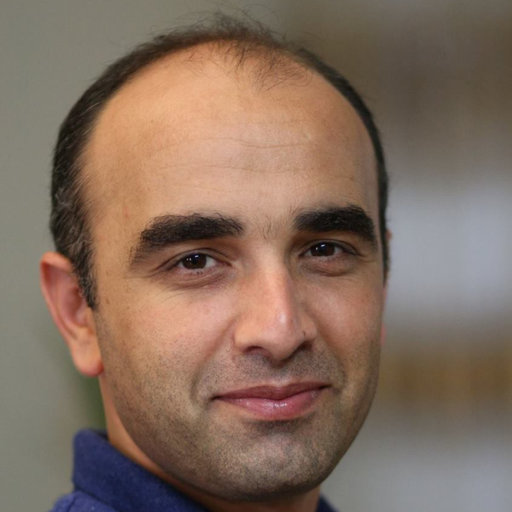
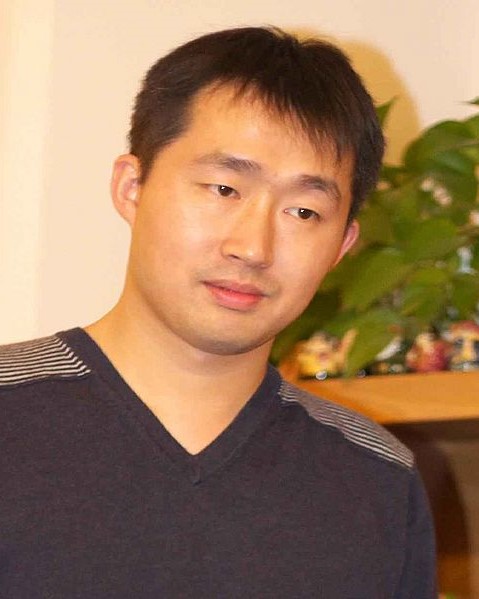
Laura Pani is Full Professor of Latin Palaeography at the University of Udine's Department of Humanities and Cultural Heritage, where she has served since 1994. She coordinates modules on Palaeography, Codicology, and Diplomatics, previously for the Faculty of Humanities (now split into multiple degree programs). Her research focuses on Carolingian manuscript studies Medieval book production during epidemics Latin diplomatics Manuscript transmission across the Eastern Alps Lately, she has explored 20th-century manuscript distribution networks and paleographic education in Italy. Her 2022 paper on Lothar's manuscripts and 2021 work on lay scribes remain particularly influential. Prof. Pani contributes to the Chartae Latinae Antiquiores series and maintains active involvement in manuscript conservation and education initiatives.
Joachim Baumeister is a Professor at the Chair of Computer Science VI - Artificial Intelligence and Knowledge Systems within the Institute of Computer Science at the University of Würzburg's Faculty of Mathematics and Computer Science. While his primary employment since September 2010 has been at denkbares GmbH, a company specializing in knowledge-based systems, he continues to regularly give lectures at the university. His research focuses on Semantic Information Systems, Knowledge Graphs, Deep Learning applications, Natural Language Processing, and Knowledge-based Configuration for Industry 4.0. Professor Baumeister's work bridges theoretical AI research with practical industry applications, particularly in knowledge-based configuration systems and semantic technologies. His recent publications (2020-2024) reveal a strong emphasis on product configuration systems, semantic knowledge representation, regulatory document processing, and knowledge-based systems. His research has evolved from foundational work on semantic wikis and knowledge engineering to more recent applications involving deep learning and large language models, demonstrating adaptability to emerging technologies while maintaining focus on practical knowledge representation problems. Professor Baumeister's work demonstrates significant contributions to case-based reasoning, knowledge configuration, and semantic technologies, with applications spanning regulatory compliance, industrial configuration systems, and document processing. His current research areas include: Semantic Information Systems and Knowledge Graphs Deep Learning for Image Recognition and Language Understanding Knowledge-based Configuration for Industry 4.0 Natural Language Processing Intelligent Personal Assistants and Chat Bots Though specific students aren't listed in the provided information, Professor Baumeister actively invites students to contact him regarding projects, bachelor theses, and master theses in his areas of expertise. His work at denkbares GmbH focuses on the design, implementation, and evolution of knowledge-based systems and semantic information systems.
Dr. Enayat Rajabi is an Associate Professor of Data Analytics at the Shannon School of Business , Cape Breton University , Canada. He also serves as an Adjunct Professor at Dalhousie University and is affiliated with Nova Scotia Health as a scientist. His academic journey included a Ph.D. in Information and Knowledge Engineering from the University of Alcalá, Spain, and he has contributed extensively to machine learning and semantic web domains. Education: Ph.D. in Information and Knowledge Engineering, University of Alcalá, Spain (2015) Master of Software Engineering, Ferdowsi University of Mashhad, Iran (2004) Bachelor of Software Engineering, Razi University, Iran (2001) Dr. Rajabi's research focuses on machine learning , knowledge engineering , and semantic web applications in healthcare and smart cities. His work explores explainable AI frameworks, knowledge graph construction, and data-driven solutions for sustainable transportation and clinical decision support systems. His recent publications highlight trends in knowledge graph integration with large language models for healthcare, graph neural networks , and predictive analytics in urban environments. He has secured significant grants, including the NSERC Discovery Grant and Mitacs Research Training Award , to advance these domains. Scientific Contributions: NSERC Discovery Grant (2020-2025) - Semantic Web Analysis over Nova Scotia Open Data ($156,000) New Health Investigator Grant (2022-2024) - Machine Learning for ALC Patients ($97,418) Mitacs Globalink ($4,250) - Graph Neural Networks CBU RISE grants for Explainable Clinical Decision Support Systems and Multi-Label Text Classification Dr. Rajabi has mentored numerous research assistants across projects and maintains active collaborations with institutions in Canada, Spain, and Iran. His technical expertise spans Python, Tableau, Databricks, and PySpark, with teaching responsibilities in Predictive Analytics , Data Visualization , and Quantitative Methods .
Dr. Timothy Cribbin is a Senior Lecturer in the Department of Computer Science within the College of Engineering, Design and Physical Sciences at Brunel University London. He has been with the university since 2001, initially joining as a lecturer and advancing to his current position. His academic home is firmly rooted in the intersection of information science, human-computer interaction, and data analytics. His educational background includes: PGCert Learning and Teaching in Higher Education, Brunel University (2007) PhD Information Science, Brunel University (2005) for research exploring spatial-semantic interfaces for exploratory document search MSc Industrial Psychology, University of Hull (1996), where he was awarded the Tom Hoyes Memorial Prize BSc (Hons) Psychology, University of Portsmouth (1994) Dr. Cribbin's research focuses on information visualization, interactive search interfaces, and text analytics, with particular expertise in processing and modeling large text collections to uncover meaningful insights. His work spans the design and evaluation of algorithms, interaction models, and end-user tools that support search, navigation, exploration, and sense-making within connected information spaces like scholarly publications and social media platforms. Early in his career, he pioneered work on interactive visualization using distance-similarity and spatial-semantic metaphors, making key contributions through the application of geodesic distance and second-order similarity transformations. More recently, his research has centered on citation-enhanced information retrieval and social media analytics, including the development of the Chorus Twitter analytics project. His scholarly output reveals a consistent trajectory from foundational work in information visualization to increasingly applied research in social media analytics and text mining. Throughout his career, Dr. Cribbin has maintained a strong focus on human-centered approaches to information processing, with particular attention to how users interact with and make sense of complex information spaces. His recent work demonstrates growing interest in psychological aspects of information processing, author classification, and the analysis of linguistic patterns in online radicalization. Dr. Cribbin has received notable recognition including: Tom Hoyes Memorial Prize for his MSc in Industrial Psychology Fellowship of the Higher Education Academy (FHEA) He has secured research funding for projects including "Predicting online radicalisation" and "Facilitating social media research in social sciences." Dr. Cribbin serves as a Deputy Senior Tutor (Academic Misconduct) and provides supervisory duties for final year undergraduate and Masters dissertation projects. He regularly acts as a reviewer for conferences and journals in information science, social media analytics, and information visualization. Dr. Cribbin is a key contributor to the User Centred Design research group and is the founder and lead programmer of the Chorus Twitter analytics project. His work bridges theoretical research with practical applications, particularly in the areas of social media analytics and text mining.
Dr. Thorsten Auth is a researcher at Forschungszentrum Jülich GmbH, affiliated with the Institute for Advanced Simulation (IAS) and its Theoretical Physics of Living Matter (IAS-2) division. His work bridges physics and biology, focusing on lipid-bilayer membranes, active matter, and cellular mechanics. Research Interests : Biological Physics, Active Matter, Soft Condensed Matter, Membrane Biophysics, and Computational Biophysics. He investigates membrane interactions with nano/microstructures and simulates active matter dynamics in cellular environments. Publications Trends : His recent work emphasizes active matter modeling, membrane-particle interactions, and computational approaches to non-equilibrium biological systems. Keywords include Biophysics , Nanotechnology , Non-equilibrium Physics , and Soft Matter . Contact : Available via phone (+49 2461/61-1735) or online profile ( Link ). ORCiD: 0000-0002-6618-2316 . Labs/Teams: Theoretical Physics of Living Matter (IAS-2), Forschungszentrum Jülich
Dr. Hisham AbouGrad is a Senior Lecturer in Computer Science and Digital Technologies at the University of East London, within the School of Architecture Computing and Engineering. With over 20 years of experience in IT industry and higher education, he has taught at multiple UK institutions including Falmouth University, Northumbria University, Roehampton University London, and University of Plymouth. Department of Computer Science and Digital Technologies School of Architecture Computing and Engineering University of East London Dr. AbouGrad holds a DProf (DBA) in Workflow Information Systems Performance from London South Bank University (2020), an MSc in Software Engineering from University of Bradford (2002), and an MBA in Management from University of Lincoln (2002). His research spans multiple domains including Business Process Management (BPM), Decision Support Systems (DSS), Workflow Systems Performance, Enterprise Content Management (ECM), Machine Learning, and Geographic Information Systems (GIS). His recent publications demonstrate a strong focus on applying AI and machine learning to solve real-world problems in finance, healthcare, agriculture, and transportation. His publication trends show a clear progression from foundational work on business process management and enterprise content systems toward cutting-edge applications of deep learning, blockchain, and computer vision in diverse domains. The breadth of his research covers financial technology, healthcare monitoring, agricultural optimization, transportation safety, and food security systems. Fellow of the Higher Education Academy (FHEA) Project Management Professional (PMP) in IT Professional member of the British Computer Society (BCS) since 2009 Member of the Central & North London Branches (CeNLB) Committee of BCS Dr. AbouGrad actively supervises doctoral research (ProfDoc, PhD), master's dissertations, and undergraduate degree projects. He has participated in doctoral research workshops and academic events to support university researchers. His teaching portfolio includes modules on Database Systems, Software Engineering, Information Systems, and Business Information Systems. He is a member of the Intelligent Systems Research Group and contributes to Research Enhanced Learning & Teaching initiatives at UEL.
Sebastian Eresheim serves as a Researcher at the Institute of IT Security Research within the Department of Computer Science and Security at St. Pölten University of Applied Sciences. His work focuses on developing innovative approaches to cybersecurity education and defense mechanisms through gamification, machine learning, and reinforcement learning techniques. He contributes to academic programs including Data Intelligence (MA) and Data Science and Artificial Intelligence (BA). Eresheim's research interests span across cybersecurity, artificial intelligence, and machine learning applications in security contexts. His work particularly emphasizes practical security solutions through gamification of security concepts, reinforcement learning for malware containment, and threat intelligence systems. He has developed cyber defense games like PenQuest that provide hands-on security training experiences. His research bridges theoretical security concepts with practical implementations, especially in the areas of process classification for anomaly detection and modeling real-world threat scenarios. Analysis of Eresheim's recent publications reveals a strong focus on applying artificial intelligence to cybersecurity challenges. His work demonstrates a progression from theoretical security modeling toward practical implementations, with increasing emphasis on gamification techniques for security education and reinforcement learning environments for cyber defense training. His research spans multiple domains including IT/OT infrastructure security, threat modeling, and security awareness training, showing interdisciplinary connections between computer science, game theory, and security engineering. Eresheim actively participates in various research projects including KliWaSim, the Webinar Series "Secure Home Office," and the Josef Ressel Center for Unified Threat Intelligence on Targeted Attacks (TARGET). He regularly presents at conferences and delivers workshops on AI and security topics, including events like the ACTA TECH DAY 2024 where he presented "Artificial Intelligence 101." His outreach extends to media appearances on ORF NÖ heute discussing practical AI applications.
Chara Podimata is an Assistant Professor of Operations Research and Statistics at the MIT Sloan School of Management and a Lead Researcher at Archimedes/Athena RC. She holds the Class of 1942 Career Development Professorship and focuses on the intersection of Theoretical Computer Science, Economics, and Machine Learning, particularly in incentive-aware machine learning, social computing, online learning, and mechanism design. PhD in Computer Science from Harvard FODSI Postdoctoral Fellow at UC Berkeley Diploma from National Technical University of Athens Her research explores the social aspects of computing, including how humans adapt to machine learning algorithms used in consequential decision-making. Recent work investigates policy questions related to AI and recommendation systems, adversarial robustness, and fairness in revenue management. She has received funding from Amazon, MacArthur Foundation, Google, and MIT GenAI Consortium. Key trends in her publications include strategic classification, contextual search, multi-armed bandits with evolving preferences, and incentive-compatible mechanism design. These works bridge theoretical foundations with practical applications in responsible AI and user behavior modeling. Amazon Research Award (2023) Google Research Scholar Award (2025) MacArthur x-grant Microsoft Dissertation Grant Siebel Scholarship As an advisor, Podimata collaborates with PhD students at MIT ORC, EECS, and MBAn capstone students. She is affiliated with the MIT Operations Research Center and previously worked with Microsoft Research and Google. Her personal page details her advising philosophy and research collaborations.
Paul Primus is a researcher at the Institute of Computational Perception, Johannes Kepler University Linz, specializing in audio processing and machine learning. His work focuses on sound event detection, acoustic scene classification, and language-based audio retrieval, with significant contributions to the DCASE (Detection and Classification of Acoustic Scenes and Events) challenges. Education: Dr. (PhD) MSc BSc Research Interests: Primus's research bridges audio signal processing and deep learning, addressing real-world challenges in machine listening. His work emphasizes device invariance, data efficiency, and transformer architectures for audio analysis. Key contributions include knowledge distillation for audio retrieval, multi-stage transformer training, and novel approaches to language-audio interaction. He actively explores low-complexity solutions suitable for embedded systems and edge deployment. Publication Trends: Primus's recent work (2023-2025) shows a clear trajectory toward multimodal audio-language systems, leveraging transformers and pretraining techniques. His publications increasingly focus on data efficiency, device generalization, and practical deployment constraints, as evidenced by his DCASE challenge submissions. The integration of metadata and cross-modal alignment represents a growing research emphasis. Activities: Adversarial Robustness in Data Augmentation (2020) Exploiting Parallel Audio Recordings to Enforce Device Invariance in CNN-based Acoustic Scene Classification (2019) Labs and Teams: Primus is a core member of the Institute of Computational Perception at JKU, which leads research in computational audio analysis. The institute maintains strong participation in international challenges like DCASE and collaborates extensively on audio transformer development and language-audio interaction systems.
Josef Ruppenhofer is a computational linguist working as a Researcher at FernUniversität in Hagen, where he contributes to the CATALPA research cluster. Since March 2023, he has served as a Research Assistant at the research professorship for Computational Linguistics in the DAKODA project, which focuses on applying NLP methods to study second language acquisition. His work bridges theoretical linguistics with practical applications in language education technology. Dr. Ruppenhofer earned his PhD in Linguistics from the University of California at Berkeley in 2004, following MA degrees from UC Berkeley (1999) and the University of Colorado at Boulder (1997). His academic journey includes postdoctoral positions at prestigious institutions including the International Computer Science Institute in Berkeley, Saarland University, Hildesheim University, and the Leibniz-Institute for the German Language. Ruppenhofer's research centers on applying computational methods to linguistic phenomena, with particular expertise in frame semantics, construction grammar, and corpus linguistics. His work spans educational applications of NLP, sentiment analysis, and the challenging domain of offensive language detection. He has developed innovative approaches for analyzing learner language corpora and identifying implicit forms of abusive language that deviate from social norms. Analysis of his recent publications reveals a consistent focus on the intersection of theoretical linguistics and practical language technology applications. His work shows increasing specialization in analyzing implicit forms of abusive language and developing methods for operationalizing developmental stages in second language acquisition, particularly for German as a foreign language. The DAKODA project represents a major focus of his current research trajectory. Ruppenhofer actively contributes to the computational linguistics community through his work on FrameNet (celebrating its 25th anniversary in his 2024 publications) and the development of linguistic resources for analyzing user-generated content and parliamentary discourse. His methodological approach consistently combines theoretical linguistic insights with practical computational techniques. As a member of the CATALPA research cluster, Ruppenhofer collaborates with an interdisciplinary team working at the intersection of language education, theoretical linguistics, and computational methods. His current work in the DAKODA project involves building tools and methodologies for analyzing learner corpora to better understand developmental stages in second language acquisition.
Christos Tryfonopoulos is an Associate Professor and Head of the Department of Informatics & Telecommunications at the University of the Peloponnese, where he leads the Software and Database Systems (SoDa) Lab. His academic career spans prestigious institutions including the Max-Planck Institute for Informatics in Germany, where he led the P2P and Information Management research area from 2006-2009, and the Technical University of Crete, where he completed his PhD and MSc degrees. His research interests focus on information management, distributed systems, digital libraries, and data/user anonymity. His work bridges theoretical foundations with practical applications across diverse domains including environmental monitoring, cybersecurity, cultural heritage, and medical informatics. He has developed innovative frameworks for pollution prediction, cyber-threat intelligence, and academic expertise mapping that demonstrate the interdisciplinary nature of his research. Professor Tryfonopoulos has published over 80 papers in top-tier journals and conferences including TOIS, TKDE, SIGIR, and SIGMOD. His recent work shows a strong trend toward applying machine learning techniques to information management problems, with publications spanning environmental science, cybersecurity, and bibliometrics. His research group has developed several significant tools including VeTo+ for expert set expansion, inTIME for cyber-threat intelligence, and Hydria for cultural heritage analytics. Candidate for best research paper in ESWC 2016 conference Honorable mention for best poster (3rd place) in ESWC 2012 conference Award as Distinguished Scientist Excelling in Research Abroad (2008) Best student paper award in ECDL 2005 conference Heraclitus PhD fellowship from Greek Ministry of Education (2002-2005) National Scholarship Foundation of Greece (IKY) scholarship (1998) Professor Tryfonopoulos has supervised 5 PhD students (3 in progress), 19 MSc students, and 31 BSc students. He has led or participated in 13 competitive EU and national research projects including ENIRISST+ for shipping and transport infrastructure, WeCare for student support structures, and FORESIGHT for cybersecurity simulation. His current research focuses on intelligent infrastructure for transportation logistics, cyber-threat intelligence systems, and educational technologies for data science.
Arminda Guerra Lopes is a Professor at the Polytechnic Institute of Castelo Branco, Portugal, with 25 years of academic service. She holds a PhD in Human-Computer Interaction from Leeds Metropolitan University (UK) and maintains a research fellowship at the Interactive Technologies Institute (ITI/LARSyS) in Portugal. Her institutional leadership includes roles as School Vice Director and President of scientific/pedagogical boards. Her research focuses on human-centered technology design, with expertise in: Social informatics and collaborative systems Human-Work Interaction Design (HWID) Creativity support tools Quality-of-life technologies AI-human interaction paradigms She maintains active international collaborations across Europe and Asia. Recent publications (2017-2023) demonstrate strong focus on AI interactions, workplace systems, and accessibility solutions, with recurring themes of pilot implementation studies, artistic interfaces, and wellbeing technologies. Her work frequently employs mixed-methods approaches bridging technical development with human behavioral analysis. Dr. Guerra leads research teams exploring affective computing, augmented reality navigation, and game-based learning, with projects involving multisensory installations, gesture recognition systems, and community information platforms.
Mike Domaratzki is an Associate Professor and Chair of the Department of Computer Science at Western University. His research focuses on bioinformatics, genomics, and theoretical computer science, with recent emphasis on machine learning tools for genomic prediction in crops. He has held academic roles at Western University and previously at the University of Manitoba and Acadia University. Education: (No explicit details provided in texts) Research Interests: Domaratzki’s work bridges computational methods and biological systems, including algorithm design for genomic analysis, machine learning applications in agriculture, and theoretical foundations of computing. His recent projects address challenges in imbalanced data classification and crop yield prediction using advanced neural networks. Teaching: He has taught a wide range of courses, including introductory programming, data structures, algorithms, bioinformatics, and automata theory across multiple institutions. Notable courses include COMPSCI 1026/1027 at Western, and COMP courses at the University of Manitoba/Acadia covering foundational CS topics and specialized areas like bionformatics algorithms. Publications: His work spans machine learning, genomics, and theoretical computer science, with recent trends emphasizing agricultural genomic applications and data-driven health analytics. Key themes include imbalanced data solutions, neural network architectures for genomics, and computational tools for biological data interpretation. Grants/Advising: No specific grants or student advising details are listed, though his teaching and research imply active involvement in mentoring. His lab focuses on interdisciplinary projects combining computational methods with biological datasets.
Chengkai Li is a Professor and Associate Chair in the Department of Computer Science and Engineering at the University of Texas at Arlington (UTA), directing the Innovative Data Intelligence Research (IDIR) Lab and co-directing the Center for Artificial Intelligence and Big Data (CARIDA). He holds adjunct roles in the Multi-Interprofessional Center for Health Informatics (MICHI). His academic journey includes a Ph.D. from UIUC (2007) and faculty positions at UTA since 2007, progressing from Assistant to Full Professor (2019). Education: Ph.D. in Computer Science (UIUC, 2007), M.E. and B.S. from Nanjing University (2000, 1997). Research focuses on AI-driven data systems for social good, including computational fact-checking, knowledge graphs, and graph data usability. Key projects include ClaimBuster (end-to-end fact-checking), FactWatcher (automated fact monitoring), and Maverick (exceptional fact discovery). His work spans 30+ news features and collaborations with organizations like Knight Foundation and Google. Publications (over 100) appear in top venues (SIGMOD, KDD, VLDB), with awards like the 2017 SIGMOD Most Reproducible Paper Award. He advises over 30 students and leads grants totaling millions from NSF, Knight Foundation, and industry partners. Labs/Teams: IDIR Lab (40+ researchers), CARIDA (AI/Big Data initiatives), and partnerships with Duke Tech & Check Cooperative.
Samuel Carton is an Assistant Professor in the Department of Computer Science at the University of New Hampshire (UNH), within the College of Engineering and Physical Sciences. His research focuses on human-centered natural language processing (NLP), emphasizing the implicit knowledge acquired by NLP models and methods to present this knowledge effectively to human stakeholders for ethical and practical use. He holds a Ph.D. in Information Science/Studies from the University of Michigan and has conducted postdoctoral research with Chenhao Tan at the University of Colorado Boulder and University of Chicago. He teaches courses including Natural Language Processing, Advanced Topics in CS, and Doctoral Research. Education: Ph.D., Information Science/Studies, University of Michigan Research Interests: Human-AI collaboration, model interpretability, ethical AI, and explainable NLP. His work bridges algorithm design and human-subject experimentation to ensure models are both effective and trustworthy. Grants & Advising: No explicit grants listed; actively involved in doctoral research supervision as seen in his course offerings. Labs & Teams: No specific lab affiliations explicitly mentioned, but his research likely involves collaborations with NLP and AI ethics groups.