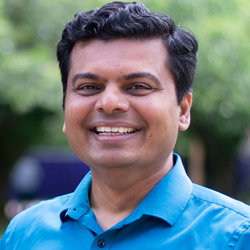
Jens Lundström is a Senior Lecturer at the School of Information Technology, Halmstad University. His research and teaching focus on Machine Learning and Artificial Intelligence, particularly their applications in healthcare, patient experience, and quality of life improvement. Research Area Leader for AI in CAISR Health Coordinator for Halmstad Professionals network (AI, data analytics, cybersecurity, service design) His research integrates applied and theoretical Machine Learning with healthcare domains, covering synthetic data generation, smart home systems, and data privacy. Recent publications highlight his contributions to Explainable AI, Generative Adversarial Networks, and robustness in Deep Learning for health and traffic data. No specific scientific awards or students are mentioned in the provided texts.
Dr. Jeroen Ooge is an Assistant Professor at Utrecht University’s Faculty of Science, specializing in Human-Centered Computing. With a background in Mathematics (MSc) and Computer Science (PhD), his research bridges technical rigor with educational innovation. He focuses on human-centered explainable AI, exploring how transparency in AI models affects trust, decision-making, and understanding across domains like education, healthcare, and agriculture. Education: MSc in Fundamental Mathematics, MSc in Applied Informatics, PhD in Computer Science Key Research Themes: Explainable AI, Data Visualization, Gamification, Lifelong Learning Research Interests span human-computer interaction , steerable AI systems , and educational technology . He investigates how interactive visualizations personalized gamification control mechanisms enhance user trust and engagement. His work with Wiski, a mathematics learning platform, demonstrates practical applications of AI in secondary education. Publication Trends show consistent contributions to conferences like AIED, IUI, and LAK, with a focus on AI ethics in education visual analytics for healthcare gamification frameworks agricultural decision support systems Collaborations include partnerships with researchers like K. Verbert and G. Stiglic, emphasizing multidisciplinary approaches. His teaching integrates AI and mathematics, reflecting his commitment to applied education.
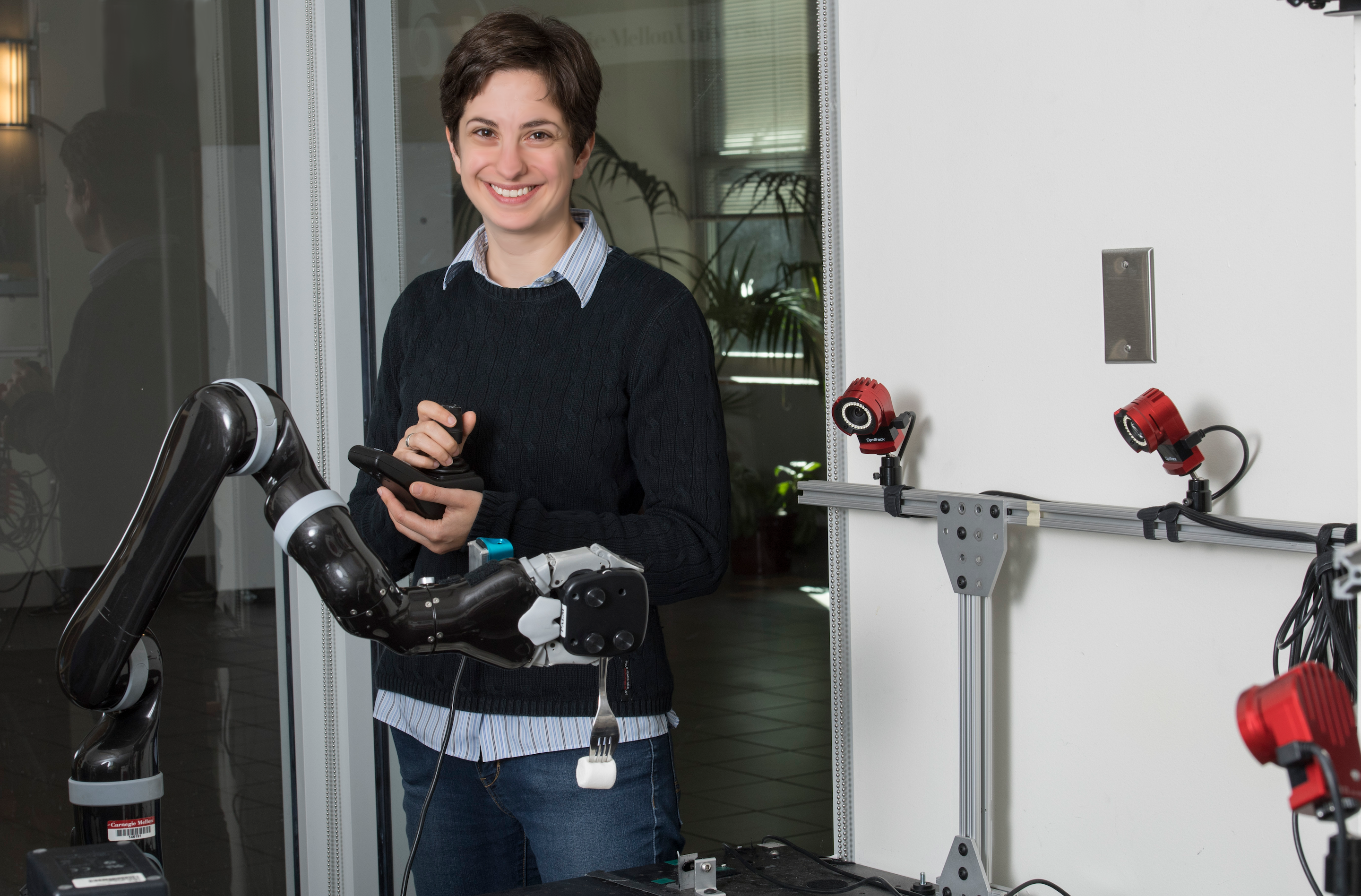
Henny Admoni is an Associate Professor at the Robotics Institute, Carnegie Mellon University . She leads the Human And Robot Partners (HARP) Lab and is currently a Digital Futures Scholar in Residence at KTH Royal Institute of Technology through August 2025. Her research focuses on human-robot interaction, assistive robotics, and modeling human behavior to develop intelligent systems that collaborate seamlessly with humans. PhD in Computer Science, Yale University MS in Computer Science, Yale University BA/MA joint degree in Computer Science, Wesleyan University Her work integrates methodologies from robotics, machine learning, artificial intelligence, computer perception, and cognitive science , with applications in physical support for daily living, driving assistance, social support networks, and collaborative tasks like household cleanup . She develops algorithms for proactive, fluent, and interpretable robot behavior , leveraging human mental state modeling and eye-gaze analysis. Recent publications include studies on driver situational awareness, robot self-assessment, and human-AI teaming , primarily in venues like IROS, HRI, CoRL, and RSS . Her research has evolved from eye-gaze-based intent prediction to proactive robot learning and strategic human-AI collaboration . Scientific recognition includes: NSF CAREER grant Okawa Research Grant A. Nico Habermann Career Development Professorship Her research is funded by NSF, ONR, Paralyzed Veterans of America Foundation, Google, Meta, and Sony AI . She emphasizes interdisciplinary collaboration and student engagement through weekly lab meetings and structured research opportunities. The HARP Lab explores human-robot shared manipulation, social support AI, and driver assistance systems , with a focus on human psychology and agency in robotic interactions.
ChengXiang Zhai is the Donald Biggar Willett Professor in Engineering at the University of Illinois at Urbana-Champaign , holding appointments in the Department of Computer Science , Carl R. Woese Institute for Genomic Biology , and the Department of Statistics . He leads research in intelligent information systems, with a focus on information retrieval, data mining, NLP, and machine learning. His TIMAN research group and DAIS explore applications in healthcare, education, and scientific discovery. He develops MOOCs on text retrieval and mining, and has published extensively on topics including LLM alignment, user simulation, and multimodal systems. Key Research Areas : Intelligent search engines, explainable AI, human-AI collaboration, biomedical informatics Recent Trends : LLM economics, knowledge overshadowing, just-in-time recommendation systems He has received the ACM Fellow title, SIGIR Salton Award , and multiple teaching honors including Rose Award and Graduate Mentoring Award . He serves as series editor for Springer Information Retrieval Book Series .
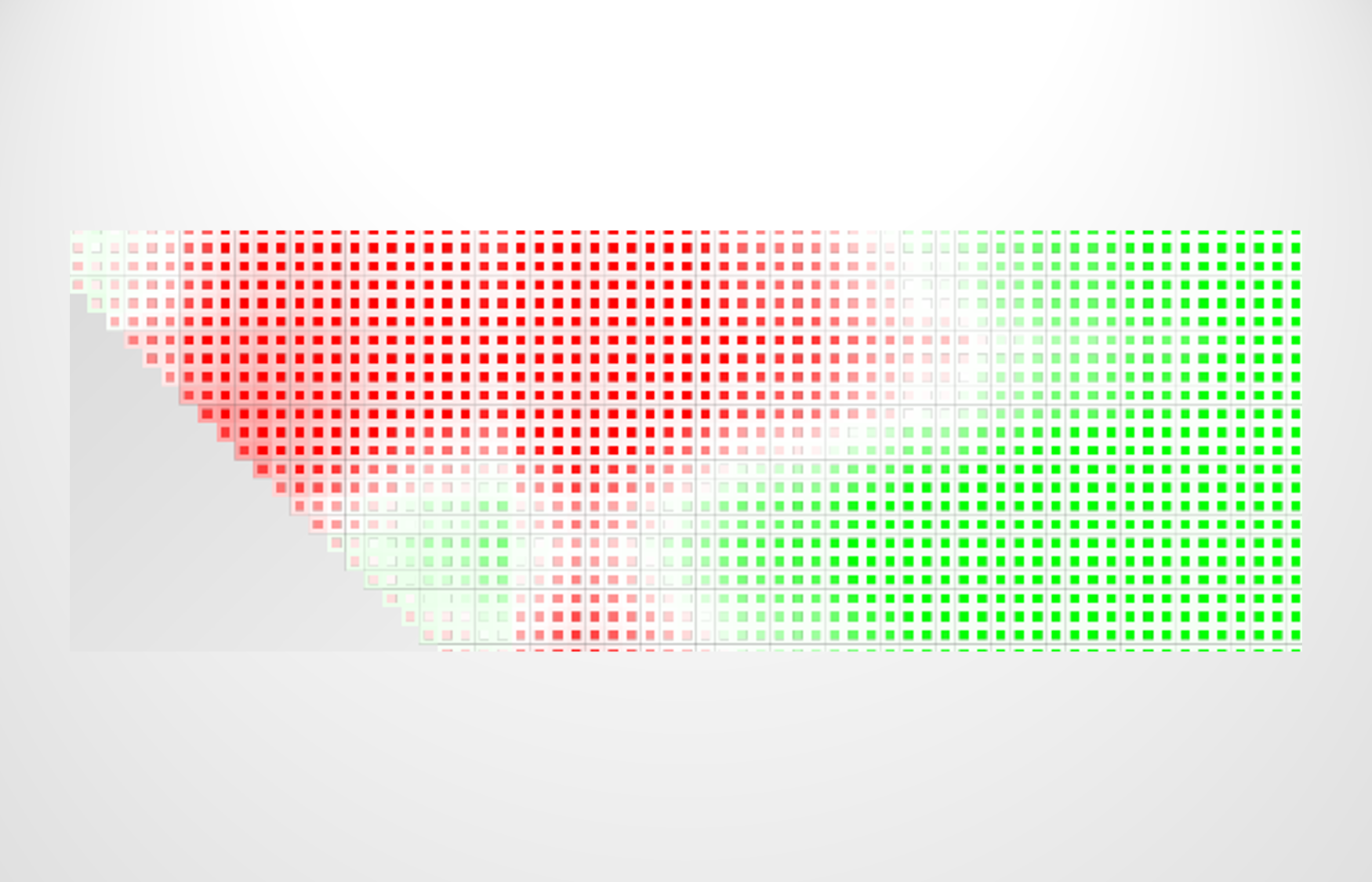
Dr. Michael Behrisch is an Associate Professor for Visual Analytics in the Visualization and Graphics Group at Utrecht University's Department of Information and Computing Sciences. With a PhD from University of Konstanz, his career includes postdoctoral work at Harvard and Tufts Universities, and over six years as a research associate at Konstanz. Specializes in matrix-based representations for relational data Focuses on cognitive load reduction in visual analytics Develops interactive systems for pattern discovery Research Highlights: Combines algorithmic approaches with user-centric visualization techniques to address challenges in large-scale, multivariate, and dynamic datasets. Research themes include: Automated pattern quantification Matrix reordering algorithms Explainable AI integration Game research applications Scientific Contributions: Recognized through 61 publications and multiple awards, including the EuroVA 2022 Best Paper and IEEE VAST 2018 Honorable Mention. His work bridges theoretical research with practical applications across life sciences, network analysis, and big data domains.
Dietmar Nedbal is a Professor at the University of Applied Sciences Steyr, where he works at the Research Center Steyr DBx - Digital Business Institute focusing on Digital Transformation. With an ORCID identifier of 0000-0002-7596-0917, he has established himself as a significant researcher in digital business fields. His research interests span Enterprise 2.0, Cloud Computing, Success Factor Analysis, Cloud Services, Business Process Management, Information Security, and Digital Transformation. Nedbal's work bridges theoretical frameworks with practical business applications, particularly in how digital technologies transform organizational processes and strategies. Nedbal has published 55 scholarly works including conference contributions, journal articles, and book chapters. His research shows a clear trajectory from early work on enterprise social software to contemporary research on cloud services, explainable AI, and information security. His publication "Scenario-Based Requirements Elicitation for User-Centric Explainable AI: A Case in Fraud Detection" (2020) has garnered significant attention with 61 Scopus citations, indicating its impact in the field. Among his notable projects are QSemIDM (Qualification seminar "Industrial Data Manager", 2020-2021), QSemDTM: Digital Transfer Manager (2017), and OptiCloud (2012-2014). These projects reflect his focus on practical digital transformation initiatives with industry applications. Nedbal has supervised 11 students' work and remains active in the academic community with 26 recorded scientific activities including presentations and invited talks. His most recent scheduled activity was "A Model for the Evaluation of User Satisfaction with Recommendation Systems of Entertainment Platforms" in October 2024.
Julian McAuley is a Professor in the Department of Computer Science at the University of California, San Diego (UCSD). His research bridges machine learning, natural language processing, and computer music, with a focus on generative models, recommender systems, and multimodal learning. He leads a lab that has produced influential datasets and frameworks for recommendation tasks. Primary Affiliation: UCSD, Department of Computer Science Research Themes: Generative AI, Recommender Systems, Music-Cognition Interfaces, Multimodal Learning McAuley's work explores the intersection of large language models (LLMs) with sequential recommendation, causal inference, and creative applications in music generation. His lab develops novel architectures like CoMMIT (multimodal instruction tuning) and SAND (LLM agent deliberation), while also advancing ethical AI through normative alignment techniques. Recent publications highlight trends in code-augmented reasoning , symbolic music processing , and contextual preference optimization . Notable applications include video-guided music synthesis, Explainable Chain-of-Thought systems, and tools for scalable self-updating models. He advises PhD students in areas spanning large language models , vision-language systems , and healthcare-driven AI . Collaborations span institutions like MIT-IBM Watson AI Lab, CMU, and companies including Google Deepmind, Meta, and Nvidia.
Peter Bednar is a Senior Lecturer at the School of Computing, University of Portsmouth, with expertise in systems analysis, information systems development methodologies, and critical systems thinking. His work aligns with UN Sustainable Development Goals, focusing on organizational learning, cybersecurity, and sustainable practices. Research Interests Systems Analysis Information Security Machine Learning Organizational Change Sustainable Development Recent publications highlight his contributions to understanding VUCA environments, bias detection in machine learning, and socio-technical approaches to cybersecurity. He actively participates in international conferences and collaborates with institutions like Lund University.
Masooda Bashir serves as Associate Professor at the University of Illinois School of Information Sciences, with concurrent appointments as Director of Social Sciences in Engineering Research in the College of Engineering (2013–present), Associate Professor at the Coordinated Science Laboratory and Information Trust Institute (2013–present), and Adjunct Assistant Professor in Industrial and Enterprise Systems Engineering (2012–present). Education: PhD in Psychology, Purdue University Degrees in Mathematics and Computer Science Her research centers on the psychological intersection of information technology, human behavior, and society, with emphasis on privacy, security, and trust dynamics in digital systems. She investigates how users perceive and interact with security mechanisms across diverse contexts—from health applications and autonomous vehicles to public libraries and cloud infrastructure—applying psychometric frameworks to understand behavioral patterns. Her work bridges technical systems design with human factors to develop more intuitive and trustworthy technologies. Recent publications (2023–2025) reveal a consistent focus on real-world privacy implementations , spanning female health apps, African data protection laws, cloud compliance standards, and autonomous vehicle trust. A recurring theme is the gap between technical capabilities and human expectations , particularly regarding legal compliance versus meaningful privacy protections. Her methodology frequently combines empirical user studies with policy analysis to expose vulnerabilities in current systems. Grants & Leadership: Principal Investigator, Illinois Cyber Security Scholarship Program (2019–present) Director, IMLS Forum on Privacy Protections in Public Libraries (2020–present) Principal Investigator, Privacy Standards Evaluation for Cloud (Cisco-funded, 2020–present) Former Co-Director, Ethical Thinking in Cyber Space (2017–2019) Bashir directs the Social Sciences in Engineering Research initiative within the College of Engineering, collaborating closely with the Information Trust Institute and Coordinated Science Laboratory. Her work integrates technical cybersecurity research with social science methodologies to address human-centric challenges in emerging technologies.
Claudia Müller-Birn is an Associate Professor for Human-Centered Computing (HCC) at the Institute of Computer Science, Freie Universität Berlin, and a principal investigator at the Cluster of Excellence Matters of Activity at Humboldt-Universität zu Berlin. Her research focuses on human-AI collaboration in healthcare, privacy-preserving technologies, and value-sensitive design principles. Current roles: Professor (tenured since 2019), Examination Committee Head for Master of Computer Science Key affiliations: Freie Universität Berlin, Humboldt-Universität zu Berlin, Charité University Medicine Her research explores: Technical approaches for improving human-AI decision-making Implementation of friction in interface design Assessment of decision aids through mixed-methods Participatory design for healthcare and mobility data donation Reflective practice in data science education Recent publications analyze uncertainty representations in AI collaboration, differential privacy communication, and value-centered consent interfaces. She advocates for open-source software and open science principles in her work. Scientific awards include: Max Rubner Prize 2024 (Charité Foundation) 100 minds of science in the capital city 2024 (Der Tagesspiegel) Honorable Mention at ACM CSCW 2019 Ted Nelson Newcomer Award 2014 Teaching activities at Freie Universität Berlin cover human-computer interaction, data science, and interactive systems. She leads the Human-Centered Computing working group and contributes to interdisciplinary education through courses like "Coding IxD".
Professor Chirag Shah at the University of Washington Information School (iSchool) is a leading researcher in intelligent information systems and generative AI. With adjunct appointments in Computer Science & Engineering and Human-Centered Design & Engineering, he bridges technical and ethical dimensions of AI. His work focuses on transparency, fairness, and bias mitigation in information access systems. PhD, Information Science - University of North Carolina (2010) MS, Computer Science - University of Massachusetts (2006) MTech, Computer Science - Indian Institute of Technology (2002) BE, Computer Engineering - Dharamsinh Desai Institute (2000) Shah's research spans task-oriented search, conversational systems, and fairness-aware AI. His work addresses critical questions about technology's societal impact, advocating for responsible AI development through his Center for Responsibility in AI Systems & Experiences (RAISE). Recent publications highlight multimodal interaction models, fairness frameworks, and cognitive trust metrics. These works examine generative AI's reasoning capabilities, bias detection in image search, and collaborative information seeking dynamics. Major Awards: 2025 SIGIR Academy Inductee 2024 ASIS&T Research in Information Science Award 2024 IEEE Pioneering Leadership in Trustworthy AI 2023 Outstanding Contributions to Information Behavior Research 2021 Karen Spärck Jones Award As founding director of the InfoSeeking Lab, Shah mentors students working at the intersection of AI and human values. His collaborations span Microsoft, Amazon, and Spotify, translating research into practical AI solutions.
Krisztian Balog is a Professor of Computer Science at the University of Stavanger, Norway, and a Staff Research Scientist at Google DeepMind. With a research focus on Interactive AI systems evaluation Conversational information access User modeling and simulation Transparent recommendation systems His recent work emphasizes leveraging large language models for information retrieval tasks and developing simulation frameworks like SimIIR 3. Scientific contributions include receiving the Karen Spärck Jones Award (2018) and Best Resource Paper Award at CIKM’23 . He co-organized the Sim4IA workshop series and leads the NorwAI-funded PhD project on LLM-based recommendation systems.
Björn Johansson is a Professor at Linköping University in the Department of Computer Science (IDA) , affiliated with the Human-Centered Systems (HCS) division. His research focuses on human interaction with complex systems, particularly in energy systems, crisis management, and autonomous systems, using simulation and game-based methods. Leading the "Att vända strömmen" project (funded by Swedish Energy Agency) to address sustainability challenges in energy systems Co-developing "megagames" for understanding societal polarization and climate change Collaborating with Saab on aviation interface design and autonomy research His recent publications span AI in smart grids, ERP cloud migration, and resilience in autonomous systems. He teaches courses in Cognitive Systems Engineering and Crisis Management, and co-leads the SkyLab research environment for future aviation concepts. Current grants include SEK 24.5 million from the Swedish Energy Agency and SEK 33.4 million from the Kamprad Family Foundation.
Dylan Losey is an Associate Professor in the Department of Mechanical Engineering at Virginia Tech , part of the College of Engineering . He leads the Collaborative Robotics Lab (Collab) , focusing on developing learning and control algorithms for robots collaborating with humans. Education : Ph.D. & M.S. in Mechanical Engineering from Rice University (2018 & 2016), B.E. in Mechanical Engineering from Vanderbilt University (2014). Formerly a Postdoctoral Scholar at Stanford University (2019–2020) and Visiting Scholar at UC Berkeley (2017). Research Interests include Human-Robot Interaction , Machine Learning , and Control Theory , with applications in assistive robotics, healthcare, and user-centered design. His lab creates robots that personalize behavior to adapt to human needs, such as the Kiri-Spoon for robot-assisted feeding. Awards include the NSF CAREER Award (2024), Best Application Paper (IEEE Transactions on Haptics, 2024), and Outstanding New Assistant Professor (Virginia Tech, 2023). Advising & Grants : Advises students like Maya Keely and Heramb Nemlekar. His NSF CAREER grant supports research on bidirectional human-robot communication. Collaborates with institutions like The Virginia Home (Richmond) for user-centric design. Labs & Teams : Directs the Collaborative Robotics Lab , emphasizing interdisciplinary work with partners like Cornell University. Recent projects include assistive robotics for mobility-impaired users and haptic display systems.
Dr. Rittika Shamsuddin is an Assistant Professor in the Department of Computer Science at Oklahoma State University. She holds a PhD in Computer Science from The University of Texas at Dallas and a BA in Computer Science and Biology from Mount Holyoke College. Her research focuses on improving interdisciplinary communication between computational fields and healthcare/biology through machine learning and algorithm development. Key areas include healthcare data analysis platforms, explainable AI, and addressing challenges like data scarcity and privacy in medical applications. Education: PhD, Computer Science & Data Science, University of Texas at Dallas (2013–2016) BA, Computer Science & Biology, Mount Holyoke College (2008–2012) Research Interests: Dr. Shamsuddin develops tools and frameworks to bridge computational and medical domains. Her work emphasizes healthcare-specific machine learning platforms, interpretable AI systems, and solutions for data scarcity. She also explores applications in rural healthcare, disease progression modeling, and ethical AI integration in medical decision-making. Recent projects include System-of-Systems ML frameworks for XAI and synthetic data generation for rare medical conditions. Grants & Funding: RET Site: SecurAIty Nexus (2024–2027) RET Site: Big Data & Machine Learning for Educators (2021–2024) Labs & Teams: She leads a research group focused on healthcare AI and collaborates with medical institutions. Her lab website hosts ongoing projects and tools like CEFEs for ECG interpretability and synthetic data generation frameworks.