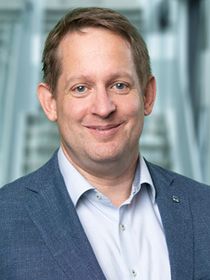
Prof. Dr. Jan-David Liebe is a Professor of Digital Society at Osnabrück University of Applied Sciences, leading the Digital Health Management field. He holds a PhD in Business Informatics from the University of Osnabrück (2013–2018). His research focuses on implementation science in healthcare, human-centered design, and AI-driven healthcare innovations. He is a co-founder of innnow GmbH and an associated researcher at UMIT’s Institute for Medical Informatics. Key roles include heading the GMDS AG mwmKIS and contributing to national IT reports in healthcare. Research Interests: His work spans digital transformation in healthcare, evaluating healthcare IT maturity models, and fostering innovation through design thinking. Notable projects include benchmarking health IT systems and developing frameworks for AI-supported diagnostics. Professional Roles: Prof. Liebe serves as the Study Director for the Health Management MA program and Entrepreneurship Officer at the WiSo faculty. He actively contributes to research networks like the German Society for Medical Informatics and advises on healthcare IT strategies. Grants & Projects: Leads projects on cloud readiness of hospitals, VR-based medical training, and AI in echocardiography. His work is published in over 50 peer-reviewed articles, emphasizing practical applications of digital tools in healthcare workflows and policy. Affiliations: Member of the Research Commission and Study Committee at Osnabrück University of Applied Sciences. Collaborates with institutions like the Medical School Hamburg and Novia University of Applied Sciences.
Elizabeth Mynatt is the Dean and Professor of the Khoury College of Computer Sciences at Northeastern University. Her research focuses on human-centered computing, personal health informatics, and assistive technologies, particularly for aging populations. She leads the National Science Foundation's AI Institute (AI-CARING) and co-directs Emory University's Cognitive Empowerment Program. Mynatt advocates for federal research funding, emphasizing its role in technological innovation and economic growth. She is a Fellow of the ACM and member of the American Academy of Arts and Sciences. Her leadership includes fostering inclusive computing education and developing the Oath for Computing Professionals . Mynatt has over 100 publications, with work spanning ubiquitous computing, health informatics, and AI ethics. She previously held roles at Georgia Tech, including Regents' Professor and director of the Institute for People and Technology. Key contributions include designing AI systems to support aging-in-place, technology-mediated caregiving, and addressing challenges in mental health medication management. Her collaborations with industry and global institutions highlight her commitment to sociotechnical systems that enhance human capabilities while respecting cultural contexts.
Dr. Daniel Harrison is an Assistant Professor in the School of Design, Arts, and Creative Industries at Northumbria University, where he serves as EDI and Athena SWAN Co-Lead and leads the HCI+Design Research Group. His academic journey includes a PhD from UCL's Interaction Centre (UCLIC) and research at Georgia Institute of Technology and Microsoft Research Cambridge. His work focuses on Human-Computer Interaction (HCI), digital health, and inclusive technology design, particularly in sports and wellbeing. Education: PhD in Human-Computer Interaction, UCL Interaction Centre (2020) MSc (2012), BSc (Hons) (2010) Research Interests: Intersection of technology, inclusivity, and sports (SportsHCI) Participatory methods (co-design, ethnography) Developing inclusive technologies for underrepresented groups Recent Projects: Co-authored Grand Challenges in SportsHCI Initiatives for inclusive sports technology Design of wellbeing-focused digital tools Advising: Mentors three PhD students researching topics such as neurodivergent workers, financial technology for international students, and gamified sports participation. Labs/Teams: HCI+Design Research Group at Northumbria University.
Albert Treytl is a Senior Researcher at the Danube University Krems , serving as Head of the Center for Distributed Systems and Sensor Networks and Deputy Head of the Department for Integrated Sensor Systems. He holds a Master’s degree in Electrical Engineering from the Vienna University of Technology (2001) and has over two decades of experience in communication technologies and security. Current roles: Head of Center, Deputy Head of Department Research focus: Security for embedded systems, IoT, digital twins, AI in energy optimization Involvement: IEEE, CEN TC 247 WG4, IEEE1588 standardization His work addresses distributed data management, smart grid security, and model predictive control strategies for energy efficiency in buildings and traffic systems. He leads multiple national and international projects funded by FFG and EU programs. Recent research projects include KI4HVACS (AI-driven HVAC optimization), Factories4Renewables (industrial renewable energy integration), and Dataskop (sensor-based data economy). He has authored over 100 peer-reviewed publications and serves as co-lecturer at the Vienna University of Technology.
Jakub Macina is a Doctoral Fellow at the ETH AI Center and a PhD Candidate at ETH Zürich . He works in the intersection of Natural Language Processing and Learning Sciences as part of the Language, Reasoning and Education Lab (led by Prof. Mrinmaya Sachan) and the Professorship for Learning Sciences and Higher Education (led by Prof. Manu Kapur). Forbes 30 Under 30 in Science & Education 2023 Recipient of ETH AI Center Fellowship ( Co-founder of a health-tech startup with seed investment Research Interests : Focus on generative large language models (LLMs), dialogue tutoring systems , pedagogical alignment of AI models, and mathematical reasoning . His work explores: Reinforcement learning for pedagogical steering LLM evaluation frameworks Socratic question generation Stepwise error detection and remediation Student-teacher interaction modeling Publications span top conferences like EMNLP , ACL , NeurIPS , and RecSys , with particular emphasis on educational applications of LLMs and dialogue-based learning systems . Scientific Awards : Forbes 30 Under 30 in Science and Education (2023) 2nd Place in ACM IT SPY Computer Science Master's Thesis Competition (2017) ETH AI Center Fellowship (2021) Leadership & Teaching includes: Managing team of 6 data scientists Teaching Assistant for Machine Learning and NLP courses at ETH Zurich Developing large-scale ML pipelines for recommender systems Open-source contributions to Discourse and Google Summer of Code projects
Nuala Flood is a Senior Lecturer in the Sustainable Built Environment department at Queen’s University Belfast, combining architectural practice with pedagogical innovation. Her work focuses on participatory design methods, climate change adaptation, and urban regeneration. She leads the award-winning Public CoLab initiative, a week-long workshop fostering collaboration between students and communities to address spatial challenges in Northern Ireland. Key areas of expertise include ecotopian design fictions, temporary urban interventions, and codesign for climate resilience. Flood has pioneered climate literacy programs within her institution, integrating sustainability into architectural education curricula. She actively engages in interdisciplinary projects like the Future Island-Island initiative exploring coastal adaptation. Notable achievements include the 2022 Fulbright/Environmental Protection Agency Scholarship and multiple teaching awards. Research interests span urban interventionist practices, architectural pedagogy, and place-based climate solutions. Her publications address topics ranging from extreme heat risks in sports infrastructure to seaweed-based urban symbiosis. Flood has presented at global events such as the Reach’24 Arts & Sustainability Festival and contributed to media discussions on Belfast’s water quality and flood resilience. She supervises PhD research in codesign methodologies and participatory urbanism, reflecting her commitment to bridging academic inquiry with community-driven action. Education: Architectural practice background with ARB registration Grants: Co-investigator on the Future Island-Island project (2024–present) Labs/Teams: Public CoLab, Sustainable Built Environment research group Future Work: Scaling climate adaptation pedagogy, exploring bio-based materials
Elizabeth (Liz) Sanders, Ph.D., is an Associate Professor in the Department of Design at The Ohio State University (OSU) since 2011. She is a globally recognized social scientist and pioneer in participatory and co-design methodologies, advocating for democratizing design through collaborative, human-centered approaches. Her work emphasizes involving stakeholders in shaping their own futures, particularly in healthcare, education, and technology. Alongside her academic role, she founded MakeTools, LLC, to explore co-design landscapes and develop tools for collective creativity. Sanders holds degrees from Miami University (BA in Psychology and Anthropology, 1975) and The Ohio State University (MA, 1977; PhD, 1981). She has been honored with prestigious awards including Phi Beta Kappa and membership in Sigma Xi. Her research focuses on transdisciplinary co-design, collective dreaming, and speculative design. Notable projects include reimagining healthcare spaces, designing interventions for diabetes management, and fostering creativity through playful probes. Sanders has collaborated with major companies like Apple, Microsoft, and Procter & Gamble, bridging academic and industrial design practices. She co-authored Convivial Toolbox: Generative Research for the Front End of Design , a seminal text in co-design education and practice. Awards and recognitions include Phi Beta Kappa, Phi Kappa Phi, Sigma Xi, and a University Fellowship from OSU (1975–1979). She actively contributes to university initiatives, such as the Reimagining Teaching and Learning Initiative, and advises student organizations like Paranormal Investigations at OSU. Her work explores emerging technologies like VR/AR/AI to accelerate co-design and collective creativity in envisioning future living systems.
Carryl Baldwin is the Carl and Rozina Cassat Distinguished Professor of Aging & Regional Institute on Aging and Director of the Wichita Auditory Research Group (WARG) at Wichita State University's Fairmount College of Liberal Arts and Sciences. Her work spans neuroergonomics, aging research, auditory cognition, and human-vehicle interface design, with funding from NHTSA, NIH, NASA, and private industry partners. Education : PhD in Human Factors Psychology (1997), MA in Human Factors Psychology (1994), BA in Psychology/Asian Studies (1987) Dr. Baldwin's research focuses on human interaction with automation , particularly in transportation contexts. She investigates driver attention, mind wandering, cognitive workload, and multimodal alarm systems using physiological metrics like EEG. Her lab explores aging-related cognitive changes and develops technologies to enhance safety and performance in semi-autonomous systems. The 15 most recent publications reveal trends in neuroergonomics , aging populations , and automated vehicle safety . Key themes include attention management in automation, auditory alarm optimization, and sustainability applications of human factors, with methodologies spanning EEG analysis, eye-tracking, and multimodal interface evaluation. Dr. Baldwin's lab has secured external funding from the National Highway Traffic Safety Administration, NIH-NIA, NASA centers, and defense contractors like Northrop Grumman. Current research includes driver vigilance in Level 2/3 vehicles, pandemic-related social isolation in older adults, and FAA-funded training technology evaluation.
Vineet Pandey is an Assistant Professor at the Kahlert School of Computing, University of Utah, and a Responsible AI Faculty Fellow starting Spring 2025. His research focuses on human-centered computing tools to bridge communities and institutional experts in science and medicine, emphasizing digital health and citizen science. He holds a Ph.D. in Computer Science from UC San Diego (2013-2019) and postdoctoral roles at MIT (2022-2023) and Harvard University (2020-2022). Education: Ph.D. in Computer Science, UC San Diego (2013-2019) Postdoctoral Researcher, MIT (2022-2023) Postdoctoral Fellow, Harvard University (2020-2022) Research Interests: Designing systems for community-led scientific work Remote health assessment tools for neurological disorders Social platforms for public participation in policymaking Collaborations with rare disease communities and healthcare institutions Articles Trends: Recent work spans motor impairment monitoring in ataxia-telangiectasia, digital phenotyping in ALS, and citizen science platforms like Galileo. Earlier contributions include key-value store systems and microbiome research via the American Gut Project. Scientific Awards: 2019 School of Engineering Henry Booker Award for Exemplary Ethical Engineering Advising/Grants: Supervises PhD/MS/BS students on HCI projects in digital health and citizen science. Alumni include Jenny Yijun Zhan (MSD) and Gunasekhar Athuluri (CS MS). Teaches courses like 'Designing Digital Health Systems' and 'Designing Human-Centered Systems'. Labs/Teams: Leads a multidisciplinary group collaborating with medical experts, rare disorder communities, and institutions. Current projects include fine-finger tracking for motor performance analysis and platform design for participatory science.
Camila Biazus-Dalcin is a Lecturer (Teaching & Research) at the University of Dundee's School of Health Sciences, affiliated with the Mother, Infant and Child Health Research Group (MIRU). She holds a PhD in Nursing (2020) and a PhD in Philosophy (2022). Her research focuses on addressing health inequalities in marginalized communities, including Gypsy/Traveller populations, people in prison, and those experiencing homelessness. She employs qualitative methods like ethnography and creative approaches, while expanding into mixed methods. She collaborates internationally with colleagues in Brazil, Portugal, Australia, and the USA. Awards include the 2022 Sigma European Early Career Researcher award and the Dr Doris J. Froebe Leadership Education Grant. Research Interests: Health inequalities, sexual and reproductive health, perinatal mental health, and community-engaged research. Recent work includes studies on HIV outcomes, perinatal healthcare access, and disinfection protocols in pediatric units. Awards: Sigma European Early Career Researcher award (2022) Dr Doris J. Froebe Leadership Education Grant (2022) Teaching & Supervision: Teaches undergraduate/postgraduate modules like Fundamentals of Adult Health and Nursing Skills. Supervises PhD students in global health and public health topics. Nominated for multiple teaching awards (2023–2024). Projects: Leads initiatives such as the 'My Data' Project (co-producing tools with drug users) and the Gypsy/Traveller Community Health Worker evaluation. Collaborates on improving healthcare access for marginalized groups.
Alva L. Couch is an Associate Professor at Tufts University's School of Engineering, Department of Computer Science, with a career spanning over 30 years. His work bridges network/system administration, autonomic computing, and hydrologic data science, focusing on scalable solutions for data management and automated system administration. Education: Ph.D. in Mathematics (1988), B.S. in Architecture (1978), and B.A. in Bassoon/Contrabassoon Performance (1978). Research Interests His research centers on: Network and System Administration: Tools like SLINK, Maelstrom, and Babble for dependency analysis, cloud migration, and policy enforcement. Geo-informatics: MEDFORD metadata language and HydroShare platform for hydrologic data curation and discovery. Autonomic Computing: Promise theory, convergent operators, and closure models for self-managing systems. Recent Work Trends His 2024-2018 publications emphasize: Cloud-based hydrologic data management (AnVILMEDFORD, HydroShare) Metadata standards for interdisciplinary research Machine learning for system administration Agent-based resource sharing models Scientific Awards Liebner Teaching Award (1996) Seymour Simches Advising Award (2017) Best Paper Awards: LISA 1996, AIMS 2008, LISA 2001 LISA 2000 Best Student Paper (with Michael Gilfix) Contributions He developed key software like Peep (network auralization) and Slink (configuration management), supported by NSF grants and industry partnerships. His work with CUAHSI's Water Data Center shapes national hydrologic data infrastructure. He also advocates for science education and privacy in computing.
Michael Sedlmair is a Professor at the University of Stuttgart's VISUS (Visualization Research Center). His research focuses on visualization, augmented reality, and immersive analytics. He holds a PhD in Computer Science from Ludwig Maximilians University Munich (2010). Affiliations: Department of Computer Science, University of Stuttgart Research interests span: Augmented Reality applications in collaboration and industry Immersive analytics and spatial data visualization Human-computer interaction in AR/VR contexts His work emphasizes practical applications such as human-robot collaboration, medical simulations, and molecular visualization. Over 200+ publications since 2008 highlight contributions to visualization theory and tool development.
Miloš N. Mladenović is an Associate Professor at the Spatial Planning and Transportation Engineering Group , affiliated with the Department of Built Environment under the School of Engineering at Aalto University. He also serves as a Vice Dean and leads the MSc program Sustainable Urban Mobility Transitions . His work bridges academic research and practical policy, with a focus on governance and ethical dimensions of emerging mobility technologies. Education: BSc in Transport Engineering, University of Belgrade MSc and PhD in Civil Engineering, Virginia Tech His research centers on: Societal Impact of Emerging Mobility Technologies , such as Mobility as a Service and automated vehicles Decision-Support Systems for urban transport planning Sustainable Transportation and accessibility frameworks Ethics in Transport Policy , including projects like EVA-HEL (electric scooters) and BATS (mobility solutions) Analysis of his recent publications shows: Development of open-source models for urban transport equity Focus on cultural governance in Finland Interdisciplinary approaches combining social sciences and engineering Scientific Recognition: 2024 Moshe Givoni Prize from Transport Reviews 2024 Linkki Pin Permit award Academic Leadership: Editorial Board Member, European Transport Research Review (2019-2024) Organizing Chair, Aalto University Summer School on Transportation (ASTRA) His work connects directly with the United Nations Sustainable Development Goals for sustainable cities and climate action.
Sylvie Nadeau is a Full Professor in the School of Rehabilitation at the University of Montreal's Faculty of Medicine. Her research focuses on locomotor activity assessment, rehabilitation interventions for neurological conditions, and biomechanical analysis of movement. She leads interdisciplinary projects addressing spinal cord injuries, stroke recovery, and mobility challenges in aging populations. Key affiliations include the INTER strategic research group and the REPAR provincial rehabilitation research network. She collaborates with institutions like the Institut de Réadaptation Gingras-Lindsay-de-Montréal (IRGLM) and has secured funding from agencies such as FRQNT, MITACS, and the Rick Hansen Institute. Her work integrates technologies like smart stationary bikes and real-time avatars to enhance rehabilitation outcomes. Research interests span gait analysis, dynamic balance, and sensorimotor rehabilitation. She has supervised over 30 graduate students, contributing to advancements in post-stroke mobility, incontinence management, and telerehabilitation. Recent projects include developing intelligent exercise systems and evaluating environmental impacts on mobility in museum settings. Directed the 2019 SOFPEL international congress Co-led the TRIVEL intelligent cycle prototype development Pioneered studies on bilateral upper limb coordination post-stroke Her teaching includes courses in physiotherapy and evidence-based practice, shaping future generations of rehabilitation professionals. She prioritizes translating research into clinical practice through innovative interventions and technology integration.
Mohamed-Slim Alouini is a Professor of Electrical Engineering and Associate Dean of the Computer, Electrical and Mathematical Science and Engineering (CEMSE) Division at King Abdullah University of Science and Technology (KAUST) in Saudi Arabia. He also serves as the Associate Vice President for Research and holds the UNESCO Chair in Education to Connect the Unconnected. With over 500 journal publications and more than 46,000 citations, he is a world-renowned expert in wireless communications who was elected IEEE Fellow in 2009 at the age of 39. Education: PhD in Electrical Engineering, California Institute of Technology (Caltech), 1998 MS in Electrical Engineering, Georgia Institute of Technology (Georgia Tech), 1995 Diplôme d'Etudes Approfondies (DEA) in Electronics, Université Pierre & Marie Curie (Sorbonne University), 1993 Diplôme d'Ingénieur, École Nationale Supérieure des Télécommunications (Télécom Paris Tech), 1993 Habilitation, Université Pierre & Marie Curie (Sorbonne University), 2003 Dr. Alouini is a world-renowned expert in wireless communication and networking with research interests spanning diversity combining techniques, MIMO systems, multi-hop/cooperative communications, optical wireless systems, cognitive radio, UAV communications, and advanced modulation schemes. His current focus addresses the technical challenges of uneven information and communication technology distribution, particularly targeting rural, low-income, disaster-prone, and hard-to-reach areas through integrated ground-airborne-space networks. His work bridges theoretical foundations with practical implementations to solve real-world connectivity problems. His recent publications (2020-2024) demonstrate a clear research trajectory toward integrated communication networks combining terrestrial, aerial, and space components. There's growing emphasis on UAV communications, satellite systems, optical wireless technologies, and rural connectivity solutions, with increasing integration of machine learning techniques for network optimization. His work shows consistent focus on addressing the digital divide, with several publications specifically targeting 6G challenges for connecting underserved populations and recycling existing infrastructure for enhanced rural connectivity. Scientific Awards: Member of the European Academy of Sciences and Arts (2019) Fellow of the African Academy of Sciences (2018) IEEE Fellow (2009) Abdul Hameed Shoman Award for Arab Researchers (2016) OIC Science & Technology Achievement Award (2017) Multiple recognitions as Highly Cited Researcher NSF CAREER Award (1999) Dr. Alouini has mentored numerous successful students and post-doctoral fellows who have secured positions at top institutions worldwide including Harvard, Caltech, Imperial College, and faculty positions at Korea University, Hanyang University, and universities across the Middle East. His December 2018 PhD graduate Qurrat-Ul-Ain Nadeem received the prestigious Marconi Society Paul Baran Young Scholars award, while post-doctoral fellows have won IEEE ComSoc Young Professionals Best Innovation Award and attended the Lindau Nobel Meeting. His Communication Theory Lab at KAUST drives significant research in wireless communications with funding supporting extensive publication output and innovative projects. Dr. Alouini leads the Communication Theory Lab at KAUST and holds the UNESCO Chair in Education to Connect the Unconnected, focusing specifically on technical solutions for connecting underserved communities. His lab works on integrated ground-airborne-space networks to bridge the digital divide, with particular emphasis on rural, low-income, and hard-to-reach areas. The team develops practical solutions using UAVs, satellite communications, and recycled infrastructure to provide cost-effective connectivity where traditional approaches fail.