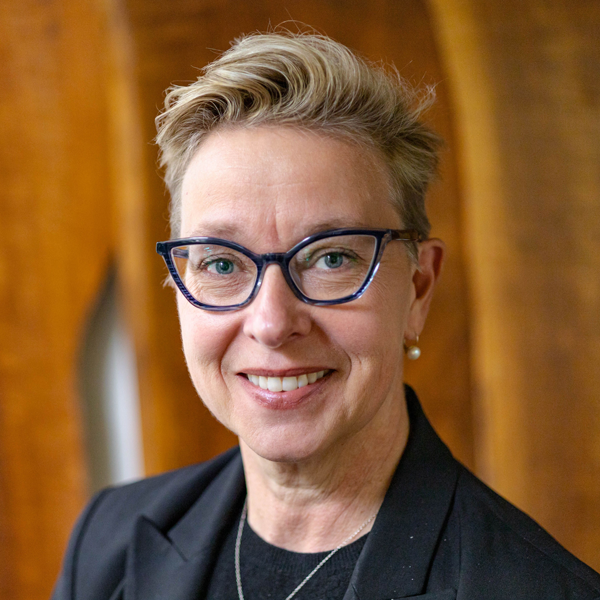
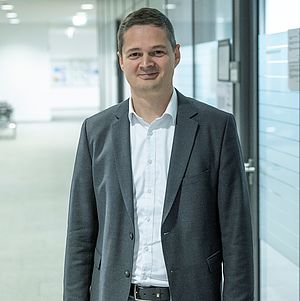
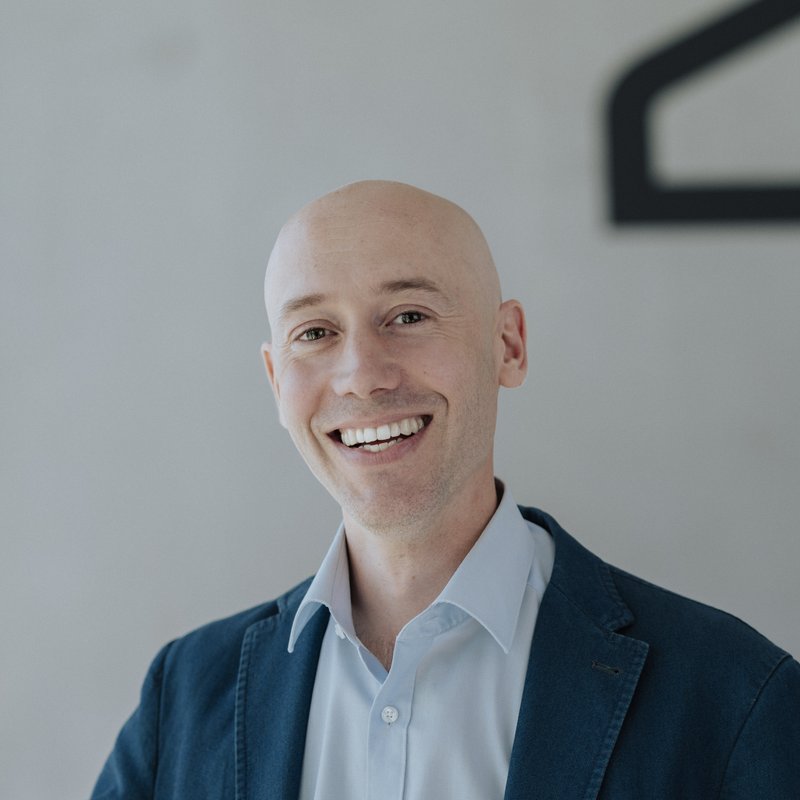
Mieke Koehoorn serves as Vice Dean, Academic Affairs, and Professor at the School of Population & Public Health within the University of British Columbia . Her academic oversight includes strategic planning, faculty development, and maintaining academic standards. She has held leadership roles such as UBC Vancouver Senator and Head of the Division of Occupational and Environmental Health. Research Interests : Dr. Koehoorn focuses on occupational health, gendered work environments, work disability, and data linkage for epidemiological studies. Her work addresses disparities in workers’ compensation, safety protocols, and health equity in digital health interventions. Article Trends : Recent publications emphasize work disability duration , gender and immigrant disparities , digital STI testing systems , and occupational hazard exposure , reflecting interdisciplinary approaches combining epidemiology, policy analysis, and social determinants of health. Awards : Canadian Institutes for Health Research Chair in Gender, Work and Health Michael Smith Health Research Scholar Award Senior Scholar Awards Administrative Contributions : She has served as Associate Director of Faculty Affairs and Research for the School of Population & Public Health and co-led the Partnership for Work, Health and Safety with WorkSafeBC.
Christoph Heinzl is a Professor of Cognitive Sensor Systems at the University of Passau since September 2022. He leads the Knowledge-based Image Processing research group at the Fraunhofer Development Center X-ray Technology (EZRT) . His academic background includes a PhD in Informatics and a Habilitation in 2022 , both from TU Wien . Research Focus: Scientific visualization, visual analytics, immersive analytics, virtual/augmented reality, machine learning, and X-ray computed tomography (XCT). Key Trends: Development of novel visualization techniques for complex volumetric data (e.g., dynamic volume lines, visual coherence frameworks), parameter space analysis, and cross-virtuality collaboration tools. Applications: Aerospace component inspection, defect analysis in composites (CFRP, GFRP), porosity quantification, and 4DCT time-series exploration.
Dr. Franceli Cibrian is an Assistant Professor in the Department of Electrical Engineering and Computer Science at Chapman University's Fowler School of Engineering. Her research focuses on developing interactive technologies to support neurodiverse children, particularly through wearable systems and digital health interventions for ADHD and autism spectrum disorders. Education: Ph.D. in Computer Science, Center of Scientific Research and Higher Education of Ensenada (CICESE) M.S. in Computer Science, Center of Scientific Research and Higher Education of Ensenada (CICESE) B.S. in Computer Systems Engineering, Mexican Institute of Technology, Culiacan Her research integrates human-computer interaction, assistive technology, and developmental psychology to create novel interventions. Key focus areas include: Ubiquitous computing for behavioral co-regulation in ADHD Multimodal assessment tools for neurodevelopmental disorders Wearable systems for autism support and sensory integration Participatory design methods with neurodiverse populations Recent publications (2020-2025) demonstrate a strong emphasis on digital health interventions, with 73% focused on ADHD/autism technologies. Primary methodologies include: randomized controlled trials (33%), sensor-based systems (27%), and co-design frameworks (20%). Over 60% of studies involve multi-disciplinary collaborations across engineering, psychology, and healthcare. Dr. Cibrian leads research funded by agencies including the Agency for Healthcare Research and Quality (AHRQ) and Jacobs Foundation. Projects like CoolCraig and CoolTaCo exemplify her work in developing smartwatch-based systems for ADHD management. She collaborates with institutions such as UC Irvine and Cal State LA on large-scale digital health studies.
Alexander W Kay, M.D., B.A., serves as Assistant Professor in Pediatrics at Baylor College of Medicine with specialized focus on Global Immigrant Health. Based full-time in Mbabane, eSwatini, he holds the position of Associate Director for the Global TB Program where he oversees clinical operations at the TB Centre of Excellence and directs clinical, translational, and operational research initiatives targeting pediatric tuberculosis and TB/HIV co-infection in high-burden settings. His academic foundation includes: BA from Cornell University, Ithaca, New York, United States MD from University of Connecticut School of Medicine, Farmington, Connecticut, United States Residency at Maine Medical Center, Portland, Maine, United States Fellowship at Stanford University, Stanford, California, United States Dr. Kay's research centers on advancing pediatric tuberculosis care through innovative diagnostics and implementation science. His current projects evaluate stool-based molecular assays for TB detection, investigate barriers to isoniazid preventive therapy uptake, and optimize active case-finding strategies. He maintains close collaboration with the eSwatini National TB Control Program to improve clinical management of children with complex TB and TB/HIV presentations, building on prior experience as a BIPAI physician in Lesotho. Analysis of his 2024-2025 publications reveals dominant themes in non-invasive diagnostic development—particularly stool-based molecular testing for pediatric and HIV-affected populations—and operational research addressing healthcare system challenges. His work spans diagnostic accuracy validation, cost-burden assessments, mathematical modeling of adolescent TB incidence, and implementation studies across Southern Africa, with concentrated efforts in eSwatini and Mozambique. Professional credentials include board certification by the American Board of Internal Medicine and American Board of Pediatrics (Certificate of Knowledge), alongside active membership in the American Society of Tropical Medicine and Hygiene and American Academy of Pediatrics' Pediatric Infectious Diseases section. As Associate Director of the Global TB Program, Dr. Kay leads research initiatives likely supported by institutional and global health grants, though specific funding sources aren't detailed. His role involves mentoring within the TB Centre of Excellence framework, but no formal student advisement is documented. He previously contributed to BIPAI's work in Lesotho and maintains this partnership in eSwatini. Operating at the TB Centre of Excellence—a dedicated pediatric referral facility for complicated TB cases—Dr. Kay collaborates with national programs to implement evidence-based practices. His team focuses on translating research into improved diagnostic algorithms and treatment protocols for children, with ongoing projects examining stool-based qPCR implementation, cost-reduction strategies, and HIV/TB integrated care models.
Prof. Dr. Harald Ritz serves as Professor of Practical Computer Science, especially Business Informatics, at the Technical University of Central Hesse (THM) within the Department of Mathematics, Natural Sciences and Computer Science since 2003. He holds leadership roles as Chair of Examination Committees for B.Sc. and M.Sc. Business Information Systems and Spokesperson for the MNI department in the Business Informatics Working Group (AKWI). His educational background includes a Diplom in Business Informatics (Dipl.-Wirtsch.-Inform.) and doctorate (Dr. rer. pol.) from the Technical University of Darmstadt, following professional experience at SAP SI AG and a professorship at Heilbronn University of Applied Sciences. Ritz's research centers on AI-driven digital transformation for data-driven enterprises, with focus on the “Data to Decision” value chain encompassing Framing, Allocation, Analytics, and Preparation phases. His work integrates business intelligence, data warehousing, machine learning, and SAP ecosystems to address challenges in SME digitalization, operational IT management, and educational technology. Current projects emphasize AI applications in higher education, including intelligent tutoring systems and automated feedback mechanisms. Analysis of his 15 most recent publications reveals a consistent trajectory toward applied AI solutions in business contexts, particularly in intelligent chatbots for educational support, financial trading algorithms, and cloud-based data infrastructure. The research demonstrates increasing integration of no-code platforms, real-time analytics, and domain-specific AI applications across logistics, banking, and procurement sectors. No scientific awards were documented in the source materials. Professor Ritz actively supervises academic development through bachelor’s and master’s theses, doctoral research, and collaborative projects. Current initiatives include the “Winfy” AI chatbot (v4.0, 2025), AI-based feedback systems for educational content (Freiraum 2025 grant), the frits intelligent tutoring project with Prof. Kammer, and doctoral research on AI adoption in SMEs. His work bridges theoretical research with practical implementation in SAP environments and cloud platforms. He operates within THM’s MNI department infrastructure, collaborating through the Business Informatics Working Group (AKWI) and contributing to the Digital Classroom communication platform for online education.
Prof. Dr. Martin Luccarelli serves as Professor of Industrial and Material Design and Deputy Head of the Teaching and Research Centre for Interactive Materials (LFZ IMAT) at Reutlingen University's TEXOVERSUM School of Textiles. His expertise bridges sustainable design, material innovation, and user-centered product development. Teaching Areas: Industrial/material design Location: Building 1, Room 116 Research focuses on green design cues , interactive materials , and sustainable product personality , particularly in automotive contexts. Publications highlight interdisciplinary approaches to design education , eco-friendly material perception , and user interface optimization . Key projects include InBiO (bio-based car interiors) and KICKup (AI-driven cellulose cycles). Contact: martin.luccarelli@reutlingen-university.de
Md. Zoheb Hassan serves as an Assistant Professor in the Department of Electrical Engineering and Computer Engineering at Laval University, where he leads cutting-edge research in wireless communications and spectrum management. His academic role includes graduate recruitment and active participation in the university's research ecosystem, particularly through the Establishment of the Next Generation of Professors program funded by FRQNT. Dr. Hassan's research centers on spectrum sharing and management, wireless communication systems, and communications network control systems. He pioneers the integration of digital twin technology and machine learning to solve critical challenges in next-generation networks, including interference management in 5G/6G aerial corridors, Internet of Vehicles, and satellite-terrestrial integration. His work emphasizes practical implementations such as proof-of-concept demonstrations for tactical networks and proactive resource allocation in dynamic environments. Analysis of his 2024-2025 publications reveals a dominant trend toward AI-driven wireless resource optimization, with 12 of 15 recent papers featuring digital twins for interference management, spectrum sharing, and energy efficiency. Key thematic clusters include vehicular communications (4 papers), underwater IoT networks (2 papers), and hardware-impairment resilient designs (3 papers), demonstrating his focus on bridging theoretical advances with real-world deployment challenges across diverse network topologies. Dr. Hassan has secured significant competitive funding for his research initiatives: Digital Twin-Enhanced Interference Management for Next-Generation Radio Access Networks in the FR3 Band (FRQNT, 2025-2027) Center for Radio Frequency and Communications Systems, Technologies and Applications (FRQNT, 2024-2030) Context-Aware Spectrum Sharing and Management for Next Generation Wireless Networks (NSERC, 2024-2029) Development of innovative technologies for modeling predictive systems in urban mobility (MITACS, 2022-2026) Springboard to Discovery supplement for Context-Aware Spectrum Sharing (NSERC, 2024-2025) He actively mentors doctoral candidates, currently supervising Mahima Karim (PhD in Electrical Engineering, expected 2025) and Mohammadamin Parhizgar (PhD in Electrical Engineering, expected 2024). His supervisory approach combines theoretical rigor with practical problem-solving, focusing on spectrum management algorithms and digital twin implementations for next-generation networks. While specific laboratory affiliations aren't detailed in the source material, his projects indicate strong alignment with Laval University's wireless research infrastructure and the Center for Radio Frequency and Communications Systems.
Steven Laureys, MD, PhD, is a Professor at the University of Liège where he leads the Coma Science Group within GIGA Consciousness. He holds dual prestigious appointments as Canada Excellence Research Chair in Integrative Neuroscience for Sustainable Mental Health and Canada Excellence Research Chair in Neuroplasticity. His clinical roles include neurologist and clinical professor at the Centre du Cerveau of the CHU of Liège, and Director of Research at the FNRS. Laureys' research focuses on alterations in consciousness across multiple states including coma, vegetative state, minimally conscious state, locked-in syndrome, anesthesia, sleep, meditation, and hypnosis. His work integrates multimodal neuroimaging (fMRI, PET, EEG), electrophysiology, and behavioral assessments to develop diagnostic and prognostic tools for disorders of consciousness (DOC). Key methodological approaches include brain connectivity mapping, metabolic analysis, and AI-driven modeling of neural dynamics. His publication portfolio reveals a strong emphasis on brain connectivity dynamics (42% of recent articles), AI applications in consciousness assessment (23%), and translational neurorehabilitation (18%). The work consistently bridges fundamental neuroscience with clinical applications, particularly in developing individualized diagnostic frameworks and neuromodulation therapies for DOC patients. Major scientific recognition includes: Francqui Prize (2017), Belgium's highest scientific honor Generet Prize (2019) Appointment as Editor-in-Chief of Brain Connectivity journal (2024) Two Canada Excellence Research Chairs (2023-2024) Laureys directs the internationally recognized Coma Science Group, which operates within the GIGA Consciousness research center. The group maintains extensive international collaborations across Europe, North America, and Asia, with particular focus on developing standardized assessment protocols and innovative neuromodulation approaches for disorders of consciousness. Current research directions emphasize neuroplasticity mechanisms, meditation's impact on brain health, and sustainable mental health frameworks through integrative neuroscience approaches.
Anna Weinstein is an Associate Professor of Screenwriting in the Department of English at Kennesaw State University, where she coordinates the Graduate Certificate in Screen & Television Writing. She is a core faculty member in the Master of Arts in Professional Writing program and an affiliated faculty member in the Gender and Women's Studies program. Her educational background includes an M.F.A. in Creative Writing & Writing for the Performing Arts from the University of California, Riverside, and a B.A. in Speech Communication from the University of North Carolina, Chapel Hill. Anna's research focuses on screenwriting, women's representation in film and television, and industry studies. Her creative work includes developing a limited series on Georgian author Lillian E. Smith and adapting 'The Jack Tales' for film. She frequently explores contributions of women both in front of and behind the camera, advancing critical discourse on gender in media. Analysis of her recent publications reveals a consistent emphasis on female-driven narratives and global women directors. Her work predominantly features interviews with filmmakers and critical analyses of women's roles in cinema history, highlighting diverse voices and underscoring her commitment to documenting underrepresented perspectives in screenwriting and media studies. Anna Weinstein serves as Secretary for the Screenwriting Research Network (2022-2024) and Co-chair of the Film Area for the Popular Culture Association (2021-present). As Coordinator of the Graduate Certificate program, she mentors students in screenwriting and professional writing, fostering next-generation media creators through curriculum development and personalized guidance.
Dr. Yanjie Fu is an Associate Professor in the School of Computing and AI at Arizona State University, part of the Ira A. Fulton Schools of Engineering. He maintains his office in BYENG 506 at the Tempe campus and can be reached at yanjie.fu@asu.edu. Dr. Fu received his Ph.D. from Rutgers University in 2016, the B.E. degree from the University of Science and Technology of China, and the M.E. degree from the Chinese Academy of Sciences. His industry research experience includes positions at Microsoft Research Asia and IBM Thomas J. Watson Research Center. His research focuses on developing disruption-robust machine intelligence that can handle imperfect and complex data. Dr. Fu's work spans two major efforts: Data for AI (D4AI), exploring how structure knowledge of data can guide AI, and AI for Data (AI4D), investigating how AI can augment, reprogram, and knowledgeize data. His current research interests include space-time intelligence, data-centric AI, sim2decision, multimodal reasoning, and LLM with agentic AI. His lab has contributed projects including D4AI-spatial, D4AI-timeseries, D4AI-causal outliers, AI4D-RL, AI4D-Gen, and AI4D-LLM. Dr. Fu's recent publications reveal a strong trend toward integrating causal reasoning with deep learning for robust anomaly detection, advancing time series forecasting with novel normalization techniques, and applying generative AI to urban planning. His work increasingly bridges traditional machine learning with large language models, particularly focusing on data-centric approaches for tabular data transformation and feature engineering. US NAE FOE early career engineer (2023) US NSF CAREER (2021) NSF CRII (2018) ACM KDD18 Best Student Paper Finalist IEEE ICDM Best Paper Finalist (2014, 2021, 2022) ACM SIGSpatial Best Paper Runner-up (2020) 2022 Baidu Scholar global top Chinese young scholars in AI 2021 Aminer.org AI 2000 Most Influential Scholar Award Honorable Mention Dr. Fu has successfully mentored multiple Ph.D. students who have secured tenure-track faculty positions at prestigious institutions including University of Kansas, Chinese Academy of Sciences, Great Bay University, Portland State University, and University of Macau. His research has been supported by significant grants including the NSF CAREER award, and he currently serves as Associate Editor of ACM Transactions on Knowledge Discovery from Data. He is also a senior member of both ACM and IEEE. Dr. Fu leads a research group focused on developing trusted and safe machine intelligence. The lab connects computing issues across representation learning, self-supervised learning, interactive learning, adaptive learning, and stream learning to build disruption-robust frameworks. The group executes two key steps: data representation construct (integrating structure knowledge, self-optimization, explainability) and learning strategy construct (integrating robust representations with adaptive and interactive learning).
Taein Kwon is a postdoctoral research fellow at the Visual Geometry Group (VGG) within the Department of Engineering Science at the University of Oxford, working under Prof. Andrew Zisserman. Previously, he completed his PhD at ETH Zurich under Prof. Marc Pollefeys and earned master's and bachelor's degrees from UCLA and Yonsei University, respectively. His educational background includes: Bachelor's in Electrical Engineering from Yonsei University, Seoul, Korea Master's degree from UCLA PhD from ETH Zurich (defended July 2024) His research spans Egocentric Vision, Action Recognition, Hand-object Interaction, Video Understanding, AR/VR, and Multi-modal Learning, with emphasis on first-person perspective analysis for AI assistants and human-computer interaction. His work integrates 3D reconstruction, pose estimation, and multimodal signals to model complex human activities and physical interactions. Analysis of his 2021-2025 publications reveals a consistent focus on egocentric vision datasets (H2O, HoloAssist, EgoPressure) and novel frameworks for hand-object interaction, action recognition, and gesture understanding. His research demonstrates strong interdisciplinary connections between computer vision, robotics, and human-centered AI, with increasing emphasis on pressure sensing, co-speech gestures, and cross-modal alignment. His scientific recognition includes: CVPR Egovis 2022/2023 Distinguished Paper Award for HoloAssist (July 2024) SNSF Postdoc.Mobility fellowship (May 2024) He actively mentors students on egocentric vision projects, supervising master's theses, semester projects, and collaboration initiatives leading to publications at top conferences. His research is supported by the SNSF fellowship and industry collaborations with Meta Reality Labs and Microsoft Research. As part of Oxford's Visual Geometry Group, he contributes to cutting-edge computer vision research while maintaining strong ties with ETH Zurich's computer vision community through ongoing collaborations and dataset development efforts.
Arlie Adkins serves as Associate Professor with dual appointments in the School of Landscape Architecture and Planning at the University of Arizona's College of Architecture, Planning and Landscape Architecture (CAPLA) and the Health Promotion Sciences Department within the Mel and Enid Zuckerman College of Public Health. He holds the position of Program Chair for the Master of Science in Urban Planning program and teaches transportation planning, planning theory, and capstone studios. Dr. Adkins earned his PhD in Urban Planning from Portland State University and Master's in City Planning from UC Berkeley. Prior to academia, he worked as a planner at TriMet (Portland's transit agency) and for carsharing pioneer Flexcar. His research program investigates transportation equity through three interconnected lenses: systemic health and safety disparities in urban transportation, socioeconomic applicability of walkability metrics, and affordable housing's role in enabling access to opportunity-rich neighborhoods. He emphasizes sociocultural contexts in built environment assessments, particularly focusing on Mexican American communities and refugee populations. His work integrates critical race theory to expose racial biases in transportation systems, as demonstrated by his nationally covered research on driver yielding behavior at crosswalks. Recent publications reveal a methodological shift toward qualitative assessment tools like the Qualitative Pedestrian Environments Data (QPED) Toolkit, addressing limitations of quantitative metrics in capturing social dimensions of walkability. His scholarship increasingly centers refugee mobility and Global South urbanism, reflecting expansion into transnational equity frameworks while maintaining core focus on transportation-housing-health intersections. Dr. Adkins has secured major funding from the Federal Highway Administration, National Institute for Transportation and Communities, and Centers for Disease Control and Prevention. He co-led the CDC-funded Physical Activity Policy Research Network (PAPRN+) collaborating center and directs the QPED initiative, which has trained practitioners through workshops including the 2019 Transportation and Communities Summit in Portland. His leadership extends to program development, evidenced by the MS Urban Planning program's #5 national ranking among public programs without PhDs by Planetizen (2023) and the UA Urban Planning Capstone's award for best graduate project from the Arizona APA chapter. He actively mentors students through capstone projects focused on transportation equity and housing justice.
Dr Rachel King is a Lecturer in Nursing at the University of Sheffield's School of Allied Health Professions, Nursing and Midwifery. With a PhD, MMedSci, and BSc, she holds Fellow status with the Higher Education Academy (FHEA) and maintains an active clinical background as a former primary care advanced nurse practitioner. University of Sheffield, School of Allied Health Professions, Nursing and Midwifery Lecturer in Nursing Room 206A, 362 Mushroom Lane, Sheffield S10 2TS Contact: rachel.king@sheffield.ac.uk | +44 114 222 2626 Dr King's research focuses on emerging healthcare roles, particularly nursing associates and advanced clinical practitioners. Her work examines workforce issues, knowledge mobilization in clinical decision-making, and the impact of the COVID-19 pandemic on healthcare roles. She employs diverse qualitative methodologies including ethnography, interviews, and focus groups, with recent work funded by the Cancer Alliance and supported by a Florence Nightingale Foundation Scholarship. Her publication record demonstrates consistent scholarly output across nursing workforce issues, advanced practice roles, and clinical decision-making, with numerous publications spanning 2020-2025. Her research shows particular strength in examining nursing associate roles, advanced practitioner well-being, and knowledge mobilization in emergency settings. Florence Nightingale Foundation Scholarship (2022) Member of Athena Swann committee in ScHARR (2016-2018) Member of academic board for Sheffield Teaching Hospitals' combined community and acute care group Scientific committee member for RCN international research conference (2019) As an educator, Dr King teaches research methods, healthcare ethics, and advanced practice, while providing dissertation and PhD supervision. She contributes to module leadership and serves as co-chair of the school's ethics committee, demonstrating significant institutional engagement alongside her research activities.
Niklas Grabbe is a postdoctoral researcher at the Chair of Ergonomics, Technical University of Munich (TUM), where he leads the research group on "Automated Driving and Mobility Systems" and is establishing a new working group focused on "Modelling complex socio-technical systems" with emphasis on Resilience Engineering and the Functional Resonance Analysis Method (FRAM). His research centers on human factors in automated and teleoperated driving, mobility systems, and behavior modeling. He applies systems engineering principles to analyze safety and usability, particularly using FRAM to study performance variability and resilience in socio-technical systems. His work addresses critical challenges in urban automated driving, teleoperation, and multi-driver interactions through rigorous quantitative modeling and field studies. Analysis of Grabbe's publications reveals a dominant trend in applying FRAM to driving scenarios, with recurring themes of safety enhancement, human-automation interaction, and usability evaluation. His interdisciplinary work bridges transportation psychology, safety engineering, and human-computer interaction, consistently emphasizing systems thinking to solve complex problems in automated vehicle technology. Grabbe contributes to academic instruction through courses like "Modelling Complex Sociotechnical Systems" (Winter 2025/26). He operates within TUM's Chair of Ergonomics infrastructure, utilizing specialized labs including driving simulators and ergonomic mockups to support experimental research in human factors and automated systems.
Prof. Dr. Stefan Eicker is a Professor and Chairholder of Business Information Systems and Software Engineering at the Faculty of Computer Science, University of Duisburg-Essen, Germany. He has held this position since April 2004, following previous academic appointments at the Technical University of Clausthal, the University of Essen, and other German institutions. His research spans multiple domains within information systems and software engineering, with a particular focus on digital transformation and emerging technologies. Prof. Eicker's research interests center around Smart Products , Service Systems , Internet of Things , and Platform Economics . His work explores how digital technologies transform traditional business models and create new value propositions. He has developed taxonomies for smart services and investigated quality factors in self-tracking solutions, demonstrating his interdisciplinary approach that bridges technical and business perspectives. His research particularly emphasizes the integration of physical and digital components in modern products and services. His recent publications (2019-2024) reveal a strong focus on digital platform economies, smart services, and IoT applications. The research shows a clear trajectory toward understanding value creation mechanisms in digital ecosystems, with increasing attention to practical applications in energy systems, self-tracking technologies, and business model innovation. His work often involves collaboration with colleagues like Gero Strobel and Tobias Brogt, indicating an active research group focused on digital transformation. Prof. Eicker has contributed significantly to the academic community through his extensive publication record spanning nearly two decades, with work appearing in journals, conference proceedings, and edited volumes. His research bridges theoretical frameworks with practical applications in business contexts. He maintains an active role in academic administration and education at the University of Duisburg-Essen, where he has contributed to curriculum development and the implementation of systems for managing academic information. His work on the bolognaT3 system demonstrates his commitment to improving academic processes through technology.