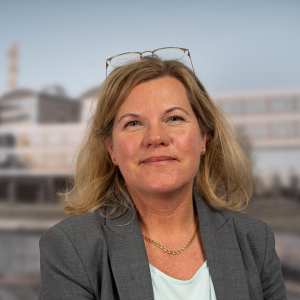
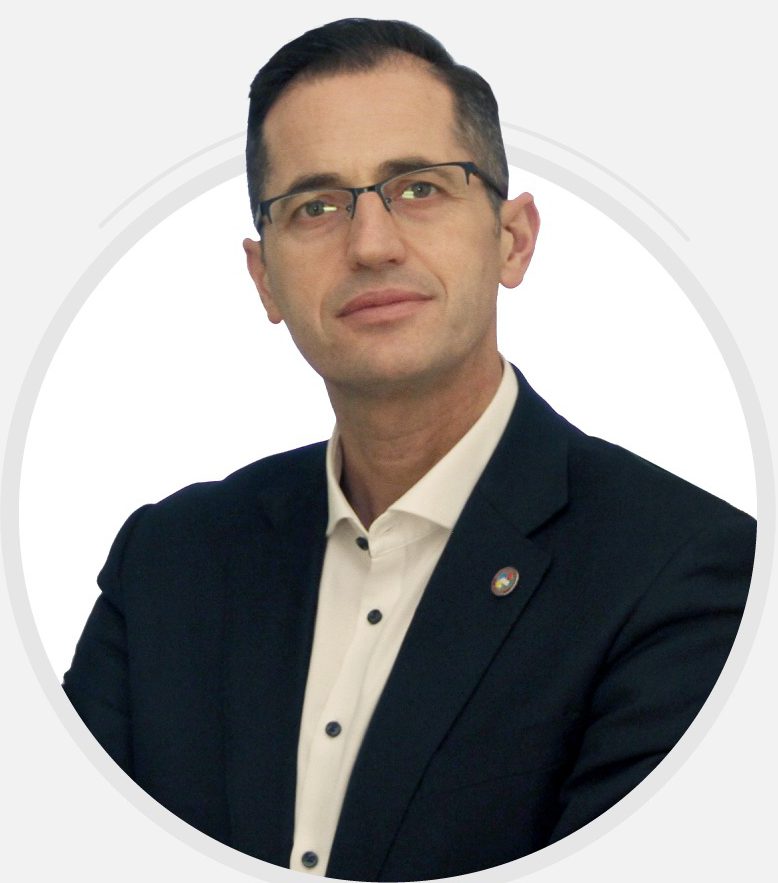
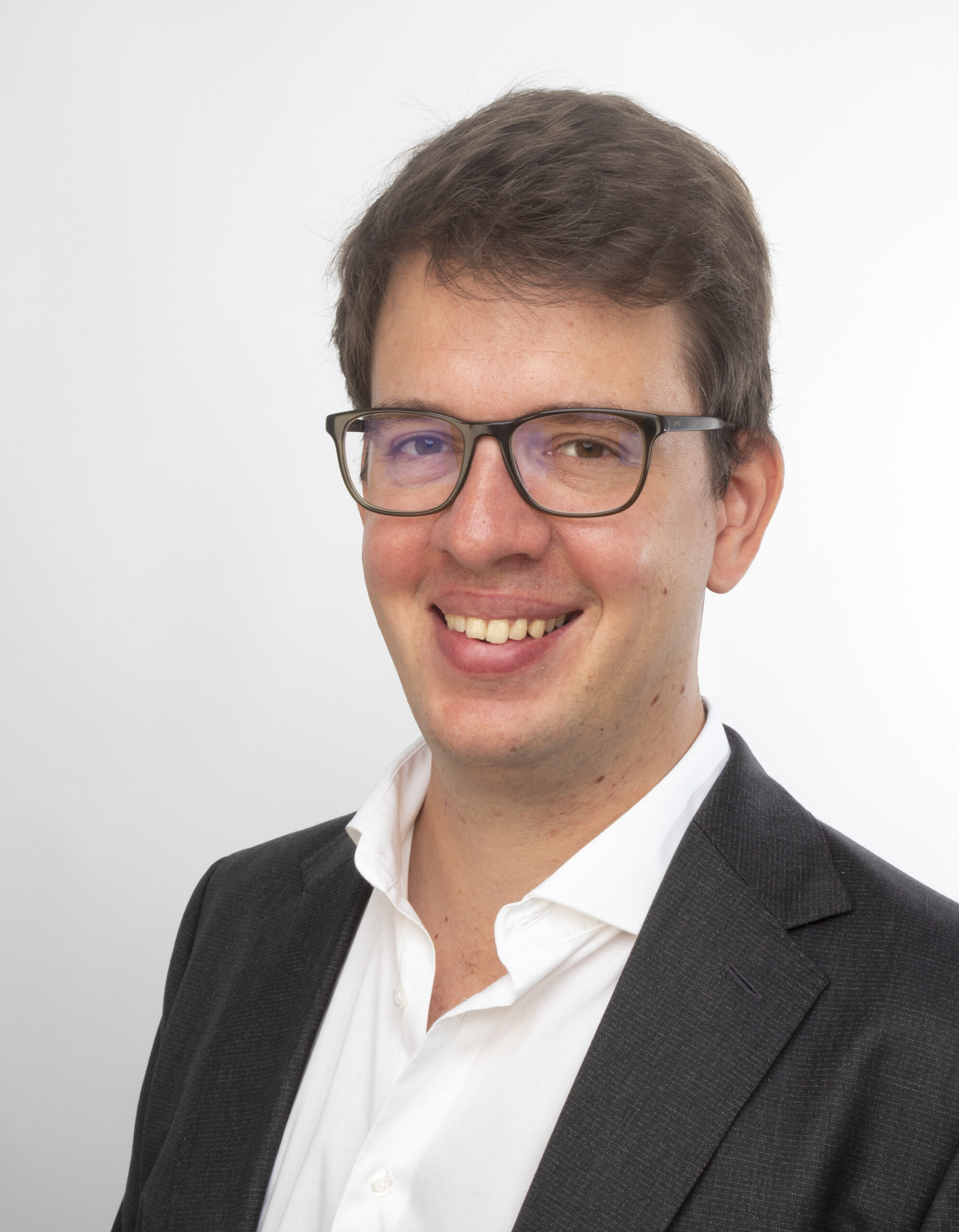
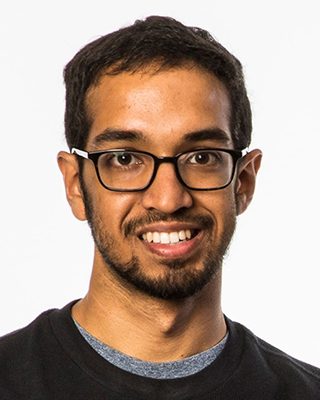
Sophie Isaksson Hallstedt is a Full Professor at Chalmers University of Technology, conducting research in Sustainable Product Development (SPD) with a focus on strategic sustainability integration in product innovation. She holds appointments at both Chalmers and Blekinge Institute of Technology, and serves on international Design Society committees. Key Research Areas: Strategic socio-ecological sustainability, digital decision support tools, circular value chains, and sustainability in emerging technologies. Notable Projects: SUSTAIN (aerospace sustainability), Circular Design Nexus (user behavior analysis), and Digital Materials Ecosystems. Awards & Recognition: Featured in Royal Swedish Academy of Engineering Sciences (IVA) 100-list (2020, 2023). Publications: Over 80 peer-reviewed works demonstrating methods for sustainability maturity assessment, impact evaluation, and progress visualization. Teaching & Education: Developed master's programs and PhD courses in sustainability-driven product development. Collaborates extensively with industry partners like GKN Aerospace and VINNOVA. Current work examines predictive models for user behavior and sustainability implications of additive manufacturing.
Nikos Aletras is a Professor of Natural Language Processing at the University of Sheffield's School of Computer Science, where he serves as Head of the Natural Language Processing research group and is co-affiliated with the Machine Learning group. His academic journey began with a Bachelor's degree in Computer Science from the University of Crete, followed by a PhD in Natural Language Processing at the University of Sheffield. Prior to his current position, he worked as a research scientist at Amazon (Core ML and Alexa) and as a research associate at UCL's Department of Computer Science. Aletras' research spans multiple domains within AI, with particular emphasis on Natural Language Processing applications across social science, legal contexts, and data science. His work demonstrates a consistent focus on practical implementations of NLP techniques to solve real-world problems, especially in computational social science and legal technology. He has developed innovative text analysis methods that bridge traditional disciplinary boundaries, creating tools applicable across multiple scientific domains. His recent publications reveal a strong trend toward efficient and responsible AI, with significant work on model compression, hallucination mitigation in language models, and ethical considerations in computational social science research. The publications also show deep engagement with multilingual NLP challenges, explainable AI, and applications of NLP to social media analysis and legal contexts. Area Chair Award: Society and NLP (2023) Aletras has secured substantial research funding as both Principal Investigator and Co-Principal Investigator, including grants from EPSRC, ESRC, Leverhulme, EC Horizon 2020, and industrial partners like Amazon. His current projects focus on efficient deployment of large language models, addressing socio-technical limitations of LLMs for medical and social computing, and developing speech and language technologies. He actively supervises PhD students and collaborates with researchers across multiple disciplines. He leads the Natural Language Processing research group at Sheffield, which focuses on advancing NLP methodologies while applying them to diverse domains including computational social science, legal informatics, and healthcare technologies. The group maintains strong industry connections, particularly with technology companies working on language technologies, and collaborates with legal scholars and social scientists on interdisciplinary projects.
Prof. Dr. Nuri Başoğlu is a Professor at Izmir Institute of Technology (IYTE). His educational background includes a BSc in Industrial Engineering from Boğaziçi University, and both MSc and PhD in Production Management from Istanbul University. Research Focus His research spans interdisciplinary domains with emphasis on: Technology Adoption : Healthcare systems, mobile services, and education. Innovation Processes : Sociotechnical systems, product design, and decision support. Information Systems : Strategic implementation and human-computer interaction. Recent publication trends (2010–2013) highlight technology diffusion in healthcare, including telemedicine, health informatics, and e-learning. Cross-cultural studies on mobile services and ERP optimization in manufacturing also feature prominently. No awards, grants, or supervised students are documented in the provided materials.
Katy Ilonka Gero is a Lecturer at the University of Sydney's School of Computer Science, with a PhD in Computer Science from Columbia University (2022). She holds a BSc in Mechanical Engineering from MIT, where she received the Carl G. Sontheimer Prize for Excellence in Innovation and Creativity. Education : BSc (MIT), PhD (Columbia) Her research focuses on Human-Computer Interaction , Creative Writing , and AI Ethics , particularly examining how language models impact writing processes, ownership, and agency. She advocates for community-driven language models trained on consensual data and explores technical innovations for personalized AI tools. Recent publications span language model ethics (Nature Machine Intelligence 2023), generative AI (CHI 2025 Best Paper), and creative collaboration (CHI 2023). Key trends include user-centered AI design , creative ownership , and data ethics . Scientific Awards : NSF Graduate Research Fellowship, Brown Institute for Media Innovation, Amazon Research Award, CHI Best Paper (2025), CHI Honorable Mention (2024) As co-founder of Ensemble Park and former taper editor, she bridges computational poetry and traditional literary practices. Her work at startups Rest Devices and Soofa demonstrates technical innovation in consumer and urban tech.
Marcus Rogers is Professor and Associate Dean for Faculty at Purdue Polytechnic Institute, Purdue University, where he directs the Cyber Forensics Lab. He holds dual fellowships with the American Academy of Forensic Sciences (AAFS) and the Center for Education and Research in Information Assurance and Security (CERIAS). Previously, he served as Editor-in-Chief of the Journal of Digital Forensics Security & Law and Secretary of AAFS. Education includes: PhD in Forensic Psychology, University of Manitoba (2001) MA in Personality Psychology, University of Manitoba (1995) BA in Psychology/Criminology, University of Manitoba (1986) His research integrates behavioral science with digital forensics, focusing on: Psychological profiling of cybercriminals and online offenders Advanced cyber forensic methodologies including mobile/GPU forensics Predictive modeling of cyber threats and adversarial behavior IT insider threats and cyber terrorism dynamics This interdisciplinary approach advances evidence analytics and digital crime scene interpretation. His publications demonstrate consistent focus on cybercrime psychology, forensic methodologies, and digital evidence innovation, with recent work emphasizing behavioral analytics, adversarial modeling, and advanced data recovery techniques. Major scientific honors include: Paul H. Chapman Medal for justice innovation (2009) AAFS Digital Sciences Research/Case Study Awards (2012, 2013) Fellow distinctions from AAFS and CERIAS University Faculty Scholar (2008) He leads the Cyber Forensics Lab, developing novel investigative tools like SMIRK (SMS forensics) and TracHac (cell phone analysis). Secured multiple grants for digital evidence research from federal and industry partners. Extensive professional engagements include chairing NIST OSAC committees and FBI InfraGard membership.
Marcus Nohlberg is an Associate Professor in the Department of Information Technology at the University of Skövde, Sweden. His primary academic affiliation is with the School of Informatics where he serves as a course coordinator for multiple bachelor-level courses in information security. He maintains an active research profile with numerous publications in cybersecurity, particularly focusing on human aspects of security. His research interests center on cybersecurity training methods, social engineering, usable security, and information security management. Nohlberg has developed the Context-Based Micro-Training (CBMT) framework, which has become a significant contribution to security awareness training. His work frequently examines how cognitive factors impact security behaviors and how training can be designed to be more effective and accessible. His publication trends show a consistent focus on human-centered security approaches, with recent work expanding into automotive cybersecurity, digital inclusion for seniors, and relationship security aspects. His research demonstrates a strong interdisciplinary approach, bridging computer science with psychology, education, and organizational behavior. Nohlberg has received recognition through numerous publications in reputable journals and conferences including Information and Computer Security, Computers & Security, and various IFIP WG 11.12 symposiums. His work often appears in Human Aspects of Information Security and Assurance conferences. He has led several research projects including "Development of Decision Support for Users in Risky Online Situations" (2020-2022) and "Information Security Training with Context-Based Microtraining" (2019-2020), demonstrating his commitment to translating research into practical security solutions. His work frequently involves collaboration with Swedish municipalities, auto workshops, and other organizations to address real-world security challenges. Nohlberg maintains active engagement with the public through media appearances and popular science presentations at the University of Skövde, discussing topics like AI risks and opportunities, digital security in relationships, and BankID accessibility issues.
Prof. Blerim Rexha is a full professor at the University of Prishtina's Faculty of Electrical and Computer Engineering, Kosovo. With a Ph.D. in Computer Engineering from Vienna University of Technology (2004), he has led research in cybersecurity, blockchain, machine learning, and electronic voting systems. His teaching portfolio includes data, computer, and internet security courses. Education : Ph.D. in Computer Engineering (Vienna), Electrical Engineer MSc (Prishtina), specialized certifications in software engineering, biometrics, and .NET programming. His research spans cybersecurity (DDoS mitigation, face authentication attacks), blockchain applications (electronic voting bridges, transaction privacy), and machine learning integration (boosted trees for intrusion detection, LSTM for vulnerability scanning). He has contributed to cloud security through novel encryption methods and AI-driven attack detection. Recent publications focus on energy efficiency in cloud vs on-premises systems, XGBoost/CatBoost/LightGBM comparisons for network security, and blockchain bridges for e-voting. His work has addressed privacy preservation in video data, SMS encryption, and eID card pseudo-profiles. Awards include the 2024 Marin Barleti Prize for academic contributions and Best Paper Awards in election security (2015) and Kosovo website vulnerabilities (2013). Honors : Marin Barleti Prize (2024) Cyber Security Ambassador (2018) ICT Academician of the Year (2016) Best Paper Awards (2015, 2013) As academic advisor to the KosovaCyberTeam , he mentors students like Korab Keqekolla and Abian Morina. His leadership extends to Kosovo's Cyber Security State Training Center curriculum development and jury roles in Albanian ICT Awards .
Felix Gille is a researcher at the University of Zurich , affiliated with the Institute for Implementation Science in Health Care under the Faculty of Medicine. He leads the DSI-funded project "Data handling, security and protection: reaching conceptual equivalence for the concept of public trust in national electronic health records in Switzerland and neighboring countries," collaborating with Prof. von Wyl (IfIS/DSI, UZH) and Prof. Thouvenin (Faculty of Law, UZH). His work bridges health system and policy research, digital health, data law, and data security. Education: BSc in European Public Health, Maastricht University MMedSc in Health Economics, Policy and Management, Karolinska Institute PhD in Public Trust in Healthcare Systems, London School of Hygiene and Tropical Medicine Research Focus: Gille specializes in public trust dynamics within healthcare systems, particularly examining data governance, health policy, and ethical dimensions of digital health innovations. His projects analyze cross-national trust frameworks, biobanking ethics, AI in healthcare, and pandemic data sharing mechanisms. Scientific Contributions: His publications address critical issues such as GDPR impacts on research, trustworthiness of mHealth apps, and interdisciplinary approaches to health data policy. Articles span 2015–2025, emphasizing conceptual trust models, policy harmonization, and stakeholder engagement in health data systems. Awards & Roles: Fellow of the Swiss School of Public Health Associate Editor for Public Health Reviews
Vikram Iyer is an Assistant Professor at the Paul G. Allen School of Computer Science and Engineering and holds an Adjunct Appointment in Mechanical Engineering at the University of Washington. He co-directs the CS for Environment Initiative , focusing on interdisciplinary solutions that bridge computing, biology, and physical systems for environmental sustainability. Education : Ph.D. in Electrical & Computer Engineering (University of Washington), B.S. in Electrical Engineering and Computer Sciences (UC Berkeley) Research Interests revolve around bio-inspired wireless systems , environmentally sustainable electronics , and miniaturized autonomous robotics . His work includes: Biodegradable circuit boards Battery-free wireless sensors Insect-scale vision systems Wind-dispersed environmental monitors AI tools for sustainable design Article Trends highlight contributions to green hardware , energy-autonomous robotics , and environmental sensing networks , often integrating machine learning with physical world interaction . Awards include: NSF CAREER Award SIGMOBILE Dissertation Award Marconi Society Paul Baran Young Scholar Best Paper Awards (SIGCOMM 2016, Sensys 2018) Google/Amazon Research Awards Students advised include Kyle Johnson (NSF Fellow), Vicente Arroyos (GEM Fellow), and Qiuyue Xue (co-advised with Shwetak Patel). His lab collaborates with the Networks & Mobile Systems Lab and Urban Innovation Initiative .
Dr. Le-Nam Tran is a researcher at the UCD School of Electrical & Electronic Engineering , University College Dublin. His work focuses on optimizing the last hop of 5G/6G wireless networks through mathematical programming, with emphasis on energy efficiency, interference management, and security against eavesdropping. Develops low-cost, low-complexity transmission techniques Projects supported by Science Foundation Ireland Career Development Award Author of over 80 peer-reviewed publications Research Keywords: Wireless Communications Network Security Signal Processing Energy-Efficient Systems Beamforming Optimization Interference Mitigation
Professor Kenneth M. Anderson is Chair of the Department of Computer Science and holds the Palmer Endowed Chair at the University of Colorado Boulder's College of Engineering & Applied Science. He co-directs Project EPIC, a $4M NSF-funded initiative on social media use during mass emergencies, and serves as Co-Director of the Center for Software and Society. Ph.D. in Computer Science, University of California, Irvine (1997) Joined CU Boulder in 1998; tenured in 2005 Former Associate Dean for Education (2016-2019) Former Associate Chair (2010-2013) His research bridges software engineering, crisis informatics, and human-computer interaction. Current projects focus on large-scale social media analytics, crisis response systems, and software architecture for data-intensive environments. Recent publications explore multilingual social media analysis (ML-EPIC), bug fix patterns in software development (FIXR), and collaborative big data platforms. Themes include disaster risk communication, data modeling challenges, and asynchronous analysis tools. ATLAS Fellow (2010) As department chair, he spearheaded initiatives for inclusivity, including creating a Bachelor of Arts in Computer Science and establishing the NSF Broadening Participation in Computing plan. He oversees major academic reforms and departmental operations.
Tim Foxon is a Professor of Sustainability Transitions at the Science Policy Research Unit (SPRU) within the University of Sussex Business School. His research focuses on technological and social aspects of energy transitions, including low-carbon economy pathways, energy-use and economic growth interdependencies, and digital society impacts. He has held academic roles at institutions such as the University of Leeds and Imperial College London. Education & Career: Current: Professor (2015–present), SPRU, University of Sussex Past roles include Reader at the University of Leeds (2007–2015) and Research Associate at Imperial College London (1996–2005). Research Interests: Energy demand reduction, low-carbon transitions, digital society impacts, economic growth frameworks. Current projects include the EDRC Governance Theme and Local Green New Deals initiatives. Grants & Collaborations: Leading EPSRC/ESRC-funded projects on energy demand, digital services, and transition pathways. Co-investigator on the Energy Demand Research Centre (EDRC). Publications: Over 120+ articles and books, including Energy and Economic Growth (2018), focusing on systemic approaches to sustainability transitions. Recent work explores teleworking's energy impacts, 5G energy use, and net-zero community strategies. Labs & Affiliations: SPRU PhD Programme Coordinator. Board member of the European Society for Ecological Economics.
Yu Nie is a Professor in the Department of Civil and Environmental Engineering at Northwestern University, affiliated with the NU-TREND research group within the McCormick School of Engineering. His work focuses on optimizing transportation networks, integrating human behavior, infrastructure design, and network topology to enhance mobility, reliability, and sustainability. He holds a Ph.D. from the University of California, Davis, an M.S. from the National University of Singapore, and a B.S. (cum laude) from Tsinghua University. His research interests span interdisciplinary approaches combining optimization, network science, traffic flow theory, economics, and statistics. Key areas include congestion pricing strategies, ride-hailing market dynamics, autonomous vehicle integration, and transit system design. He has contributed to studies on dockless bike-sharing systems, ethics-aware transit design, and traffic management in autonomous vehicle zones. Nie’s recent publications (2024–2025) highlight advancements in modular autonomous vehicle systems, co-modal freight solutions, and policy frameworks for sustainable urban mobility. His work often bridges theoretical insights with practical applications, addressing challenges like EV charging chaos and ride-pooling impacts. He received the 2021 Transportation Science Meritorious Service Award for his editorial contributions. His research also explores freight exchange platforms, taxi market resilience during pandemics, and the role of route choice models in transit design. Labs/Teams: Yu Nie is associated with the NU-TREND research group, specializing in innovative transportation solutions through interdisciplinary collaboration.
Dr. TAN Wee Kek is an Associate Professor (Educator Track) in the Department of Information Systems and Analytics at the National University of Singapore's School of Computing. He served as Assistant Dean in the School's Office of Student Life from 2019 to 2024 and has been a Fellow of the NUS Teaching Academy since 2017. He holds a Doctor of Philosophy in Information Systems and Bachelor of Computing in Information Systems (First Class Honours) from NUS, and previously earned a Diploma in Computer Information Systems from Singapore Polytechnic. His research focuses on Technology-Enhanced Learning (TEL), particularly artificial intelligence applications in education, and consumer-based information technology including online decision aids, social computing, virtual worlds, and consumer cloud services. His methodological approach primarily employs design science paradigms. Publication analysis reveals his scholarly work spans educational technology, e-commerce systems, human-computer interaction, and information systems pedagogy, with recent emphasis on learning analytics and AI-enhanced educational frameworks. Major Honors: Commendation Medal from Singapore's President (2017) Multiple Annual Teaching Excellence Awards (2009-2024) Crystal Service Award, WorldSkills Singapore Council (2018) Lee Kuan Yew Award for Mathematics and Science (2001)
Shuangquan (Peter) Wang is an Assistant Professor of Computer Science at Salisbury University. He holds a PhD in Computer Science from the College of William & Mary (2020) and a PhD in Pattern Recognition and Intelligent Systems from Shanghai Jiao Tong University (2008), along with earlier degrees from Wuhan University of Technology and Wuhan Institute of Technology. His research focuses on mobile/wearable computing, activity recognition, smart health, and machine learning. He has over 10 years of experience in academia and industry, including roles at Philips Research East Asia and Nokia Research Center (Beijing). His work emphasizes wearable sensor-based health monitoring, such as fall detection, mastication analysis, and Parkinson’s disease monitoring. He leads the WISH Research Lab and serves as an Associate Editor for Elsevier's Smart Health Journal. Recent contributions include papers on salinity anomaly detection (2024), LLM-based user requirement analysis (2024), and socially acceptable food recognition (2022). His research trends emphasize interdisciplinary applications of machine learning in healthcare and sensor-driven human activity analysis. Professional service roles include coordinating Salisbury University’s Center for Applied Mathematics and Science (2021–2024) and chairing ACM/IEEE CHASE conferences. He has delivered invited talks on artificial intelligence and its societal impacts to diverse audiences, including the Institute of Retired Persons at Salisbury University. His lab, WISH Research Lab, explores innovative solutions in smart health and mobile computing, integrating wearable technologies with machine learning for real-world health applications.