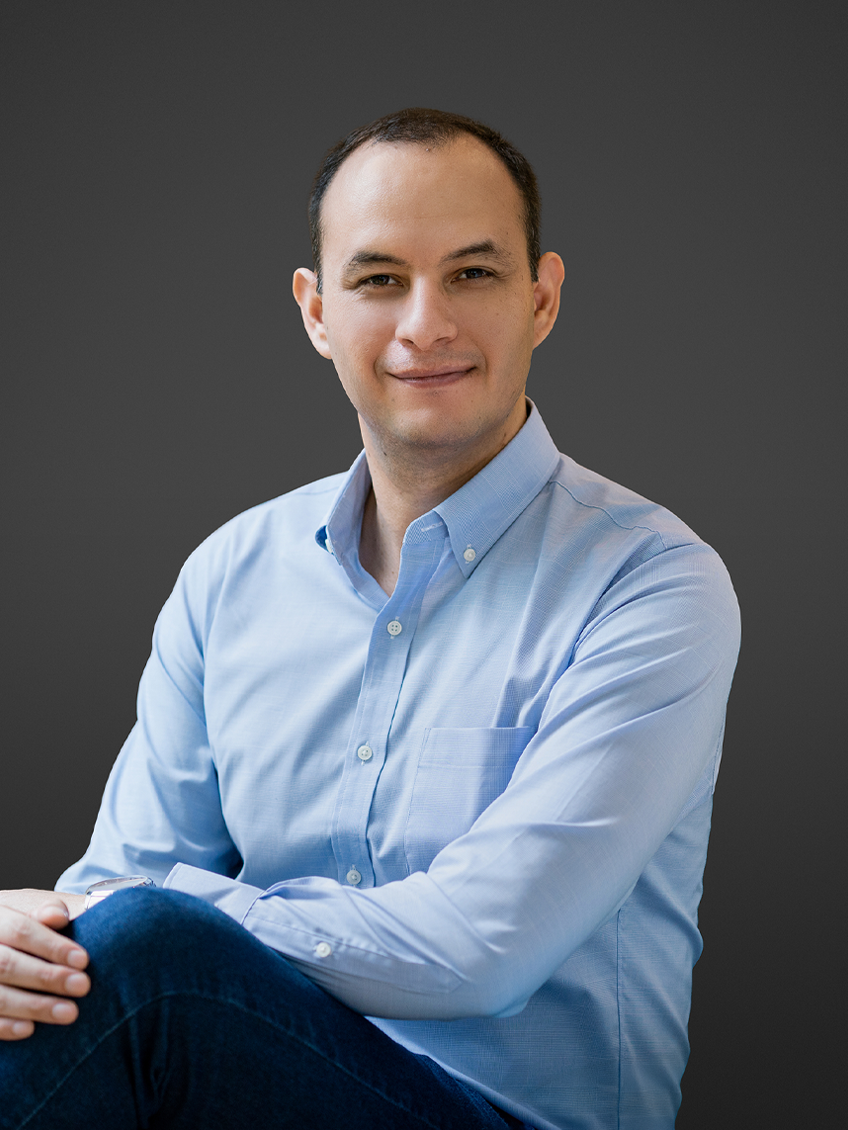
Laura Vandenbosch is a Senior Lecturer at KU Leuven's Faculty of Social Sciences , actively leading the Lab for Media Psychology (OG) . She contributes to interdisciplinary research networks like DigiSoc , LC&Y , and Leuven One Health , with formal university affiliations confirmed through ORCID (0000-0001-6834-8386). Key research themes: digital media effects on adolescent mental health, body image, political identity, and social media literacy Current projects focus on topics like positive body image in preadolescence , influencer morality , and digital intimacy literacy Her 2025 publications include multi-method studies on appearance-focused social media activity, AI chatbot interactions, and political socialization through non-political figures Advises PhD candidates through promotor roles in diverse media psychology research areas
Dimitra Dritsa is a Postdoctoral Researcher in the Department of Industrial Design at Eindhoven University of Technology (TU/e), specializing in human-computer interaction applied to urban health, physiological data analysis, and remote patient monitoring systems. Her work bridges design research with healthcare innovation, particularly in cancer surgery prehabilitation and wellbeing technologies. Her academic foundation includes a Master's degree from Delft University of Technology and a PhD from the University of Technology Sydney, where her dissertation focused on Spatiotemporal dynamics of urban health: Physiological data driven strategies for enhancing urban health and wellbeing . Dr. Dritsa's research centers on leveraging physiological data and AI to improve urban health outcomes and clinical interventions. She investigates user-centered design for telemonitoring systems, uncertainty-aware data visualization in design processes, and experience sampling methods for office wellbeing. Her work emphasizes contextual data integration and ethical AI applications in healthcare settings. Recent publications (2023-2025) reveal a clear trajectory toward human-AI collaboration in health contexts, with significant contributions to remote patient monitoring frameworks and data-driven design methodologies. Key themes include physiological response tracking in urban environments, AI-guided wellbeing interventions, and multidimensional data exploration tools for design researchers. She actively contributes to the STRAP project ( Self Tracking for Prevention and diagnosis of heart disease , 2020-2025) as a core project member, focusing on big data solutions and AI-driven healthcare innovations. Her supervisory role includes guidance for two students as indicated in institutional records, and she teaches the course Making sense of sensors since 2016.
Nick Koudas is a Professor in the Department of Computer Science at the University of Toronto. His research focuses on large-scale data management, integrating machine learning into data systems, and developing efficient query processing techniques for unstructured and streaming data. He holds a PhD from the University of Toronto, an MSc from the University of Maryland at College Park, and a Bachelor's from the University of Patras in Greece. Research interests include data systems, big data analysis, video query processing, and natural language interfaces for databases. He leads projects like ReDD (Relational Deep Dive), SVQ (Streaming Video Queries), and Reliable Text-to-SQL, aiming to bridge human-readable queries with database execution. His work emphasizes scalability, intelligence, and real-world applicability. Recipient of the University of Toronto's Inventor of the Year Award (2011), he translates research into startups like Sysomos, Aislelabs, and Workorb. His contributions span over 200 publications in top venues such as SIGMOD, VLDB, and ICDE. Courses taught include advanced data systems, database design, and system internals. Current projects explore schema extraction from unstructured data, video query optimization, and cost-effective machine learning pipelines. Collaborations with industry and academic partners drive innovations in both theory and practical applications.
Francisco Benita is an Adjunct Lecturer at the Engineering Systems and Design (ESD) Pillar of Singapore University of Technology and Design (SUTD). He holds a PhD in Engineering Sciences from Monterrey Tech (2016) and an MSc in Industrial Economics from Universidad Autónoma de Nuevo León (2012). Prior to SUTD, he was a postdoctoral fellow at SUTD’s Architecture and Sustainable Design Pillar and a Senior Advisor at the ITESM-BMGI Lean Six Sigma Program. His research focuses on urban systems, optimization, data science, and their intersections with economics and public policy. Key areas include transportation networks, spatial livability indices, and pandemic impacts on urban environments. Benita’s interdisciplinary work spans fields like sustainable urban design, carbon emissions modeling, and global trade dynamics. Recent publications highlight trends in transportation innovation (e.g., ride-sharing impacts, aircraft routing frameworks), climate-resilient urban planning (e.g., walkway thermal comfort), and pandemic analysis. His projects often integrate quantitative methods with real-world data, emphasizing actionable insights for policymakers and urban planners. Though no scientific awards are explicitly mentioned, his extensive international collaborations—including research visits to TU Berlin, Vrije Universiteit Brussel, and Supélec—reflect his global academic engagement. Students and grants are not listed in the provided texts. Benita’s work is anchored in labs/teams within SUTD’s ESD Pillar, though specific lab affiliations are not detailed. His research bridges theoretical optimization with practical urban challenges, contributing to both academic discourse and applied solutions in smart cities.
Gad Allon is the Jeffrey A. Keswin Professor and Professor of Operations, Information and Decisions at the University of Pennsylvania’s Wharton School. He directs the Management and Technology Program and teaches in the Education Entrepreneurship program. His research focuses on operations strategy, service systems, gig economy dynamics, and education technology. A co-founder of ForClass, a platform enhancing classroom engagement, he advises firms on service and operations strategy. Allon holds a Ph.D. from Columbia Business School and degrees from the Israeli Institute of Technology. Recognized as one of the ‘World’s Top 40 B-School professors under 40,’ he has pioneered work on behavioral drivers in service systems and gig economies. His recent research explores multihoming in gig work, machine learning in causal inference, and agile product development. Academic contributions span over 50 publications in top journals, emphasizing real-world applications of operations management theories. Education: Ph.D. in Management Science, Columbia Business School (New York) Bachelor’s and Master’s Degrees, Israeli Institute of Technology Research Interests: Professor Allon’s work bridges theoretical operations research with practical challenges in service systems, digital platforms, and educational technology. Key themes include optimizing customer service through behavioral insights, analyzing labor dynamics in gig economies, and leveraging machine learning for causal inference in business decisions. Notable Contributions: Co-founder of ForClass, addressing classroom engagement Leading studies on worker behavior in gig economies Groundbreaking work on call center retrials and service quality trade-offs Labs/Initiatives: Active in educational technology innovation through ForClass and advises on large-scale service marketplace design through Wharton’s Management and Technology Program.
Stephan Hankammer is a Professor of Sustainable Corporate Management at Alanus University of Arts and Society, where he holds the Chair for Sustainable Management, Innovation, and Entrepreneurship. He is also the co-founder and scientific director of the Institute for Regenerative Economics (REGWI), an affiliated research institute. His academic career includes roles as Junior Professor (2018-2022) and Postdoctoral Researcher at RWTH Aachen University. His research focuses on sustainable innovation, regenerative business models, circular economy, and the dual transformation of digital and sustainable business practices. Key areas include collaboration in value chains, regeneration of ecosystems, and post-growth economic models. He earned his Ph.D. in Business Administration from RWTH Aachen in 2018, with postgraduate studies at institutions like MINES Saint-Étienne and the University of St. Gallen. His work emphasizes frameworks for sustainable degrowth, co-creation in innovation, and leveraging digital tools (e.g., blockchain) for transparency and circular practices. He has presented globally at venues like the Academy of Management and Impact Festival, advocating for regenerative business practices. Hankammer serves on editorial boards (e.g., International Journal of Sustainable Design) and is a member of professional networks like the Academy of Management and SCORAI. His recent projects explore Industry 4.0 sustainability, post-growth business models, and co-opetition strategies for circular economies.
Dr. Abubakar Bello is a Senior Lecturer in Criminal Justice and Program Leader at Edge Hill University's School of Law, Policing, and Criminal Justice. Previously, he held roles at Western Sydney University, including Academic Program Advisor and Lecturer in Cyber Security and Behaviour. He holds a PhD in Cyber Criminology, an MBA in Business Law and Technology, and degrees in Computer Science. His research focuses on interdisciplinary approaches to cyber security risks, threat intelligence models, and behavioral aspects of cyber crime. Education: PhD (Cyber Criminology, Murdoch University), MBA (Business Law & Tech, Western Sydney University), MSc & BSc (Computer Science, University of Wolverhampton). Research Interests: Combating cyber crime through AI and machine learning, secure systems design, and behavioral cybersecurity. Key areas include ransomware defenses, social engineering, and cybersecurity frameworks for diverse populations. Grants & Projects: Awarded funding for initiatives such as 'Social Engineered Payment Diversion Fraud' (NSW Cyber Security Network), 'Brain-Inspired Algorithm for Network Anomaly Detection' (DST Group), and 'Cyber Security Awareness Framework' (ECR Grant). Awards: 'Award for Teaching and Learning Contributing to Public Good.' Active in professional networks like the International Centre on Racism and Centre for Applied Criminal Justice Research. Labs & Collaboration: Engages in cyber investigations, forensics, and community outreach through initiatives like Western Cyber Aid. Serves as a consultant for corporate espionage cases and a speaker on ransomware and AI in law enforcement.
Dr. Dave Murray-Rust is an Associate Professor in Human-Algorithm Interaction Design at TU Delft's Faculty of Industrial Design Engineering. He explores the intersection of humans, data, and AI through design research, focusing on ethical AI systems and sociotechnical interactions. His work bridges computer science, design theory, and digital sociology, addressing challenges like algorithmic fairness and human-AI collaboration. He leads initiatives such as the AI Futures Lab and Data-Centric Design Lab, advancing methods for leveraging behavioral data in design processes. His research emphasizes experiential AI frameworks, metaphors for designers, and the legibility of AI systems. He has been honored with awards including Best alt.HRI 2024 and a CHI 2023 Best Paper Award for contributions to fairness perceptions in algorithmic decision-making. Murray-Rust teaches courses like the Speculative Design Studio and collaborates on projects like DCODE (Designing the Future of AI) and the BrightSky Project. His work extends to public engagement through installations like GeoPact and explorations of blockchain's societal impact. He holds an Honorary Fellowship at the University of Edinburgh.
Jisun An is an Assistant Professor at the Luddy School of Informatics, Computing, and Engineering, Indiana University Bloomington (IUB), leading the Social Data and AI (SODA) Lab. Previously, she held positions at Singapore Management University (SMU) and the Qatar Computing Research Institute (QCRI). She earned a Ph.D. in Computer Science from the University of Cambridge (2015), supported by EPSRC, and received the Google European Scholarship. Her research focuses on computational social science, leveraging NLP and machine learning to analyze social media, political communication, health informatics, and journalism. Education: Ph.D. in Computer Science (University of Cambridge, 2015). Notable roles include Associate Editor of EPJ Data Science and PC member for conferences like ICWSM, ACL, and AAAI. She co-organized the News and Public Opinion (NECO) workshop (2016-2020). Teaching includes courses on Performance Analytics and Computational Social Science. Research highlights include studies on media attention patterns, user engagement, hate speech detection, and public health campaigns. Her work bridges interdisciplinary gaps, combining theoretical foundations with practical computational methods. Recent projects explore discursive power in media systems and predictive modeling of collective behavior. Awards: Google European Scholarship Key Projects: Discursive Power in Media, Precision Public Health Campaigns, and Algorithmic Bias Analysis Labs/Teams: SODA Lab at IU, previously contributed to QCRI's research initiatives
Cody Buntain is an Assistant Professor at the College of Information Studies (iSchool) at the University of Maryland (UMD), serving as Co-Director of the Center for AI, Data, and Conflict. He is also an Affiliate Fellow at UMD's Honors College – Artificial Intelligence Cluster and a research affiliate at NYU’s Center for Social Media and Politics (CSMaP). His research focuses on crisis informatics, online political engagement, and information quality, particularly examining how AI shapes information ecosystems during crises, conflicts, and social unrest. Dr. Buntain’s work addresses disinformation, health misinformation, and AI-driven methods for emergency response. Key affiliations include the Global Elections and Information Security (GEIS) initiative and the Tech Policy Research & Education Hub. His research has been featured in major media outlets like the New York Times, Washington Post, and WIRED. Education: PhD in Information Studies from University of Maryland (2016), postdoctoral research at NYU’s SMaPP Lab (2018-2019) and UMD’s Human-Computer Interaction Lab (HCIL, 2016-2018). Previously served as Assistant Professor at NJIT’s Informatics department and Adjunct Faculty at American University. Professional experience includes Director of Research at Pikewerks Corporation (2008–2013). Current projects include E-VERIFY (HMT-ISR analysis), M3I (maps/models for influence efforts), and the Incident Streams TRECIS initiative. His GitHub repositories reflect technical contributions to crisis informatics, including tools for social media analysis during disasters.
Pavlos S. Georgilakis is a Professor at the School of Electrical and Computer Engineering, National Technical University of Athens (NTUA), specializing in modern techniques for power system analysis, optimization, and renewable energy integration. He holds a Diploma (1990) and PhD (2000) in Electrical Engineering from NTUA. His career includes roles as Lecturer (2009) and Associate Professor (2018–2023) at NTUA, and Assistant Professor at the Technical University of Crete (2004–2009). Research focuses on power transmission/distribution systems, transformer design, and applying AI/optimization for grid efficiency. He led 10 research projects, including Horizon 2020 initiatives SHAR-Q, WiseGRID, and NobelGrid. He authored 3 books and over 230 publications (SCOPUS citations: >5,500). Editor of IET Smart Grid, Energies, and Electricity journals; senior IEEE member. He supervised 4 doctoral, 9 master’s, and 76 diploma theses. Awards include the 2013 Best Reviewer Award from Electric Power Systems Research. Active in energy storage, smart grids, and decentralized energy resource integration.
Haohan Wang serves as Assistant Professor at the School of Information Sciences, University of Illinois Urbana-Champaign, with additional appointments as Affiliate at the Carl R. Woese Institute for Genomic Biology and Assistant Professor at the National Center for Supercomputing Applications (NCSA). His interdisciplinary work bridges machine learning, genomics, and AI security, focusing on trustworthy systems for biomedical applications and foundational AI research. Wang's research centers on robust and secure artificial intelligence, with emphasis on large language model vulnerabilities (jailbreaking, safety evaluation), federated learning personalization, and genomic data analysis. He develops techniques for privacy-preserving dataset distillation, confounding factor correction in genome-wide studies, and multi-agent frameworks for scientific discovery. His fingerprint highlights expertise in Machine Learning (94%), Linear Mixed Models (87%), and Confounding Factor Correction (41%), reflecting his focus on methodological rigor in complex data environments. Analysis of his 2025 publications reveals dominant trends in AI security (jailbreak evaluation frameworks like GuardVal, adversarial attacks such as InfoFlood), biomedical AI (transcriptomic analysis, wearable data privacy), and foundational methods (federated learning optimization, synthetic data generation). These works consistently address real-world challenges in model trustworthiness while advancing computational techniques for genomics and healthcare. Through NCSA's high-performance computing resources and the Institute for Genomic Biology's collaborative ecosystem, Wang integrates supercomputing capabilities with biological research to tackle data-intensive problems in disease modeling and AI safety testing, as evidenced by media coverage of his team's AI security testing methods.
Marc Plantevit is a Full Professor at EPITA, member of the Laboratoire LRDE (LRDE). Previously, he served as an Associate Professor at University Claude Bernard Lyon 1 (2010–2021), leading the Data Mining & Machine Learning group at LIRIS lab. He holds a PhD in Computer Science from the University of Montpellier (2008), supervised by Maguelonne Teisseire and Anne Laurent at LIRMM Lab. His research focuses on foundational data mining, graph mining, subgroup discovery, and explainable AI. He is an editorial board member of Data Mining and Knowledge Discovery Journal and has held roles such as CAPES NSI jury member and former head of the Data Mining & Machine Learning group at LIRIS. Research Interests : Data Mining, Machine Learning, Explainable AI, Graph Mining, Subgroup Discovery, Exceptional Model Mining, Constraint-based Pattern Mining, and applications in neuroscience and energy systems. His work explores interpretable AI, GNN explainability, and interdisciplinary applications like odor perception modeling and electricity price forecasting. Key Contributions : Best Paper Award at EGC'22 for work on GNN representations. Active in program committees for ECMLPKDD, IJCAI, and IEEE ICDM . Supervised PhD students working on GNN explainability, electricity forecasting, and machine learning in exposome studies. Labs & Teams : LRDE (EPITA), previously involved with LIRIS (UMR CNRS 5205) and collaborative projects with institutions like INSA Lyon and ISGlobal (Barcelona).
Dr. George Chalhoub is a Lecturer (Assistant Professor) in Human-Computer Interaction at the UCL Interaction Centre (UCLIC), Department of Computer Science, University College London (UCL). He is also an Associate Member at the Department of Computer Science, University of Oxford, and a 2024–2025 Berkman Klein Fellow at the Berkman Klein Center for Internet & Society, Harvard Law School, Harvard University. His multidisciplinary research bridges cybersecurity, privacy, and human-centered computing, focusing on real-world technology use. DPhil in Cyber Security, University of Oxford (supported by Information Commissioner’s Office) MSc in Computer Science, University of Southampton (supported by Lloyd’s Register) BS in Computer Science, Lebanese American University His research centers on the security, privacy, and safety of digital technologies through a user-centered lens. Key areas include AI-powered systems (e.g., LLMs, smart assistants), emerging technologies in the wild (e.g., smart homes, IoT), embedded devices (e.g., routers), marginalized communities, data workers in AI, and online content creators. His work integrates UX principles to improve data protection in healthcare (e.g., NHS records) and children’s apps, with implications for GDPR compliance and responsible AI innovation. The analysis of his recent publications reveals a consistent focus on empirical studies of user experience in security and privacy, particularly in smart homes and data-intensive applications. His work spans design interventions, ethical frameworks, and policy-relevant findings, published in top venues like CHI, CSCW, SOUPS, and IJHCS. Themes include consent design, communal privacy, vulnerability patching, and developer support for privacy. UK Global Talent Visa recipient, UK Research and Innovation 2024–2025 Berkman Klein Fellow, Harvard University Dr. Chalhoub has advised on research projects related to secure networking by design and responsible AI (e.g., EWADA, RoboTIPS). He has received grant support from the Information Commissioner’s Office for his doctoral work. He is available for consultancy, collaborative research, grant assessment, and supervision of research degrees. His professional experience includes internships at Microsoft Research (Calc Intelligence) and Nokia Bell Labs (Social Dynamics), contributing to projects in AI and social computing. He is affiliated with research groups including the Human-Centered Computing group at Oxford, the UCL Interaction Centre (UCLIC), and the Berkman Klein Center at Harvard. His work is supported by tools and frameworks developed in collaboration with interdisciplinary teams focused on cybersecurity ethics, data governance, and platform accountability.
Prof. Dr. Nuri Başoğlu is a Professor at Izmir Institute of Technology (IYTE). His educational background includes a BSc in Industrial Engineering from Boğaziçi University, and both MSc and PhD in Production Management from Istanbul University. Research Focus His research spans interdisciplinary domains with emphasis on: Technology Adoption : Healthcare systems, mobile services, and education. Innovation Processes : Sociotechnical systems, product design, and decision support. Information Systems : Strategic implementation and human-computer interaction. Recent publication trends (2010–2013) highlight technology diffusion in healthcare, including telemedicine, health informatics, and e-learning. Cross-cultural studies on mobile services and ERP optimization in manufacturing also feature prominently. No awards, grants, or supervised students are documented in the provided materials.