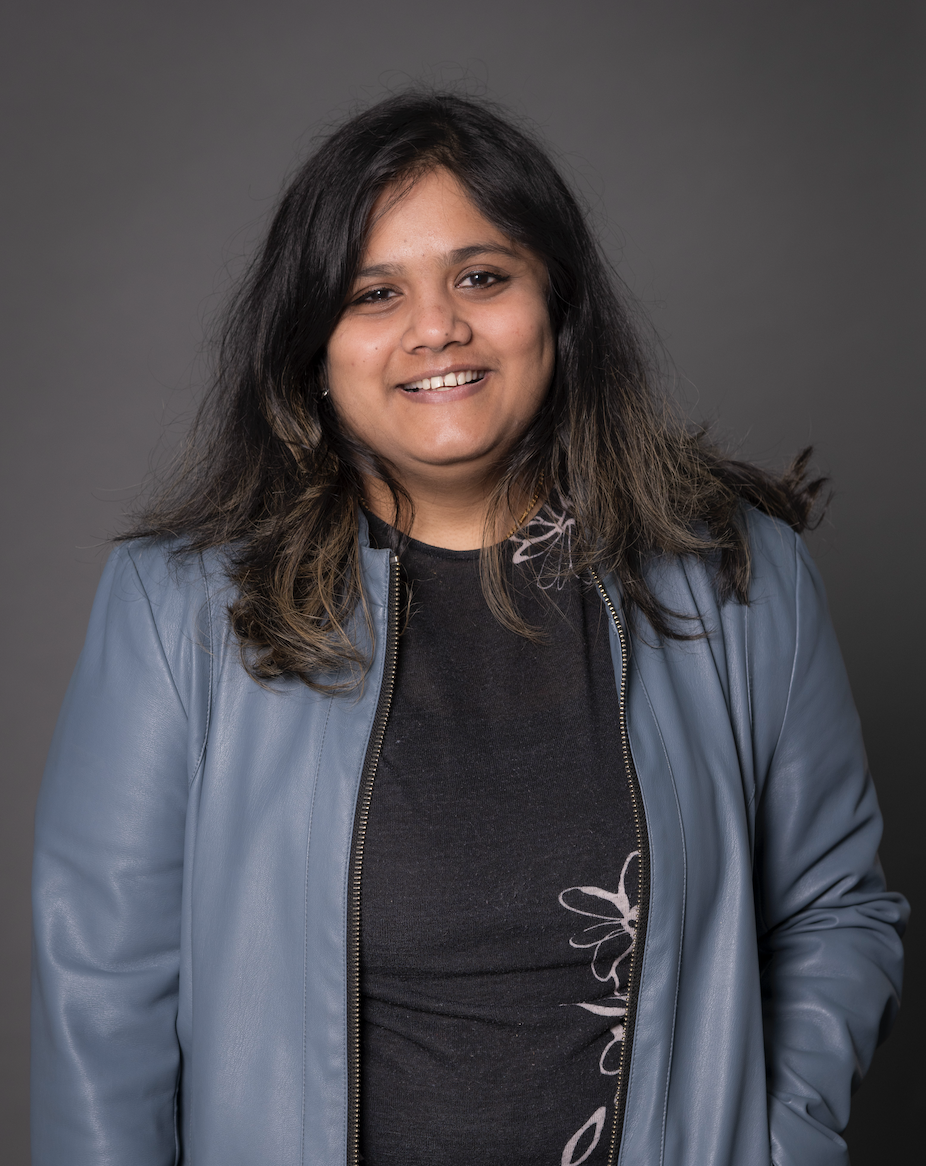
Katherine V. Gough is Professor of Human Geography at Lund University, Sweden, with a 30-year research focus on housing/home, work/entrepreneurship, youth/elderly geographies, mobility, urbanisation, and climate change across Africa, Latin America, and Asia-Pacific. She collaborates with Loughborough University's Clear Climate team on extreme heat mitigation in Ghana and leads the 'Trocha de Paz' project for Colombia's 'Total Peace' agenda. Research Themes Extreme Heat in Ghana Peacebuilding in Colombia Rural-Urban Dynamics Her multidisciplinary approach bridges academia, policy, and communities through projects like VEWEC, REFIT, and Paz Alto Cauca. Current work emphasizes: Climate-resilient housing design Post-conflict governance Informal sector innovation Scientific Engagement: British Academy funded VEWEC and REFIT projects Principal Investigator for Trocha de Paz (Colombia) Her collaborative research strengthens stakeholder networks in: West African urban livelihoods Colombian territorial peacebuilding Tropical climate adaptation
Neil Carrier serves as an Associate Professor in the Department of Anthropology and Archaeology at the University of Bristol, contributing to academic instruction and research within the institution's social sciences framework. His educational qualifications include: MA from the University of St Andrews MLitt from the University of St Andrews PhD from the University of St Andrews Carrier's research program focuses on Social Anthropology, with specialized investigations into the anthropology of drugs, ethnographic fieldwork in East Africa (particularly Kenya), urbanisation dynamics, and innovative applications of film and photography in anthropological methodology. His work bridges theoretical frameworks with empirical studies of cultural practices and societal transformations. No scientific awards or grant funding details are documented in the available information. Similarly, there is no indication of doctoral student supervision or laboratory/team affiliations within the provided text.
Sir Paul Collier is Professor of Economics and Public Policy at the Blavatnik School of Government, University of Oxford, and serves as the Oxford Academic Director of the International Growth Centre, a collaboration between the LSE and Oxford Universities. He is also a member of the Natural Resource Governance Institute Board. His academic work spans decades of research focused on economic development challenges in the world's poorest regions, bridging theoretical economics with practical policy solutions, particularly in contexts of conflict, natural resource management, and regional economic decline. Professor Collier's research interests center on economic development, with specific focus areas including: Mitigating the challenges of migration and the refugee crisis Understanding urbanization processes in low-income countries Addressing the political economy of resource-rich but economically poor nations Exploring how cultural factors influence economic outcomes Developing frameworks for regional renewal in neglected places Analyzing the relationship between democracy and economic development in fragile states His recent publications reveal a consistent focus on the intersection of economic policy, social cohesion, and cultural dimensions in development contexts. Collier's work increasingly emphasizes the importance of collective learning, social capital, and local agency in reversing economic decline, moving beyond traditional market-centric approaches. Among his notable scientific contributions are: Handesblatt Prize for The Future of Capitalism Arthur Ross Prize for The Bottom Billion Adam Smith Prize by Glasgow's Philosophical Society (2023) Global Citizenship Award by Belgium's cooperative movement (2018) 2025 Axiom Business Book Award for Left Behind Professor Collier actively advises governments and international organizations on development policy, with particular emphasis on practical approaches to regional renewal. His current research project "Establishing state legitimacy and effectiveness in fragile and conflict-affected societies," funded by a British Academy Grant, examines how conflict-affected states can build functional governance capacity. He has also contributed to Oxford University's first MOOC "From poverty to prosperity: understanding economic development," making his expertise accessible globally.
Niall Winters is a Visiting Fellow at the University of Oxford's Department of Education, previously serving as Professor of Education and Technology and an Official Fellow. His research focuses on socially-just technology innovations, particularly in healthcare and education, supported by over €7 million in funding. He holds a PhD in Computer Science from Trinity College Dublin. Key roles include co-convenor of the Critical Digital Education Research Group, director of the MSc Education (Digital and Social Change), and mentor to Kellogg students. Prior to Oxford, he was a Reader in Learning Technologies at UCL Institute of Education and Deputy Head of the Department of Culture, Communication and Media. His research integrates global health challenges with digital solutions, emphasizing community health workers' training in low-resource settings. Collaborations include the Global Centre on Healthcare and Urbanisation at Kellogg and projects with UNESCO, WHO, and the NHS. He has held fellowships at institutions like Sciences Po and MIT Media Lab Europe. Publications span mobile health technologies, gamification in medical education, and policy frameworks for digital equity. His work bridges theory and practice, advocating for ethical technology design that addresses systemic inequalities in education and healthcare systems.
Hyung Min Kim is an Associate Professor in Urban Planning at the University of Melbourne's Melbourne School of Design. His research focuses on globalisation's urban impacts, including FDI spatial dynamics, smart cities, liveability, and Asia-Pacific urbanisation. Before joining Melbourne in 2016, he worked at RMIT University (Australia), Xian Jiaotong-Liverpool University (China), and Korea Appraisal Board. He holds a PhD from the University of Melbourne, supported by an Endeavour Postgraduate Award. His work examines global cities' economic and spatial transformations, emphasizing FDI, international real estate investments, and urban policy in Korea, China, and Vietnam. Key themes include urban renewal strategies, land value capture mechanisms, and the interplay between ICT and urban development. Notable research areas include: Global urban governance and expertise export Spatial mismatch in FDI distribution Pedestrian-centric city design Smart city frameworks for productivity and sustainability Historical urban trajectories in North Korea His publications span 20+ countries, analyzing urban phenomena from Hanoi to Suzhou. Current projects explore FDI-urban growth linkages in Southeast Asia and the role of land readjustment in creating walkable cities. He advises on international urban development strategies and has collaborated with governments on smart city implementation frameworks.
London School of Economics and Political Science (LSE)United Kingdom
Suzi Hall is Professor of Sociology and Head of Department at the London School of Economics and Political Science (LSE). Her research explores the intersections of global migration, urban marginalisation, and racialisation, with a focus on everyday life in multicultural cities. She is a leading figure in urban ethnography and contributes significantly to debates on citizenship, public space, and migrant livelihoods. University: London School of Economics and Political Science School: Department of Sociology Academic Rank: Professor Her research interests include urbanisation, migration, racialisation, livelihoods, and ethnography, with a strong emphasis on the lived realities of marginalised communities in cities. She combines sociological theory with architectural insight, drawing from her background as a practicing architect in South Africa. The recent publications of Professor Hall reveal a consistent trajectory in urban ethnography, focusing on migrant infrastructures, gendered precarity, and the politics of urban space. Her work spans high-impact journals in sociology, urban studies, and geography, demonstrating interdisciplinary reach and methodological rigor. Themes such as super-diversity, street economies, and urban belonging recur across her scholarship, often grounded in fieldwork in London, Cape Town, and other global cities. Scientific awards and recognitions include: Philip Leverhulme Prize in Sociology (2017) ESRC Future Research Leaders award (2015–2017) LSE Student Union 'Outstanding Teacher of the Year' (2025) Rome Scholarship in Architecture (1998–1999) LSE Robert McKenzie Prize for outstanding PhD research (2010) She teaches on the MSc City Design & Social Science programme and convenes an undergraduate module on Racial Borderscapes. She is part of the Urban Sociology research cluster at LSE and welcomes PhD enquiries in her research areas, though not for the 2026–27 session. She has supervised and mentored numerous students and contributes to academic leadership as Head of Department. Her major works include the books The Migrant’s Paradox (2021) and City, Street and Citizen (2012), as well as edited volumes like The Sage Handbook of the 21st Century City . She has also contributed to public scholarship through films like Ordinary Streets and the open-access website Race, Space and Architecture .
Prof. Dr. Gabriel Zeilinger is a Professor of Bavarian and Franconian Regional History at Friedrich-Alexander-Universität Erlangen-Nürnberg since April 2022. He holds a Chair in the Department of History and focuses on medieval and early modern urban history, comparative regional studies, and pre-modern socio-economic dynamics. Born in Freiburg im Breisgau in 1975, he studied History and Norse Philology in Kiel and Oslo, earning his PhD in 2006 with a thesis on the impact of war on urban life in 15th-century Southern Germany. His habilitation (2013) explored urbanization in Upper Alsace. Education: 1996–2002: Studies in History and Norse Philology (Kiel/Oslo) 2006: PhD, Kiel University 2013: Habilitation, Kiel University His research interests span Bavarian/Franconian regional history, comparative urbanization processes, and the interplay between nobility, cities, and political structures. Key themes include medieval disasters, economic resource management, and the role of violence in urban contexts. Zeilinger has authored/co-edited over 30 books and numerous articles on topics like medieval festivals, city-state conflicts, and the socio-political dynamics of urban communities. His work often bridges archaeology, historical documentation, and interdisciplinary methodologies. Memberships: Board Member, Society for Franconian History Editor, Jahrbuch für fränkische Landesforschung DSM Fellow/Senior Expert, Leibniz Institute for Maritime History Member, German Historical Association and multiple regional history associations His recent studies examine medieval water management, urban conflict strategies, and the legacy of the Protestant Reformation in Franconia. Zeilinger’s interdisciplinary approach integrates material culture analysis with textual evidence to illuminate medieval socio-political landscapes.
Yogi Vidyattama is an Associate Professor at the Canberra School of Politics, Economics and Society, University of Canberra. He specializes in spatial microsimulation modeling, economic growth, income distribution, and fiscal decentralization. Previously affiliated with the University of Indonesia, he contributed to regional economic analysis in Indonesia. His research focuses on linking economic policies with spatial outcomes, including corruption determinants, healthcare access, and disaster resilience. Education: PhD in Patterns of Provincial Economic Growth from Australian National University (2008), Master's from ANU (2003), and Bachelor's in Fiscal Decentralisation from University of Indonesia (2000). Research interests include microsimulation modeling, regional economic disparities, and policy impacts. He has led 49 projects, including studies on electric vehicle policy, disaster capability mapping, and regional fast rail economic impacts. His work contributes to UN SDGs related to economic growth, inequality reduction, and disaster resilience. Publications span over 117 outputs, analyzing topics like Indonesia's regional corruption, Australian housing crises, and pandemic policy effects. Awards and recognitions are unspecified, but his roles in executive councils of ANZRSAI and PRSCO highlight peer recognition. Advised 10 students and maintains NATSEM's spatial models and GIS systems.
Christine Hatzky is Professor of the History of Latin America and the Caribbean at Leibniz University Hannover, Faculty of Philosophy, Historical Seminar, and serves as Dean of Research of the Faculty since 2021. She is founding spokesperson of the interdisciplinary M.A. programme Atlantic Studies in History, Culture and Society and directs the university’s Centre for Atlantic and Global Studies . Since 2019 she leads a CALAS sub-project on Visions of Peace in Latin America and previously co-directed the EU Horizon 2020 project ConnectCaribbean . Her research integrates Atlantic, global and trans-regional perspectives with gender and oral history to analyse decolonization, violence and peace processes in Latin America and the Caribbean. Education & Career 1990–1997: Studies in Iberian and Latin American History, Romance Studies, Medieval and Modern History, University of Cologne & Universidad Nacional Autónoma de México (UNAM) 1997: M.A., University of Cologne 2003: Ph.D. in Modern History, University of Hanover – dissertation on Julio Antonio Mella 2010: Habilitation, University of Duisburg-Essen – thesis on Cubans in Angola 2010–present: Professor, Leibniz University Hannover Research Focus Hatzky’s work centres on the decolonization of Latin America, Africa and the Caribbean , analysing violence, conflicts and peace processes through trans-regional and global lenses. She investigates transnational solidarity networks during the Cold War , revolutions in Europe and the Americas , and the global history of science and knowledge transfer . Methodologically she combines oral history, biographical research and gender perspectives to illuminate entangled histories of the Global South. Awards & Recognition 2016: Luciano Tomassini Book Award, Latin American Studies Association 2013: Geisteswissenschaften International Award for Cubans in Angola 2011, 2004, 1999: Printing-cost and doctoral scholarships from DFG, VG Wort, Heinrich Böll Foundation Doctoral Supervision & Projects She currently supervises six ongoing PhD projects on topics ranging from Afro-descendant women in Colombia to Turkish-Syrian-Lebanese migration in Argentina. Eight further dissertations have been successfully completed under her guidance, exploring Central American peace processes, German solidarity movements, Cuban-African networks and urbanisation in Brazil. Laboratories & Networks Hatzky co-directs the CALAS/Merian Regional Center Centroamérica y Caribe (with Universidad de Costa Rica) and leads the CEAGS research hub, hosting more than 50 visiting scholars from Latin America and the Caribbean over the past five years.
London School of Economics and Political Science (LSE)United Kingdom
Dr. Jayaraj Sundaresan is a Lecturer in the Department of Geography and Environment at the London School of Economics and Political Science . He teaches across urban studies, planning, and development domains while conducting research on vernacular governance, planning violations, and decolonial urbanism in India and London. PhD in Regional and Urban Planning Studies (LSE Geography) MSc in City Design and Social Science (LSE Cities) MArch in Urban Design and Planning (CEPT Ahmedabad) BArch in Architecture (CET Kerala University) His research focuses on urban politics, commoning practices, and planning illegalities through ethnographic methods. Key themes include: Decolonial urban theory Water governance and ecological transformations Corruption in land use planning Vernacular formations of power Participatory urbanism critiques Comparative global South urbanism Scientific contributions span 15+ years with notable work on Bangalore lake restoration dynamics, urban commons, and JAM (Jan Dhan-Aadhaar-Mobile) digital governance. Awards include: UNESCO award for Arackal Palace conservation Fellow of the Higher Education Academy UK He has advised Kerala's Chittur-Thathamangalam Municipality on participatory planning (2022-2023) and contributed to London's Tall Buildings evidence Framework (2013). Current work involves a monograph on Indian planning violations.
Xuesheng You is a Lecturer at Cardiff Business School, Cardiff University, specializing in economic history of eighteenth- and nineteenth-century Britain. He joined Cardiff in July 2022 after serving as a lecturer in economics at Swansea University for two years and remains an affiliated researcher at the Cambridge Group for the History of Population and Social Structure. His educational background includes a Bachelor's degree from the University of Manchester, an MPhil from the University of Cambridge, and a PhD in Economic History from Cambridge as a Gates Scholar. Dr. You's research focuses on two interconnected domains: gendered labor markets and household economy during the British Industrial Revolution , examining women's employment patterns and familial labor organization; and transport infrastructure's role in industrialization , analyzing railways' impact on labor migration, resource allocation, and urban development. His recent work extends to transport and economic development in late imperial China. His 2019-2025 publications demonstrate consistent methodological rigor using census data and historical records, revealing how industrialization reshaped gender roles in domestic service and factory labor while highlighting transport networks as catalysts for regional economic divergence. Scientific recognition includes: Economic History Society Carnevali Research Grant (2024) Textile History Society Pasold Research Grant (2024) Gates Scholarship As principal investigator for a Victorian child labor project funded by the Textile History Society and Economic History Society, he actively supervises research students in economic history. He serves as PhD examiner for the London School of Economics and reviews for top journals including Nature: Communications and Economic History Review . He contributes to academic governance as a member of Cardiff University Senate (2024-present) and maintains collaborative ties with Cambridge's population history group.
Ben Derudder is a Professor at KU Leuven's Public Governance Institute within the Faculty of Social Sciences. He serves as Director of the LUSI - KU Leuven Urban Studies Institute and is a member of the LIM - KU Leuven Institute for Mobility. His roles include Promotor and Co-promotor in numerous high-impact research projects focusing on urban development, polycentric regions, and global city networks. Derudder actively contributes to policy advisory complexes and cross-border regional studies, with a strong emphasis on sustainability transitions and digital twins. His research explores urban systems, innovation dynamics, and the interplay between cities and their governance structures. Notable projects include analyzing the Yangtze River Delta's labor market integration, Chinese city-region innovation, and Brussels' urban sustainability challenges. Derudder's work bridges theoretical frameworks with empirical analysis, often employing big data and network methodologies. Recent publications highlight urban polycentricity, intercity cooperation, and global financial infrastructure. He supervises PhD students investigating neighborhood delineations, climate mitigation strategies, and urban periphery innovation. Derudder's interdisciplinary approach addresses both local and global urban challenges, emphasizing policy applications and transnational collaboration. Key affiliations include the LUSI and LIM institutes, reflecting his focus on urban studies and mobility. His advisory roles in Flemish municipal fusion scenarios and policy evaluations underscore his commitment to impactful research. Derudder's work is characterized by its methodological rigor and real-world policy relevance in an increasingly urbanized global landscape.
Dr. Hita Unnikrishnan is an Assistant Professor at the Institute for Global Sustainable Development (IGSD), University of Warwick, and holds affiliations with the Urban Institute (University of Sheffield), Azim Premji University (India), Blue Range Labs, and the Ostrom Workshop (Indiana University). She earned her PhD in 2017 from Manipal University, focusing on urban lake commons in Bengaluru. Her research integrates environmental governance, social justice, and resilience, with a focus on urban ecological systems, policy analysis, and community-centric approaches in the Global South. She has led initiatives like the Early Career Network of the International Association for the Study of the Commons (IASC-ECN) and contributes to platforms like the In Common Podcast . Her work addresses contested urban commons, energy transitions, and inclusive policy design, informed by historical GIS, participatory methods, and interdisciplinary frameworks. Key research themes include: Trajectories: Urban water/energy systems' evolution and their socio-ecological impacts. Sustainability Policy: Governance of urban environmental commons using Ostromian, resilience, and political ecology lenses. Community Co-Production: Challenges in defining 'community' and ensuring inclusive practices in resource management. She has collaborated with UN Habitat, the World Bank, and projects like the GCRF-funded CESET (Ethiopia/Malawi/Mozambique). Her advocacy includes advancing equitable urban policies and bridging academic-practice gaps through interdisciplinary networks.
Sohail Ahmad is a Senior Lecturer in Town Planning and Programme Leader of the BSc (Hons) Town Planning Programme at the School of Computing, Engineering and Physical Sciences, University of the West of Scotland. He holds a PhD in City Planning from Seoul National University and is a Chartered Member of the Royal Town Planning Institute (MRTPI), Fellow of the Higher Education Academy (FHEA), and Fellow of the Royal Geographical Society (FRGS). His career includes roles at the University of York (Lecturer in Sustainable Cities), University of Glasgow (contributor to SHLC and CaCHE research initiatives), and postdoctoral fellowships at the Mercator Research Institute on Global Commons and Climate Change (Berlin) and UNU-IAS (Tokyo). He previously served as an Assistant Professor at Vijayawada’s School of Planning and Architecture. Research focuses on four themes: climate change mitigation in cities (e.g., heat pumps in Scotland), housing inequality in Indian subcontinent cities, urbanisation impacts on well-being, and neighbourhood governance in Asia/Africa. Over 35 peer-reviewed articles and book chapters highlight his work, funded by organisations like the Japan Society for the Promotion of Science and Scottish Funding Council. Teaching emphasizes student-centred learning with problem-based approaches. Current research directions include heating/cooling strategies for Global North/South cities. Collaborations target housing developers, energy companies, and think tanks like ICLEI and C40. He serves as External Examiner at Heriot-Watt University (2023–2027).
Dr. Katherine Maxwell is a Research Fellow at the Global Centre on Healthcare and Urbanisation (GCHU) and holds roles as an Associate at WSP, leading their Net Zero Cities team, and Chief Climate Scientist at Kooling, a data-driven startup focused on corporate transport emissions reduction. She was nominated as a COP26 Climate Resilience Fellow by the COP Universities Network and Cambridge Zero, representing GCHU at COP26. Her expertise spans climate policy, urban sustainability, and disaster resilience. Education: DPhil in Sustainable Urban Development (University of Oxford), MSc and BSc in Environmental Sustainability and Geography (University of Edinburgh). Research focuses on integrating climate strategies into urban planning, particularly in global cities. She has advised cities in Africa, Asia, and Latin America through C40 Cities Climate Leadership Group, where she managed climate action plans aligned with the Paris Agreement. Her work includes UN-HABITAT board roles and European Union-funded projects via the Edinburgh Centre for Carbon Innovation. Notable recognition includes her COP26 Fellowship and contributions to the New Climate Economy report while at the London School of Economics. Past roles include Visiting Researcher at UC Chile, consultancy work through 'Urban Transitions', and board positions at GCHU.