Luca De Benedictis is a Professor of International Economics and Network Analysis at the University of Macerata's Department of Economics and Law. His research focuses on international trade empirics, including trade specialization measurement, network analysis, and causal models. He has authored numerous articles on topics like gravity models, migration impacts, and historical trade networks. His work spans journals such as the Journal of the Royal Statistical Society and Network Science . He teaches courses in International Economics and Network Analysis. His research interests include economic geography, policy evaluation, and applied econometrics. Notable projects include analyzing the Erasmus Program's inclusivity, Roman road networks' legacy, and immigration's effect on trade. De Benedictis has secured funding from EU initiatives like COSTNET and GeComplexity, focusing on network data science and economic systems. He serves on editorial boards of journals like Italian Economic Journal and Journal of Historical Network Research . His work bridges theoretical models with empirical applications in trade, migration, and policy.
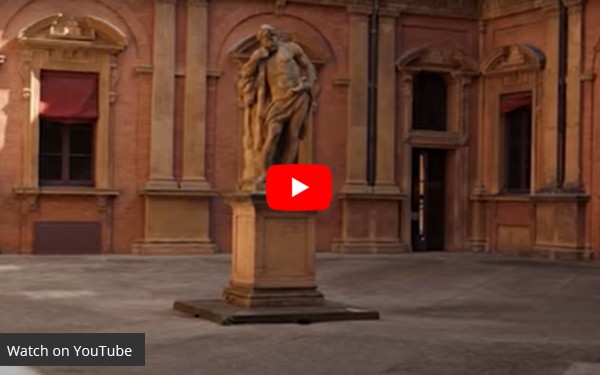
Umberto Eco was a renowned Professor of Semiotics at the University of Bologna and founder of Communication Science studies in Italy. Born in Alessandria (1932), he pursued classical studies before earning his philosophy degree from Turin University (1954). His academic career spanned Turin, Milan, and Florence universities, where he explored semiotics, media studies, and medieval aesthetics. He pioneered interdisciplinary approaches, blending literary criticism with contemporary cultural analysis. Eco's work in publishing (Bompiani, 1959–1975) and media (RAI, L'Espresso) shaped Italian intellectual discourse. The University of Bologna honored him with its highest accolades for his transformative contributions to academia and semiotic theory. Educations: Classical High School in Alessandria Laurea in Literature and Philosophy, University of Turin (1954) His research integrated medieval scholasticism with modern semiotics, analyzing mass media's societal impact through works like Apocalittici e integrati (1964) and the La bustina di Minerva column (1985–2016). Key themes included countercultural movements, communication theory, and the philosophy of aesthetics. His lectures and publications, such as Il costume di casa (1973), became foundational texts for understanding 20th-century intellectual trends. Though no specific scientific awards are listed, his academic legacy was celebrated through institutional recognitions from the University of Bologna. His advisory roles and editorial work fostered avant-garde movements like Gruppo 63, challenging 1950s literary norms. Eco's intellectual reach extended to founding the Scuola Superiore di Studi Umanistici, cementing his role as a pivotal figure in humanistic education.
Alessandra Maria Paola Broccolini is an Associate Professor at the Department of Social and Economic Sciences (DISSE), Sapienza University of Rome. She specializes in cultural anthropology, with a focus on intangible cultural heritage, ecomuseums, and urban/rural territorial studies. Since 2016, she has led the Italian Society for Museography and Demo-Ethno-Anthropological Assets (SIMBDEA) and coordinates national research projects like PRIN 2022 on local museums and PRIN 2020 on marginal Italian territories. Current affiliations: Sapienza University of Rome, Ecole Française de Rome [2021-2026] Research themes: Identity politics, festivals/rituals, traditional knowledge, migration-heritage intersections Key projects: Ecomuseo Casilino Ad Duas Lauros, UNESCO cultural heritage nominations Fieldwork: 5-year study in Naples' Pallonetto district (1994-1999), Bolsena Lake fisheries, Irpinia carnivals Collaborations: ICCD, Regione Lazio, Universidad de Huancayo (Peru) Her publications address heritage regimes in Italy, UNESCO's 2003 Convention implementation, and ethnographic case studies on Mediterranean festivals, urban ecomuseums, and agricultural biodiversity. She teaches Cultural Anthropology and Anthropology of Territory at Sapienza's Faculty of Political Science, Sociology, and Communication.
Ivan Franceschini is a Research Fellow at the Department of Asian and North African Studies, Ca' Foscari University of Venice, and a Postdoctoral Fellow at The Australian National University's Coral Bell School of Asia Pacific Affairs. His work focuses on Chinese labor movements, civil society, and political transformations. University: Ca' Foscari University of Venice Department: Department of Asian and North African Studies Email: ivan.franceschini@unive.it Franceschini's research spans labor activism, NGO strategies, and historical narratives in China. His publications in journals like The China Quarterly and Pacific Affairs analyze state-labor relations, digital activism, and garment industry exploitation. He co-edits the Made in China Journal , exploring labor and civil society dynamics. Key article trends include comparative labor studies across China and Cambodia, legal mobilization by workers, and historical reinterpretations such as the Taiping Rebellion. His 2019 work on collective bargaining and 2018 comparative analysis of garment workers highlight systemic labor challenges.
Richard Lang is an Extraordinary Professor at the University of Bolzano within the Faculty of Economics , specializing in cooperative management, social entrepreneurship, and housing policy. He leads the Competence Center for Cooperative Management , focusing on innovative models for community-led housing and nonprofit sector development. His research emphasizes the role of social capital, institutional contexts, and collaborative governance in fostering sustainable urban and rural development. Recent work highlights his engagement with cooperative housing initiatives , including studies on social innovation in Vienna, grassroots movements in England, and rural entrepreneurship across Europe. Lang’s interdisciplinary approach bridges economics, sociology, and urban planning to address systemic challenges in housing equity, community integration, and policy implementation. Education Background: Not explicitly stated in provided texts. Labs/Teams: Competence Center for Cooperative Management (University of Bolzano). Grants/Awards: None listed in the provided texts. His articles consistently analyze the intersection of institutional frameworks and grassroots action, emphasizing how cooperative models can drive social and economic sustainability. Key themes include contextual adaptation of policies, multilevel social capital utilization, and the governance challenges in collaborative housing systems.
Fabio Perocco is an Associate Professor at the Department of Philosophy and Cultural Heritage at Ca' Foscari University of Venice. His work focuses on migration, social inequality, racism, and labor precarity. He has conducted extensive research on racialized welfare discourses, migrant labor conditions, and Islamophobia in Europe. Key research interests include the intersection of migration and social policy, structural violence against migrants, and the precarization of labor in the digital economy. His studies often highlight systemic discrimination within welfare systems and analyze the socioeconomic impact of migration policies. Recent publications examine topics such as the racialized discourse on social welfare, gig economy labor dynamics, and the structural roots of torture against migrants. He is affiliated with the Research Institute for Social Innovation, contributing to projects addressing territorial inequalities and global migration challenges.
Albena Kostadinova Yaneva is a Full Professor at the Department of Architecture and Design (DAD) at Politecnico di Torino, Italy. Her academic work bridges Political and Social Sciences with Architecture , focusing on the Sociology of Environment and Territory . She teaches courses such as Academic Writing: 5 Exercises in Style , Innovation Studies , and Architecture, Society and Territory A . Research Areas : Sociological analysis of architectural practices, digital technologies in design, actor-network theory applications, and material culture. Teaching Roles : Course Instructor for PhD and Master's programs, emphasizing critical design, environmental sustainability, and urban sociology. Her recent publications explore themes like the impact of Zoom technologies on architectural collaboration, performative school buildings, and the role of models in design processes. Collaborative works include studies on graphene research labs and the interplay between science and urban development. She supervises PhD student Rayna Elena Razmilic Triantafilo, whose research focuses on architectural discourse platforms. Though no scientific awards are explicitly listed, her work engages with interdisciplinary methodologies, blending architectural anthropology and digital humanities to analyze contemporary design challenges.
Giovanni Semi is a Full Professor in Urban Sociology at the Interuniversity Department of Territorial Sciences, Planning and Policies (DIST) at Politecnico di Torino. His academic career spans multiple institutions, with significant teaching contributions to doctoral programs at both the University of Milan and University of Turin over the past decade. University of Milan (2013-2023): Multiple cycles of Sociology and Methodology of Social Research University of Turin (2016-2018): Sociology and Methodology of Social Research His research focuses on three interconnected areas: urban studies (particularly gentrification, platform capitalism, and public spaces), migration studies (Mediterranean circulations and daily multiculturalism), and sociology (ethnographic methods, class analysis, and housing dynamics). Semi's work bridges theoretical frameworks with empirical fieldwork, often employing qualitative methodologies to examine contemporary urban transformations. Semi's recent publications demonstrate a consistent focus on the evolving nature of urban inequality, particularly examining how short-term rental platforms, post-pandemic conditions, and gentrification processes reshape urban landscapes and social relations. His work often centers on Turin as a case study while maintaining broader theoretical implications for Southern European urban contexts. As an academic, Semi has contributed significantly to methodological discussions through his practical guide to participant observation, now in its second edition. His research has appeared in prominent journals including Cities, European Urban and Regional Studies, and Identities. His work on urban sociology, particularly concerning gentrification processes and the impact of platform economies on housing markets, has established him as a significant voice in contemporary urban studies, with particular expertise on Southern European urban contexts.
Donatella Strangio serves as Professor of Economic History and Director of the Department of Methods and Models for the Economy, Territory and Finance (Memotef) at Sapienza University of Rome. She also holds the position of Deputy Rector for Chile and Brazil in the Latin America and Caribbean region. Her academic leadership extends to directing international research projects including the European Project PNRR Changes 5 and the Jean Monnet Project EUMCHA. Her research spans economic development and underdevelopment, financial history, tourism economics, international migration patterns, and colonial-decolonization processes. She examines these topics through historical lenses, particularly focusing on pre-industrial economic systems, 20th century European history, famines, food policies, and institutional evolution. Her work often bridges historical analysis with contemporary policy challenges. Professor Strangio's recent publications demonstrate strong thematic coherence across economic history, with particular emphasis on resilience mechanisms during crises, migration as knowledge transmission, and tourism's economic dimensions. Her scholarship shows consistent engagement with both Italian and global contexts, especially regarding Mediterranean and Latin American connections. She actively mentors through multiple master's programs including the Master in Migration and Development and the Master in Tourism Economics and Management. Her leadership in the Civis short-term courses on Crisis Sustainability and Cultural Heritage Enhancement demonstrates commitment to innovative teaching approaches. Professor Strangio directs significant research initiatives including the Spoke9 of PNRR Cultural Heritage and coordinates the Scientific Guarantee Committee for the 'Repertory of Italian banks from 1861 to today.' Her international collaborations span Columbia University, Universidad de Quilmes, University of Adelaide, London School of Economics, and numerous Latin American institutions.
Marco Filoni is an Associate Professor of Political Philosophy (SPS/01) at Link Campus University in Rome. He currently coordinates the Master's Degree in Strategic Studies and Security Policies (LM-62). His research focuses on 20th-century French Hegelianism, political fear analysis, technology-human relations, and critiques of artificial intelligence. He holds a Ph.D. in History of Philosophy and has conducted research at institutions including the Polytechnic University of Milan, the University of Bologna, and the École Normale Supérieure in Paris. Since 2022, Filoni has served as head of the Éclaireurs research program at the Fondation Robert de Sorbon in Paris and curated the 11th edition of the Festival della Politica di Mestre-Venezia. His international collaborations include teaching and research at Sorbonne, KU Leuven, the University of Tokyo, and others. He actively contributes to academic journals like La Cultura and serves on editorial boards for multiple publications. Filoni’s publications include major works like The Political Action of the Philosopher: The Life and Thought of Alexandre Kojève (2021) and The Calculation of Fear (2021), exploring themes of political fear, totalitarianism, and Kojève’s intellectual legacy. His recent articles (2024–2025) emphasize AI ethics, geopolitical strategy, and the intersection of philosophy with contemporary political challenges.
Simone Baglioni is a Full Professor in the Department of Economics and Management at the University of Parma and Vice Rector for Education since November 2023. He co-founded the GRIMLI research group focusing on migration, labor markets, and entrepreneurship. Previously, he held academic positions at Glasgow Caledonian University , and the Universities of Geneva, Neuchâtel, Florence, and Milan-Bocconi . Current Role: Professor, Vice Rector Education Departments: Economics and Management (University of Parma), Yunus Centre for Social Business and Health (Glasgow Caledonian University) Research Focus: Labor migration, asylum, gig economy, social innovation, civil society, and integration policies. Research Themes : His work examines labor market integration of migrants , transnational solidarity , and social innovation in policy . Recent projects include PRIN and FIL A1 on remittances and migrant entrepreneurship, and coordination of EU Horizon 2020 projects like SIRIUS and MATILDE . He also developed the WORKEEN mobile app to aid migrant employment. Teaching : Courses on Socioeconomic analysis of agrifood environments , sociology of globalization , and critical food consumption at the University of Parma , covering both undergraduate and graduate programs in Global Studies , International Business , and Food Law .
Luca D'Acci is an Associate Professor in Sustainable Urban Forms and Evaluations at the Polytechnic of Turin, affiliated with the Interuniversity Department of Territorial Sciences, Planning and Policies (DIST). He holds additional affiliations as a Senior Research Fellow at the University of Portsmouth and as a member of research networks at the University of Birmingham and Erasmus University Rotterdam. His academic journey includes international roles such as Head of Urban Environment at Erasmus University Rotterdam and visiting researcher positions at the University of Oxford, University of Cambridge, and ETH Zurich. Education: MSc in Architecture-Science of Cities, Polytechnic of Turin (2003, cum laude) PhD in Economic Assessments, Polytechnic of Turin (2007) BSc in Mathematics, University of Turin (2007) BSc in Construction Engineering, Polytechnic of Turin (2009, cum laude) Post-PhD in Urbanism, University of Campinas (2010) Anthropology, University of Oxford (2020, 20 credits) Luca D'Acci’s research focuses on urban morphology, urban allometry, isobenefit urbanism, and the socio-economic-environmental impacts of urban form. His work bridges humanistic and quantitative approaches, integrating engineering, architecture, economics, and anthropology. He investigates how urbanicity, urban form, and spatial configuration influence well-being, sustainability, and resilience. His recent publications (2023–2025) reveal a strong trend toward computational modeling and simulation of urban growth, particularly through the lens of isobenefit urbanism —a concept he has pioneered. These works combine cellular automata, agent-based modeling, and morphogenetic frameworks to simulate sustainable urban futures. He also explores fractal patterns in housing markets, the psychology of urban living, and the mental costs of urbanicity. His research spans disciplines including urban science, environmental psychology, urban economics, and complex systems. Scientific Awards and Honors: Fellow, Erasmus Happiness Economics Research Organisation (EHERO), Erasmus University Rotterdam (2022–) Senior Research Fellow, University of Portsmouth (2017–) Fellow, Cluster for Sustainable Cities, University of Portsmouth (2017–2020) Fellow, Urban Morphology Research Group, University of Birmingham (2016–2021) Member, Cambridge Networks Network, University of Cambridge (2016–) Honorary Fellow, University of Birmingham (2016–) Luca D'Acci actively advises PhD students as a member of the Doctoral Collegium for Urban and Regional Development at Politecnico di Torino (2020–2024). He has secured and contributed to significant research grants, including projects funded by the World Bank, Asian Development Bank, European Commission, EPSRC, Lincoln Institute of Land Policy, and University College London (Future Urban Growth Lab). His editorial roles include membership on the boards of PLOS ONE , PLOS Mental Health , and Humanities & Social Sciences Communications . Labs and Research Networks: Future Urban Growth Lab (UCL, 2019–) LEUr Urban Ecology Lab (UFSC, 2022–) URban Evolution Morphology (UReM, 2024–) Erasmus Universiteit Rotterdam (EHERO, 2022–2024) Spatial Intelligence Unit (SPIN Unit), Estonia (2013–) International Society of Biourbanism (2013–)
Gabriele Baratto is an Assistant Professor of Criminology at the Faculty of Law, University of Trento, where he is also a senior researcher in the eCrime research group and a member of the Centre for Security and Crime Sciences (CSSC), a joint initiative with the University of Verona. He teaches courses including Digital Criminology, Transnational Organized Crime, Urban Security, and Financial Crime, and serves as an academic specialist for the UNICRI-UPEACE LL.M. in Cybercrime and Cybersecurity. PhD in International Studies (Criminology), University of Trento (2019, cum laude) Master’s Degree in Law, University of Trento (2013, 110/110 with honors) LL.M. in Cybercrime, Cybersecurity and International Law (cum laude), UNICRI-UPEACE-CSSC Scientific High School Diploma, Giorgio Dal Piaz, Feltre (2006) His research focuses on the intersection of crime and digital society, with expertise in cybercrime, human trafficking, migrant smuggling, hate speech, counterfeit goods, urban security, and financial crime. He investigates how digital technologies transform criminal behaviors and how law enforcement and prevention strategies can adapt. His work emphasizes multidisciplinary approaches combining criminology, law, and information science. Baratto has led and contributed to numerous EU-funded research projects such as qAID (Asset and Interest Disclosure), EU CYBER VAT (VAT fraud), HATEMETER (online anti-Muslim hate), and www.surfandsound.eu (human trafficking). His recent publications and conference presentations explore deepfake pornography, conversational AI for victim support, digital human trafficking, and organized cybercrime. His work bridges academic research with practical policy and law enforcement applications. Best Workshop Presentation 2018, Italian Society of Criminology He has advised government bodies and law enforcement, including the Trento Public Prosecutor, Guardia di Finanza, and EUROPOL. He has delivered guest lectures at universities in Italy, Spain, Switzerland, and the UK, and conducted training for police, public officials, and educators on topics like cyberbullying, human trafficking, and digital crime. He serves as a reviewer for journals such as Trends in Organised Crime and Humanities & Social Sciences Communications , and was a guest editor for a special issue on cybercrime. Baratto is actively involved in public engagement and knowledge transfer, participating in seminars, workshops, and public events on restorative justice, prison reform, and digital risks. Through his startup Intellegit, he applies research to real-world security challenges. His work consistently emphasizes the societal impact of digital crime and the need for innovative, interdisciplinary solutions.
Ilaria Riccioni is an Associate Professor of General Sociology at the Faculty of Education , Free University of Bozen-Bolzano. She earned her PhD in Social Theory and Research from Sapienza University in Rome and has been a tenured academic since 2007. Her work bridges sociological theory with applied research in multicultural contexts. Education: PhD in Social Theory and Research, Sapienza University, Rome. Research Focus: Sociological theory, avant-garde art as critique, multicultural coexistence, and institutional roles in education and social dynamics. Her recent publications analyze theatre's role in mediating social boundaries, art's relationship with capitalist markets, and methodologies for integrating qualitative research with artistic expression. As President of the ISA's Research Committee RC37 (Sociology of the Arts), she leads global discourse on art's sociological implications. Scientific Leadership: President of RC37 (ISA), 2025–. Teaching: Courses include Epistemology of Educational and Social Sciences and Fundamentals of General Sociology. Her empirical studies focus on South Tyrol's trilingual society, examining how artistic practices foster cohesion across cultural divides and redefine public spheres in digital globalization.
Philipp Wassler, PhD, is an Associate Professor at the Department of Business Sciences, University of Bergamo, Italy, since 2021. His academic career spans multiple continents, including senior lecturing at Bournemouth University (2017-2021), assistant professorship at University of Science & Technology Macau (2016-2017), and postdoctoral research at The Hong Kong Polytechnic University (2015-2016). He holds a PhD in Tourism Management from The Hong Kong Polytechnic University and a Master's from Breda University of Applied Sciences.